
Phonological Awareness Where Do I Begin Jenifer Davis
Phonological Awareness: Where Do I Begin? Jenifer Davis Charlottesville City Schools November 2, 2015
On Target: ● Using the paper in the center of the table, write as many words that come to mind when you think of phonological awareness.
Phonological Awareness Learning Targets: ● What is it? What is it NOT? ● What are the layers of PA? ● What does good PA instruction look like? ● What are some examples of PA instruction along the continuum? ● How can you fit it in daily into your classroom routine? ● How can you use the PALS data to drive instruction in the classroom?
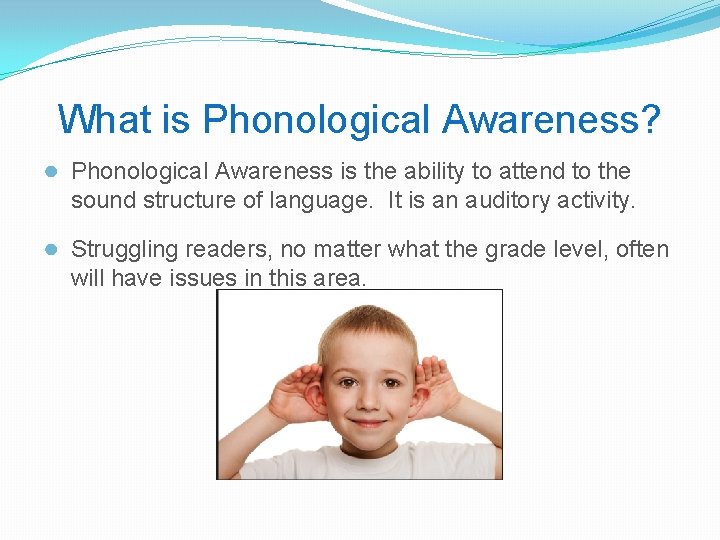
What is Phonological Awareness? ● Phonological Awareness is the ability to attend to the sound structure of language. It is an auditory activity. ● Struggling readers, no matter what the grade level, often will have issues in this area.
Phonological Awareness: ● Umbrella term ● Phonological Awareness does not equal Phonemic Awareness ● Phonological Awareness does not equal Phonics
Seven Layers of PA: Rhyme Alliteration Sentence Segmentation (COW) Syllables Blending Segmenting Phoneme Manipulation (from the easiest to the most difficult tasks)
Rhyme ● Match between the ending sounds of words ● Rhyme Identification ● Rhyme Production
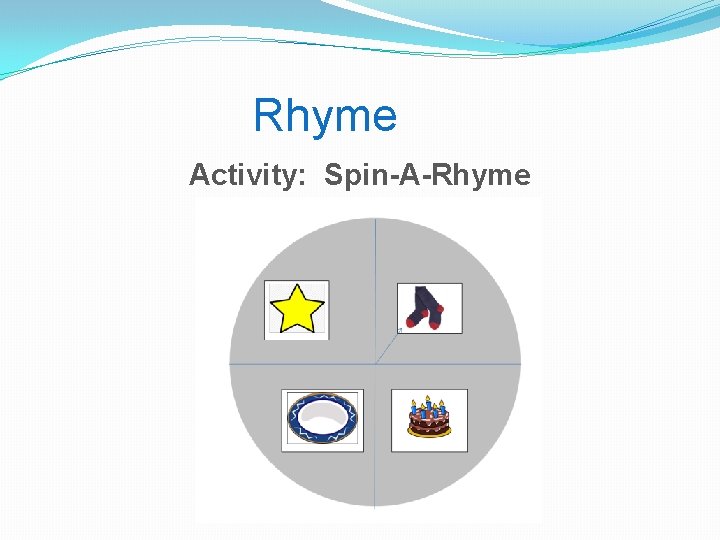
Rhyme Activity: Spin-A-Rhyme
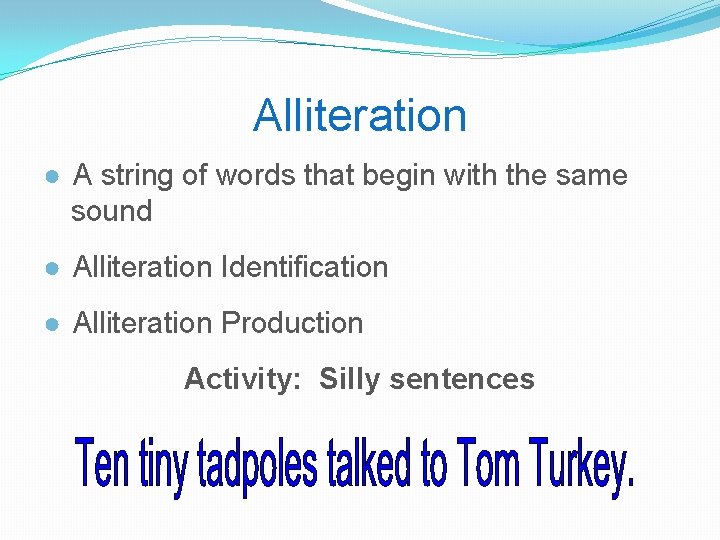
Alliteration ● A string of words that begin with the same sound ● Alliteration Identification ● Alliteration Production Activity: Silly sentences
Sentence Segmentation �Breaking sentences into individual words �Synonymous with voice print match (COW)
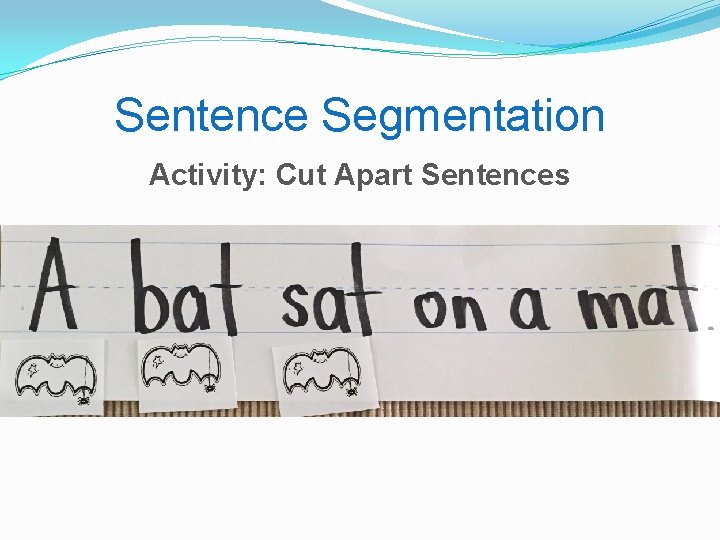
Sentence Segmentation Activity: Cut Apart Sentences

Sentence Segmentation
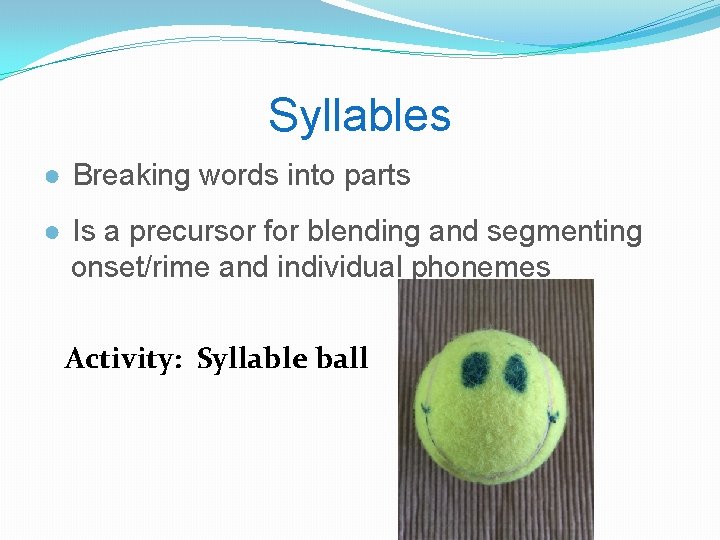
Syllables ● Breaking words into parts ● Is a precursor for blending and segmenting onset/rime and individual phonemes Activity: Syllable ball
Blending ● Putting chunks or individual sounds together ● Compound words ● Syllables ● Onset-rime ● Individual phonemes (2 -3, digraphs, and blends)
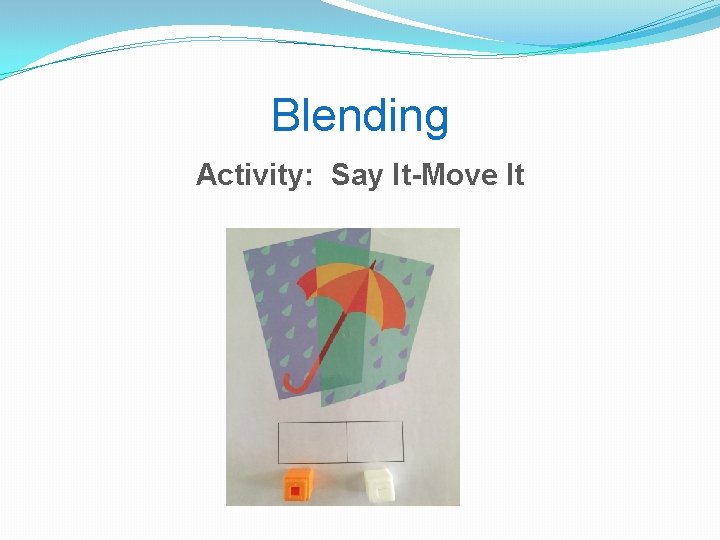
Blending Activity: Say It-Move It
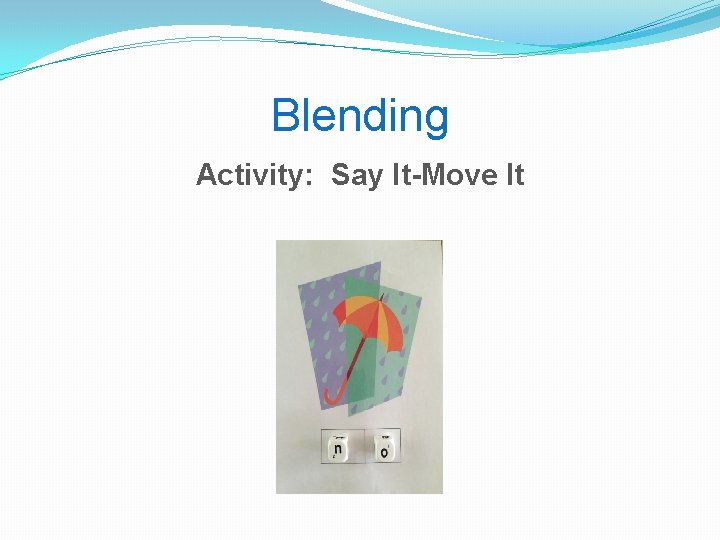
Blending Activity: Say It-Move It
Segmentation ● Taking apart chunks or individual sounds ● Compound words ● Syllables ● Onset-rime ● Individual phonemes (2 -3, digraphs, and blends) ● Phoneme isolation v. Phoneme Segmentation
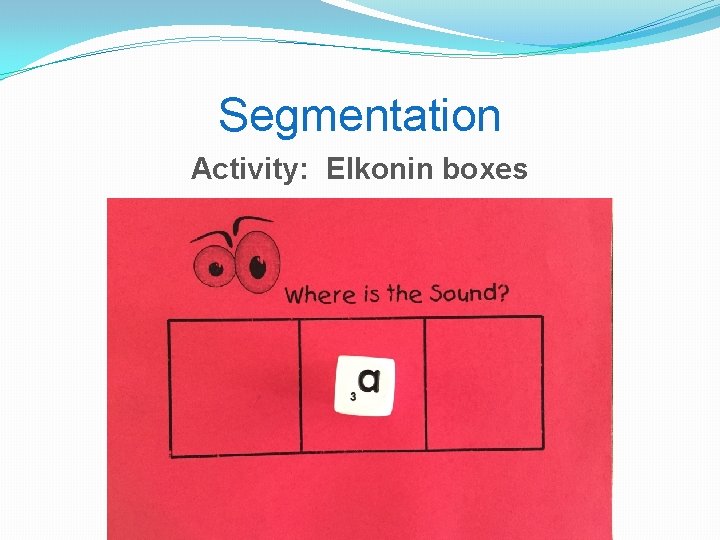
Segmentation Activity: Elkonin boxes
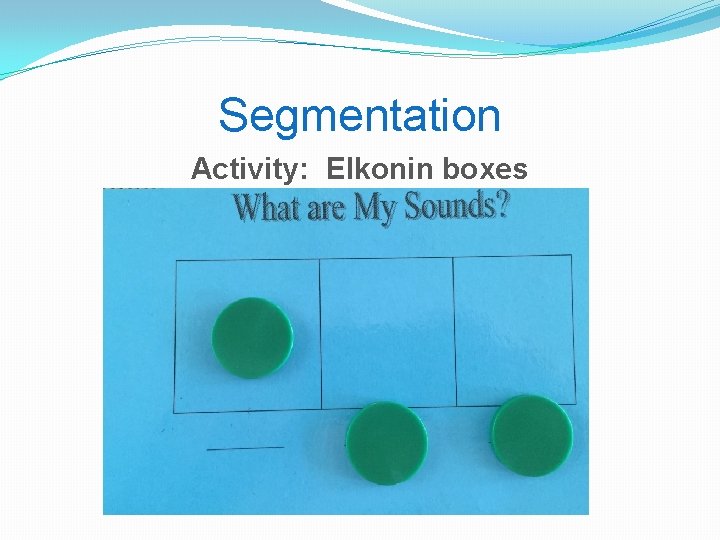
Segmentation Activity: Elkonin boxes
Phoneme Manipulation ● Addition (beginning and/or end) ● Deletion (beginning and/or end) ● Substitution Tasks (beginning, middle or end)
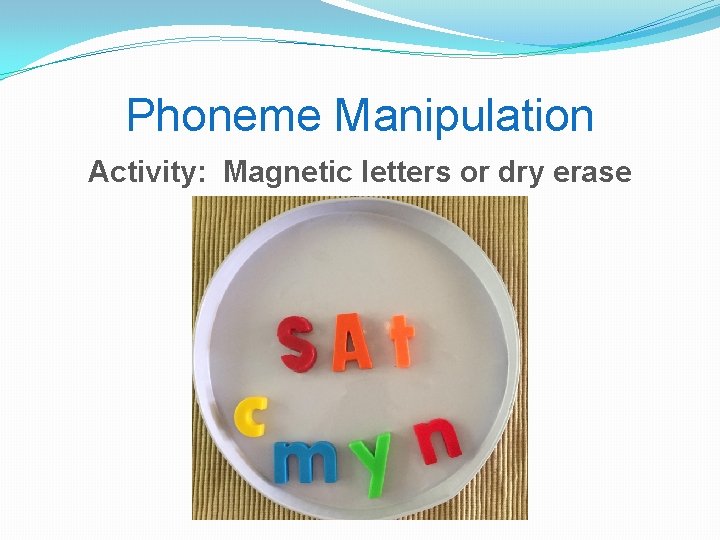
Phoneme Manipulation Activity: Magnetic letters or dry erase
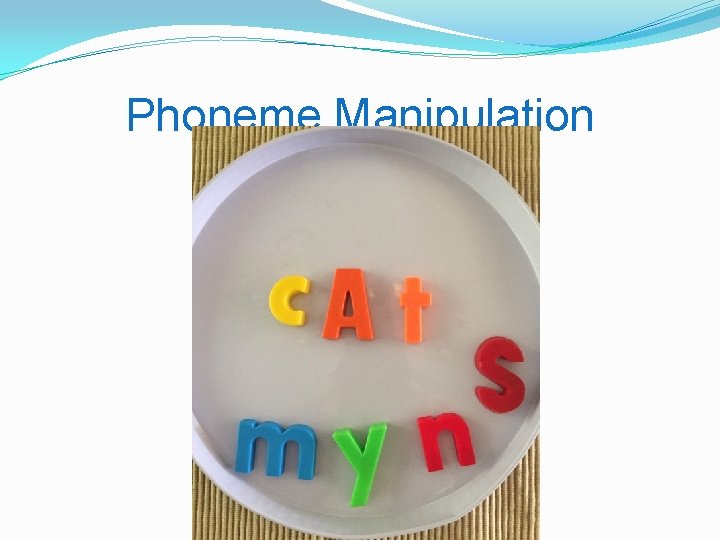
Phoneme Manipulation
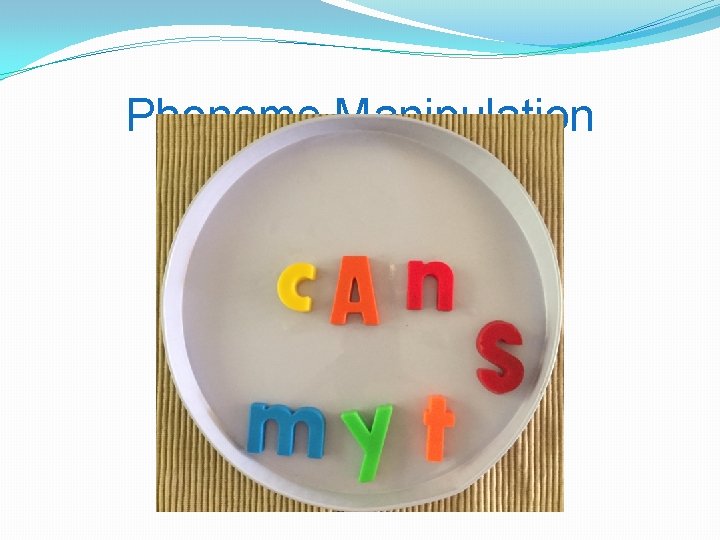
Phoneme Manipulation
Jigsaw Activity: 1. Decide which of the PA cards work specifically on the part of the continuum. 2. Using one of the following books, discuss with a partner how you could use that book to design phonological awareness activities.
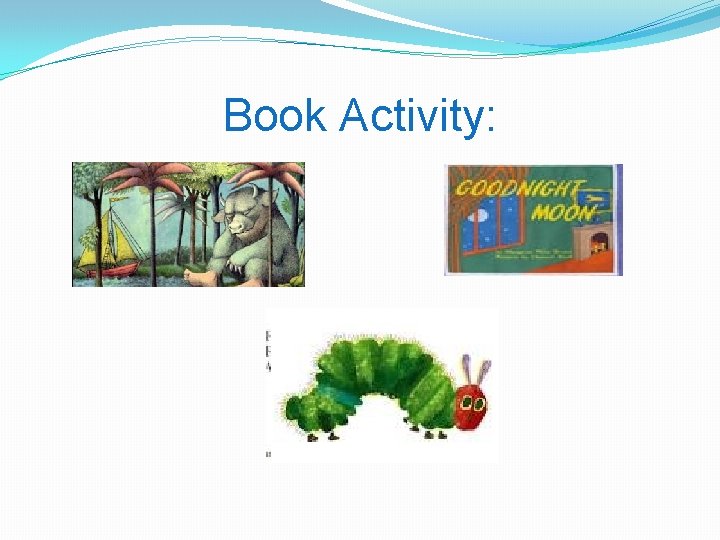
Book Activity:
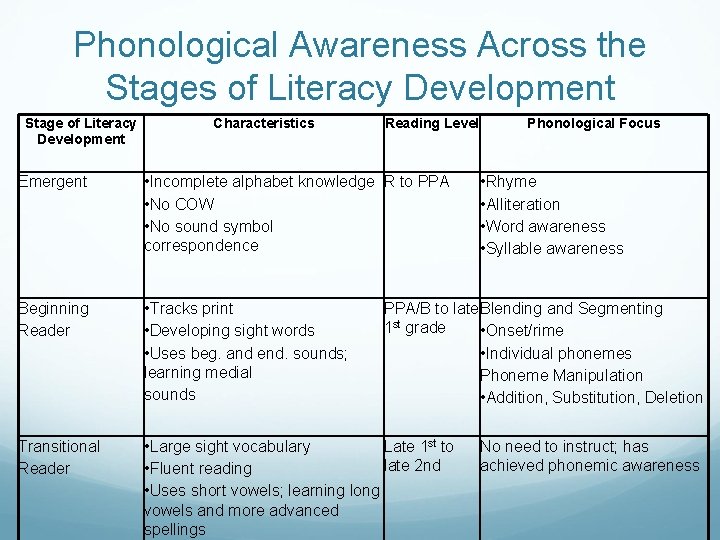
Phonological Awareness Across the Stages of Literacy Development Stage of Literacy Development Characteristics Reading Level Phonological Focus Emergent • Incomplete alphabet knowledge R to PPA • No COW • No sound symbol correspondence • Rhyme • Alliteration • Word awareness • Syllable awareness Beginning Reader • Tracks print • Developing sight words • Uses beg. and end. sounds; learning medial sounds • Individual phonemes Phoneme Manipulation • Addition, Substitution, Deletion Transitional Reader PPA/B to late Blending and Segmenting 1 st grade • Onset/rime • Large sight vocabulary Late 1 st to late 2 nd • Fluent reading • Uses short vowels; learning long vowels and more advanced spellings No need to instruct; has achieved phonemic awareness
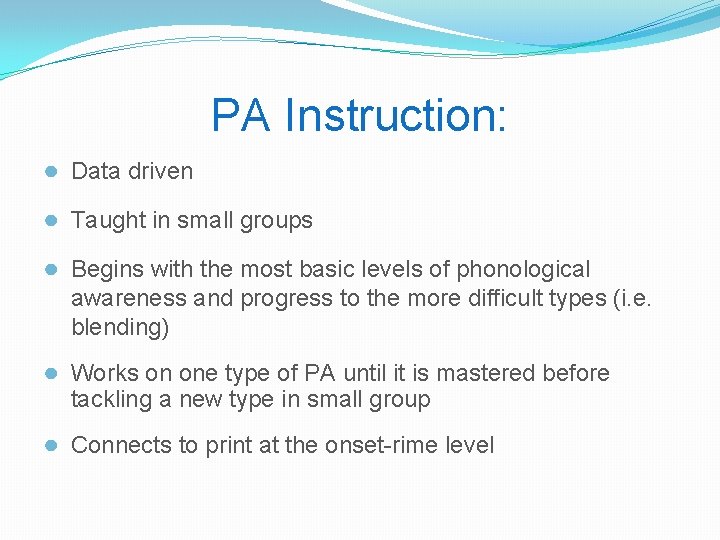
PA Instruction: ● Data driven ● Taught in small groups ● Begins with the most basic levels of phonological awareness and progress to the more difficult types (i. e. blending) ● Works on one type of PA until it is mastered before tackling a new type in small group ● Connects to print at the onset-rime level
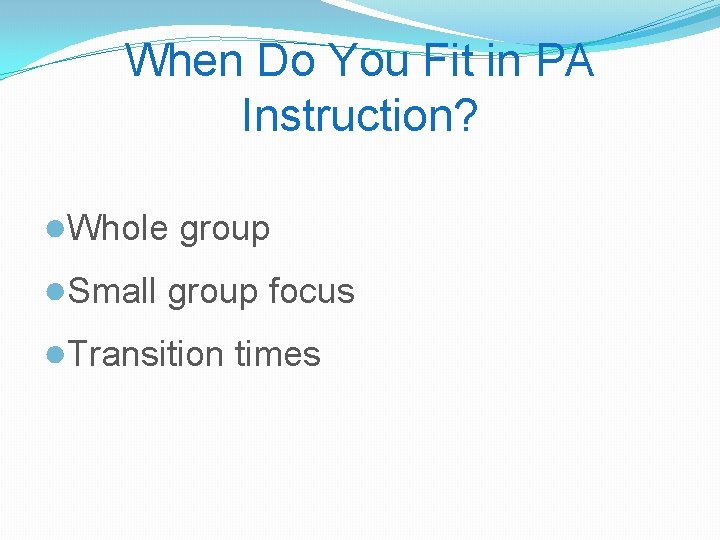
When Do You Fit in PA Instruction? ●Whole group ●Small group focus ●Transition times
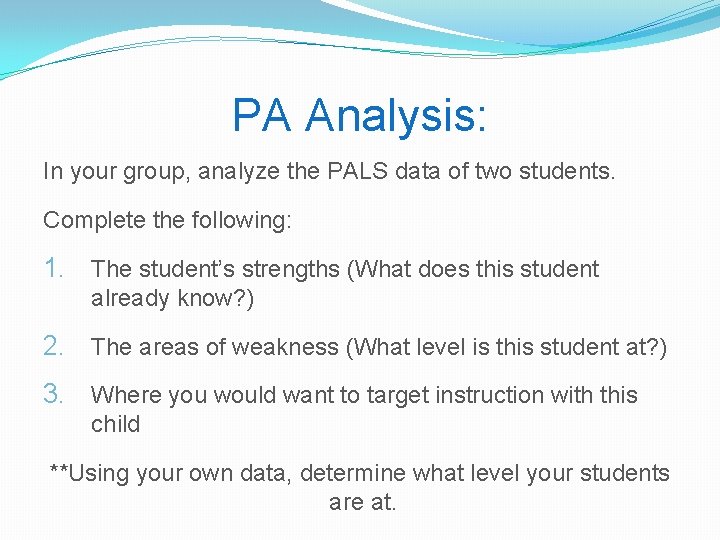
PA Analysis: In your group, analyze the PALS data of two students. Complete the following: 1. The student’s strengths (What does this student already know? ) 2. The areas of weakness (What level is this student at? ) 3. Where you would want to target instruction with this child **Using your own data, determine what level your students are at.
On Target: ● Using the red pen, scratch out any words that do not apply to phonological awareness that were misconceptions. ● Using the blue pen, add in any additional words that have to do with phonological awareness.
- Slides: 30