
Phonics Workshop What is Phonics Phonics is a
- Slides: 13
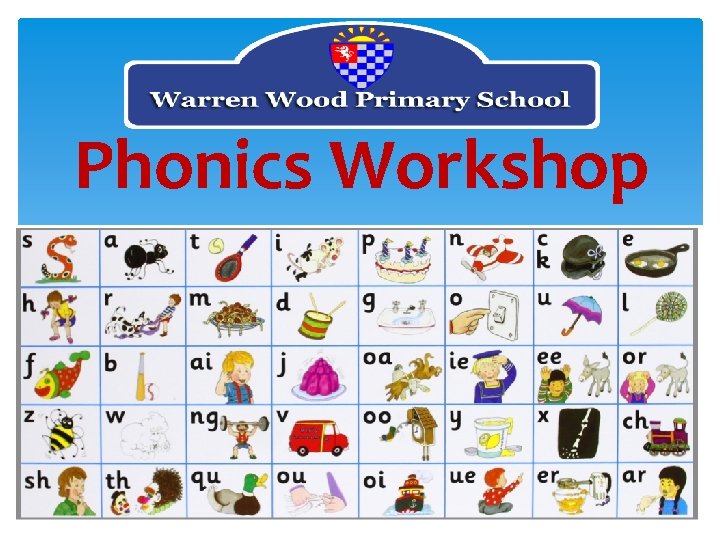
Phonics Workshop
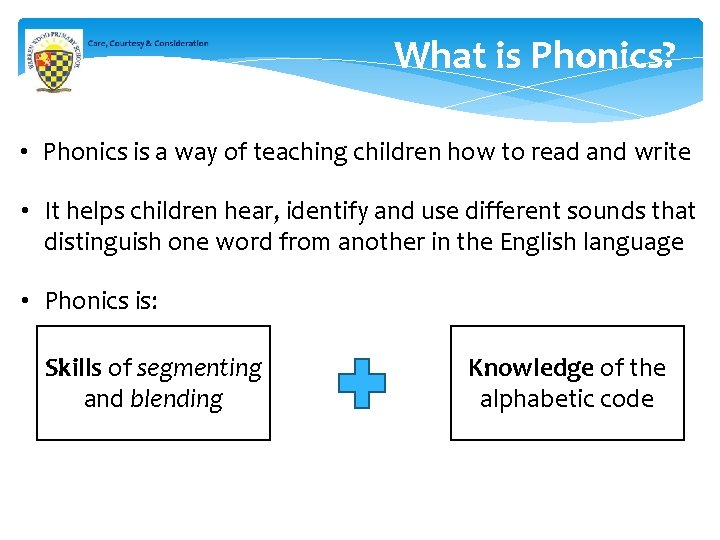
What is Phonics? • Phonics is a way of teaching children how to read and write • It helps children hear, identify and use different sounds that distinguish one word from another in the English language • Phonics is: Skills of segmenting and blending Knowledge of the alphabetic code
What is Phonics? • Although there are 26 letters in the English alphabet, there are over 40 speech sounds • These sounds (phonemes) are represented by letters (graphemes) • A sound can be represented by a single letter (e. g. ‘e’ or ‘p’) or a group of letters (e. g. ‘sh’ or ‘air’)
What is Phonics? • At Warren Wood, we follow the Letters and Sounds programme. This is a phonics resource published by the Department for Education and Skills which consists of six phases • During Reception we build on Phase One, which children should have covered during their pre-school year. We then move through Phase Two, Phase Three and Phase Four • As the children move into Year One we hope that they will ready to begin Phase Five
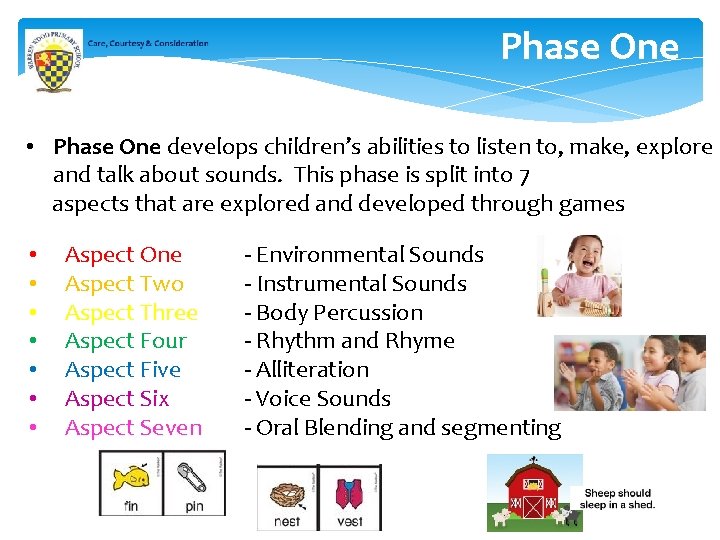
Phase One • Phase One develops children’s abilities to listen to, make, explore and talk about sounds. This phase is split into 7 aspects that are explored and developed through games • • Aspect One Aspect Two Aspect Three Aspect Four Aspect Five Aspect Six Aspect Seven - Environmental Sounds - Instrumental Sounds - Body Percussion - Rhythm and Rhyme - Alliteration - Voice Sounds - Oral Blending and segmenting
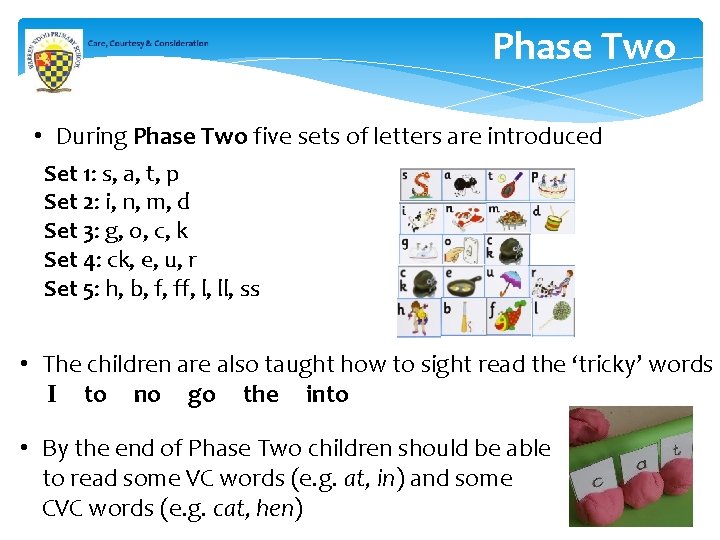
Phase Two • During Phase Two five sets of letters are introduced Set 1: s, a, t, p Set 2: i, n, m, d Set 3: g, o, c, k Set 4: ck, e, u, r Set 5: h, b, f, ff, l, ll, ss • The children are also taught how to sight read the ‘tricky’ words I to no go the into • By the end of Phase Two children should be able to read some VC words (e. g. at, in) and some CVC words (e. g. cat, hen)
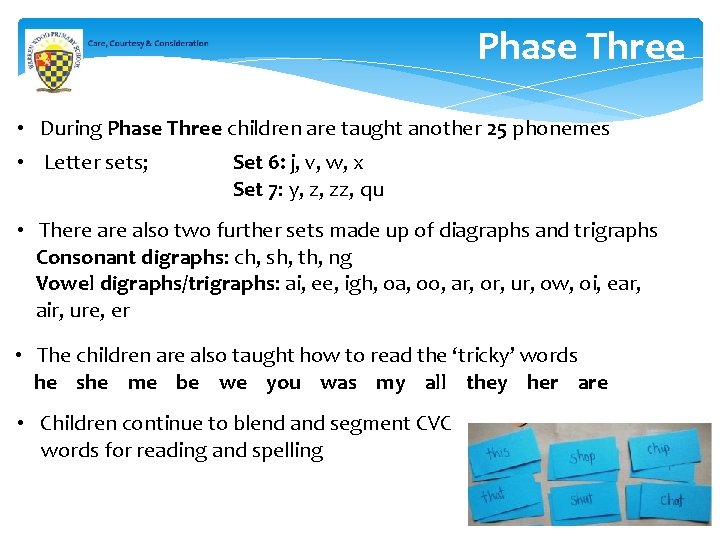
Phase Three • During Phase Three children are taught another 25 phonemes • Letter sets; Set 6: j, v, w, x Set 7: y, z, zz, qu • There also two further sets made up of diagraphs and trigraphs Consonant digraphs: ch, sh, th, ng Vowel digraphs/trigraphs: ai, ee, igh, oa, oo, ar, or, ur, ow, oi, ear, air, ure, er • The children are also taught how to read the ‘tricky’ words he she me be we you was my all they her are • Children continue to blend and segment CVC words for reading and spelling
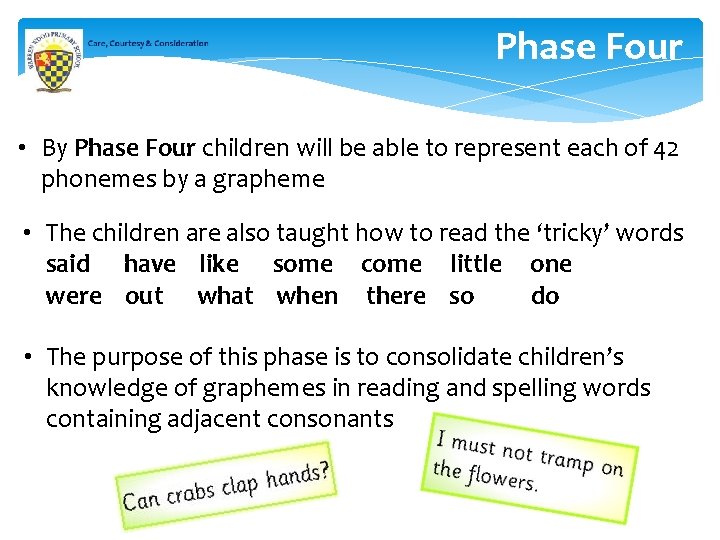
Phase Four • By Phase Four children will be able to represent each of 42 phonemes by a grapheme • The children are also taught how to read the ‘tricky’ words said have like some come little one were out what when there so do • The purpose of this phase is to consolidate children’s knowledge of graphemes in reading and spelling words containing adjacent consonants
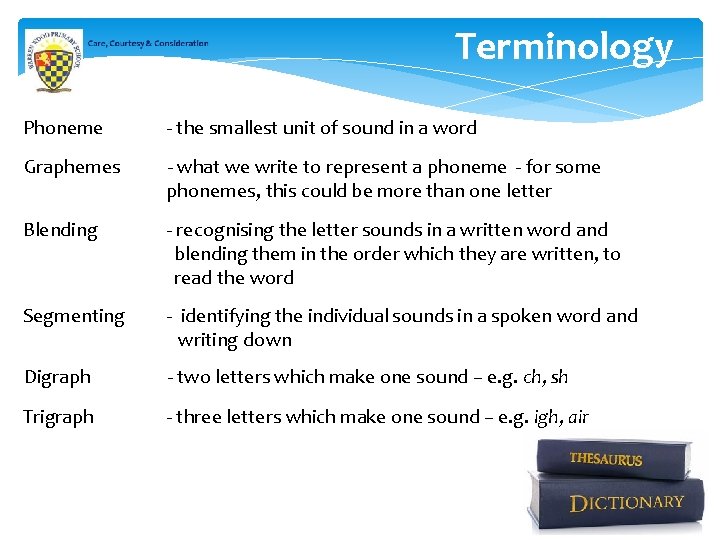
Terminology Phoneme - the smallest unit of sound in a word Graphemes - what we write to represent a phoneme - for some phonemes, this could be more than one letter Blending - recognising the letter sounds in a written word and blending them in the order which they are written, to read the word Segmenting - identifying the individual sounds in a spoken word and writing down Digraph - two letters which make one sound – e. g. ch, sh Trigraph - three letters which make one sound – e. g. igh, air
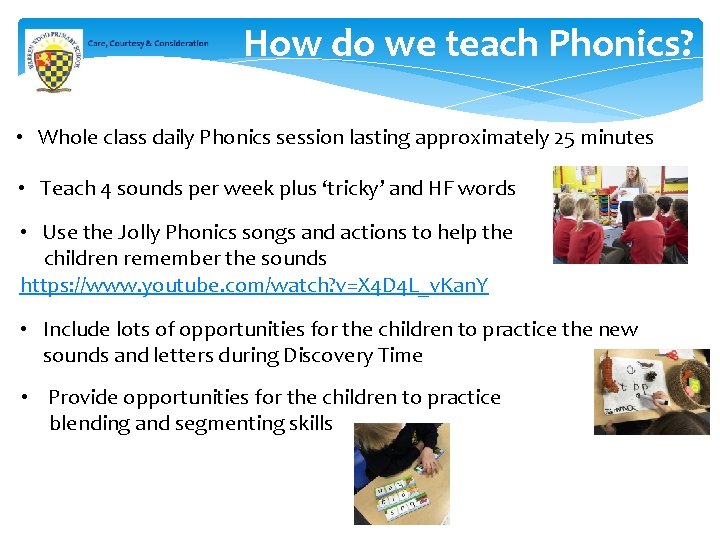
How do we teach Phonics? • Whole class daily Phonics session lasting approximately 25 minutes • Teach 4 sounds per week plus ‘tricky’ and HF words • Use the Jolly Phonics songs and actions to help the children remember the sounds https: //www. youtube. com/watch? v=X 4 D 4 L_v. Kan. Y • Include lots of opportunities for the children to practice the new sounds and letters during Discovery Time • Provide opportunities for the children to practice blending and segmenting skills
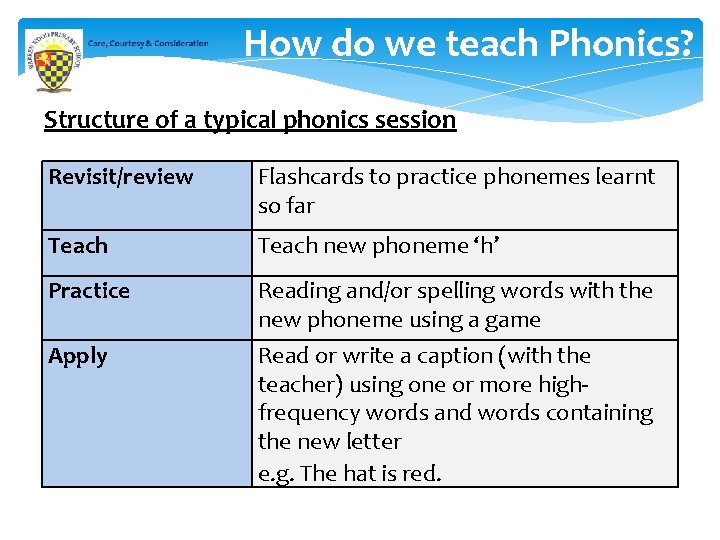
How do we teach Phonics? Structure of a typical phonics session Revisit/review Flashcards to practice phonemes learnt so far Teach new phoneme ‘h’ Practice Reading and/or spelling words with the new phoneme using a game Read or write a caption (with the teacher) using one or more highfrequency words and words containing the new letter e. g. The hat is red. Apply
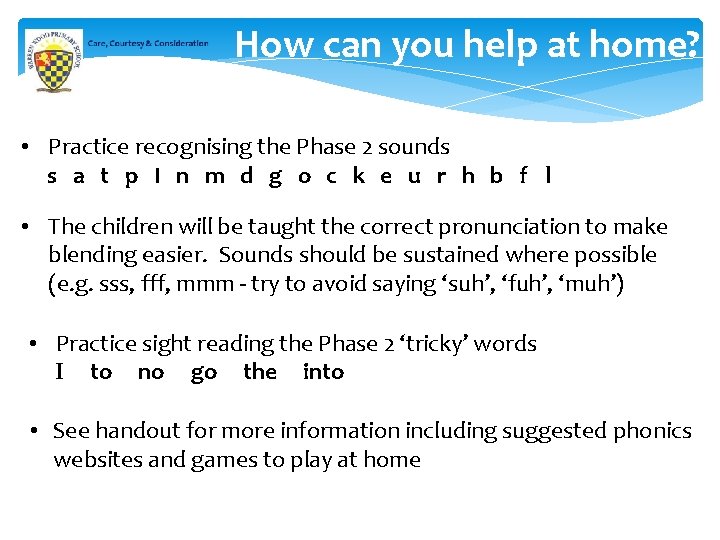
How can you help at home? • Practice recognising the Phase 2 sounds s a t p I n m d g o c k e u r h b f l • The children will be taught the correct pronunciation to make blending easier. Sounds should be sustained where possible (e. g. sss, fff, mmm - try to avoid saying ‘suh’, ‘fuh’, ‘muh’) • Practice sight reading the Phase 2 ‘tricky’ words I to no go the into • See handout for more information including suggested phonics websites and games to play at home
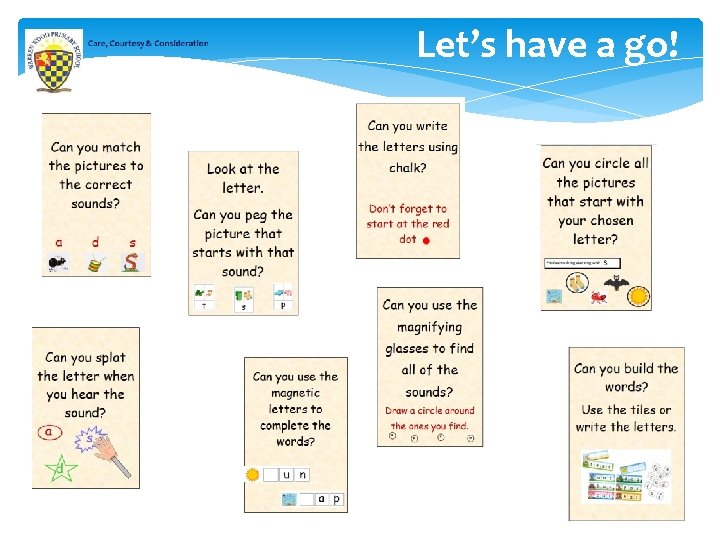
Let’s have a go!