
Phonics Welcome to Advanced phonics for parents Aims
- Slides: 18
Phonics Welcome to ‘Advanced phonics’ for parents.
Aims • • To introduce the key features of each phase of Letters and Sounds (phase 3 -6) To explore the application of phonics to reading and writing - how to support your child (children) at home
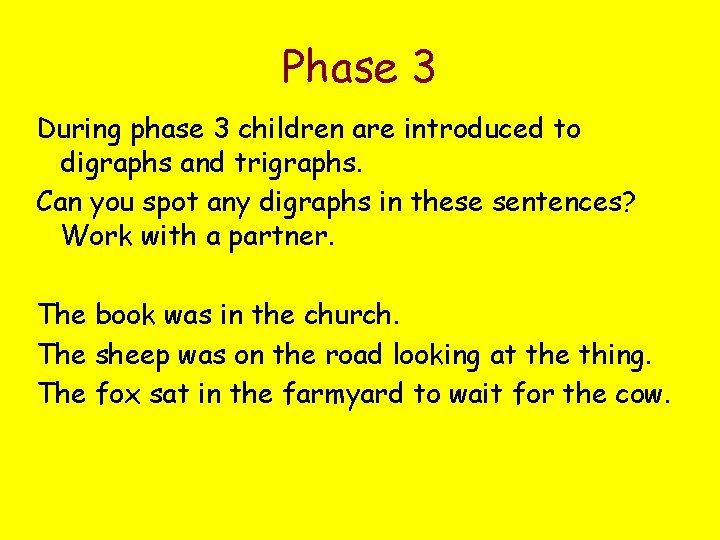
Phase 3 During phase 3 children are introduced to digraphs and trigraphs. Can you spot any digraphs in these sentences? Work with a partner. The book was in the church. The sheep was on the road looking at the thing. The fox sat in the farmyard to wait for the cow.
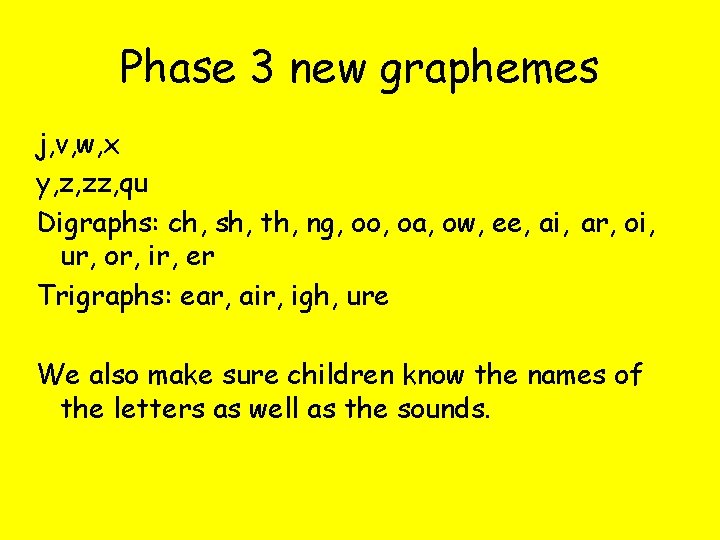
Phase 3 new graphemes j, v, w, x y, z, zz, qu Digraphs: ch, sh, th, ng, oo, oa, ow, ee, ai, ar, oi, ur, or, ir, er Trigraphs: ear, air, igh, ure We also make sure children know the names of the letters as well as the sounds.
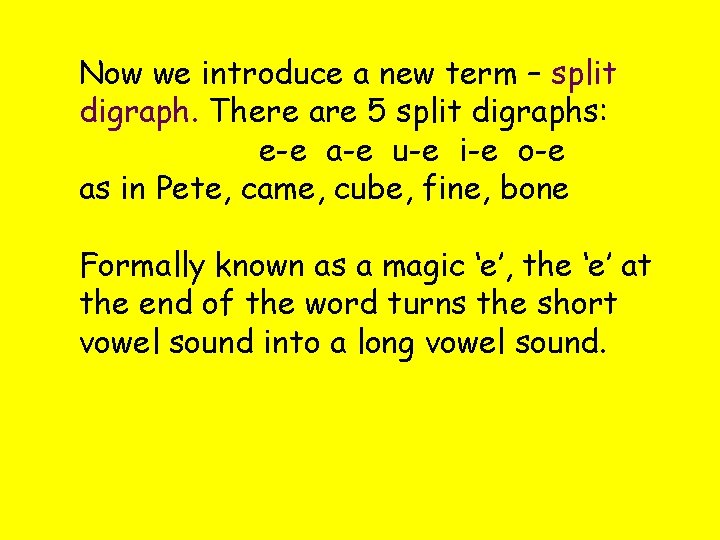
Now we introduce a new term – split digraph. There are 5 split digraphs: e-e a-e u-e i-e o-e as in Pete, came, cube, fine, bone Formally known as a magic ‘e’, the ‘e’ at the end of the word turns the short vowel sound into a long vowel sound.
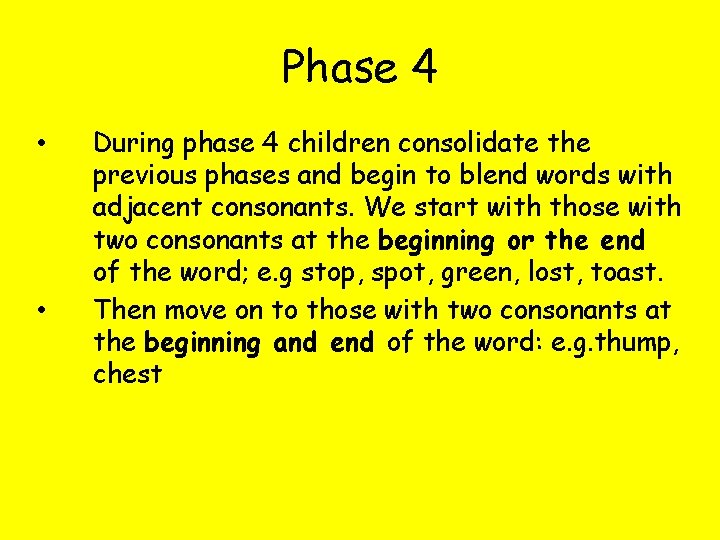
Phase 4 • • During phase 4 children consolidate the previous phases and begin to blend words with adjacent consonants. We start with those with two consonants at the beginning or the end of the word; e. g stop, spot, green, lost, toast. Then move on to those with two consonants at the beginning and end of the word: e. g. thump, chest
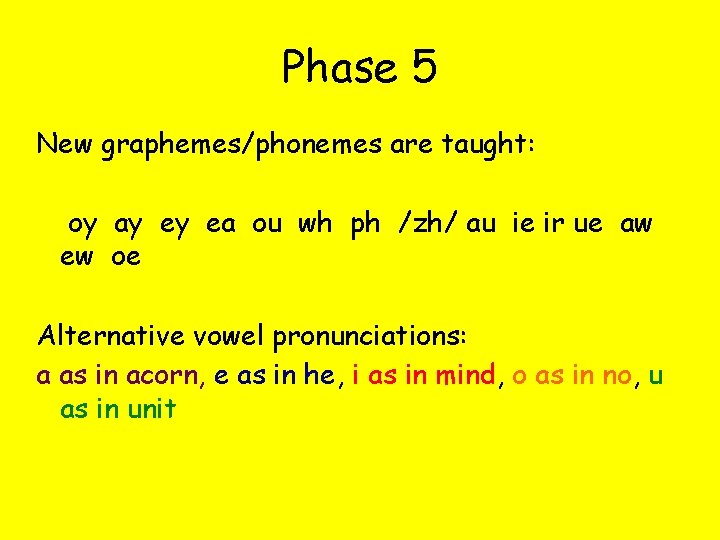
Phase 5 New graphemes/phonemes are taught: oy ay ey ea ou wh ph /zh/ au ie ir ue aw ew oe Alternative vowel pronunciations: a as in acorn, e as in he, i as in mind, o as in no, u as in unit
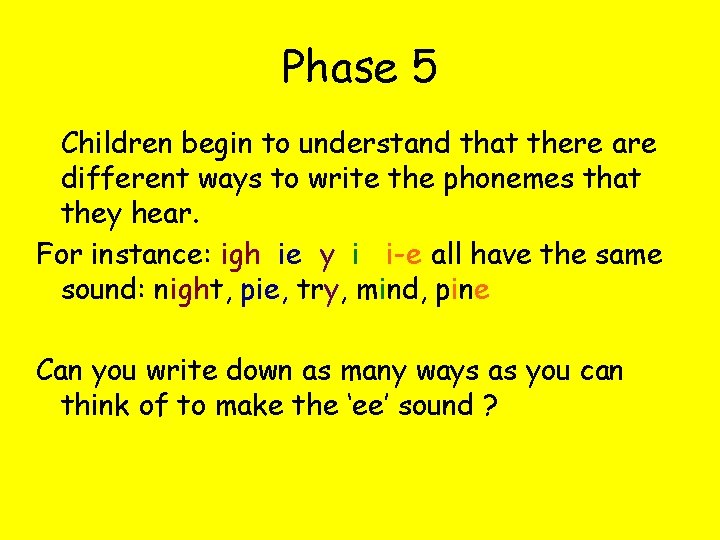
Phase 5 Children begin to understand that there are different ways to write the phonemes that they hear. For instance: igh ie y i i-e all have the same sound: night, pie, try, mind, pine Can you write down as many ways as you can think of to make the ‘ee’ sound ?
Other aspects of phase 5 • • • Teaching two- syllable and three syllable words i. e thirteen. Unusual graphemes e. g other ways of writing ai – aigh(straight), eigh(eight), e-e(fete), ey(they) They learn to make choices about which graphemes to use in their writing using ‘best bet’.
Year 1 grammar Practise reading and spelling words with adjacent consonants and words with newly learned graphemes. Use the correct terminology - word, singular, plural, capital letter, full-stop, punctuation Practise reading sentences Practise writing sentences Make plurals using s and es Add suffixes er, est, ing and ed Add the prefix un to change the meaning of verbs 10
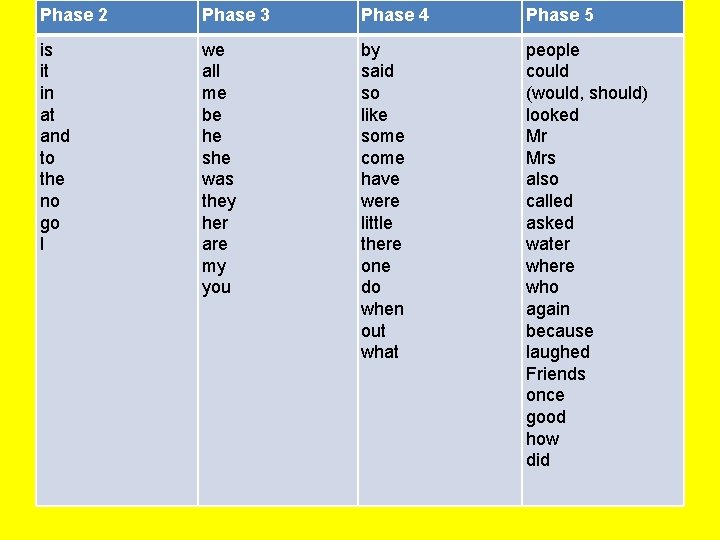
Tricky words • • Tricky words are words that usually cannot be decoded using synthetic phonics so they are taught as sight words. During each phase the children are introduced to some tricky words which they have to learn how to read and write.
High Frequency words • • • These are words that appear most frequently in written English. Children will encounter them in their reading books and will need to use them in their writing. We hope that children will be able to read these as speed words - They will have a series speed word sheets as homework which support their quick recall of high frequency and tricky words.
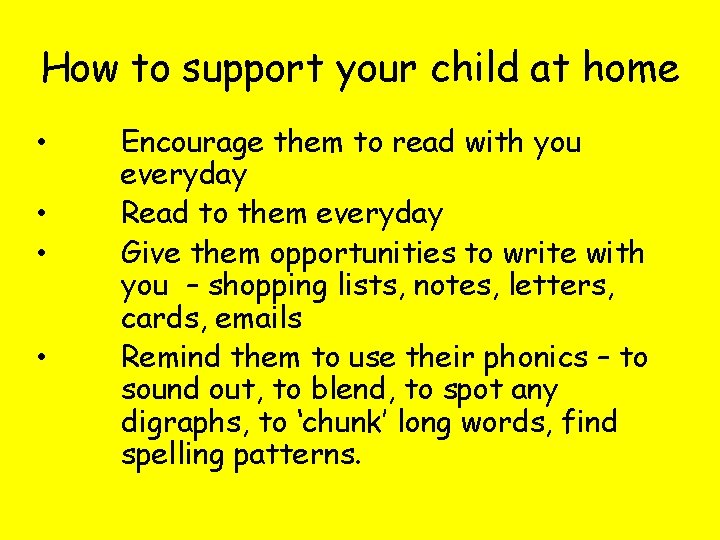
How to support your child at home • • Encourage them to read with you everyday Read to them everyday Give them opportunities to write with you – shopping lists, notes, letters, cards, emails Remind them to use their phonics – to sound out, to blend, to spot any digraphs, to ‘chunk’ long words, find spelling patterns.
Phase 2 Phase 3 Phase 4 Phase 5 is it in at and to the no go I we all me be he she was they her are my you by said so like some come have were little there one do when out what people could (would, should) looked Mr Mrs also called asked water where who again because laughed Friends once good how did
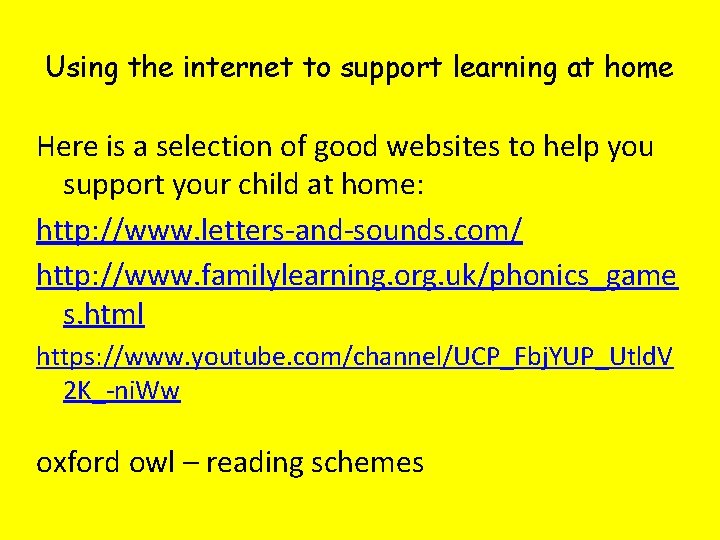
Using the internet to support learning at home Here is a selection of good websites to help you support your child at home: http: //www. letters-and-sounds. com/ http: //www. familylearning. org. uk/phonics_game s. html https: //www. youtube. com/channel/UCP_Fbj. YUP_Utld. V 2 K_-ni. Ww oxford owl – reading schemes
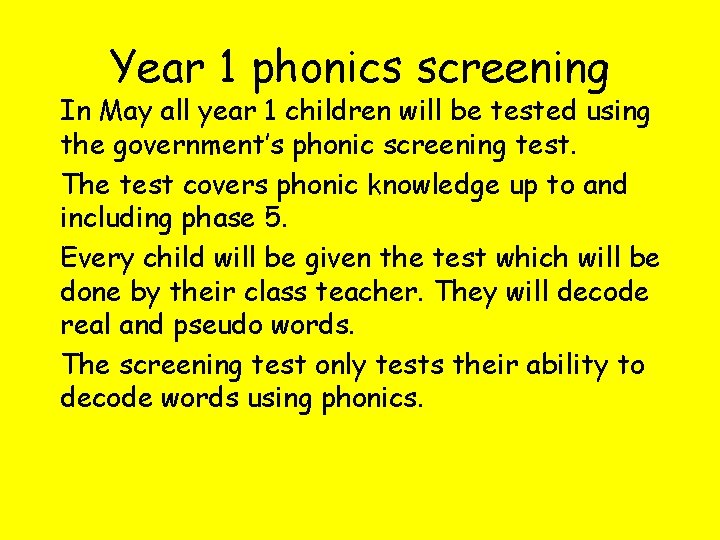
Year 1 phonics screening In May all year 1 children will be tested using the government’s phonic screening test. The test covers phonic knowledge up to and including phase 5. Every child will be given the test which will be done by their class teacher. They will decode real and pseudo words. The screening test only tests their ability to decode words using phonics.
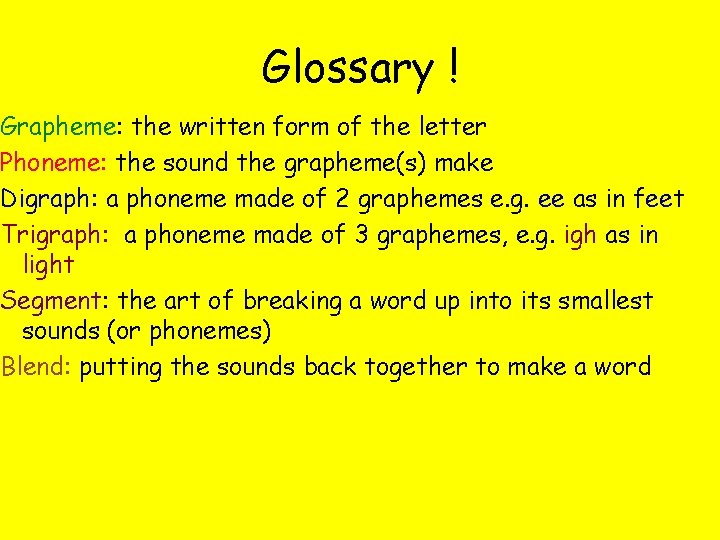
Glossary ! Grapheme: the written form of the letter Phoneme: the sound the grapheme(s) make Digraph: a phoneme made of 2 graphemes e. g. ee as in feet Trigraph: a phoneme made of 3 graphemes, e. g. igh as in light Segment: the art of breaking a word up into its smallest sounds (or phonemes) Blend: putting the sounds back together to make a word