
Phonics Phase One Aspect 1 Environmental sounds Aspect
- Slides: 5
Phonics Phase One Aspect 1: Environmental sounds
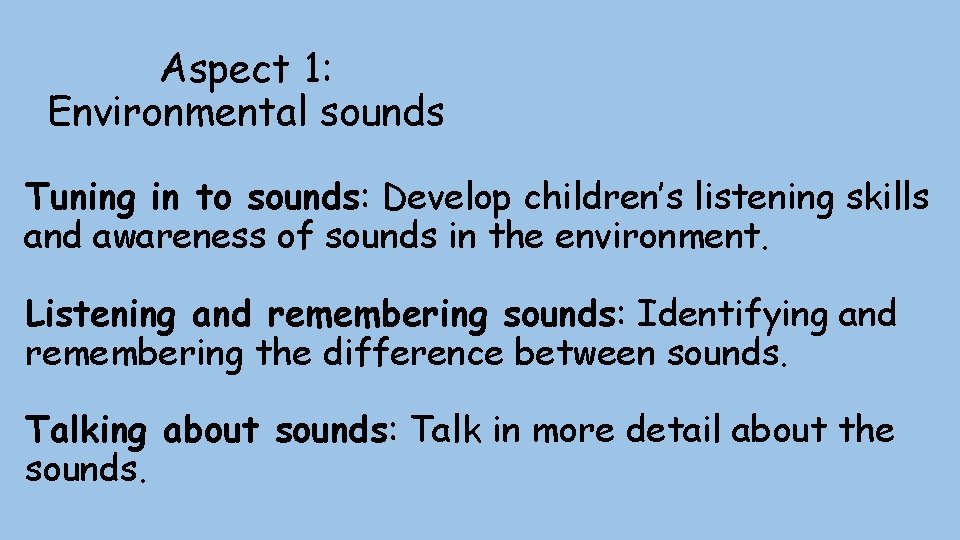
Aspect 1: Environmental sounds Tuning in to sounds: Develop children’s listening skills and awareness of sounds in the environment. Listening and remembering sounds: Identifying and remembering the difference between sounds. Talking about sounds: Talk in more detail about the sounds.
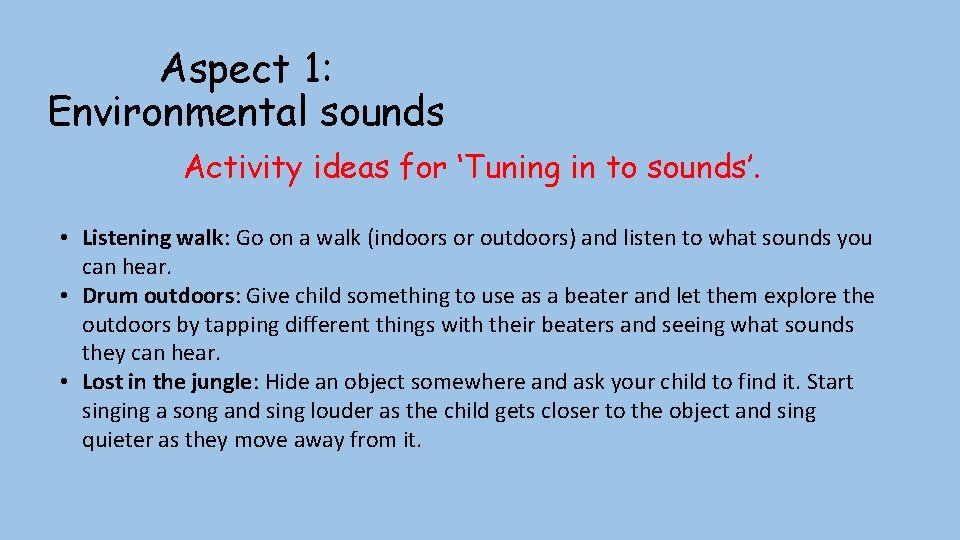
Aspect 1: Environmental sounds Activity ideas for ‘Tuning in to sounds’. • Listening walk: Go on a walk (indoors or outdoors) and listen to what sounds you can hear. • Drum outdoors: Give child something to use as a beater and let them explore the outdoors by tapping different things with their beaters and seeing what sounds they can hear. • Lost in the jungle: Hide an object somewhere and ask your child to find it. Start singing a song and sing louder as the child gets closer to the object and sing quieter as they move away from it.
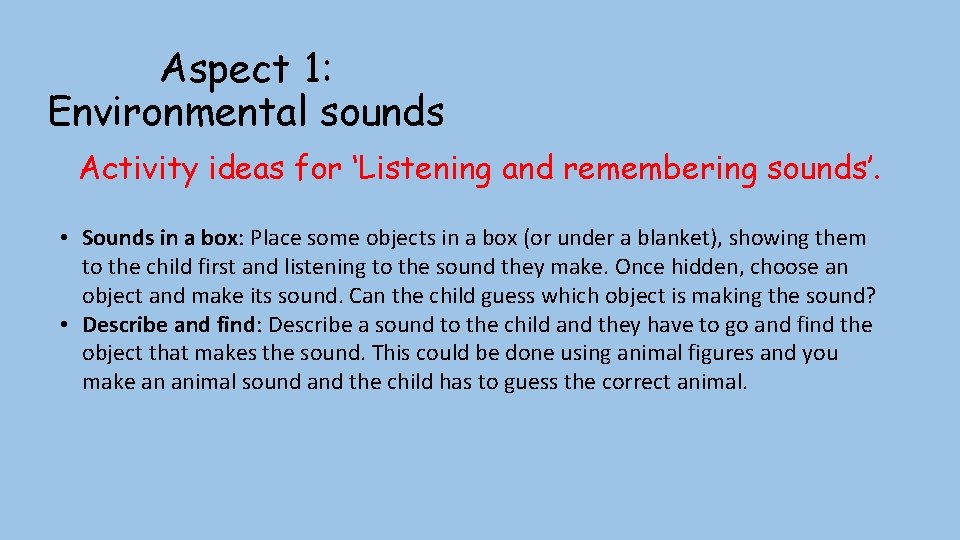
Aspect 1: Environmental sounds Activity ideas for ‘Listening and remembering sounds’. • Sounds in a box: Place some objects in a box (or under a blanket), showing them to the child first and listening to the sound they make. Once hidden, choose an object and make its sound. Can the child guess which object is making the sound? • Describe and find: Describe a sound to the child and they have to go and find the object that makes the sound. This could be done using animal figures and you make an animal sound and the child has to guess the correct animal.
Aspect 1: Environmental sounds Activity ideas for ‘Talking about sounds’. • Shakers: Fill a clear plastic bottle with some noisy materials (rice, peas, pebbles, marbles, shells, coins). Ask your child to shake the bottle and talk about the objects and the sounds they make. • Favourite sounds: Ask the children to talk about their favourite sounds and why they like them. Also, ask them which sounds they don’t like and why. • Stories and songs: When reading stories or singing rhymes, stop and think about sound effects that you could use at different parts of the story/rhyme.