
Phonics and Reading Presentation for Parents th 4

- Slides: 45
Phonics and Reading Presentation for Parents th 4 October 2018 Welcome to St. Jérôme Church of England Bilingual School
Why teach phonics? • The ability to read and write well is a vital skill for all children, paving the way for an enjoyable and successful school experience. • Phonics helps children to develop good reading and spelling skills e. g. cat can be sounded out for reading and spelling • We use a synthetic scheme called ‘Letters and Sounds’ as our teaching resource.
Why synthetic phonics? “Synthetic phonics offers the vast majority of young children the best and most direct route to becoming skilled readers and writers. ” Sir Jim Rose, Rose Review of Reading 2006. Synthetic phonics is simply the ability to convert a letter or letter group into sounds that are then blended together into a word.
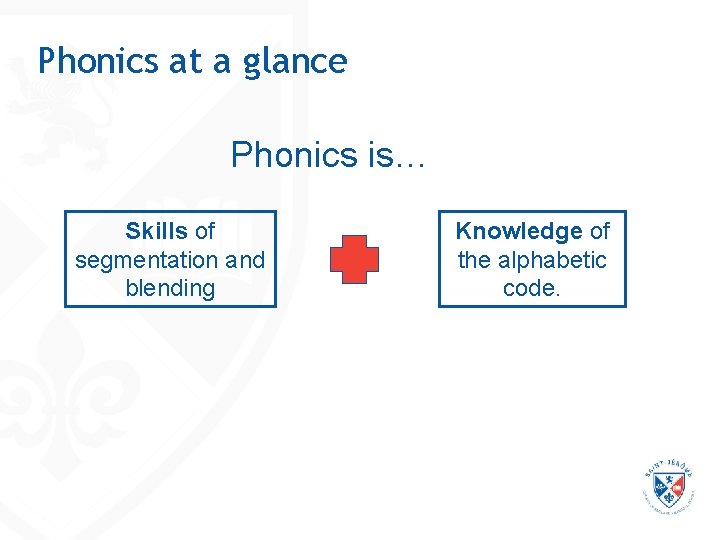
Phonics at a glance Phonics is… Skills of segmentation and blending Knowledge of the alphabetic code.
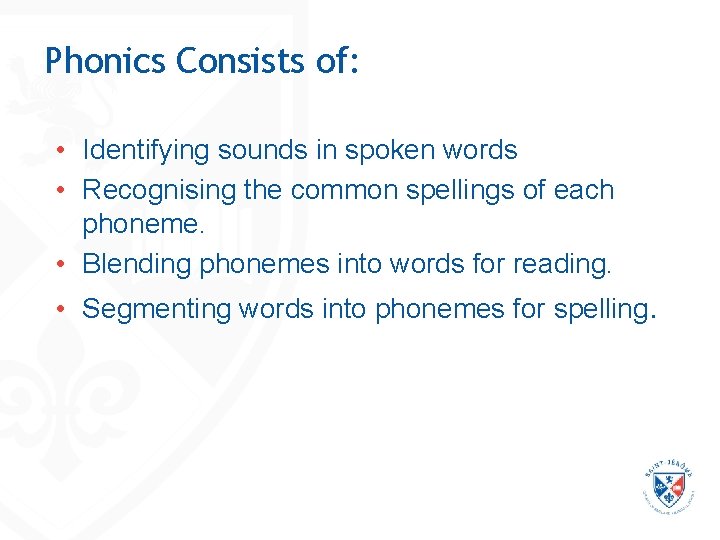
Phonics Consists of: • Identifying sounds in spoken words • Recognising the common spellings of each phoneme. • Blending phonemes into words for reading. • Segmenting words into phonemes for spelling.
Phonics Consists of: • Identifying sounds in spoken words • Recognising the common spellings of each phoneme. • Blending phonemes into words for reading. • Segmenting words into phonemes for spelling.
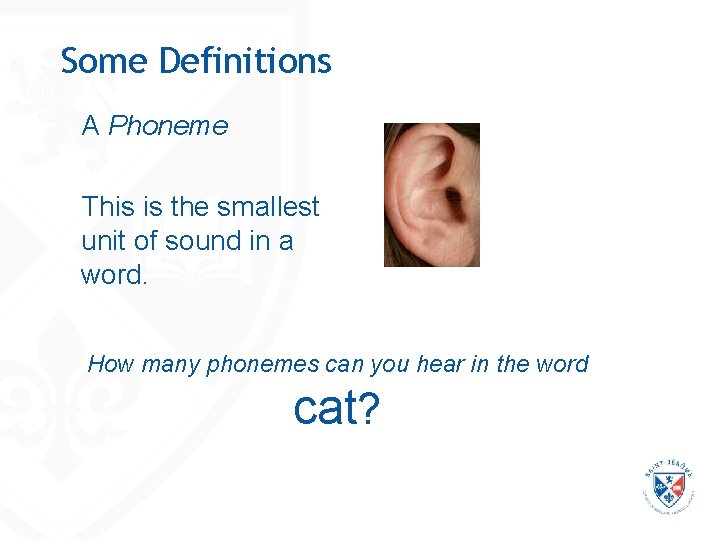
Some Definitions A Phoneme This is the smallest unit of sound in a word. How many phonemes can you hear in the word cat?
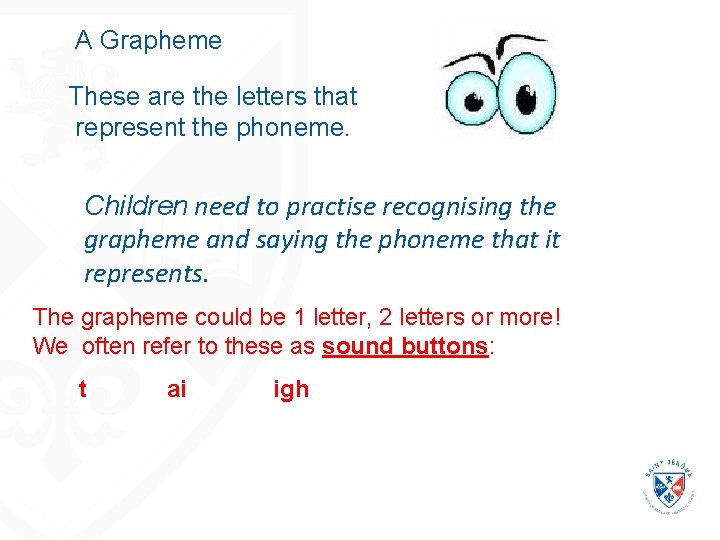
A Grapheme These are the letters that represent the phoneme. Children need to practise recognising the grapheme and saying the phoneme that it represents. The grapheme could be 1 letter, 2 letters or more! We often refer to these as sound buttons: t ai igh
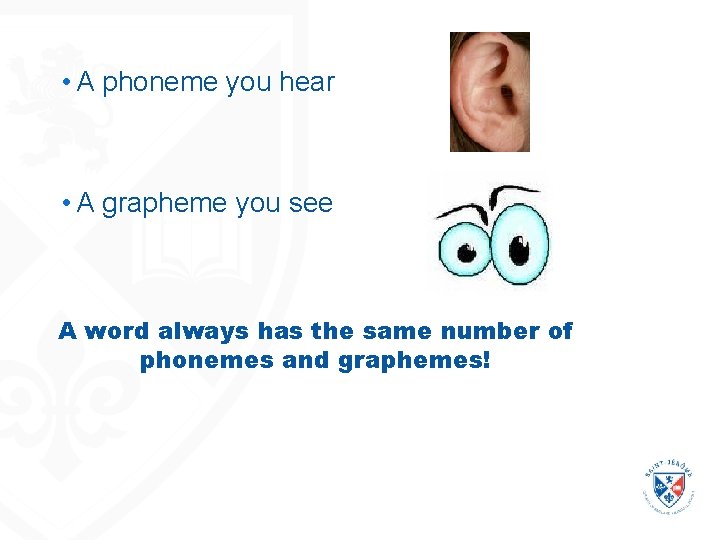
• A phoneme you hear • A grapheme you see A word always has the same number of phonemes and graphemes!
How to say the sounds • Saying the sounds correctly with your child is extremely important • The way we say sounds may well be different from when you were at school • We say the shortest form of the sounds
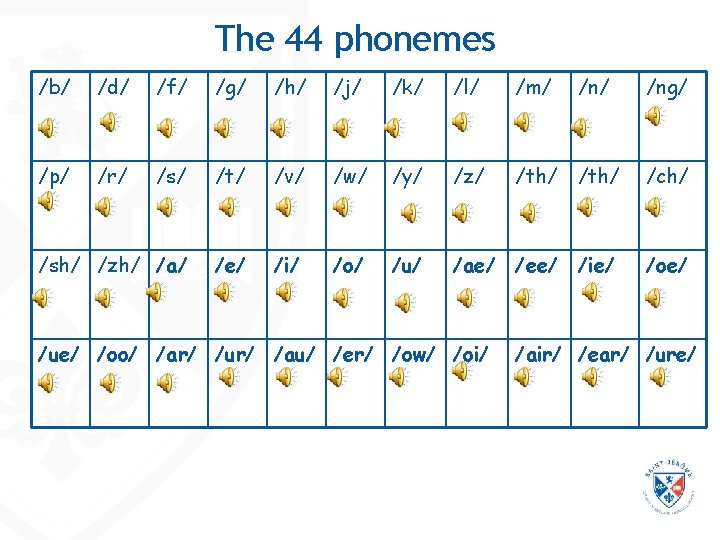
The 44 phonemes /b/ /d/ /f/ /g/ /h/ /j/ /k/ /l/ /m/ /ng/ /p/ /r/ /s/ /t/ /v/ /w/ /y/ /z/ /th/ /ch/ /sh/ /zh/ /a/ /e/ /i/ /o/ /u/ /ae/ /ee/ /ie/ /oe/ /ue/ /oo/ /ar/ /ur/ /au/ /er/ /ow/ /oi/ /air/ /ear/ /ure/
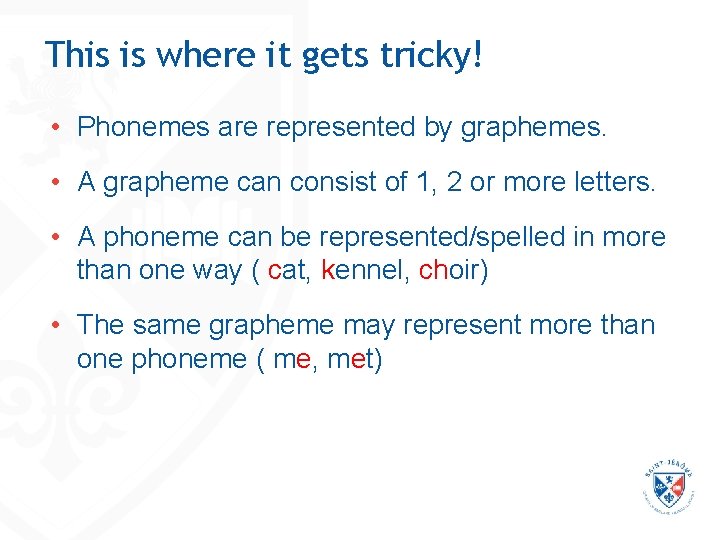
This is where it gets tricky! • Phonemes are represented by graphemes. • A grapheme can consist of 1, 2 or more letters. • A phoneme can be represented/spelled in more than one way ( cat, kennel, choir) • The same grapheme may represent more than one phoneme ( me, met)
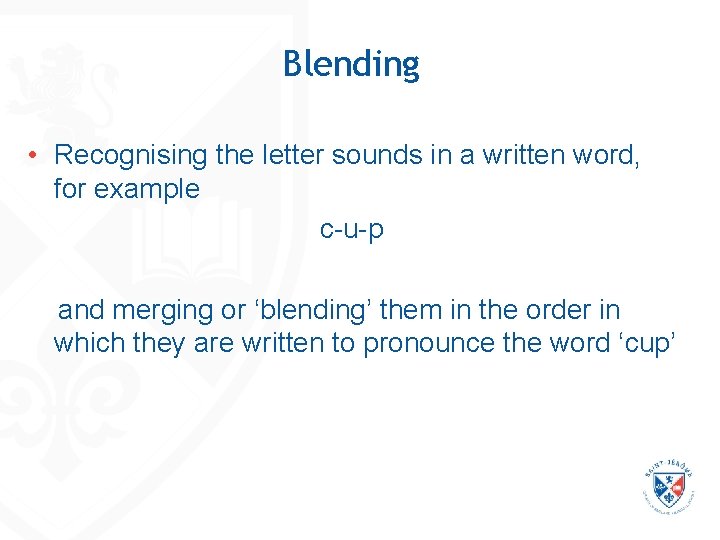
Blending • Recognising the letter sounds in a written word, for example c-u-p and merging or ‘blending’ them in the order in which they are written to pronounce the word ‘cup’
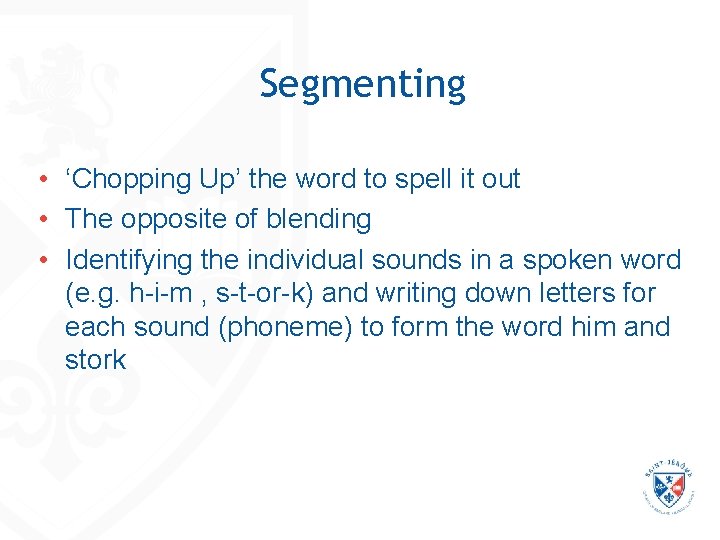
Segmenting • ‘Chopping Up’ the word to spell it out • The opposite of blending • Identifying the individual sounds in a spoken word (e. g. h-i-m , s-t-or-k) and writing down letters for each sound (phoneme) to form the word him and stork
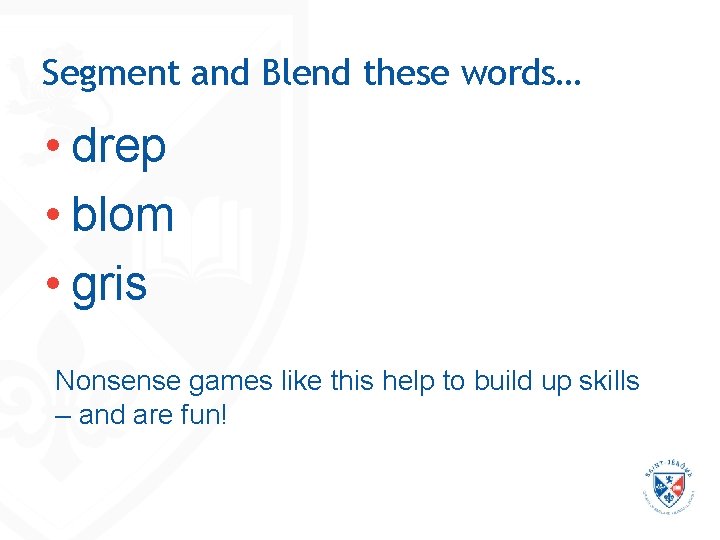
Segment and Blend these words… • drep • blom • gris Nonsense games like this help to build up skills – and are fun!
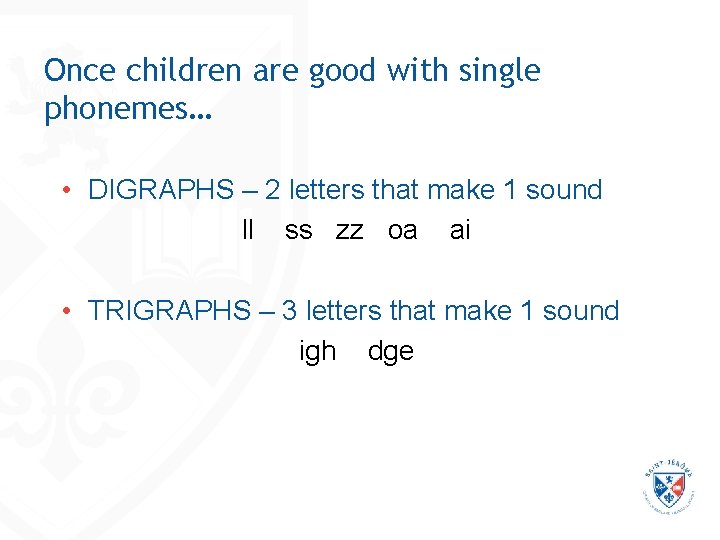
Once children are good with single phonemes… • DIGRAPHS – 2 letters that make 1 sound ll ss zz oa ai • TRIGRAPHS – 3 letters that make 1 sound igh dge
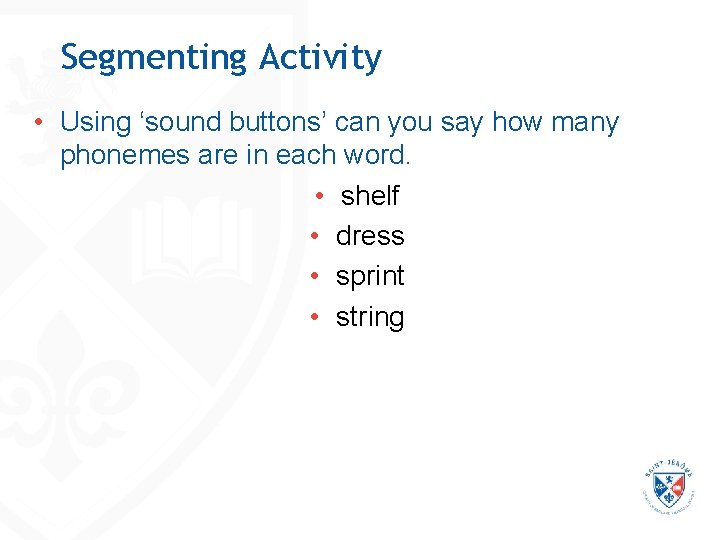
Segmenting Activity • Using ‘sound buttons’ can you say how many phonemes are in each word. • shelf • dress • sprint • string
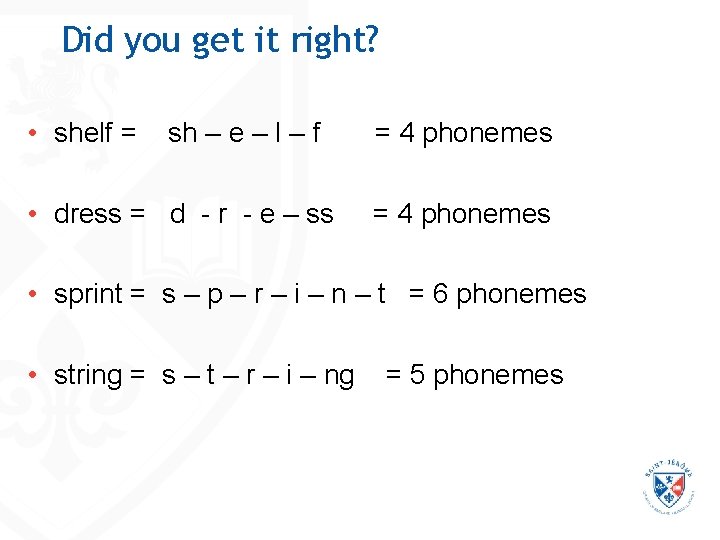
Did you get it right? • shelf = sh – e – l – f = 4 phonemes • dress = d - r - e – ss = 4 phonemes • sprint = s – p – r – i – n – t = 6 phonemes • string = s – t – r – i – ng = 5 phonemes
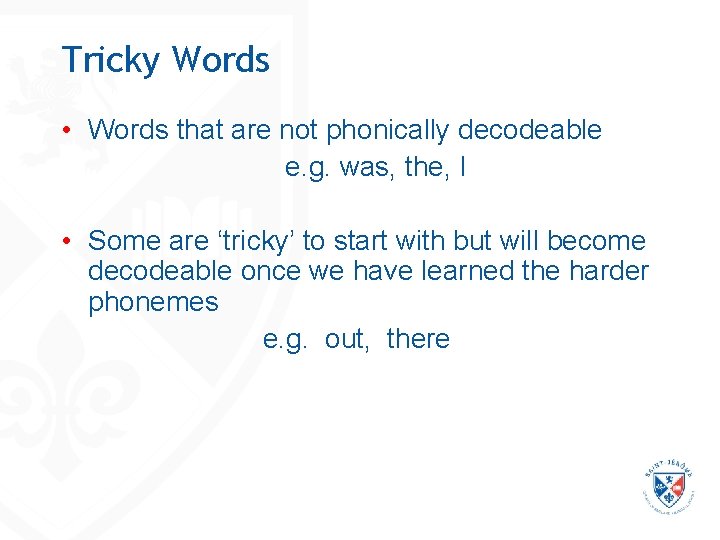
Tricky Words • Words that are not phonically decodeable e. g. was, the, I • Some are ‘tricky’ to start with but will become decodeable once we have learned the harder phonemes e. g. out, there
Letters and Sounds • Letters and Sounds is divided into six phases, with each phase building on the skills and knowledge of previous learning. Children have time to practise and rapidly expand their ability to read and spell words. They are also taught to read and spell ‘tricky words’, which are words with spellings that are unusual.
Lesson format • In each year group, phonic lessons follow the same format: • Revise: The children will revise previous learning. • Teach: New phonemes or high frequency or tricky words will be taught. • Practice: The children will practise the new learning by reading and/or writing the words. • Apply: The children will apply their new learning by reading or writing sentences.
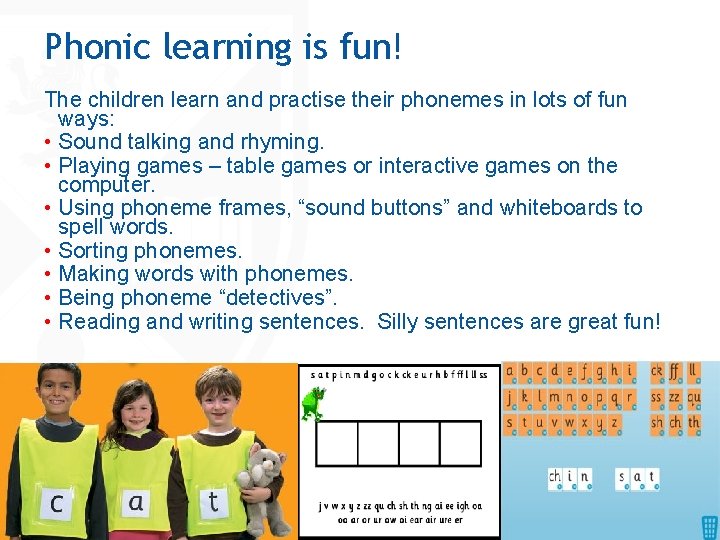
Phonic learning is fun! The children learn and practise their phonemes in lots of fun ways: • Sound talking and rhyming. • Playing games – table games or interactive games on the computer. • Using phoneme frames, “sound buttons” and whiteboards to spell words. • Sorting phonemes. • Making words with phonemes. • Being phoneme “detectives”. • Reading and writing sentences. Silly sentences are great fun!
Phase 1 • • Environmental sounds Instrumental sounds Body percussion Rhythm and Rhyme Alliteration Voice sounds Oral blending and segmenting
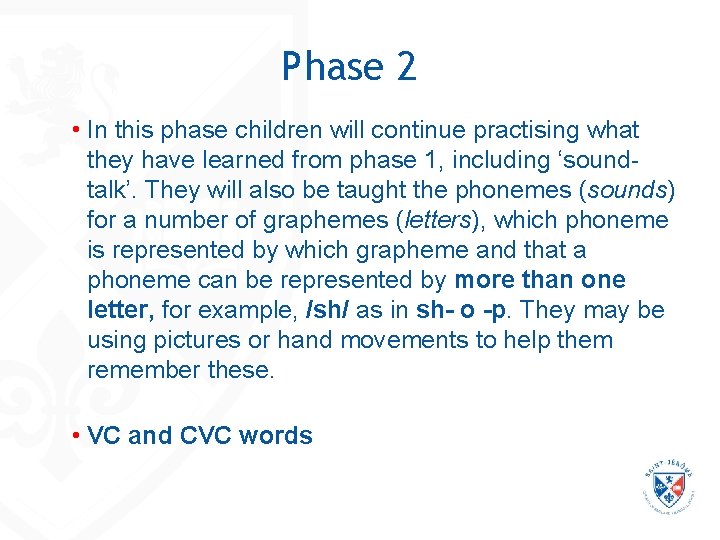
Phase 2 • In this phase children will continue practising what they have learned from phase 1, including ‘soundtalk’. They will also be taught the phonemes (sounds) for a number of graphemes (letters), which phoneme is represented by which grapheme and that a phoneme can be represented by more than one letter, for example, /sh/ as in sh- o -p. They may be using pictures or hand movements to help them remember these. • VC and CVC words
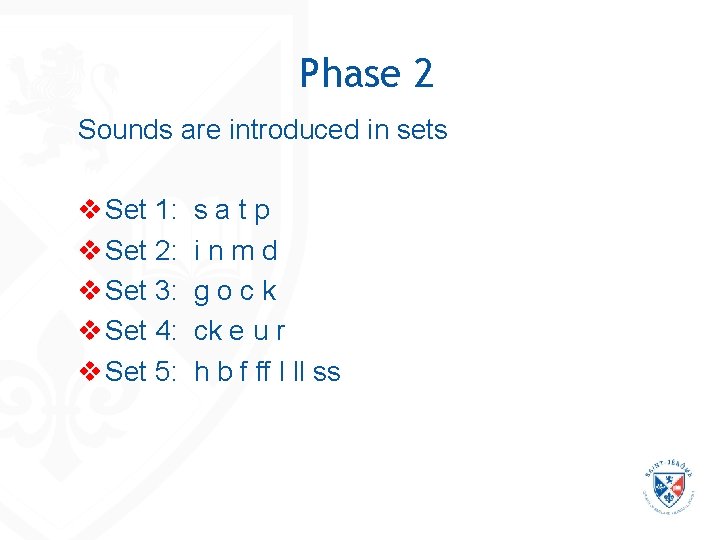
Phase 2 Sounds are introduced in sets v Set 1: s a t p v Set 2: i n m d v Set 3: g o c k v Set 4: ck e u r v Set 5: h b f ff l ll ss
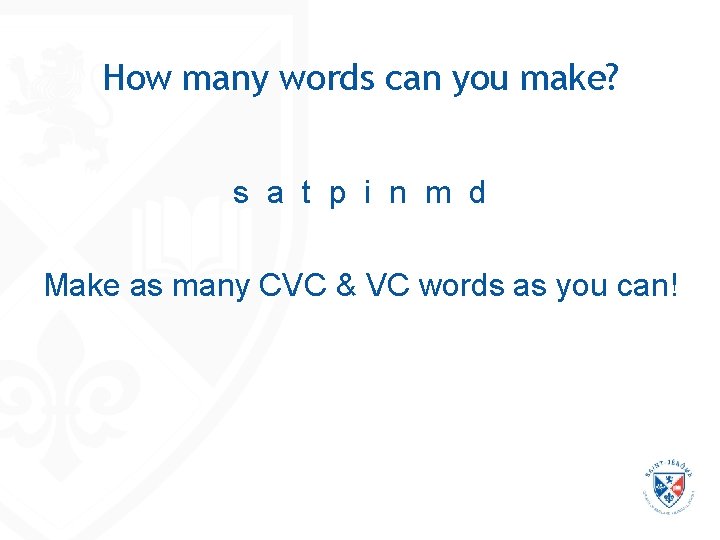
How many words can you make? s a t p i n m d Make as many CVC & VC words as you can!
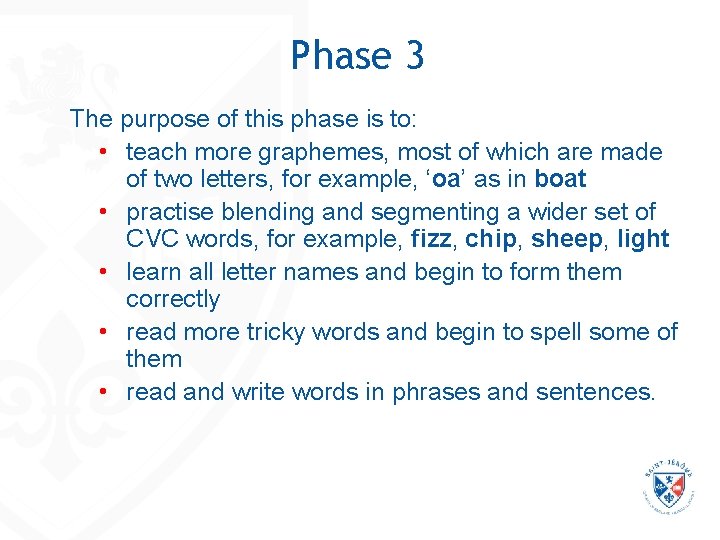
Phase 3 The purpose of this phase is to: • teach more graphemes, most of which are made of two letters, for example, ‘oa’ as in boat • practise blending and segmenting a wider set of CVC words, for example, fizz, chip, sheep, light • learn all letter names and begin to form them correctly • read more tricky words and begin to spell some of them • read and write words in phrases and sentences.
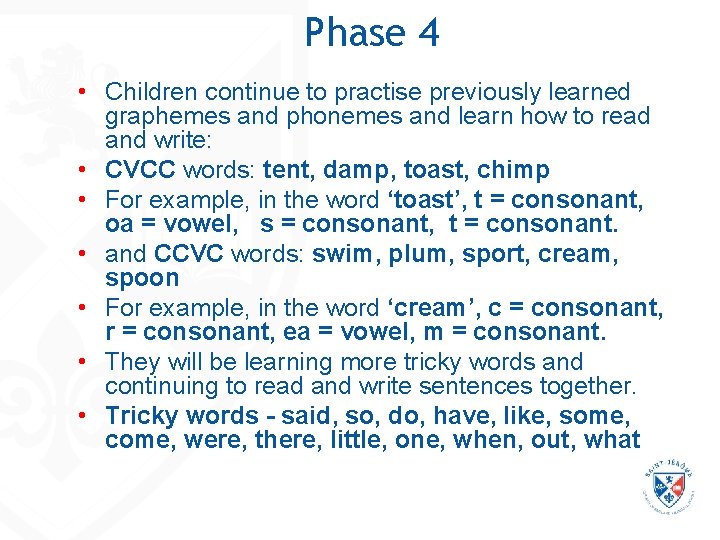
Phase 4 • Children continue to practise previously learned graphemes and phonemes and learn how to read and write: • CVCC words: tent, damp, toast, chimp • For example, in the word ‘toast’, t = consonant, oa = vowel, s = consonant, t = consonant. • and CCVC words: swim, plum, sport, cream, spoon • For example, in the word ‘cream’, c = consonant, r = consonant, ea = vowel, m = consonant. • They will be learning more tricky words and continuing to read and write sentences together. • Tricky words - said, so, do, have, like, some, come, were, there, little, one, when, out, what
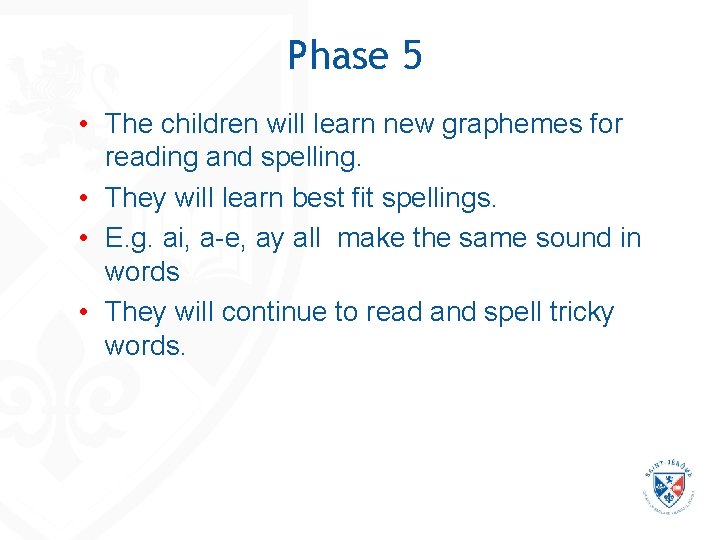
Phase 5 • The children will learn new graphemes for reading and spelling. • They will learn best fit spellings. • E. g. ai, a-e, ay all make the same sound in words • They will continue to read and spell tricky words.
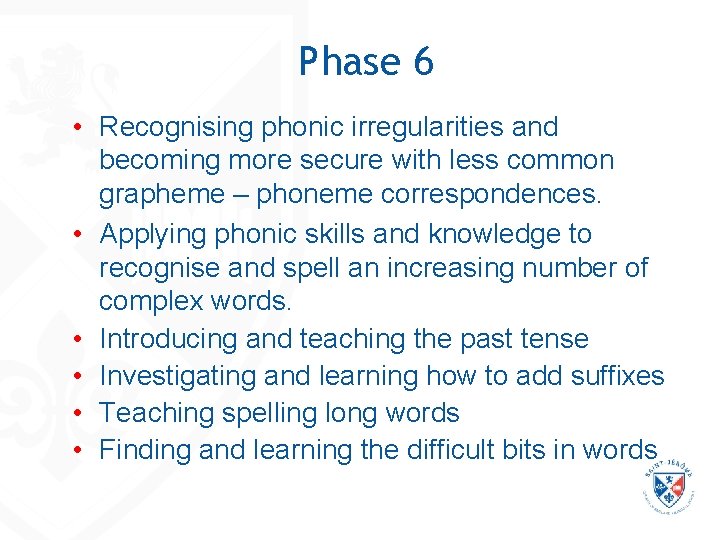
Phase 6 • Recognising phonic irregularities and becoming more secure with less common grapheme – phoneme correspondences. • Applying phonic skills and knowledge to recognise and spell an increasing number of complex words. • Introducing and teaching the past tense • Investigating and learning how to add suffixes • Teaching spelling long words • Finding and learning the difficult bits in words
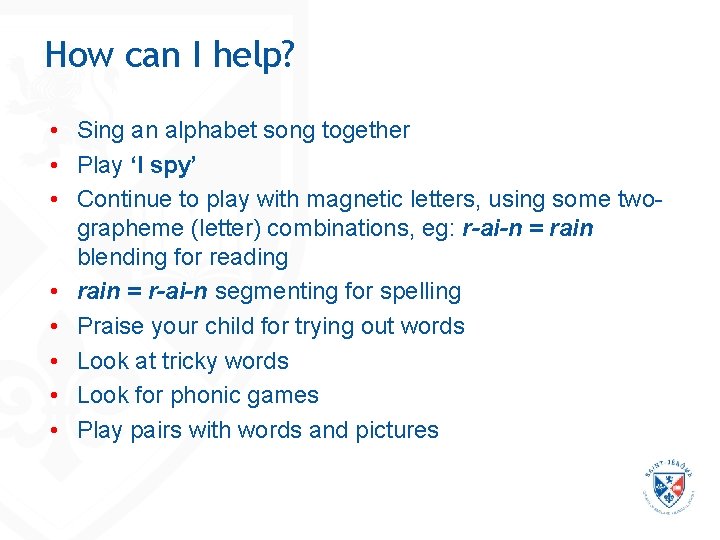
How can I help? • Sing an alphabet song together • Play ‘I spy’ • Continue to play with magnetic letters, using some twographeme (letter) combinations, eg: r-ai-n = rain blending for reading • rain = r-ai-n segmenting for spelling • Praise your child for trying out words • Look at tricky words • Look for phonic games • Play pairs with words and pictures
Welcome to St. Jérôme Church of England Bilingual School
Reading books • We primarily use the Oxford Reading Tree and Big Cat scheme of reading books. Children start off with books without words to build up their ‘story language’ before progressing to books with a few words with repetition and can be decoded. • As they become more confident with phonics and recalling high frequency words they will progress through other levels.
Comprehension • Without understanding the text reading is meaningless. • Talking about the book you have read is as important as decoding the book you have read. • Develop understanding of the text by asking questions - What do you think?
But there’s more… • There is a difference between someone who can read and a reader. • Decoding is important but understanding what they have read is just as important. • Talking about the book is great…this helps understanding and comprehension of what they have read.
Reading a book more than once • It is important that, especially in the early stages of reading, that children read a book more than once. • Even returning to a book that they have read weeks, months or even years ago has value…especially with higher level reading skills such as comprehension, identifying with characters or situations.
Asking questions • This is an important part of a reading session – it enables you to see if they have understood what they have read. • As your child becomes a more confident reader they will be able to return to the text and use this to answer questions. They may be able to find words or phrases that support answers.
At school… • We aim to read individually with children as much as is possible, through teacher reading, TA reading and parent volunteer reading. • Children take part in group reading sessions at least once a week. • Children have daily letters and sounds lessons – where reading is given high priority • We encourage reading to be fun!
At school… • We aim to read a range of fiction and non fiction stories. • We have reading areas • We encourage children to take part in the Summer Reading Challenge and to visit the library
The perfect reading environment Quiet, calm and focused • Make children aware that this is their reading time. • Enjoy laughing at the funny parts of a story together. • Talk about what is happening in the pictures. • Allow your child to read to the end of the sentence without interrupting.
What can you do at home? • Role model – read books, newspapers, anything! • Share exciting stories. • Read a bed time story. • Set the scene for reading. • Reading information books. • It is also a means of communicating any concerns or questions you may have. • Remember reading is FUN!!!!
What can you do at home? • Try to find 5 or 10 minutes each day to share your child’s reading book and record in their reading diary. • Practise any words they may have. • Practise recognition of phonemes and recall of graphemes.
Thank you so much for coming. Any questions? Welcome to St. Jérôme Church of England Bilingual School
Welcome to St. Jérôme Church of England Bilingual School