
Phonetics and Phonology English vowel sounds Classification of

- Slides: 17
Phonetics and Phonology English vowel sounds. Classification of vowel sounds.
What is a vowel sound? It is a sound in which • there is a continuous vibration of the vocal chords and • the airstream is allowed to escape from the mouth in an unobstructed manner, without any interruption.
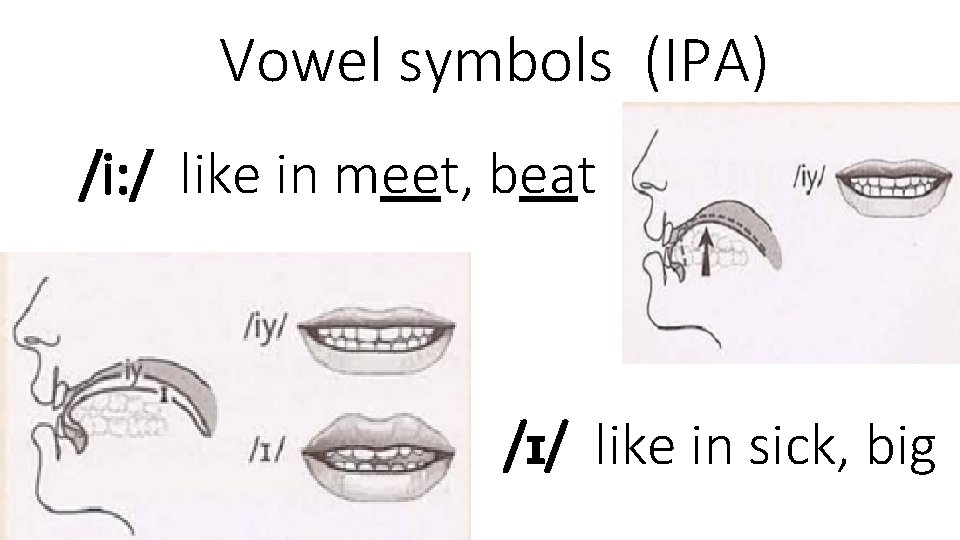
Vowel symbols (IPA) /i: / like in meet, beat /ɪ/ like in sick, big
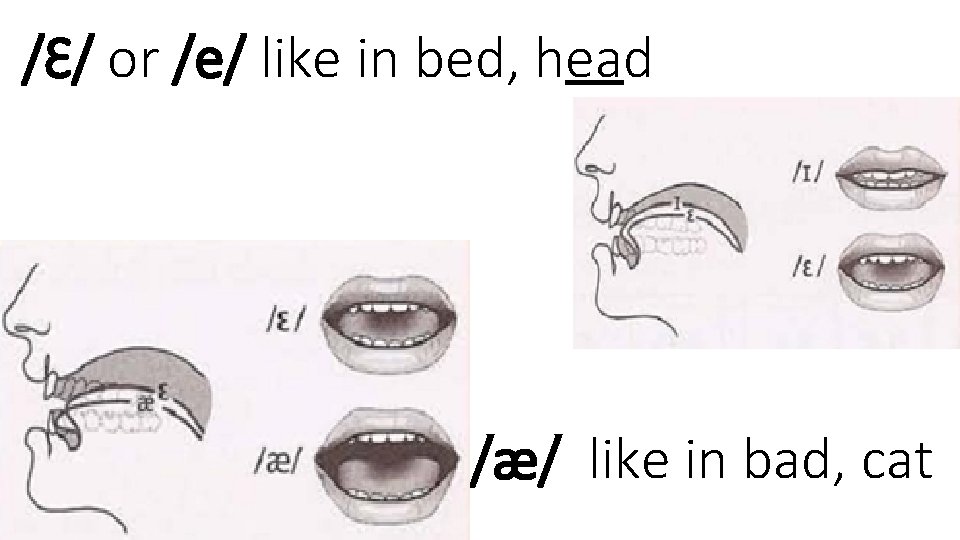
/Ɛ/ or /e/ like in bed, head /ӕ/ like in bad, cat
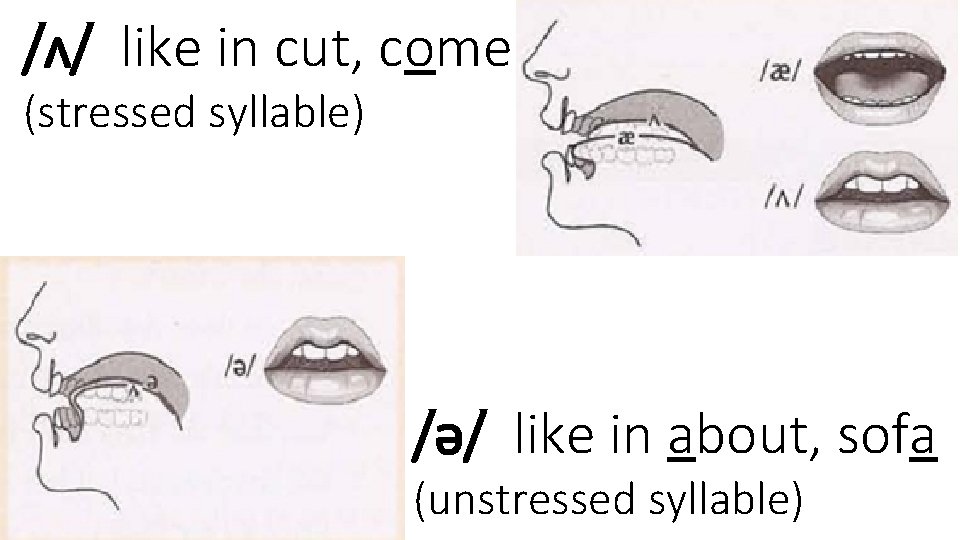
/ʌ/ like in cut, come (stressed syllable) /ə/ like in about, sofa (unstressed syllable)
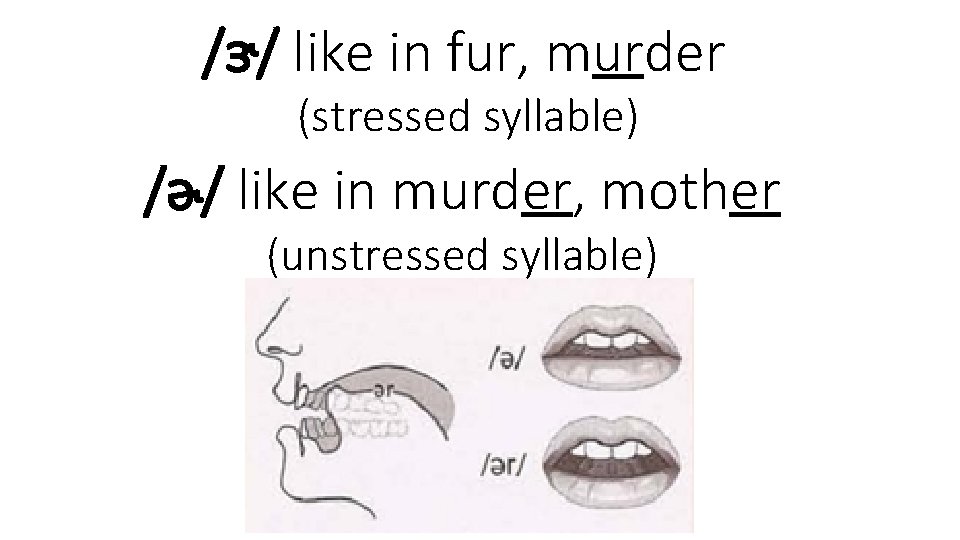
/ɝ/ like in fur, murder (stressed syllable) /ɚ/ like in murder, mother (unstressed syllable)
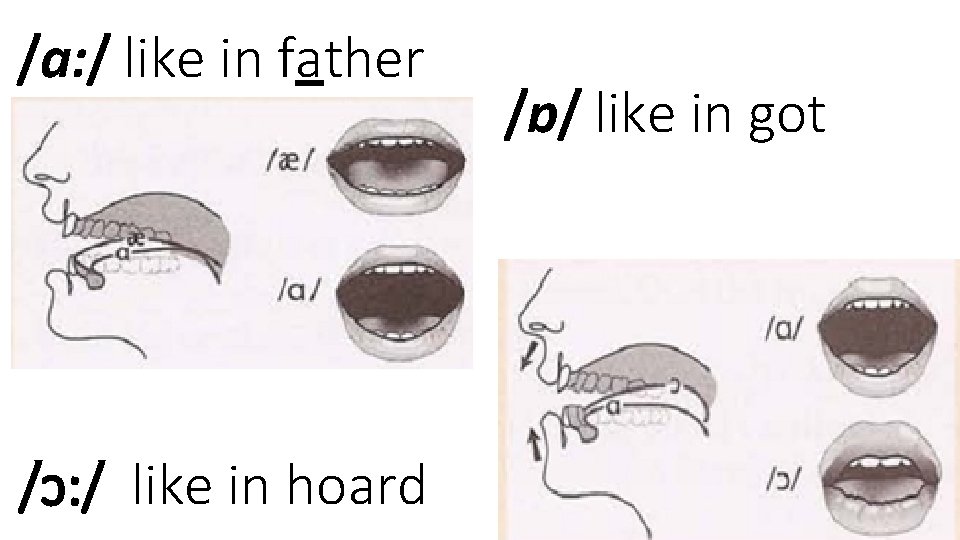
/a: / like in father /ɔ: / like in hoard /ɒ/ like in got
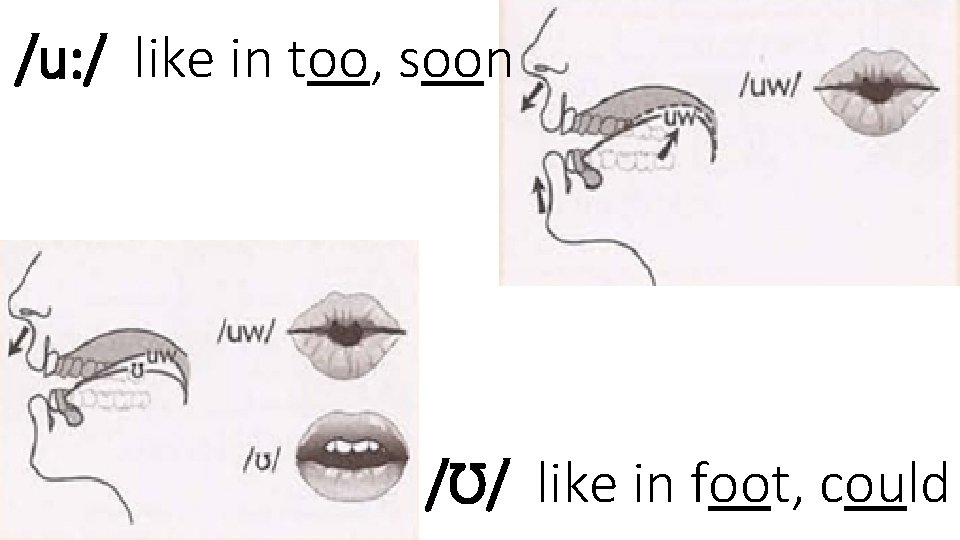
/u: / like in too, soon /Ʊ/ like in foot, could
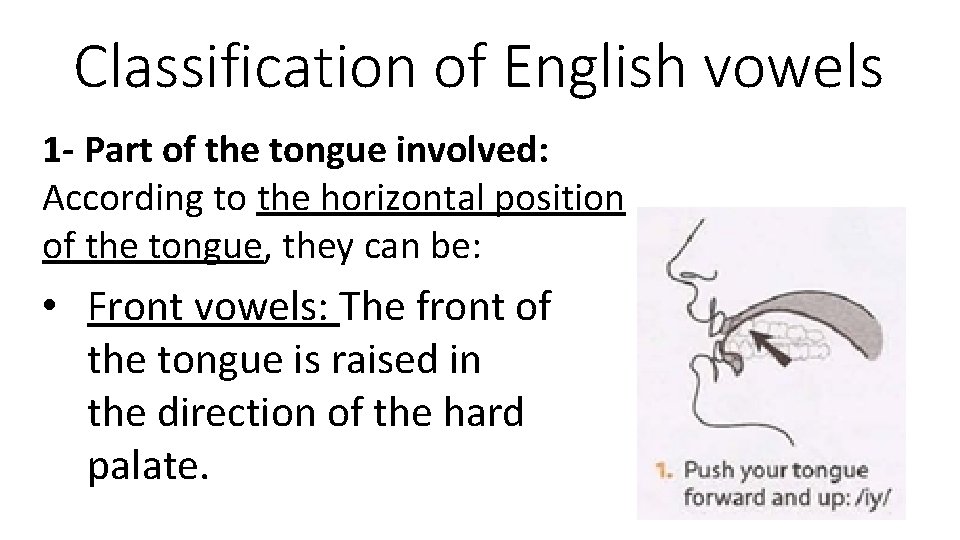
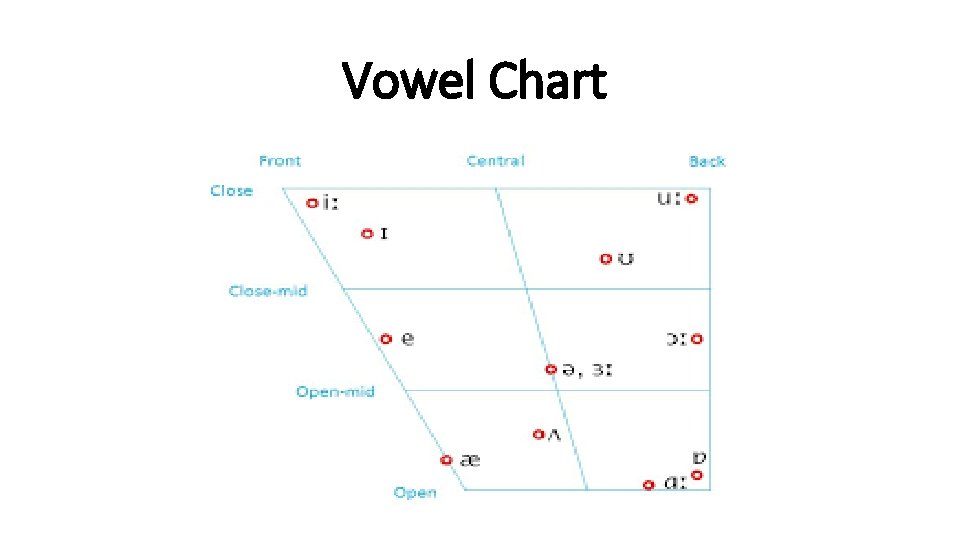
Classification of English vowels 1 - Part of the tongue involved: According to the horizontal position of the tongue, they can be: • Front vowels: The front of the tongue is raised in the direction of the hard palate.
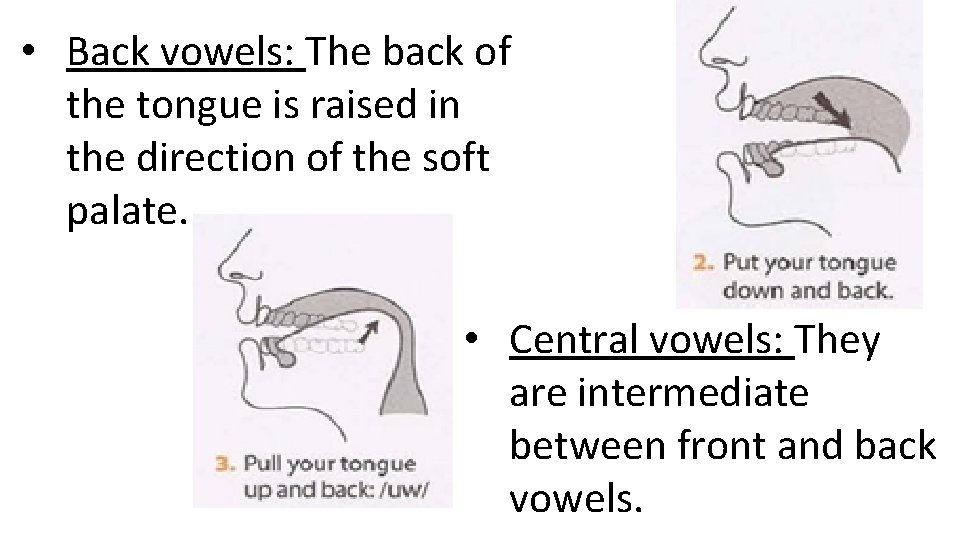
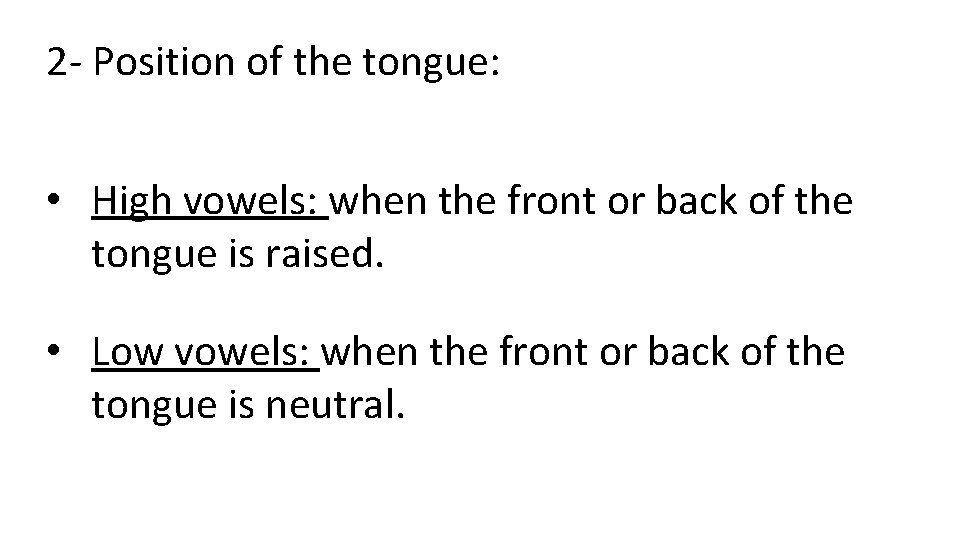
• Back vowels: The back of the tongue is raised in the direction of the soft palate. • Central vowels: They are intermediate between front and back vowels.
2 - Position of the tongue: • High vowels: when the front or back of the tongue is raised. • Low vowels: when the front or back of the tongue is neutral.
3 - According to the vertical position of the mouth, they can be: • Close vowels: when the mouth is relatively closed. • Half Close vowels: when the mouth is approximately half-way. • Open vowels: when the mouth is relatively open.
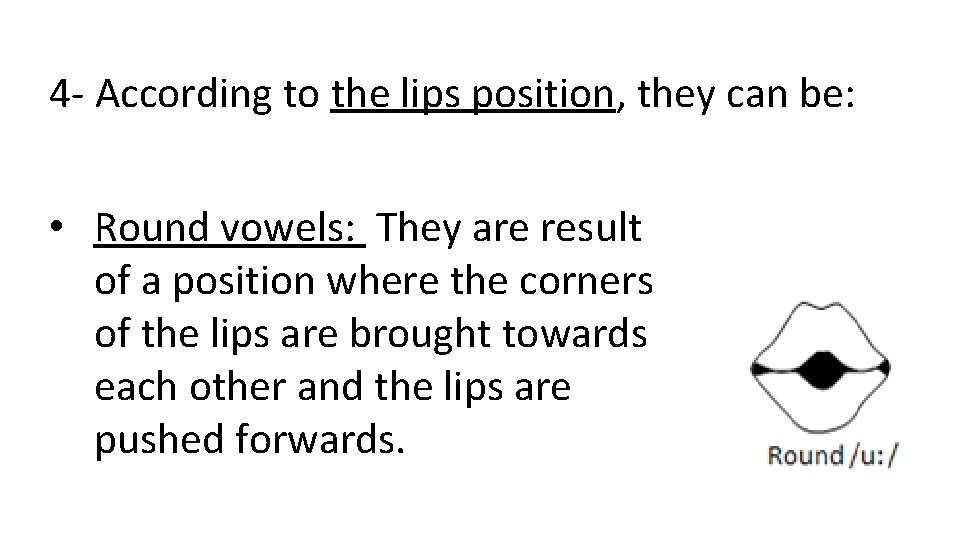
4 - According to the lips position, they can be: • Round vowels: They are result of a position where the corners of the lips are brought towards each other and the lips are pushed forwards.
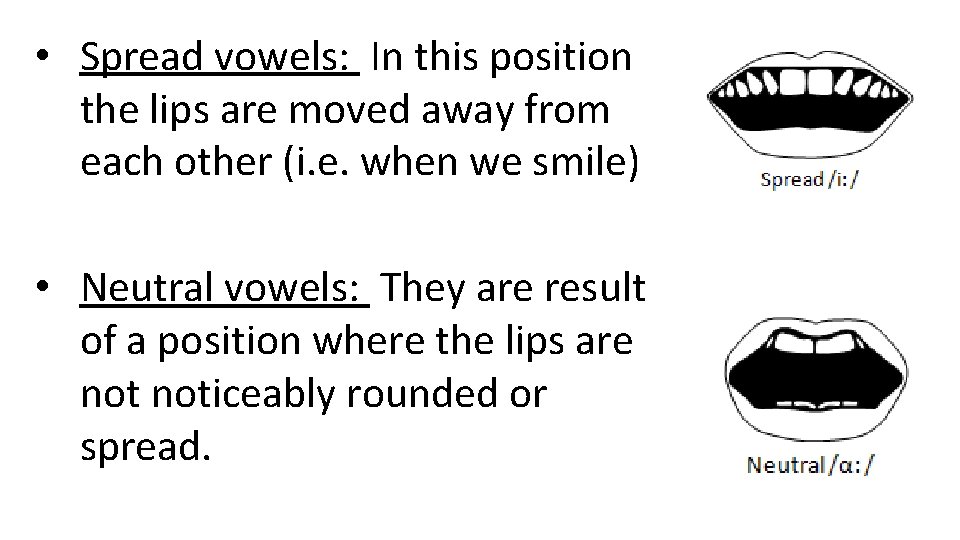
• Spread vowels: In this position the lips are moved away from each other (i. e. when we smile) • Neutral vowels: They are result of a position where the lips are noticeably rounded or spread.
5 - According to the duration of the sound, they can be: • Long vowels • Short vowels
Vowel Chart
Thank You!