
Phonemic Awareness and Phonics for ELs English Learner
- Slides: 8
Phonemic Awareness and Phonics for ELs English Learner Elementary Program Consultant Stephanie Cobin scobin@washoeschools. net Julie Lucas jlucas@washoeschools. net
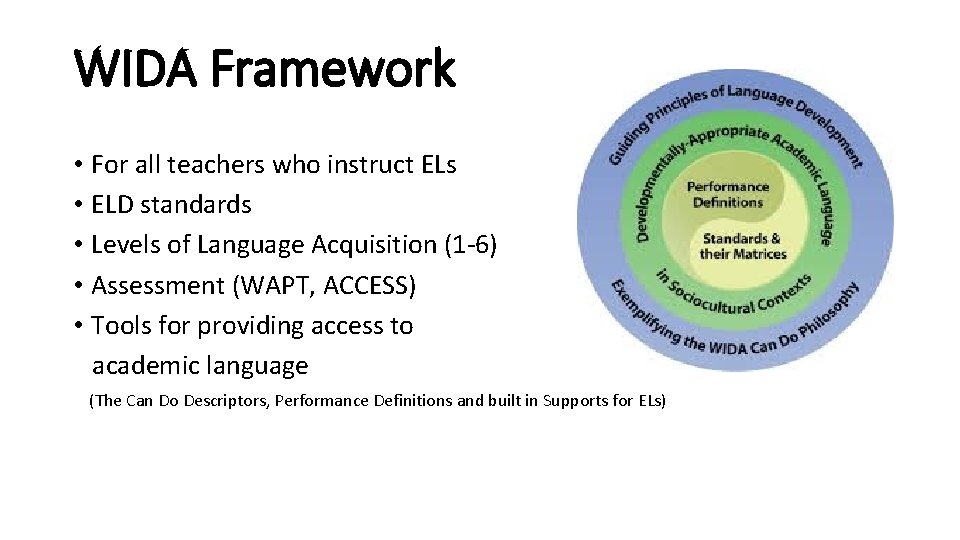
WIDA Framework • For all teachers who instruct ELs • ELD standards • Levels of Language Acquisition (1 -6) • Assessment (WAPT, ACCESS) • Tools for providing access to academic language (The Can Do Descriptors, Performance Definitions and built in Supports for ELs)
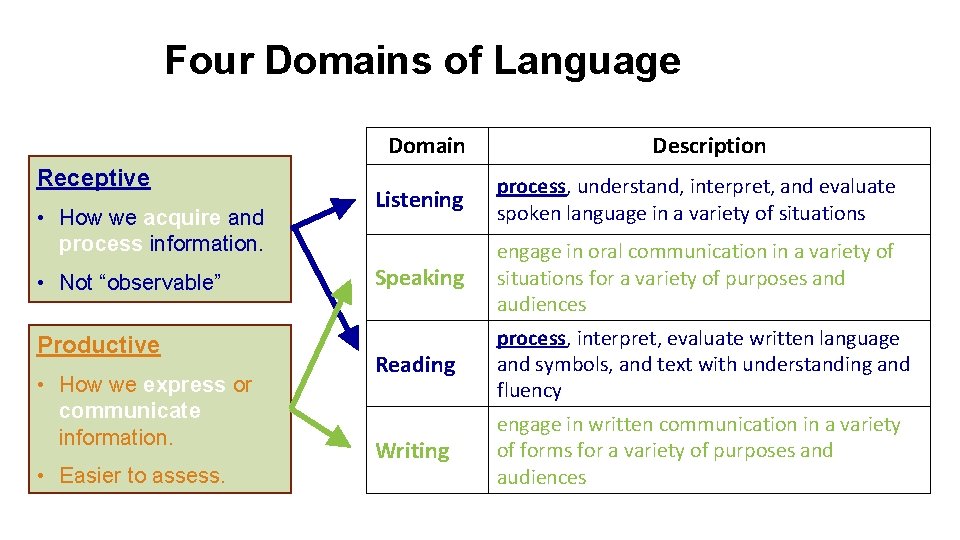
Four Domains of Language Domain Receptive • How we acquire and process information. • Not “observable” Productive • How we express or communicate information. • Easier to assess. Description Listening process, understand, interpret, and evaluate spoken language in a variety of situations Speaking engage in oral communication in a variety of situations for a variety of purposes and audiences Reading process, interpret, evaluate written language and symbols, and text with understanding and fluency Writing engage in written communication in a variety of forms for a variety of purposes and audiences
The Struggles ELs Have With Phonemic Awareness and Phonics “The phonemes of any individual language are those sounds that make a difference in meaning between words. ” (Pauline Gibbons) • ELs need to learn 44 distinctive sounds in English (22 consonants, 20 vowels and 2 semi-vowels: yellow and window) • ELs may not hear or be able to produce a new sound because it is unfamiliar. (Cannot hear or produce = cannot relate them to letters or they will just use closest. ) • Not all languages use rhyming words • Phonemes in different languages are often not the same.
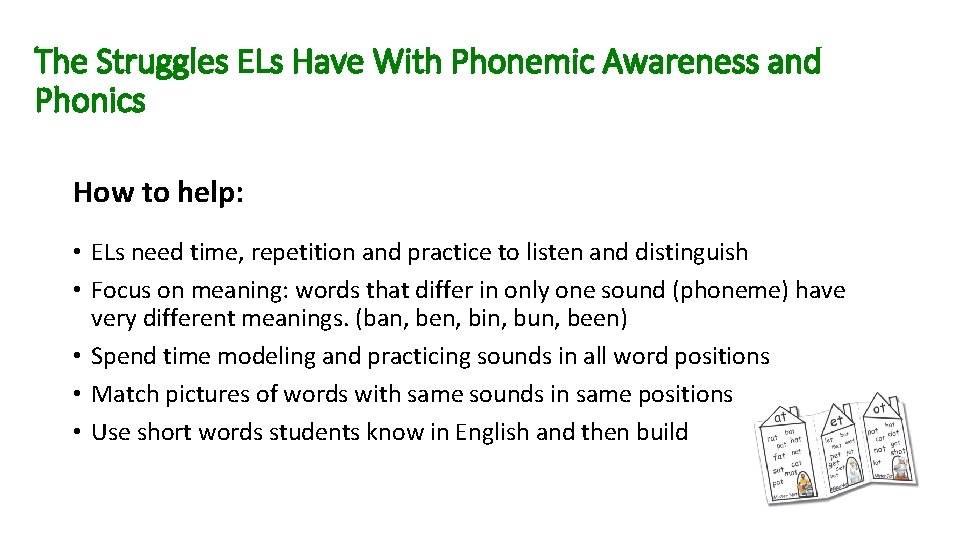
The Struggles ELs Have With Phonemic Awareness and Phonics How to help: • ELs need time, repetition and practice to listen and distinguish • Focus on meaning: words that differ in only one sound (phoneme) have very different meanings. (ban, ben, bin, bun, been) • Spend time modeling and practicing sounds in all word positions • Match pictures of words with same sounds in same positions • Use short words students know in English and then build
The Struggles ELs Have With Phonemic Awareness and Phonics The relationship between a sound and its corresponding letter. Crucial for understanding that letters and letter patterns represent sounds. • Sounds are different in different languages. • ELs that have not learned to read in L 1 may not have the understanding. • Students learn to read at different ages/grades in different countries.
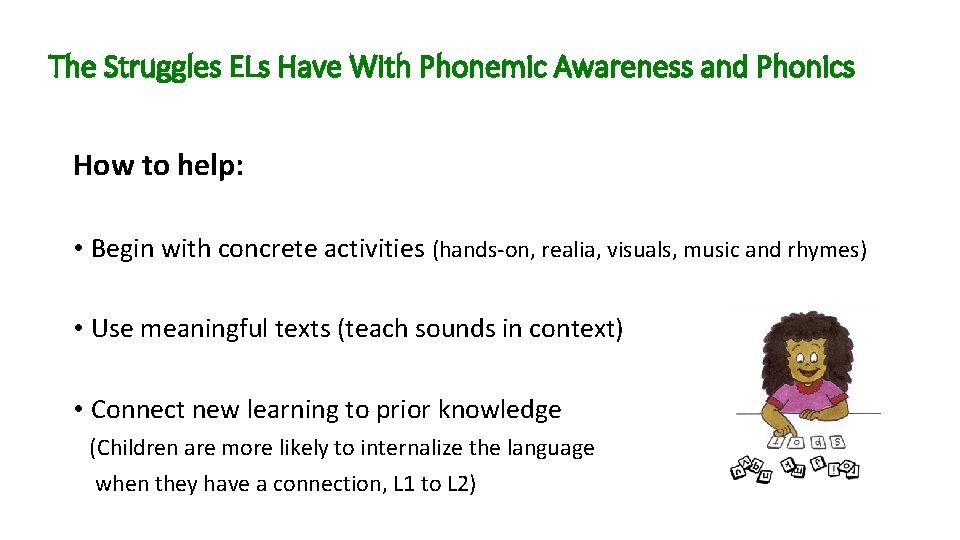
The Struggles ELs Have With Phonemic Awareness and Phonics How to help: • Begin with concrete activities (hands-on, realia, visuals, music and rhymes) • Use meaningful texts (teach sounds in context) • Connect new learning to prior knowledge (Children are more likely to internalize the language when they have a connection, L 1 to L 2)
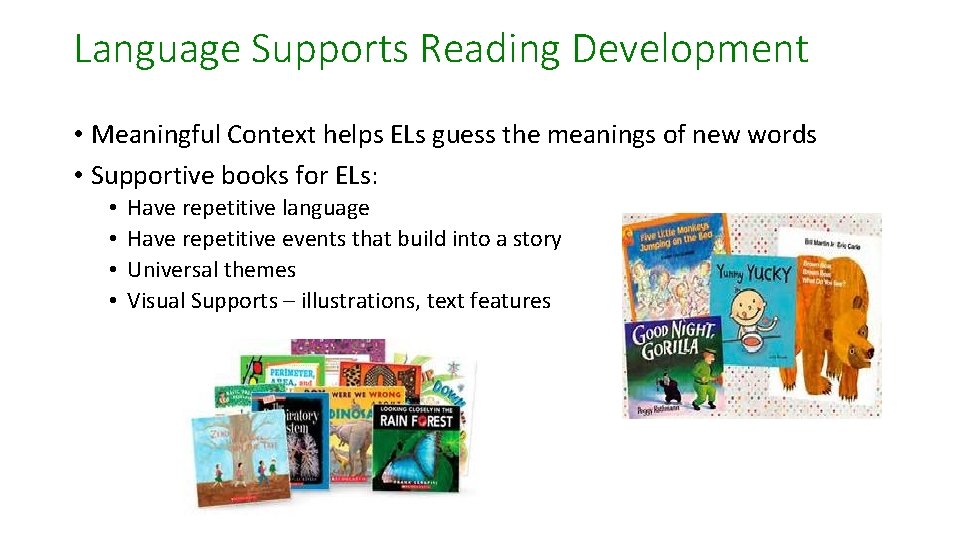
Language Supports Reading Development • Meaningful Context helps ELs guess the meanings of new words • Supportive books for ELs: • • Have repetitive language Have repetitive events that build into a story Universal themes Visual Supports – illustrations, text features