
Philosophy 213 Justice Whats the Right Thing To



- Slides: 24
Philosophy 213 Justice: What’s the Right Thing To Do? Chapter 8 ~ Who Deserves What Aristotle Day 15
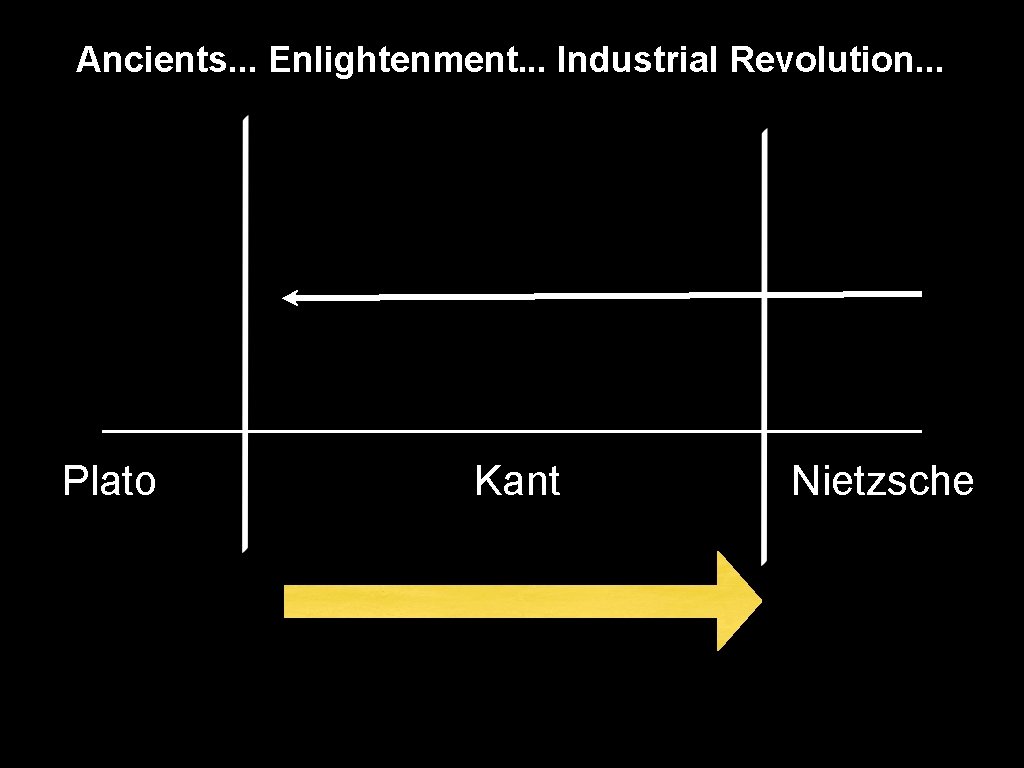
Ancients. . . Enlightenment. . . Industrial Revolution. . . Plato Kant Nietzsche
“Suppose it were the case that the catastrophe of which my hypothesis speaks had occurred before, or largely before, the founding of academic history, so that the moral and other evaluative presuppositions of academic history derived from the forms of disorder which it brought about. . . ” ~Alasdair Mac. Intyre, After Virtue
Aristotle • 384 --322 BCE • Student of Plato & Teacher of Alexander. . . • Manuscripts Maintained by Muslims • Recovered & Incorporated into the Philosophy of Thomas Aquinas • Alasdair Mac. Intyre (Notre Dame)
Aristotelian Ethics • Starting Point: A Good Aim. . . Highest Aim is Living Well. . . • 3 Types of Soul: Nutritive Soul, Perceptive Soul, Rational Soul • We Become Virtuous As We Practice the Virtues (Doing Precedes Being)
Major Works Include • Nicomachean Ethics: • The Good Becomes Practical & Voluntary. . . • Eudemian Ethics: • The Good Becomes Political. . . (Polis Overrides the Individual) • Magna Moralia: Justice is Possible. . .
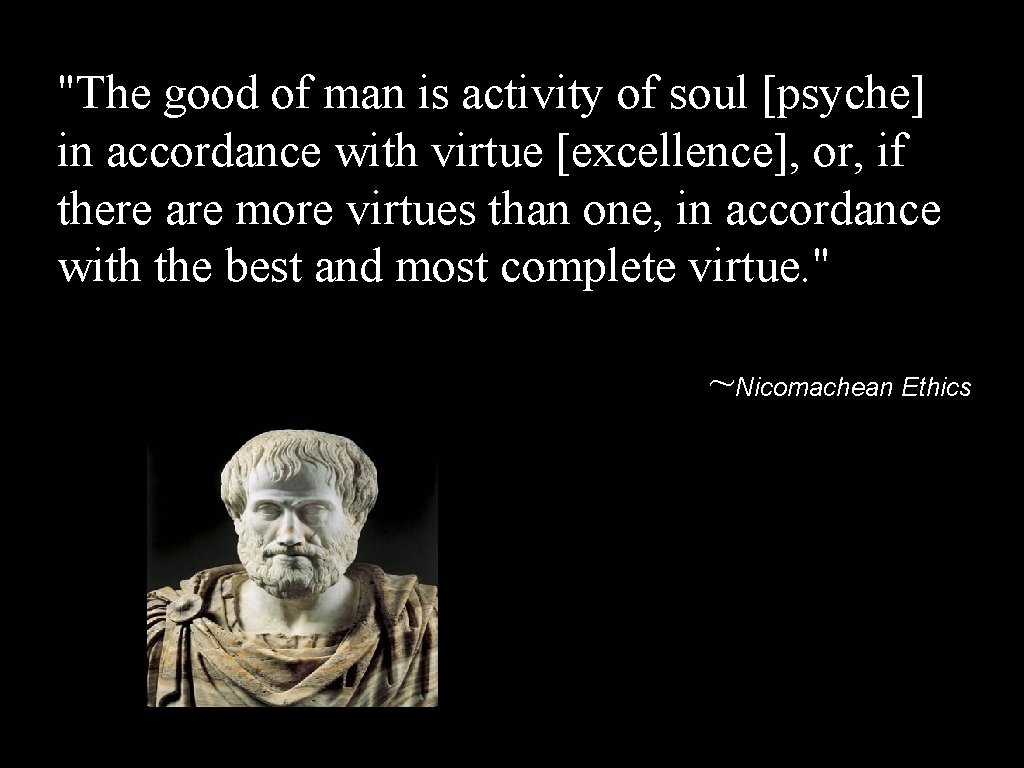
"The good of man is activity of soul [psyche] in accordance with virtue [excellence], or, if there are more virtues than one, in accordance with the best and most complete virtue. " ~Nicomachean Ethics
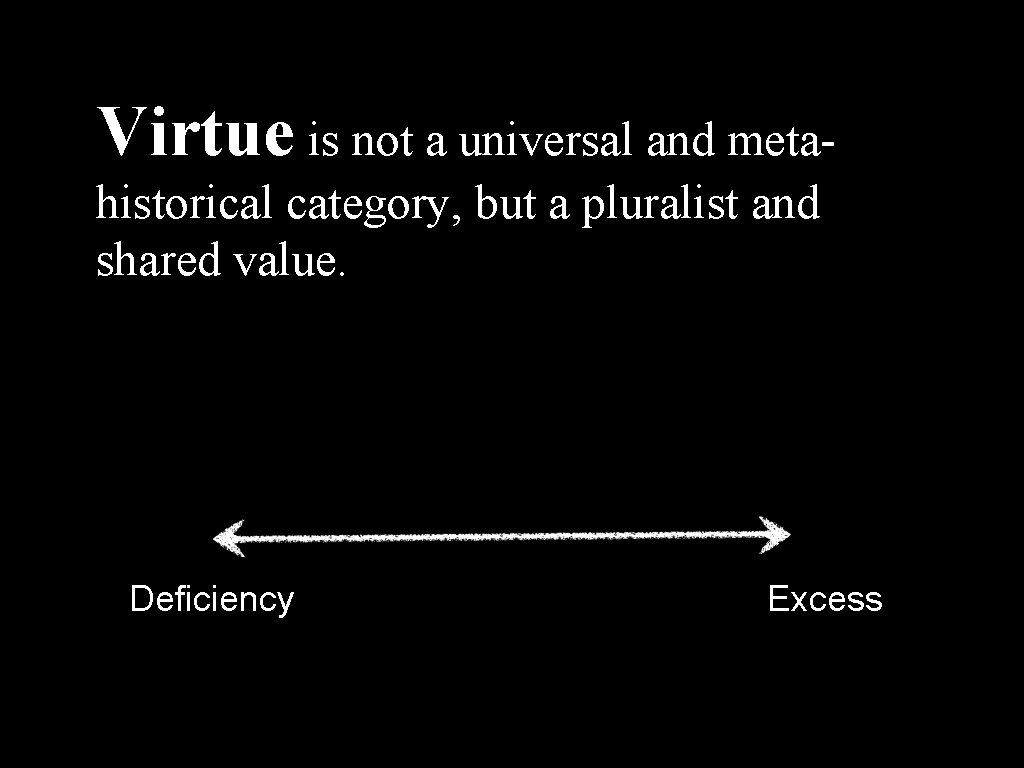
Virtue is not a universal and metahistorical category, but a pluralist and shared value. Deficiency Excess
For Aristotle, the purpose of politics is not to set up a framework of rights that is neutral among ends. It is to form good citizens and to cultivate good character. . . (193).
Virtues In Pursuit of. . . Telos End/Goal
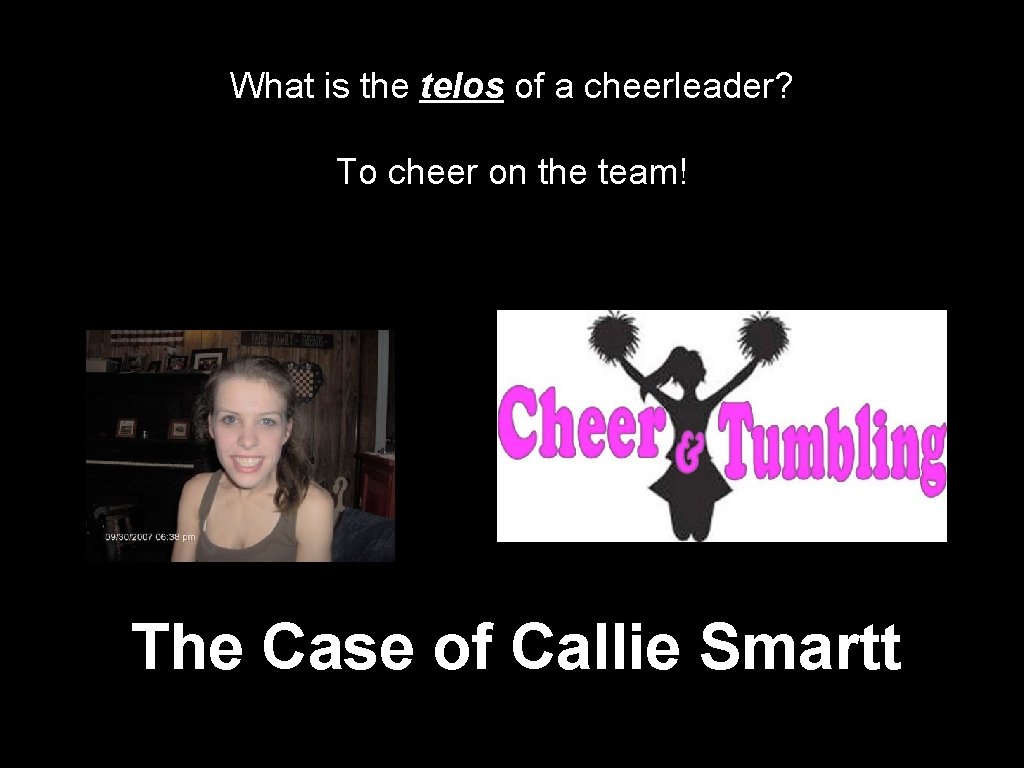
What is the telos of a cheerleader? To cheer on the team! The Case of Callie Smartt
If Callie should be a cheerleader because she displays, despite her disability, the virtues appropriate to her role, her claim does pose a threat to the honor accorded the other cheerleaders. The gymnastic skills they display no longer appear essential to excellence in cheerleading, only one way among others of rousing the crowd. . . (p. 185) Enthusiastic __________________ Cheering Crowd of Fans!
What’s the telos of bees making honey?
What is the Argument for the allocation of flutes. . . tennis courts? How Does Virtue Theory Move Beyond Utilitarianism?
Universities Exist Because. . .
Human Society Exists Because. . . The Individual Exists Because. . .
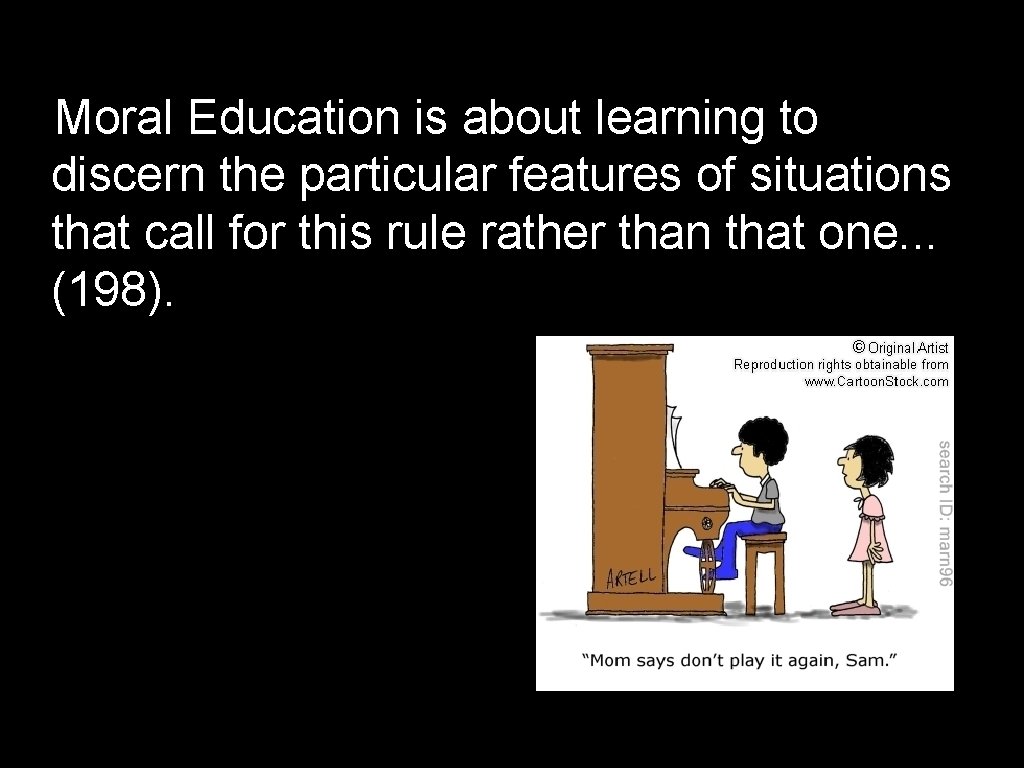
Moral Education is about learning to discern the particular features of situations that call for this rule rather than that one. . . (198).
To Live in What Kind of “Polis”
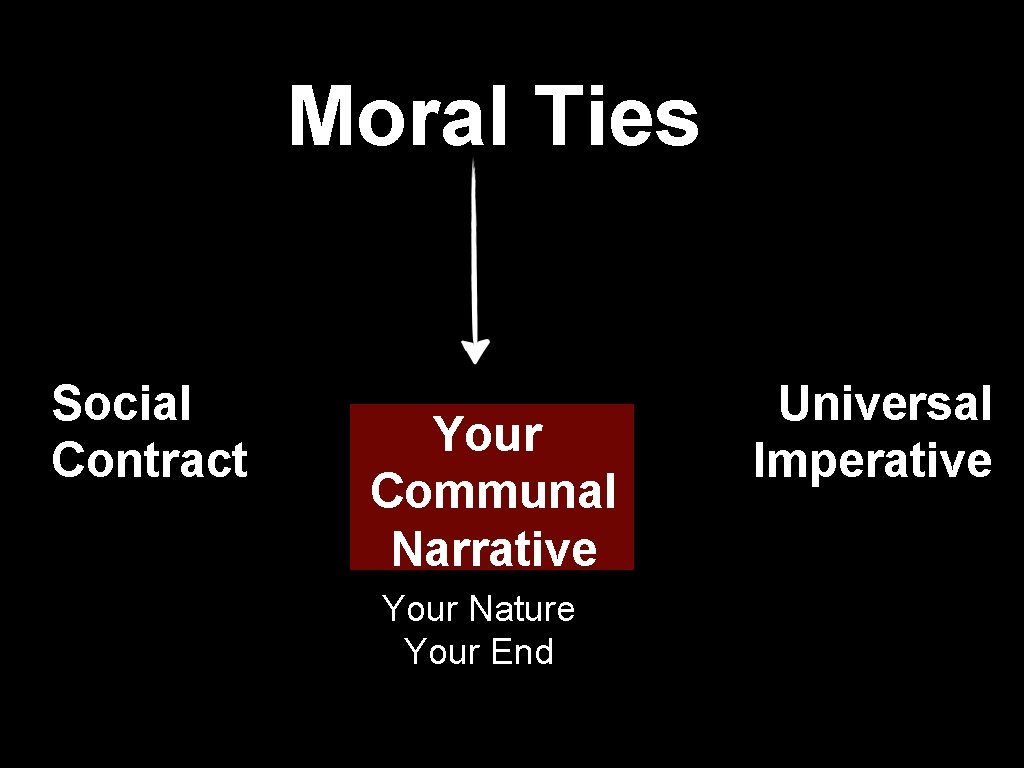
Moral Ties Social Contract Your Communal Narrative Your Nature Your End Universal Imperative
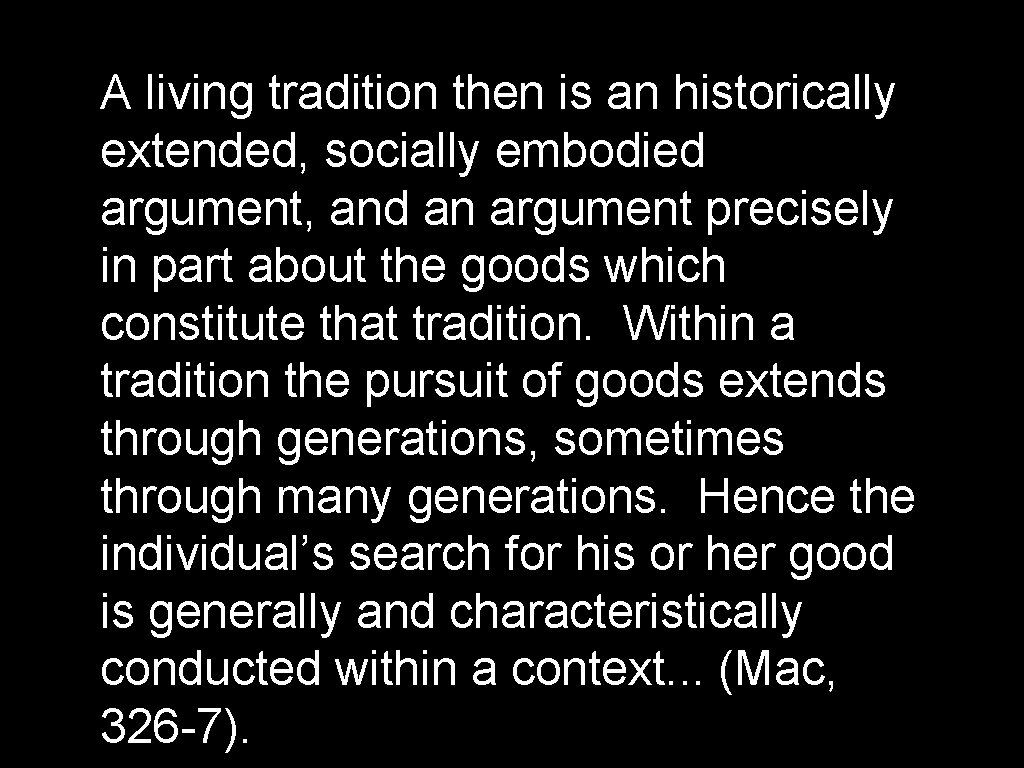
A living tradition then is an historically extended, socially embodied argument, and an argument precisely in part about the goods which constitute that tradition. Within a tradition the pursuit of goods extends through generations, sometimes through many generations. Hence the individual’s search for his or her good is generally and characteristically conducted within a context. . . (Mac, 326 -7).
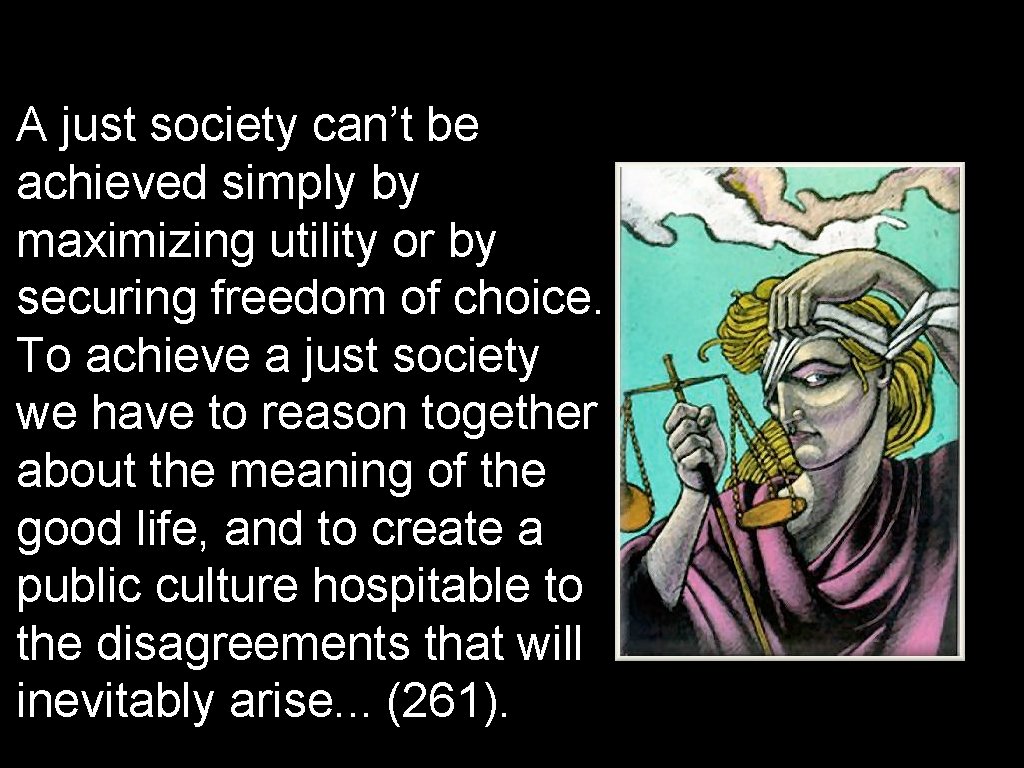
A just society can’t be achieved simply by maximizing utility or by securing freedom of choice. To achieve a just society we have to reason together about the meaning of the good life, and to create a public culture hospitable to the disagreements that will inevitably arise. . . (261).
A more robust public engagement with our moral disagreements could provide a stronger, not a weaker, basis for mutual respect. Rather than avoid the moral and religious convictions that our fellow citizens bring to public life, we should attend to them more directly--sometimes by challenging and contesting them, sometimes by listening and learning from them. . . (268).
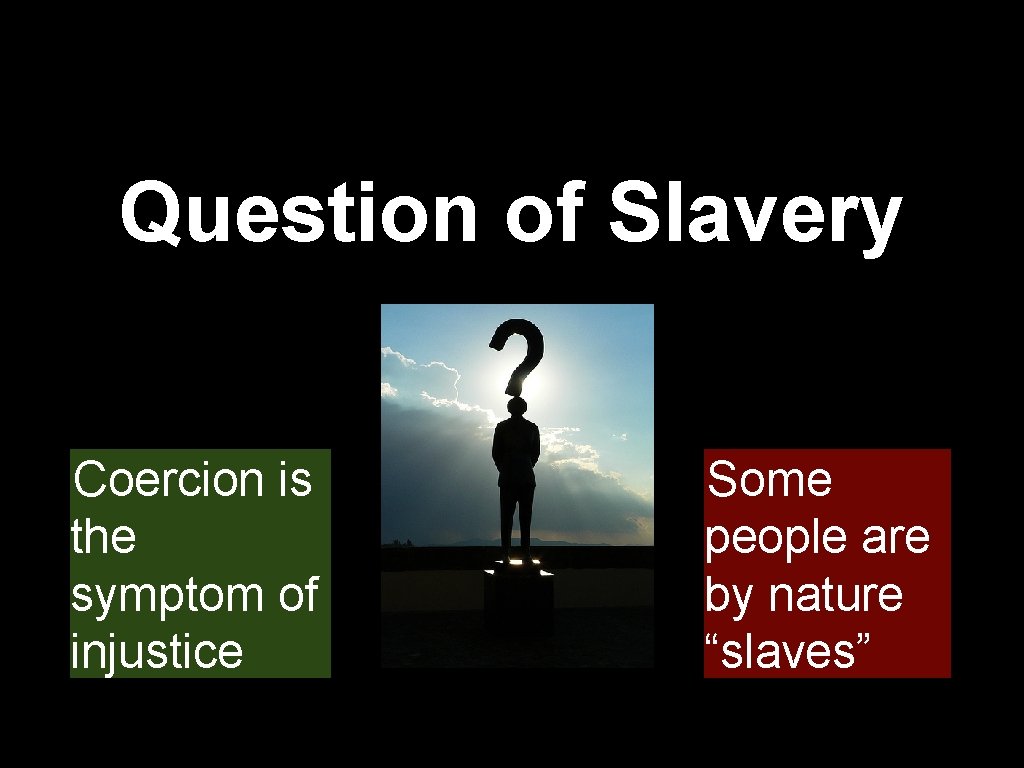
Question of Slavery Coercion is the symptom of injustice Some people are by nature “slaves”
For Next Class • Read Pages 295— 299 in A Reader • Quote #8 is Due.