
Philosophers and Prussians The Enlightenment and the European
- Slides: 17
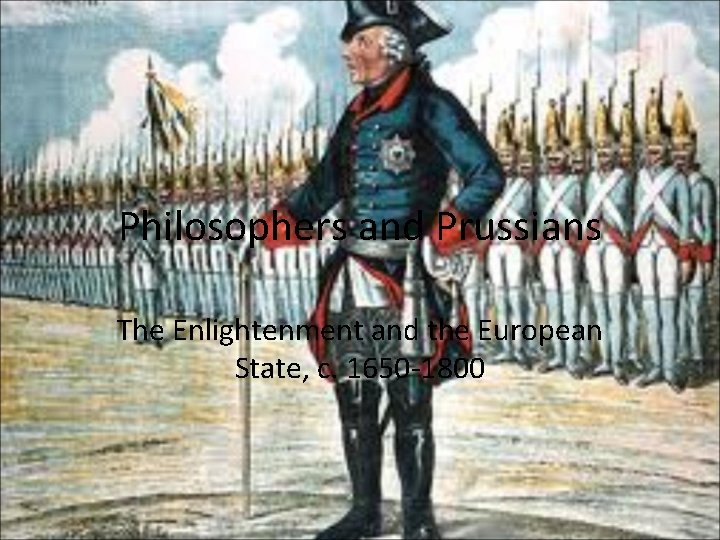
Philosophers and Prussians The Enlightenment and the European State, c. 1650 -1800
Outline and Key Terms I. Searching for a New Order II. Enlightenment Rationality and European Statecraft III. The Example of Prussia
The Thirty Years’ War • A deadly mix: “power politics” + religious hostilities = disaster for Germany! • Beginnings: the Bohemian dispute – Catholic Ferdinand II (r. 161937) elected as king of Bohemia, 1617 – Protestant counteroffensive – The Battle of White Mountain (1620) • Friedrich V and Protestant alliance defeated, 1620 -1625 • The Danish phase (1626 -1629) – King Christian IV vs. Imperial commander Count Albrecht von Wallenstein • The Swedish Phase (16301635) – King Gustavus Adolphus (15941632) invades Germany – First major Protestant victories: Breitenfeld, 1631; Lützen, 1632 • French phase and stalemate (1635 -1643) – France enters the war (1635), on the Protestant side! – Fighting in the Spanish Netherlands, in the Empire, in the Atlantic, at home
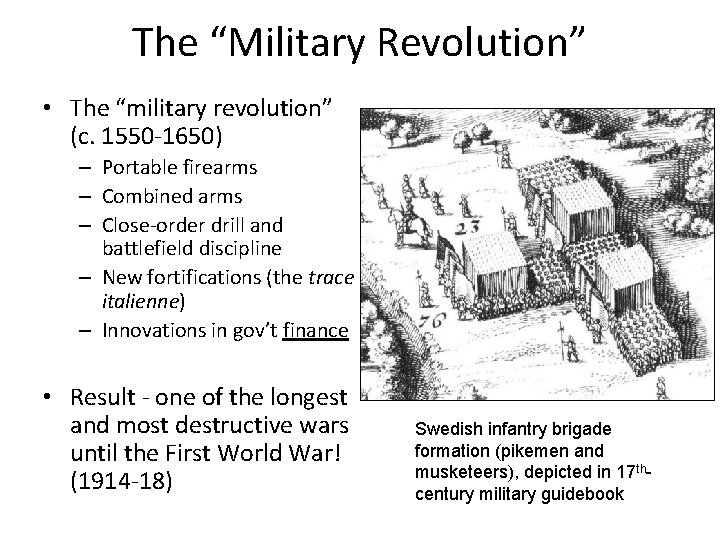
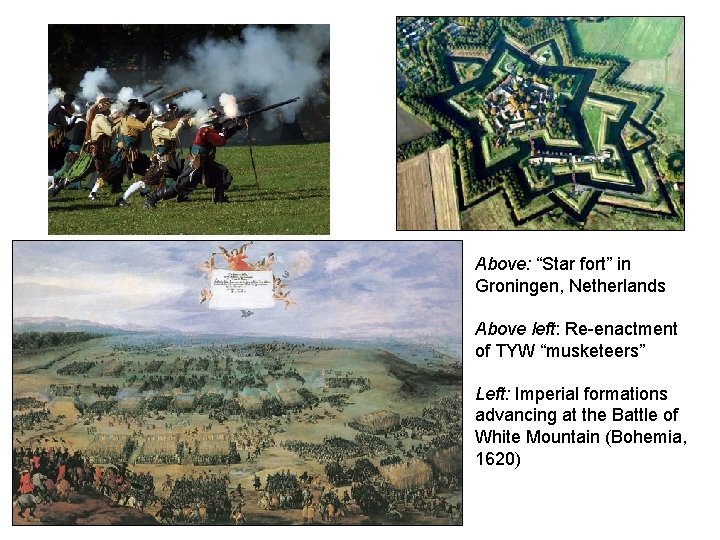
The “Military Revolution” • The “military revolution” (c. 1550 -1650) – Portable firearms – Combined arms – Close-order drill and battlefield discipline – New fortifications (the trace italienne) – Innovations in gov’t finance • Result - one of the longest and most destructive wars until the First World War! (1914 -18) Swedish infantry brigade formation (pikemen and musketeers), depicted in 17 thcentury military guidebook
Above: “Star fort” in Groningen, Netherlands Above left: Re-enactment of TYW “musketeers” Left: Imperial formations advancing at the Battle of White Mountain (Bohemia, 1620)
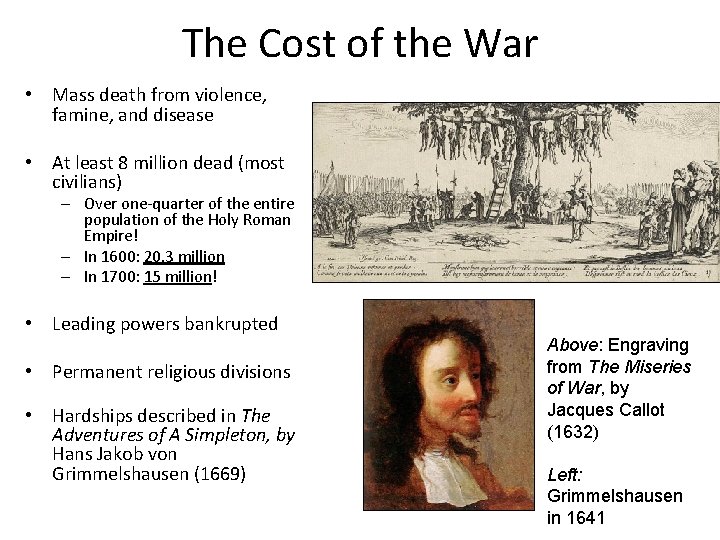
The Cost of the War • Mass death from violence, famine, and disease • At least 8 million dead (most civilians) – Over one-quarter of the entire population of the Holy Roman Empire! – In 1600: 20. 3 million – In 1700: 15 million! • Leading powers bankrupted • Permanent religious divisions • Hardships described in The Adventures of A Simpleton, by Hans Jakob von Grimmelshausen (1669) Above: Engraving from The Miseries of War, by Jacques Callot (1632) Left: Grimmelshausen in 1641
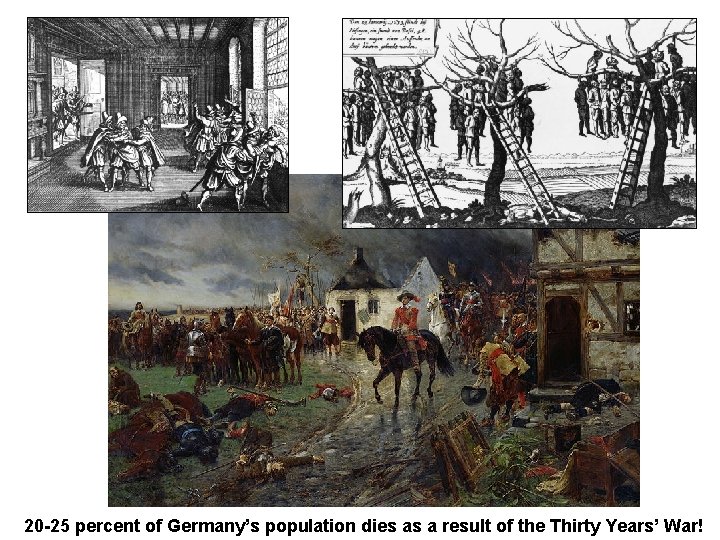
20 -25 percent of Germany’s population dies as a result of the Thirty Years’ War!
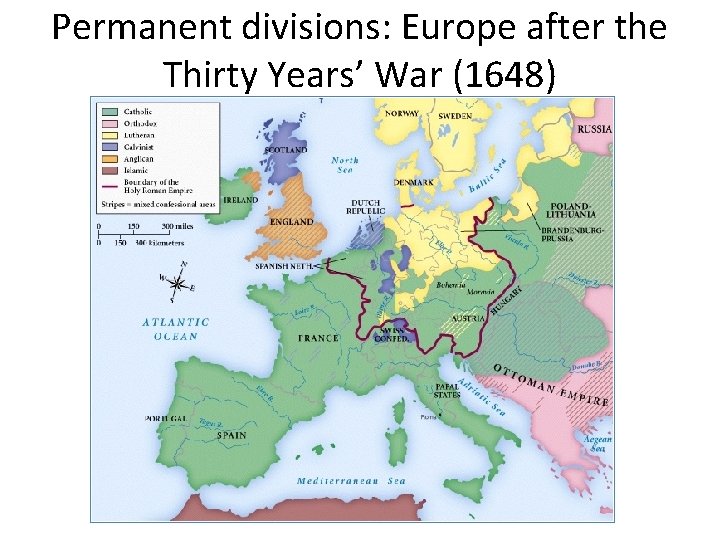
Permanent divisions: Europe after the Thirty Years’ War (1648)
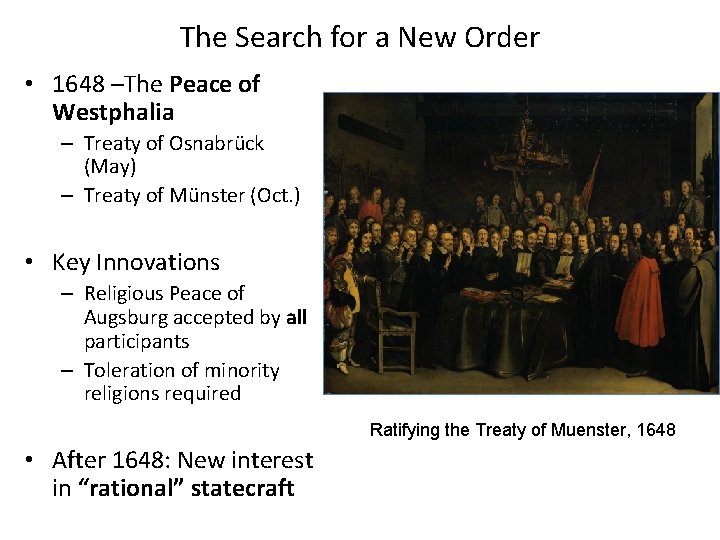
The Search for a New Order • 1648 –The Peace of Westphalia – Treaty of Osnabrück (May) – Treaty of Münster (Oct. ) • Key Innovations – Religious Peace of Augsburg accepted by all participants – Toleration of minority religions required Ratifying the Treaty of Muenster, 1648 • After 1648: New interest in “rational” statecraft
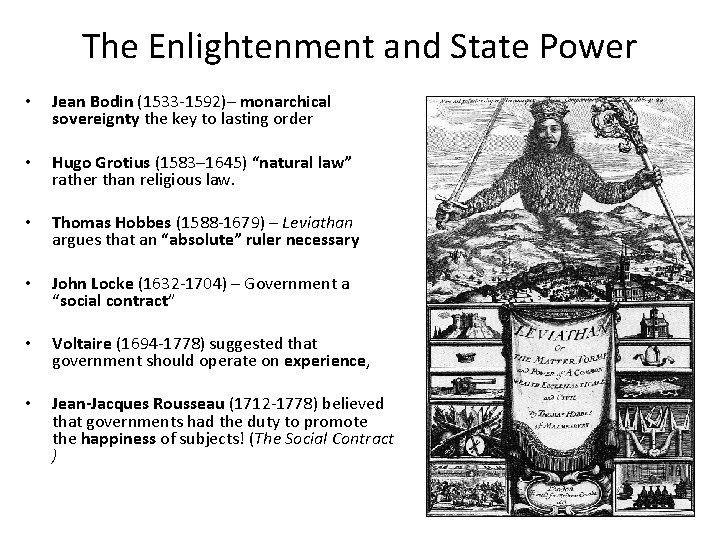
The Enlightenment and State Power • Jean Bodin (1533 -1592)– monarchical sovereignty the key to lasting order • Hugo Grotius (1583– 1645) “natural law” rather than religious law. • Thomas Hobbes (1588 -1679) – Leviathan argues that an “absolute” ruler necessary • John Locke (1632 -1704) – Government a “social contract” • Voltaire (1694 -1778) suggested that government should operate on experience, • Jean-Jacques Rousseau (1712 -1778) believed that governments had the duty to promote the happiness of subjects! (The Social Contract )
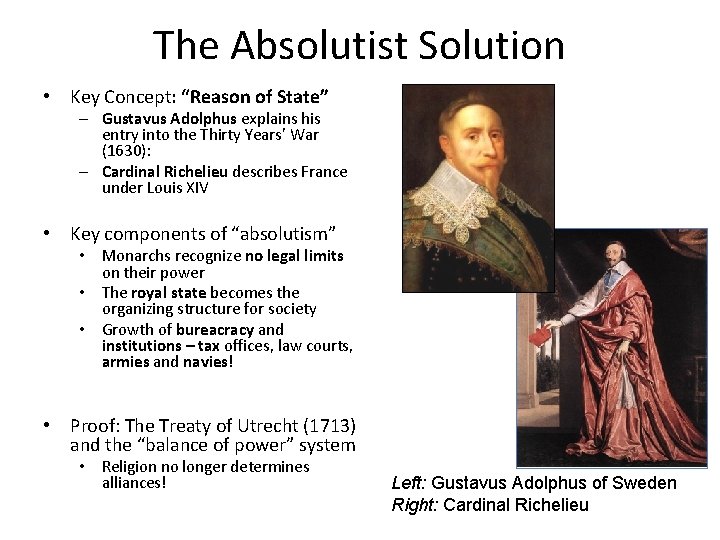
The Absolutist Solution • Key Concept: “Reason of State” – Gustavus Adolphus explains his entry into the Thirty Years’ War (1630): – Cardinal Richelieu describes France under Louis XIV • Key components of “absolutism” • Monarchs recognize no legal limits on their power • The royal state becomes the organizing structure for society • Growth of bureacracy and institutions – tax offices, law courts, armies and navies! • Proof: The Treaty of Utrecht (1713) and the “balance of power” system • Religion no longer determines alliances! Left: Gustavus Adolphus of Sweden Right: Cardinal Richelieu
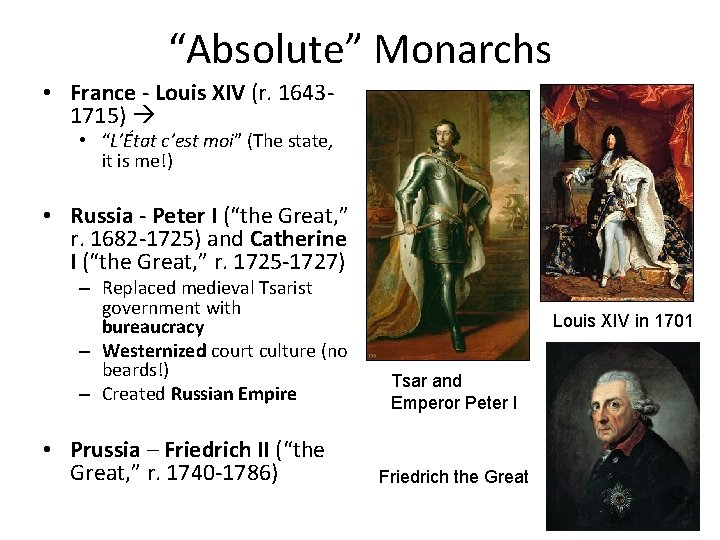
“Absolute” Monarchs • France - Louis XIV (r. 16431715) • “L’État c’est moi” (The state, it is me!) • Russia - Peter I (“the Great, ” r. 1682 -1725) and Catherine I (“the Great, ” r. 1725 -1727) – Replaced medieval Tsarist government with bureaucracy – Westernized court culture (no beards!) – Created Russian Empire • Prussia – Friedrich II (“the Great, ” r. 1740 -1786) Louis XIV in 1701 Tsar and Emperor Peter I Friedrich the Great
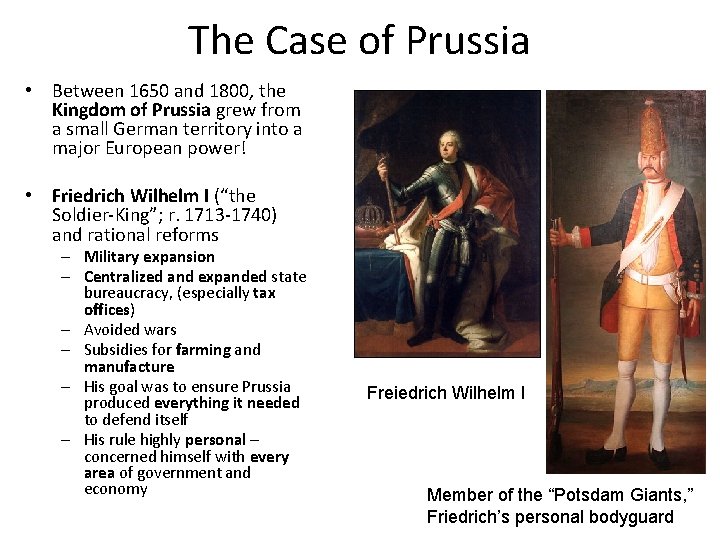
The Case of Prussia • Between 1650 and 1800, the Kingdom of Prussia grew from a small German territory into a major European power! • Friedrich Wilhelm I (“the Soldier-King”; r. 1713 -1740) and rational reforms – Military expansion – Centralized and expanded state bureaucracy, (especially tax offices) – Avoided wars – Subsidies for farming and manufacture – His goal was to ensure Prussia produced everything it needed to defend itself – His rule highly personal – concerned himself with every area of government and economy Freiedrich Wilhelm I Member of the “Potsdam Giants, ” Friedrich’s personal bodyguard
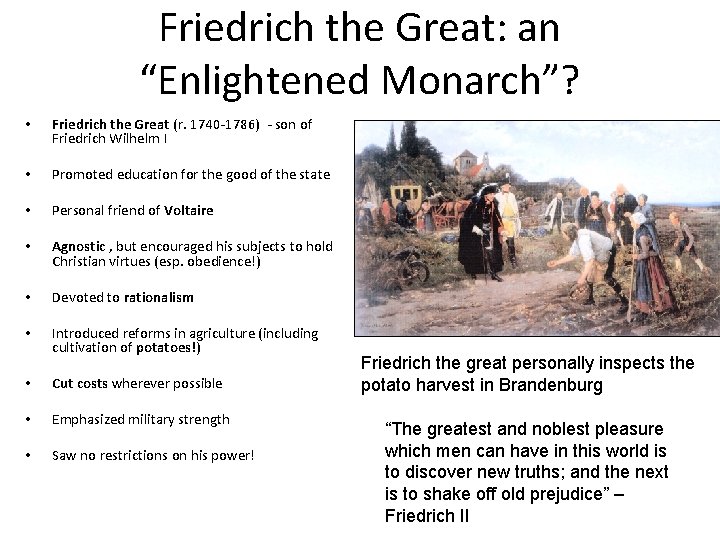
Friedrich the Great: an “Enlightened Monarch”? • Friedrich the Great (r. 1740 -1786) - son of Friedrich Wilhelm I • Promoted education for the good of the state • Personal friend of Voltaire • Agnostic , but encouraged his subjects to hold Christian virtues (esp. obedience!) • Devoted to rationalism • Introduced reforms in agriculture (including cultivation of potatoes!) • Cut costs wherever possible • Emphasized military strength • Saw no restrictions on his power! Friedrich the great personally inspects the potato harvest in Brandenburg “The greatest and noblest pleasure which men can have in this world is to discover new truths; and the next is to shake off old prejudice” – Friedrich II
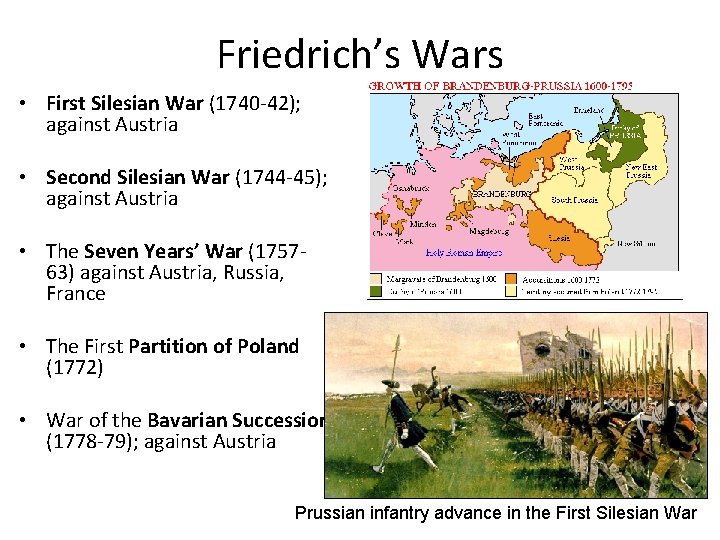
Friedrich’s Wars • First Silesian War (1740 -42); against Austria • Second Silesian War (1744 -45); against Austria • The Seven Years’ War (175763) against Austria, Russia, France • The First Partition of Poland (1772) • War of the Bavarian Succession (1778 -79); against Austria Prussian infantry advance in the First Silesian War
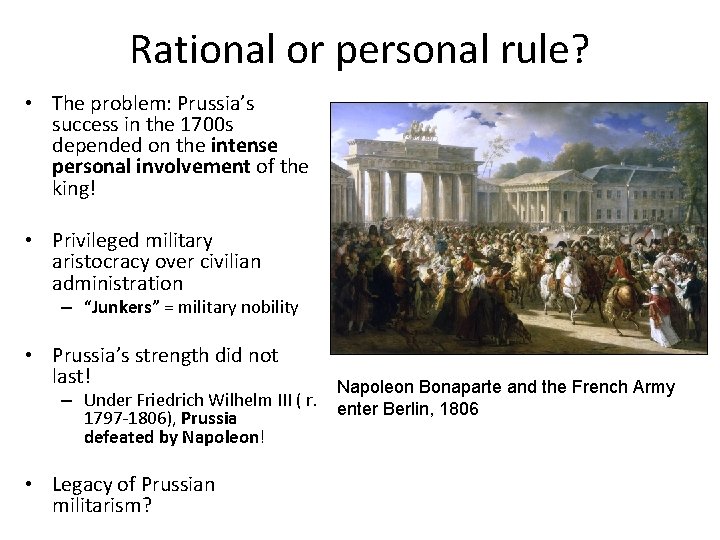
Rational or personal rule? • The problem: Prussia’s success in the 1700 s depended on the intense personal involvement of the king! • Privileged military aristocracy over civilian administration – “Junkers” = military nobility • Prussia’s strength did not last! – Under Friedrich Wilhelm III ( r. 1797 -1806), Prussia defeated by Napoleon! • Legacy of Prussian militarism? Napoleon Bonaparte and the French Army enter Berlin, 1806
How modern? • The Enlightenment and society – How “rational” does society and political life become? • Is the Absolutist state an “Enlightened” form of government?