
Philippine Association of Water Districts 36 th National

- Slides: 22
Philippine Association of Water Districts 36 th National Convention Waterfront Hotel, Cebu City 5 February 2015 Introduction to Sanitation Safety Plan Bonifacio B. Magtibay Technical Officer, WHO-Philippines
Outline � Background � Concept � Expected benefits � Testing the concept � Progress and future activities � Water safety and sanitation safety plan linkages � Conclusion
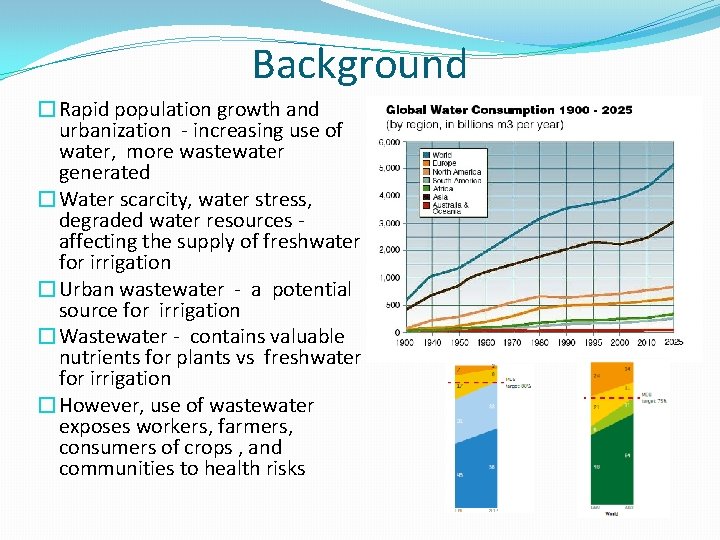
Background �Rapid population growth and urbanization - increasing use of water, more wastewater generated �Water scarcity, water stress, degraded water resources affecting the supply of freshwater for irrigation �Urban wastewater - a potential source for irrigation �Wastewater - contains valuable nutrients for plants vs freshwater for irrigation �However, use of wastewater exposes workers, farmers, consumers of crops , and communities to health risks
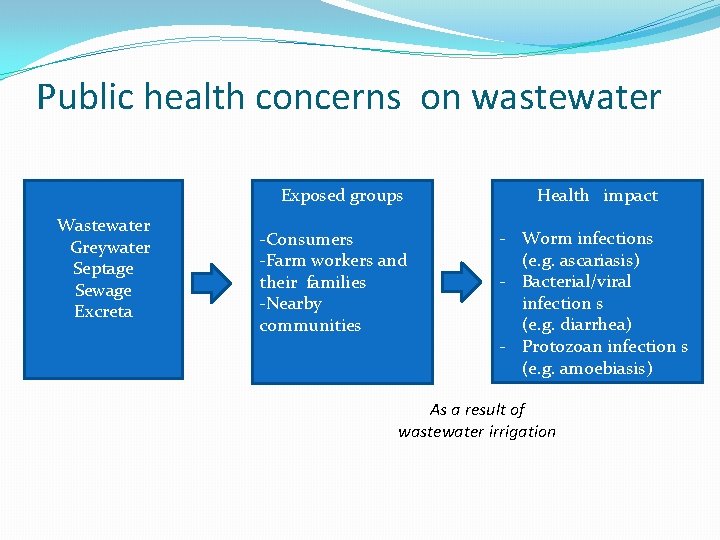
Public health concerns on wastewater Exposed groups Wastewater Greywater Septage Sewage Excreta -Consumers -Farm workers and their families -Nearby communities Health impact - Worm infections (e. g. ascariasis) - Bacterial/viral infection s (e. g. diarrhea) - Protozoan infection s (e. g. amoebiasis) As a result of wastewater irrigation
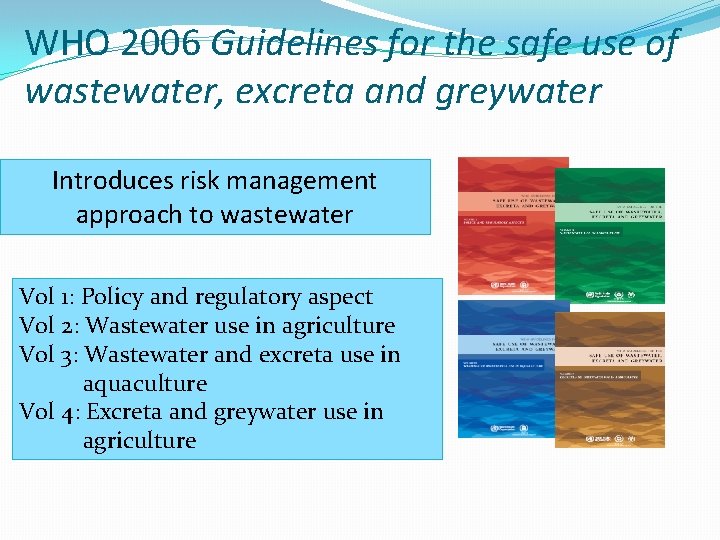
WHO 2006 Guidelines for the safe use of wastewater, excreta and greywater Introduces risk management approach to wastewater Vol 1: Policy and regulatory aspect Vol 2: Wastewater use in agriculture Vol 3: Wastewater and excreta use in aquaculture Vol 4: Excreta and greywater use in agriculture
Concept of SSP Sanitation safety plan – risk-based management tool for sanitation systems with an emphasis on safe use of human wastes �Systematically identify and manage health risks along the sanitation chain �Guide investment to where it will have the greatest health impact �Provide assurance to authorities and the public on the safety of sanitation-related products and services
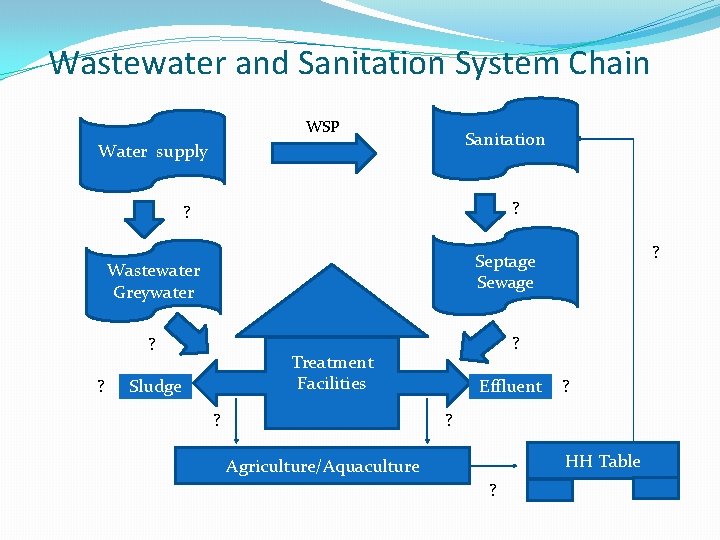
Wastewater and Sanitation System Chain WSP Sanitation Water supply ? ? Wastewater Greywater ? ? ? Septage Sewage ? Treatment Facilities Sludge ? Effluent ? ? HH Table Agriculture/Aquaculture ?
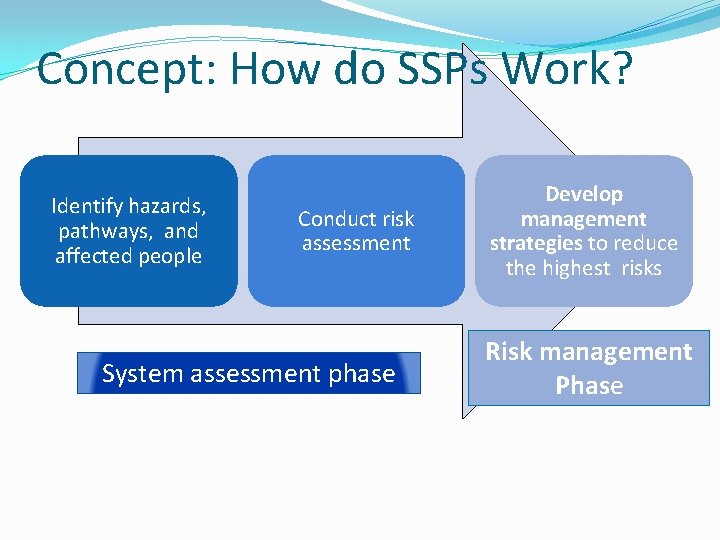
Concept: How do SSPs Work? Identify hazards, pathways, and affected people Conduct risk assessment System assessment phase Develop management strategies to reduce the highest risks Risk management Phase
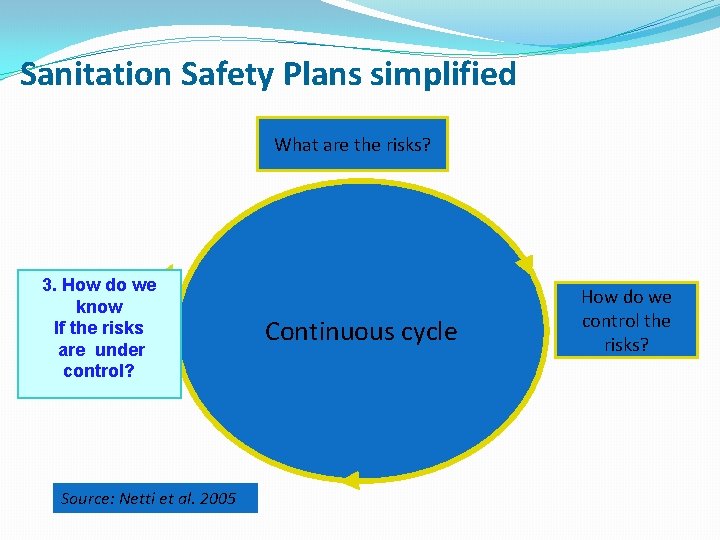
Sanitation Safety Plans simplified What are the risks? 3. How do we know If the risks are under control? Source: Netti et al. 2005 Continuous cycle How do we control the risks?
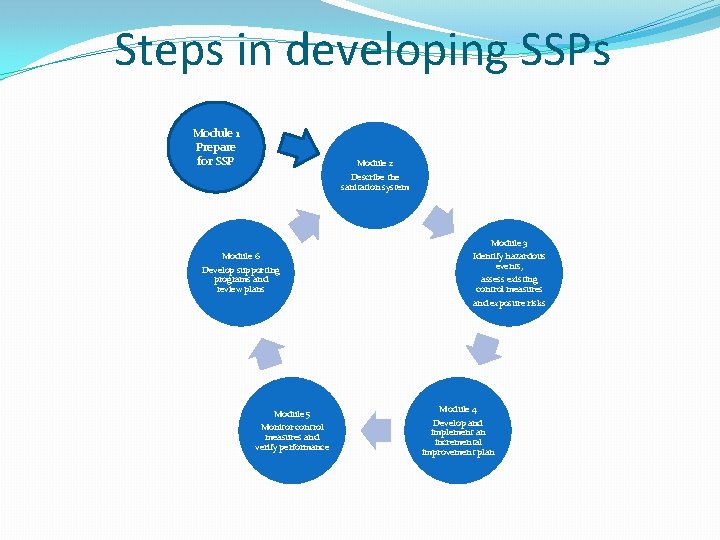
Steps in developing SSPs Module 1 Prepare for SSP Module 2 Describe the sanitation system Module 3 Module 6 Develop supporting programs and review plans Module 5 Monitor control measures and verify performance Identify hazardous events, assess existing control measures and exposure risks Module 4 Develop and implement an incremental improvement plan
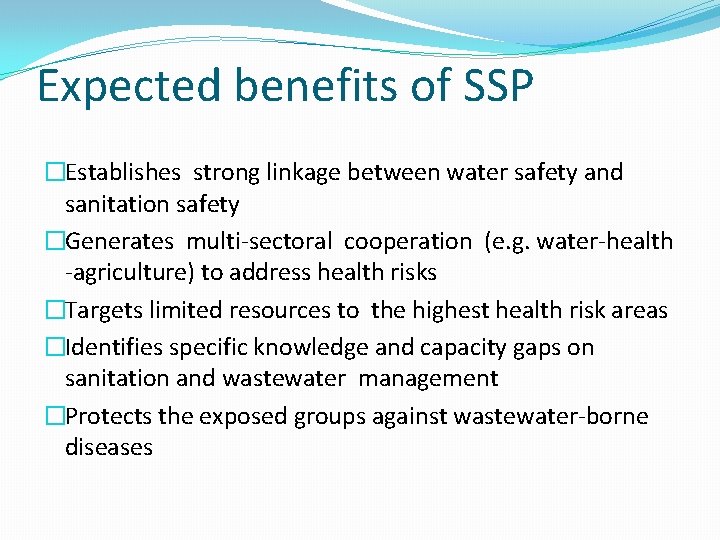
Expected benefits of SSP �Establishes strong linkage between water safety and sanitation safety �Generates multi-sectoral cooperation (e. g. water-health -agriculture) to address health risks �Targets limited resources to the highest health risk areas �Identifies specific knowledge and capacity gaps on sanitation and wastewater management �Protects the exposed groups against wastewater-borne diseases
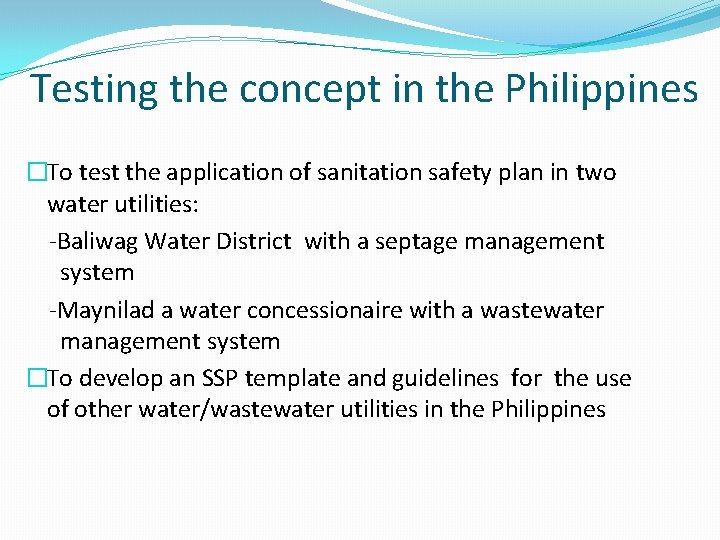
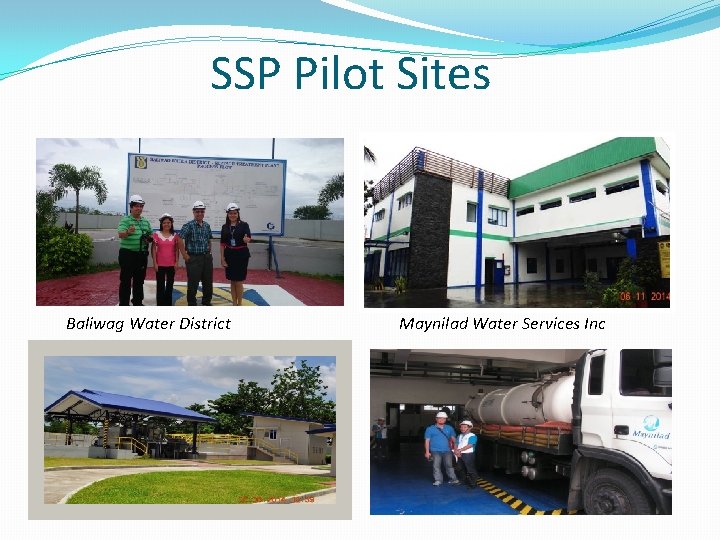
Testing the concept in the Philippines �To test the application of sanitation safety plan in two water utilities: -Baliwag Water District with a septage management system -Maynilad a water concessionaire with a wastewater management system �To develop an SSP template and guidelines for the use of other water/wastewater utilities in the Philippines
SSP Pilot Sites Baliwag Water District Maynilad Water Services Inc
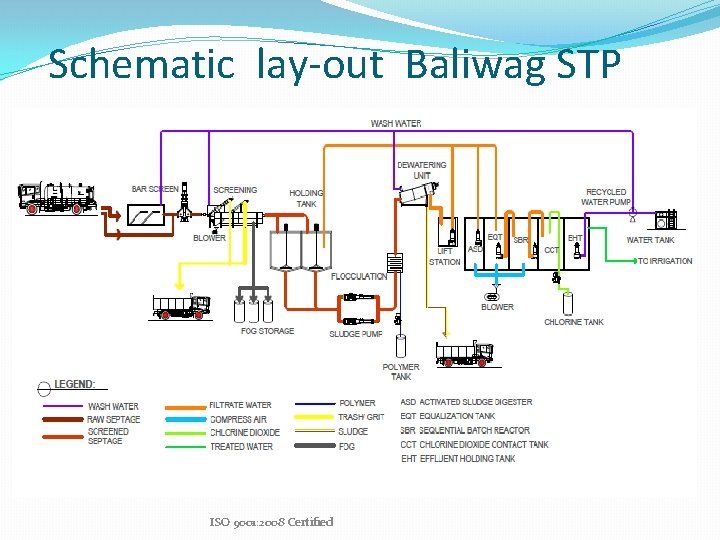
Schematic lay-out Baliwag STP ISO 9001: 2008 Certified
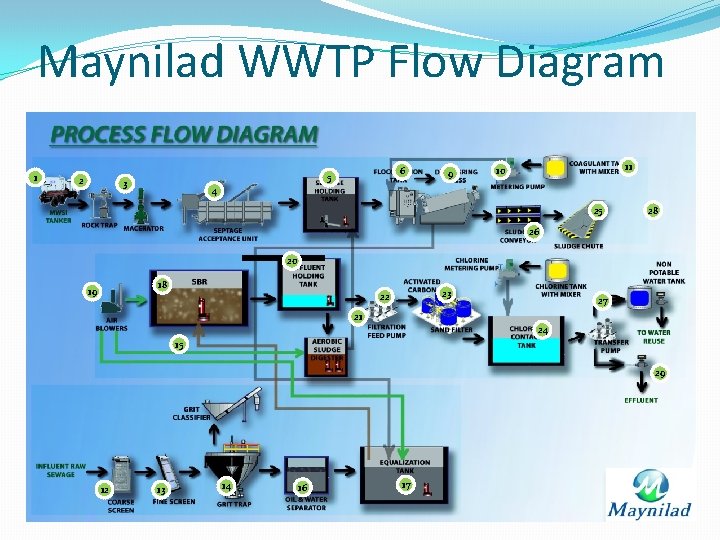
Maynilad WWTP Flow Diagram 1 2 6 5 3 9 11 10 4 25 28 26 20 18 19 23 22 27 21 24 15 29 12 13 14 16 17
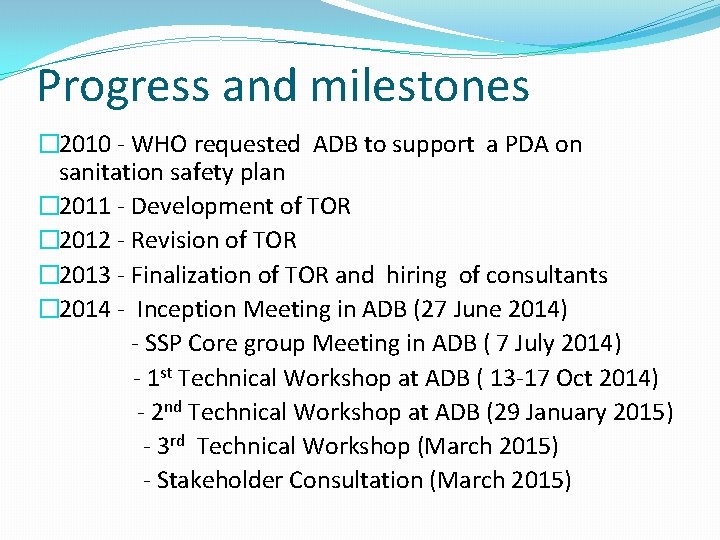
Progress and milestones � 2010 - WHO requested ADB to support a PDA on sanitation safety plan � 2011 - Development of TOR � 2012 - Revision of TOR � 2013 - Finalization of TOR and hiring of consultants � 2014 - Inception Meeting in ADB (27 June 2014) - SSP Core group Meeting in ADB ( 7 July 2014) - 1 st Technical Workshop at ADB ( 13 -17 Oct 2014) - 2 nd Technical Workshop at ADB (29 January 2015) - 3 rd Technical Workshop (March 2015) - Stakeholder Consultation (March 2015)
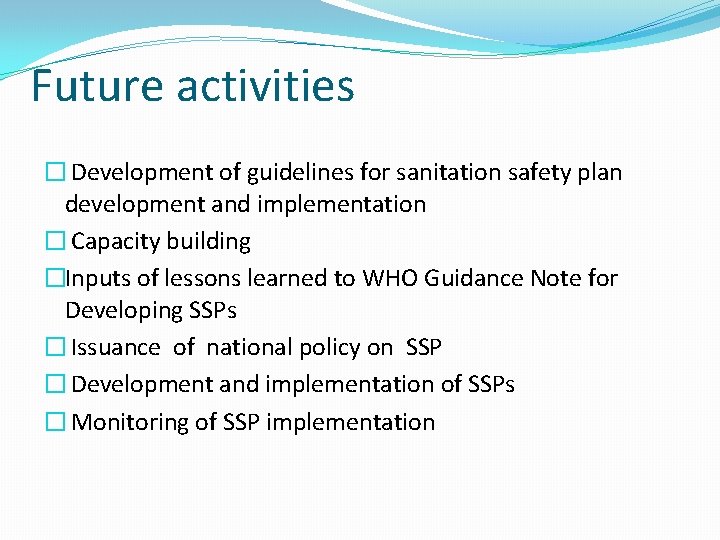
Future activities � Development of guidelines for sanitation safety plan development and implementation � Capacity building �Inputs of lessons learned to WHO Guidance Note for Developing SSPs � Issuance of national policy on SSP � Development and implementation of SSPs � Monitoring of SSP implementation
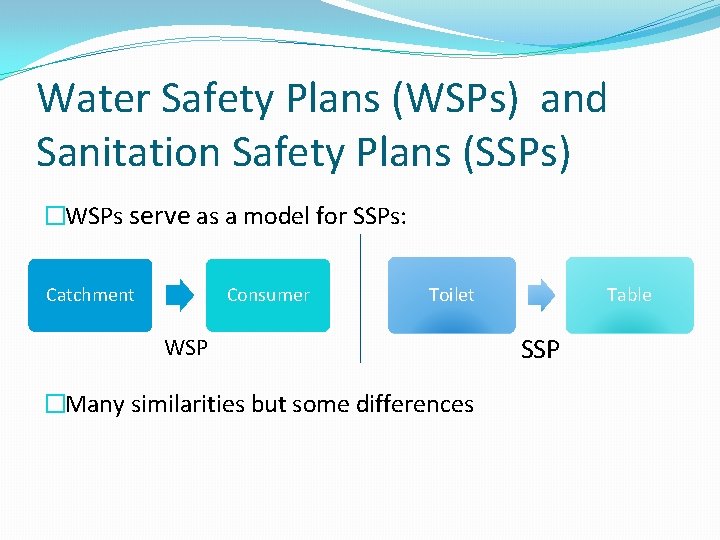
Water Safety Plans (WSPs) and Sanitation Safety Plans (SSPs) �WSPs serve as a model for SSPs: Catchment Consumer Toilet WSP �Many similarities but some differences Table SSP
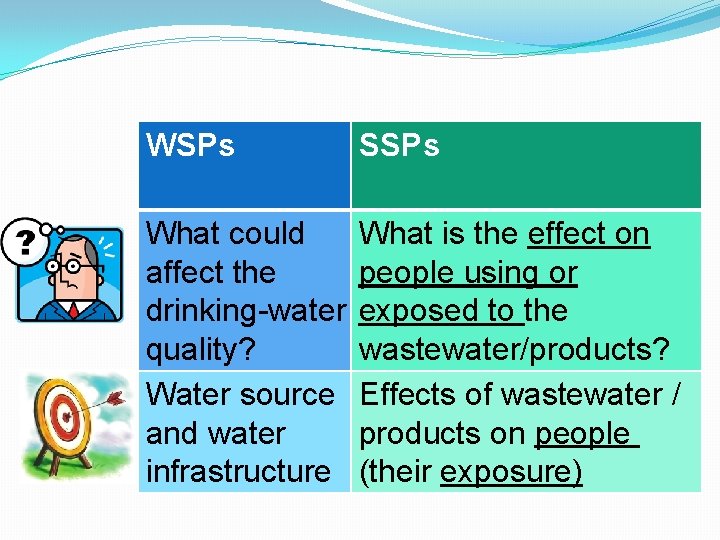
WSPs SSPs What could affect the drinking-water quality? Water source and water infrastructure What is the effect on people using or exposed to the wastewater/products? Effects of wastewater / products on people (their exposure)
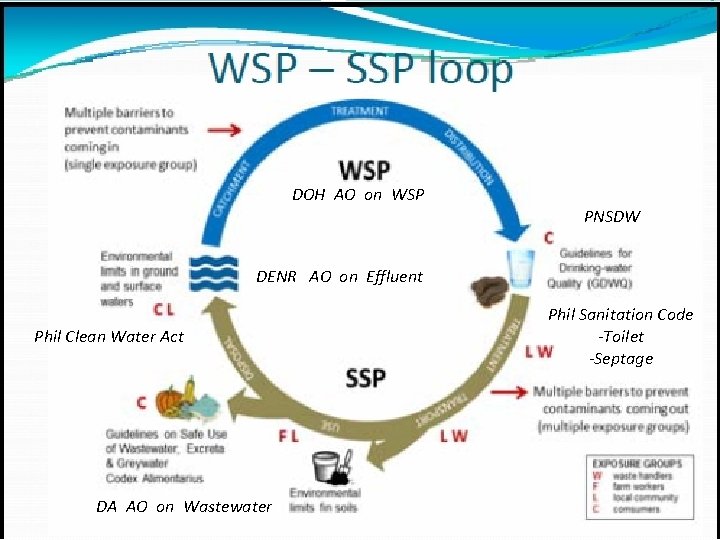
DOH AO on WSP PNSDW DENR AO on Effluent Phil Clean Water Act DA AO on Wastewater Phil Sanitation Code -Toilet -Septage
Conclusion � Wastewater is increasingly becoming a resource for agriculture � SSP is closely linked to WSP -SSP controls pathogens in wastewater from exposure to people -WSP controls exposed pathogens from infecting water supply �Improvement in wastewater quality, less burden to water source � Benefits of SSP is still to be realized in the Philippines
�THANK YOU!