
Philadelphia Convention May 55 delegates Every state except
- Slides: 4
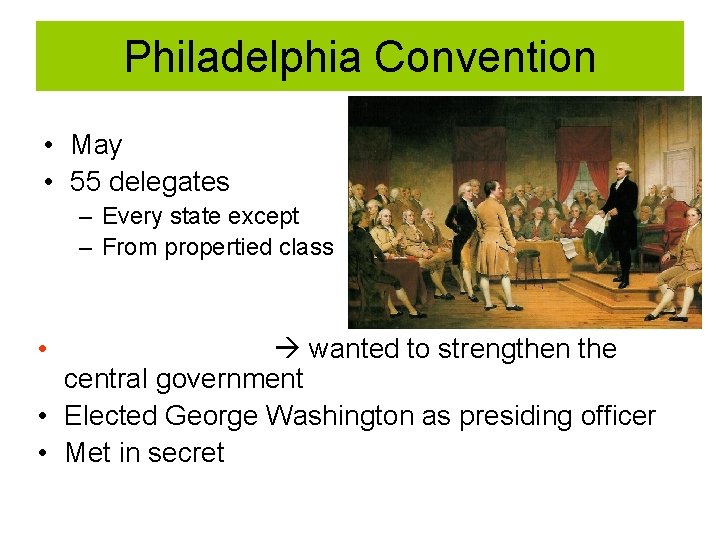
Philadelphia Convention • May • 55 delegates – Every state except – From propertied class • wanted to strengthen the central government • Elected George Washington as presiding officer • Met in secret
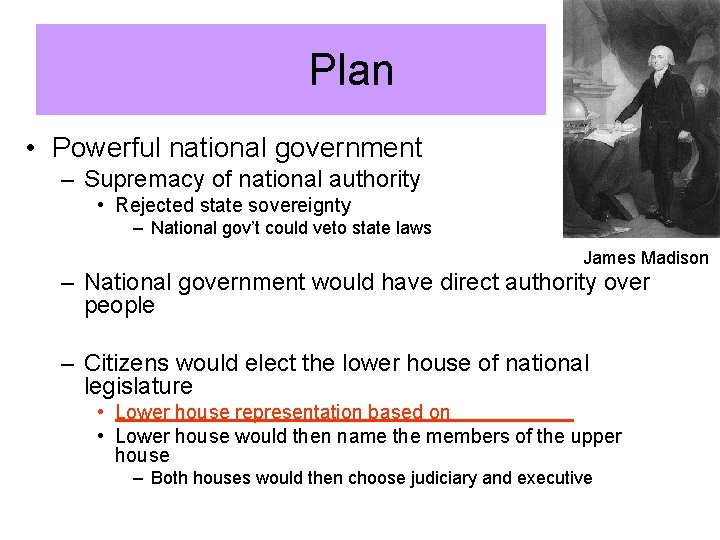
Plan • Powerful national government – Supremacy of national authority • Rejected state sovereignty – National gov’t could veto state laws James Madison – National government would have direct authority over people – Citizens would elect the lower house of national legislature • Lower house representation based on • Lower house would then name the members of the upper house – Both houses would then choose judiciary and executive
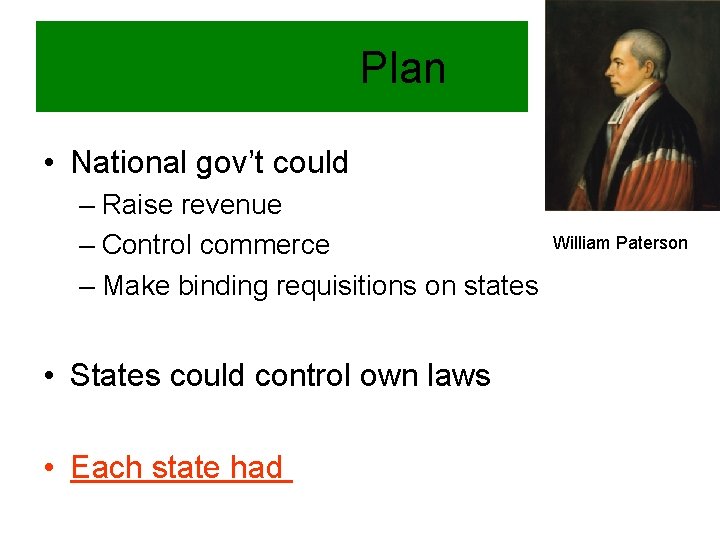
Plan • National gov’t could – Raise revenue – Control commerce – Make binding requisitions on states • States could control own laws • Each state had William Paterson
Political Negotiation • “ ” – Upper house – Lower house • Federal Judicial System – States had own courts and feared losing this power – Convention left creation of system up to new national legislature • Voting was not restricted to just property owners • Upper house chosen by • President elected by States and their legislatures had some power + the people had more direct power = acceptance of reduction of state sovereignty?