
Phenotype frequency Phenotype frequency AND Allele frequency Formula
- Slides: 35
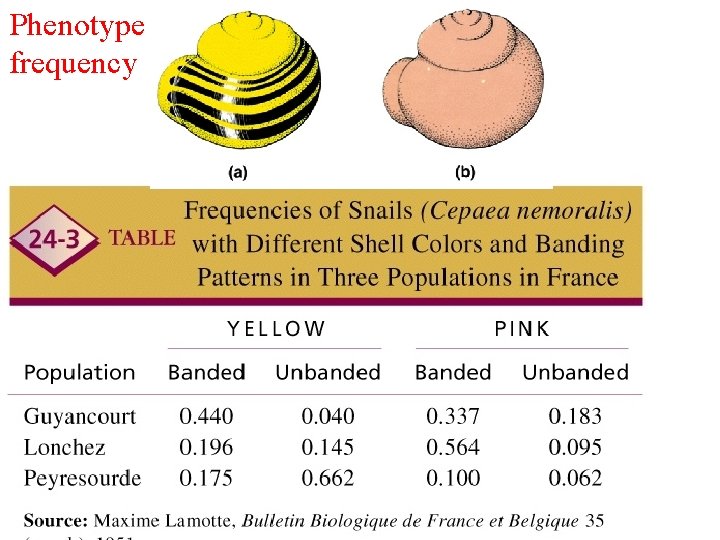
Phenotype frequency
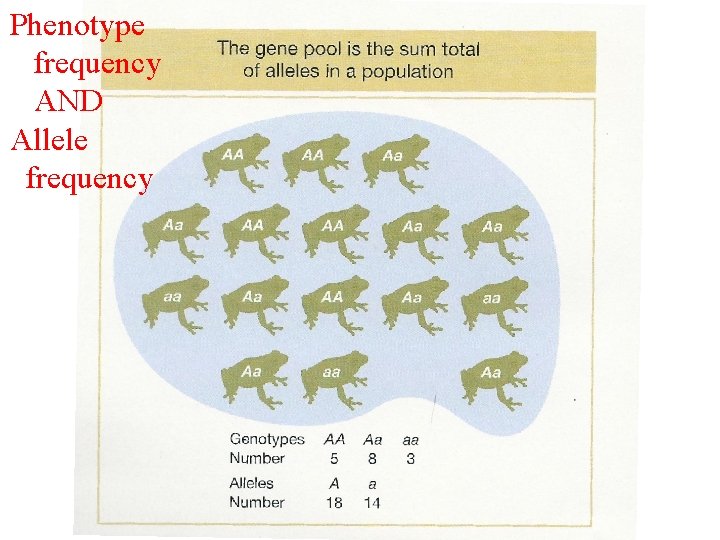
Phenotype frequency AND Allele frequency
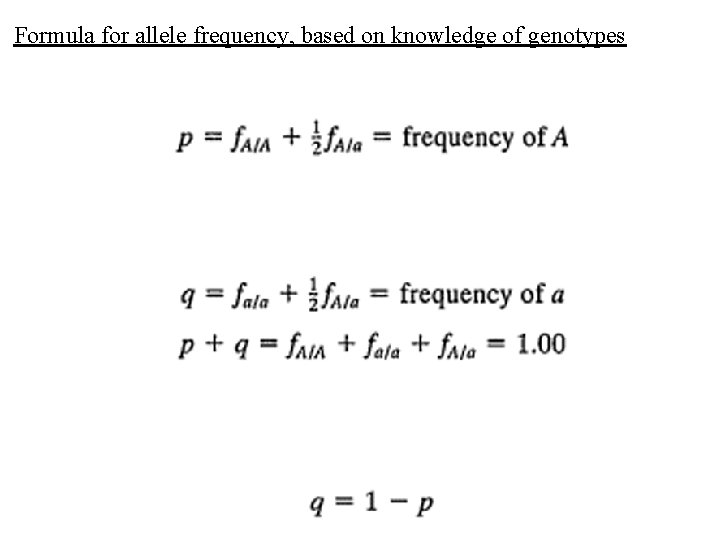
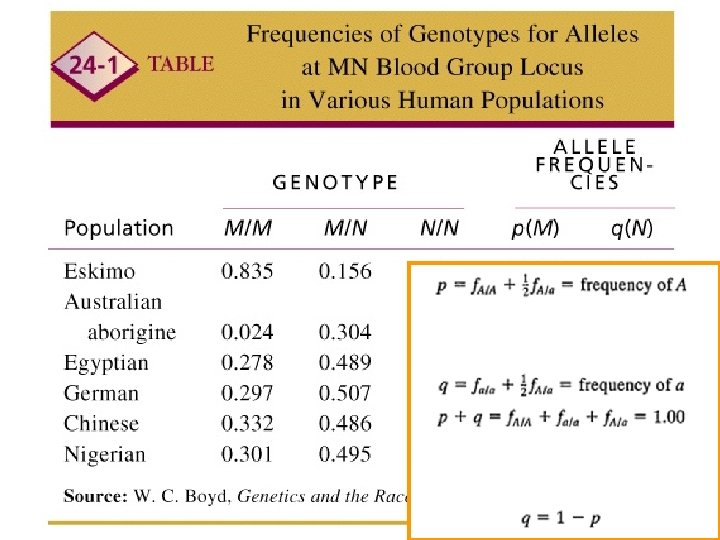
Formula for allele frequency, based on knowledge of genotypes
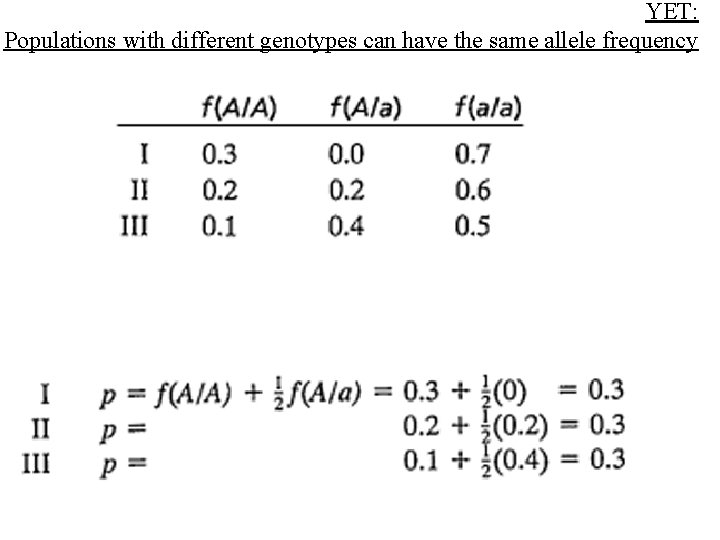
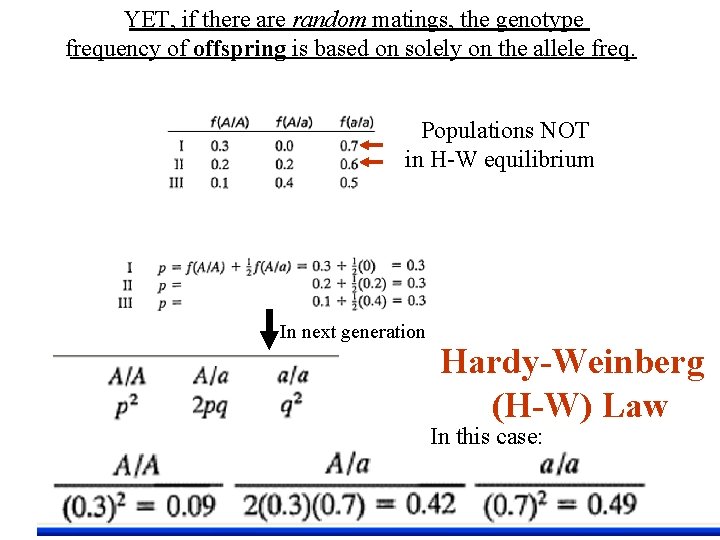
YET: Populations with different genotypes can have the same allele frequency
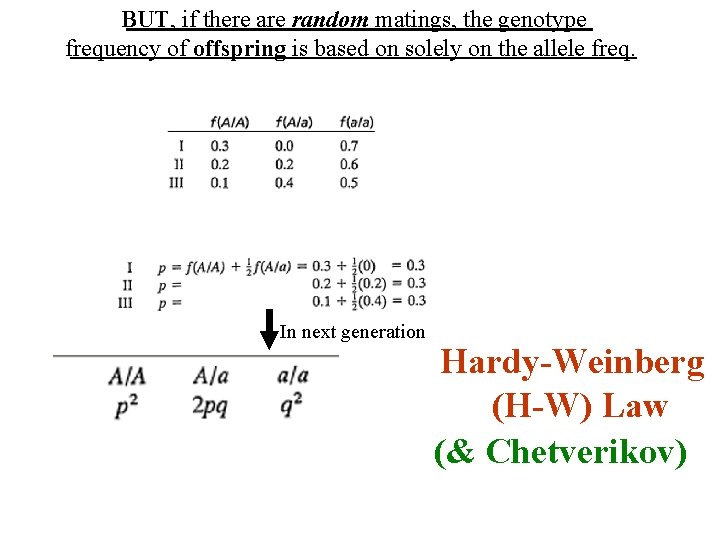
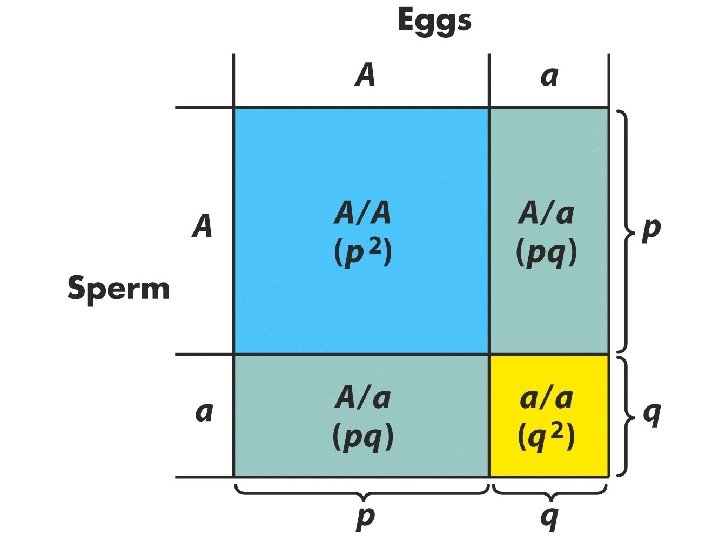
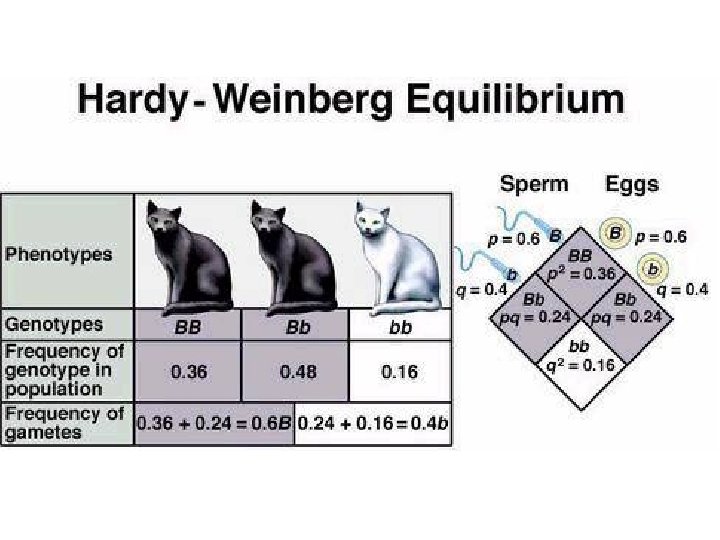
BUT, if there are random matings, the genotype frequency of offspring is based on solely on the allele freq. In next generation Hardy-Weinberg (H-W) Law (& Chetverikov)
YET, if there are random matings, the genotype frequency of offspring is based on solely on the allele freq. Populations NOT in H-W equilibrium In next generation Hardy-Weinberg (H-W) Law In this case:
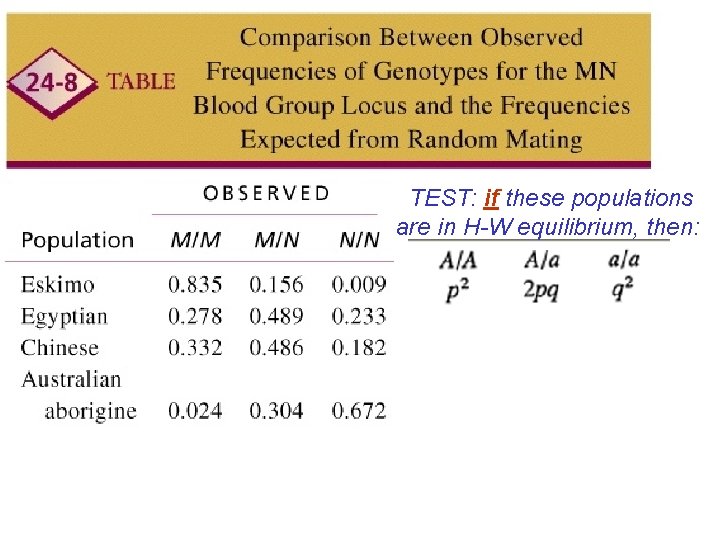
TEST: if these populations are in H-W equilibrium, then:
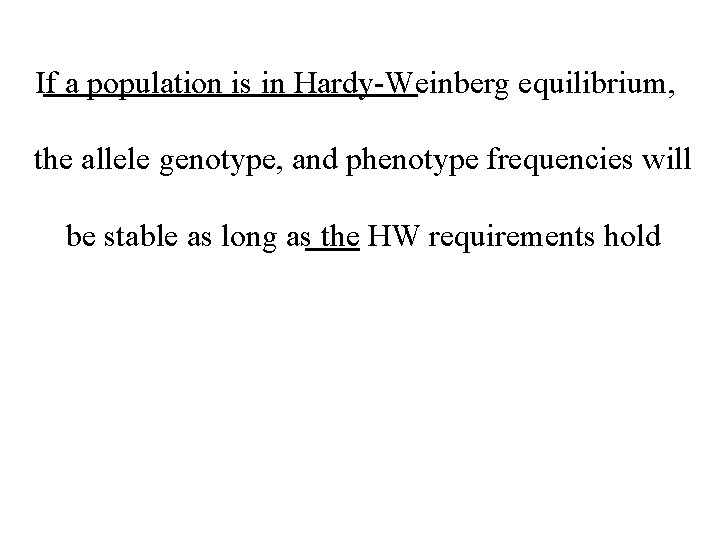
If a population is in Hardy-Weinberg equilibrium, the allele genotype, and phenotype frequencies will be stable as long as the HW requirements hold
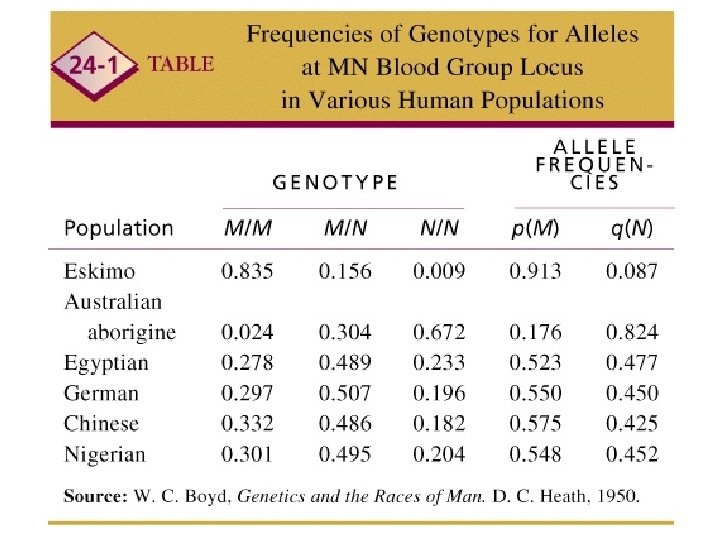
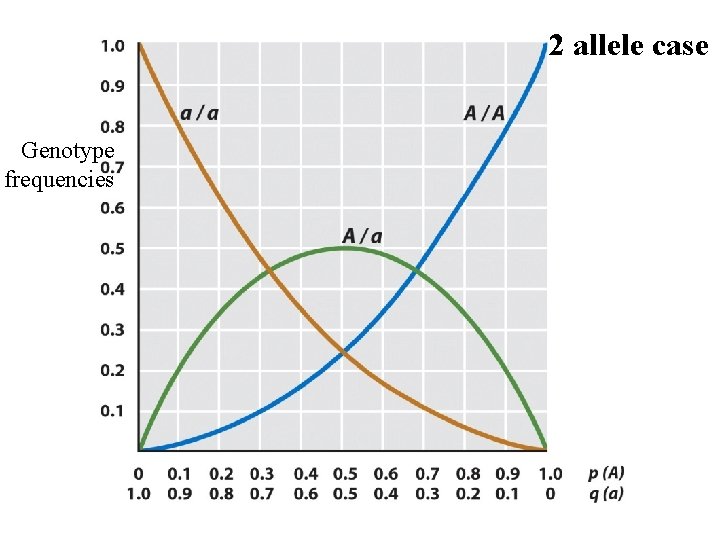
2 allele case Genotype frequencies
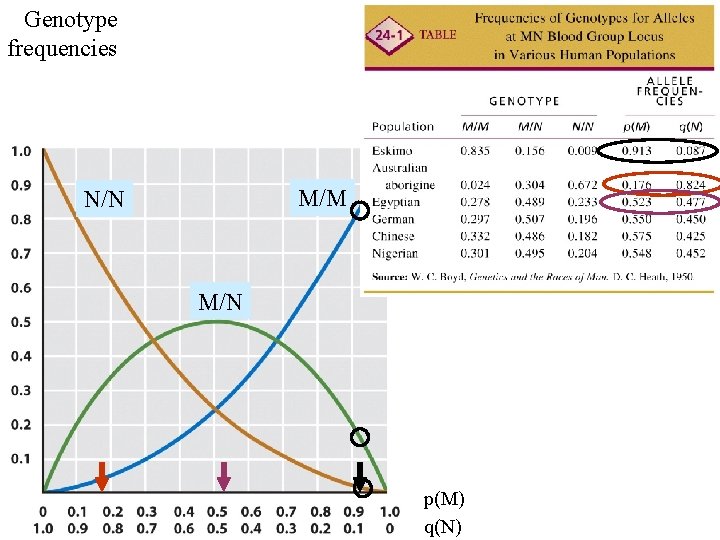
Genotype frequencies M/M N/N M/N p(M) q(N)
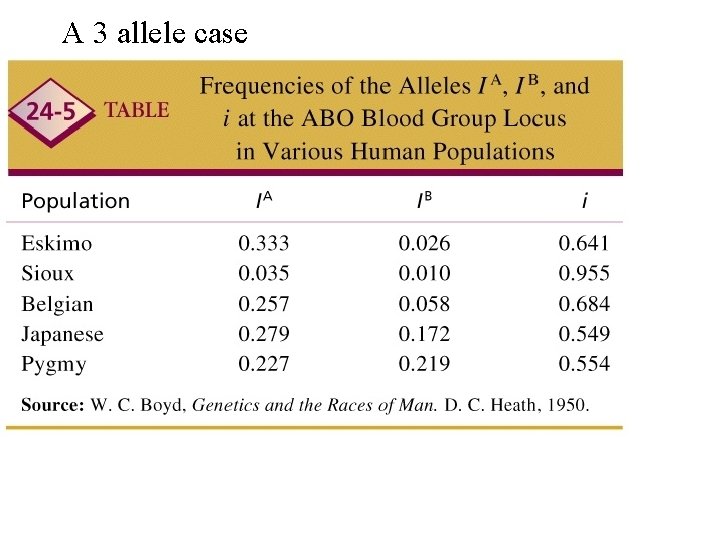
A 3 allele case
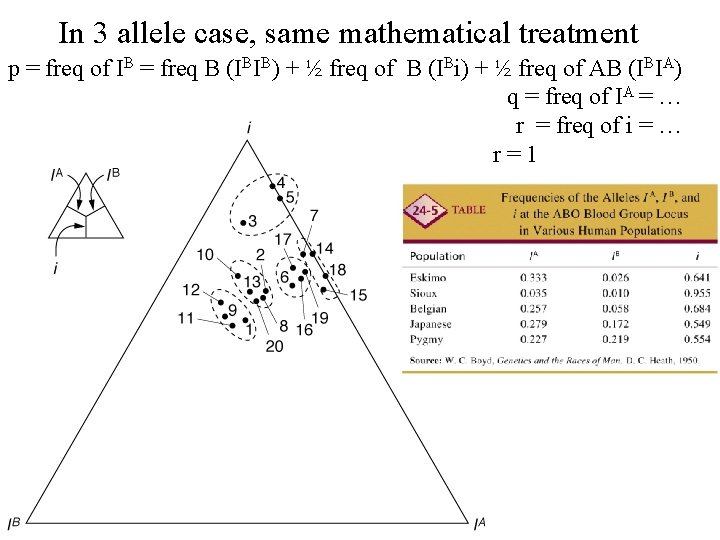
In 3 allele case, same mathematical treatment p = freq of IB = freq B (IBIB) + ½ freq of B (IBi) + ½ freq of AB (IBIA) q = freq of IA = … r = freq of i = … p+q+r=1
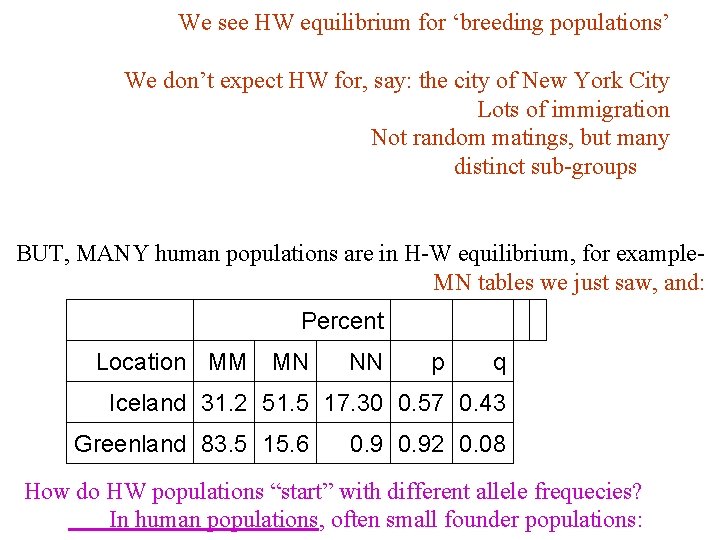
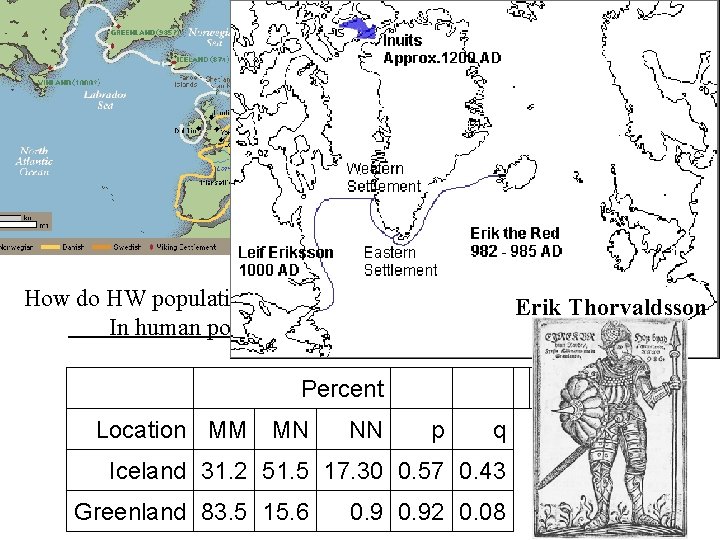
We see HW equilibrium for ‘breeding populations’ We don’t expect HW for, say: the city of New York City Lots of immigration Not random matings, but many distinct sub-groups BUT, MANY human populations are in H-W equilibrium, for example. MN tables we just saw, and: Percent Location MM MN NN p q Iceland 31. 2 51. 5 17. 30 0. 57 0. 43 Greenland 83. 5 15. 6 0. 92 0. 08 How do HW populations “start” with different allele frequecies? In human populations, often small founder populations:
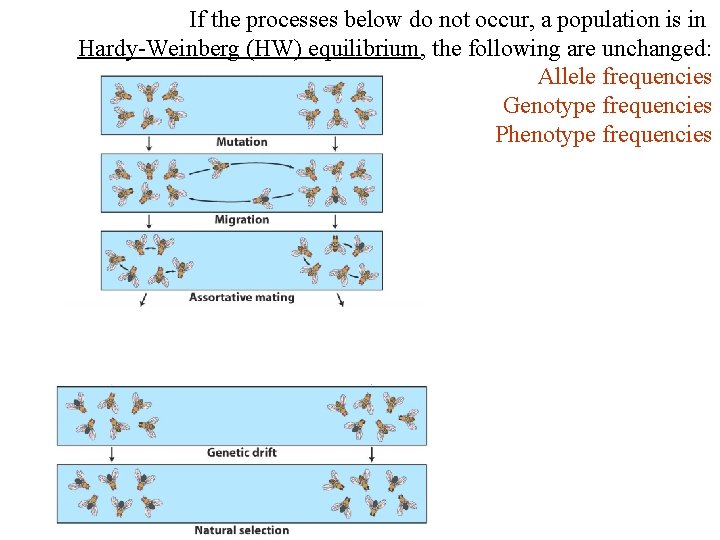
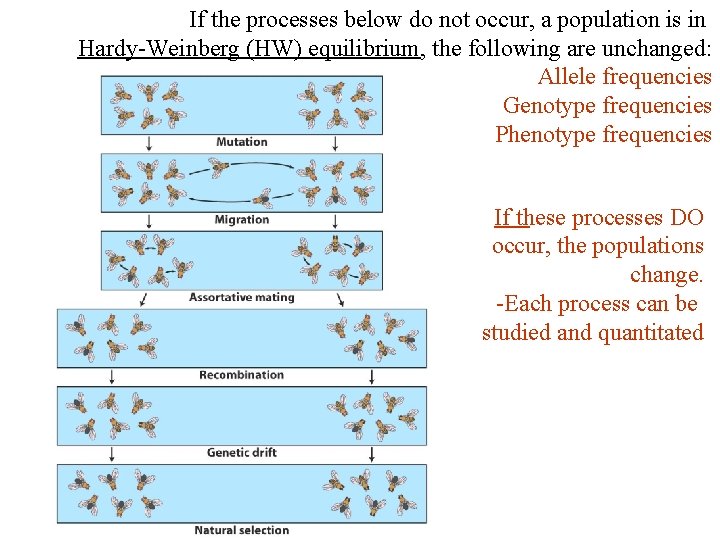
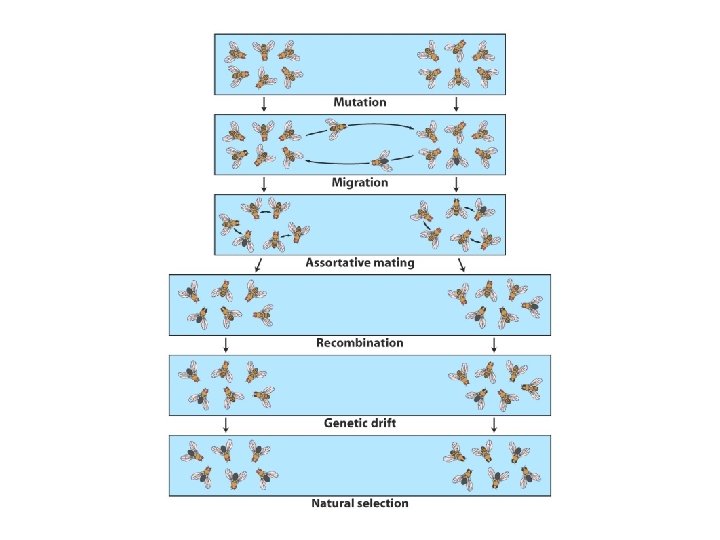
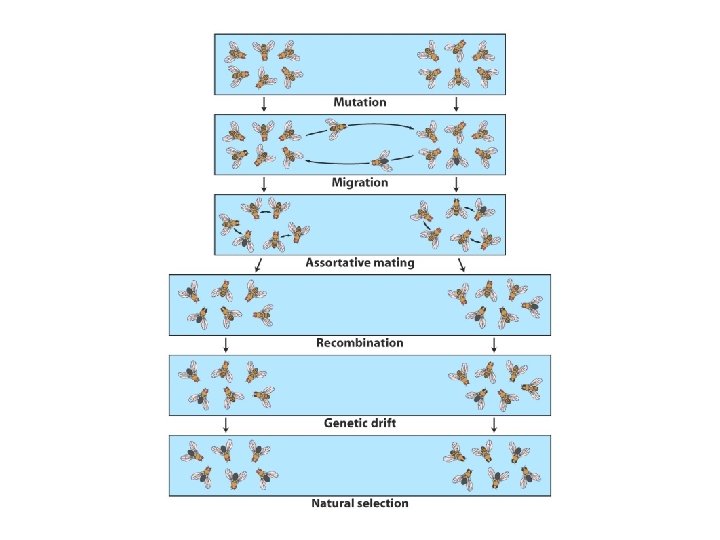
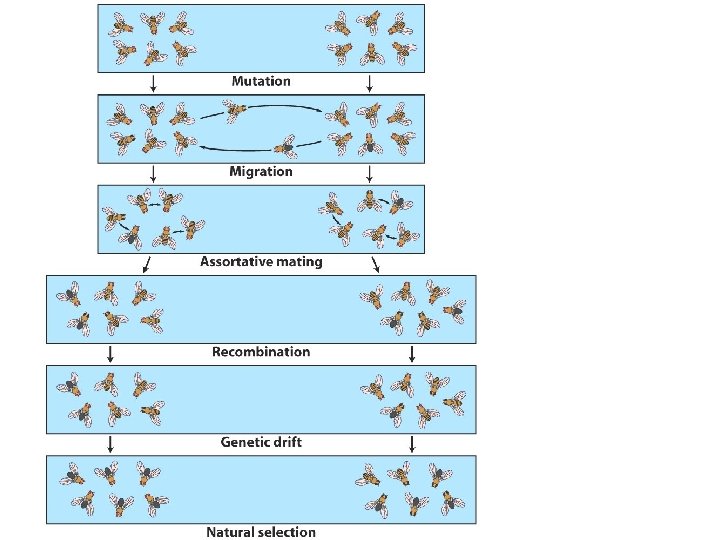
If the processes below do not occur, a population is in Hardy-Weinberg (HW) equilibrium, the following are unchanged: Allele frequencies Genotype frequencies Phenotype frequencies
How do HW populations “start” with different allele frequecies? Erik Thorvaldsson In human populations, often small founder populations: Percent Location MM MN NN p q Iceland 31. 2 51. 5 17. 30 0. 57 0. 43 Greenland 83. 5 15. 6 0. 92 0. 08
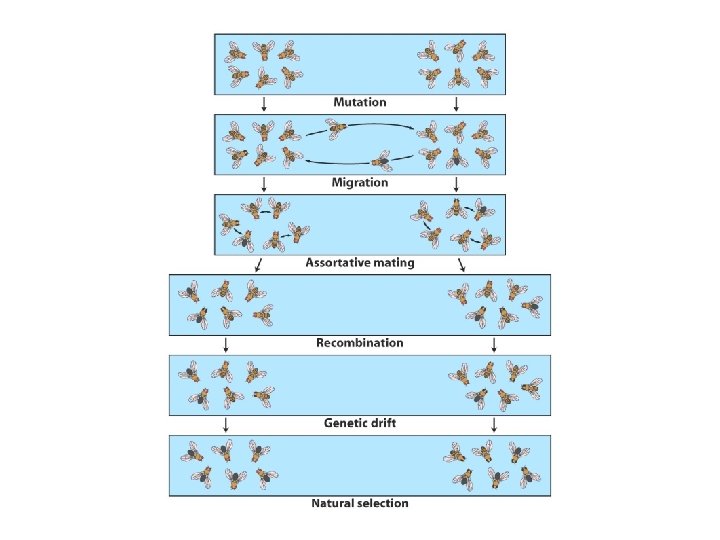
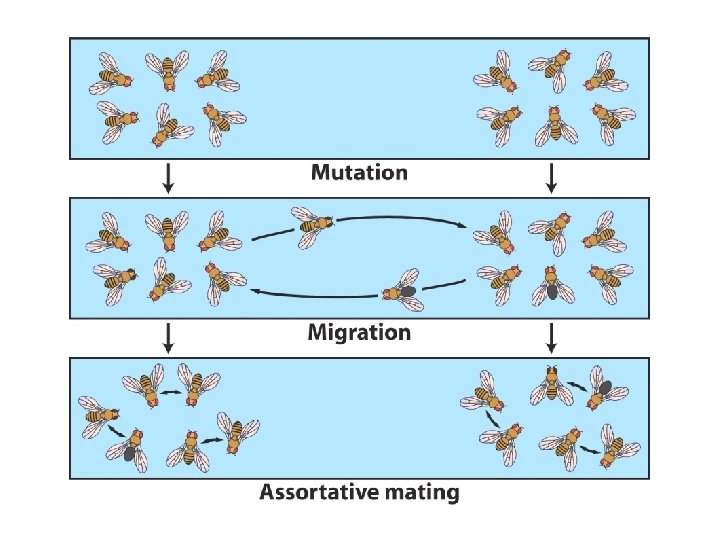
If the processes below do not occur, a population is in Hardy-Weinberg (HW) equilibrium, the following are unchanged: Allele frequencies Genotype frequencies Phenotype frequencies If these processes DO occur, the populations change. -Each process can be studied and quantitated
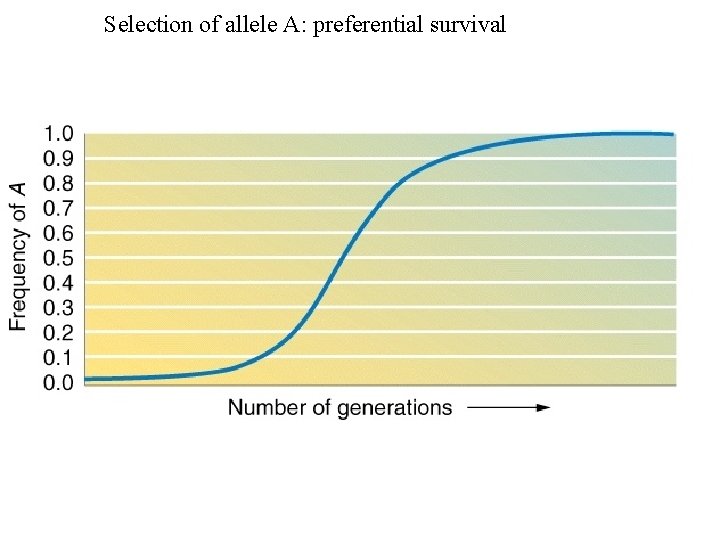
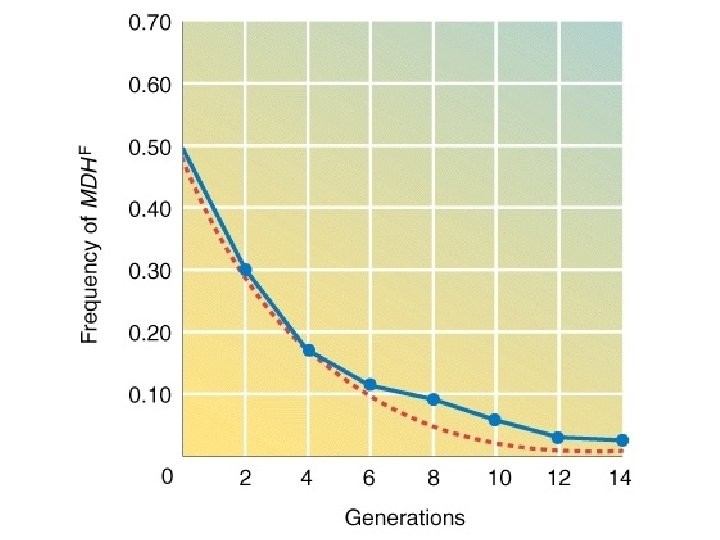
Selection of allele A: preferential survival
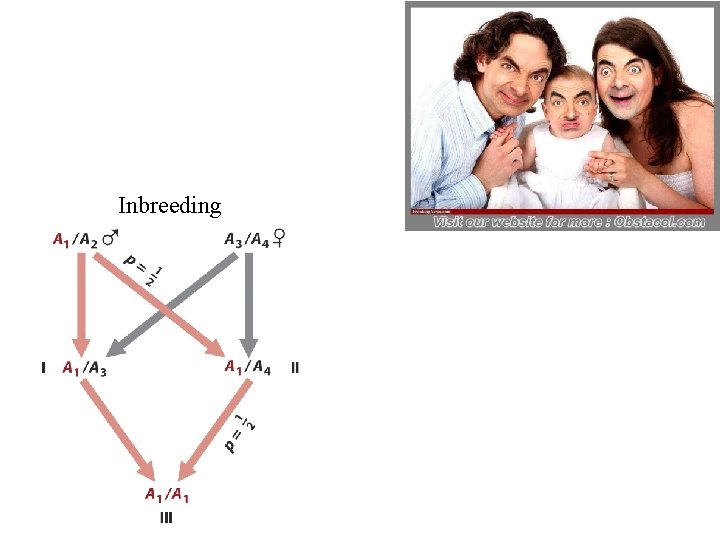
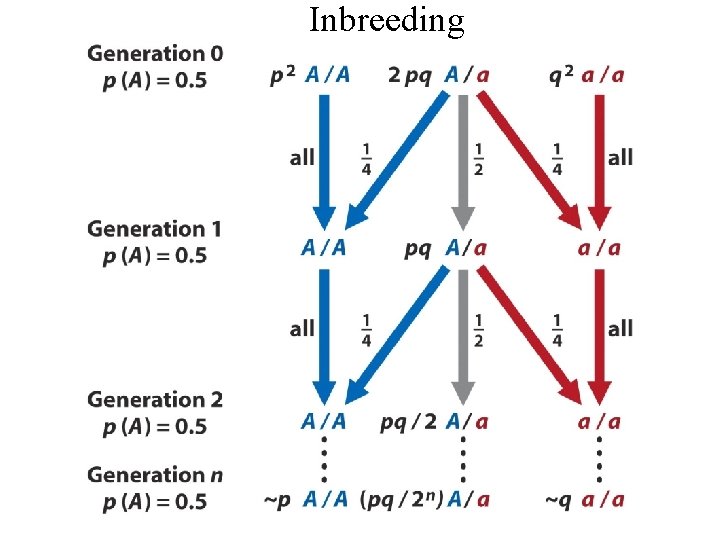
Inbreeding
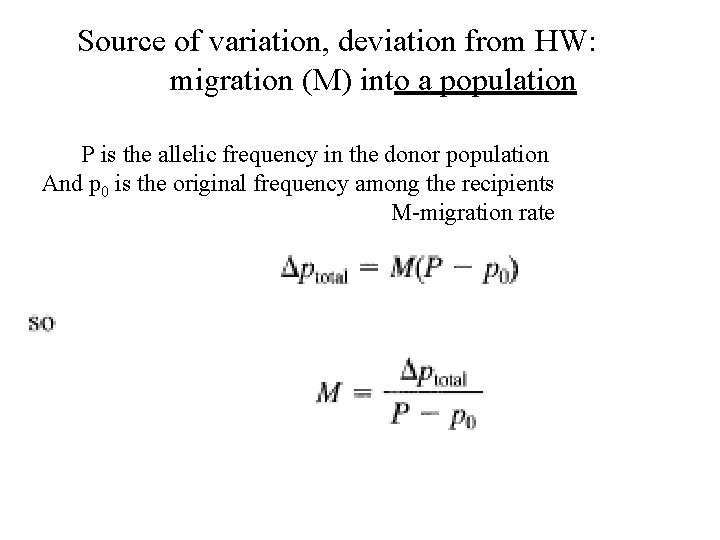
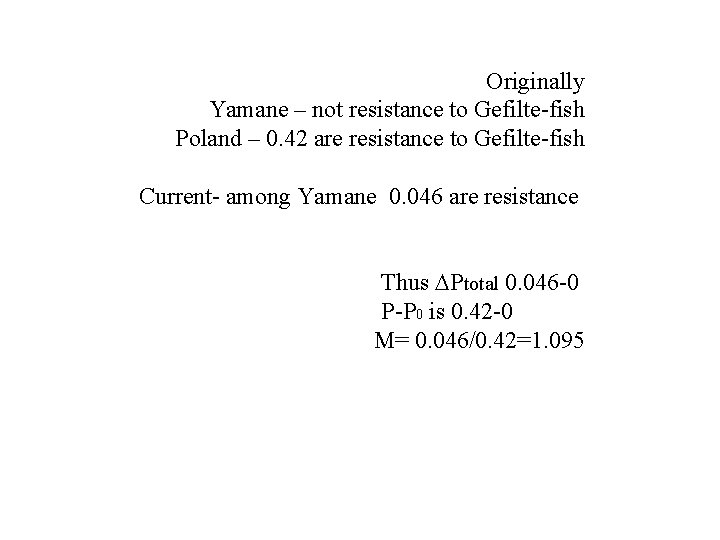
Source of variation, deviation from HW: migration (M) into a population P is the allelic frequency in the donor population And p 0 is the original frequency among the recipients M-migration rate
Originally Yamane – not resistance to Gefilte-fish Poland – 0. 42 are resistance to Gefilte-fish Current- among Yamane 0. 046 are resistance Thus DPtotal 0. 046 -0 P-P 0 is 0. 42 -0 M= 0. 046/0. 42=1. 095
Inbreeding
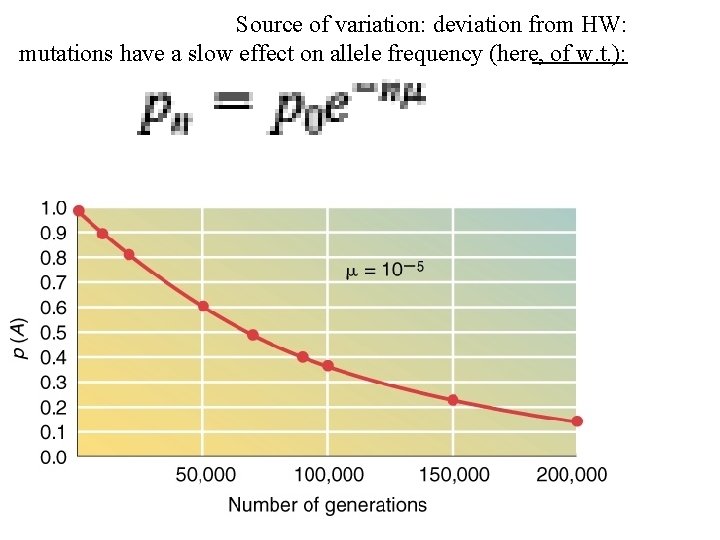
Source of variation: deviation from HW: mutations have a slow effect on allele frequency (here, of w. t. ):