
PhenomenaBased Instruction and NGSS January 7 th 2019
Phenomena-Based Instruction and NGSS January 7 th, 2019 Staff Development Day
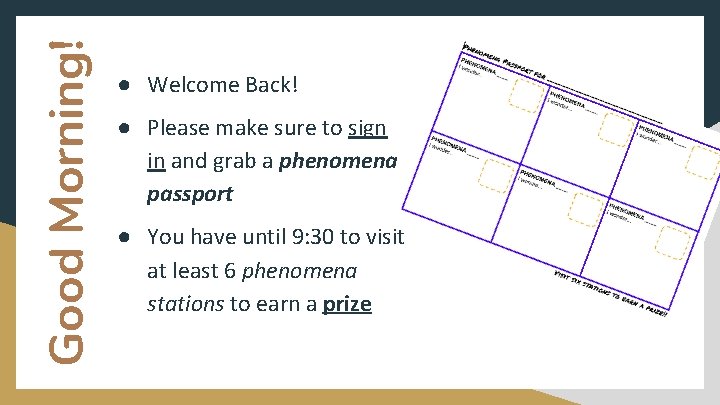
Good Morning! ● Welcome Back! ● Please make sure to sign in and grab a phenomena passport ● You have until 9: 30 to visit at least 6 phenomena stations to earn a prize
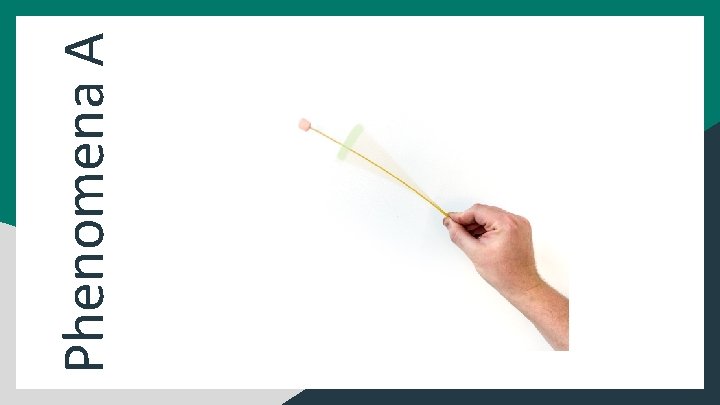
Phenomena A
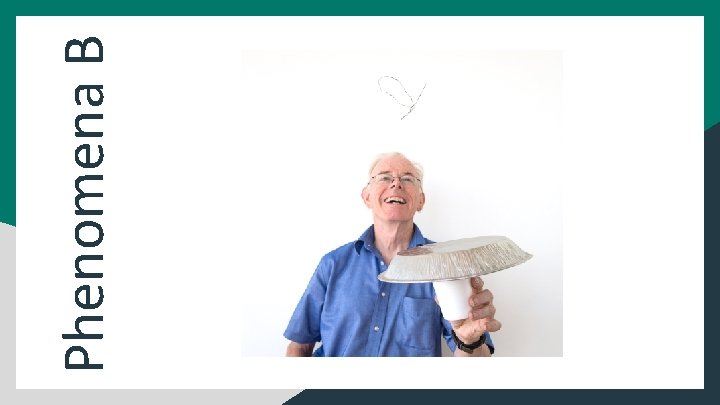
Phenomena B
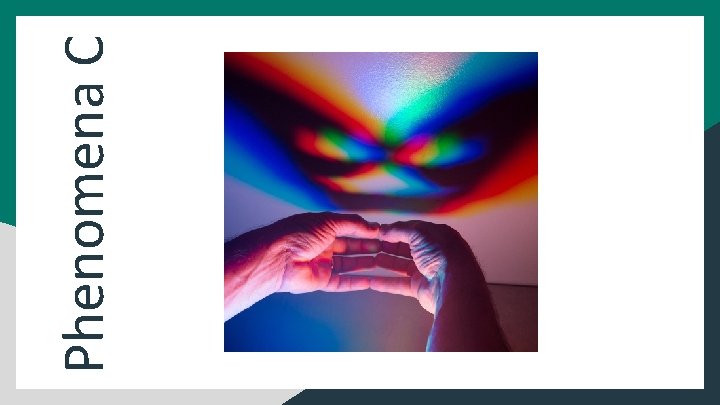
Phenomena C
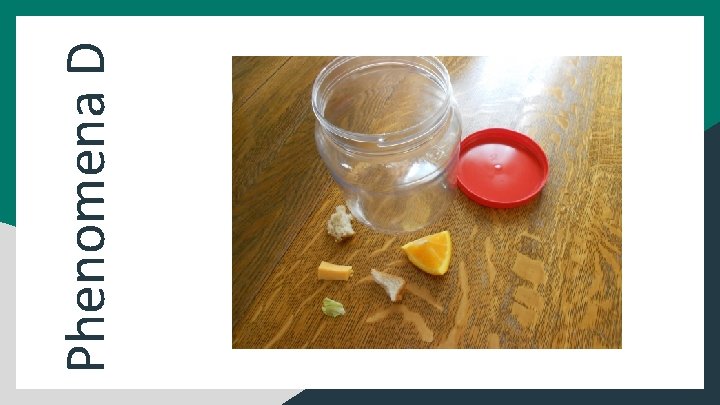
Phenomena D
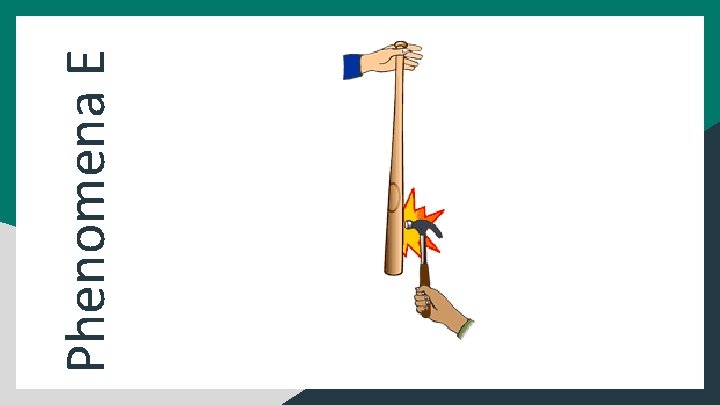
Phenomena E
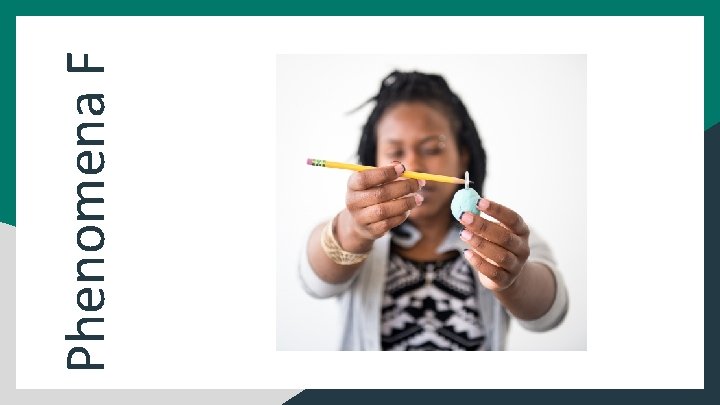
Phenomena F
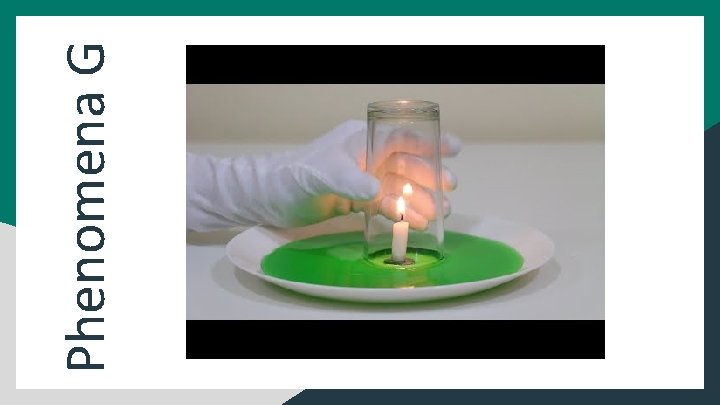
Phenomena G
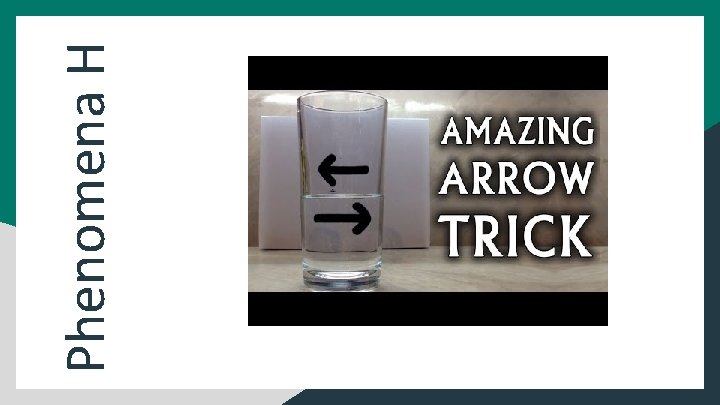
Phenomena H
Phenomena I
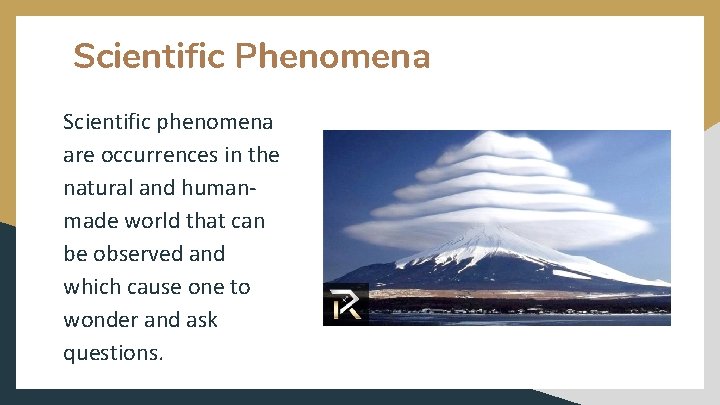
Scientific Phenomena Scientific phenomena are occurrences in the natural and humanmade world that can be observed and which cause one to wonder and ask questions.
Session Outcomes ● Understand what phenomena are and their importance in NGSS-aligned instruction ● Understand how phenomena-based instruction supports the SEP of scientific modeling ● Understand how to identify useful phenomena that can drive instruction and student learning
Think and Discuss at your table: What phenomenon did you observe over break which has caused you to wonder and ask questions?
Article: Using Phenomena in NGSS-Designed Lessons and Units ➢ Star something that was a surprise ★ ➢ Underline something that raises questions for you - jot down any questions you have ➢ Box something that resonated with you � ➢ Share your “take-aways” with your table group ⇆
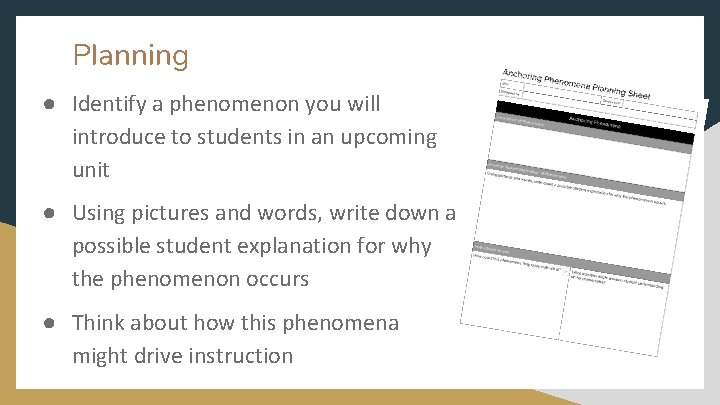
Planning ● Identify a phenomenon you will introduce to students in an upcoming unit ● Using pictures and words, write down a possible student explanation for why the phenomenon occurs ● Think about how this phenomena might drive instruction
“Science is beautiful when it makes simple explanations of phenomena or connections between different observations. ” ---Stephen Hawking
Phenomena and Scientific Modeling A model is a simplified representation of a system that can explain and help make predictions regarding phenomena, rather than defining a specific concept. Natural phenomena are observable events that occur in the universe that we can use our science knowledge to explain or predict.
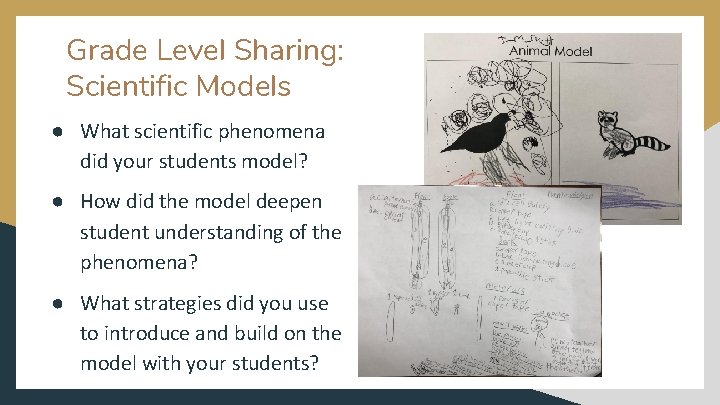
Grade Level Sharing: Scientific Models ● What scientific phenomena did your students model? ● How did the model deepen student understanding of the phenomena? ● What strategies did you use to introduce and build on the model with your students?
Take some time to explore this amazing resource. How will you incorporate modeling and scientific phenomena in your next unit of study? https: //thewonderofscience. com/
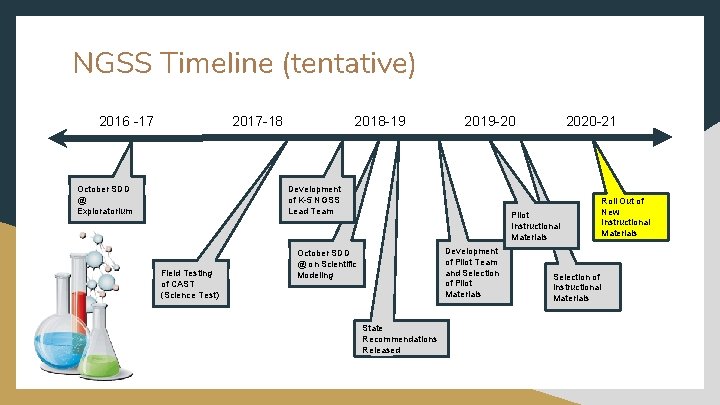
NGSS Timeline (tentative) 2016 -17 2017 -18 2018 -19 2019 -20 Development of K-5 NGSS Lead Team October SDD @ Exploratorium Field Testing of CAST (Science Test) 2020 -21 Pilot Instructional Materials Development of Pilot Team and Selection of Pilot Materials October SDD @ on Scientific Modeling State Recommendations Released Roll Out of New Instructional Materials Selection of Instructional Materials
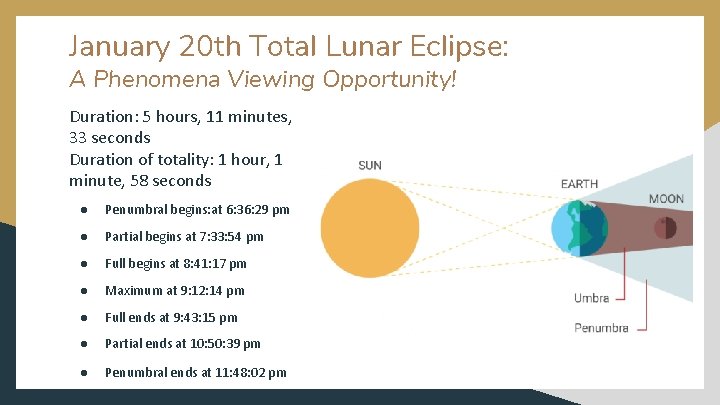
January 20 th Total Lunar Eclipse: A Phenomena Viewing Opportunity! Duration: 5 hours, 11 minutes, 33 seconds Duration of totality: 1 hour, 1 minute, 58 seconds ● Penumbral begins: at 6: 36: 29 pm ● Partial begins at 7: 33: 54 pm ● Full begins at 8: 41: 17 pm ● Maximum at 9: 12: 14 pm ● Full ends at 9: 43: 15 pm ● Partial ends at 10: 50: 39 pm ● Penumbral ends at 11: 48: 02 pm
- Slides: 23