
Phenological characteristics of Ficus microcarpa under climate change
- Slides: 28
Phenological characteristics of Ficus microcarpa under climate change Shuling Lin School of Geographical Sciences, Guangzhou University
n Relationship between plant phenology and climate change has become an important topic under global climate warming.
n Phenology is a plant growth progress that is largely driven by meteorological conditions. n Phenological changes are vital indicators for changes in climate and other enviromental conditions.
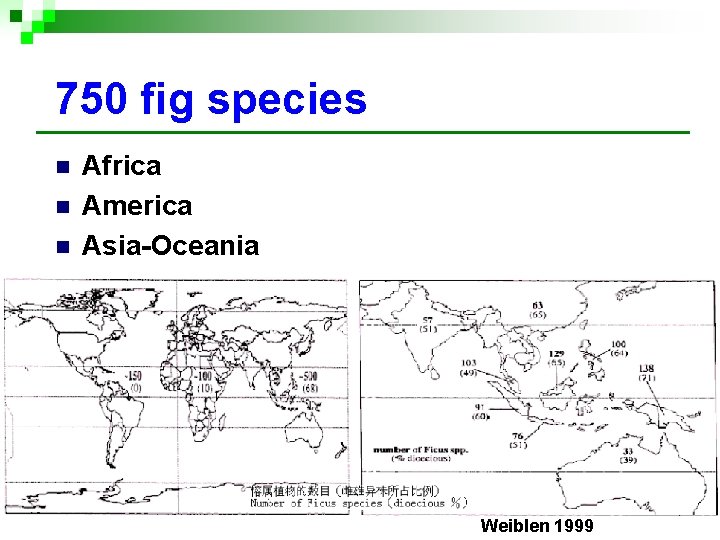
750 fig species n n n Africa America Asia-Oceania Weiblen 1999
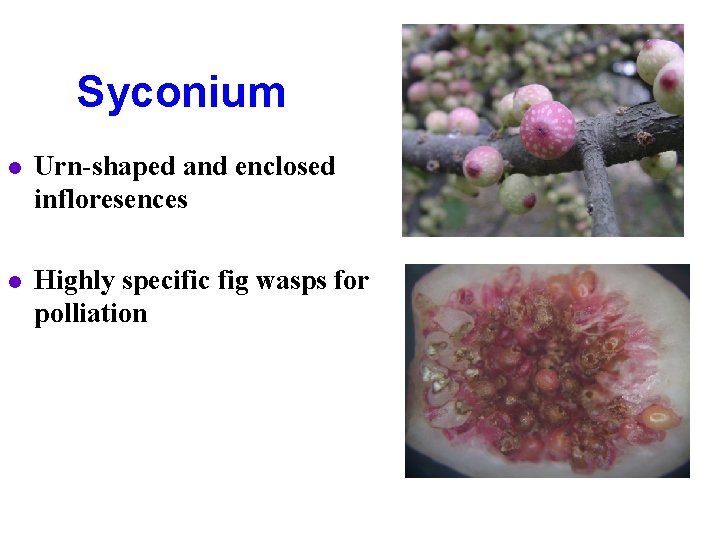
Syconium l Urn-shaped and enclosed infloresences l Highly specific fig wasps for polliation
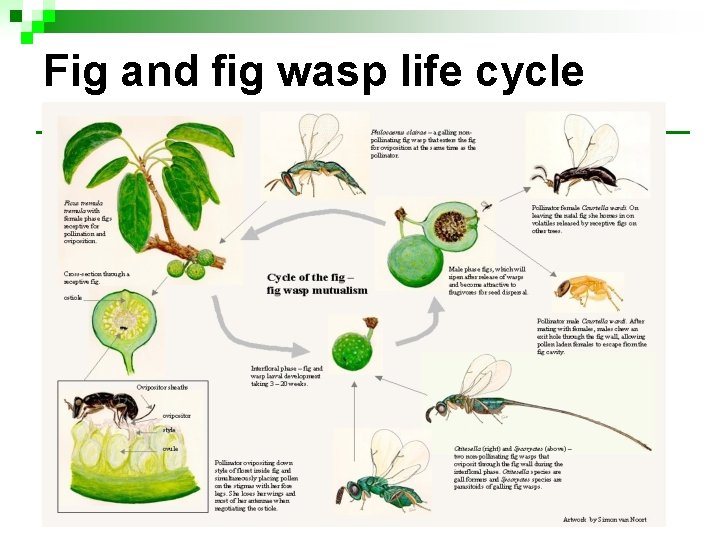
Fig and fig wasp life cycle
n Figs rely on fig wasps for transmission of their pollen, and also rely on birds for seed dispersal. n The impact of climate change on fig tree phenology and population dynamics of fig wasps and birds.
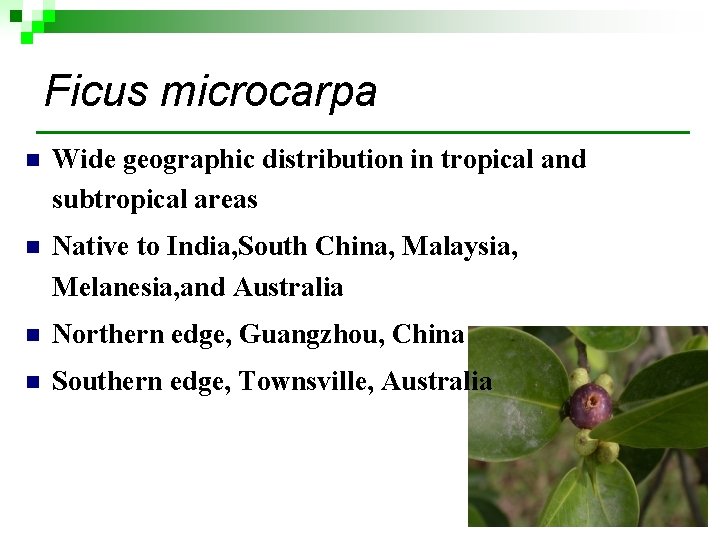
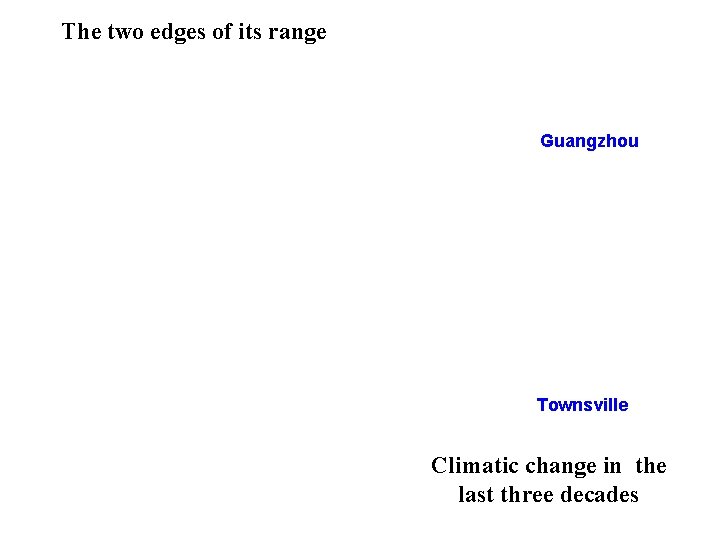
Ficus microcarpa n Wide geographic distribution in tropical and subtropical areas n Native to India, South China, Malaysia, Melanesia, and Australia n Northern edge, Guangzhou, China n Southern edge, Townsville, Australia
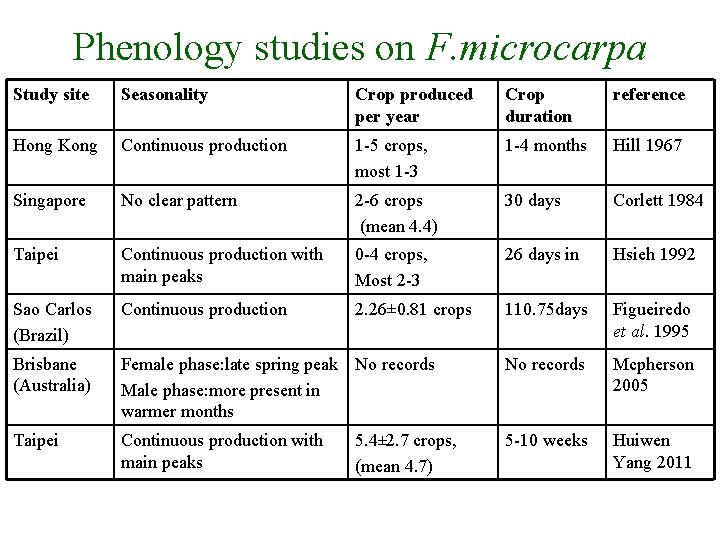
Phenological studies conducted in different locations provide an opportunity for a comparsion
Phenology studies on F. microcarpa Study site Seasonality Crop produced per year Crop duration reference Hong Kong Continuous production 1 -5 crops, most 1 -3 1 -4 months Hill 1967 Singapore No clear pattern 2 -6 crops (mean 4. 4) 30 days Corlett 1984 Taipei Continuous production with main peaks 0 -4 crops, Most 2 -3 26 days in Hsieh 1992 Sao Carlos (Brazil) Continuous production 2. 26± 0. 81 crops 110. 75 days Figueiredo et al. 1995 Brisbane (Australia) Female phase: late spring peak No records Male phase: more present in warmer months No records Mcpherson 2005 Taipei Continuous production with main peaks 5 -10 weeks Huiwen Yang 2011 5. 4± 2. 7 crops, (mean 4. 7)
Why flowering phenology variation in different study sites? • • Temperature Precipitation Sunlight hours ……
The two edges of its range Guangzhou Townsville Climatic change in the last three decades
Methods n 8 -10 individual trees n 1 -2 weeks n the stage of syconium Develpoment and the duration of phases n 50 ripe figs collected randomly per fruiting trees n flowering patterns of F. microcarpa in different environments n the correlation between climate factors and syconia quantity
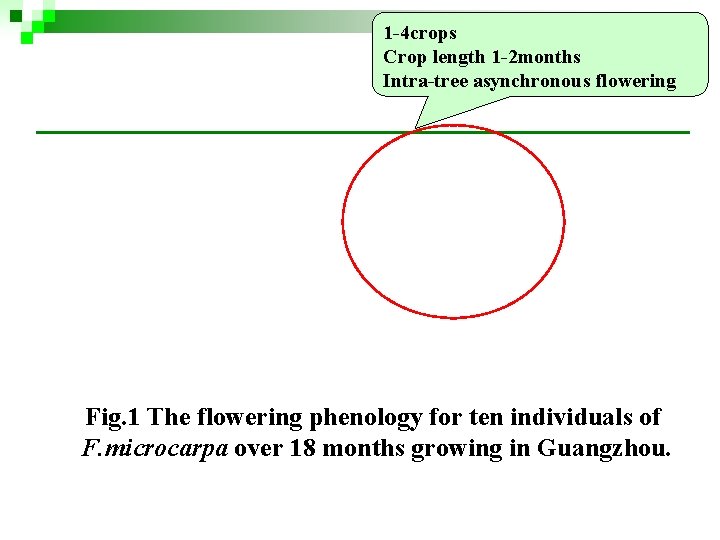
1 -4 crops Crop length 1 -2 months Intra-tree asynchronous flowering Fig. 1 The flowering phenology for ten individuals of F. microcarpa over 18 months growing in Guangzhou.
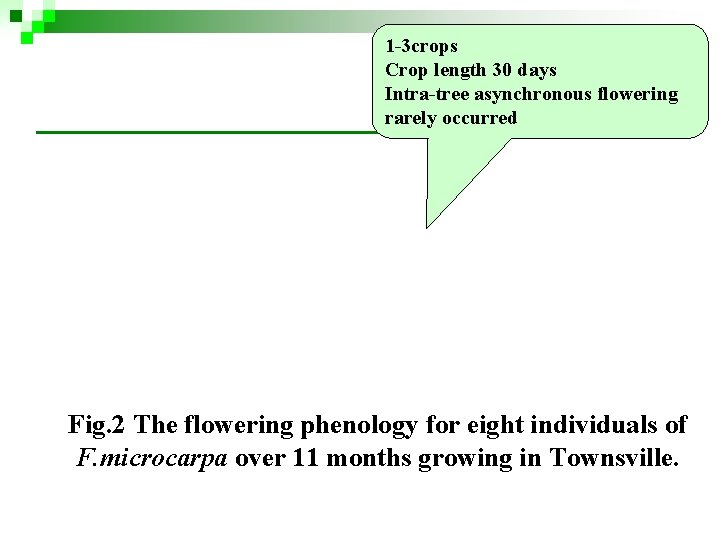
1 -3 crops Crop length 30 days Intra-tree asynchronous flowering rarely occurred Fig. 2 The flowering phenology for eight individuals of F. microcarpa over 11 months growing in Townsville.
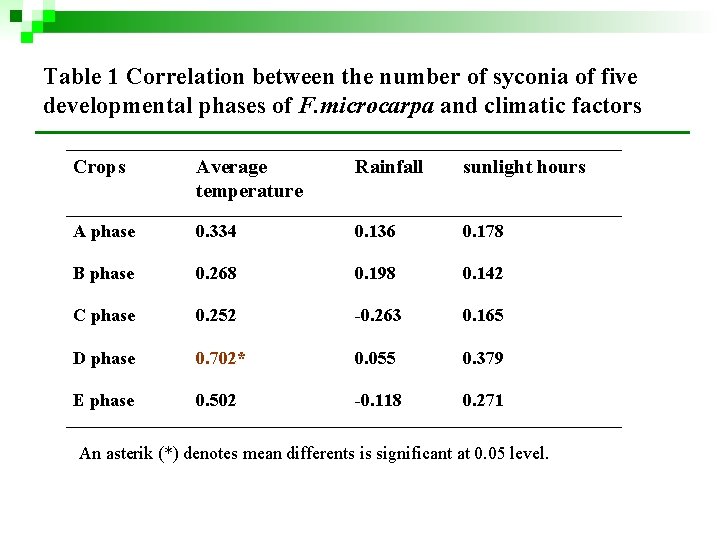
Table 1 Correlation between the number of syconia of five developmental phases of F. microcarpa and climatic factors Crops Average temperature Rainfall sunlight hours A phase 0. 334 0. 136 0. 178 B phase 0. 268 0. 198 0. 142 C phase 0. 252 -0. 263 0. 165 D phase 0. 702* 0. 055 0. 379 E phase 0. 502 -0. 118 0. 271 An asterik (*) denotes mean differents is significant at 0. 05 level.
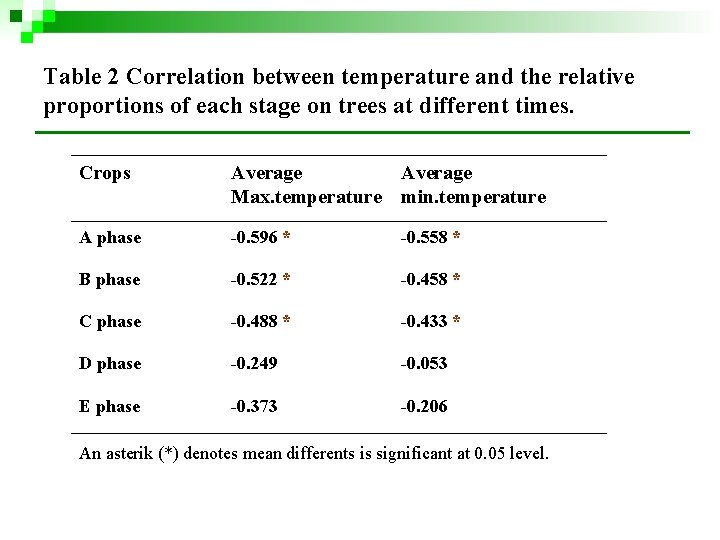
Table 2 Correlation between temperature and the relative proportions of each stage on trees at different times. Crops Average Max. temperature min. temperature A phase -0. 596 * -0. 558 * B phase -0. 522 * -0. 458 * C phase -0. 488 * -0. 433 * D phase -0. 249 -0. 053 E phase -0. 373 -0. 206 An asterik (*) denotes mean differents is significant at 0. 05 level.
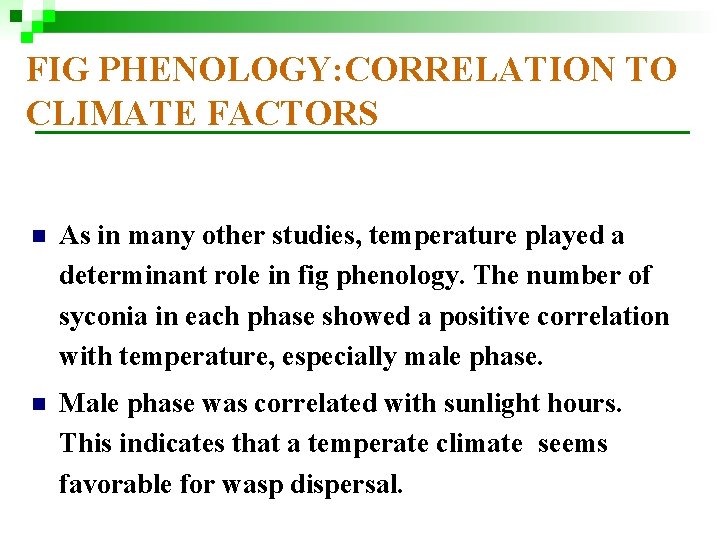
FIG PHENOLOGY: CORRELATION TO CLIMATE FACTORS n As in many other studies, temperature played a determinant role in fig phenology. The number of syconia in each phase showed a positive correlation with temperature, especially male phase. n Male phase was correlated with sunlight hours. This indicates that a temperate climate seems favorable for wasp dispersal.
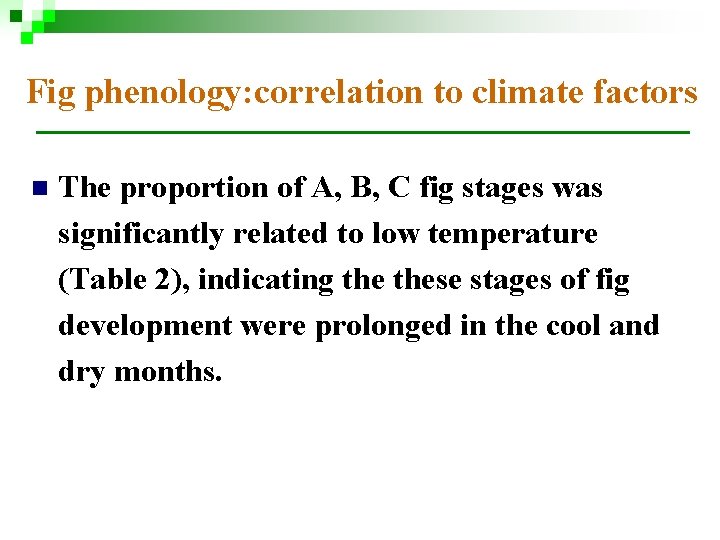
Fig phenology: correlation to climate factors n The proportion of A, B, C fig stages was significantly related to low temperature (Table 2), indicating these stages of fig development were prolonged in the cool and dry months.
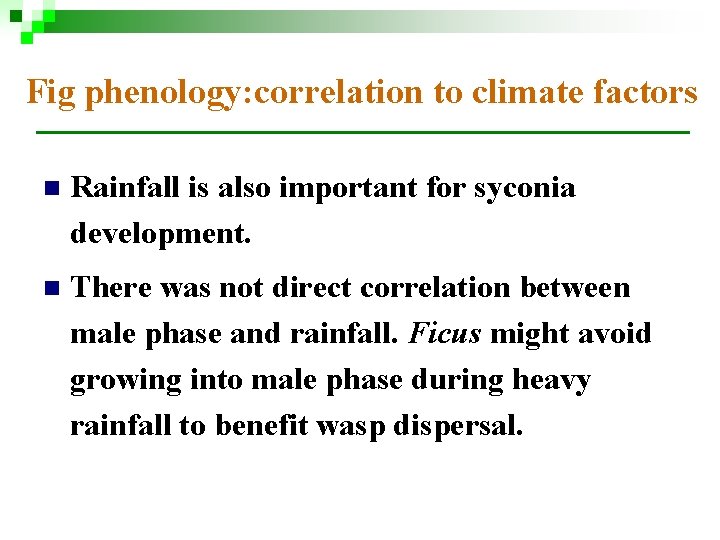
Fig phenology: correlation to climate factors n Rainfall is also important for syconia development. n There was not direct correlation between male phase and rainfall. Ficus might avoid growing into male phase during heavy rainfall to benefit wasp dispersal.
Fig phenology: correlation to climate factors n This study found a positive correlation between receptive syconia and rainfall. n Response of receptive phase to rainfall seems disadvantageous for pollinator arrival. However, unpollinated syconia remain receptive for one to two weeks. Overlap between male- and female-phase might reduced both the pollen waste and abortion probability of receptive syconia.
HYPOTHESIS WAS PRESENTED n Janzen's hypothesis of adaptations to seasonality was tested and criticized. n Within-tree asynchronous flowering was adaptation to adverse conditions,including low temperature,heavy rainfall,gale etc.
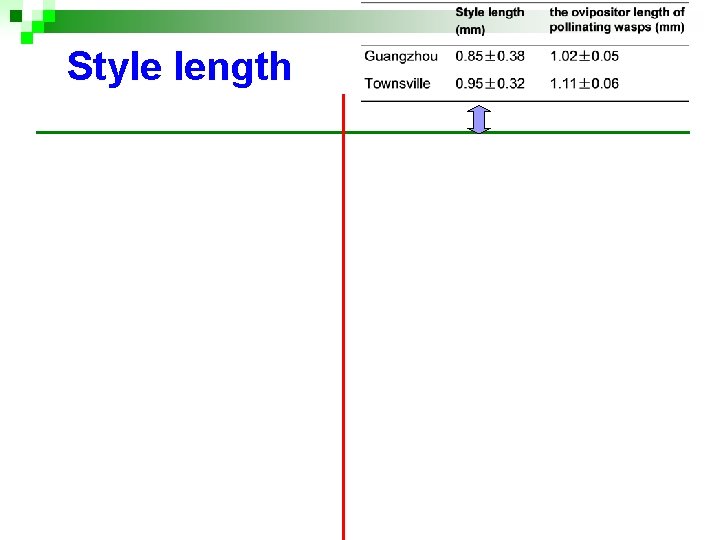
Style length
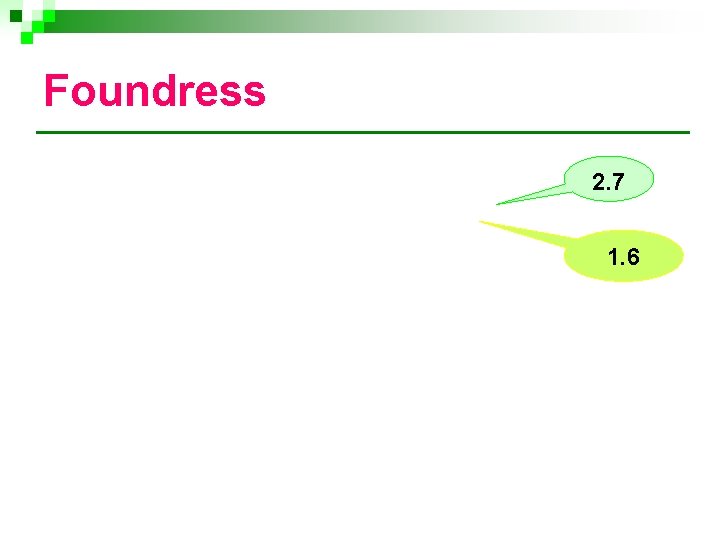
Foundress 2. 7 1. 6
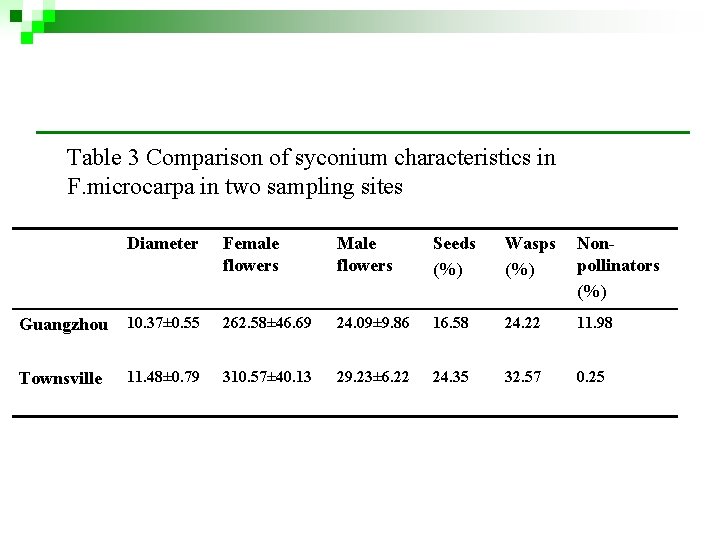
Table 3 Comparison of syconium characteristics in F. microcarpa in two sampling sites Diameter Female flowers Male flowers Seeds (%) Wasps (%) Nonpollinators (%) Guangzhou 10. 37± 0. 55 262. 58± 46. 69 24. 09± 9. 86 16. 58 24. 22 11. 98 Townsville 11. 48± 0. 79 310. 57± 40. 13 29. 23± 6. 22 24. 35 32. 57 0. 25
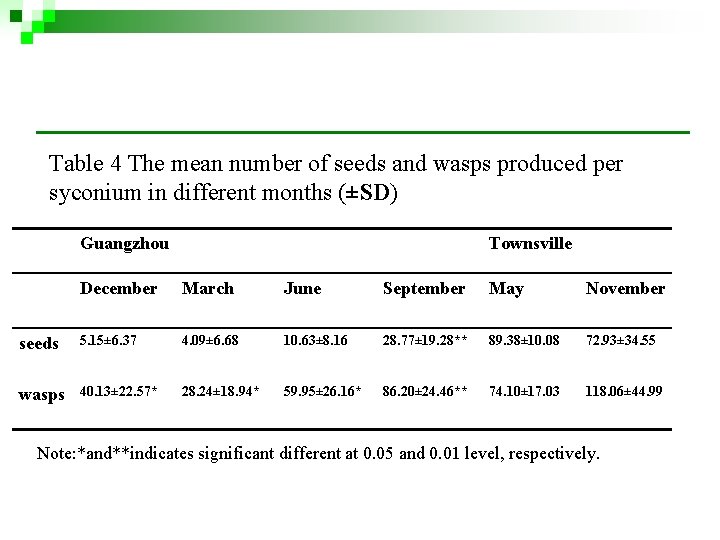
Table 4 The mean number of seeds and wasps produced per syconium in different months (±SD) Guangzhou Townsville December March June September May November seeds 5. 15± 6. 37 4. 09± 6. 68 10. 63± 8. 16 28. 77± 19. 28** 89. 38± 10. 08 72. 93± 34. 55 wasps 40. 13± 22. 57* 28. 24± 18. 94* 59. 95± 26. 16* 86. 20± 24. 46** 74. 10± 17. 03 118. 06± 44. 99 Note: *and**indicates significant different at 0. 05 and 0. 01 level, respectively.
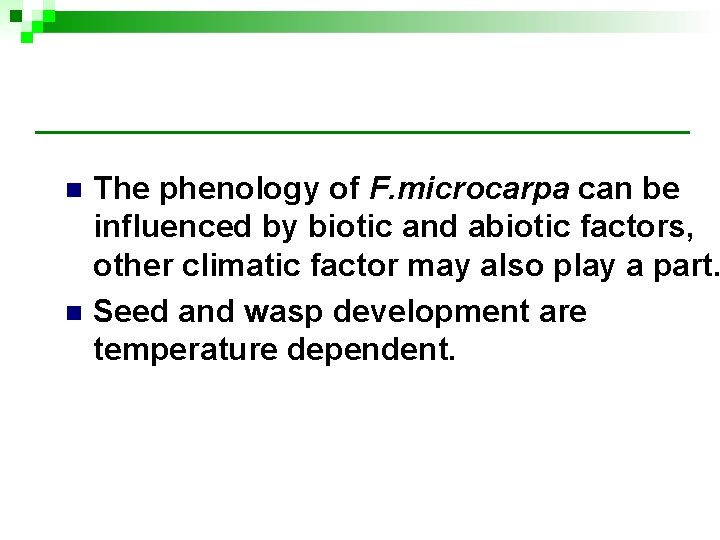
n n The phenology of F. microcarpa can be influenced by biotic and abiotic factors, other climatic factor may also play a part. Seed and wasp development are temperature dependent.
n n The phenology of F. microcarpa can be influenced by biotic and abiotic factors, other climatic factor may also play a part. Seed and wasp development are temperature dependent.