
PHEMU 21 Phnomnes Mutuels 2021 an international observing
PHEMU 21 (Phénomènes Mutuels 2021) an international observing program organised by the Institut de Mécanique Céleste et de Calcul des Éphémérides (IMCCE), Paris, France (Paris Obs) Jupiter Mutual Events 2021 Feb 28 to Nov 16 Dave Herald
• A mutual event is an eclipse or occultation of one satellite by another satellite • Mutual events can only occur when the plane of the orbits is edge-on to the Earth. For Jupiter, this occurs for a 12 -month period every 6 years. • Measuring/analysing the light curve leads to very precise measurements of the relative positions of the satellites. These can be used to improve our knowledge of the orbits, and long-term orbital variations 2
• Despite there having been several spacecraft orbiting Jupiter, these observations remain very important for measuring long-term variations in the motion of the satellites 3
Occult functionlity • Occult has functionality to predict events – under the Satellite Phenomena tab • The predictions: Øcan be limited to those visible at your location Øshow expected light curves Øillustrate the curcumstances 4
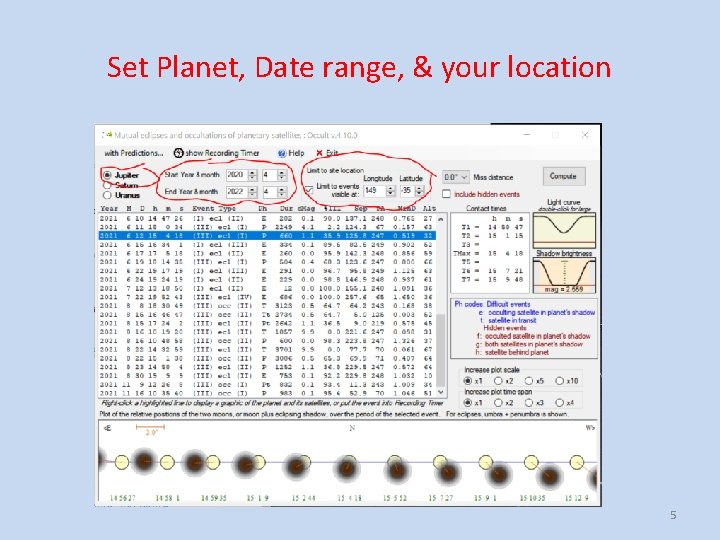
Set Planet, Date range, & your location 5
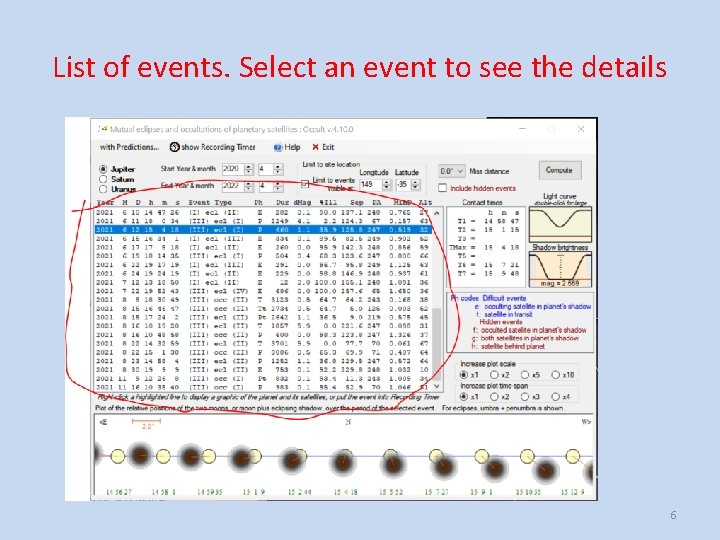
List of events. Select an event to see the details 6
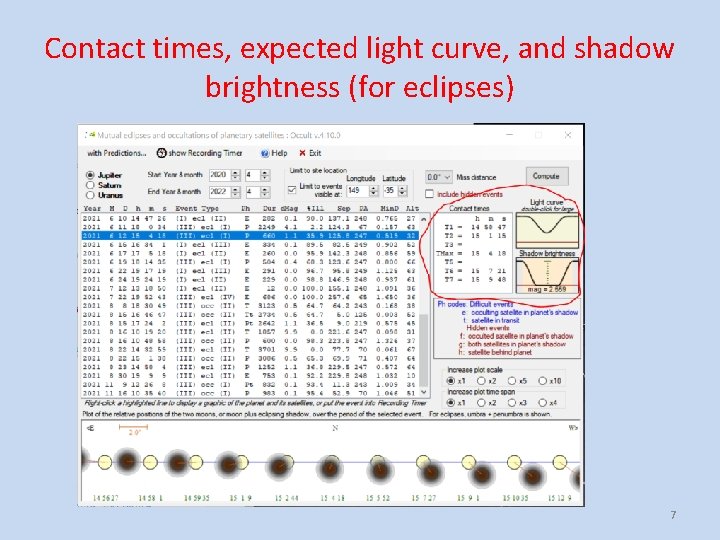
Contact times, expected light curve, and shadow brightness (for eclipses) 7
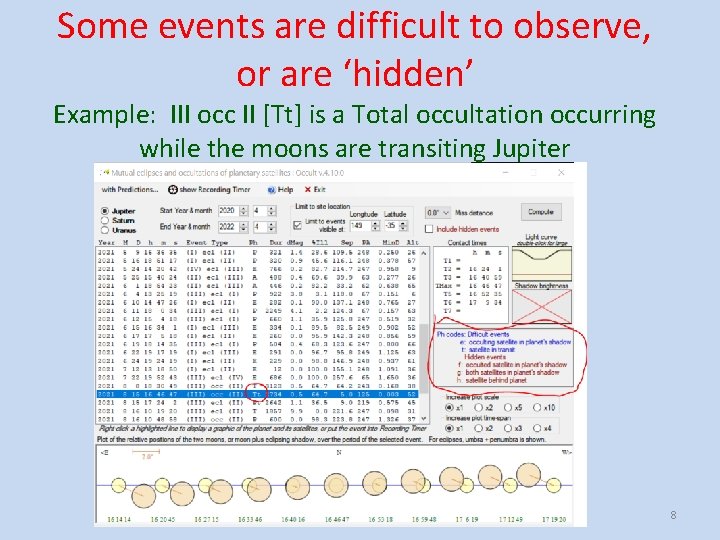
Some events are difficult to observe, or are ‘hidden’ Example: III occ II [Tt] is a Total occultation occurring while the moons are transiting Jupiter 8
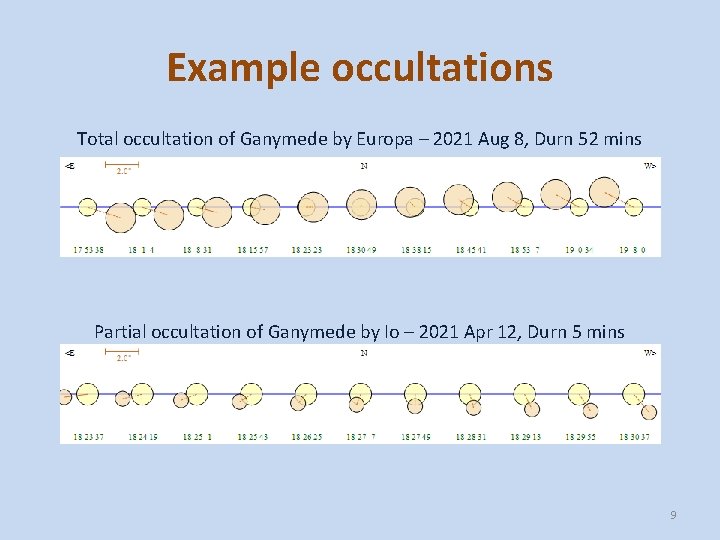
Example occultations Total occultation of Ganymede by Europa – 2021 Aug 8, Durn 52 mins Partial occultation of Ganymede by Io – 2021 Apr 12, Durn 5 mins 9
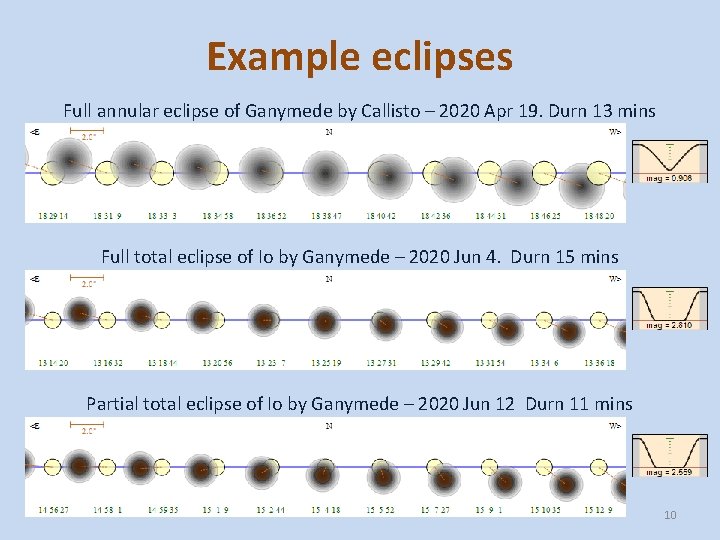
Example eclipses Full annular eclipse of Ganymede by Callisto – 2020 Apr 19. Durn 13 mins Full total eclipse of Io by Ganymede – 2020 Jun 4. Durn 15 mins Partial total eclipse of Io by Ganymede – 2020 Jun 12 Durn 11 mins 10
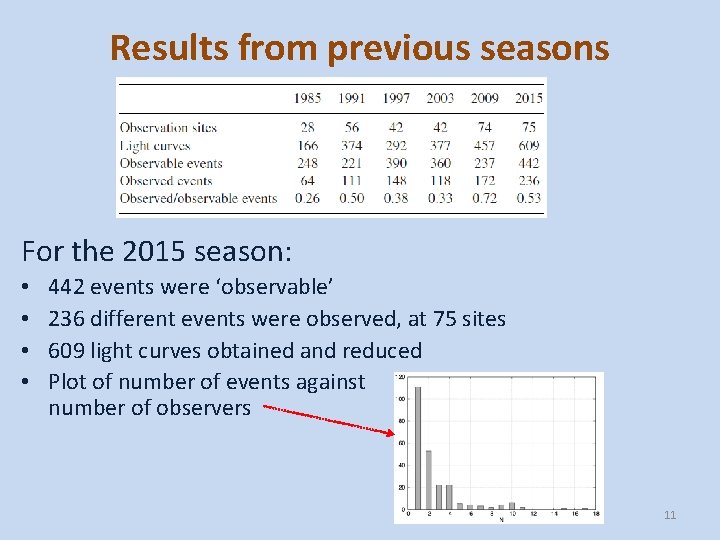
Results from previous seasons For the 2015 season: • • 442 events were ‘observable’ 236 different events were observed, at 75 sites 609 light curves obtained and reduced Plot of number of events against number of observers 11
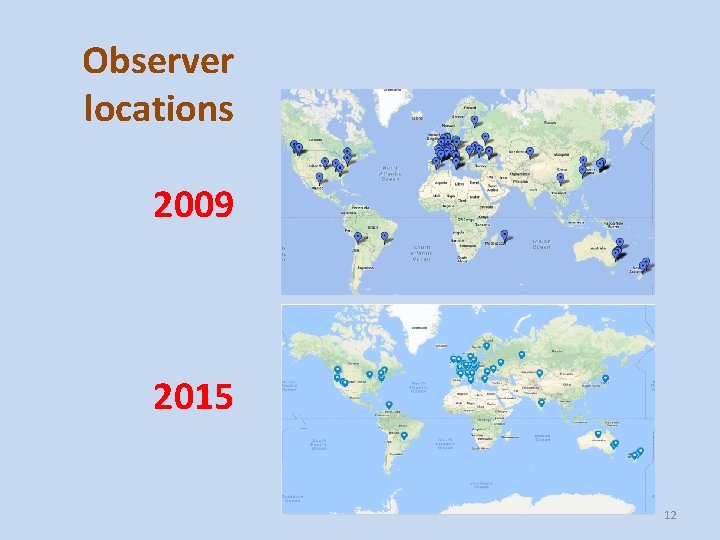
Observer locations 2009 2015 12
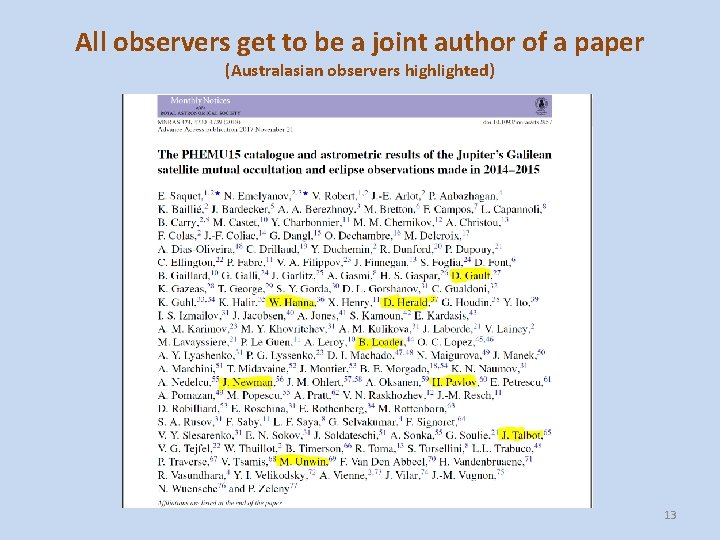
All observers get to be a joint author of a paper (Australasian observers highlighted) 13
Observing requirements • Driven Telescope (but need not be equatorial) • Time to 0. 1 secs UTC – GPS, NTP**, WWVH • Video with time stamp – Can achieve this by recording to a VCR, with VCR time stamp recording enabled. But need to check correction to VCR clock at start and end. • Recorder – VCR, Computer • Frame grabber – to convert to a. avi file 14
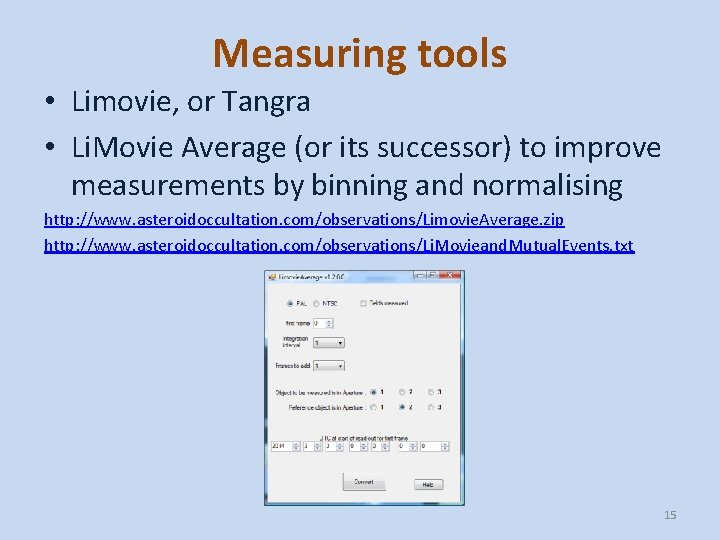
Measuring tools • Limovie, or Tangra • Li. Movie Average (or its successor) to improve measurements by binning and normalising http: //www. asteroidoccultation. com/observations/Limovie. Average. zip http: //www. asteroidoccultation. com/observations/Li. Movieand. Mutual. Events. txt 15
Reporting • Observations reported online to IMCCE {effectively, Paris Observatory} using: http: //www. sai. msu. ru/neb/nss/phemuobsai. htm • Simple text report (standard form) with attached. csv and optional plot, using the form downloaded from https: //www. imcce. fr/content/medias/recher che/campagnes-observations/phemu 15/ficheobs-phemu-v 3 -fr. txt 16
Observing issues • Need to compress the video when creating the avi file – otherwise the file will be HUGE • Concerns about linearity of the video camera. Where possible, make sure the Gamma is set to 1. • Image motion – minimise. In particular, any vignetting across the field will cause light variations if there is significant image movement 17
Observing issues 2 • IMCCE recommend the use of a red filter – reduce sky background • For events close to Jupiter’s limb – experiment with a Methane filter (if you happen to have one – they are expensive!). But exposures will have to be much longer • Highly desirable to have several independent observations of the same event • Best to avoid saturated images of the satellites – but no concern if the saturation is not great. 18
Observing issues 3 • Closeness to Jupiter can create problems with correcting for sky background, which will have a 2 nd-order variation with distance from Jupiter. Aperture sizes and shapes can affect the measurement result. – Tangra may be improved to model the glare from Jupiter, to improve background subtraction 19
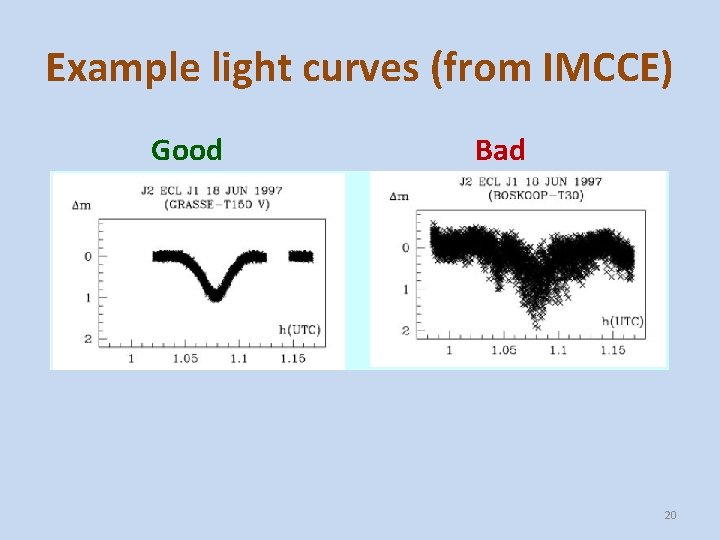
Example light curves (from IMCCE) Good Bad 20
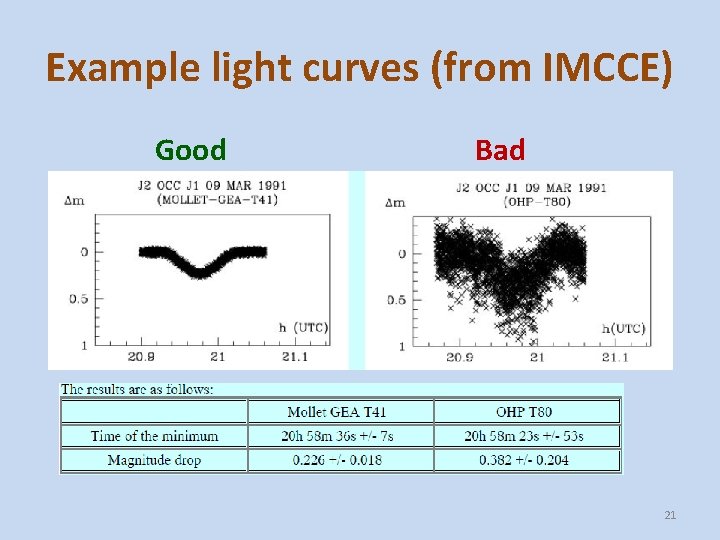
Example light curves (from IMCCE) Good Bad 21
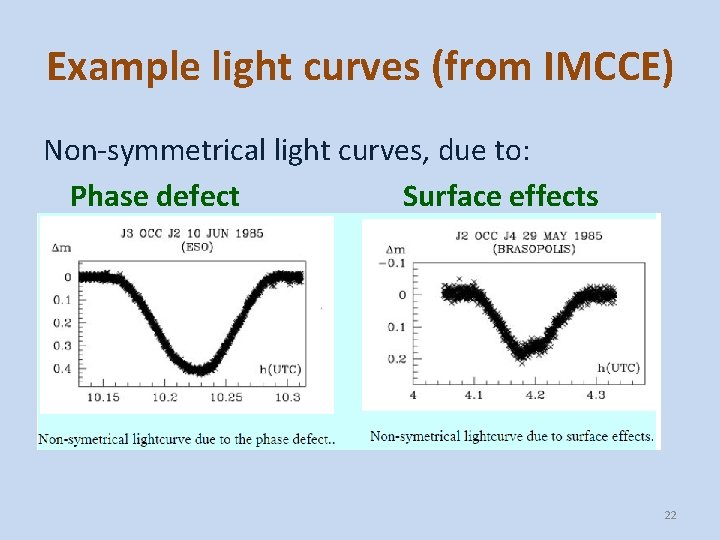
Example light curves (from IMCCE) Non-symmetrical light curves, due to: Phase defect Surface effects 22
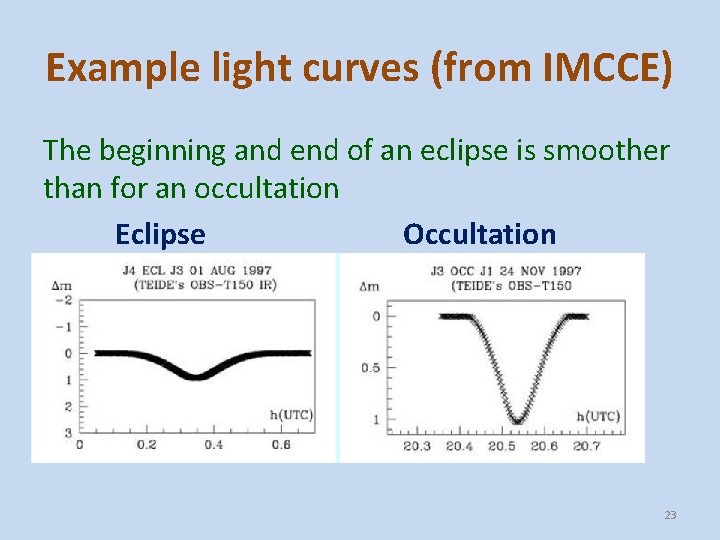
Example light curves (from IMCCE) The beginning and end of an eclipse is smoother than for an occultation Eclipse Occultation 23
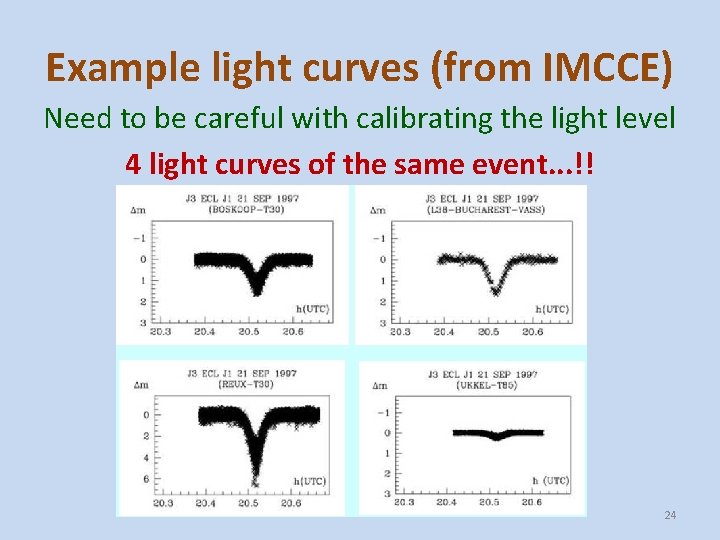
Example light curves (from IMCCE) Need to be careful with calibrating the light level 4 light curves of the same event. . . !! 24
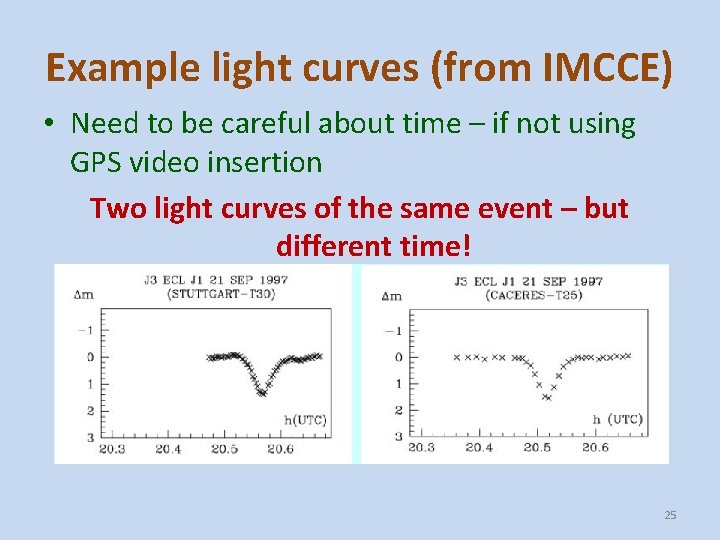
Example light curves (from IMCCE) • Need to be careful about time – if not using GPS video insertion Two light curves of the same event – but different time! 25
Summary of events visible from Eastern Australia & New Zealand 2021 Mar Apr # events 3 (2 ecl, 1 occ) 15 (13 ecl, 2 occ) 2021 Jul Aug # events 2 (2 ecl, 0 occ) 9 (5 ecl, 4 occ, with 2 pairs of simultaneous ecl Occ) May Jun 5 (5 ecl, 0 occ) 10 (10 ecl, 0 occ) Nov 2(0 ecl, 2 occ) Total 46 Jupiter at opposition 2021 Aug 21 Two events occur while the satellite transits Jupiter’s disc 2021 Aug 15 (III) occ & ecl (II) 2021 Nov 9 (III) occ (I) Overall, this series season of mutual events has far fewer opportunities than the last 6 series – so make the most of the events that are available! 26
More info & guidance IMCCE has a dedicated web page at: https: //www. imcce. fr/recherche/campagnes-observations/phemu#1 27
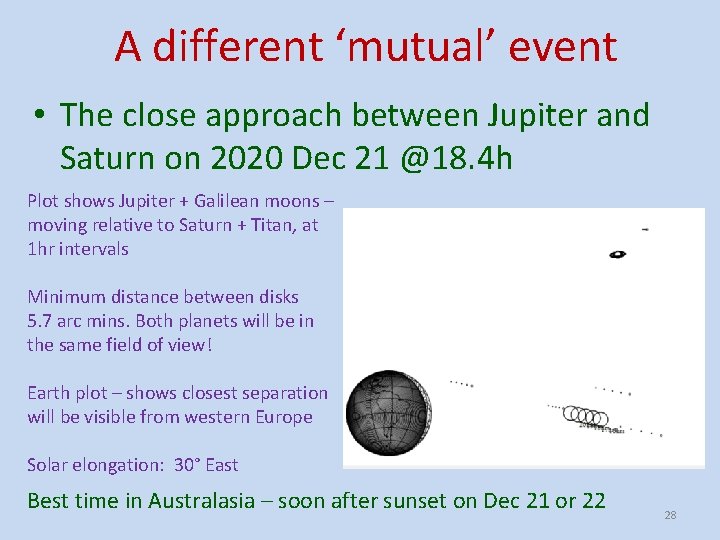
A different ‘mutual’ event • The close approach between Jupiter and Saturn on 2020 Dec 21 @18. 4 h Plot shows Jupiter + Galilean moons – moving relative to Saturn + Titan, at 1 hr intervals Minimum distance between disks 5. 7 arc mins. Both planets will be in the same field of view! Earth plot – shows closest separation will be visible from western Europe Solar elongation: 30° East Best time in Australasia – soon after sunset on Dec 21 or 22 28
Questions? 29
- Slides: 29