
Phases of Matter Examples of Plasma on Earth


- Slides: 16
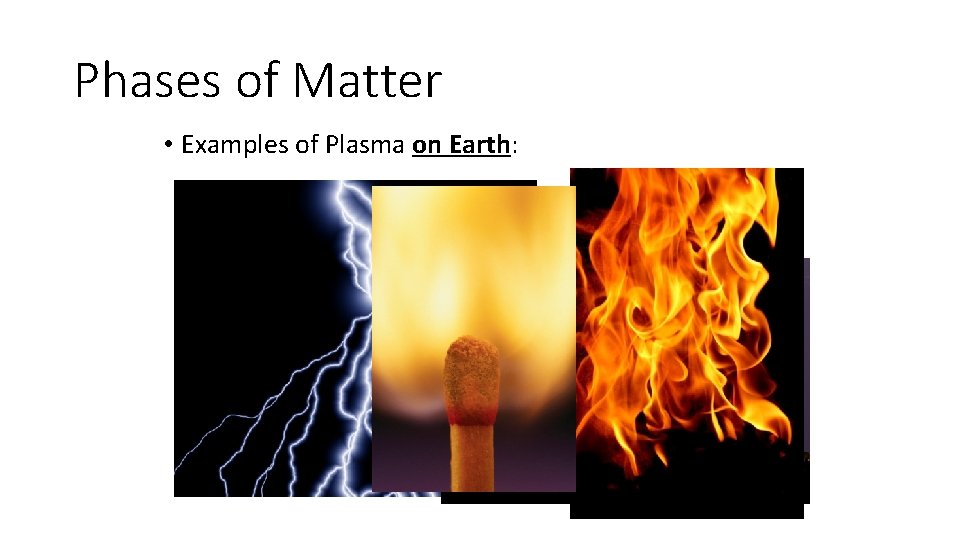
Phases of Matter • Examples of Plasma on Earth:
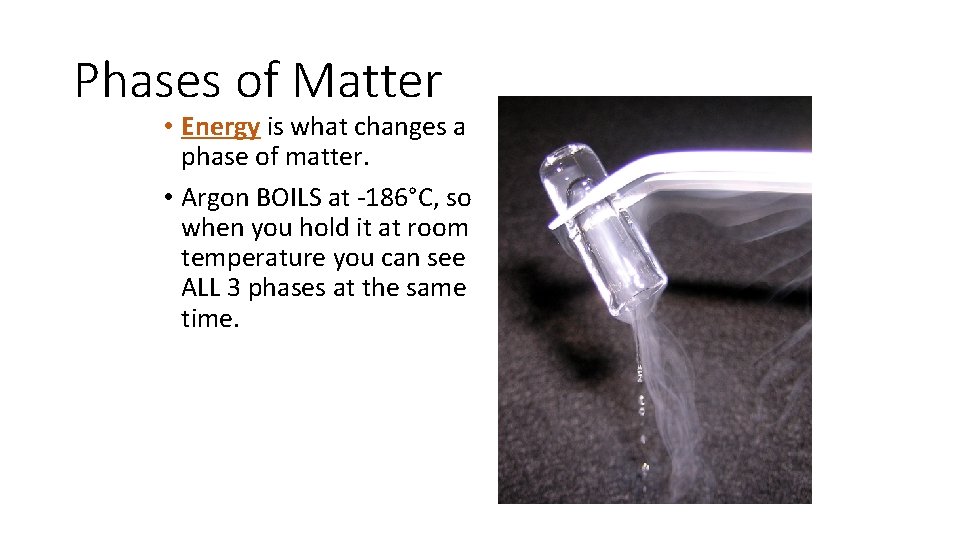
Phases of Matter • Energy is what changes a phase of matter. • Argon BOILS at -186°C, so when you hold it at room temperature you can see ALL 3 phases at the same time.
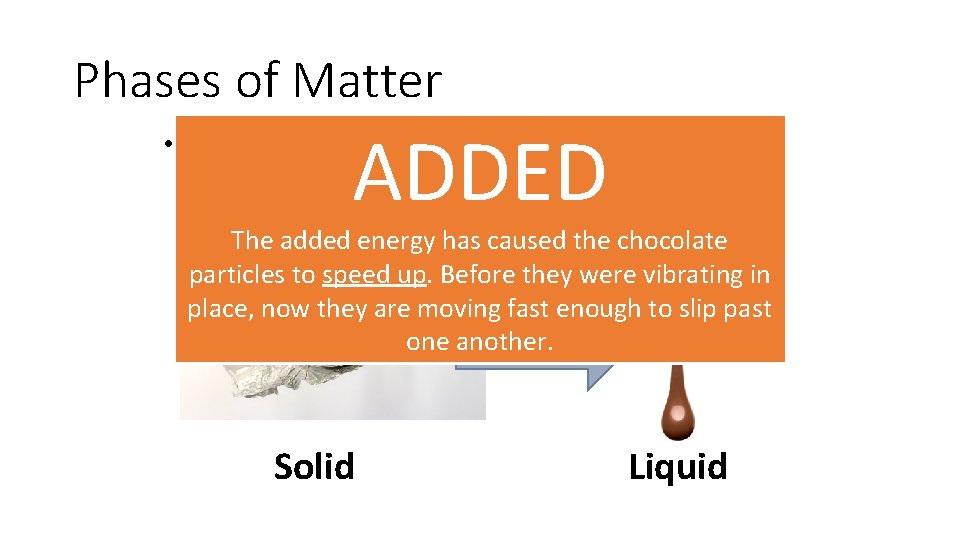
Phases of Matter ADDED • Is ENERGY being ADDED or TAKEN AWAY in this phase change: The added energy has caused the chocolate particles to speed up. Before they were vibrating in place, now they are moving fast enough to slip past one another. Solid Liquid
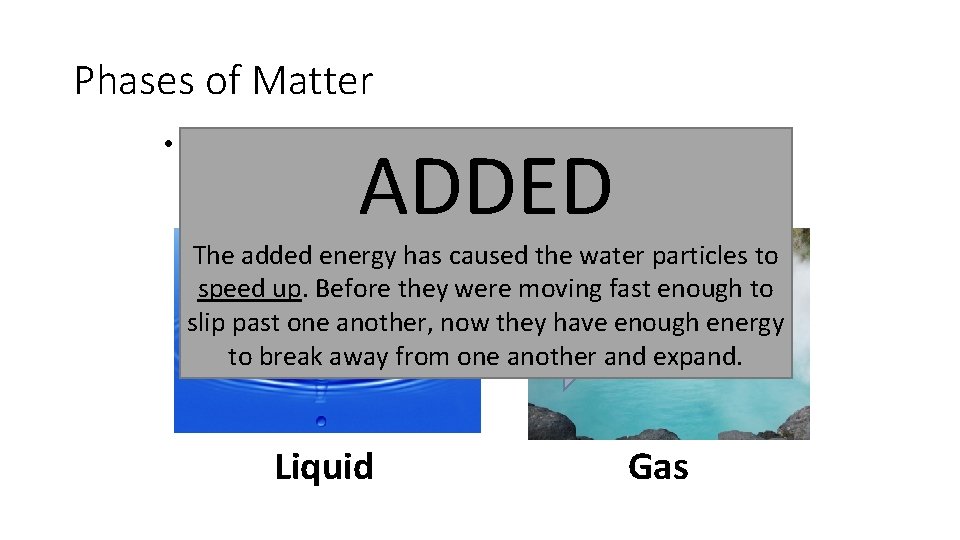
Phases of Matter • Is ENERGY being ADDED or TAKEN AWAY in this phase change: ADDED The added energy has caused the water particles to speed up. Before they were moving fast enough to slip past one another, now they have enough energy to break away from one another and expand. Liquid Gas
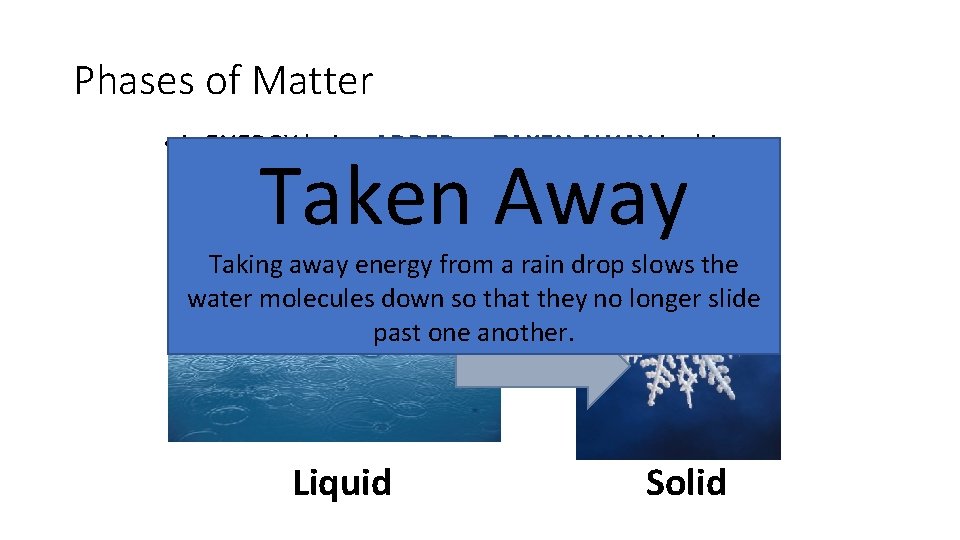
Phases of Matter • Is ENERGY being ADDED or TAKEN AWAY in this phase change: Taken Away Taking away energy from a rain drop slows the water molecules down so that they no longer slide past one another. Liquid Solid
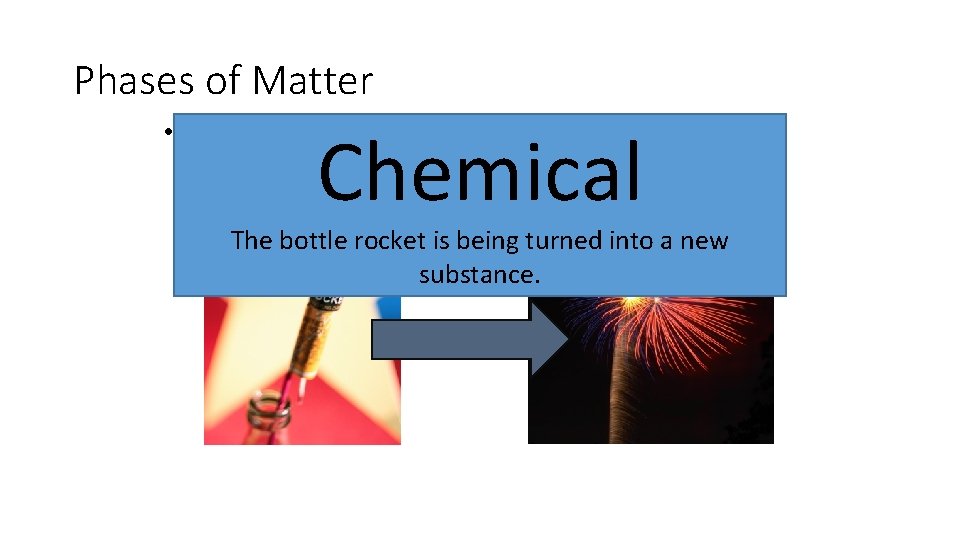
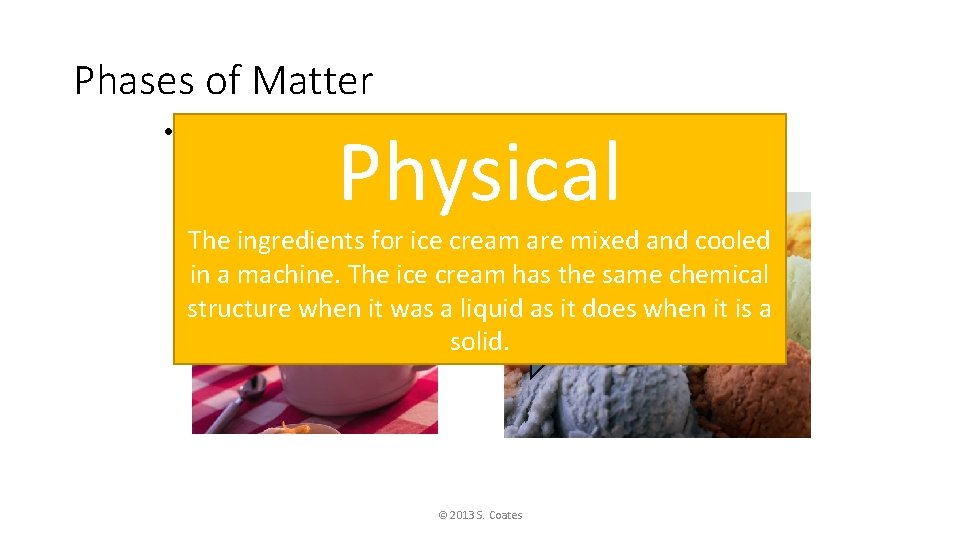
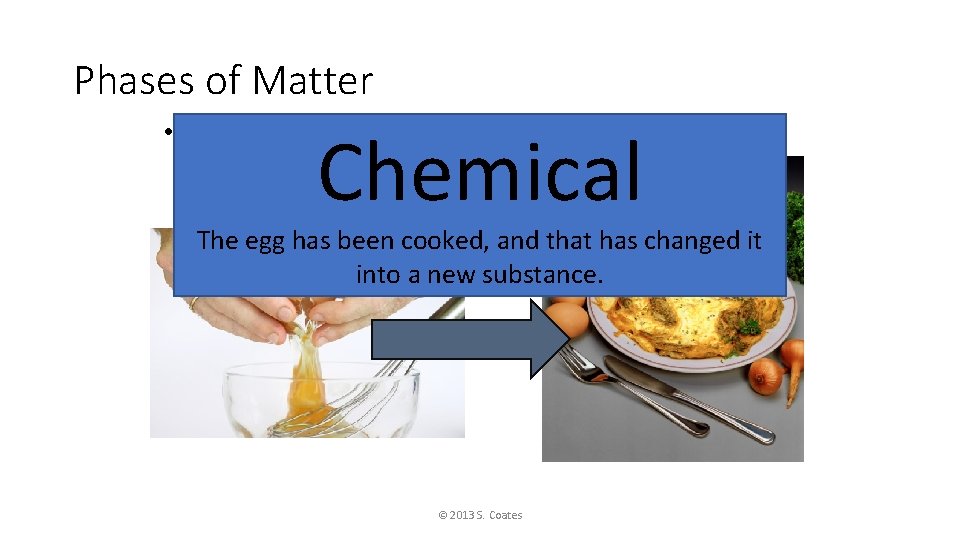
Phases of Matter • Matter can change phases permanently or temporarily. • Temporary changes are called PHYSICAL changes. • Permanent changes are called CHEMICAL changes.
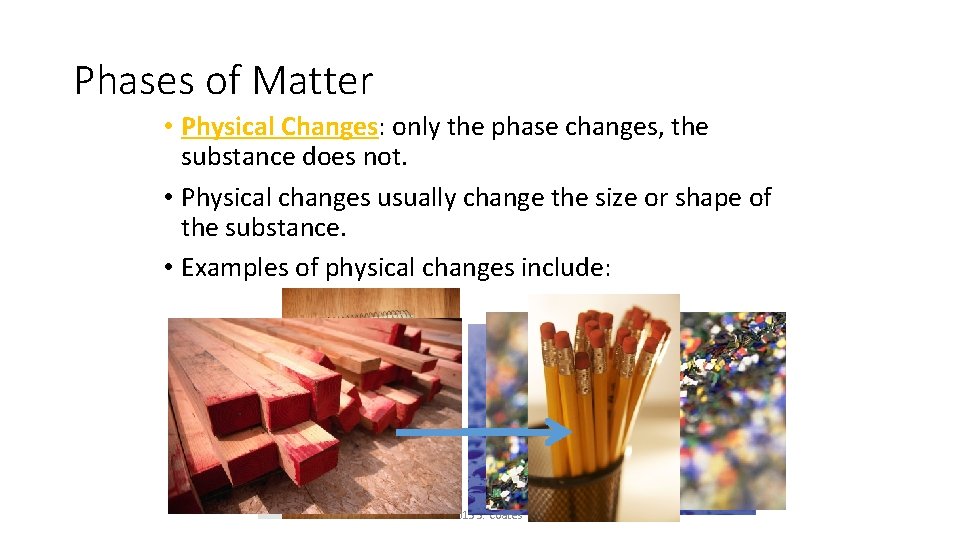
Phases of Matter • Physical Changes: only the phase changes, the substance does not. • Physical changes usually change the size or shape of the substance. • Examples of physical changes include: © 2013 S. Coates
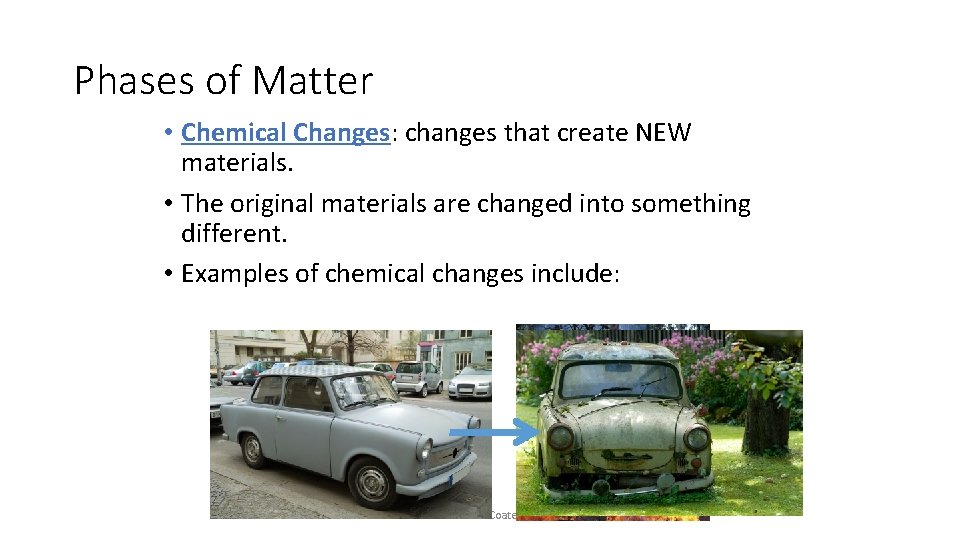
Phases of Matter • Chemical Changes: changes that create NEW materials. • The original materials are changed into something different. • Examples of chemical changes include: © 2013 S. Coates
Phases of Matter • Is this a chemical change, or a physical change? Chemical The bottle rocket is being turned into a new substance.
Phases of Matter • Is this a chemical change, or a physical change? Physical The ingredients for ice cream are mixed and cooled in a machine. The ice cream has the same chemical structure when it was a liquid as it does when it is a solid. © 2013 S. Coates
Phases of Matter • Is this a chemical change, or a physical change? Chemical The egg has been cooked, and that has changed it into a new substance. © 2013 S. Coates
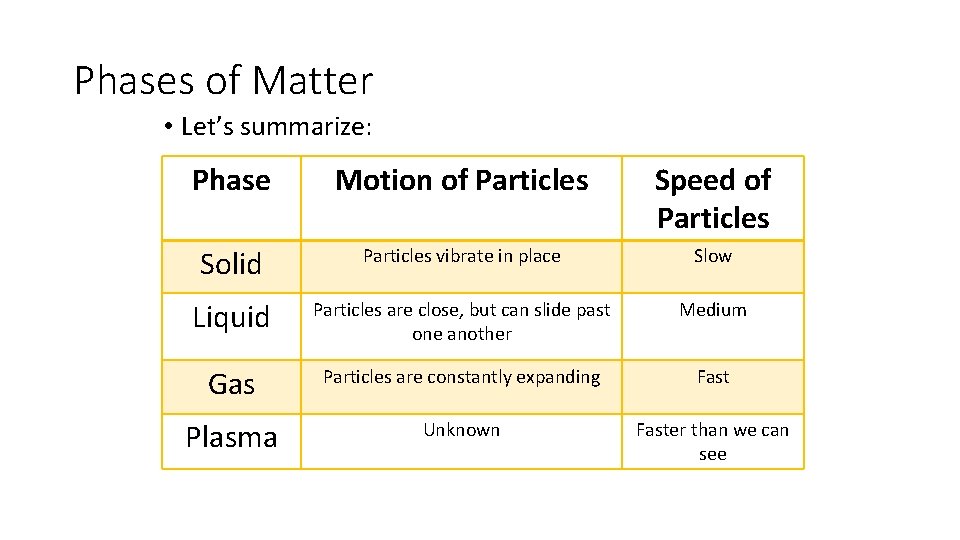
Phases of Matter • Let’s summarize: Phase Motion of Particles Speed of Particles Solid Particles vibrate in place Slow Liquid Particles are close, but can slide past one another Medium Gas Particles are constantly expanding Fast Plasma Unknown Faster than we can see
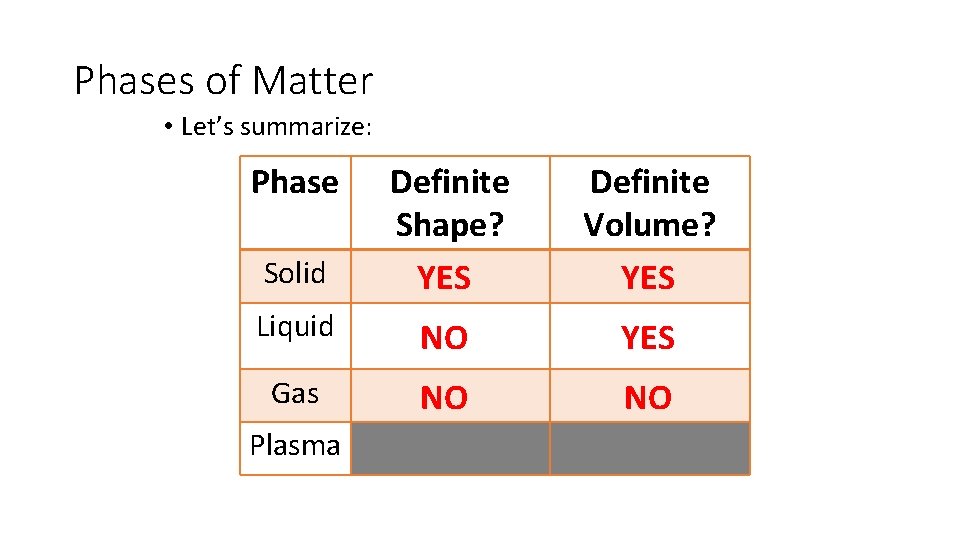
Phases of Matter • Let’s summarize: Phase Solid Definite Shape? YES Definite Volume? YES Liquid NO YES Gas NO NO Plasma
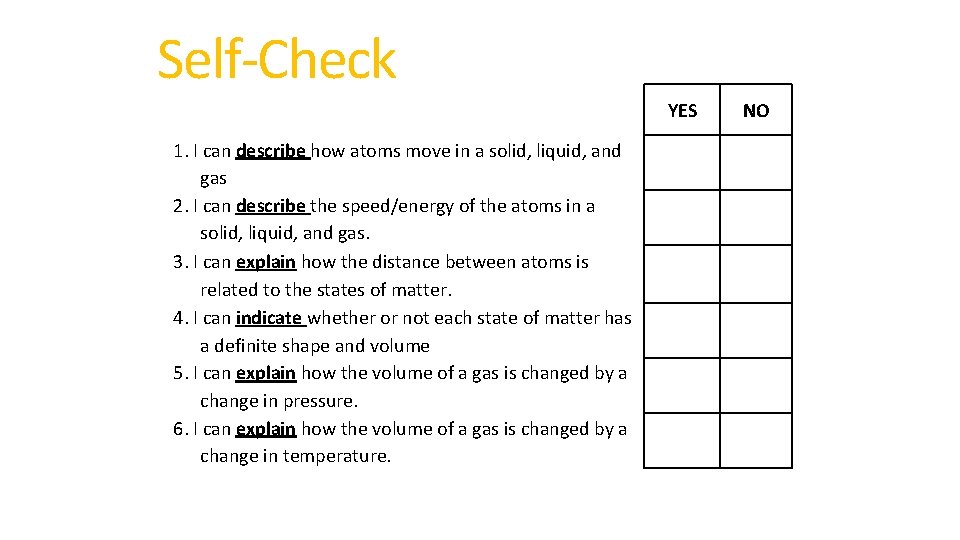
Self-Check YES 1. I can describe how atoms move in a solid, liquid, and gas 2. I can describe the speed/energy of the atoms in a solid, liquid, and gas. 3. I can explain how the distance between atoms is related to the states of matter. 4. I can indicate whether or not each state of matter has a definite shape and volume 5. I can explain how the volume of a gas is changed by a change in pressure. 6. I can explain how the volume of a gas is changed by a change in temperature. NO
Dates • Notes quiz 9/14 • Vocabulary quiz 9/15 © 2013 S. Coates