
Phases of a project By Dr Shabnum Shaheen
Phases of a project By: Dr. Shabnum Shaheen
Project • Simply a project is a series of tasks that need to be completed in order to reach a specific outcome. • A project can also be defined as a set of inputs and outputs required to achieve a particular goal

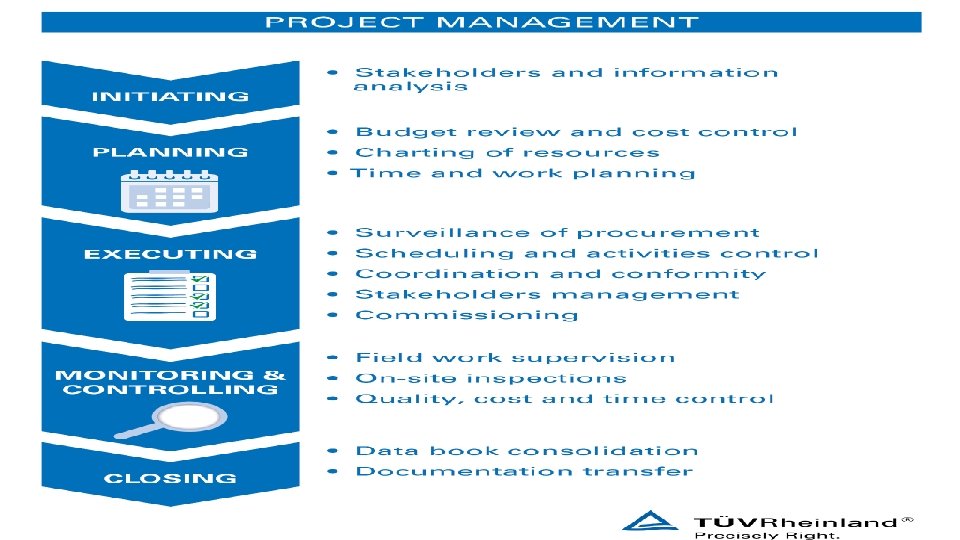
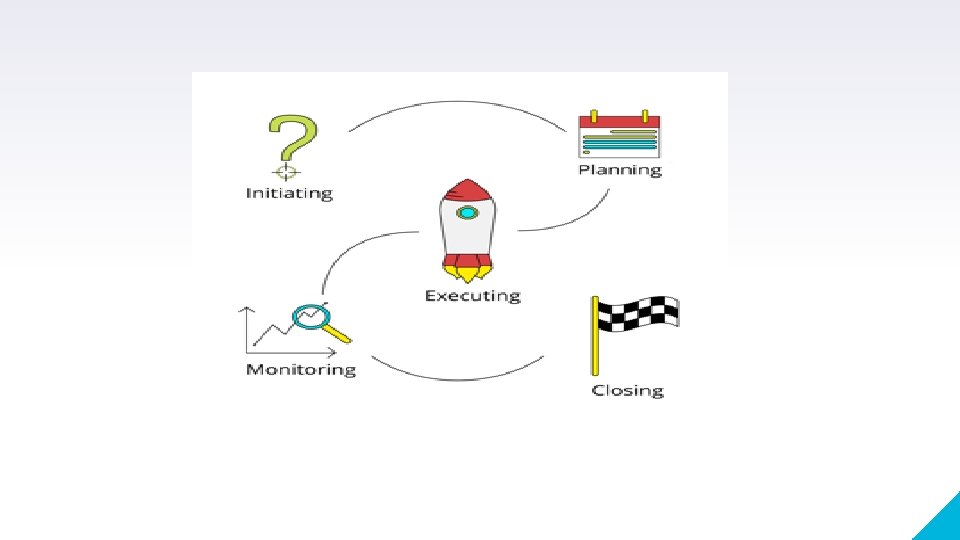
Project Phases ▸ Initiating the project ▸ Planning the project ▸ Executing the project ▸ Monitoring and controlling ▸ Closing the project

Project Initiation ▸ The first phase of Project Management Process in which activities are performed to asses the Size, Scope, and Complexity of the Project and to establish procedures to support later Project activities.

Project Initiation ▸ The project management techniques related to the project initiation phase include: ▸ Establishing the project initiation team. This involves organizing team members to assist in carrying out the project initiation activities. ▸ Establishing the project initiation plan. Defines the activities required to organize the team while working to define the goals and scope of the project. ▸ Establishing management procedures. Concerned with developing team communication and reporting procedures, job assignments and roles, project change procedure, and how project funding and billing will be handled.

Project Initiation ▸ Establishing the project management environment and workbook. Focuses on the collection and organization of the tools that you will use while managing the project.
Project Planning ▸ The Project Planning provides an overall framework for managing Project Costs and schedules. Project Planning takes place at the beginning and at the end of each Project Phase. Project Planning involves defining clear, discrete “Activities” or “Tasks” and the work needed to complete each Activity. ▸ Project Planning involves defining clear, discrete “Activities” or “Tasks” and the work needed to complete each Activity. An ACTIVITY is any work that has a beginning and an end.
Project Planning ▸ The project management techniques related to the project planning phase include: ▸ Describing project scope, alternatives, and feasibility. The understanding of the content and complexity of the project. Some relevant questions that should be answered include: ▸ What problem/opportunity does the project address? ▸ What results are to be achieved? ▸ How will success be measured?

Project Planning ▸ Divide the project into tasks. This technique is also known as the work breakdown structure. This step is done to ensure an easy progression between tasks. ▸ Estimating resources and creating a resource plan. This helps to gather and arrange resources in the most effective manner. ▸ Developing a preliminary schedule. In this step, you are to assign time estimates to each activity in the work breakdown structure. From here, you will be able to create the target start and end dates for the project.

Project Planning ▸ Determining project standards and procedures. The specification of how various deliverables are produced and tested by the project team. ▸ Creating a preliminary budget. The budget should summarize the planned expenses and revenues related to the project. ▸ Developing a statement of work. This document will list the work to be done and the expected outcome of the project. ▸ Setting a baseline project plan. This should provide an estimate of the project's tasks and resource requirements.
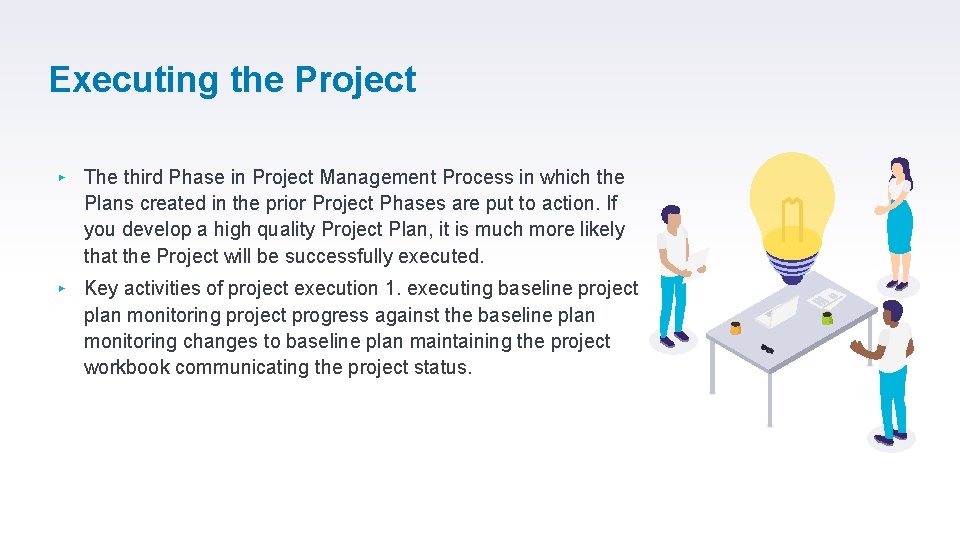
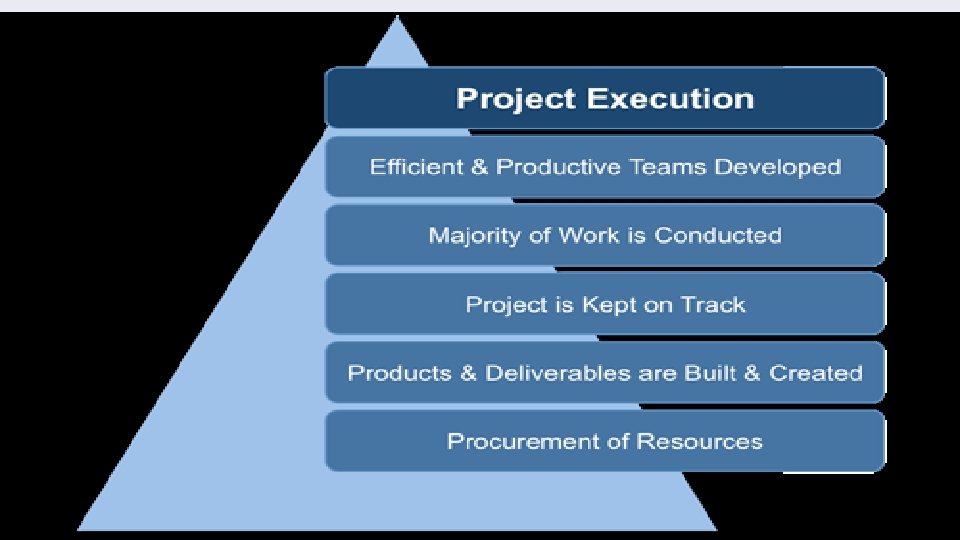
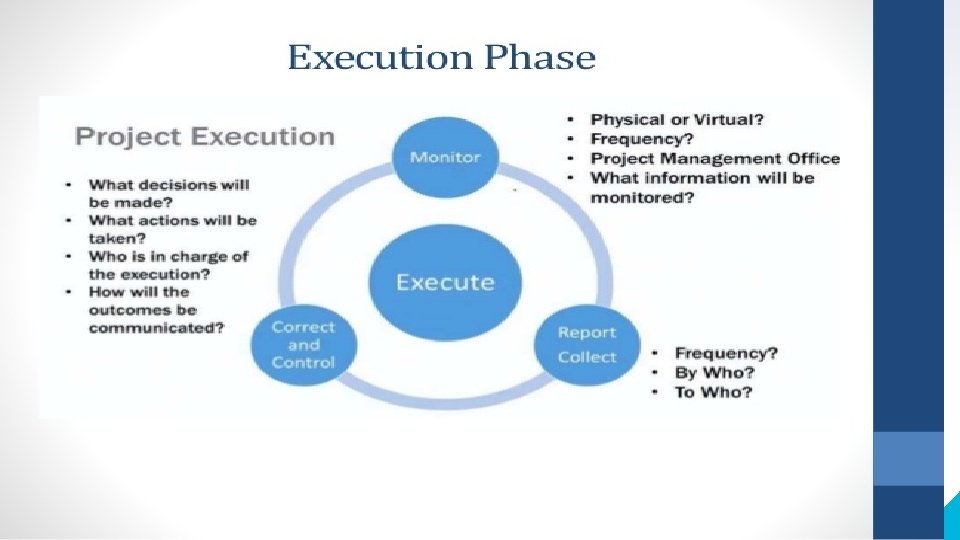
Executing the Project ▸ The third Phase in Project Management Process in which the Plans created in the prior Project Phases are put to action. If you develop a high quality Project Plan, it is much more likely that the Project will be successfully executed. ▸ Key activities of project execution 1. executing baseline project plan monitoring project progress against the baseline plan monitoring changes to baseline plan maintaining the project workbook communicating the project status.
Executing the Project ▸ The project management techniques related to the project execution phase include: ▸ Executing the baseline project plan. The job of the project manager is to initiate the execution of project activities, acquire and assign resources, orient and train new team members, keep the project on schedule, and assure the quality of project deliverables. ▸ Monitoring project progress against the baseline project plan. Using Gantt and PERT charts, which will be discussed in detail further on in this paper, can assist the project manager in doing this.

Executing the Project ▸ Managing changes to the baseline project plan. ▸ Maintaining the project workbook. Maintaining complete records of all project events is necessary. The project workbook is the primary source of information for producing all project reports. ▸ Communicating the project status. This means that the entire project plan should be shard with the entire project team and any revisions to the plan should be communicated to all interested parties so that everyone understands how the plan is evolving.
Project Monitoring and Controlling • Monitoring deviation from the plan • Taking corrective action to match actual progress with the plan • Receiving and evaluating project changes requested • Rescheduling the project as necessary • Adapting resource levels as necessary • Changing the project scope • Returning to the planning stage
Closing the Project ▸ The final Phase of Project Management process which focuses on bringing a Project to an end. Closedown is a very important activity since a Project is not complete until it is closed and it is at closedown that projects are deemed a success or failure. ▸ Projects can conclude with a natural or unnatural termination. Natural termination occurs when the requirements of the Project have been met and thus the Project completed and is a success. An Unnatural termination occurs when the Project is stopped before natural completion.
Closing the Project ▸ The project management techniques related to the project closedown phase include: ▸ Closing down the project. In this stage, it is important to notify all interested parties of the completion of the project. Also, all project documentation and records should be finalized so that the final review of the project can be conducted. ▸ Conducting post project reviews. This is done to determine the strengths and weaknesses of project deliverables, the processes used to create them, and the project management process.

n a h T o s ku ! h c u m
- Slides: 21