
Phase Ib Study of the AntiTIM3 Antibody MBG
Phase Ib Study of the Anti–TIM-3 Antibody MBG 453 in Combination With Decitabine in Patients With High-Risk Myelodysplastic Syndrome and Acute Myeloid Leukemia Abstract 570 Borate U, Esteve J, Porkka K, Knapper S, Vey N, Scholl S, Garcia-Manero G, Wermke M, Janssen J, Traer E, Chua CC, Narayan R, Tovar N, Kontro M, Ottmann O, Sun H, Longmire T, Szpakowski S, Liao S, Mohammed A, Patel A, Rinne M, Brunner A, Wei AH
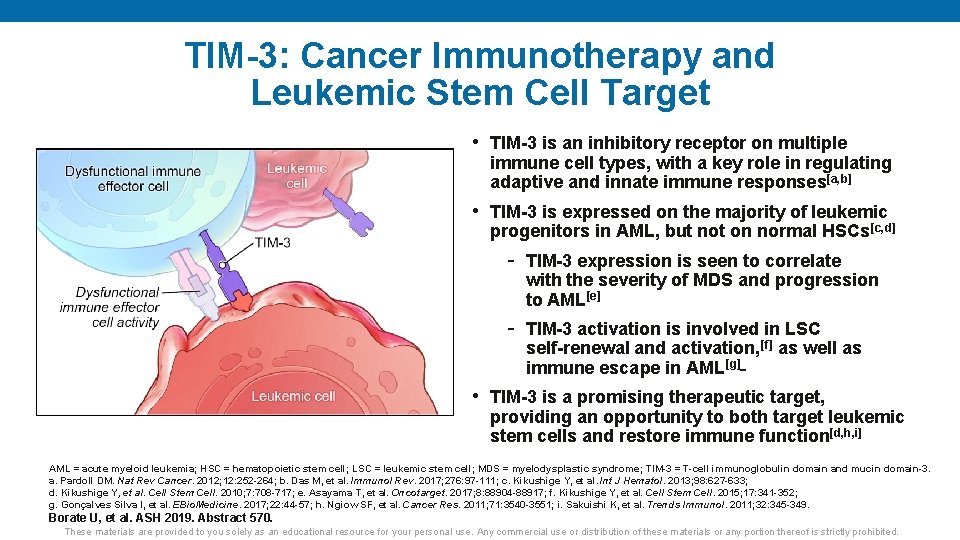
TIM-3: Cancer Immunotherapy and Leukemic Stem Cell Target • TIM-3 is an inhibitory receptor on multiple immune cell types, with a key role in regulating adaptive and innate immune responses[a, b] • TIM-3 is expressed on the majority of leukemic progenitors in AML, but not on normal HSCs[c, d] - TIM-3 expression is seen to correlate with the severity of MDS and progression to AML[e] - TIM-3 activation is involved in LSC self-renewal and activation, [f] as well as immune escape in AML[g] • TIM-3 is a promising therapeutic target, providing an opportunity to both target leukemic stem cells and restore immune function[d, h, i] AML = acute myeloid leukemia; HSC = hematopoietic stem cell; LSC = leukemic stem cell; MDS = myelodysplastic syndrome; TIM-3 = T-cell immunoglobulin domain and mucin domain-3. a. Pardoll DM. Nat Rev Cancer. 2012; 12: 252 -264; b. Das M, et al. Immunol Rev. 2017; 276: 97 -111; c. Kikushige Y, et al. Int J Hematol. 2013; 98: 627 -633; d. Kikushige Y, et al. Cell Stem Cell. 2010; 7: 708 -717; e. Asayama T, et al. Oncotarget. 2017; 8: 88904 -88917; f. Kikushige Y, et al. Cell Stem Cell. 2015; 17: 341 -352; g. Gonçalves Silva I, et al. EBio. Medicine. 2017; 22: 44 -57; h. Ngiow SF, et al. Cancer Res. 2011; 71: 3540 -3551; i. Sakuishi K, et al. Trends Immunol. 2011; 32: 345 -349. Borate U, et al. ASH 2019. Abstract 570. These materials are provided to you solely as an educational resource for your personal use. Any commercial use or distribution of these materials or any portion thereof is strictly prohibited.
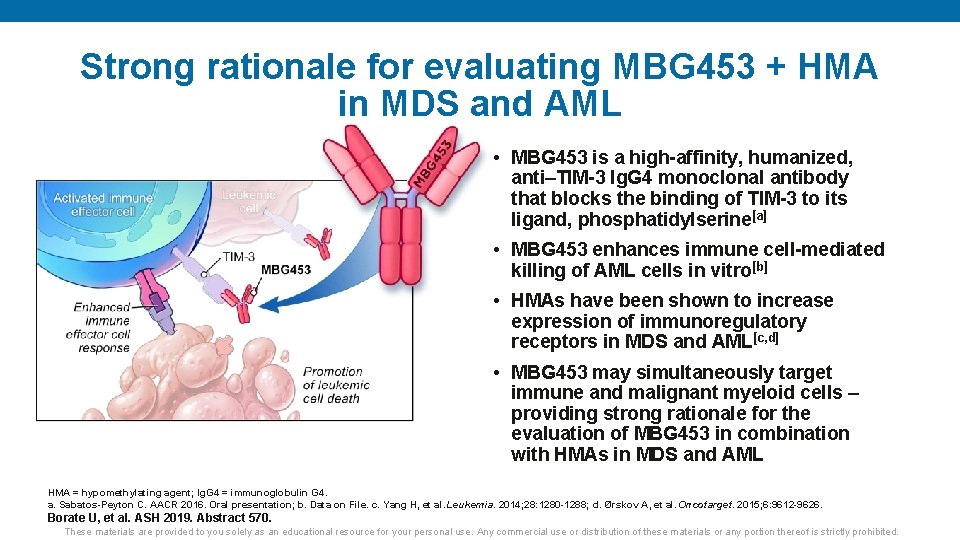
Strong rationale for evaluating MBG 453 + HMA in MDS and AML • MBG 453 is a high-affinity, humanized, anti–TIM-3 Ig. G 4 monoclonal antibody that blocks the binding of TIM-3 to its ligand, phosphatidylserine[a] • MBG 453 enhances immune cell-mediated killing of AML cells in vitro[b] • HMAs have been shown to increase expression of immunoregulatory receptors in MDS and AML[c, d] • MBG 453 may simultaneously target immune and malignant myeloid cells – providing strong rationale for the evaluation of MBG 453 in combination with HMAs in MDS and AML HMA = hypomethylating agent; Ig. G 4 = immunoglobulin G 4. a. Sabatos-Peyton C. AACR 2016. Oral presentation; b. Data on File. c. Yang H, et al. Leukemia. 2014; 28: 1280 -1288; d. Ørskov A, et al. Oncotarget. 2015; 6: 9612 -9626. Borate U, et al. ASH 2019. Abstract 570. These materials are provided to you solely as an educational resource for your personal use. Any commercial use or distribution of these materials or any portion thereof is strictly prohibited.
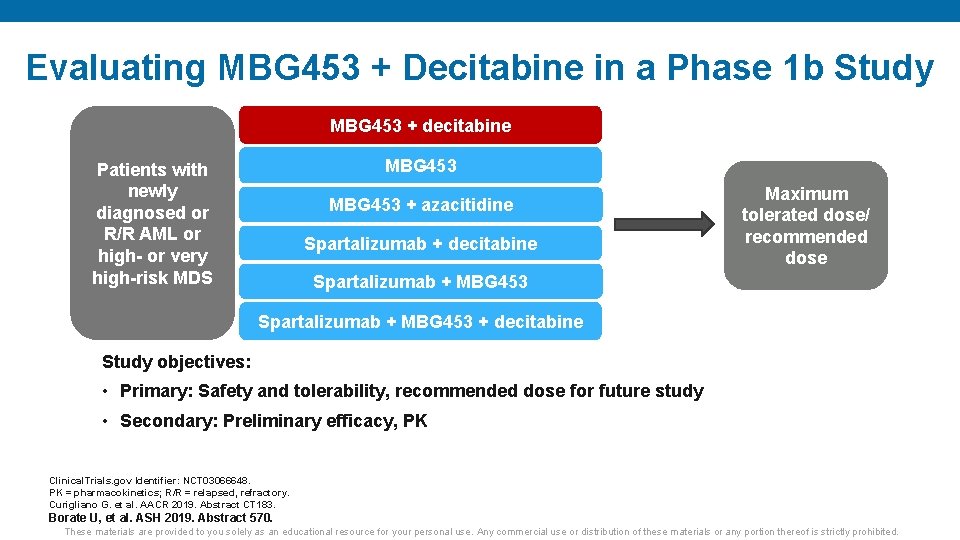
Evaluating MBG 453 + Decitabine in a Phase 1 b Study MBG 453 + decitabine MBG 453 Patients with newly diagnosed or R/R AML or high- or very high-risk MDS MBG 453 + azacitidine Spartalizumab + decitabine Maximum tolerated dose/ recommended dose Spartalizumab + MBG 453 + decitabine Study objectives: • Primary: Safety and tolerability, recommended dose for future study • Secondary: Preliminary efficacy, PK Clinical. Trials. gov Identifier: NCT 03066648. PK = pharmacokinetics; R/R = relapsed, refractory. Curigliano G. et al. AACR 2019. Abstract CT 183. Borate U, et al. ASH 2019. Abstract 570. These materials are provided to you solely as an educational resource for your personal use. Any commercial use or distribution of these materials or any portion thereof is strictly prohibited.
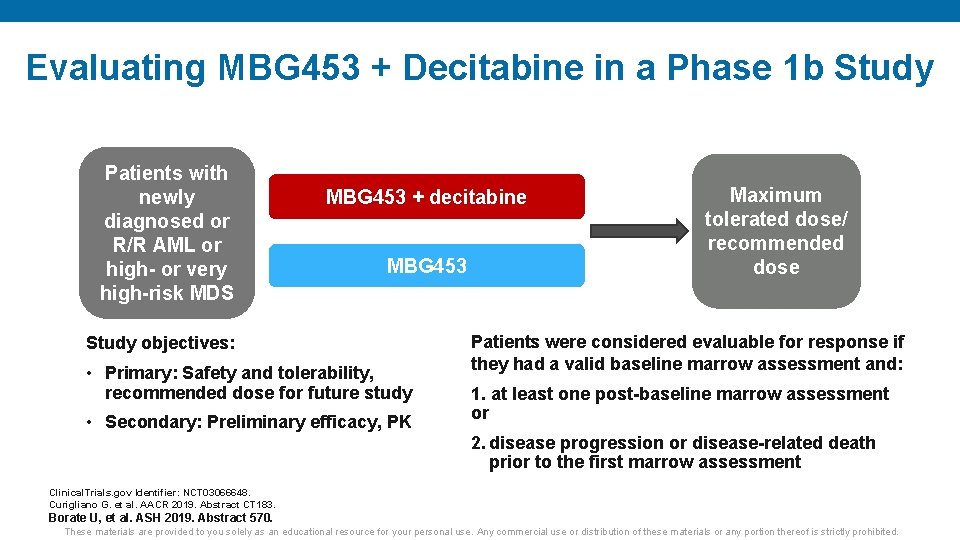
Evaluating MBG 453 + Decitabine in a Phase 1 b Study Patients with newly diagnosed or R/R AML or high- or very high-risk MDS MBG 453 + decitabine MBG 453 Study objectives: • Primary: Safety and tolerability, recommended dose for future study • Secondary: Preliminary efficacy, PK Maximum tolerated dose/ recommended dose Patients were considered evaluable for response if they had a valid baseline marrow assessment and: 1. at least one post-baseline marrow assessment or 2. disease progression or disease-related death prior to the first marrow assessment Clinical. Trials. gov Identifier: NCT 03066648. Curigliano G. et al. AACR 2019. Abstract CT 183. Borate U, et al. ASH 2019. Abstract 570. These materials are provided to you solely as an educational resource for your personal use. Any commercial use or distribution of these materials or any portion thereof is strictly prohibited.
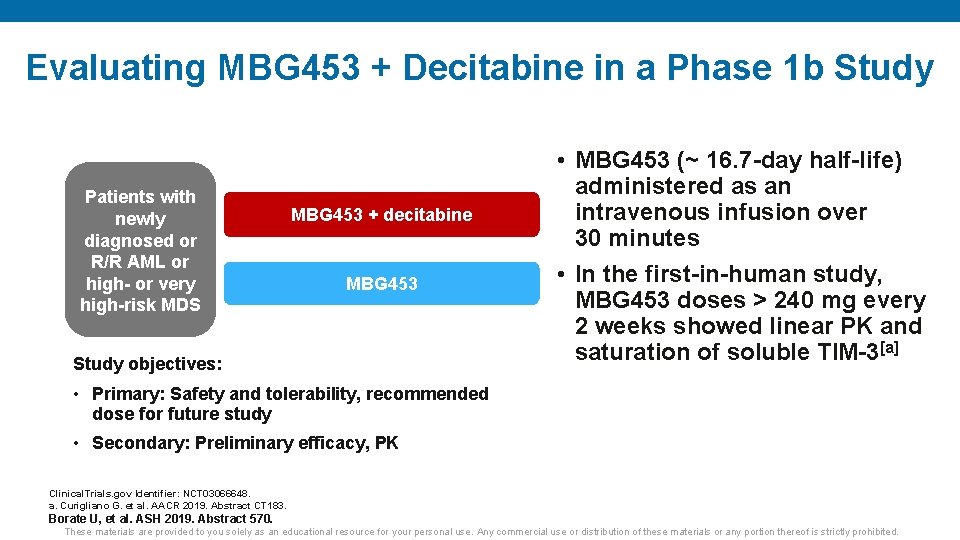
Evaluating MBG 453 + Decitabine in a Phase 1 b Study Patients with newly diagnosed or R/R AML or high- or very high-risk MDS MBG 453 + decitabine MBG 453 Study objectives: • MBG 453 (~ 16. 7 -day half-life) administered as an intravenous infusion over 30 minutes • In the first-in-human study, MBG 453 doses > 240 mg every 2 weeks showed linear PK and saturation of soluble TIM-3[a] • Primary: Safety and tolerability, recommended dose for future study • Secondary: Preliminary efficacy, PK Clinical. Trials. gov Identifier: NCT 03066648. a. Curigliano G. et al. AACR 2019. Abstract CT 183. Borate U, et al. ASH 2019. Abstract 570. These materials are provided to you solely as an educational resource for your personal use. Any commercial use or distribution of these materials or any portion thereof is strictly prohibited.
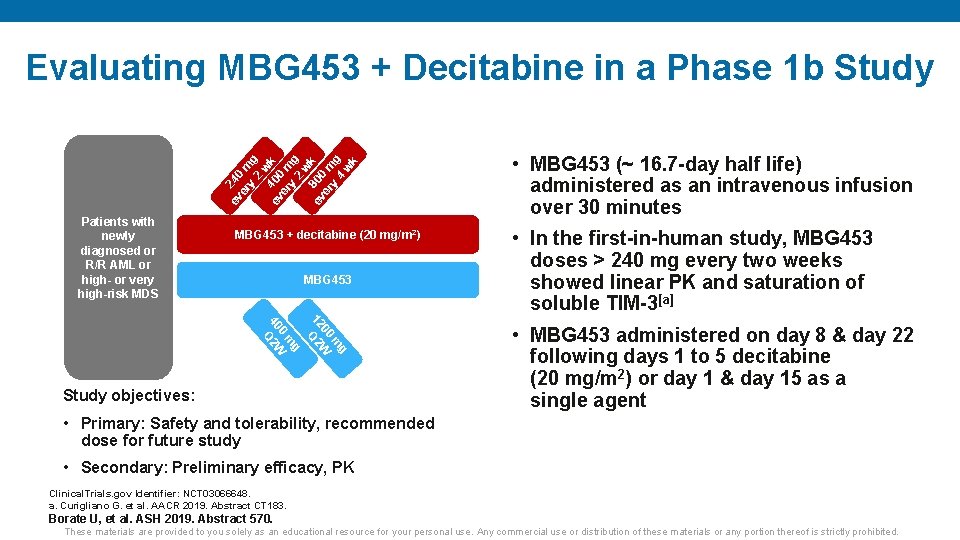
ev 240 er m y g 2 w ev 400 k er m y g 2 w k ev 800 er m y g 4 w k Evaluating MBG 453 + Decitabine in a Phase 1 b Study Patients with newly diagnosed or R/R AML or high- or very high-risk MDS MBG 453 + decitabine (20 mg/m 2) MBG 453 g m 00 W 12 Q 2 g m 0 40 2 W Q Study objectives: • MBG 453 (~ 16. 7 -day half life) administered as an intravenous infusion over 30 minutes • In the first-in-human study, MBG 453 doses > 240 mg every two weeks showed linear PK and saturation of soluble TIM-3[a] • MBG 453 administered on day 8 & day 22 following days 1 to 5 decitabine (20 mg/m 2) or day 1 & day 15 as a single agent • Primary: Safety and tolerability, recommended dose for future study • Secondary: Preliminary efficacy, PK Clinical. Trials. gov Identifier: NCT 03066648. a. Curigliano G. et al. AACR 2019. Abstract CT 183. Borate U, et al. ASH 2019. Abstract 570. These materials are provided to you solely as an educational resource for your personal use. Any commercial use or distribution of these materials or any portion thereof is strictly prohibited.
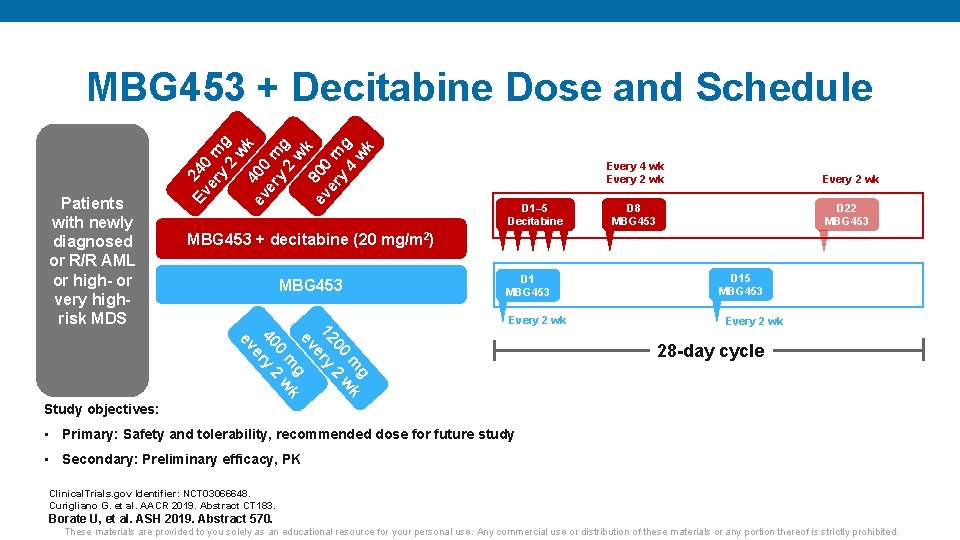
Patients with newly diagnosed or R/R AML or high- or very highrisk MDS Ev 240 er m y g 2 w k 4 ev 00 er m y g 2 w k 8 ev 00 er m y g 4 w k MBG 453 + Decitabine Dose and Schedule Every 4 wk Every 2 wk D 1– 5 Decitabine Every 2 wk D 8 MBG 453 D 22 MBG 453 + decitabine (20 mg/m 2) MBG 453 D 1 MBG 453 Every 2 wk D 15 MBG 453 Every 2 wk g m k 00 2 w 12 ry e ev g m k 0 w 40 ry 2 e ev 28 -day cycle Study objectives: • Primary: Safety and tolerability, recommended dose for future study • Secondary: Preliminary efficacy, PK Clinical. Trials. gov Identifier: NCT 03066648. Curigliano G. et al. AACR 2019. Abstract CT 183. Borate U, et al. ASH 2019. Abstract 570. These materials are provided to you solely as an educational resource for your personal use. Any commercial use or distribution of these materials or any portion thereof is strictly prohibited.
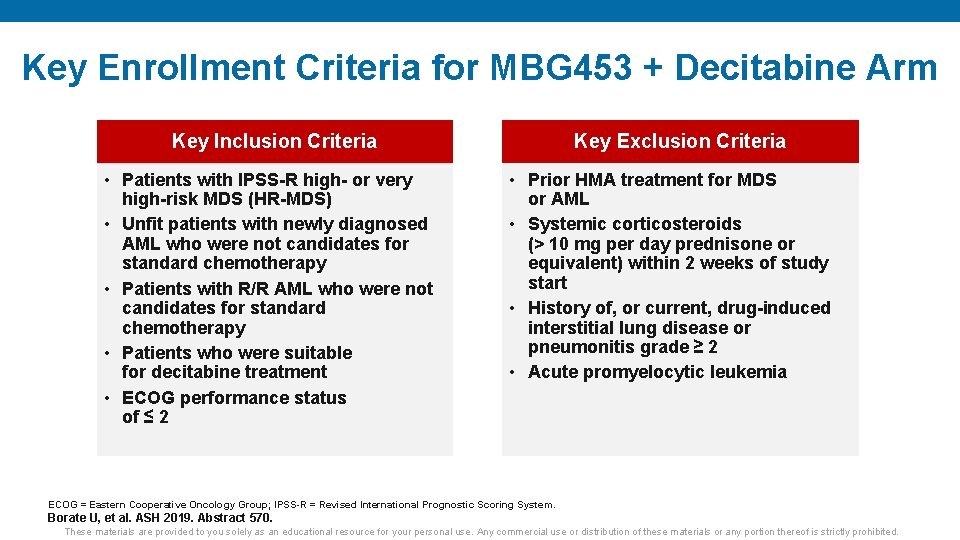
Key Enrollment Criteria for MBG 453 + Decitabine Arm Key Exclusion Criteria Key Inclusion Criteria • Patients with IPSS-R high- or very high-risk MDS (HR-MDS) • Unfit patients with newly diagnosed AML who were not candidates for standard chemotherapy • Patients with R/R AML who were not candidates for standard chemotherapy • Patients who were suitable for decitabine treatment • ECOG performance status of ≤ 2 • Prior HMA treatment for MDS or AML • Systemic corticosteroids (> 10 mg per day prednisone or equivalent) within 2 weeks of study start • History of, or current, drug-induced interstitial lung disease or pneumonitis grade ≥ 2 • Acute promyelocytic leukemia ECOG = Eastern Cooperative Oncology Group; IPSS-R = Revised International Prognostic Scoring System. Borate U, et al. ASH 2019. Abstract 570. These materials are provided to you solely as an educational resource for your personal use. Any commercial use or distribution of these materials or any portion thereof is strictly prohibited.
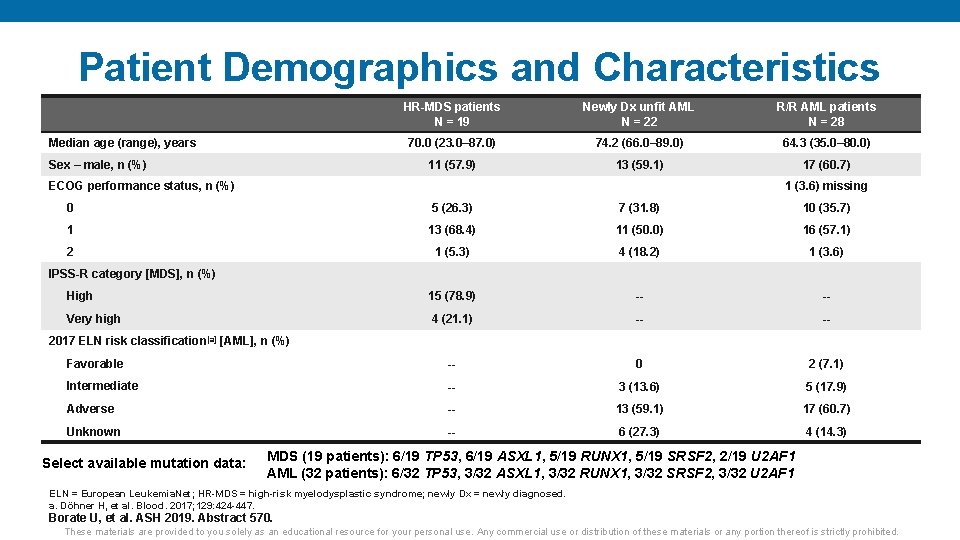
Patient Demographics and Characteristics Median age (range), years Sex – male, n (%) HR-MDS patients N = 19 Newly Dx unfit AML N = 22 R/R AML patients N = 28 70. 0 (23. 0– 87. 0) 74. 2 (66. 0– 89. 0) 64. 3 (35. 0– 80. 0) 11 (57. 9) 13 (59. 1) 17 (60. 7) ECOG performance status, n (%) 1 (3. 6) missing 0 5 (26. 3) 7 (31. 8) 10 (35. 7) 1 13 (68. 4) 11 (50. 0) 16 (57. 1) 2 1 (5. 3) 4 (18. 2) 1 (3. 6) High 15 (78. 9) -- -- Very high 4 (21. 1) -- -- Favorable -- 0 2 (7. 1) Intermediate -- 3 (13. 6) 5 (17. 9) Adverse -- 13 (59. 1) 17 (60. 7) Unknown -- 6 (27. 3) 4 (14. 3) IPSS-R category [MDS], n (%) 2017 ELN risk classification[a] [AML], n (%) Select available mutation data: MDS (19 patients): 6/19 TP 53, 6/19 ASXL 1, 5/19 RUNX 1, 5/19 SRSF 2, 2/19 U 2 AF 1 AML (32 patients): 6/32 TP 53, 3/32 ASXL 1, 3/32 RUNX 1, 3/32 SRSF 2, 3/32 U 2 AF 1 ELN = European Leukemia. Net; HR-MDS = high-risk myelodysplastic syndrome; newly Dx = newly diagnosed. a. Döhner H, et al. Blood. 2017; 129: 424 -447. Borate U, et al. ASH 2019. Abstract 570. These materials are provided to you solely as an educational resource for your personal use. Any commercial use or distribution of these materials or any portion thereof is strictly prohibited.
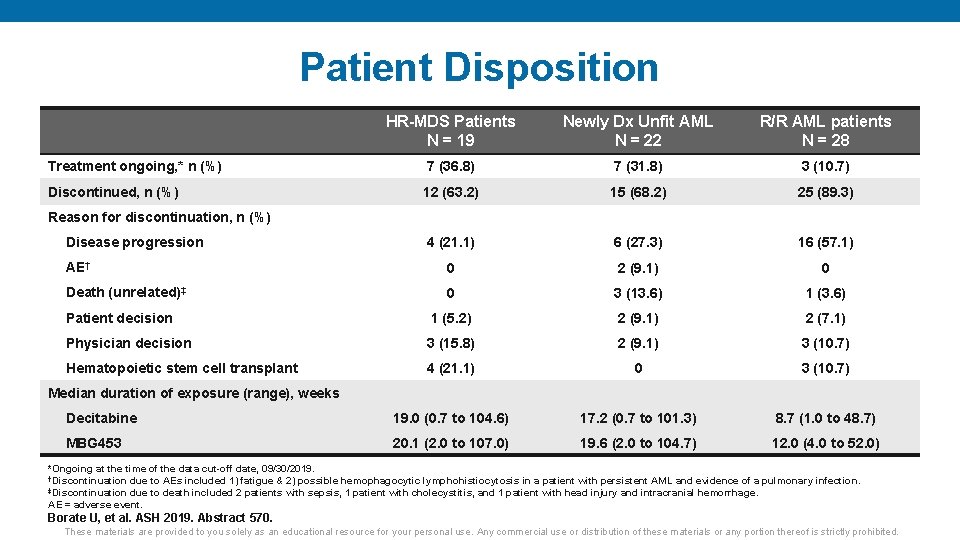
Patient Disposition HR-MDS Patients N = 19 Newly Dx Unfit AML N = 22 R/R AML patients N = 28 Treatment ongoing, * n (%) 7 (36. 8) 7 (31. 8) 3 (10. 7) Discontinued, n (%) 12 (63. 2) 15 (68. 2) 25 (89. 3) 4 (21. 1) 6 (27. 3) 16 (57. 1) AE† 0 2 (9. 1) 0 Death (unrelated)‡ 0 3 (13. 6) 1 (3. 6) Patient decision 1 (5. 2) 2 (9. 1) 2 (7. 1) Physician decision 3 (15. 8) 2 (9. 1) 3 (10. 7) Hematopoietic stem cell transplant 4 (21. 1) 0 3 (10. 7) Decitabine 19. 0 (0. 7 to 104. 6) 17. 2 (0. 7 to 101. 3) 8. 7 (1. 0 to 48. 7) MBG 453 20. 1 (2. 0 to 107. 0) 19. 6 (2. 0 to 104. 7) 12. 0 (4. 0 to 52. 0) Reason for discontinuation, n (%) Disease progression Median duration of exposure (range), weeks *Ongoing at the time of the data cut-off date, 09/30/2019. †Discontinuation due to AEs included 1) fatigue & 2) possible hemophagocytic lymphohistiocytosis in a patient with persistent AML and evidence of a pulmonary infection. ‡Discontinuation due to death included 2 patients with sepsis, 1 patient with cholecystitis, and 1 patient with head injury and intracranial hemorrhage. AE = adverse event. Borate U, et al. ASH 2019. Abstract 570. These materials are provided to you solely as an educational resource for your personal use. Any commercial use or distribution of these materials or any portion thereof is strictly prohibited.
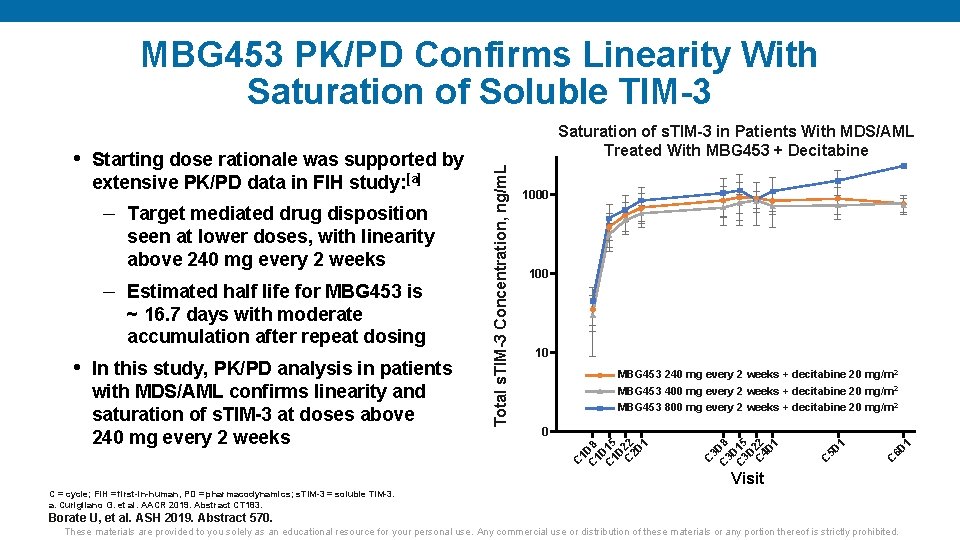
MBG 453 PK/PD Confirms Linearity With Saturation of Soluble TIM-3 MBG 453 400 mg every 2 weeks + decitabine 20 mg/m 2 MBG 453 800 mg every 2 weeks + decitabine 20 mg/m 2 1 0 6 D with MDS/AML confirms linearity and saturation of s. TIM-3 at doses above 240 mg every 2 weeks MBG 453 240 mg every 2 weeks + decitabine 20 mg/m 2 C • In this study, PK/PD analysis in patients 10 1 ~ 16. 7 days with moderate accumulation after repeat dosing 5 D Estimated half life for MBG 453 is 100 C seen at lower doses, with linearity above 240 mg every 2 weeks C 3 C D 8 3 D C 15 3 D C 22 4 D 1 Target mediated drug disposition 1000 C 1 C D 8 1 D C 15 1 D C 22 2 D 1 extensive PK/PD data in FIH study: [a] Total s. TIM-3 Concentration, ng/m. L • Starting dose rationale was supported by Saturation of s. TIM-3 in Patients With MDS/AML Treated With MBG 453 + Decitabine Visit C = cycle; FIH = first-in-human, PD = pharmacodynamics; s. TIM-3 = soluble TIM-3. a. Curigliano G. et al. AACR 2019. Abstract CT 183. Borate U, et al. ASH 2019. Abstract 570. These materials are provided to you solely as an educational resource for your personal use. Any commercial use or distribution of these materials or any portion thereof is strictly prohibited.
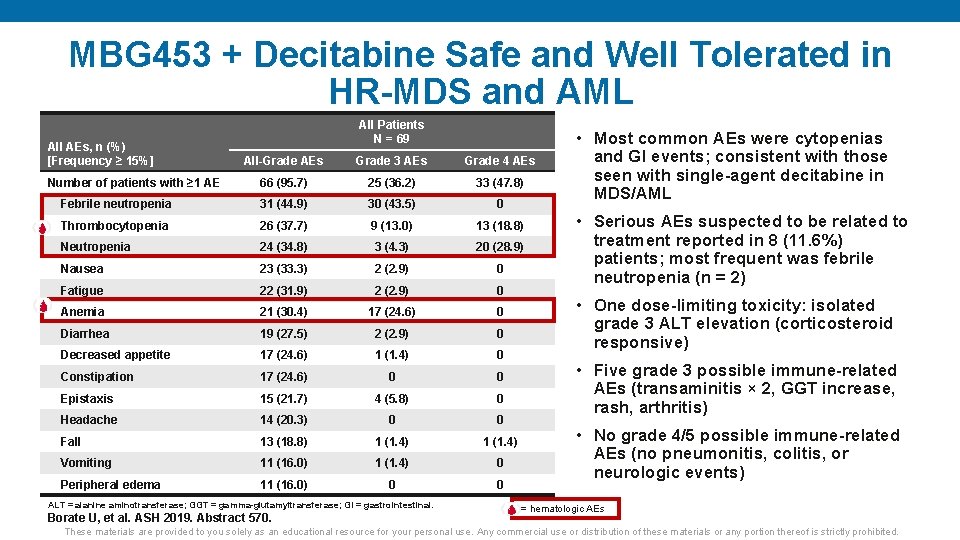
MBG 453 + Decitabine Safe and Well Tolerated in HR-MDS and AML All AEs, n (%) [Frequency ≥ 15%] All Patients N = 69 All-Grade AEs Grade 3 AEs Grade 4 AEs 66 (95. 7) 25 (36. 2) 33 (47. 8) Febrile neutropenia 31 (44. 9) 30 (43. 5) 0 Thrombocytopenia 26 (37. 7) 9 (13. 0) 13 (18. 8) Neutropenia 24 (34. 8) 3 (4. 3) 20 (28. 9) Nausea 23 (33. 3) 2 (2. 9) 0 Fatigue 22 (31. 9) 2 (2. 9) 0 Anemia 21 (30. 4) 17 (24. 6) 0 Diarrhea 19 (27. 5) 2 (2. 9) 0 Decreased appetite 17 (24. 6) 1 (1. 4) 0 Constipation 17 (24. 6) 0 0 Epistaxis 15 (21. 7) 4 (5. 8) 0 Headache 14 (20. 3) 0 0 Fall 13 (18. 8) 1 (1. 4) Vomiting 11 (16. 0) 1 (1. 4) 0 Peripheral edema 11 (16. 0) 0 0 Number of patients with ≥ 1 AE ALT = alanine aminotransferase; GGT = gamma-glutamyltransferase; GI = gastrointestinal. Borate U, et al. ASH 2019. Abstract 570. • Most common AEs were cytopenias and GI events; consistent with those seen with single-agent decitabine in MDS/AML • Serious AEs suspected to be related to treatment reported in 8 (11. 6%) patients; most frequent was febrile neutropenia (n = 2) • One dose-limiting toxicity: isolated grade 3 ALT elevation (corticosteroid responsive) • Five grade 3 possible immune-related AEs (transaminitis × 2, GGT increase, rash, arthritis) • No grade 4/5 possible immune-related AEs (no pneumonitis, colitis, or neurologic events) = hematologic AEs These materials are provided to you solely as an educational resource for your personal use. Any commercial use or distribution of these materials or any portion thereof is strictly prohibited.
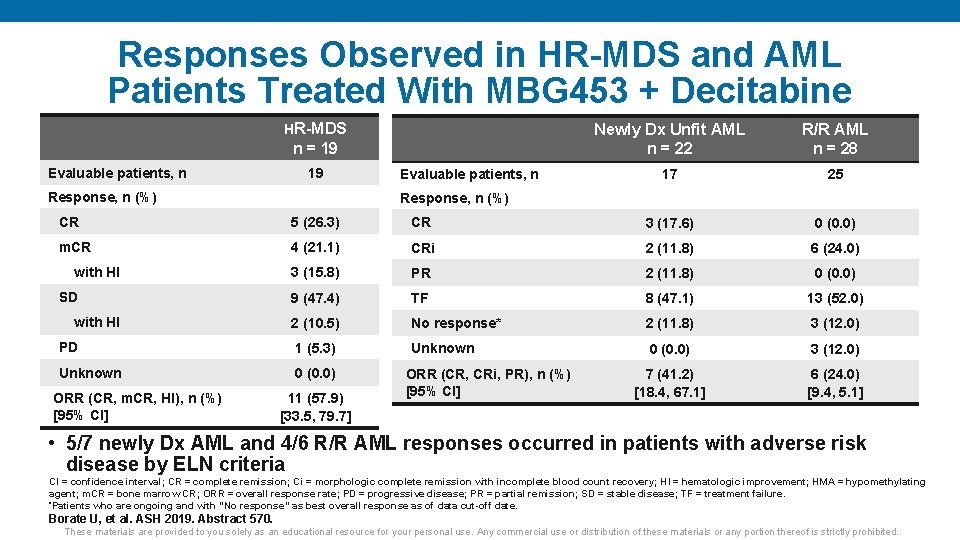
Responses Observed in HR-MDS and AML Patients Treated With MBG 453 + Decitabine HR-MDS n = 19 Evaluable patients, n 19 Response, n (%) Evaluable patients, n Newly Dx Unfit AML n = 22 R/R AML n = 28 17 25 Response, n (%) CR 5 (26. 3) CR 3 (17. 6) 0 (0. 0) m. CR 4 (21. 1) CRi 2 (11. 8) 6 (24. 0) with HI 3 (15. 8) PR 2 (11. 8) 0 (0. 0) SD 9 (47. 4) TF 8 (47. 1) 13 (52. 0) with HI 2 (10. 5) No response* 2 (11. 8) 3 (12. 0) PD 1 (5. 3) Unknown 0 (0. 0) 3 (12. 0) Unknown 0 (0. 0) 7 (41. 2) [18. 4, 67. 1] 6 (24. 0) [9. 4, 5. 1] ORR (CR, m. CR, HI), n (%) [95% CI] 11 (57. 9) [33. 5, 79. 7] ORR (CR, CRi, PR), n (%) [95% CI] • 5/7 newly Dx AML and 4/6 R/R AML responses occurred in patients with adverse risk disease by ELN criteria CI = confidence interval; CR = complete remission; Ci = morphologic complete remission with incomplete blood count recovery; HI = hematologic improvement; HMA = hypomethylating agent; m. CR = bone marrow CR; ORR = overall response rate; PD = progressive disease; PR = partial remission; SD = stable disease; TF = treatment failure. *Patients who are ongoing and with "No response" as best overall response as of data cut-off date. Borate U, et al. ASH 2019. Abstract 570. These materials are provided to you solely as an educational resource for your personal use. Any commercial use or distribution of these materials or any portion thereof is strictly prohibited.
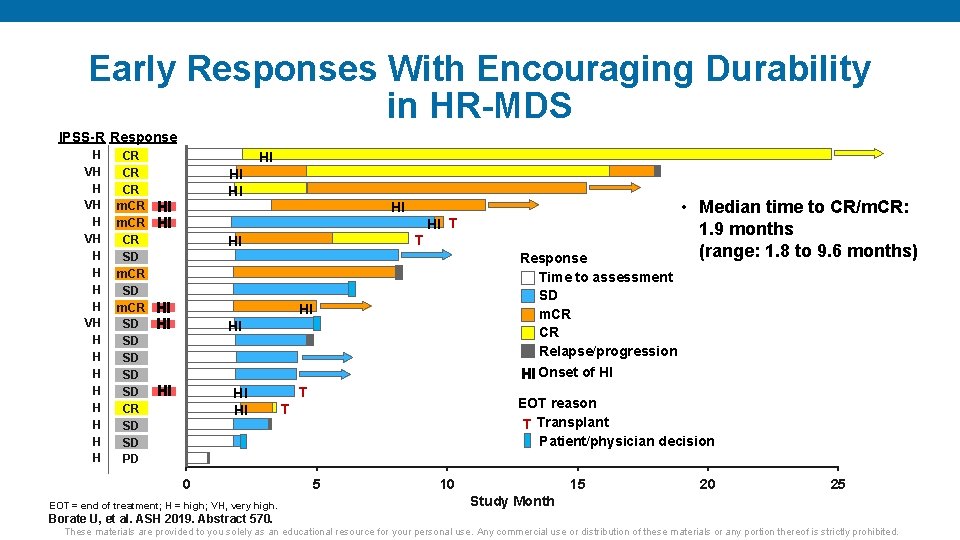
Early Responses With Encouraging Durability in HR-MDS IPSS-R Response H VH H H H CR CR CR m. CR CR SD m. CR SD SD SD CR SD SD PD HI HI T T HI HI HI Response Time to assessment SD m. CR CR Relapse/progression HI Onset of HI HI HI 0 EOT = end of treatment; H = high; VH, very high. T • Median time to CR/m. CR: 1. 9 months (range: 1. 8 to 9. 6 months) EOT reason T Transplant Patient/physician decision T 5 10 15 20 25 Study Month Borate U, et al. ASH 2019. Abstract 570. These materials are provided to you solely as an educational resource for your personal use. Any commercial use or distribution of these materials or any portion thereof is strictly prohibited.
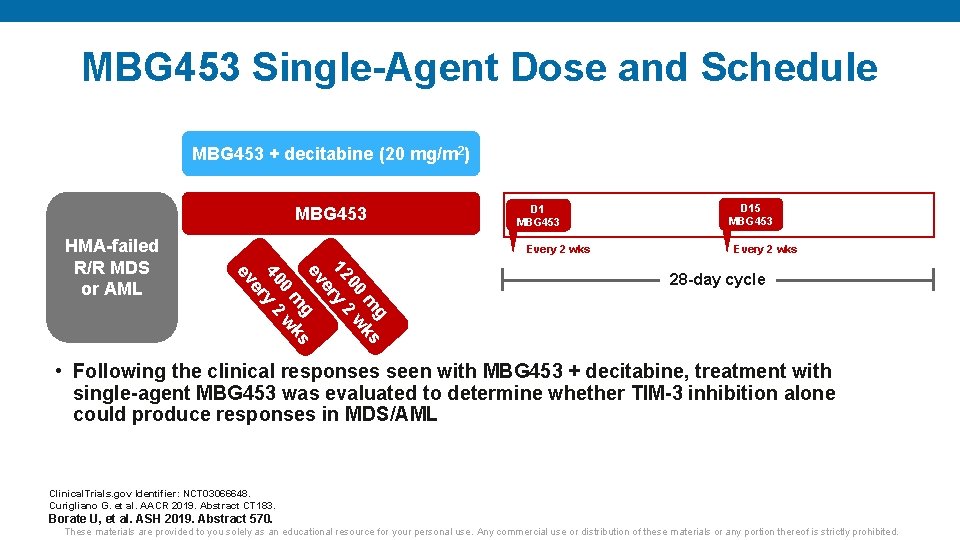
MBG 453 Single-Agent Dose and Schedule MBG 453 + decitabine (20 mg/m 2) MBG 453 Every 2 wks g m ks 00 w 12 y 2 er ev g m ks 0 w 40 y 2 er ev HMA-failed R/R MDS or AML D 1 MBG 453 D 15 MBG 453 Every 2 wks 28 -day cycle • Following the clinical responses seen with MBG 453 + decitabine, treatment with single-agent MBG 453 was evaluated to determine whether TIM-3 inhibition alone could produce responses in MDS/AML Clinical. Trials. gov Identifier: NCT 03066648. Curigliano G. et al. AACR 2019. Abstract CT 183. Borate U, et al. ASH 2019. Abstract 570. These materials are provided to you solely as an educational resource for your personal use. Any commercial use or distribution of these materials or any portion thereof is strictly prohibited.
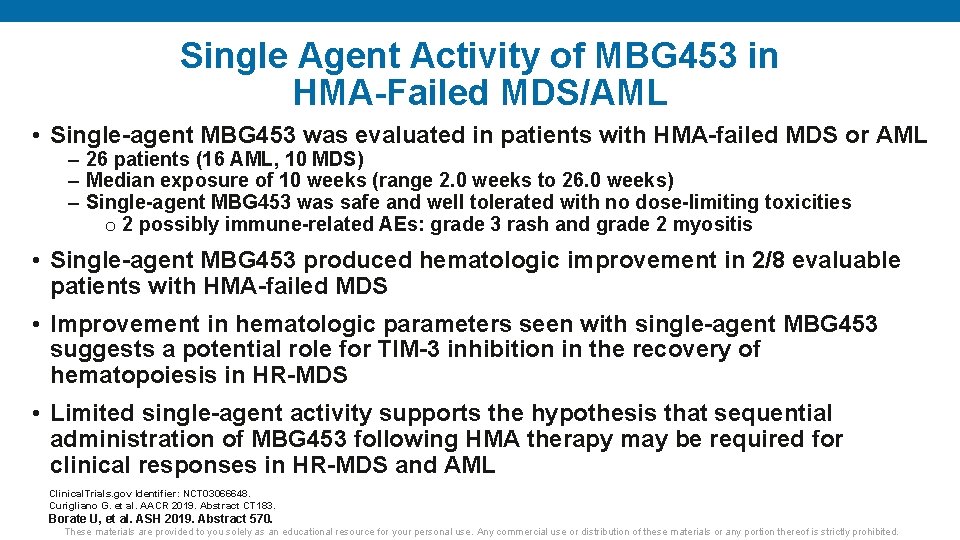
Single Agent Activity of MBG 453 in HMA-Failed MDS/AML • Single-agent MBG 453 was evaluated in patients with HMA-failed MDS or AML – 26 patients (16 AML, 10 MDS) – Median exposure of 10 weeks (range 2. 0 weeks to 26. 0 weeks) – Single-agent MBG 453 was safe and well tolerated with no dose-limiting toxicities o 2 possibly immune-related AEs: grade 3 rash and grade 2 myositis • Single-agent MBG 453 produced hematologic improvement in 2/8 evaluable patients with HMA-failed MDS • Improvement in hematologic parameters seen with single-agent MBG 453 suggests a potential role for TIM-3 inhibition in the recovery of hematopoiesis in HR-MDS • Limited single-agent activity supports the hypothesis that sequential administration of MBG 453 following HMA therapy may be required for clinical responses in HR-MDS and AML Clinical. Trials. gov Identifier: NCT 03066648. Curigliano G. et al. AACR 2019. Abstract CT 183. Borate U, et al. ASH 2019. Abstract 570. These materials are provided to you solely as an educational resource for your personal use. Any commercial use or distribution of these materials or any portion thereof is strictly prohibited.
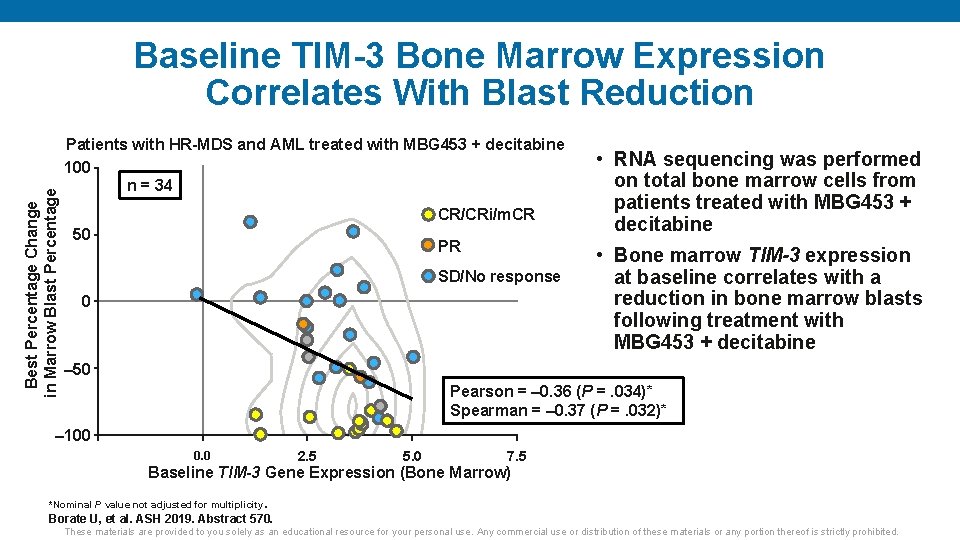
Best Percentage Change in Marrow Blast Percentage Baseline TIM-3 Bone Marrow Expression Correlates With Blast Reduction Patients with HR-MDS and AML treated with MBG 453 + decitabine 100 n = 34 CR/CRi/m. CR 50 PR SD/No response 0 • RNA sequencing was performed on total bone marrow cells from patients treated with MBG 453 + decitabine • Bone marrow TIM-3 expression at baseline correlates with a reduction in bone marrow blasts following treatment with MBG 453 + decitabine – 50 Pearson = – 0. 36 (P =. 034)* Spearman = – 0. 37 (P =. 032)* – 100 0. 0 2. 5 5. 0 7. 5 Baseline TIM-3 Gene Expression (Bone Marrow) *Nominal P value not adjusted for multiplicity. Borate U, et al. ASH 2019. Abstract 570. These materials are provided to you solely as an educational resource for your personal use. Any commercial use or distribution of these materials or any portion thereof is strictly prohibited.
Conclusions • MBG 453 in combination with decitabine was safe and well tolerated in patients with HR-MDS and AML, and did not add significant toxicity compared to that reported with HMA monotherapy • MBG 453 + decitabine exhibits promising efficacy with emerging durability in patients with high-risk and very high-risk MDS and adverse-risk AML, with responses occurring at a median of 2. 1 months: – ORR of 58% (including 47% CR/m. CR) in patients with high-risk and very high-risk MDS – ORR of 41% (including 29% CR/CRi) in patients with newly diagnosed unfit AML • Baseline TIM-3 expression correlates with bone marrow blast reduction • These findings highlight TIM-3 as a promising therapeutic target in MDS and AML and support further clinical development of MBG 453 in combination with HMAs in MDS and AML Randomized Phase II study ongoing: STIMULUS-MDS 1 (NCT 03946670). Trial-in-progress poster #4259, Monday, December 9, 6– 8 pm. Borate U, et al. ASH 2019. Abstract 570. These materials are provided to you solely as an educational resource for your personal use. Any commercial use or distribution of these materials or any portion thereof is strictly prohibited.
- Slides: 19