
Phase I Trials Lillian L Siu Princess Margaret
- Slides: 41
Phase I Trials Lillian L. Siu Princess Margaret Hospital
Definition(s) of a phase I trial First evaluation of a new cancer therapy in humans ◦ First-in-human, first-in-kind (e. g. the first compound ever evaluated in humans against a new molecular target), single-agent ◦ First-in-human, but not first-in-kind (i. e. others agents of the same class have entered human testing), single-agent
Definition(s) of a phase I trial First evaluation of a new cancer therapy in humans ◦ Investigational agent + investigational agent ◦ Investigational agent + approved agent(s) ◦ Approved or investigational agent with pharmacokinetic focus (e. g. adding of CYP inhibitor to enhance drug levels) ◦ Approved or investigational agent with pharmacodynamic focus (e. g. evaluation using functional imaging) ◦ Approved or investigational agent with radiotherapy
Objectives of a phase I trial Primary objective: ◦ Identify dose-limiting toxicities (DLTs) and the recommended phase II dose (RPTD) Secondary objectives: ◦ Describe the toxicity profile of the new therapy in the schedule under evaluation ◦ Assess pharmacokinetics (PK) ◦ Assess pharmacodynamic effects (PD) in tumor and/or surrogate tissues ◦ Document any preliminary evidence of objective antitumor activity
Definitions of key concepts in phase I trials Dose-limiting toxicity (DLT): ◦ Toxicity that is considered unacceptable (due to severity and/or irreversibility) and limits further dose escalation ◦ Specified using standardized grading criteria, e. g. Common Terminology Criteria for Adverse Event (CTCAE v 3. 0; v 4. 0 release in May 2009) ◦ DLT is defined in advance prior to beginning the trial and is protocol-specific ◦ Typically defined based on toxicity seen in the first cycle
Definitions of key concepts in phase I trials Examples of DLTs – chronic (daily) dosing: ◦ Threshold for DLTs is lower ◦ Some Grade 2 toxicities may be unacceptable and intolerable due to their persistence and lack of time period for recovery ◦ Examples: Grade 2 intolerable or worse non-hematologic toxicity despite supportive measures Grade 3 or worse hematologic toxicity Inability to complete a pre-specified percentage of treatment during the cycle due to toxicity (e. g. missing 10 -15% of doses)
Definitions of key concepts in phase I trials Examples of DLTs – intermittent dosing: ◦ Generally can tolerate higher degrees of toxicity because the interval between treatments allows for rest and recovery ◦ Examples: Grade 3 or worse non-hematologic toxicity despite supportive measures ANC < 0. 5 x 10⁹/L for > 5 or 7 days Febrile neutropenia (ANC < 1 x 10⁹/L, fever > 38. 5 C) Platelets < 25 x 109/L or thrombocytopenic bleeding Inability to re-treat patient within 2 weeks of scheduled treatment
Definitions of key concepts in phase I trials Maximum administered dose (MAD), maximum tolerated dose: confusing More important term: Recommended phase II dose (RPTD or RD): ◦ Dose associated with DLT in a pre-specified proportion of patients (e. g. < 33%) – dose that will be used in subsequent phase II trials
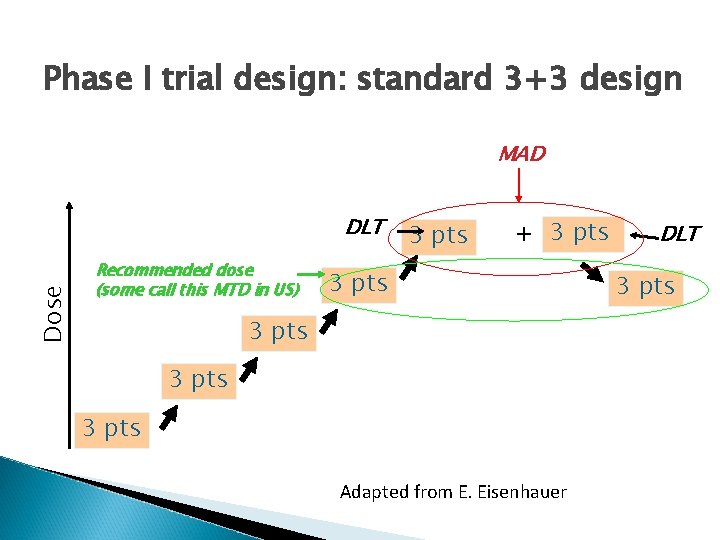
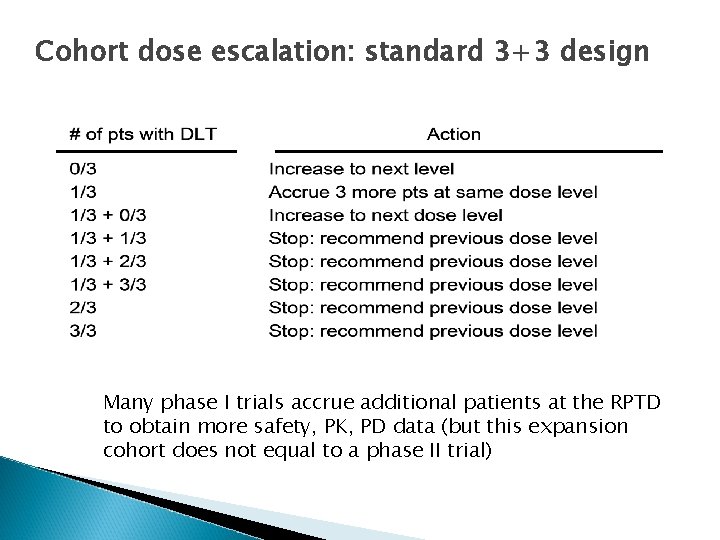
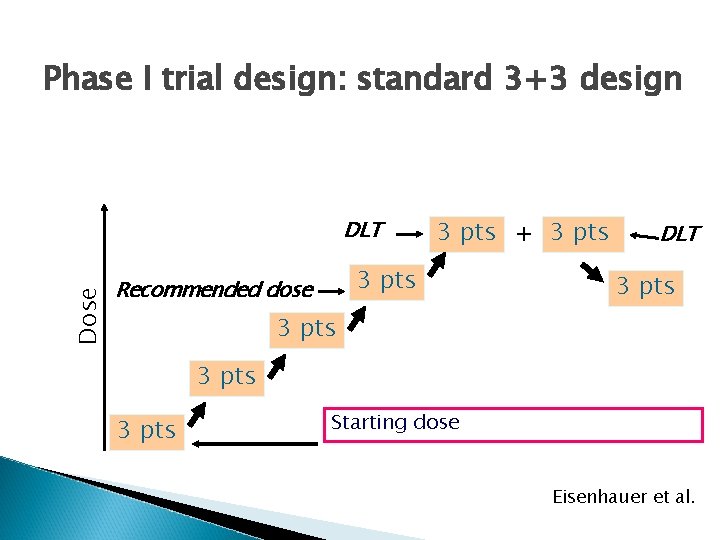
Phase I trial design: standard 3+3 design MAD Dose DLT Recommended dose (some call this MTD in US) 3 pts + 3 pts 3 pts Adapted from E. Eisenhauer DLT 3 pts
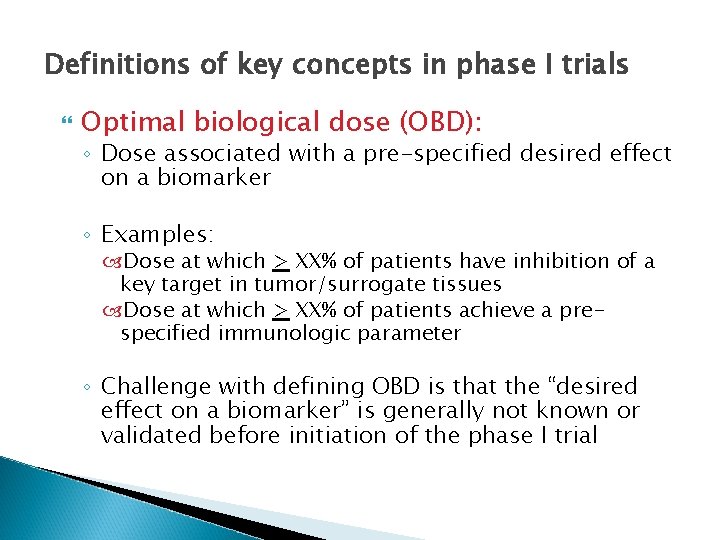
Definitions of key concepts in phase I trials Optimal biological dose (OBD): ◦ Dose associated with a pre-specified desired effect on a biomarker ◦ Examples: Dose at which > XX% of patients have inhibition of a key target in tumor/surrogate tissues Dose at which > XX% of patients achieve a prespecified immunologic parameter ◦ Challenge with defining OBD is that the “desired effect on a biomarker” is generally not known or validated before initiation of the phase I trial
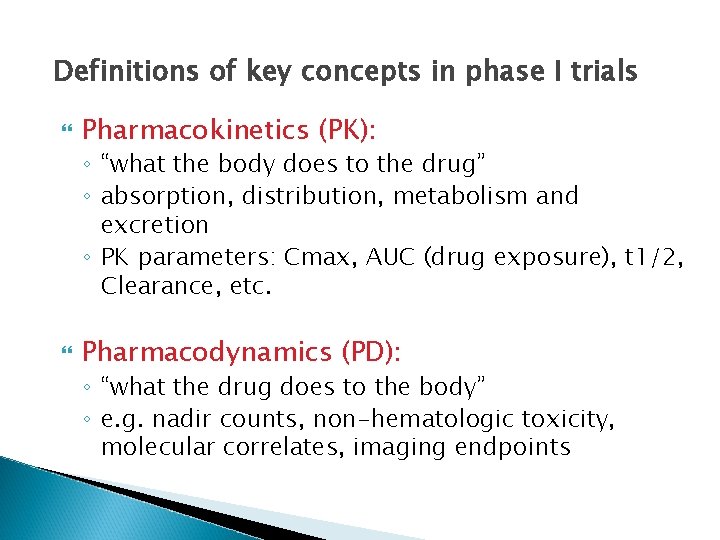
Definitions of key concepts in phase I trials Pharmacokinetics (PK): ◦ “what the body does to the drug” ◦ absorption, distribution, metabolism and excretion ◦ PK parameters: Cmax, AUC (drug exposure), t 1/2, Clearance, etc. Pharmacodynamics (PD): ◦ “what the drug does to the body” ◦ e. g. nadir counts, non-hematologic toxicity, molecular correlates, imaging endpoints
Phase I trials: fundamental questions At what dose do you start? What type of patients? How many patients per cohort? How quickly do you escalate? What are the endpoints?
Phase I trials: fundamental questions At what dose do you start? What type of patients? How many patients per cohort? How quickly do you escalate? What are the endpoints?
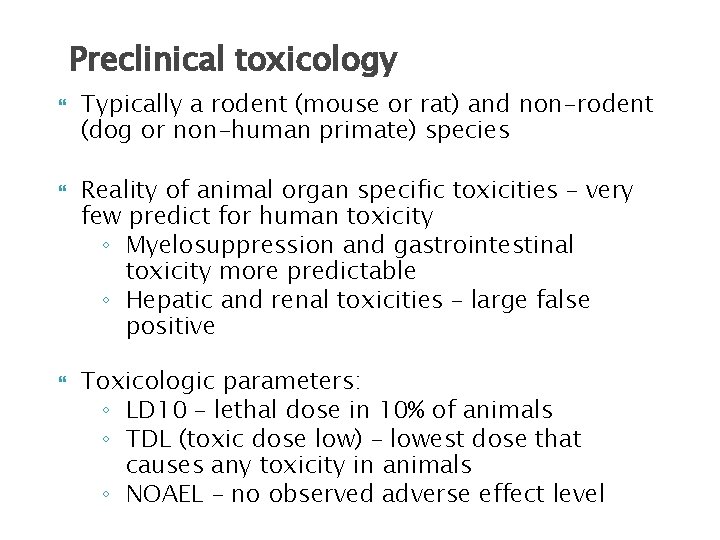
Preclinical toxicology Typically a rodent (mouse or rat) and non-rodent (dog or non-human primate) species Reality of animal organ specific toxicities – very few predict for human toxicity ◦ Myelosuppression and gastrointestinal toxicity more predictable ◦ Hepatic and renal toxicities – large false positive Toxicologic parameters: ◦ LD 10 – lethal dose in 10% of animals ◦ TDL (toxic dose low) – lowest dose that causes any toxicity in animals ◦ NOAEL – no observed adverse effect level
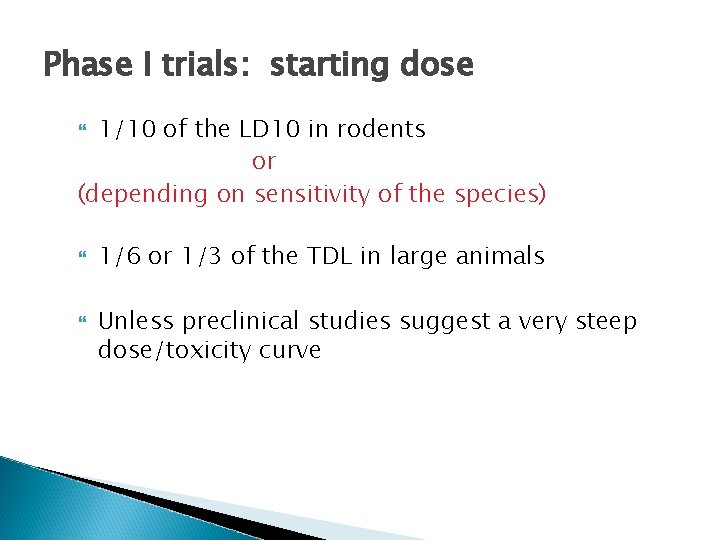
Phase I trials: starting dose 1/10 of the LD 10 in rodents or (depending on sensitivity of the species) 1/6 or 1/3 of the TDL in large animals Unless preclinical studies suggest a very steep dose/toxicity curve
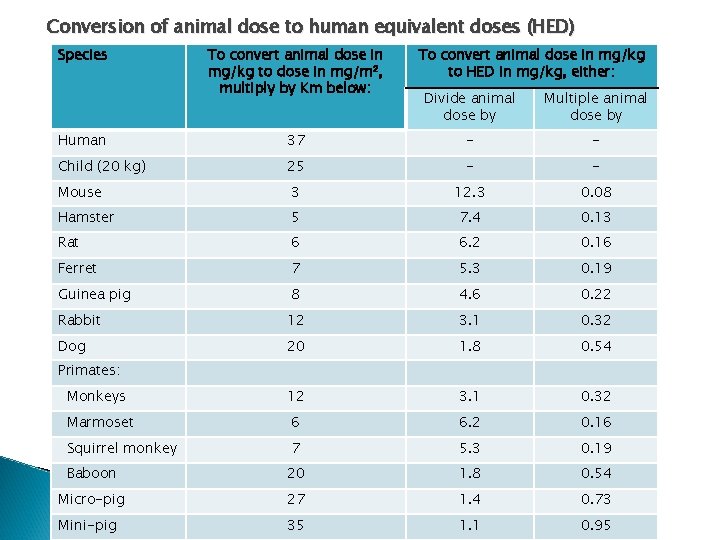
Conversion of animal dose to human equivalent doses (HED) Species To convert animal dose in mg/kg to dose in mg/m 2, multiply by Km below: To convert animal dose in mg/kg to HED in mg/kg, either: Divide animal dose by Multiple animal dose by Human 37 - - Child (20 kg) 25 - - Mouse 3 12. 3 0. 08 Hamster 5 7. 4 0. 13 Rat 6 6. 2 0. 16 Ferret 7 5. 3 0. 19 Guinea pig 8 4. 6 0. 22 Rabbit 12 3. 1 0. 32 Dog 20 1. 8 0. 54 Monkeys 12 3. 1 0. 32 Marmoset 6 6. 2 0. 16 Squirrel monkey 7 5. 3 0. 19 Baboon 20 1. 8 0. 54 Micro-pig 27 1. 4 0. 73 Mini-pig 35 1. 1 0. 95 Primates:
Phase I trials: fundamental questions At what dose do you start? What type of patients? How many patients per cohort? How quickly do you escalate? What are the endpoints?
Phase I patient population “Conventional” eligibility criteria- examples: ◦ Advanced solid tumors unresponsive to standard therapies or for which there is no known effective treatment ◦ Performance status (e. g. ECOG 0 or 1) ◦ Adequate organ functions (e. g. ANC, platelets, Creatinine, AST/ALT, bilirubin) ◦ Specification about prior therapy allowed ◦ Specification about time interval between prior therapy and initiation of study treatment ◦ No serious uncontrolled medical disorder or active infection
Phase I patient population “Agent-specific” eligibility criteria - examples: ◦ Restriction to certain patient populations – must have strong scientific rationale ◦ Specific organ functions: For example – cardiac function restrictions (e. g. QTc < 450 -470 ms, LVEF > 45%, etc) if preclinical data or prior clinical data of similar agents suggest cardiac risks For example – no recent (6 -12 months) history of acute MI/unstable angina, cerebrovascular events, venous thromboembolism; no uncontrolled hypertension; no significant proteinuria, for antiangiogenic agents ◦ Prohibited medications if significant risk of interaction with study drug
Phase I trials: fundamental questions At what dose do you start? What type of patients? How many patients per cohort? How quickly do you escalate? What are the endpoints?
Cohort dose escalation: standard 3+3 design Many phase I trials accrue additional patients at the RPTD to obtain more safety, PK, PD data (but this expansion cohort does not equal to a phase II trial)
Phase I trials: fundamental questions At what dose do you start? What type of patients? How many patients per cohort? How quickly do you escalate? What are the endpoints?
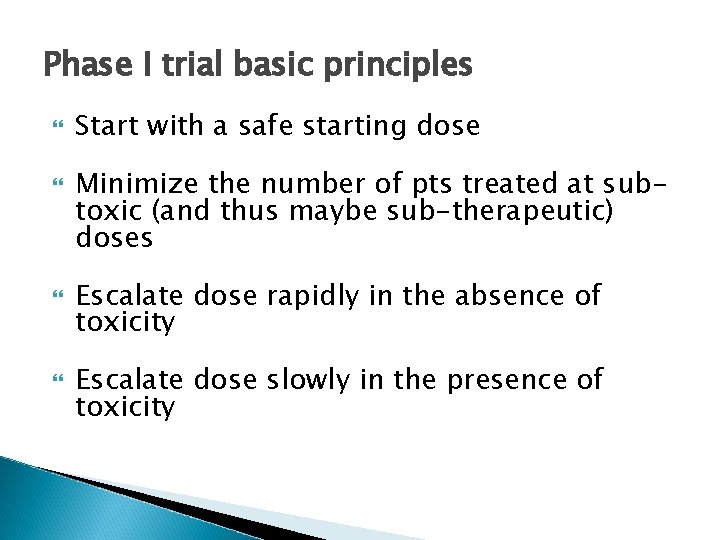
Phase I trial basic principles Start with a safe starting dose Minimize the number of pts treated at subtoxic (and thus maybe sub-therapeutic) doses Escalate dose rapidly in the absence of toxicity Escalate dose slowly in the presence of toxicity
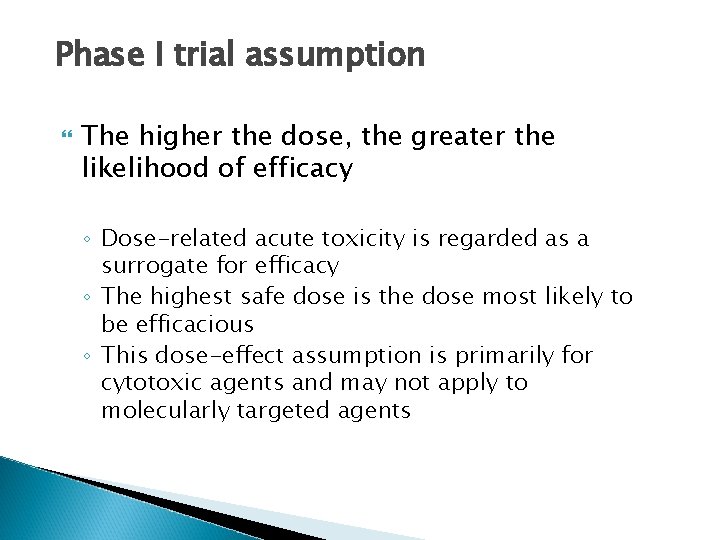
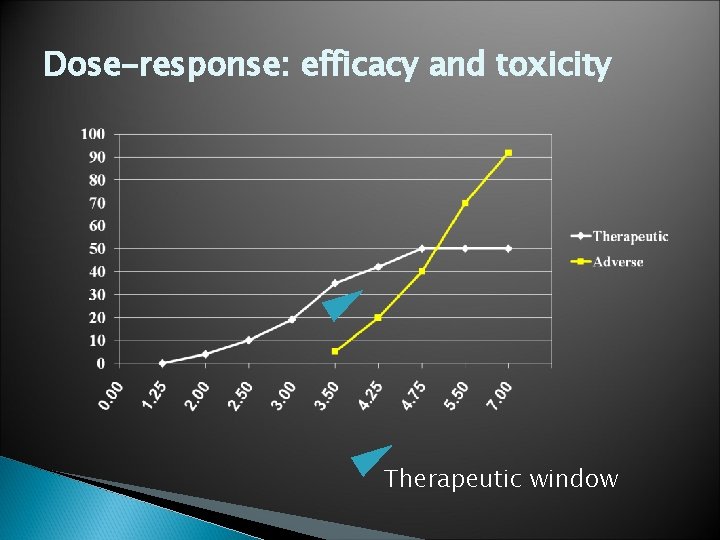
Phase I trial assumption The higher the dose, the greater the likelihood of efficacy ◦ Dose-related acute toxicity is regarded as a surrogate for efficacy ◦ The highest safe dose is the dose most likely to be efficacious ◦ This dose-effect assumption is primarily for cytotoxic agents and may not apply to molecularly targeted agents
Dose-response: efficacy and toxicity Therapeutic window
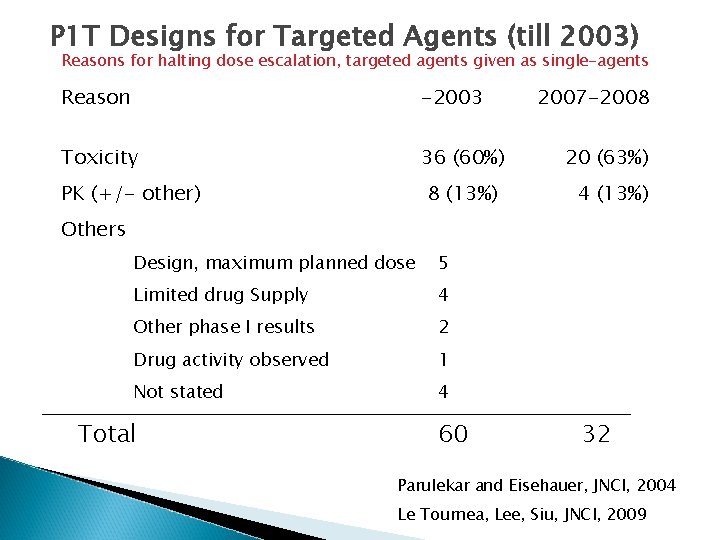
P 1 T Designs for Targeted Agents (till 2003) Reasons for halting dose escalation, targeted agents given as single-agents Reason -2003 Toxicity 36 (60%) PK (+/- other) 8 (13%) 2007 -2008 20 (63%) 4 (13%) Others Design, maximum planned dose 5 Limited drug Supply 4 Other phase I results 2 Drug activity observed 1 Not stated 4 Total 60 32 Parulekar and Eisehauer, JNCI, 2004 Le Tournea, Lee, Siu, JNCI, 2009
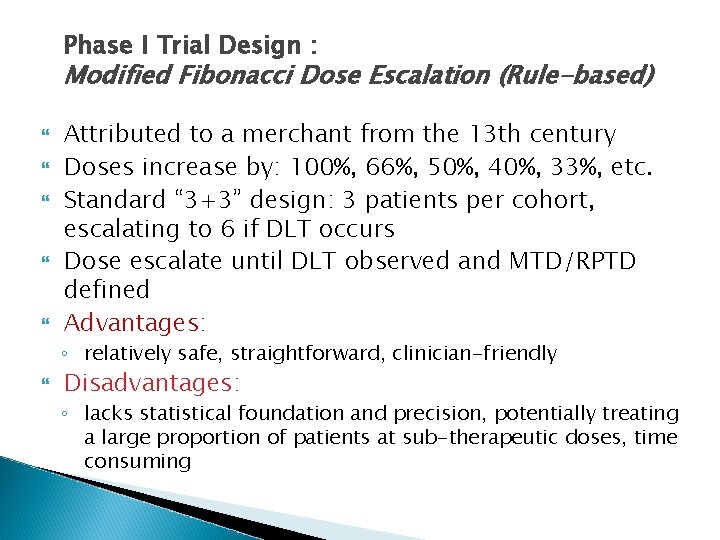
Phase I Trial Design : Modified Fibonacci Dose Escalation (Rule-based) Attributed to a merchant from the 13 th century Doses increase by: 100%, 66%, 50%, 40%, 33%, etc. Standard “ 3+3” design: 3 patients per cohort, escalating to 6 if DLT occurs Dose escalate until DLT observed and MTD/RPTD defined Advantages: ◦ relatively safe, straightforward, clinician-friendly Disadvantages: ◦ lacks statistical foundation and precision, potentially treating a large proportion of patients at sub-therapeutic doses, time consuming
Phase I trial design: standard 3+3 design Dose DLT 3 pts + 3 pts Recommended dose DLT 3 pts Starting dose Eisenhauer et al.
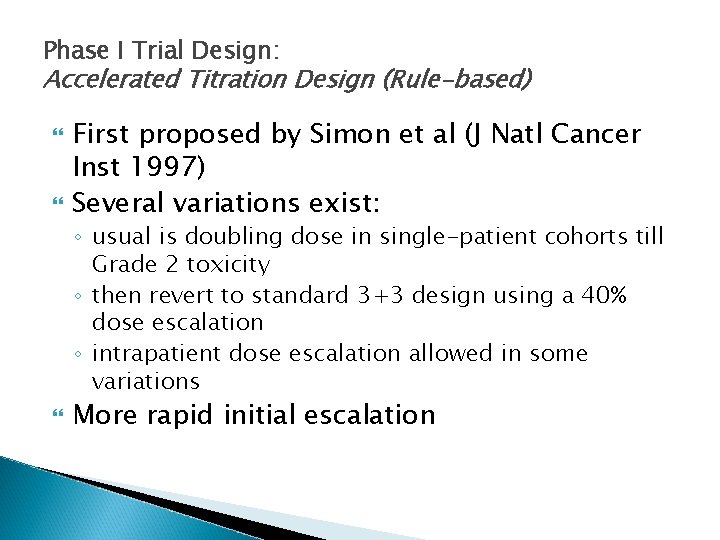
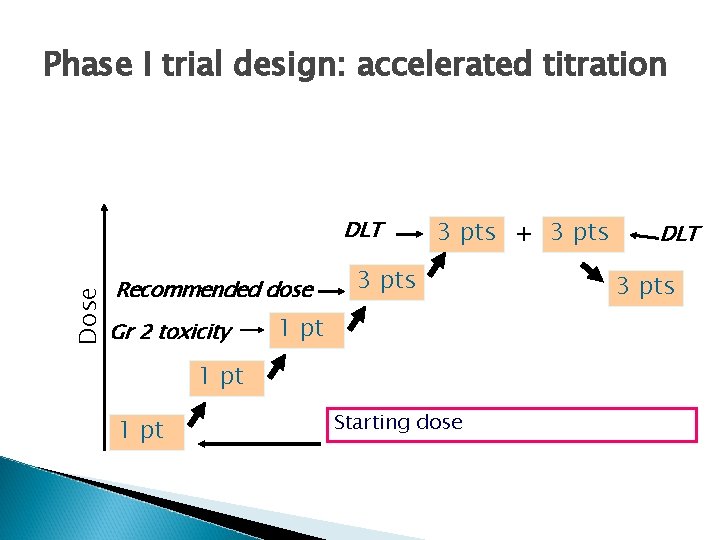
Phase I Trial Design: Accelerated Titration Design (Rule-based) First proposed by Simon et al (J Natl Cancer Inst 1997) Several variations exist: ◦ usual is doubling dose in single-patient cohorts till Grade 2 toxicity ◦ then revert to standard 3+3 design using a 40% dose escalation ◦ intrapatient dose escalation allowed in some variations More rapid initial escalation
Phase I trial design: accelerated titration Dose DLT Recommended dose Gr 2 toxicity 3 pts + 3 pts 1 pt Starting dose DLT 3 pts
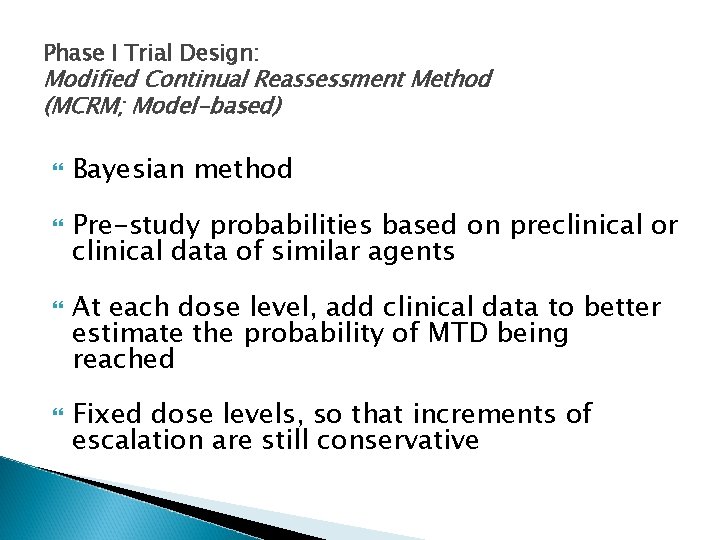
Phase I Trial Design: Modified Continual Reassessment Method (MCRM; Model-based) Bayesian method Pre-study probabilities based on preclinical or clinical data of similar agents At each dose level, add clinical data to better estimate the probability of MTD being reached Fixed dose levels, so that increments of escalation are still conservative
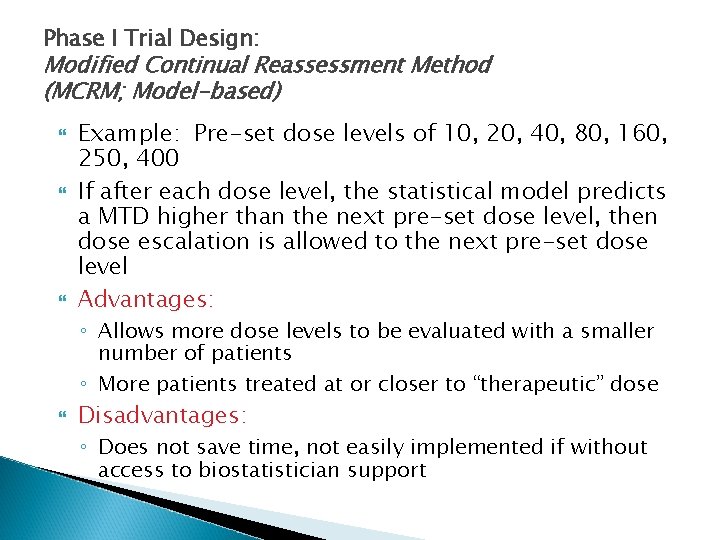
Phase I Trial Design: Modified Continual Reassessment Method (MCRM; Model-based) Example: Pre-set dose levels of 10, 20, 40, 80, 160, 250, 400 If after each dose level, the statistical model predicts a MTD higher than the next pre-set dose level, then dose escalation is allowed to the next pre-set dose level Advantages: ◦ Allows more dose levels to be evaluated with a smaller number of patients ◦ More patients treated at or closer to “therapeutic” dose Disadvantages: ◦ Does not save time, not easily implemented if without access to biostatistician support
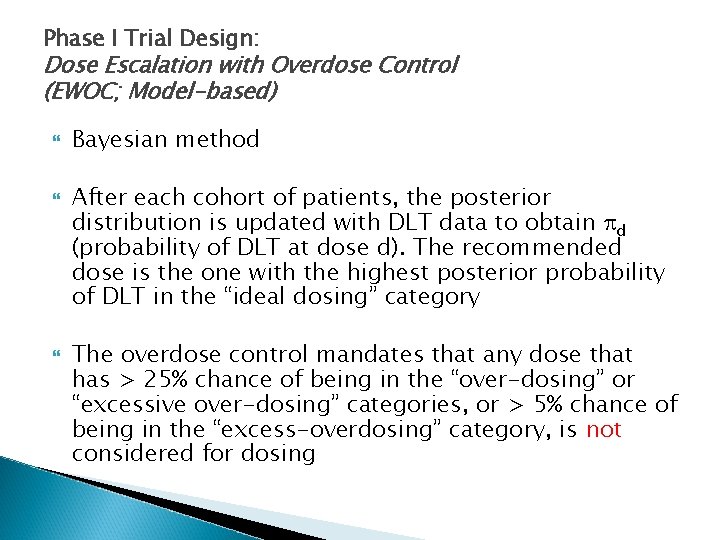
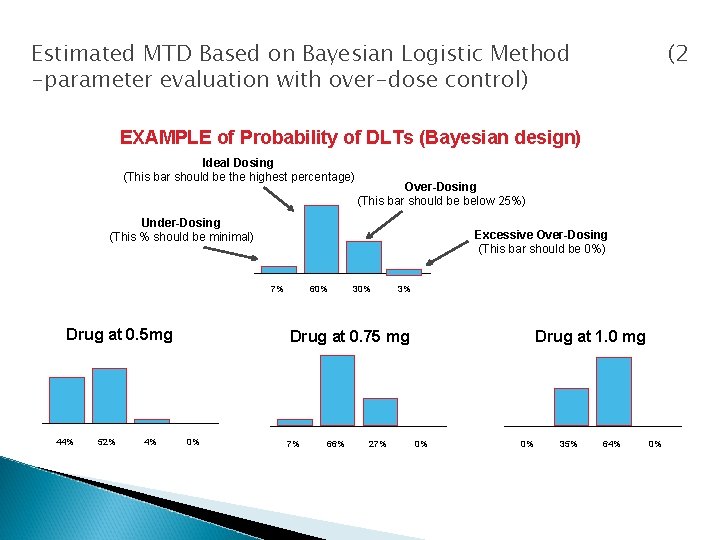
Phase I Trial Design: Dose Escalation with Overdose Control (EWOC; Model-based) Bayesian method After each cohort of patients, the posterior distribution is updated with DLT data to obtain d (probability of DLT at dose d). The recommended dose is the one with the highest posterior probability of DLT in the “ideal dosing” category The overdose control mandates that any dose that has > 25% chance of being in the “over-dosing” or “excessive over-dosing” categories, or > 5% chance of being in the “excess-overdosing” category, is not considered for dosing
Estimated MTD Based on Bayesian Logistic Method -parameter evaluation with over-dose control) (2 EXAMPLE of Probability of DLTs (Bayesian design) Ideal Dosing (This bar should be the highest percentage) Over-Dosing (This bar should be below 25%) Under-Dosing (This % should be minimal) Excessive Over-Dosing (This bar should be 0%) 7% Drug at 0. 5 mg 44% 52% 4% 60% 3% Drug at 0. 75 mg 0% 7% 66% 27% Drug at 1. 0 mg 0% 0% 35% 64% 0%
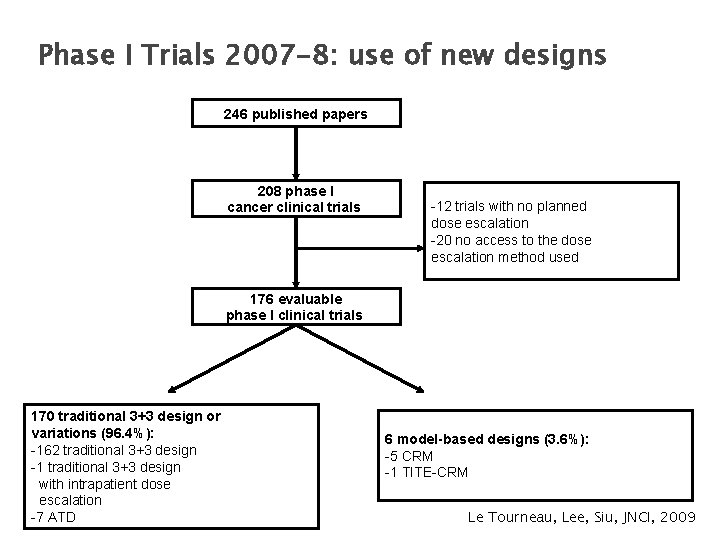
Phase I Trials 2007 -8: use of new designs 246 published papers 208 phase I cancer clinical trials -12 trials with no planned dose escalation -20 no access to the dose escalation method used 176 evaluable phase I clinical trials 170 traditional 3+3 design or variations (96. 4%): -162 traditional 3+3 design -1 traditional 3+3 design with intrapatient dose escalation -7 ATD 6 model-based designs (3. 6%): -5 CRM -1 TITE-CRM Le Tourneau, Lee, Siu, JNCI, 2009
Phase I trials: fundamental questions At what dose do you start? What type of patients? How many patients per cohort? How quickly do you escalate? What are the endpoints?
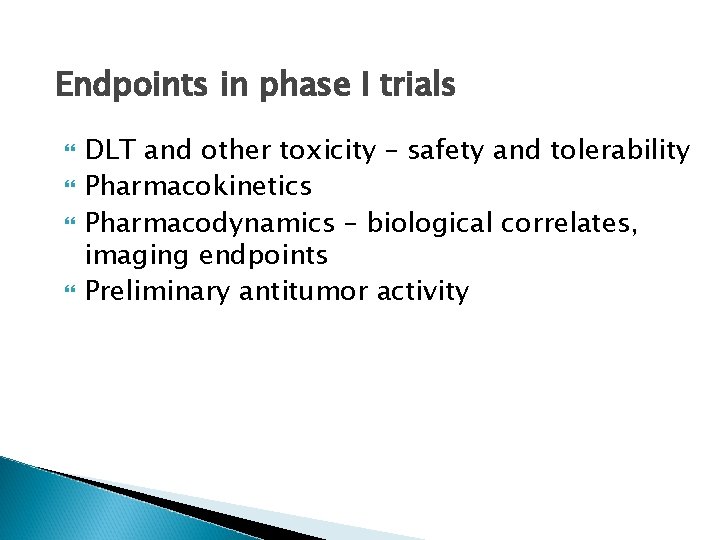
Endpoints in phase I trials DLT and other toxicity – safety and tolerability Pharmacokinetics Pharmacodynamics – biological correlates, imaging endpoints Preliminary antitumor activity
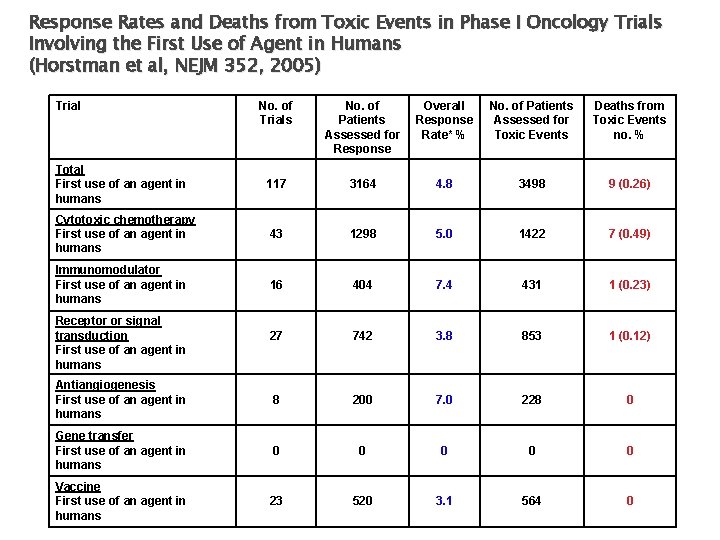
Response Rates and Deaths from Toxic Events in Phase I Oncology Trials Involving the First Use of Agent in Humans (Horstman et al, NEJM 352, 2005) Trial No. of Trials No. of Patients Assessed for Response Overall Response Rate* % No. of Patients Assessed for Toxic Events Deaths from Toxic Events no. % Total First use of an agent in humans 117 3164 4. 8 3498 9 (0. 26) Cytotoxic chemotherapy First use of an agent in humans 43 1298 5. 0 1422 7 (0. 49) Immunomodulator First use of an agent in humans 16 404 7. 4 431 1 (0. 23) 27 742 3. 8 853 1 (0. 12) Antiangiogenesis First use of an agent in humans 8 200 7. 0 228 0 Gene transfer First use of an agent in humans 0 0 0 Vaccine First use of an agent in humans 23 520 3. 1 564 0 Receptor or signal transduction First use of an agent in humans
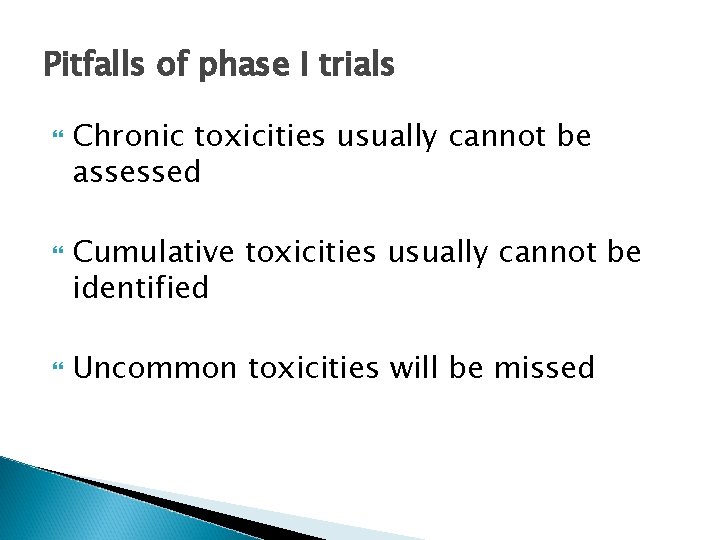
Pitfalls of phase I trials Chronic toxicities usually cannot be assessed Cumulative toxicities usually cannot be identified Uncommon toxicities will be missed
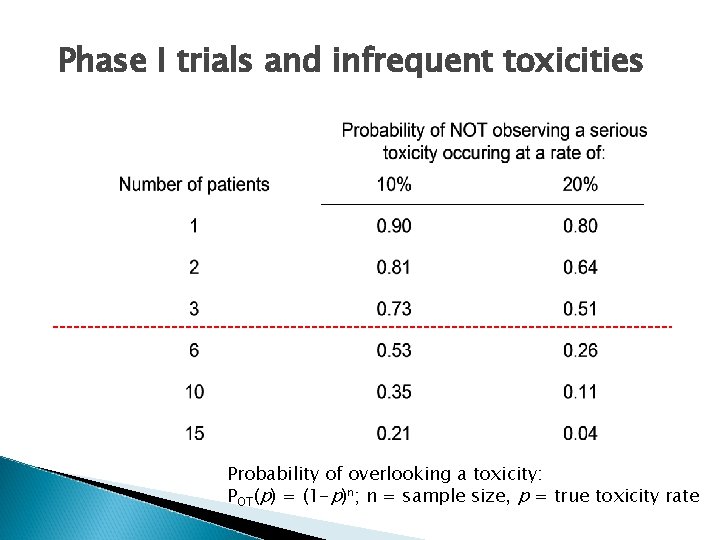
Phase I trials and infrequent toxicities Probability of overlooking a toxicity: POT(p) = (1 -p)n; n = sample size, p = true toxicity rate
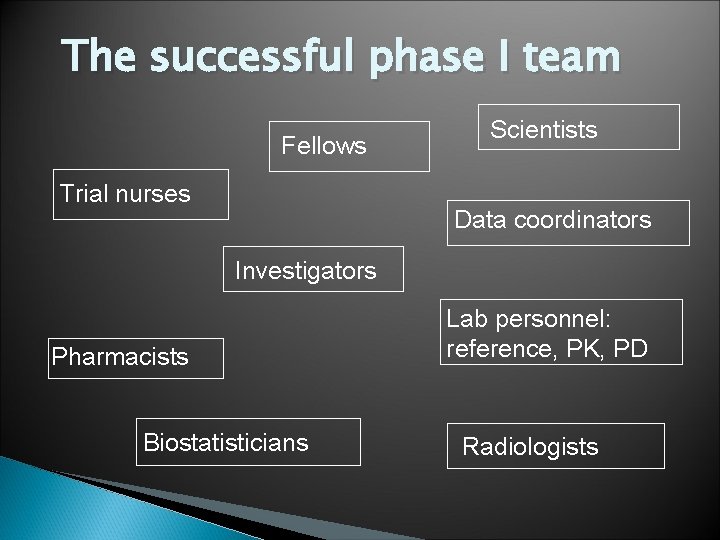
The successful phase I team Fellows Trial nurses Scientists Data coordinators Investigators Pharmacists Biostatisticians Lab personnel: reference, PK, PD Radiologists