
Phase Diagrams Best Chapter 14 Gibbs Phase Rule
Phase Diagrams Best, Chapter 14

Gibbs Phase Rule F=2+C- F = degrees of freedom (P-T-X) C= components = phases
Degrees of Freedom • Rule applies to a phase or assemblage • Divariant indicates two degrees of freedom • Univariant means one degree of freedom • Invariant means there are no degrees of freedom
Petrogenetic Grid • The grid define stability limits – End-member minerals – Mineral assemblages • More thermodynamic data is needed to construct a useful grid
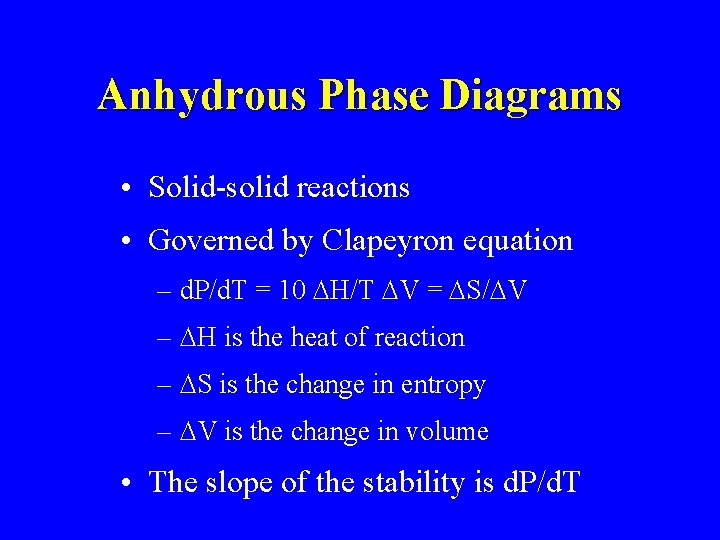
Anhydrous Phase Diagrams • Solid-solid reactions • Governed by Clapeyron equation – d. P/d. T = 10 H/T V = S/ V – H is the heat of reaction – S is the change in entropy – V is the change in volume • The slope of the stability is d. P/d. T
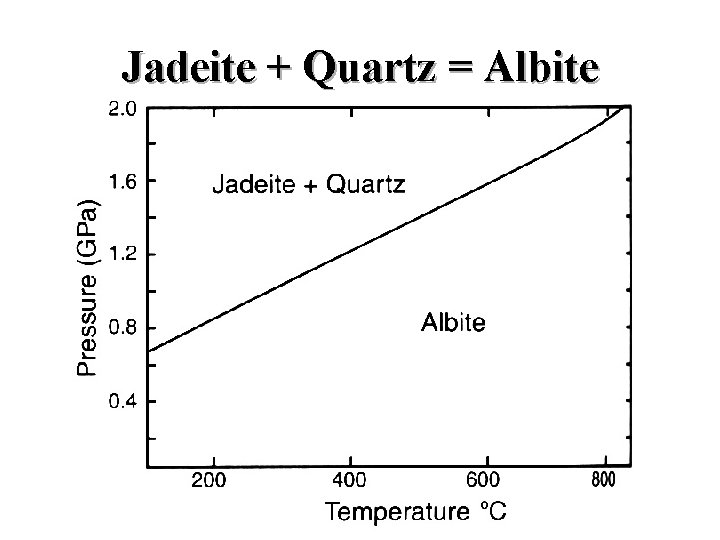
Jadeite + Quartz = Albite
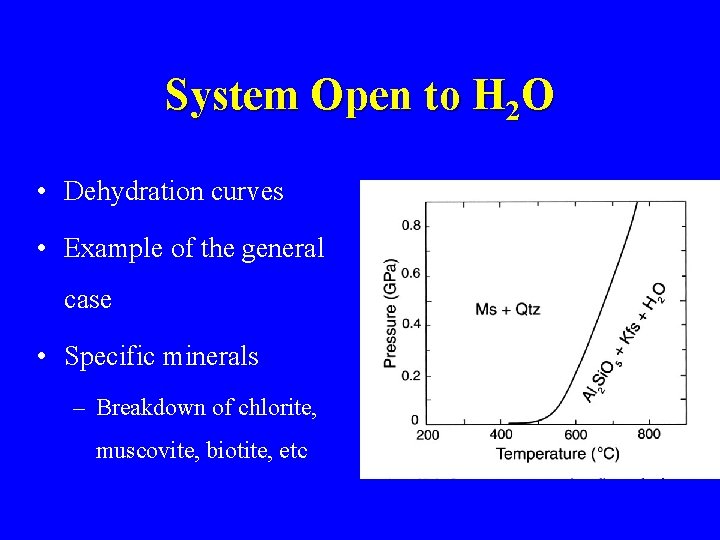
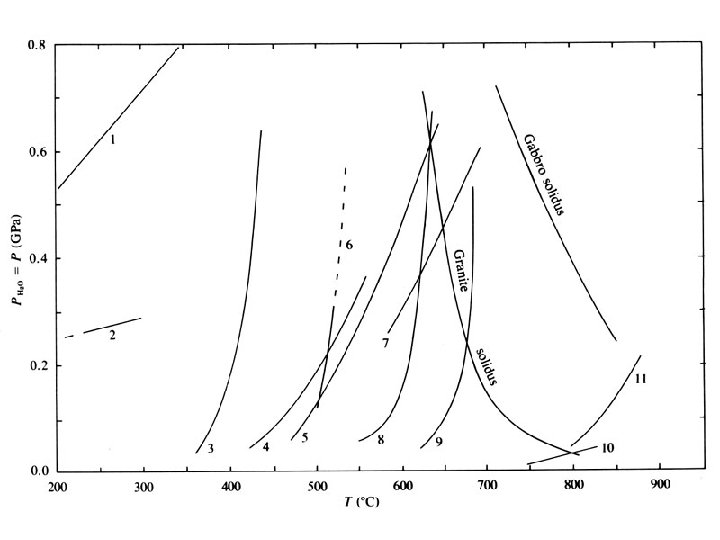
System Open to H 2 O • Dehydration curves • Example of the general case • Specific minerals – Breakdown of chlorite, muscovite, biotite, etc
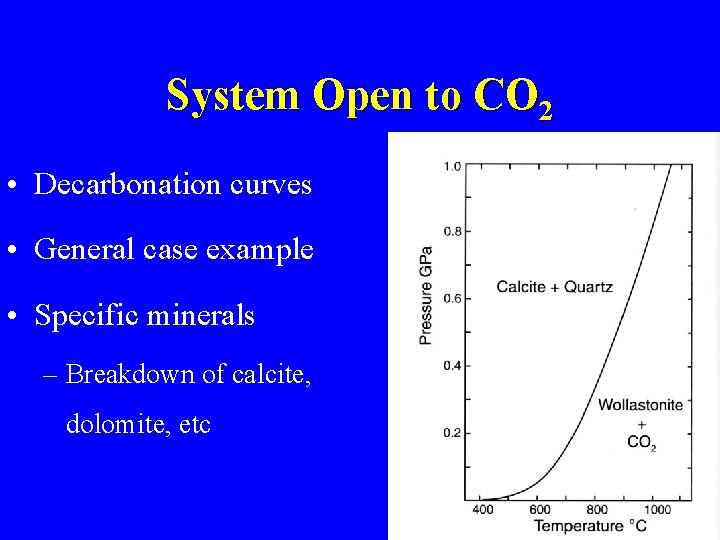
System Open to CO 2 • Decarbonation curves • General case example • Specific minerals – Breakdown of calcite, dolomite, etc
Univariant Curves • Curves that define reactions with one degree of freedom • In P-T space this means that if T is changed, than P must also change to maintain equilibrium • Many important metamorphic reactions are defined by these curves
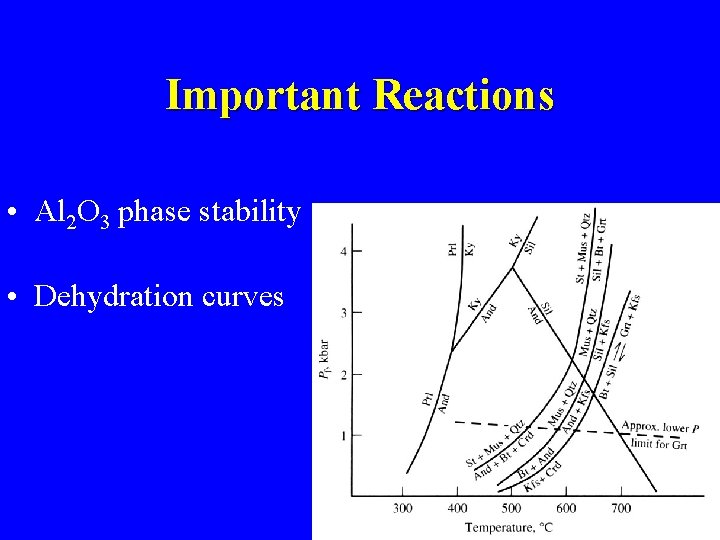
Important Reactions • Al 2 O 3 phase stability • Dehydration curves
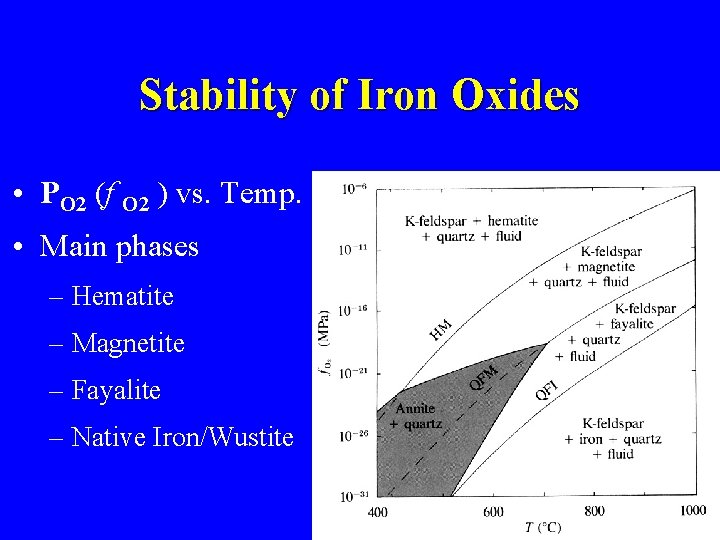
Stability of Iron Oxides • PO 2 (f O 2 ) vs. Temp. • Main phases – Hematite – Magnetite – Fayalite – Native Iron/Wustite
Miyashiro’s Facies Series • Low geothermal gradient – Zeolite, pumpellyite-prehnite, blueschist • Intermediate geothermal gradient – Barrow’s zones • High geothermal gradient – Andalucite present in pelitic rocks
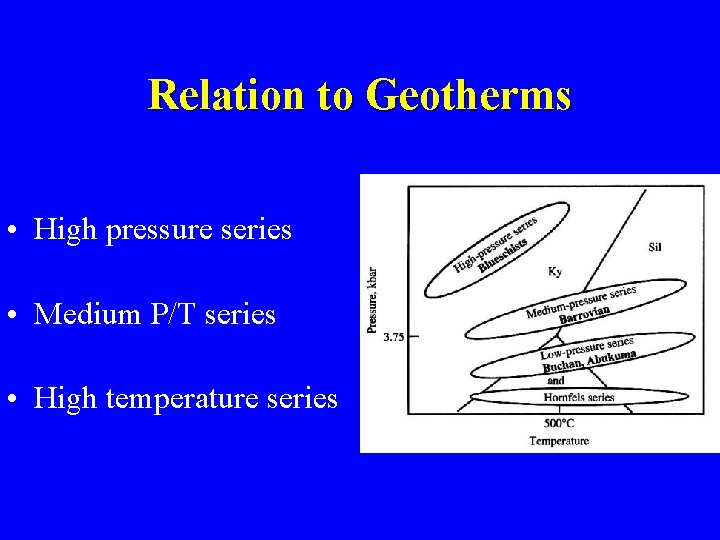
Relation to Geotherms • High pressure series • Medium P/T series • High temperature series
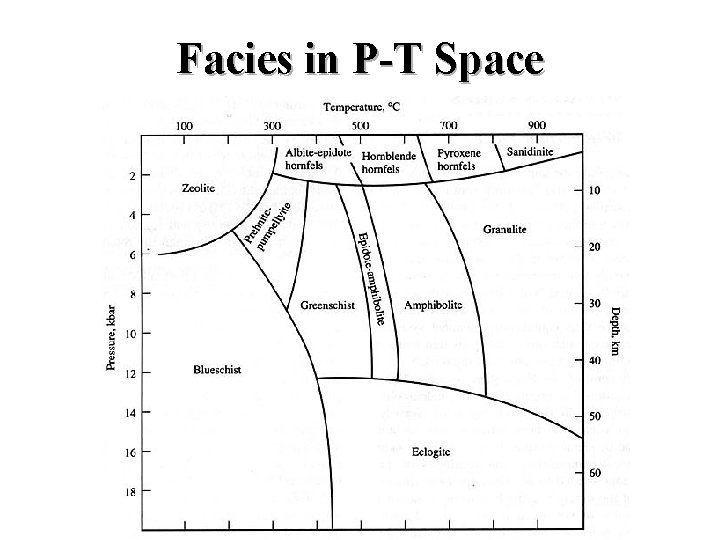
Facies in P-T Space
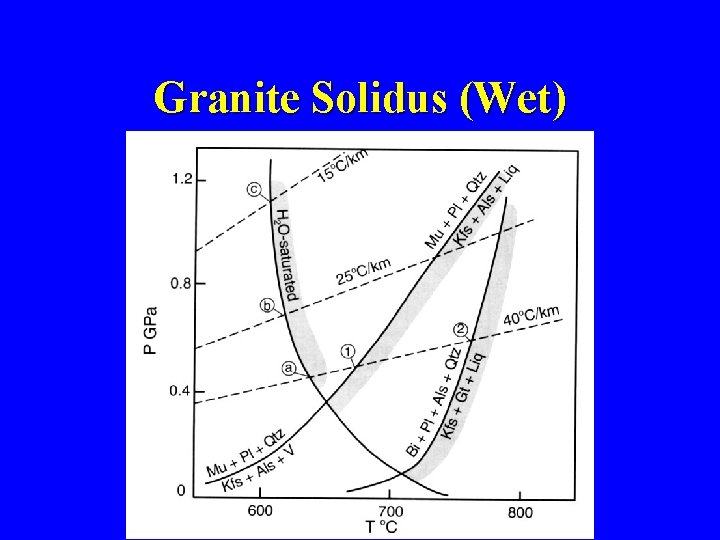
Granite Solidus (Wet)
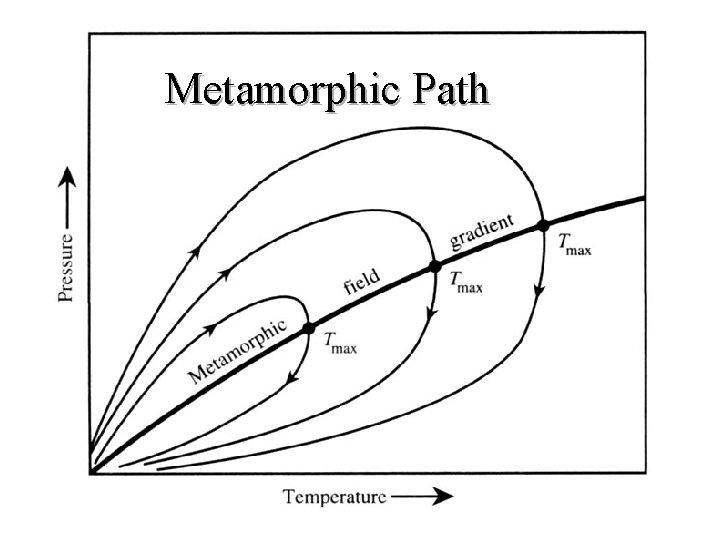
Metamorphic Path
Polymetamorphism • Sometimes there are repeated episodes of metamorphism • The last event may be weak or of short duration • Polymetamorphism is common in post tectonic environments and in contact aureoles
Material Transport Diffusion Infiltration
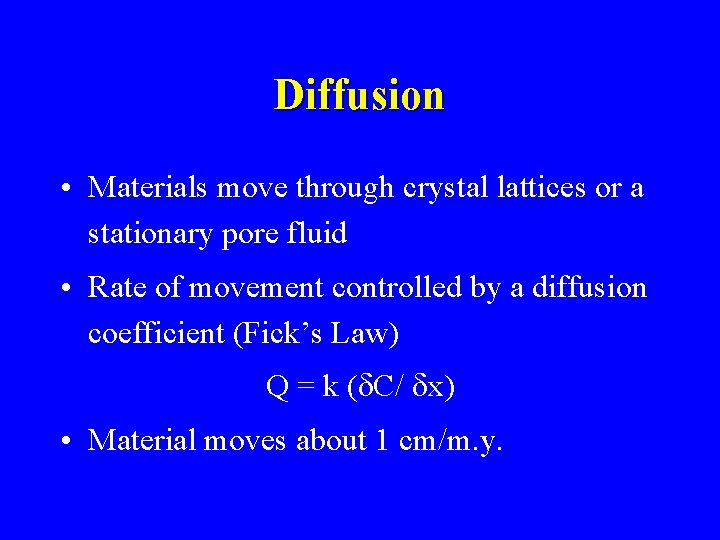
Diffusion • Materials move through crystal lattices or a stationary pore fluid • Rate of movement controlled by a diffusion coefficient (Fick’s Law) Q = k ( C/ x) • Material moves about 1 cm/m. y.
Infiltration • Passive mass transport of a solute in a moving fluid medium • Driven by fluid pressure • Microfractures are important • Reaction-enhanced permeability – Volume reduction due to reactions • Dilatency pumping
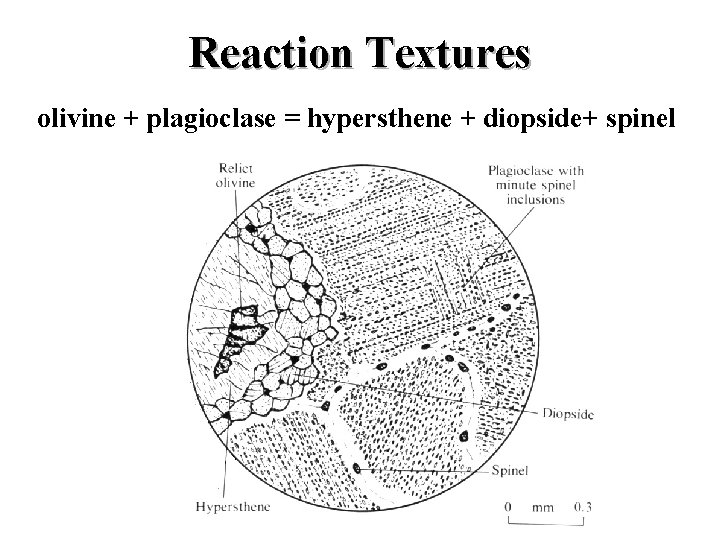
Reaction Textures olivine + plagioclase = hypersthene + diopside+ spinel
- Slides: 22