
Phase Changes Phase Change Phase Change Reversible physical
Phase Changes

Phase Change • Phase Change: Reversible physical change that occurs when substance changes from one state to another • Energy is either released or absorbed during phase changes

1. Melting • Phase change from Solid to liquid – Energy is absorbed by substance • Heat of fusion: amount of heat energy needed to melt a substance – Varies for different substances

Melting ice Melting iron
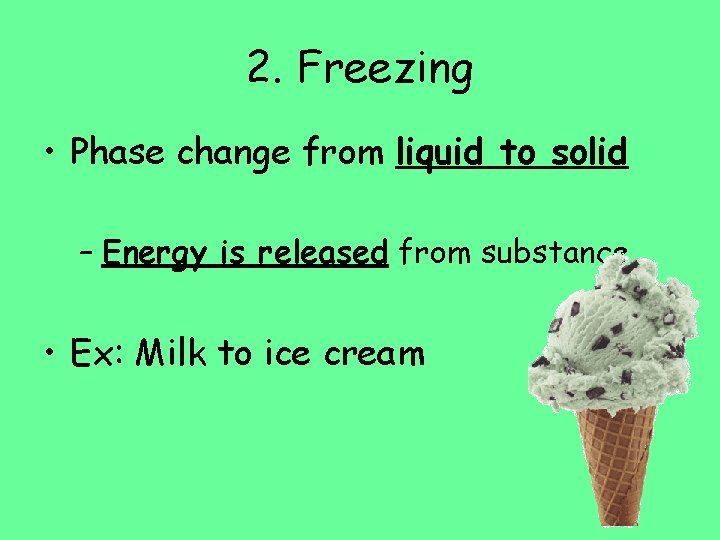
2. Freezing • Phase change from liquid to solid – Energy is released from substance • Ex: Milk to ice cream

3. Vaporization • Phase change from a liquid to a gas – Energy is absorbed by substance • Heat of Vaporization: amount of heat energy required to change a substance from a liquid to gas – varies for different substances
Vaporization (2 Types) • 1. Evaporation: Change from liquid to gas at temperatures below the substance’s boiling point – Ex: Evaporating water from ocean • 2. Boiling: Change from liquid to gas at the substance’s boiling point.

4. Condensation • Phase change from gas to liquid – Energy is released from substance

5. Sublimation • Phase change from solid directly to gas (skips liquid phase) • Energy is absorbed by substance – Ex: Dry ice (solid CO 2)

6. Deposition • Change from gas directly to solid • Energy is released by substance – Ex: Frost on car windows
- Slides: 10