
Phase Changes and Heating Curve of Water Temperature

- Slides: 16
Phase Changes and Heating Curve of Water
Temperature • Temperature – the measure of particles moving • Higher temperature = Fast moving particles • Lower temperature = Slow moving particles
Thermal Energy • Thermal Energy – TOTAL energy of all particles (KE + PE) • ALL matter has thermal energy
Heat • Heat – the amount of thermal energy that is transferred to an object or area • EX: Cooking an egg (Hot stove frying pan egg
States of Matter • 4 States of Matter • Solid • Liquid • Gas • Plasma
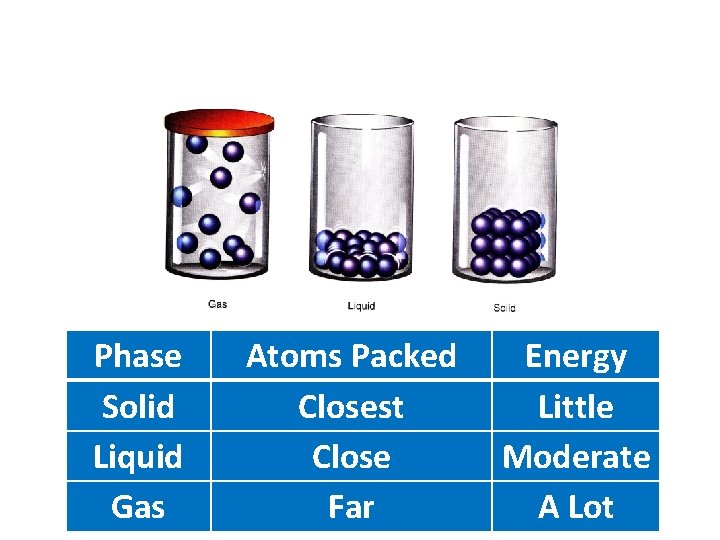
Phase Properties Phase Solid Liquid Gas Atoms Packed Closest Close Far Energy Little Moderate A Lot
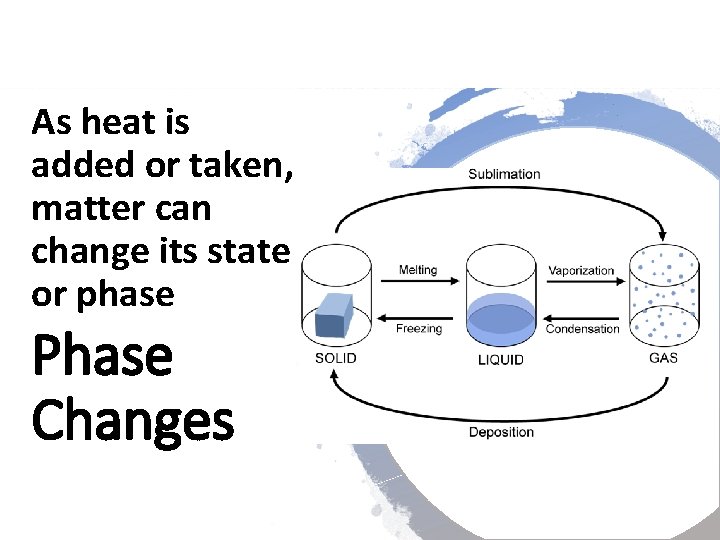
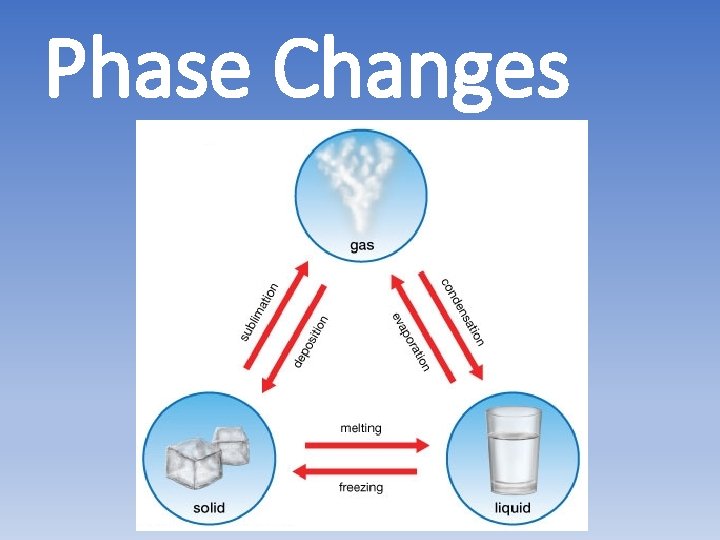
As heat is added or taken, matter can change its state or phase Phase Changes
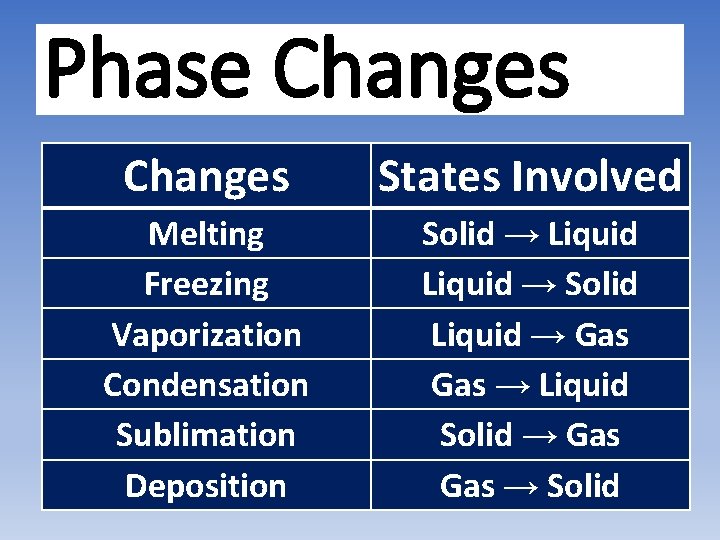
Phase Changes States Involved Melting Freezing Vaporization Condensation Sublimation Deposition Solid → Liquid → Solid Liquid → Gas → Liquid Solid → Gas → Solid
Phase Changes
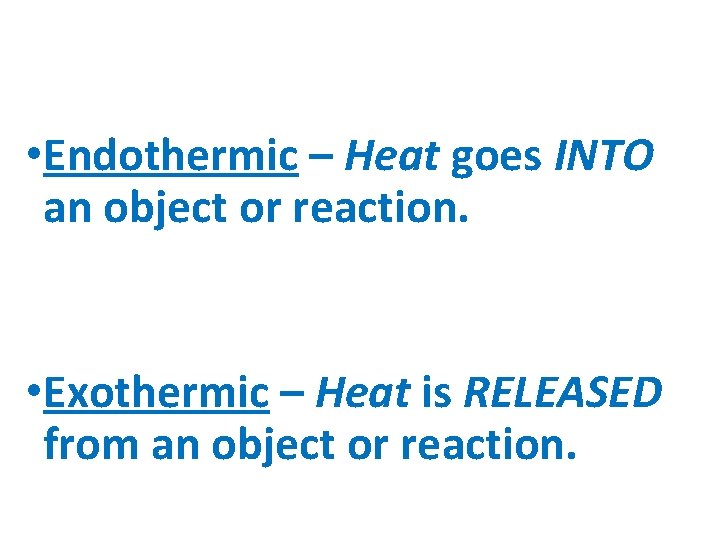
Heat Transmission • Endothermic – Heat goes INTO an object or reaction. • Exothermic – Heat is RELEASED from an object or reaction.
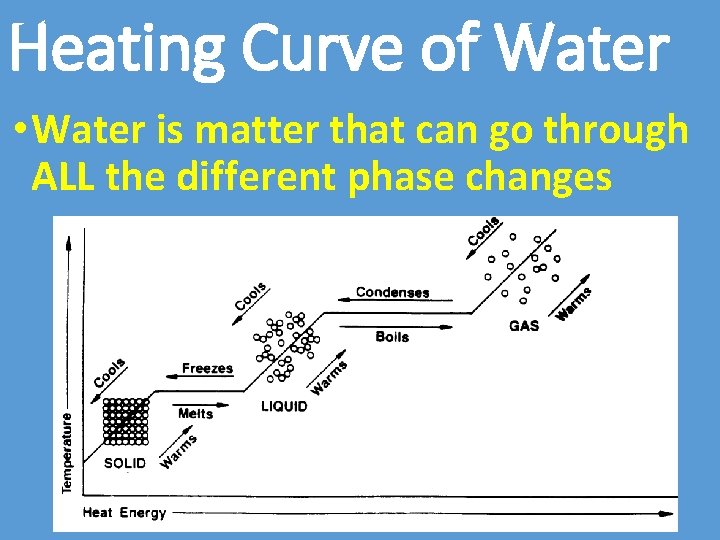
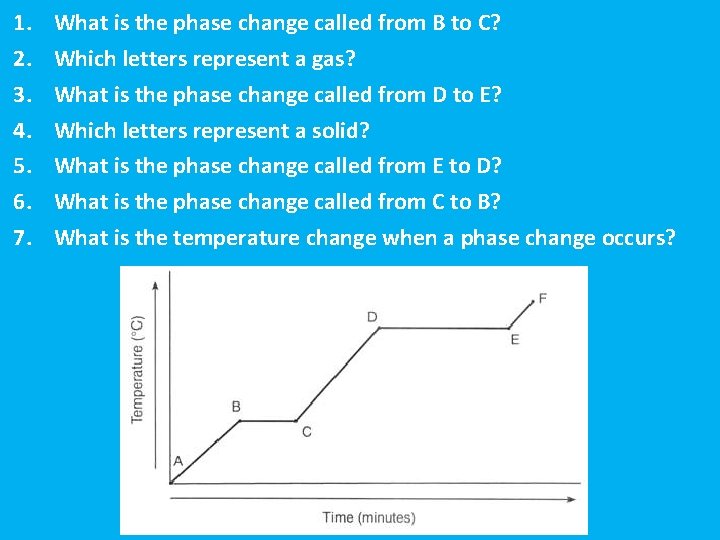
Heating Curve of Water • Water is matter that can go through ALL the different phase changes
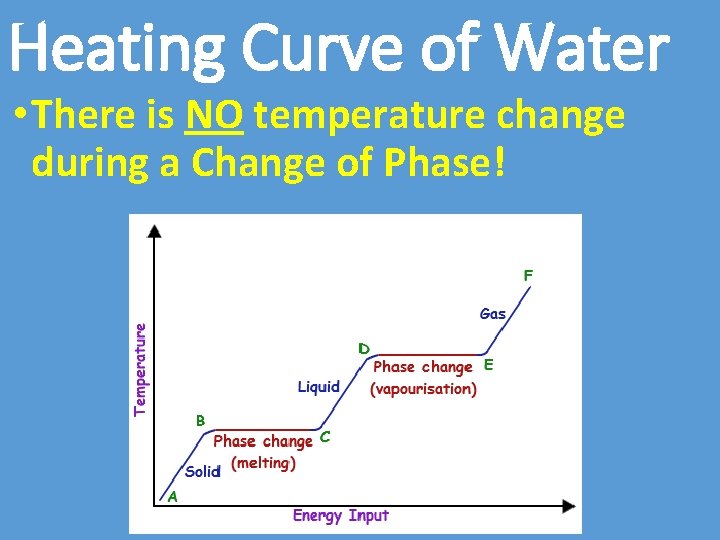
Heating Curve of Water • There is NO temperature change during a Change of Phase!
1. 2. 3. 4. 5. 6. 7. What is the phase change called from B to C? Which letters represent a gas? What is the phase change called from D to E? Which letters represent a solid? What is the phase change called from E to D? What is the phase change called from C to B? What is the temperature change when a phase change occurs?
Heat of Fusion Energy required to change a solid at its melting point to a liquid. It is unique for every substance. For water, the heat of fusion = 6 k. J/mol 14
Heat of Vaporization The energy required to change a liquid at its boiling point to a gas. It is unique for every substance. For water, the heat of fusion = 41 k. J/mol 15
Professor Dave Phase Changes Video 16