
Phase A Architecture Vision Phase H Architecture Change
- Slides: 27
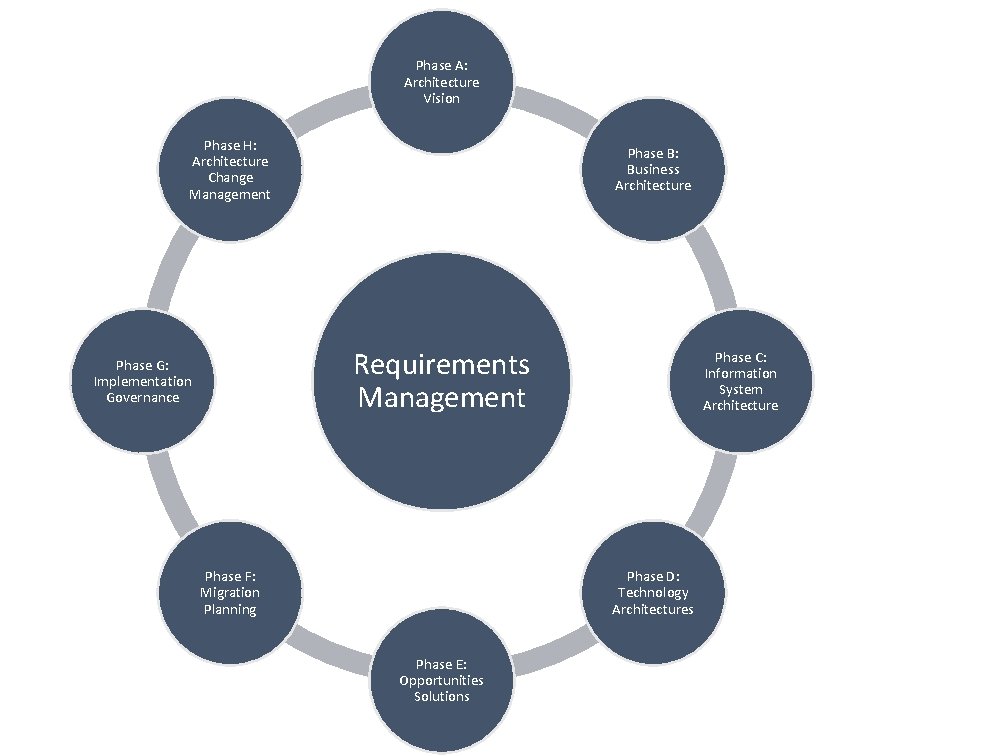
Phase A: Architecture Vision Phase H: Architecture Change Management Phase B: Business Architecture Requirements Management Phase G: Implementation Governance Phase F: Migration Planning Phase C: Information System Architecture Phase D: Technology Architectures Phase E: Opportunities Solutions
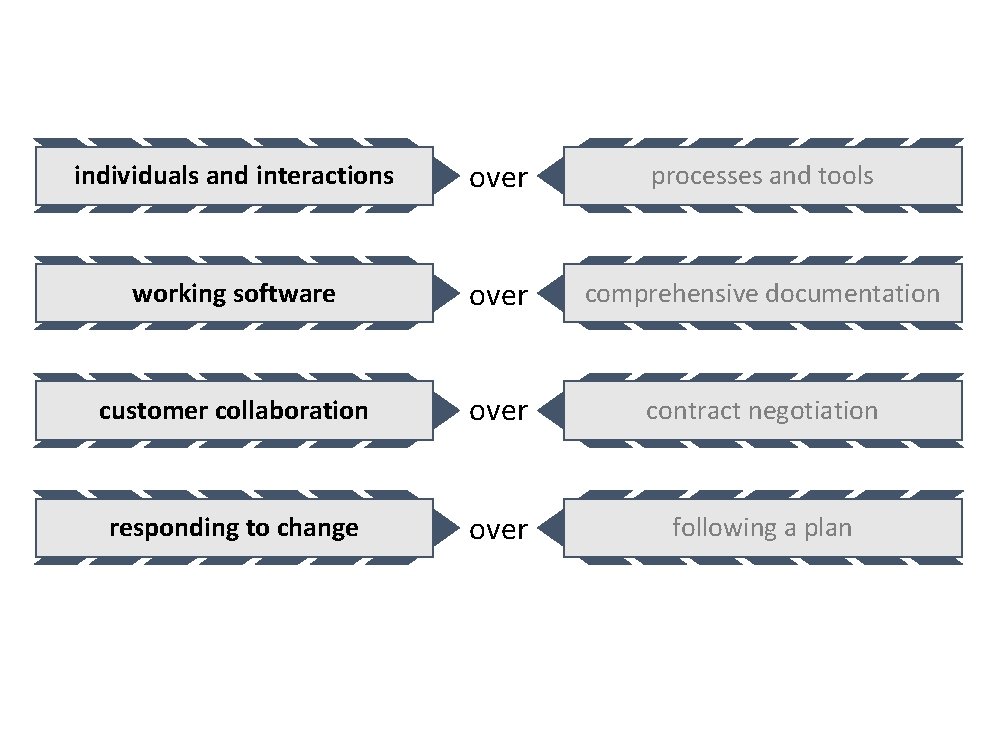
individuals and interactions over processes and tools working software over comprehensive documentation customer collaboration over contract negotiation responding to change over following a plan
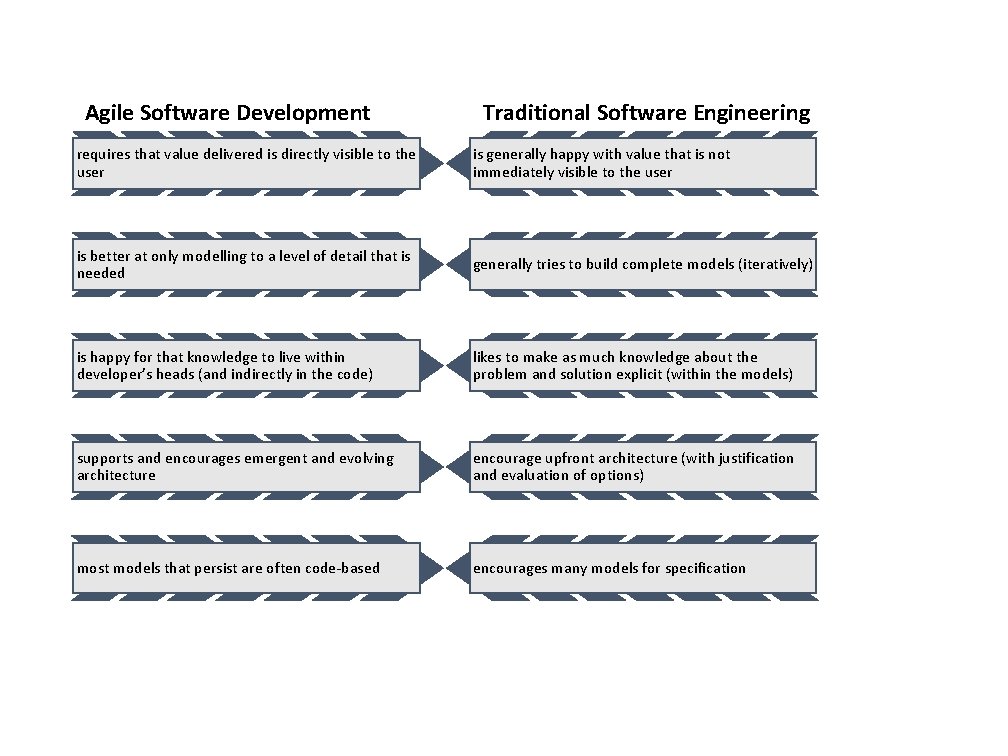
Agile Software Development Traditional Software Engineering requires that value delivered is directly visible to the user is generally happy with value that is not immediately visible to the user is better at only modelling to a level of detail that is needed generally tries to build complete models (iteratively) is happy for that knowledge to live within developer’s heads (and indirectly in the code) likes to make as much knowledge about the problem and solution explicit (within the models) supports and encourages emergent and evolving architecture encourage upfront architecture (with justification and evaluation of options) most models that persist are often code-based encourages many models for specification
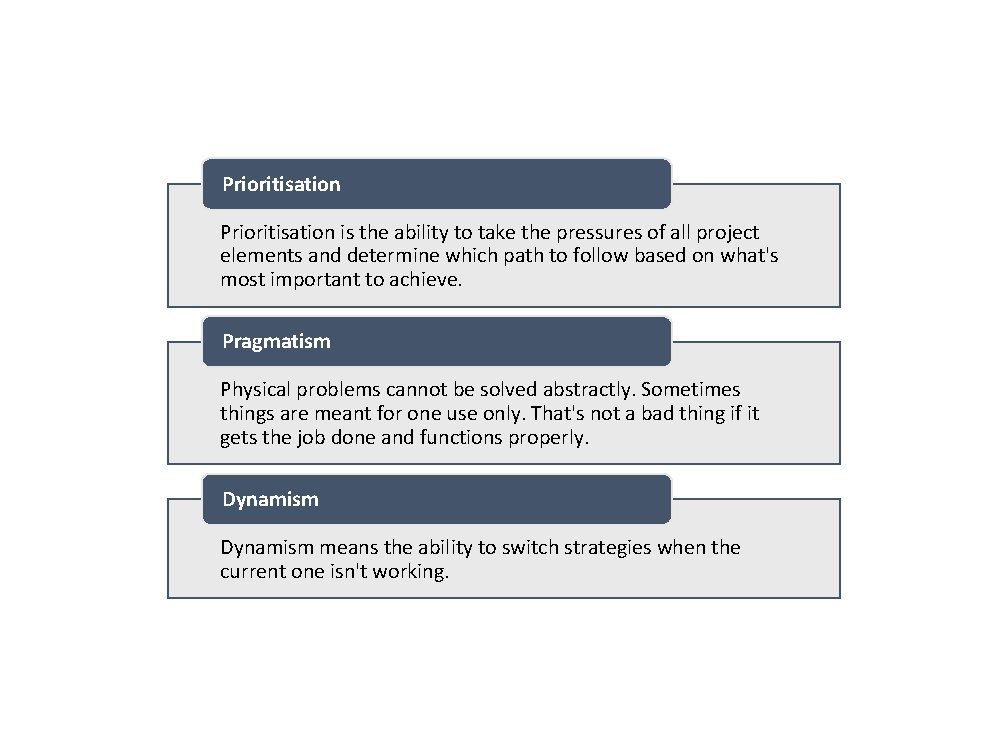
Prioritisation is the ability to take the pressures of all project elements and determine which path to follow based on what's most important to achieve. Pragmatism Physical problems cannot be solved abstractly. Sometimes things are meant for one use only. That's not a bad thing if it gets the job done and functions properly. Dynamism means the ability to switch strategies when the current one isn't working.
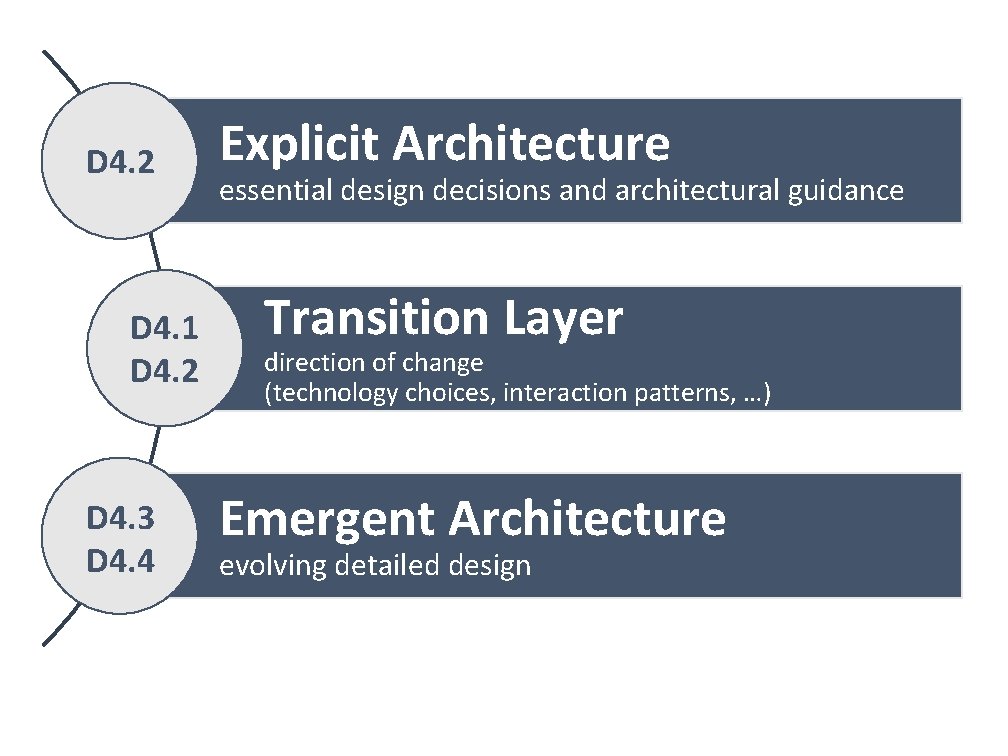
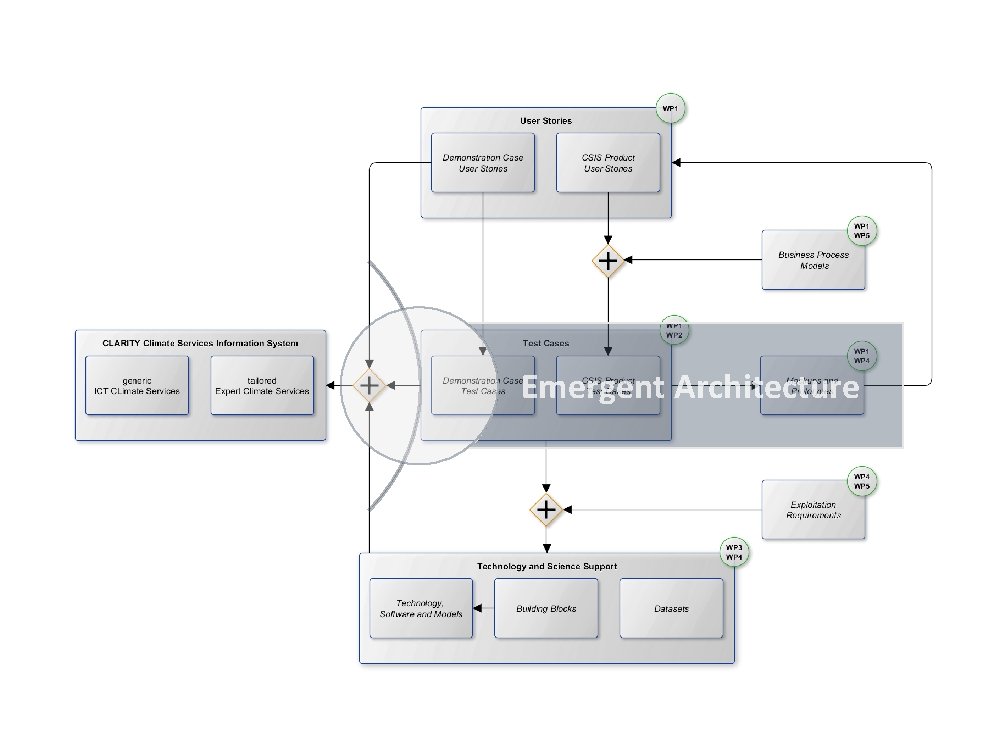
D 4. 2 D 4. 1 D 4. 2 D 4. 3 D 4. 4 Explicit Architecture essential design decisions and architectural guidance Transition Layer direction of change (technology choices, interaction patterns, …) Emergent Architecture evolving detailed design
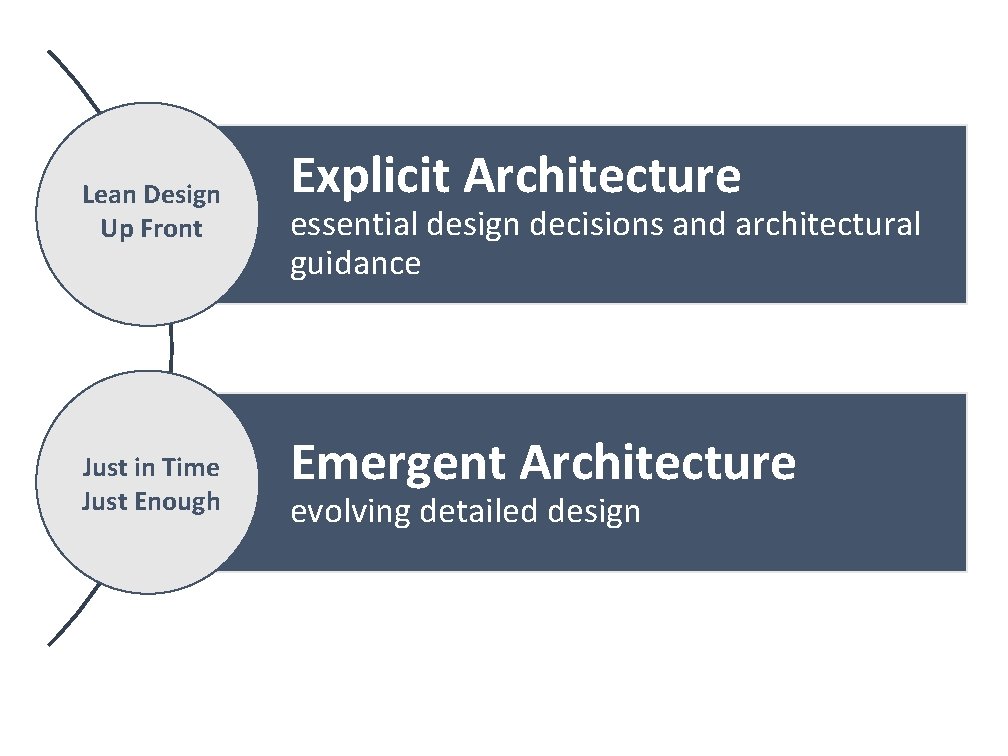
Lean Design Up Front Just in Time Just Enough Explicit Architecture essential design decisions and architectural guidance Emergent Architecture evolving detailed design
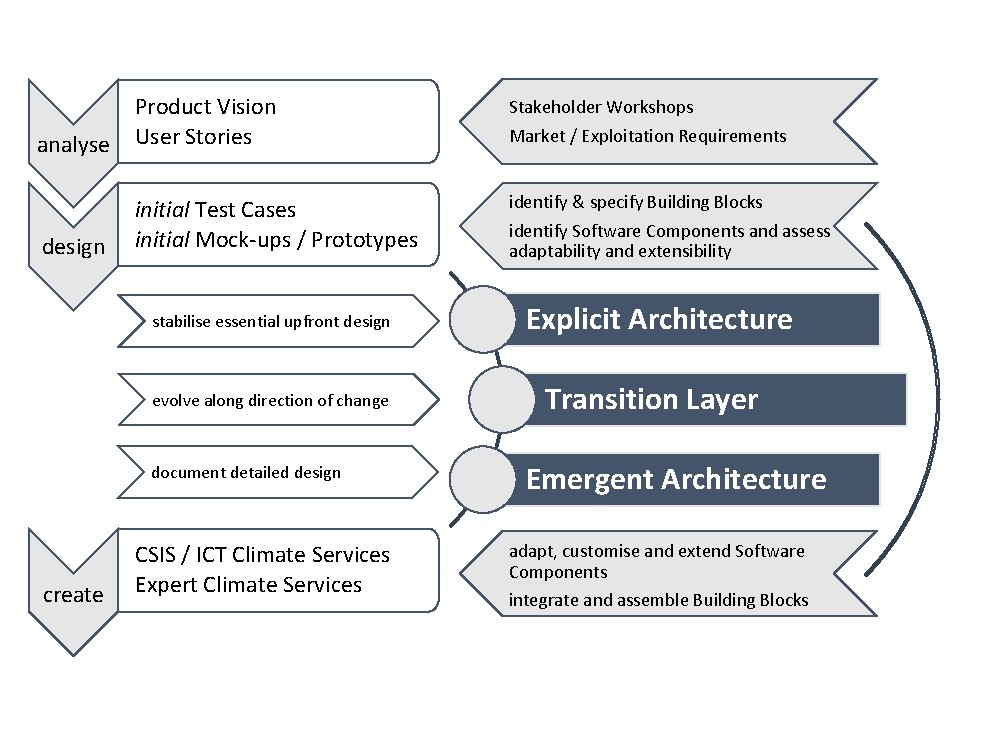
analyse Product Vision User Stories Stakeholder Workshops Market / Exploitation Requirements design initial Test Cases initial Mock-ups / Prototypes identify & specify Building Blocks identify Software Components and assess adaptability and extensibility stabilise essential upfront design evolve along direction of change document detailed design create CSIS / ICT Climate Services Expert Climate Services Explicit Architecture Transition Layer Emergent Architecture adapt, customise and extend Software Components integrate and assemble Building Blocks
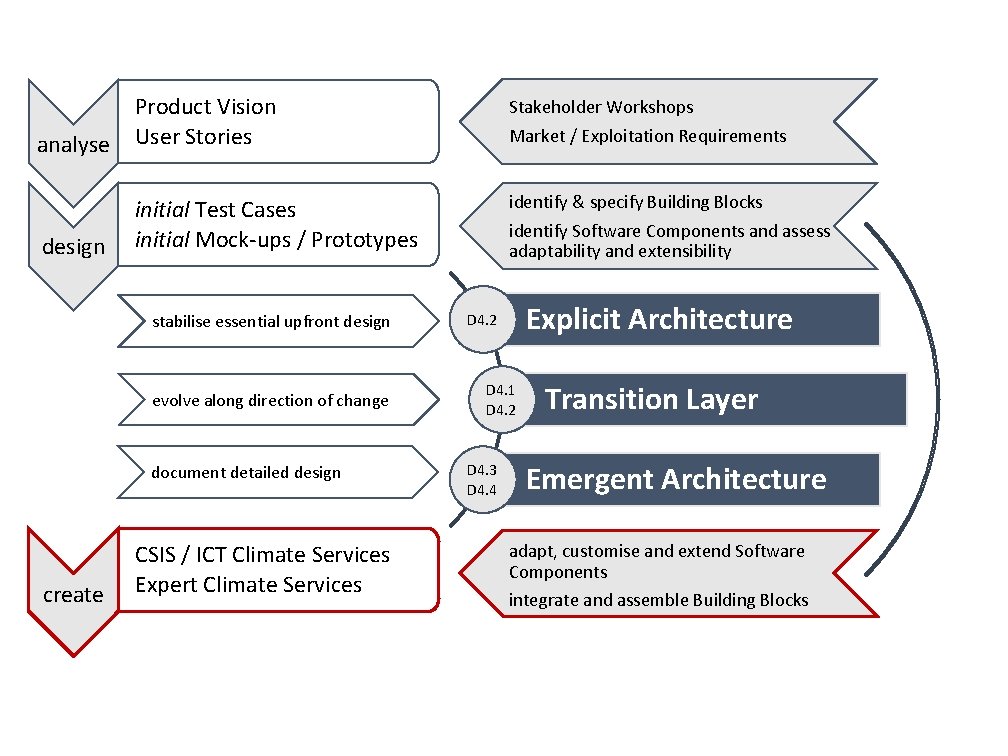
analyse Product Vision User Stories Stakeholder Workshops Market / Exploitation Requirements design initial Test Cases initial Mock-ups / Prototypes identify & specify Building Blocks identify Software Components and assess adaptability and extensibility stabilise essential upfront design evolve along direction of change document detailed design create CSIS / ICT Climate Services Expert Climate Services Explicit Architecture D 4. 2 D 4. 1 D 4. 2 D 4. 3 D 4. 4 Transition Layer Emergent Architecture adapt, customise and extend Software Components integrate and assemble Building Blocks
Emergent Architecture
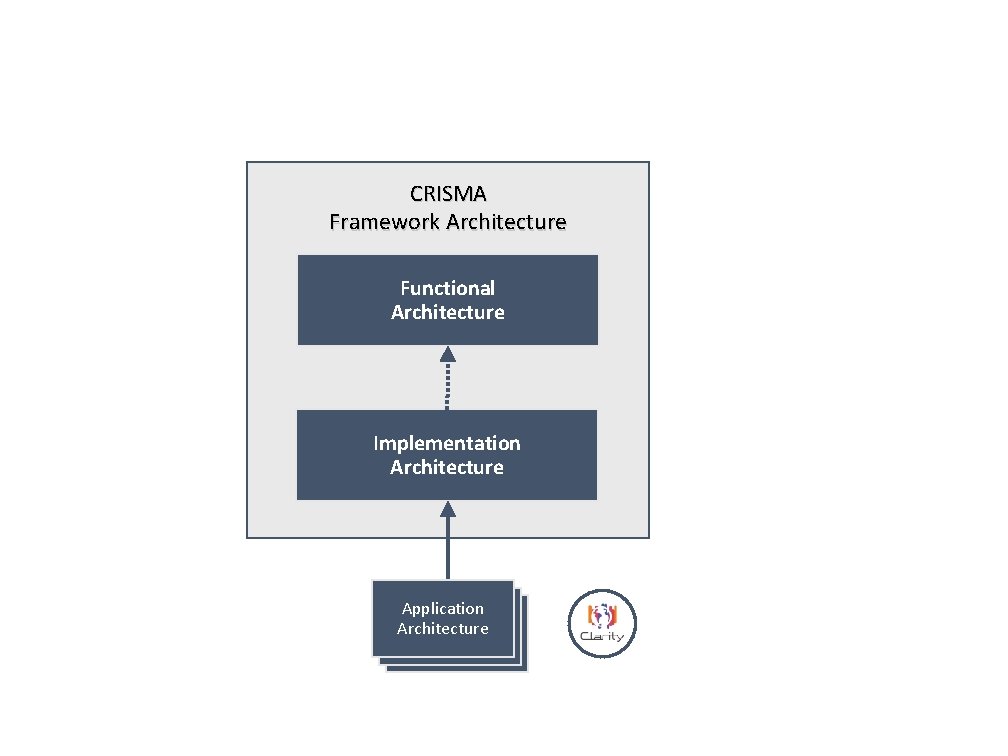
CRISMA Framework Architecture Functional Architecture Implementation Architecture Application Architecture
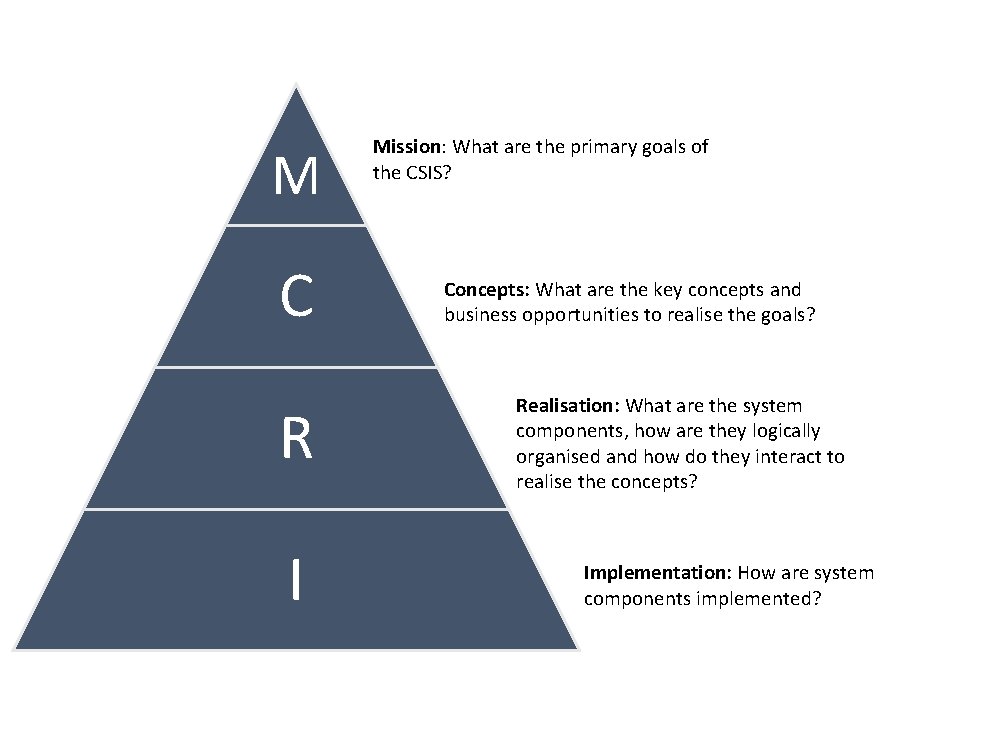
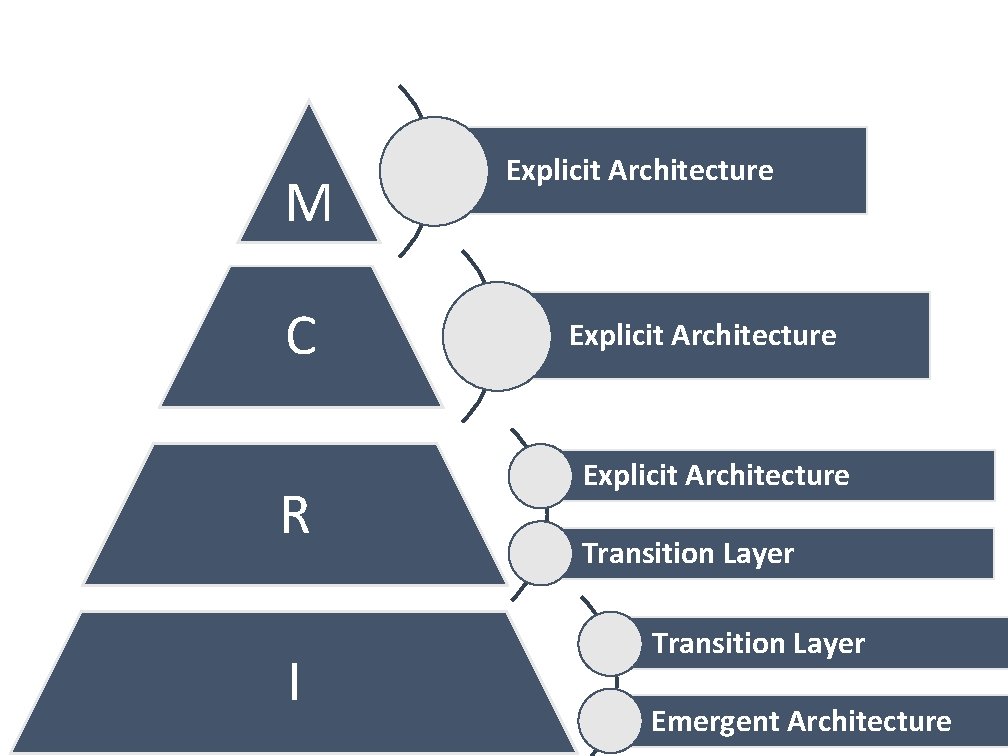
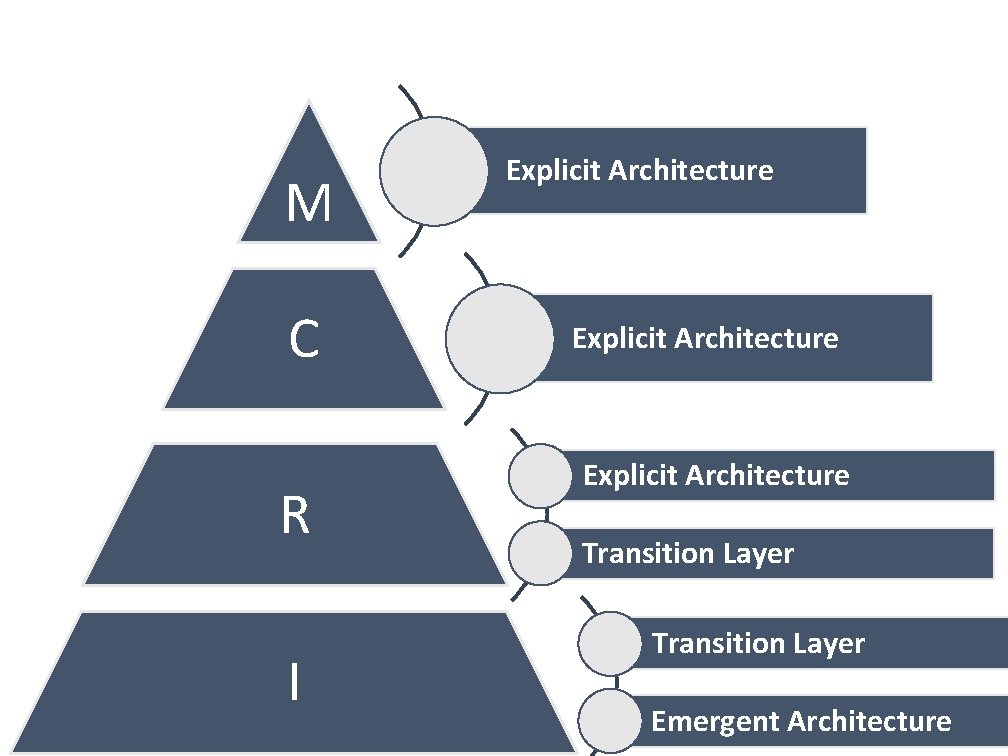
M C R I Mission: What are the primary goals of the CSIS? Concepts: What are the key concepts and business opportunities to realise the goals? Realisation: What are the system components, how are they logically organised and how do they interact to realise the concepts? Implementation: How are system components implemented?
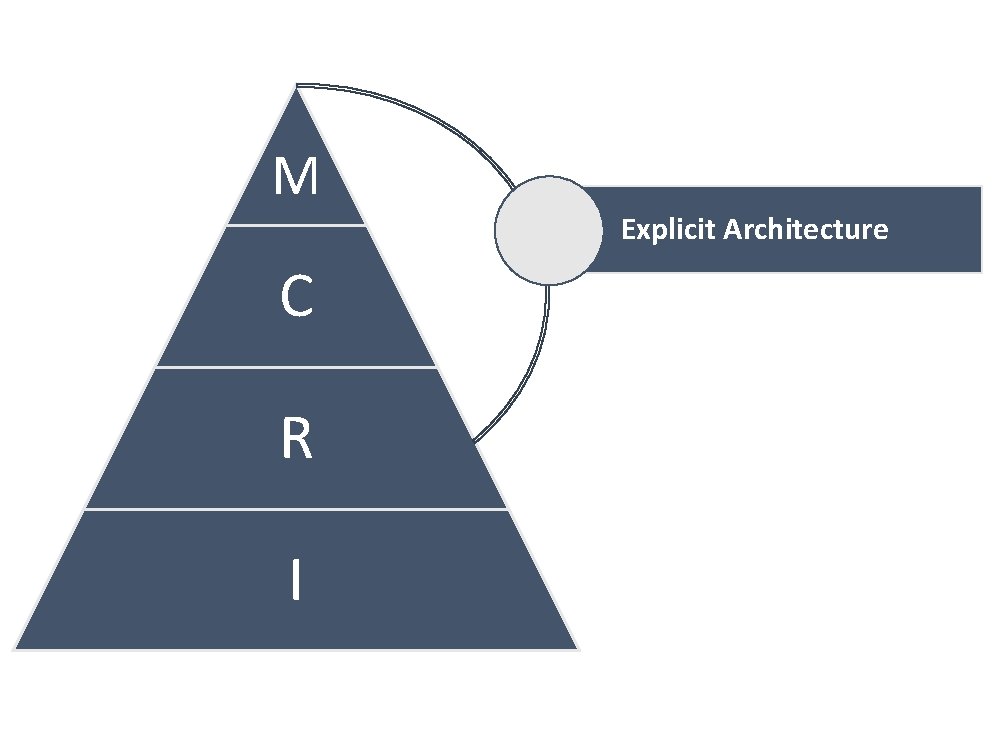
M C R I Explicit Architecture
M C R I Explicit Architecture Transition Layer Emergent Architecture
M C R I Explicit Architecture Transition Layer Emergent Architecture
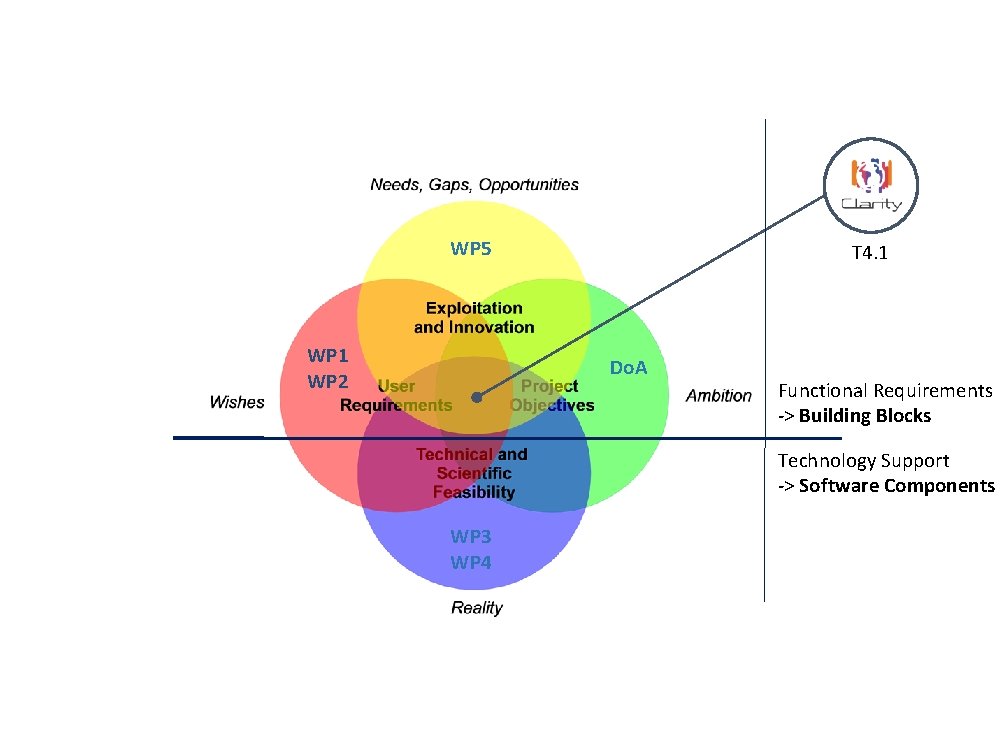
WP 5 WP 1 WP 2 T 4. 1 Do. A Functional Requirements -> Building Blocks Technology Support -> Software Components WP 3 WP 4
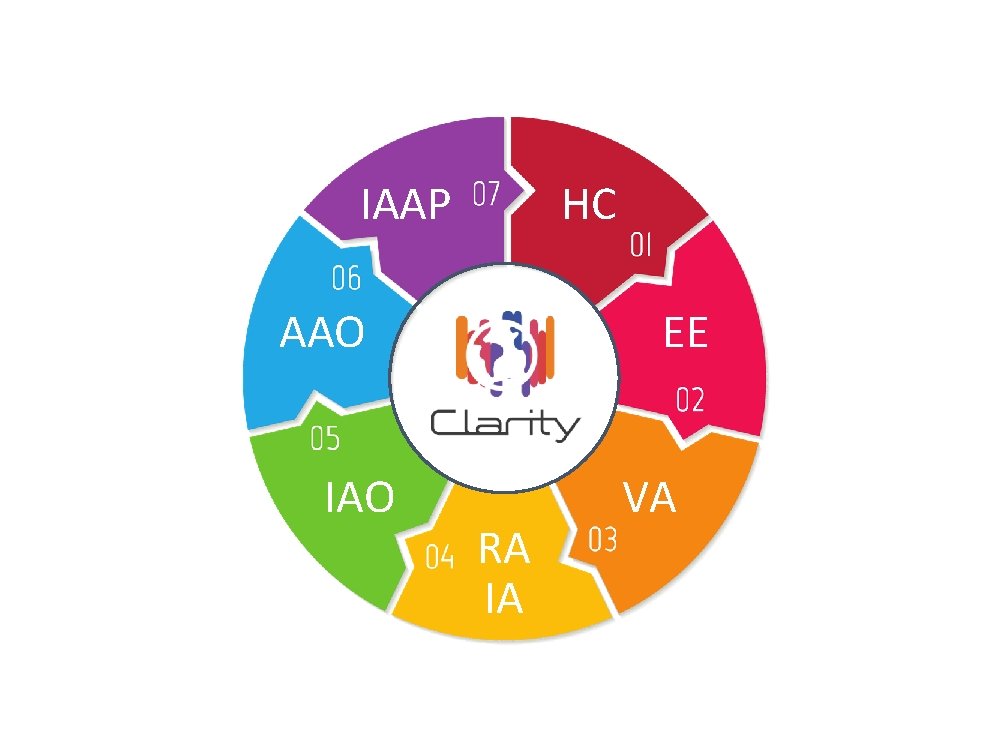
IAAP HC AAO IAO EE RA IA VA
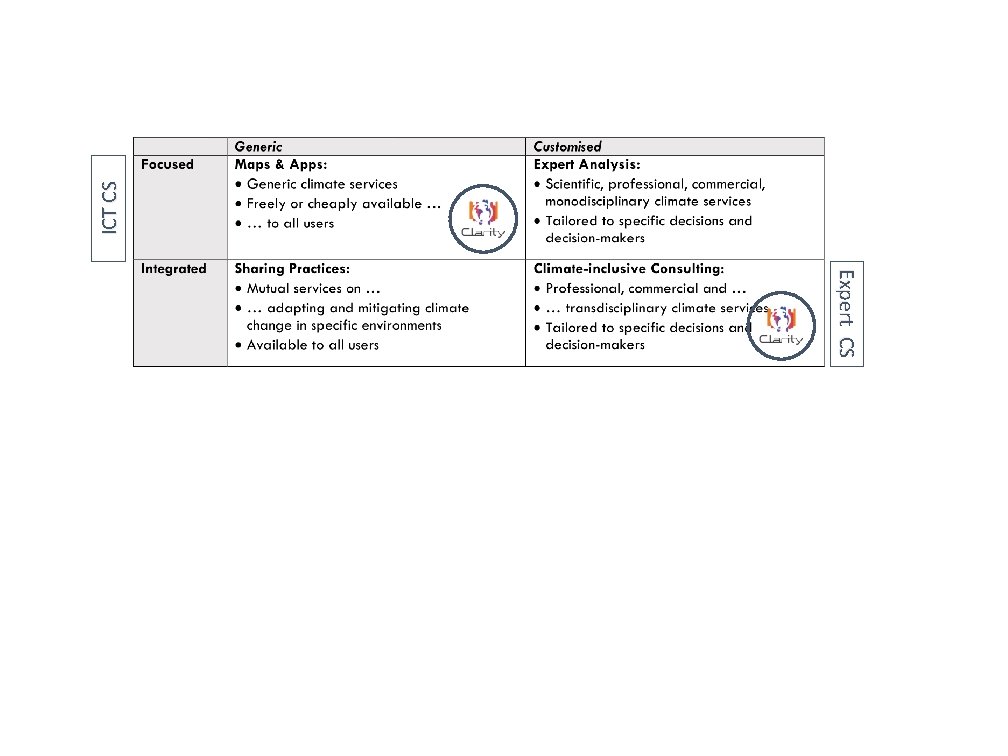
Expert CS ICT CS
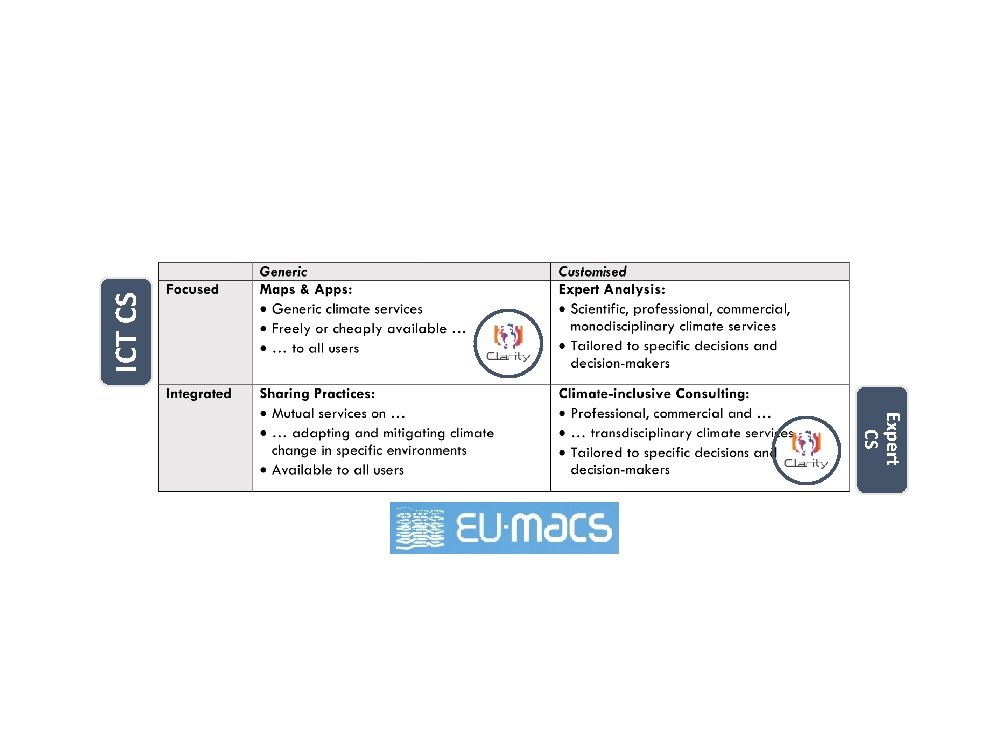
Expert CS ICT CS
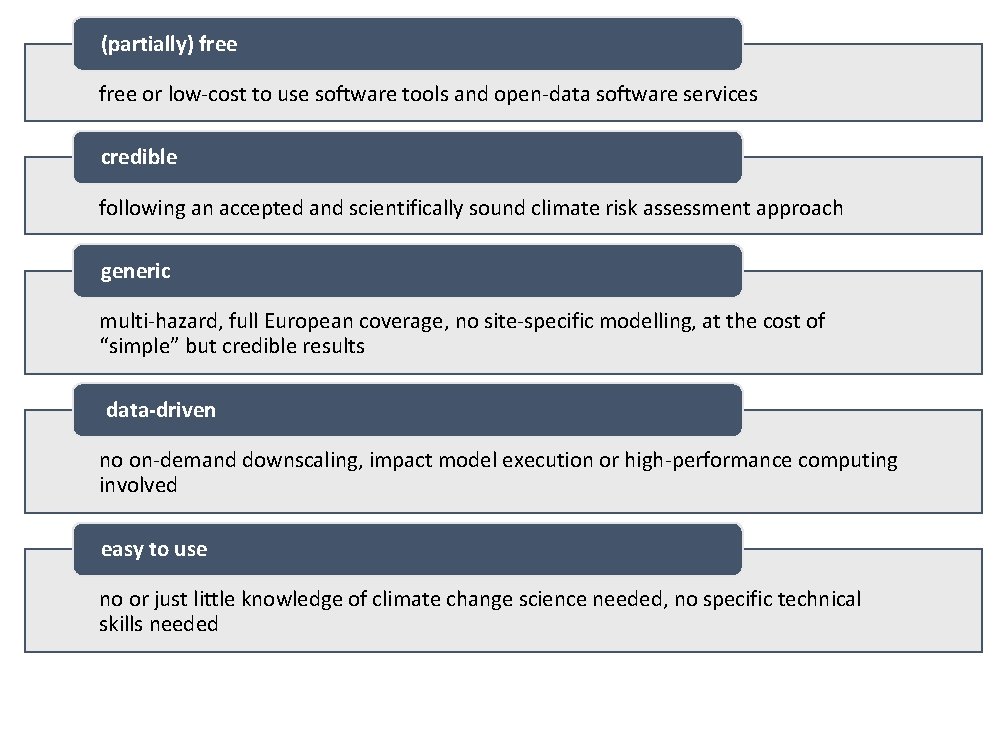
(partially) free or low-cost to use software tools and open-data software services credible following an accepted and scientifically sound climate risk assessment approach generic multi-hazard, full European coverage, no site-specific modelling, at the cost of “simple” but credible results data-driven no on-demand downscaling, impact model execution or high-performance computing involved easy to use no or just little knowledge of climate change science needed, no specific technical skills needed
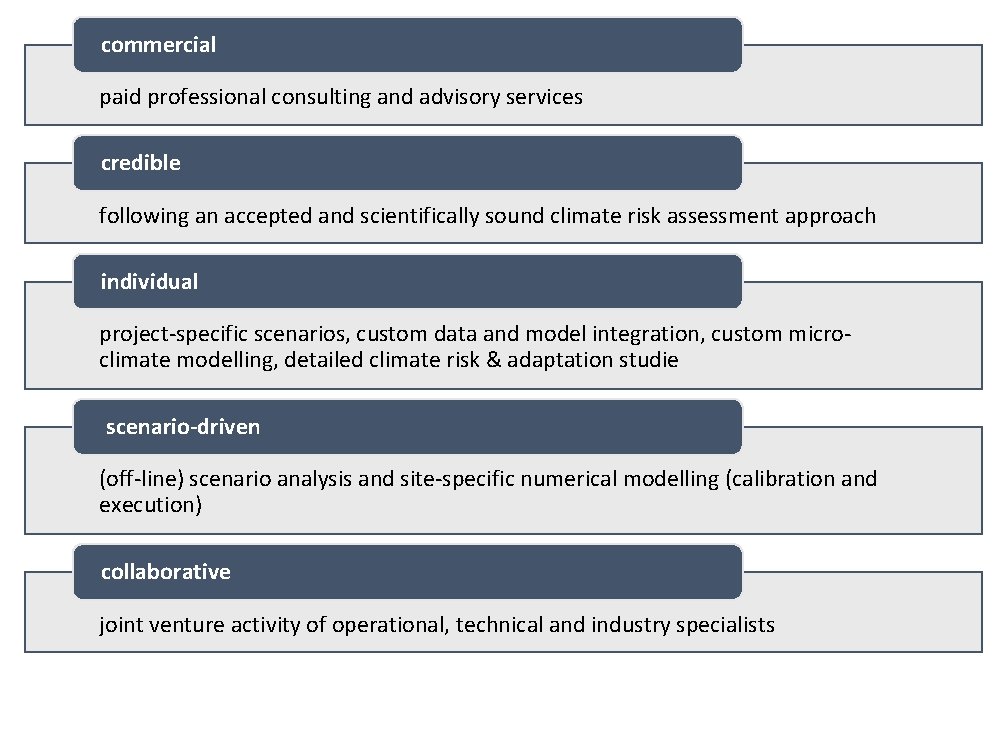
commercial paid professional consulting and advisory services credible following an accepted and scientifically sound climate risk assessment approach individual project-specific scenarios, custom data and model integration, custom microclimate modelling, detailed climate risk & adaptation studie scenario-driven (off-line) scenario analysis and site-specific numerical modelling (calibration and execution) collaborative joint venture activity of operational, technical and industry specialists
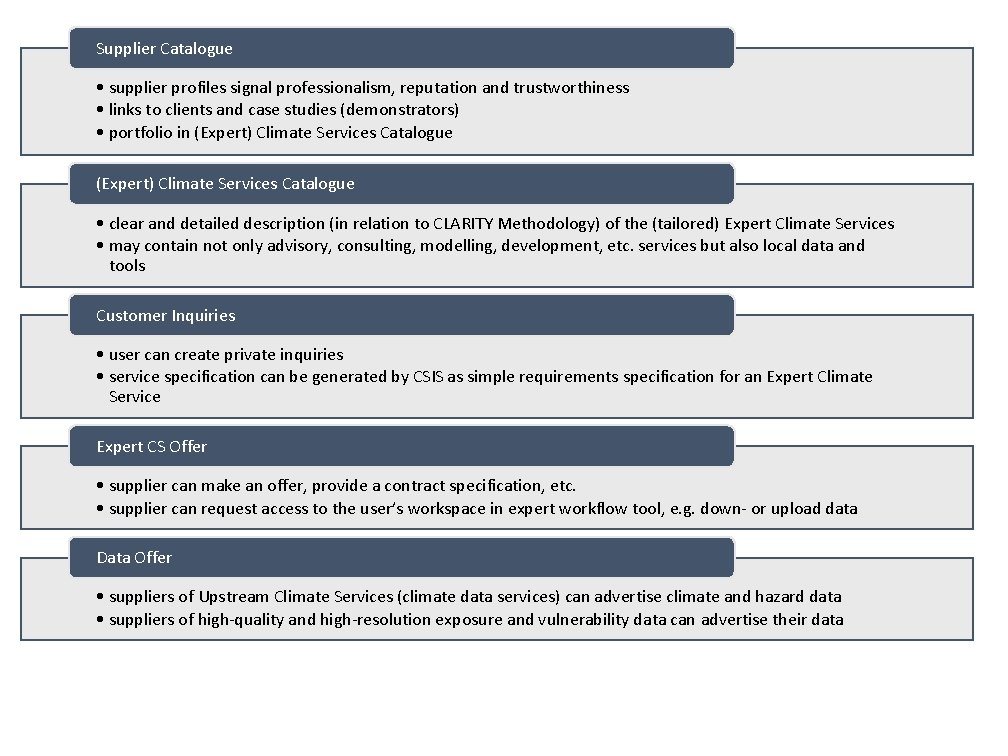
Supplier Catalogue • supplier profiles signal professionalism, reputation and trustworthiness • links to clients and case studies (demonstrators) • portfolio in (Expert) Climate Services Catalogue • clear and detailed description (in relation to CLARITY Methodology) of the (tailored) Expert Climate Services • may contain not only advisory, consulting, modelling, development, etc. services but also local data and tools Customer Inquiries • user can create private inquiries • service specification can be generated by CSIS as simple requirements specification for an Expert Climate Service Expert CS Offer • supplier can make an offer, provide a contract specification, etc. • supplier can request access to the user’s workspace in expert workflow tool, e. g. down- or upload data Data Offer • suppliers of Upstream Climate Services (climate data services) can advertise climate and hazard data • suppliers of high-quality and high-resolution exposure and vulnerability data can advertise their data
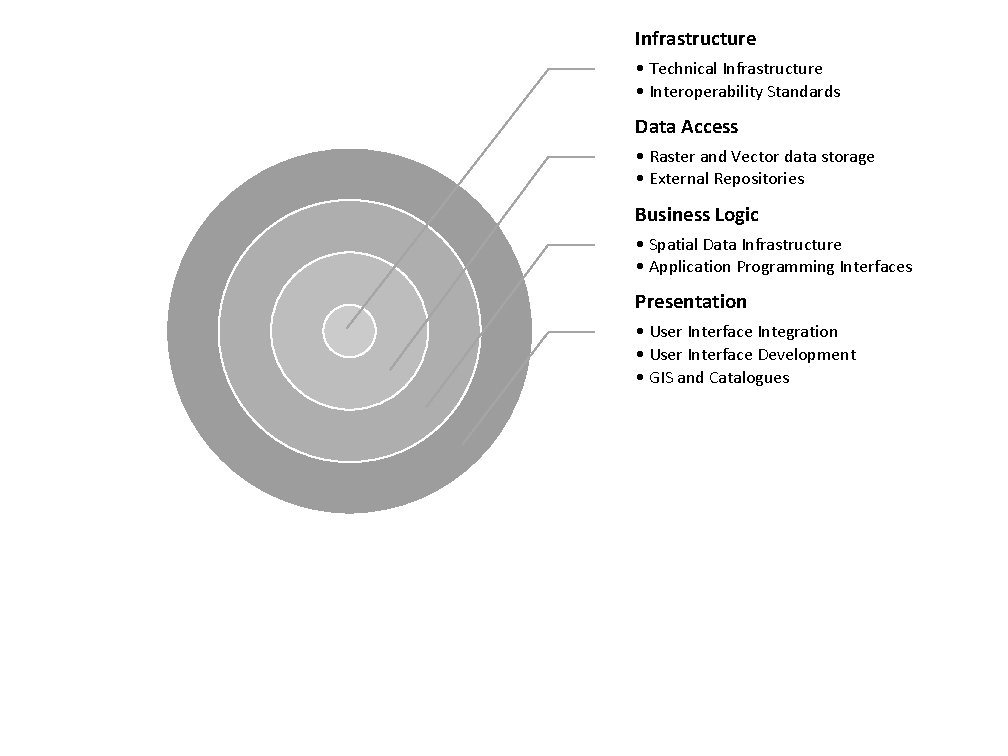
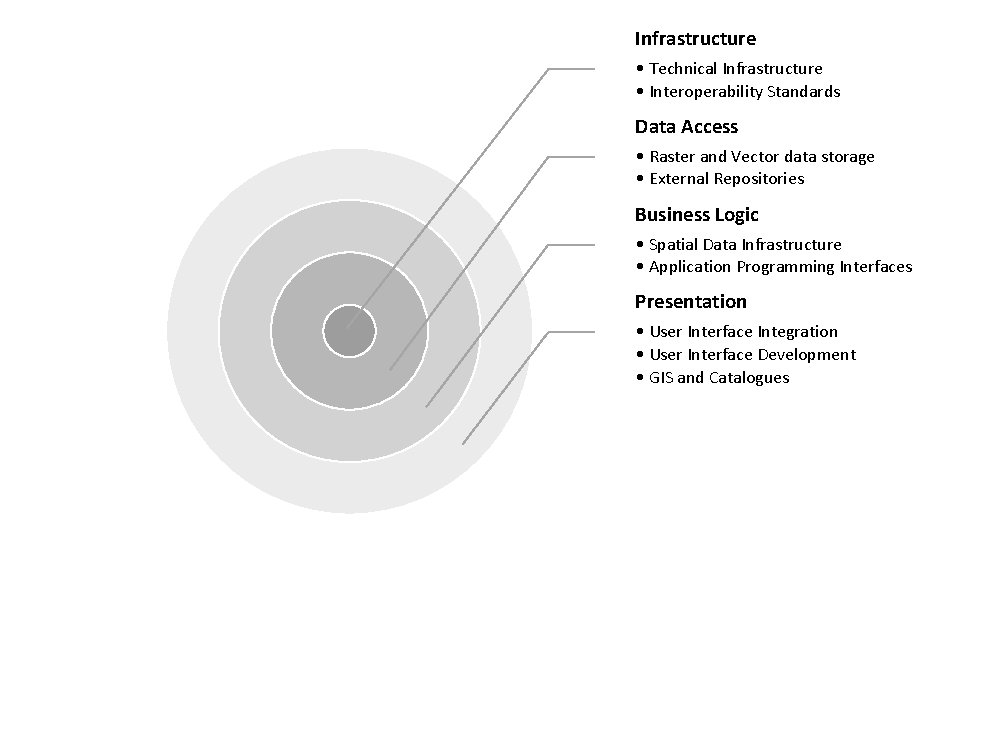
Infrastructure • Technical Infrastructure • Interoperability Standards Data Access • Raster and Vector data storage • External Repositories Business Logic • Spatial Data Infrastructure • Application Programming Interfaces Presentation • User Interface Integration • User Interface Development • GIS and Catalogues
Infrastructure • Technical Infrastructure • Interoperability Standards Data Access • Raster and Vector data storage • External Repositories Business Logic • Spatial Data Infrastructure • Application Programming Interfaces Presentation • User Interface Integration • User Interface Development • GIS and Catalogues
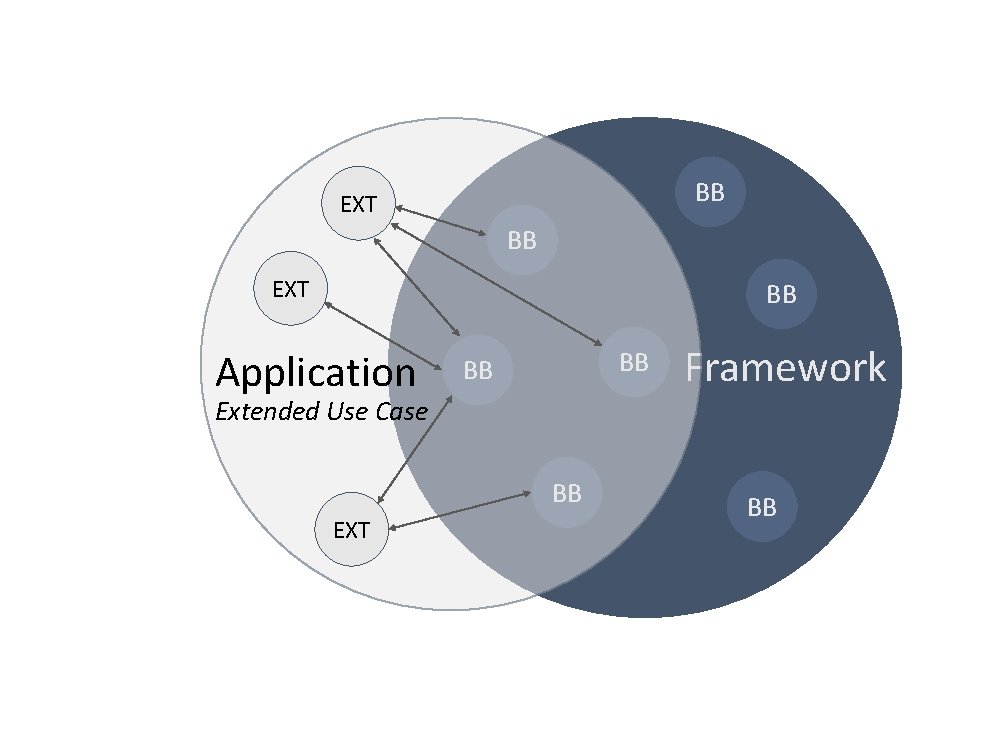
BB EXT BB Application BB BB Framework Extended Use Case BB EXT BB
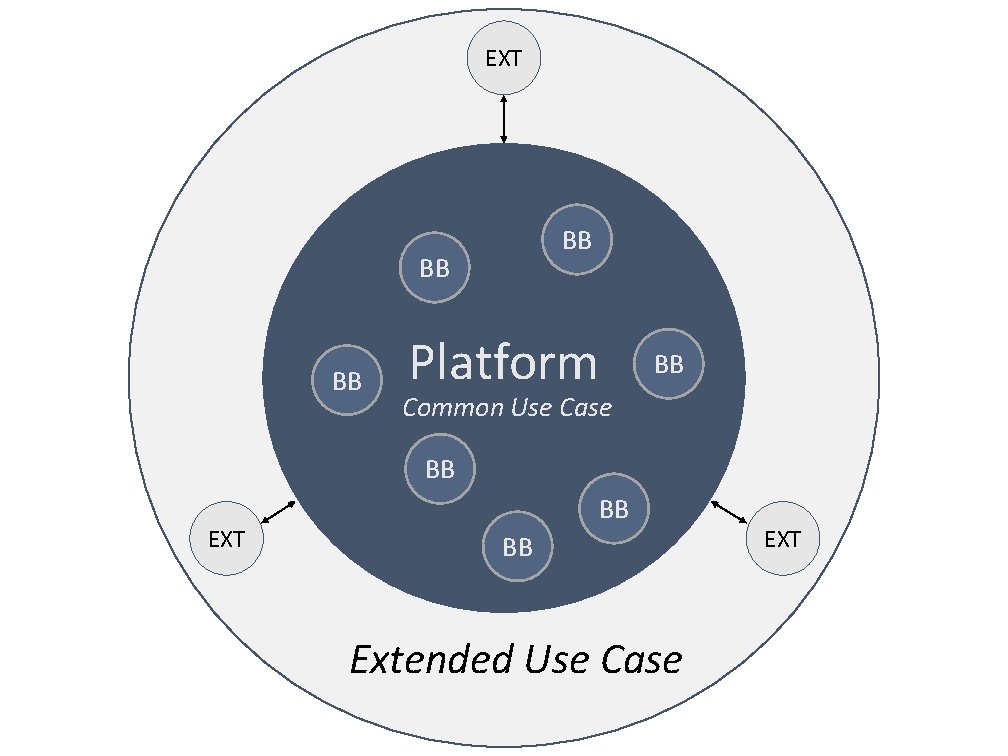
EXT BB BB BB Platform BB Common Use Case BB EXT BB BB Extended Use Case EXT