
PHASE 5 COMMUNICATION PLAN DESIGN GUIDE Implementation Planning
- Slides: 3
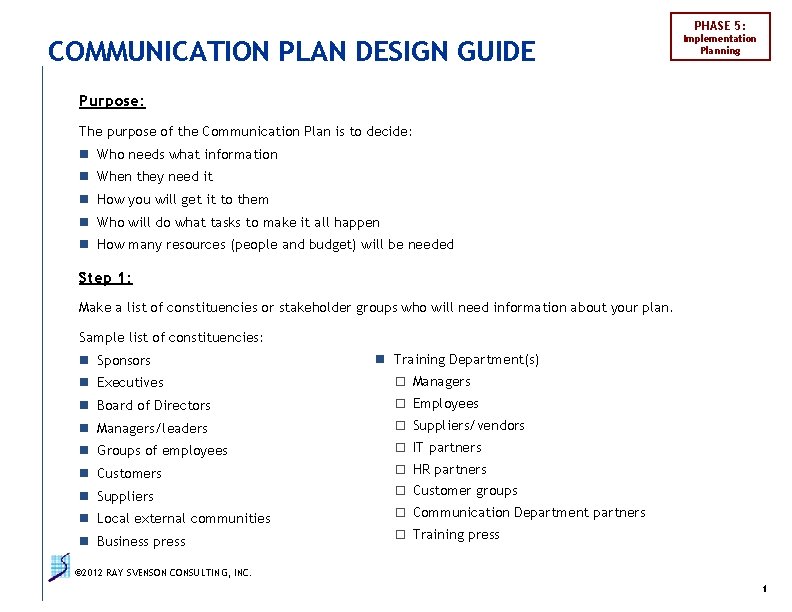
PHASE 5: COMMUNICATION PLAN DESIGN GUIDE Implementation Planning Purpose: The purpose of the Communication Plan is to decide: n Who needs what information n When they need it n How you will get it to them n Who will do what tasks to make it all happen n How many resources (people and budget) will be needed Step 1: Make a list of constituencies or stakeholder groups who will need information about your plan. Sample list of constituencies: n Sponsors n Training Department(s) n Executives o Managers n Board of Directors o Employees n Managers/leaders o Suppliers/vendors n Groups of employees o IT partners n Customers o HR partners n Suppliers o Customer groups n Local external communities o Communication Department partners n Business press o Training press © 2012 RAY SVENSON CONSULTING, INC. 1
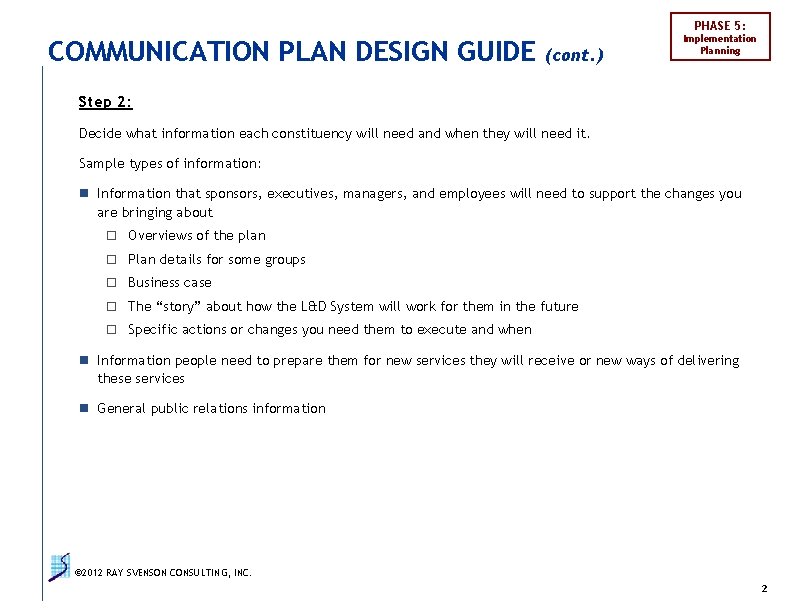
PHASE 5: COMMUNICATION PLAN DESIGN GUIDE (cont. ) Implementation Planning Step 2: Decide what information each constituency will need and when they will need it. Sample types of information: n Information that sponsors, executives, managers, and employees will need to support the changes you are bringing about o Overviews of the plan o Plan details for some groups o Business case o The “story” about how the L&D System will work for them in the future o Specific actions or changes you need them to execute and when n Information people need to prepare them for new services they will receive or new ways of delivering these services n General public relations information © 2012 RAY SVENSON CONSULTING, INC. 2
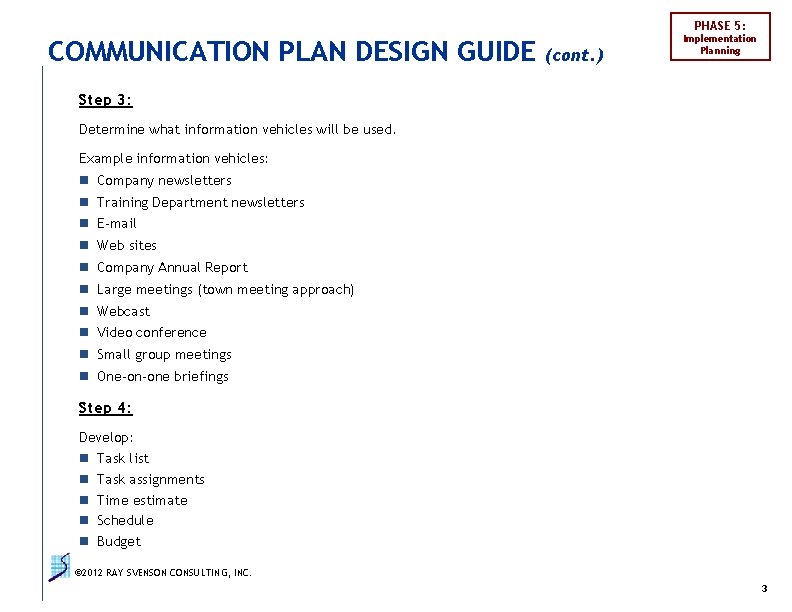
PHASE 5: COMMUNICATION PLAN DESIGN GUIDE (cont. ) Implementation Planning Step 3: Determine what information vehicles will be used. Example information vehicles: n Company newsletters n Training Department newsletters n E-mail n Web sites n Company Annual Report n Large meetings (town meeting approach) n Webcast n Video conference n Small group meetings n One-on-one briefings Step 4: Develop: n Task list n Task assignments n Time estimate n Schedule n Budget © 2012 RAY SVENSON CONSULTING, INC. 3