
Phase 2 In Phase 2 we introduce graphemes
- Slides: 5
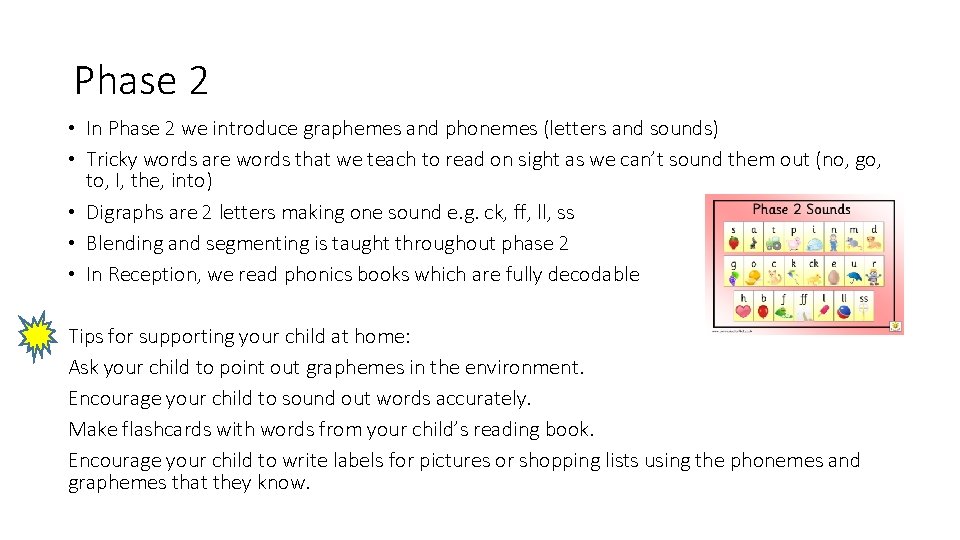
Phase 2 • In Phase 2 we introduce graphemes and phonemes (letters and sounds) • Tricky words are words that we teach to read on sight as we can’t sound them out (no, go, to, I, the, into) • Digraphs are 2 letters making one sound e. g. ck, ff, ll, ss • Blending and segmenting is taught throughout phase 2 • In Reception, we read phonics books which are fully decodable Tips for supporting your child at home: Ask your child to point out graphemes in the environment. Encourage your child to sound out words accurately. Make flashcards with words from your child’s reading book. Encourage your child to write labels for pictures or shopping lists using the phonemes and graphemes that they know.
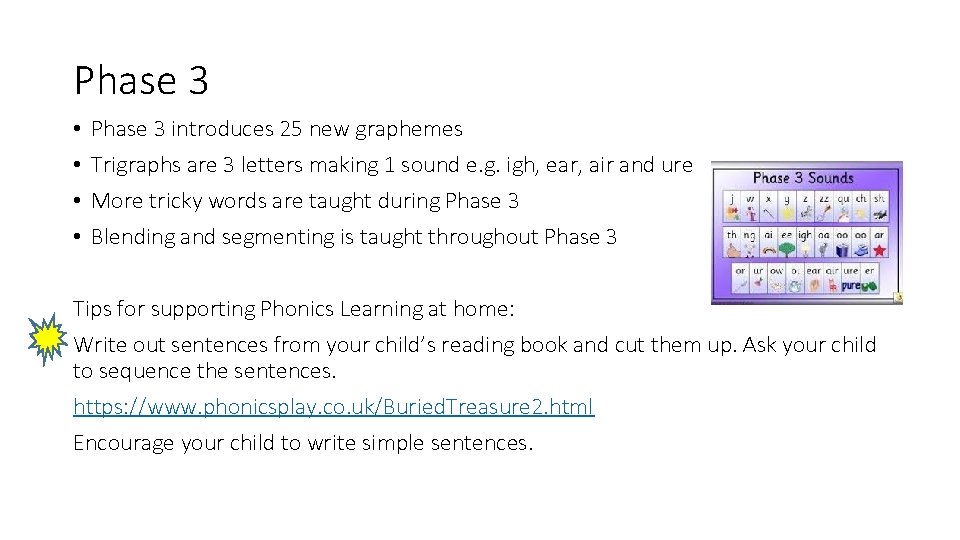
Phase 3 • • Phase 3 introduces 25 new graphemes Trigraphs are 3 letters making 1 sound e. g. igh, ear, air and ure More tricky words are taught during Phase 3 Blending and segmenting is taught throughout Phase 3 Tips for supporting Phonics Learning at home: Write out sentences from your child’s reading book and cut them up. Ask your child to sequence the sentences. https: //www. phonicsplay. co. uk/Buried. Treasure 2. html Encourage your child to write simple sentences.
Phase 4 • During Phase 4, children are not taught any new graphemes and phonemes but they consolidate their learning through reading words using the graphemes and phonemes already taught • Within this phase, children are taught to read words with adjacent consonants e. g. stamp, milk, stop • There are further tricky words taught at Phase 4 Tips for supporting your child at home: Continue to read phonics reading scheme books alongside other books at home. Encourage your child to write sentences with capital letters, finger spaces and full stops.
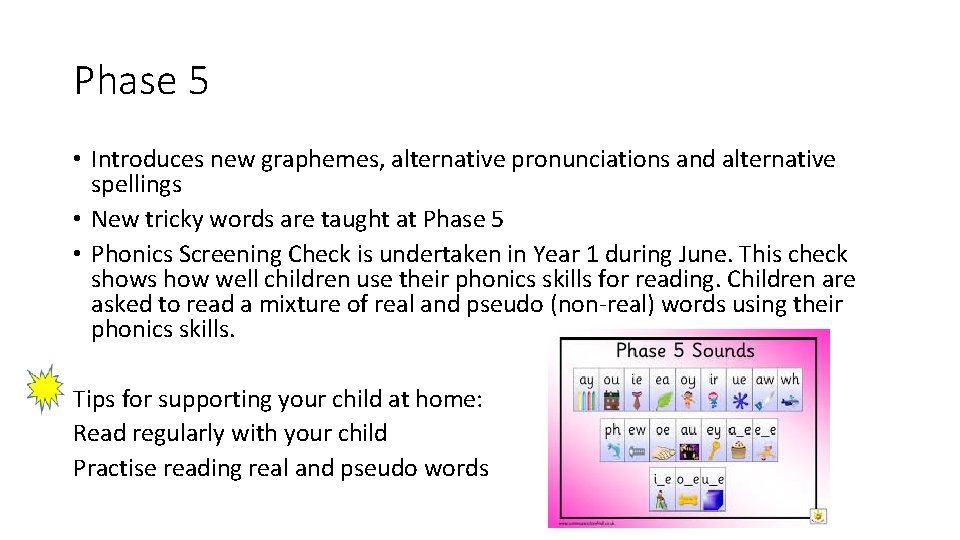
Phase 5 • Introduces new graphemes, alternative pronunciations and alternative spellings • New tricky words are taught at Phase 5 • Phonics Screening Check is undertaken in Year 1 during June. This check shows how well children use their phonics skills for reading. Children are asked to read a mixture of real and pseudo (non-real) words using their phonics skills. Tips for supporting your child at home: Read regularly with your child Practise reading real and pseudo words