
Pharmokinetics Pharmacodynamics CHAPTER 4 1 Dr Dipa Brahmbhatt
Pharmokinetics/ Pharmacodynamics CHAPTER 4 - 1 Dr. Dipa Brahmbhatt VMD Mp. H dbrahmbh@yahoo. com
Objectives • Factors that affect movement of drug molecules throughout the body • Route of drug administration • Physiologic factors that change the way drugs move in the body
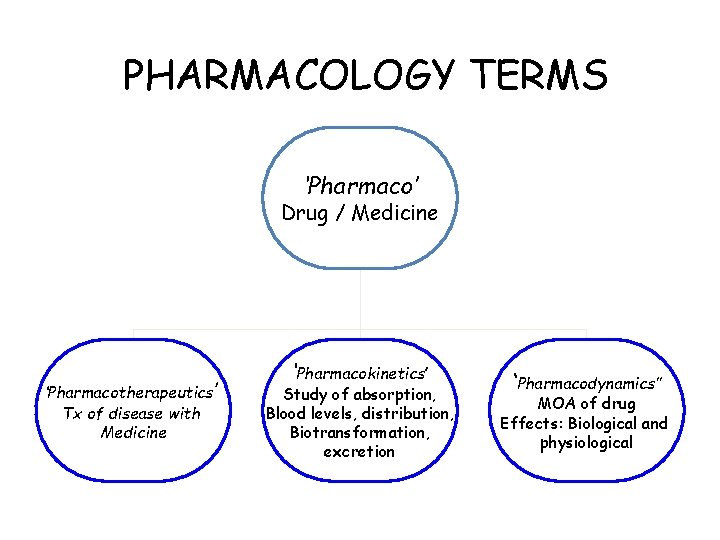
PHARMACOLOGY TERMS ‘Pharmaco’ Drug / Medicine ‘Pharmacotherapeutics’ Tx of disease with Medicine ‘Pharmacokinetics’ Study of absorption, Blood levels, distribution, Biotransformation, excretion ‘Pharmacodynamics’’ MOA of drug Effects: Biological and physiological
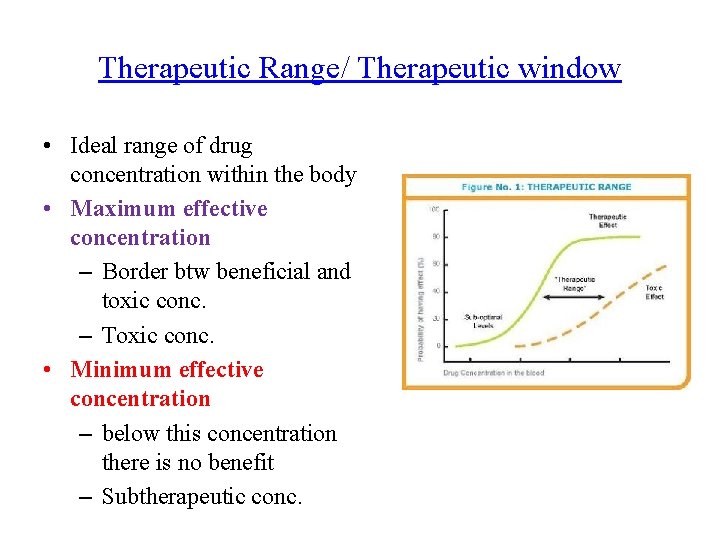
Therapeutic Range/ Therapeutic window • Ideal range of drug concentration within the body • Maximum effective concentration – Border btw beneficial and toxic conc. – Toxic conc. • Minimum effective concentration – below this concentration there is no benefit – Subtherapeutic conc.
Therapeutic Range Other factors that play a role in getting and keeping drugs within therapeutic range include: Drug properties Health and physiology of the animal Maintaining drugs within range involves maintaining a balance among: Rate of drug entry into body Absorption of drug Distribution of drug Metabolism of drug Excretion of drug
Therapeutic Range/ Therapeutic window • Perfect balance – Drug in = drug out –. Drug dose, elimination/ metabolism of drug and therapeutic range • Liver and Kidney failure – Reduce dose as metabolism/ elimination compromised • PU/PD – Increase dose as rate of elimination increased
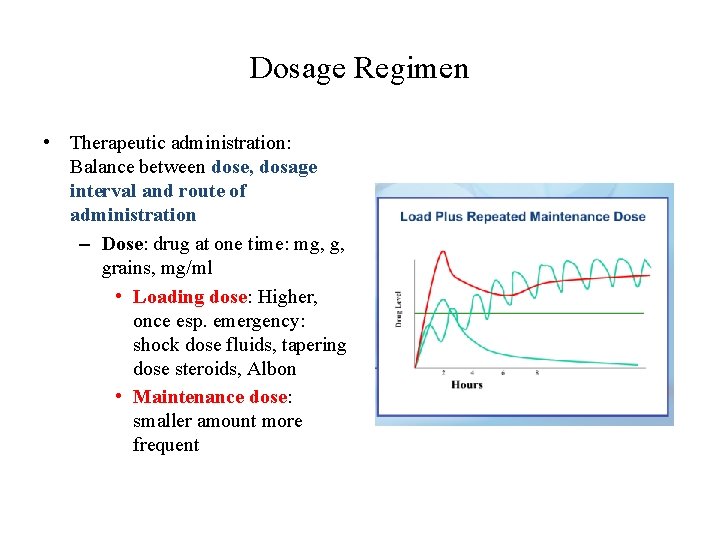
Dosage Regimen • Therapeutic administration: Balance between dose, dosage interval and route of administration – Dose: drug at one time: mg, g, grains, mg/ml • Loading dose: Higher, once esp. emergency: shock dose fluids, tapering dose steroids, Albon • Maintenance dose: smaller amount more frequent
Dosage Regimen – Dosage interval: s. i. d; b. i. d, t. . i. d (Table 3 -1) • Error: q. i. d and qd (4 times more) • Total daily dose: 100 mg T given 4 times/day = 400 mg – Adjust dosage interval based on client compliance – Reduce drug interval: wider swing of conc. » Can lead to above max. effective conc. And under the minimum effective concentration = subtherapeutic conc.
Trypanophobia • TRYPANOPHOBIA is the extreme and irrational fear of medical procedures involving injections or hypodermic needles
Prefixes • • • Intra – within Inter – between Sub – under Epi – above Trans - across
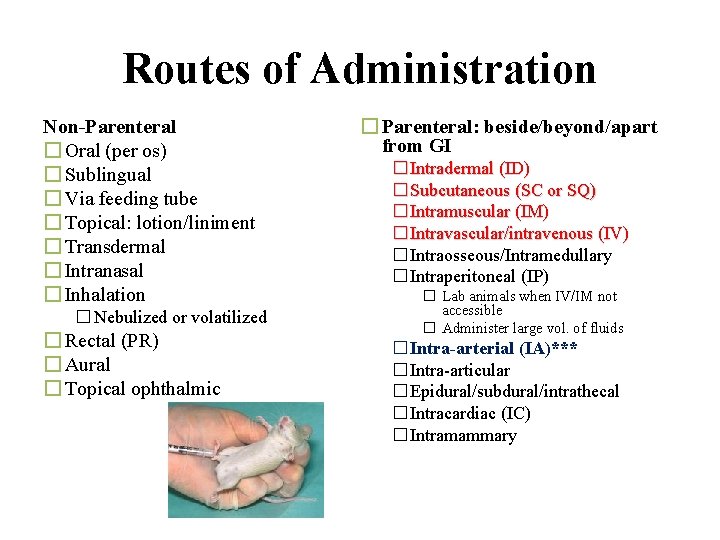
Routes of Administration Non-Parenteral � Oral (per os) � Sublingual � Via feeding tube � Topical: lotion/liniment � Transdermal � Intranasal � Inhalation � Nebulized or volatilized � Rectal (PR) � Aural � Topical ophthalmic � Parenteral: beside/beyond/apart from GI � Intradermal (ID) � Subcutaneous (SC or SQ) � Intramuscular (IM) � Intravascular/intravenous (IV) � Intraosseous/Intramedullary � Intraperitoneal (IP) � Lab animals when IV/IM not accessible � Administer large vol. of fluids � Intra-arterial (IA)*** � Intra-articular � Epidural/subdural/intrathecal � Intracardiac (IC) � Intramammary
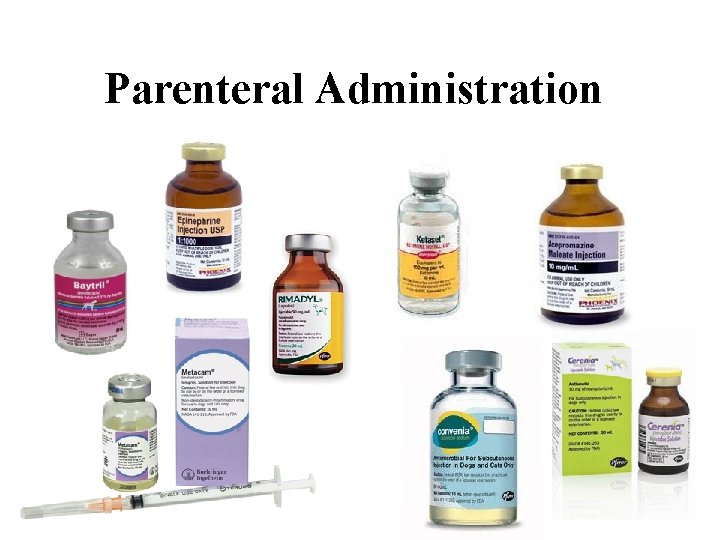
Parenteral Administration
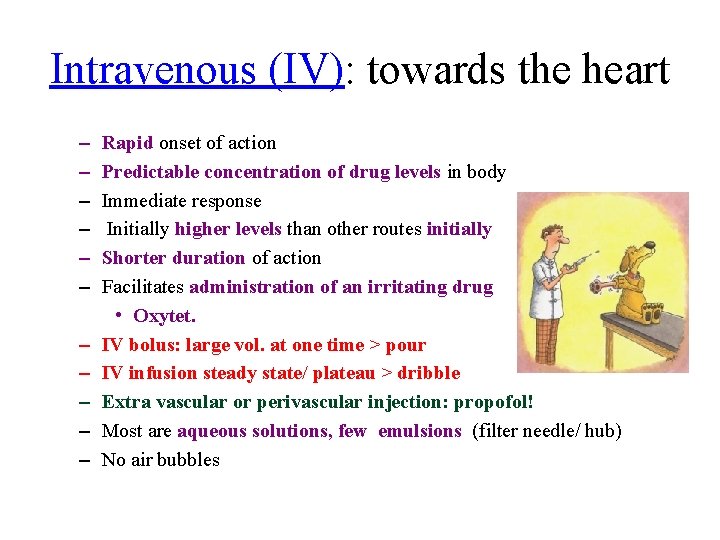
Intravenous (IV): towards the heart – – – Rapid onset of action Predictable concentration of drug levels in body Immediate response Initially higher levels than other routes initially Shorter duration of action Facilitates administration of an irritating drug • Oxytet. IV bolus: large vol. at one time > pour IV infusion steady state/ plateau > dribble Extra vascular or perivascular injection: propofol! Most are aqueous solutions, few emulsions (filter needle/ hub) No air bubbles
Routes of Administration • Intra – arterial: high conc. directly to tissues and can led to local toxicosis
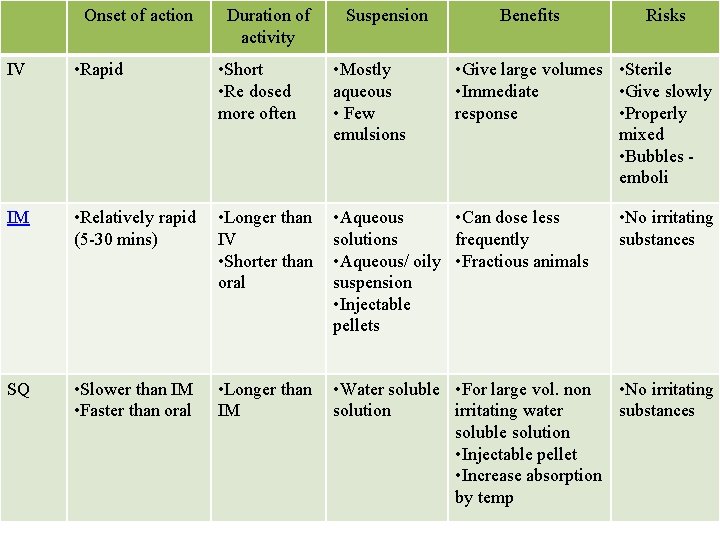
Onset of action Duration of activity Suspension Benefits Risks IV • Rapid • Short • Re dosed more often • Mostly aqueous • Few emulsions • Give large volumes • Sterile • Immediate • Give slowly response • Properly mixed • Bubbles emboli IM • Relatively rapid (5 -30 mins) • Longer than IV • Shorter than oral • Aqueous • Can dose less solutions frequently • Aqueous/ oily • Fractious animals suspension • Injectable pellets SQ • Slower than IM • Faster than oral • Longer than IM • Water soluble • For large vol. non • No irritating solution irritating water substances soluble solution • Injectable pellet • Increase absorption by temp • No irritating substances
References • Romich, J. A. Pharmacology for Veterinary Technicians, 2 nd edition. 2010. • Bill, R. L. Clinical Pharmacology and Therapeutics for the Veterinary Technician, 3 rd edition. 2006.
- Slides: 16