
Pharmacotherapy Obesity Pharmacotherapy Outline How to apply drug

Pharmacotherapy
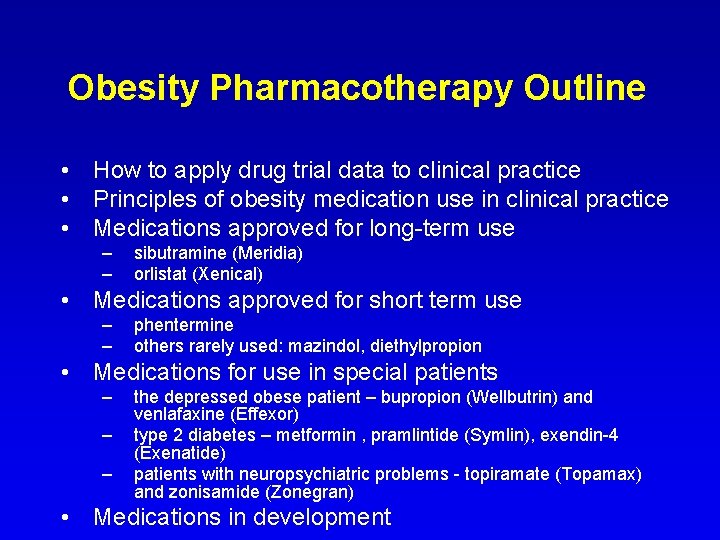
Obesity Pharmacotherapy Outline • • • How to apply drug trial data to clinical practice Principles of obesity medication use in clinical practice Medications approved for long-term use – – • Medications approved for short term use – – • phentermine others rarely used: mazindol, diethylpropion Medications for use in special patients – – – • sibutramine (Meridia) orlistat (Xenical) the depressed obese patient – bupropion (Wellbutrin) and venlafaxine (Effexor) type 2 diabetes – metformin , pramlintide (Symlin), exendin-4 (Exenatide) patients with neuropsychiatric problems - topiramate (Topamax) and zonisamide (Zonegran) Medications in development
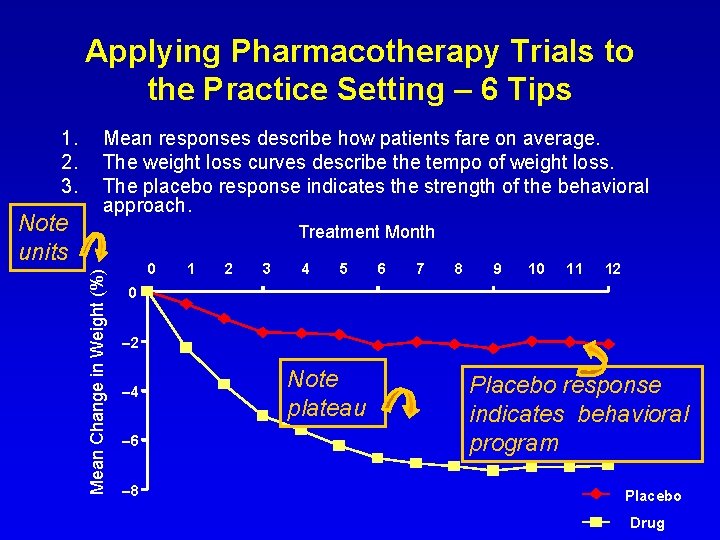
Applying Pharmacotherapy Trials to the Practice Setting – 6 Tips Note units Mean responses describe how patients fare on average. The weight loss curves describe the tempo of weight loss. The placebo response indicates the strength of the behavioral approach. Treatment Month Mean Change in Weight (%) 1. 2. 3. 0 1 2 3 4 5 6 7 8 9 10 11 12 0 – 2 – 4 – 6 – 8 Note plateau Placebo response indicates behavioral program Placebo Drug

Applying Pharmacotherapy Trials to the Practice Setting – 6 Tips 4. Categorical responses indicate the chance an individual patient has of meeting key response levels, 5% and 10%. Significance levels and n’s are important. 5. † 80 † † 70 Placebo (n=87) Drug (n) † 60 Patients (%) Chances of response 50 † 40 * † † 30 † 20 1 mg 5 mg 10 mg 15 mg 20 mg 30 mg * 10 0 5% Responders *P < 0. 01 vs placebo †P < 0. 001 vs placebo 10% Responders note (95) (107) (99) (98) (96) (101)
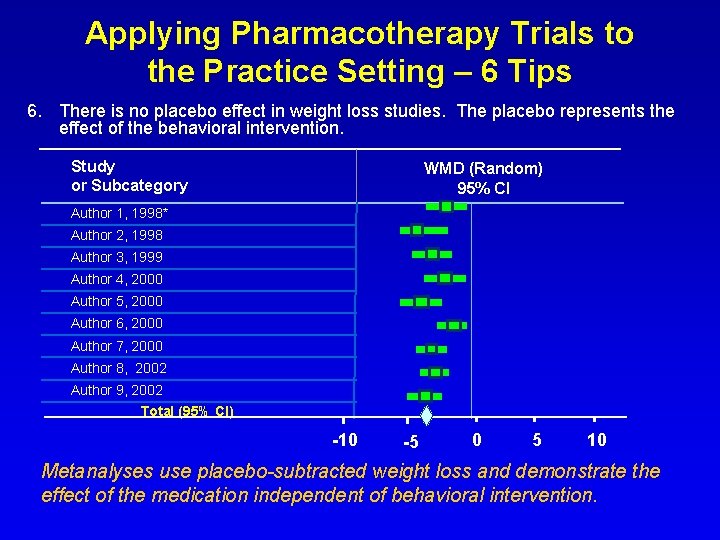
Applying Pharmacotherapy Trials to the Practice Setting – 6 Tips 6. There is no placebo effect in weight loss studies. The placebo represents the effect of the behavioral intervention. Study or Subcategory WMD (Random) 95% CI Author 1, 1998* Author 2, 1998 Author 3, 1999 Author 4, 2000 Author 5, 2000 Author 6, 2000 Author 7, 2000 Author 8, 2002 Author 9, 2002 Total (95% CI) -10 -5 0 5 10 Metanalyses use placebo-subtracted weight loss and demonstrate the effect of the medication independent of behavioral intervention.
Principles of Obesity Medication Use • Lifestyle interventions are the foundation of medicating for obesity • The behavioral approach should be implemented with knowledge of the medication’s mechanism of action – – Orlistat with 30% fat diet Sibutramine with meal plan that takes advantage of its satiety promotion • Obesity medications do not cure obesity, just as antihypertensives do not cure hypertension • Not all patients respond to a weight loss medication. – • If the drug’s use is not associated with weight loss within four weeks, it should be stopped Medications work as long as they are used – Weight gain occurs on stopping medications, although there is some evidence in support of efficacy of intermittent medication

Obesity Pharmacotherapy Outline • How to apply drug trial data to clinical practice • Principles of obesity medication use in clinical practice • Medications approved for long-term use – – sibutramine (Meridia) orlistat (Xenical) • Medications approved for short term use – – phentermine others rarely used: mazindol, diethylpropion • Medications for use in special patients – – – the depressed obese patient – bupropion (Wellbutrin) and venlafaxine (Effexor) type 2 diabetes – metformin , pramlintide (Symlin), exendin-4 (Exenatide) patients with neuropsychiatric problems - topiramate (Topamax) and zonisamide (Zonegran) • Medications in development
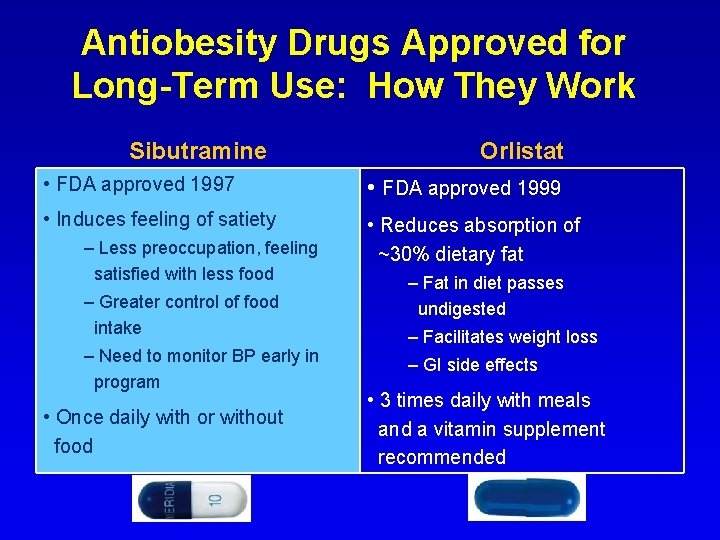
Antiobesity Drugs Approved for Long-Term Use: How They Work Sibutramine Orlistat • FDA approved 1997 • FDA approved 1999 • Induces feeling of satiety • Reduces absorption of ~30% dietary fat – Less preoccupation, feeling satisfied with less food – Greater control of food intake – Need to monitor BP early in program • Once daily with or without food – Fat in diet passes undigested – Facilitates weight loss – GI side effects • 3 times daily with meals and a vitamin supplement recommended
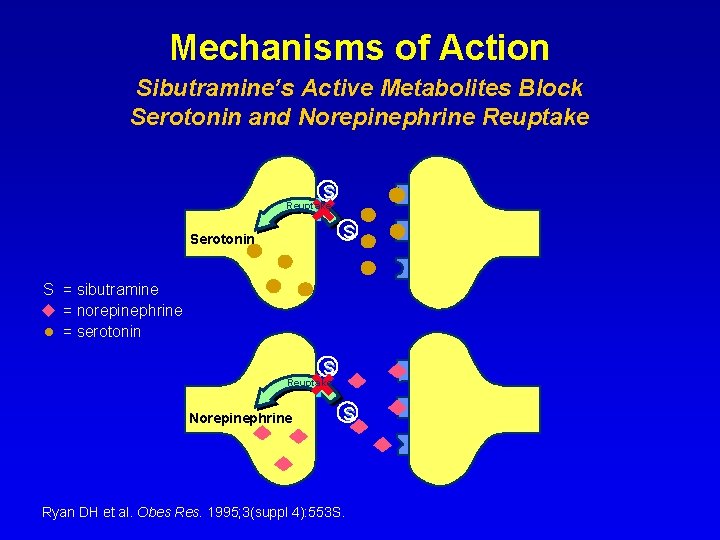
Mechanisms of Action Sibutramine’s Active Metabolites Block Serotonin and Norepinephrine Reuptake S Serotonin S = sibutramine = norepinephrine = serotonin S Reuptake Norepinephrine S Ryan DH et al. Obes Res. 1995; 3(suppl 4): 553 S.
Other SNRIs • Venlafaxine (Effexor) – Widely used in depression – Similar side effect profile to sibutramine, small blood pressure increases – Produces some weight loss Rudolph RL, Derivan AT. J Clin Psychopharmacol. 1996; 16(suppl 2): 54 S.
Sibutramine Key Facts • Multiple large clinical trials demonstrating: − Dose-related weight loss occurs for 6 months − Amount of weight loss related to intensity of behavioral approach − Efficacy in weight loss maintenance demonstrated ≥ 2 years − Weight loss produces benefits in lipids, body composition and is associated with mean blood pressure decrease − Trials in patients with hypertension and diabetes • Favorable side effect profile: − No abuse potential − No valvuloplasty, no PPH • Cautions − Blood pressure should be monitored − Should not use with MAOIs, erythromycin, ketoconazole
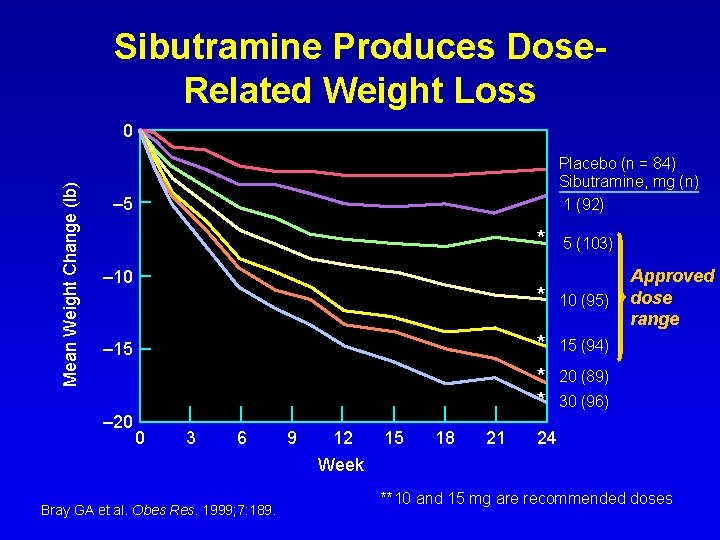
Sibutramine Produces Dose. Related Weight Loss Mean Weight Change (lb) 0 Placebo (n = 84) Sibutramine, mg (n) 1 (92) – 5 * – 10 * * – 15 – 20 0 3 6 9 12 15 18 21 5 (103) 10 (95) Approved dose range 15 (94) 20 (89) 30 (96) 24 Week Bray GA et al. Obes Res. 1999; 7: 189. **10 and 15 mg are recommended doses
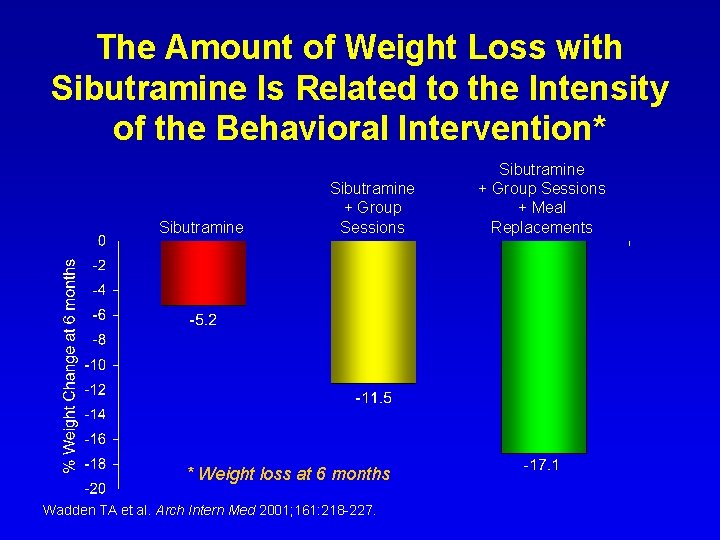
The Amount of Weight Loss with Sibutramine Is Related to the Intensity of the Behavioral Intervention* Sibutramine + Group Sessions * Weight loss at 6 months Wadden TA et al. Arch Intern Med 2001; 161: 218 -227. Sibutramine + Group Sessions + Meal Replacements
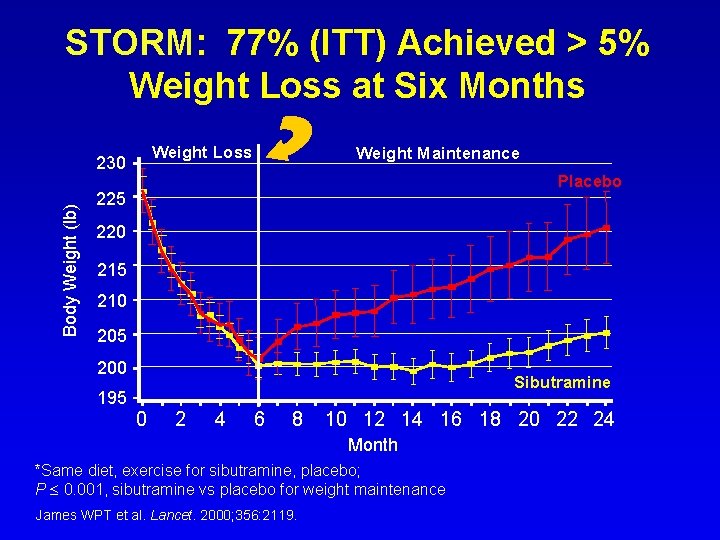
STORM: 77% (ITT) Achieved > 5% Weight Loss at Six Months Weight Loss Body Weight (lb) 230 Weight Maintenance Placebo 225 220 215 210 205 200 Sibutramine 195 0 2 4 6 8 10 12 14 16 18 20 22 24 Month *Same diet, exercise for sibutramine, placebo; P 0. 001, sibutramine vs placebo for weight maintenance James WPT et al. Lancet. 2000; 356: 2119.
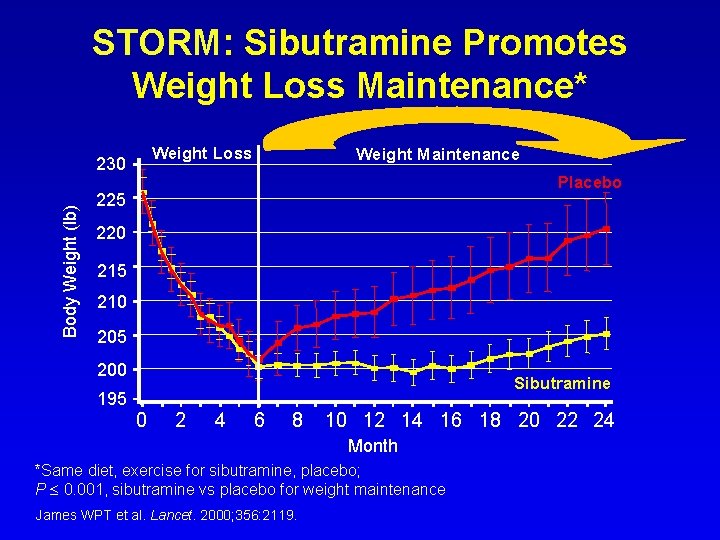
STORM: Sibutramine Promotes Weight Loss Maintenance* Weight Loss Body Weight (lb) 230 Weight Maintenance Placebo 225 220 215 210 205 200 Sibutramine 195 0 2 4 6 8 10 12 14 16 18 20 22 24 Month *Same diet, exercise for sibutramine, placebo; P 0. 001, sibutramine vs placebo for weight maintenance James WPT et al. Lancet. 2000; 356: 2119.
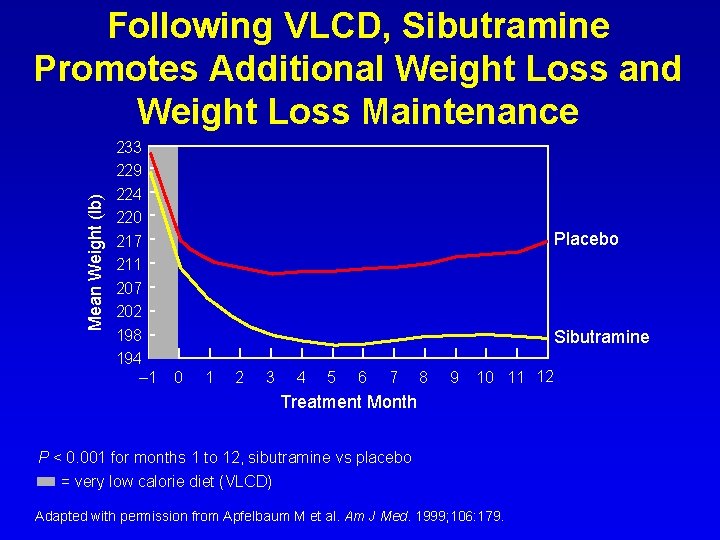
Following VLCD, Sibutramine Promotes Additional Weight Loss and Weight Loss Maintenance Mean Weight (lb) 233 229 224 220 217 211 207 202 Placebo 198 194 – 1 Sibutramine 0 1 2 3 4 5 6 7 8 9 10 11 12 Treatment Month P < 0. 001 for months 1 to 12, sibutramine vs placebo = very low calorie diet (VLCD) Adapted with permission from Apfelbaum M et al. Am J Med. 1999; 106: 179.
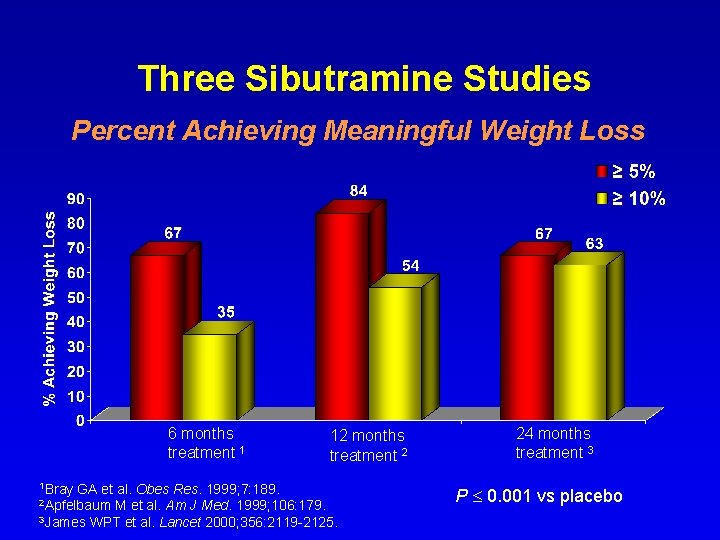
Three Sibutramine Studies Percent Achieving Meaningful Weight Loss 6 months treatment 1 1 Bray 12 months treatment 2 GA et al. Obes Res. 1999; 7: 189. M et al. Am J Med. 1999; 106: 179. 3 James WPT et al. Lancet 2000; 356: 2119 -2125. 2 Apfelbaum 24 months treatment 3 P 0. 001 vs placebo
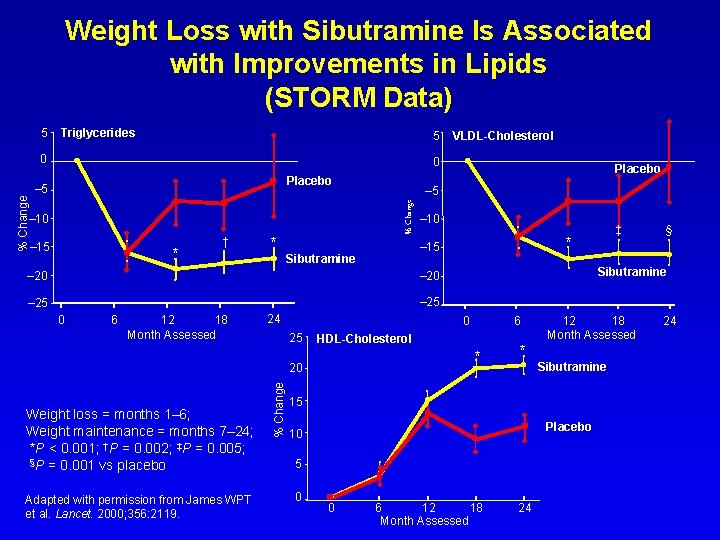
Weight Loss with Sibutramine Is Associated with Improvements in Lipids (STORM Data) 5 Triglycerides 5 0 Placebo – 5 – 10 – 15 * † * – 10 – 15 Sibutramine * – 20 ‡ § – 20 Placebo – 5 % Change 0 VLDL-Cholesterol Sibutramine – 25 0 6 12 18 Month Assessed 24 0 25 6 HDL-Cholesterol * 20 Weight loss = months 1– 6; Weight maintenance = months 7– 24; *P < 0. 001; †P = 0. 002; ‡P = 0. 005; §P = 0. 001 vs placebo % Change 12 18 Month Assessed * 15 Placebo 10 5 Adapted with permission from James WPT et al. Lancet. 2000; 356: 2119. Sibutramine 0 0 6 12 18 Month Assessed 24 24
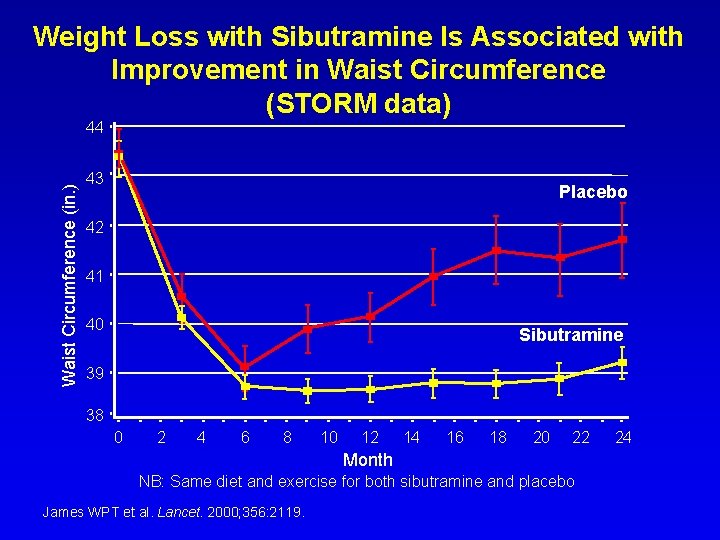
Weight Loss with Sibutramine Is Associated with Improvement in Waist Circumference (STORM data) Waist Circumference (in. ) 44 43 Placebo 42 41 40 Sibutramine 39 38 0 2 4 6 8 10 12 14 16 18 20 22 Month NB: Same diet and exercise for both sibutramine and placebo James WPT et al. Lancet. 2000; 356: 2119. 24
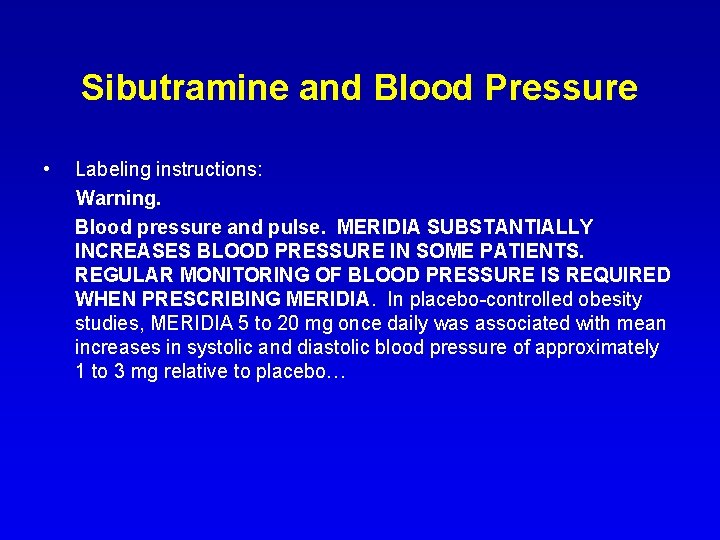
Sibutramine and Blood Pressure • Labeling instructions: Warning. Blood pressure and pulse. MERIDIA SUBSTANTIALLY INCREASES BLOOD PRESSURE IN SOME PATIENTS. REGULAR MONITORING OF BLOOD PRESSURE IS REQUIRED WHEN PRESCRIBING MERIDIA. In placebo-controlled obesity studies, MERIDIA 5 to 20 mg once daily was associated with mean increases in systolic and diastolic blood pressure of approximately 1 to 3 mg relative to placebo…
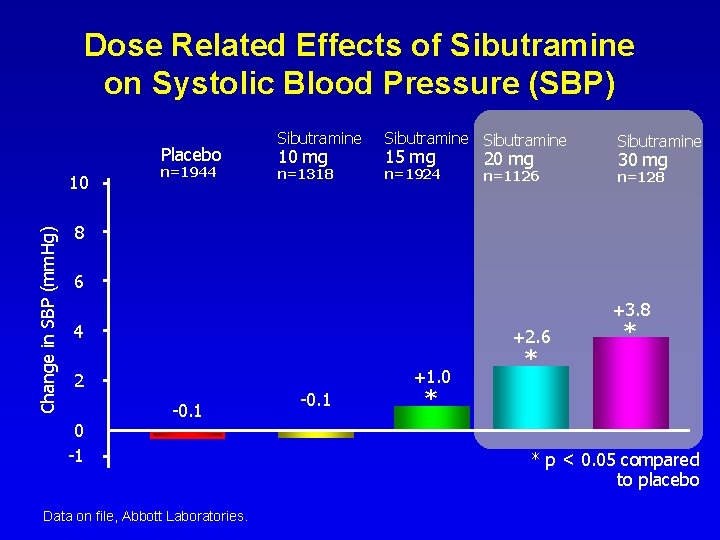
Dose Related Effects of Sibutramine on Systolic Blood Pressure (SBP) Placebo Change in SBP (mm. Hg) 10 n=1944 Sibutramine n=1318 n=1924 n=128 10 mg 15 mg 20 mg n=1126 30 mg 8 6 +3. 8 4 +2. 6 +1. 0 2 0 -1 -0. 1 Data on file, Abbott Laboratories. -0. 1 * * p < 0. 05 compared to placebo
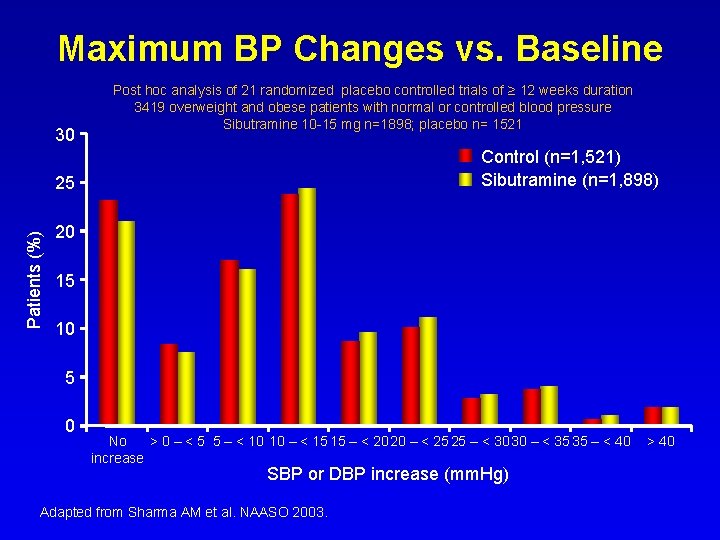
Maximum BP Changes vs. Baseline 30 Post hoc analysis of 21 randomized placebo controlled trials of ≥ 12 weeks duration 3419 overweight and obese patients with normal or controlled blood pressure Sibutramine 10 -15 mg n=1898; placebo n= 1521 Control (n=1, 521) Sibutramine (n=1, 898) Patients (%) 25 20 15 10 5 0 No > 0 – < 5 5 – < 10 10 – < 15 15 – < 20 20 – < 25 25 – < 30 30 – < 35 35 – < 40 increase SBP or DBP increase (mm. Hg) Adapted from Sharma AM et al. NAASO 2003. > 40
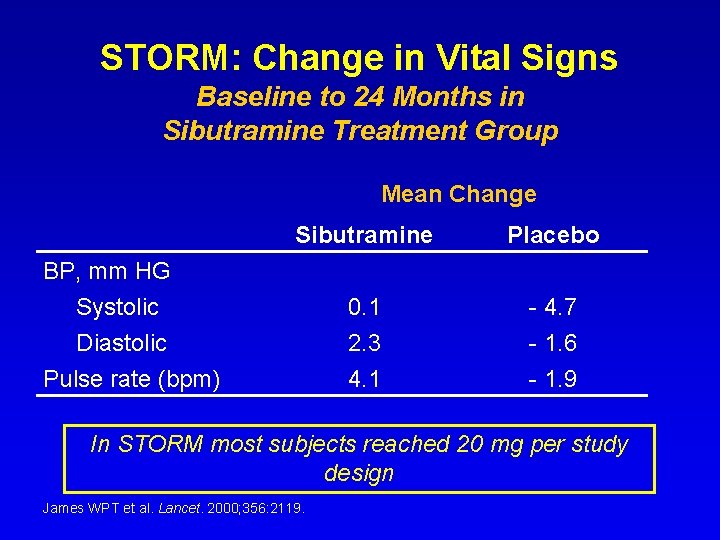
STORM: Change in Vital Signs Baseline to 24 Months in Sibutramine Treatment Group Mean Change Sibutramine Placebo 0. 1 2. 3 4. 1 - 4. 7 - 1. 6 - 1. 9 BP, mm HG Systolic Diastolic Pulse rate (bpm) In STORM most subjects reached 20 mg per study design James WPT et al. Lancet. 2000; 356: 2119.
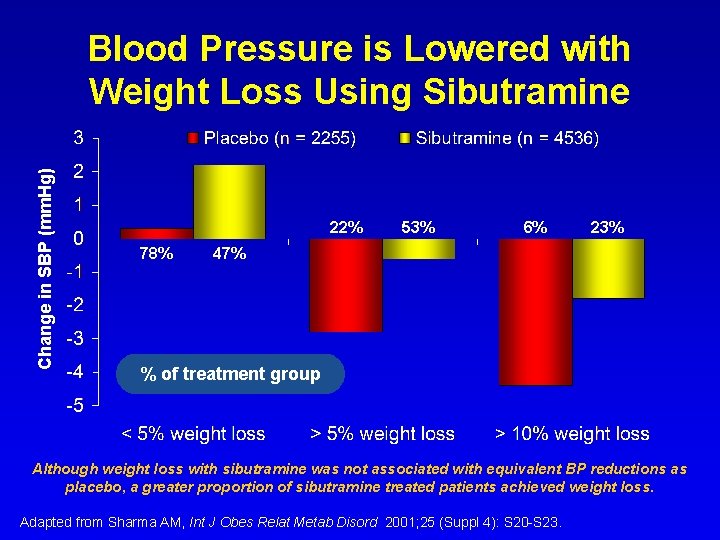
Change in SBP (mm. Hg) Blood Pressure is Lowered with Weight Loss Using Sibutramine 22% 78% 53% 6% 23% 47% % of treatment group Although weight loss with sibutramine was not associated with equivalent BP reductions as placebo, a greater proportion of sibutramine treated patients achieved weight loss. Adapted from Sharma AM, Int J Obes Relat Metab Disord 2001; 25 (Suppl 4): S 20 -S 23.
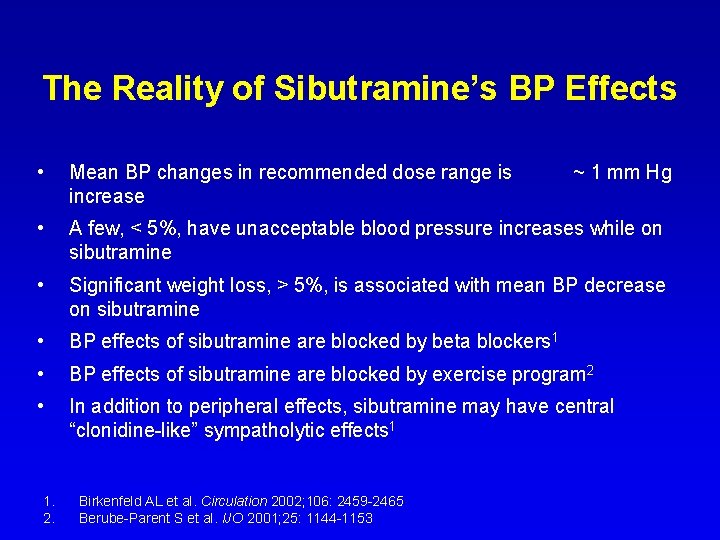
The Reality of Sibutramine’s BP Effects • Mean BP changes in recommended dose range is increase • A few, < 5%, have unacceptable blood pressure increases while on sibutramine • Significant weight loss, > 5%, is associated with mean BP decrease on sibutramine • BP effects of sibutramine are blocked by beta blockers 1 • BP effects of sibutramine are blocked by exercise program 2 • In addition to peripheral effects, sibutramine may have central “clonidine-like” sympatholytic effects 1 1. 2. Birkenfeld AL et al. Circulation 2002; 106: 2459 -2465 Berube-Parent S et al. IJO 2001; 25: 1144 -1153 ~ 1 mm Hg
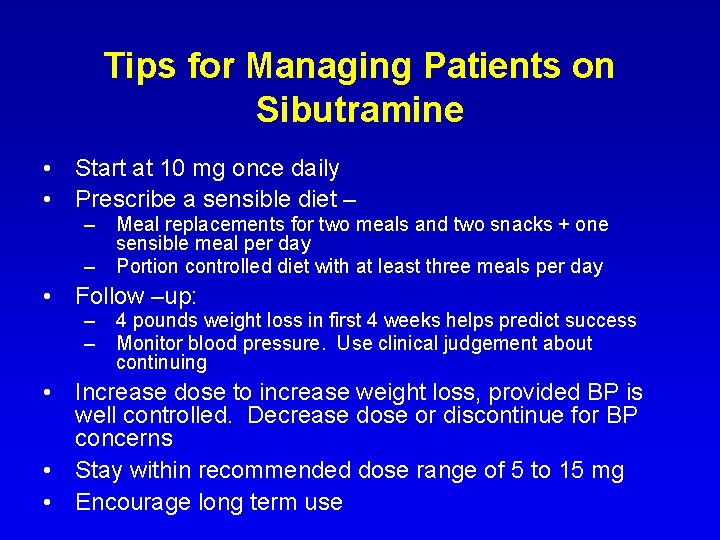
Tips for Managing Patients on Sibutramine • Start at 10 mg once daily • Prescribe a sensible diet – – – Meal replacements for two meals and two snacks + one sensible meal per day Portion controlled diet with at least three meals per day • Follow –up: – – 4 pounds weight loss in first 4 weeks helps predict success Monitor blood pressure. Use clinical judgement about continuing • Increase dose to increase weight loss, provided BP is well controlled. Decrease dose or discontinue for BP concerns • Stay within recommended dose range of 5 to 15 mg • Encourage long term use
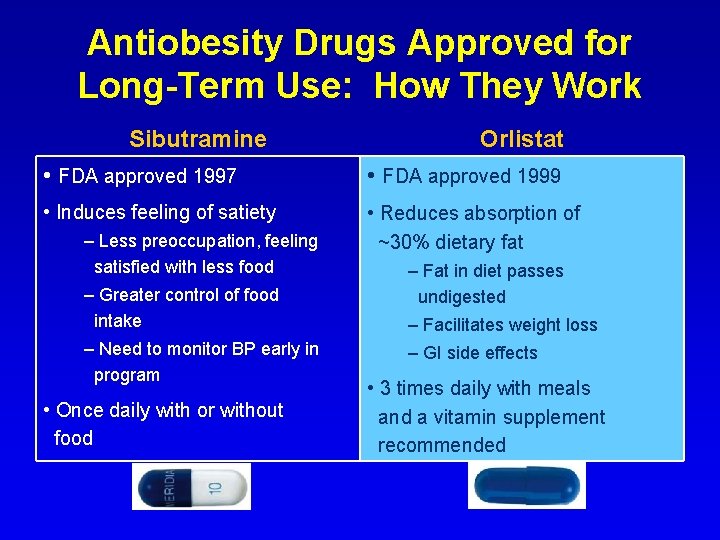
Antiobesity Drugs Approved for Long-Term Use: How They Work Sibutramine Orlistat • FDA approved 1997 • FDA approved 1999 • Induces feeling of satiety • Reduces absorption of ~30% dietary fat – Less preoccupation, feeling satisfied with less food – Greater control of food intake – Need to monitor BP early in program • Once daily with or without food – Fat in diet passes undigested – Facilitates weight loss – GI side effects • 3 times daily with meals and a vitamin supplement recommended
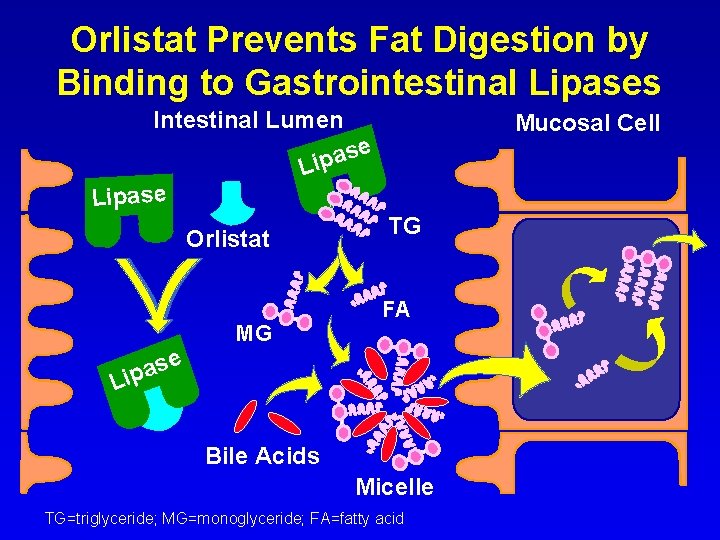
Orlistat Prevents Fat Digestion by Binding to Gastrointestinal Lipases Intestinal Lumen Mucosal Cell e s Lipase Orlistat TG FA MG e s a ip L Bile Acids Micelle TG=triglyceride; MG=monoglyceride; FA=fatty acid
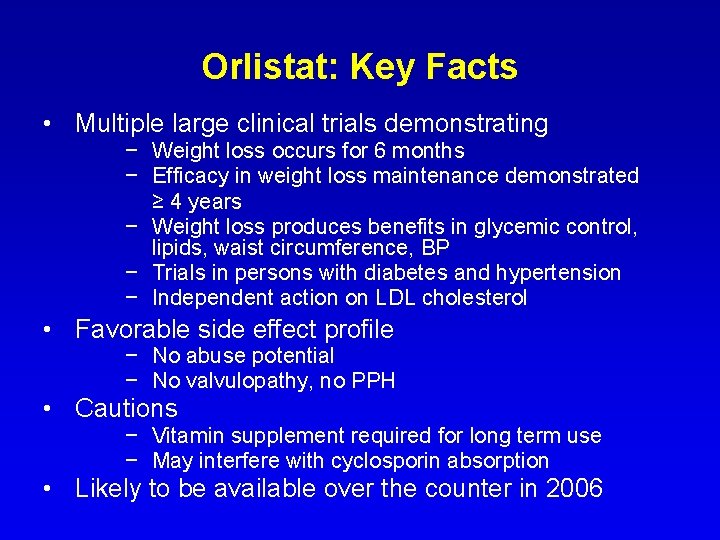
Orlistat: Key Facts • Multiple large clinical trials demonstrating − Weight loss occurs for 6 months − Efficacy in weight loss maintenance demonstrated ≥ 4 years − Weight loss produces benefits in glycemic control, lipids, waist circumference, BP − Trials in persons with diabetes and hypertension − Independent action on LDL cholesterol • Favorable side effect profile − No abuse potential − No valvulopathy, no PPH • Cautions − Vitamin supplement required for long term use − May interfere with cyclosporin absorption • Likely to be available over the counter in 2006
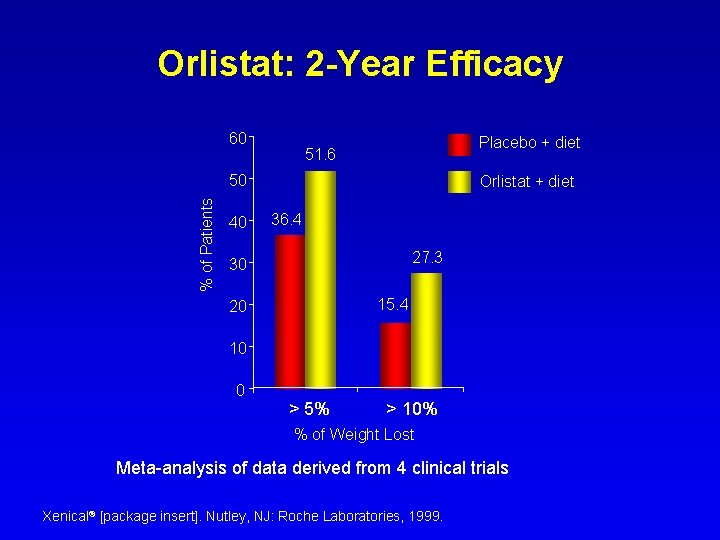
Orlistat: 2 -Year Efficacy 60 Placebo + diet 51. 6 % of Patients 50 40 Orlistat + diet 36. 4 27. 3 30 15. 4 20 10 0 > 5% > 10% % of Weight Lost Meta-analysis of data derived from 4 clinical trials Xenical® [package insert]. Nutley, NJ: Roche Laboratories, 1999.
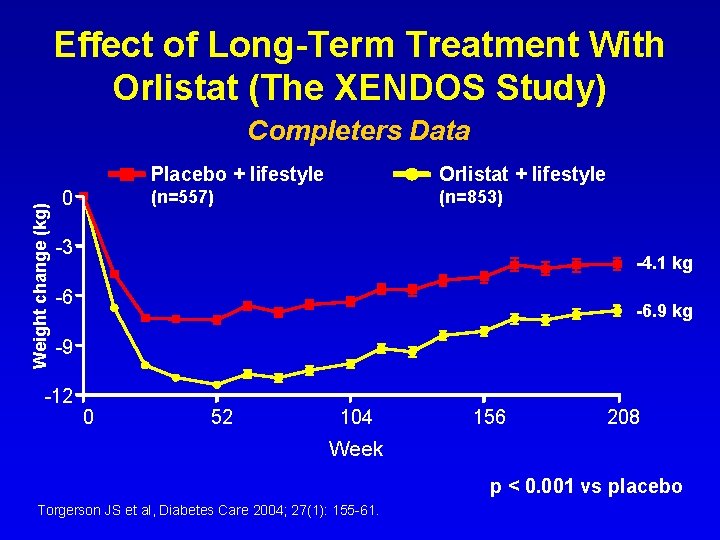
Effect of Long-Term Treatment With Orlistat (The XENDOS Study) Weight change (kg) Completers Data 0 Placebo + lifestyle Orlistat + lifestyle (n=557) (n=853) -3 -4. 1 kg -6 -6. 9 kg -9 -12 0 52 104 156 208 Week p < 0. 001 vs placebo Torgerson JS et al, Diabetes Care 2004; 27(1): 155 -61.
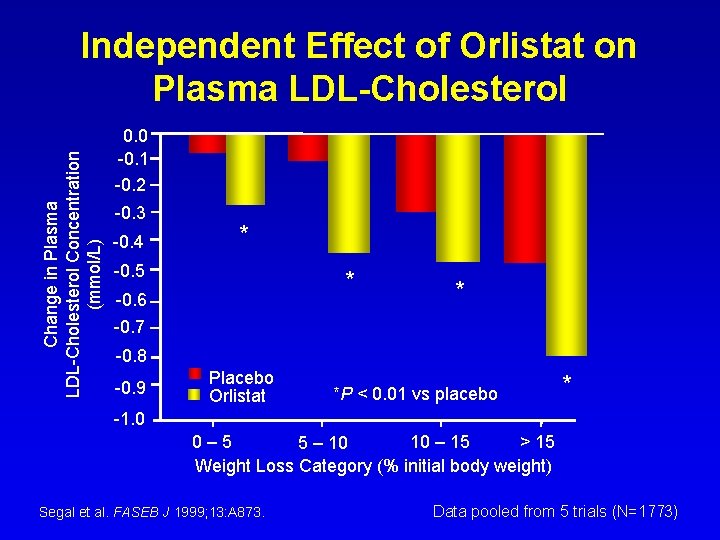
Change in Plasma LDL-Cholesterol Concentration (mmol/L) Independent Effect of Orlistat on Plasma LDL-Cholesterol 0. 0 -0. 1 -0. 2 -0. 3 -0. 4 * -0. 5 * -0. 6 -0. 7 * -0. 8 -0. 9 Placebo Orlistat *P < 0. 01 vs placebo * -1. 0 0– 5 10 – 15 > 15 5 – 10 Weight Loss Category (% initial body weight) Segal et al. FASEB J 1999; 13: A 873. Data pooled from 5 trials (N=1773)
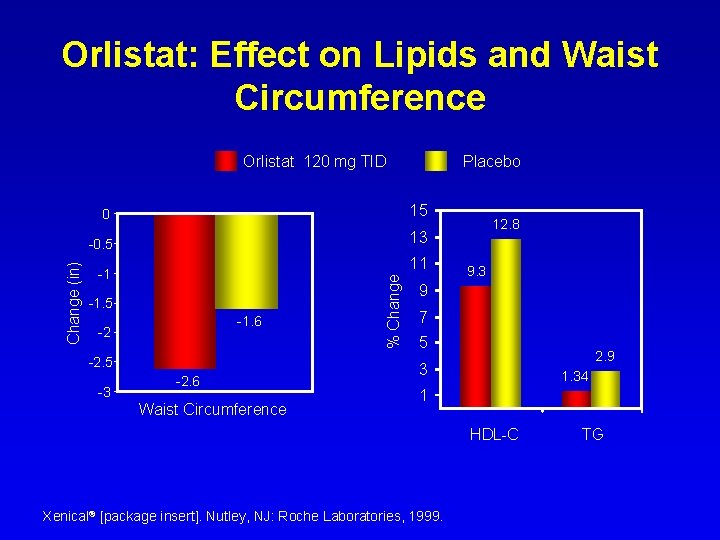
Orlistat: Effect on Lipids and Waist Circumference Placebo 0 15 -0. 5 13 11 -1 -1. 5 -1. 6 -2 -2. 5 -3 -2. 6 Waist Circumference % Change (in) Orlistat 120 mg TID 12. 8 9. 3 9 7 5 2. 9 3 1 1. 34 HDL-C Xenical® [package insert]. Nutley, NJ: Roche Laboratories, 1999. TG
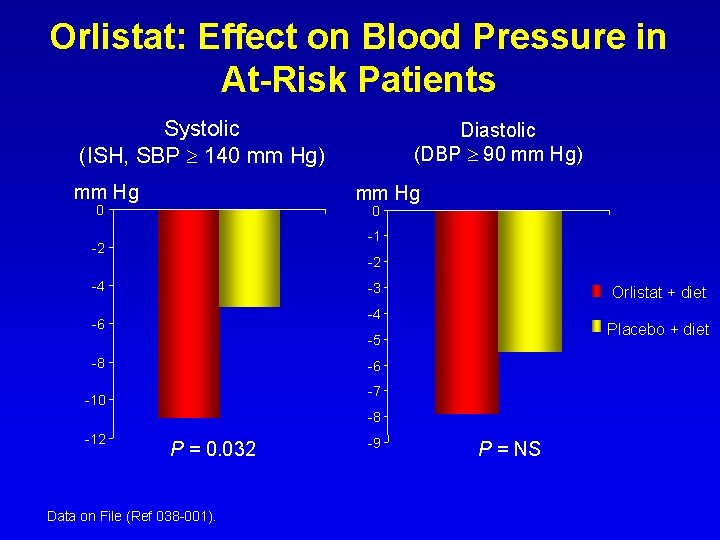
Orlistat: Effect on Blood Pressure in At-Risk Patients Systolic (ISH, SBP 140 mm Hg) mm Hg Diastolic (DBP 90 mm Hg) mm Hg 0 0 -1 -2 -2 -4 -3 Orlistat + diet -4 -6 Placebo + diet -5 -8 -6 -7 -10 -8 -12 P = 0. 032 Data on File (Ref 038 -001). -9 P = NS
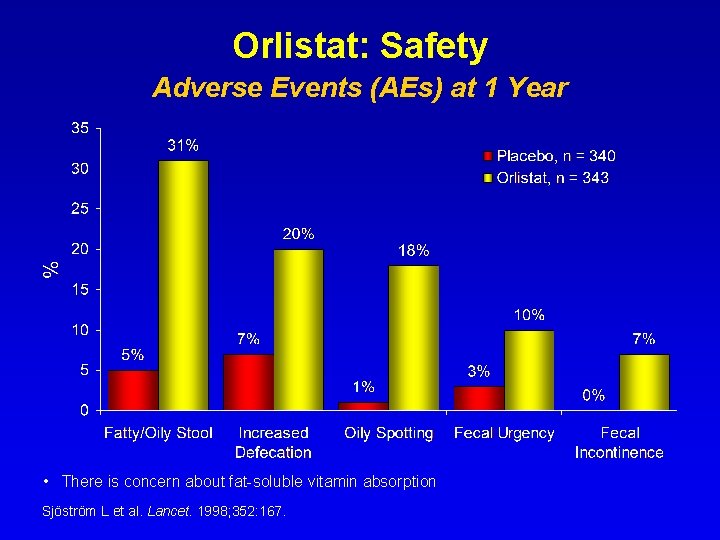
Orlistat: Safety Adverse Events (AEs) at 1 Year • There is concern about fat-soluble vitamin absorption Sjöström L et al. Lancet. 1998; 352: 167.
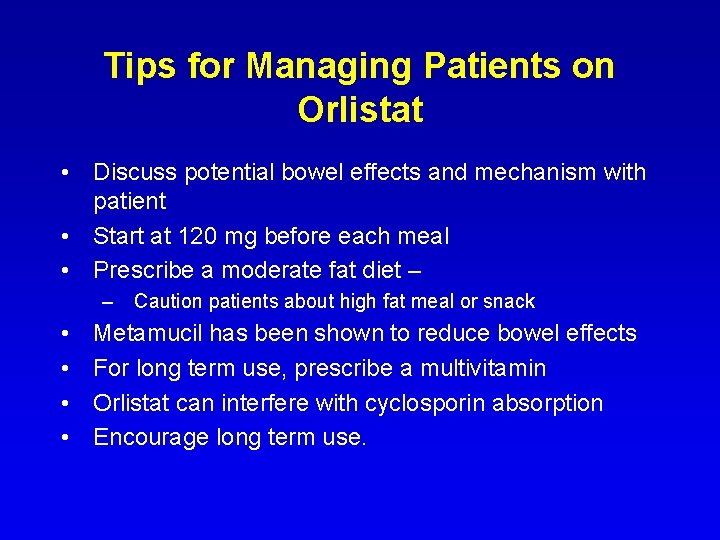
Tips for Managing Patients on Orlistat • Discuss potential bowel effects and mechanism with patient • Start at 120 mg before each meal • Prescribe a moderate fat diet – – • • Caution patients about high fat meal or snack Metamucil has been shown to reduce bowel effects For long term use, prescribe a multivitamin Orlistat can interfere with cyclosporin absorption Encourage long term use.
Obesity Pharmacotherapy Outline • How to apply drug trial data to clinical practice • Principles of obesity medication use in clinical practice • Medications approved for long-term use – – sibutramine (Meridia) orlistat (Xenical) • Medications approved for short term use – – phentermine others rarely used: mazindol, diethylpropion • Medications for use in special patients – – – the depressed obese patient – bupropion (Wellbutrin) and venlafaxine (Effexor) type 2 diabetes – metformin , pramlintide (Symlin), exendin-4 (Exenatide) patients with neuropsychiatric problems - topiramate (Topamax) and zonisamide (Zonegran) • Medications in development
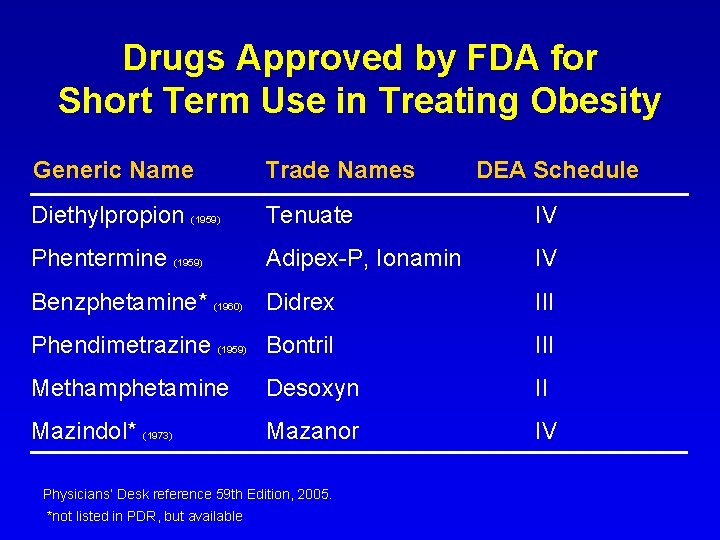
Drugs Approved by FDA for Short Term Use in Treating Obesity Generic Name Trade Names DEA Schedule Diethylpropion (1959) Tenuate IV Phentermine (1959) Adipex-P, Ionamin IV Benzphetamine* (1960) Didrex III Phendimetrazine (1959) Bontril III Methamphetamine Desoxyn II Mazindol* (1973) Mazanor IV Physicians’ Desk reference 59 th Edition, 2005. *not listed in PDR, but available
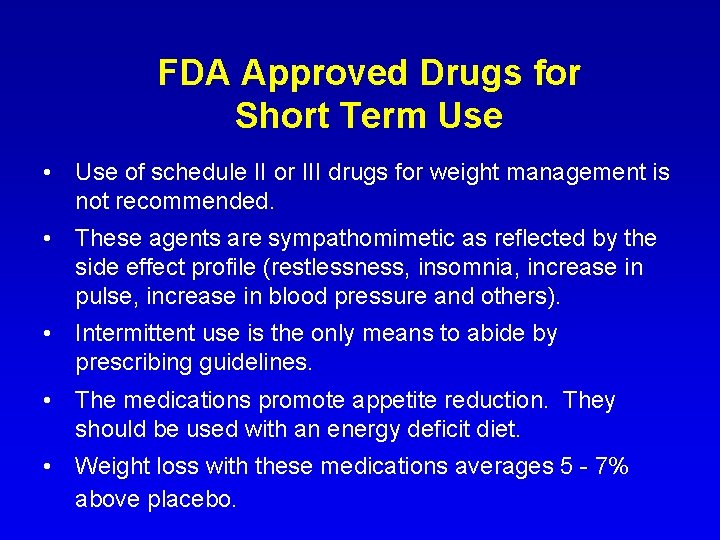
FDA Approved Drugs for Short Term Use • Use of schedule II or III drugs for weight management is not recommended. • These agents are sympathomimetic as reflected by the side effect profile (restlessness, insomnia, increase in pulse, increase in blood pressure and others). • Intermittent use is the only means to abide by prescribing guidelines. • The medications promote appetite reduction. They should be used with an energy deficit diet. • Weight loss with these medications averages 5 - 7% above placebo.
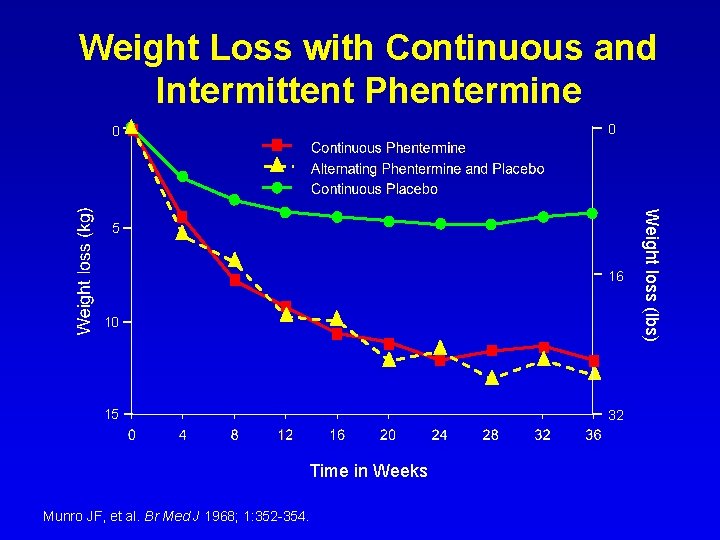
Weight Loss with Continuous and Intermittent Phentermine 0 0 16 10 15 32 Time in Weeks Munro JF, et al. Br Med J 1968; 1: 352 -354. Weight loss (lbs) 5
Obesity Pharmacotherapy Outline • How to apply drug trial data to clinical practice • Principles of obesity medication use in clinical practice • Medications approved for long-term use – – sibutramine (Meridia) orlistat (Xenical) • Medications approved for short term use – – phentermine others rarely used: mazindol, diethylpropion • Medications for use in special patients – – – the depressed obese patient – bupropion (Wellbutrin) and venlafaxine (Effexor) type 2 diabetes – metformin , pramlintide (Symlin), exendin-4 (Exenatide) patients with neuropsychiatric problems - topiramate (Topamax) and zonisamide (Zonegran) • Medications in development
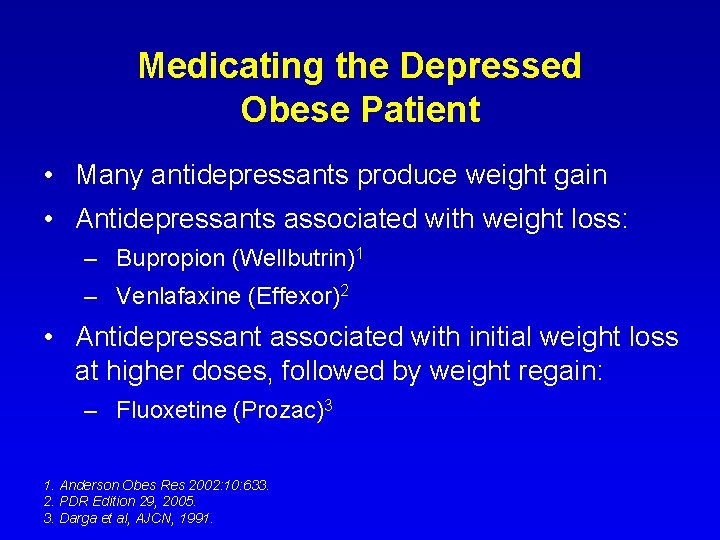
Medicating the Depressed Obese Patient • Many antidepressants produce weight gain • Antidepressants associated with weight loss: – Bupropion (Wellbutrin)1 – Venlafaxine (Effexor)2 • Antidepressant associated with initial weight loss at higher doses, followed by weight regain: – Fluoxetine (Prozac)3 1. Anderson Obes Res 2002: 10: 633. 2. PDR Edition 29, 2005. 3. Darga et al, AJCN, 1991.
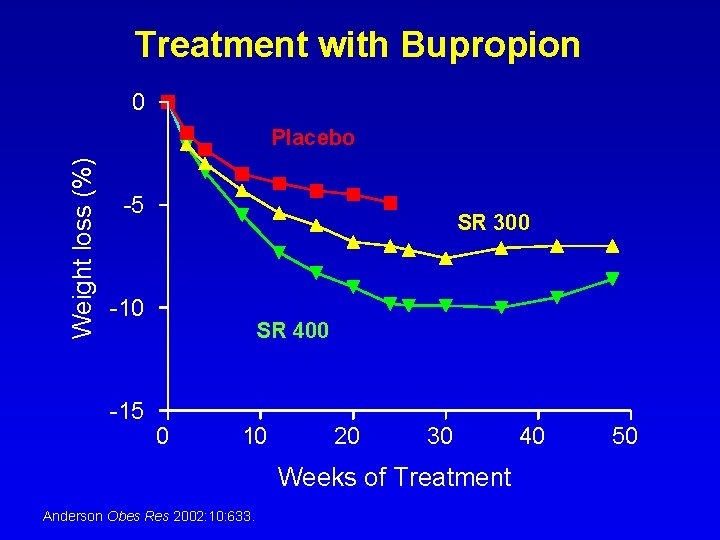
Treatment with Bupropion 0 Weight loss (%) Placebo -5 SR 300 -15 SR 400 0 10 20 30 Weeks of Treatment Anderson Obes Res 2002: 10: 633. 40 50
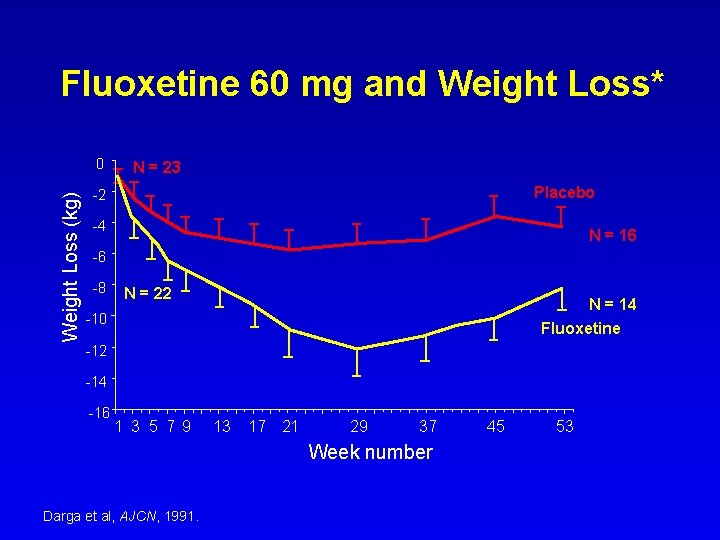
Fluoxetine 60 mg and Weight Loss* Weight Loss (kg) 0 N = 23 Placebo -2 -4 N = 16 -6 -8 N = 22 N = 14 -10 Fluoxetine -12 -14 -16 1 3 5 7 9 13 17 21 29 37 Week number Darga et al, AJCN, 1991. 45 53
Medicating the Patient with Type 2 Diabetes • Weight gain is associated with use of thioglitazones, sulfonylureas and insulin. • Metformin is associated with small amounts of weight loss. • Pramlintide is associated with weight loss.
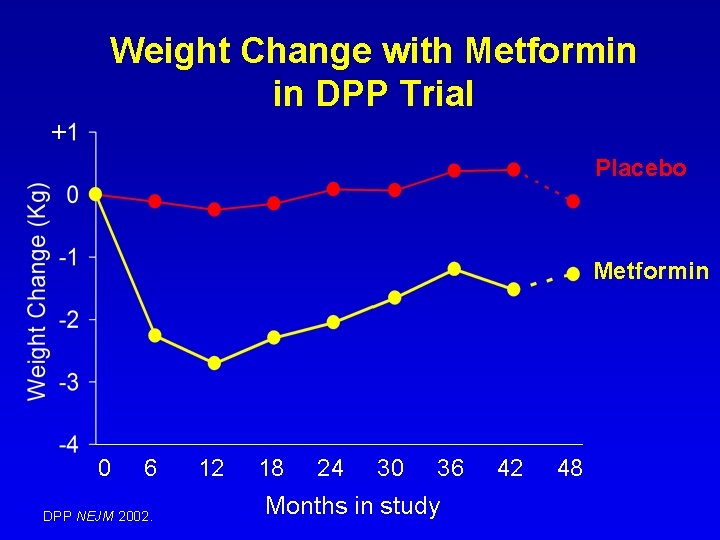
Weight Change with Metformin in DPP Trial + Placebo Metformin 0 6 DPP NEJM 2002. 12 18 24 30 36 Months in study 42 48
Pramlintide • Pramlintide injection approved by FDA 3/2005. • Indication: as an adjunct treatment in patients with T 1 DM or T 2 DM who use mealtime insulin therapy and have failed to achieve desired glucose control despite optimal insulin therapy, with or without a concurrent sulfonylurea agent and/or metformin. • Synthetic analog of human amylin, designed to replace reduced amylin secretion that accompanies beta cell. • Patients in clinical trials used less mealtime insulin and also had a reduction in body weight compared to patients taking insulin alone.
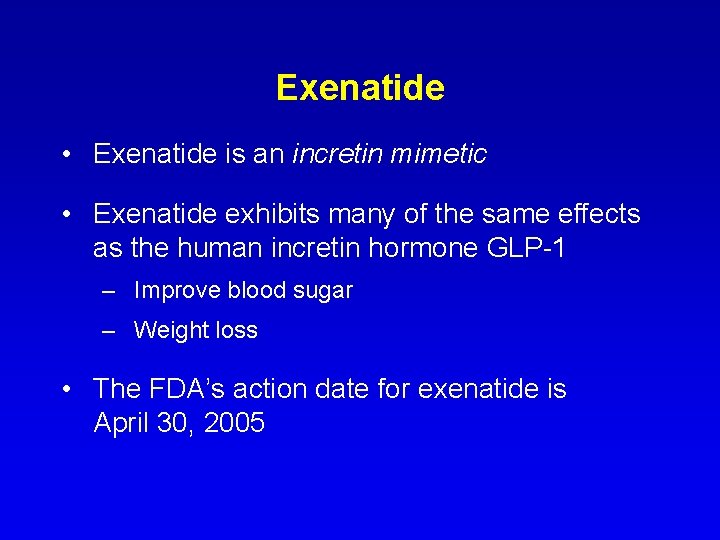
Exenatide • Exenatide is an incretin mimetic • Exenatide exhibits many of the same effects as the human incretin hormone GLP-1 – Improve blood sugar – Weight loss • The FDA’s action date for exenatide is April 30, 2005
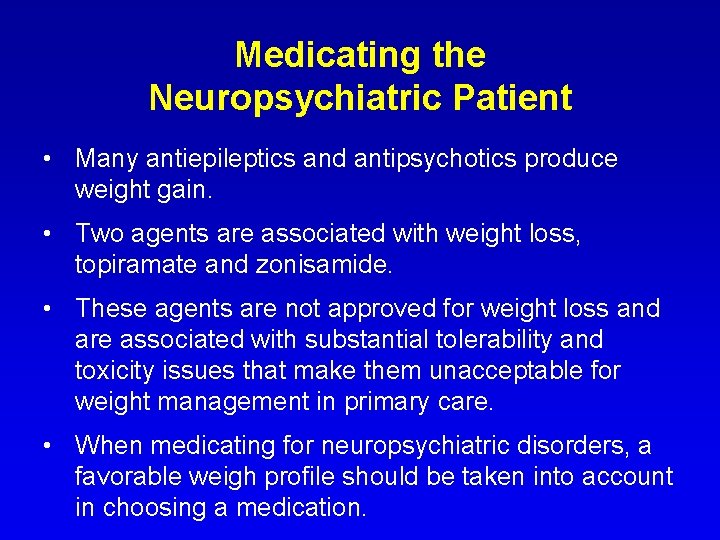
Medicating the Neuropsychiatric Patient • Many antiepileptics and antipsychotics produce weight gain. • Two agents are associated with weight loss, topiramate and zonisamide. • These agents are not approved for weight loss and are associated with substantial tolerability and toxicity issues that make them unacceptable for weight management in primary care. • When medicating for neuropsychiatric disorders, a favorable weigh profile should be taken into account in choosing a medication.
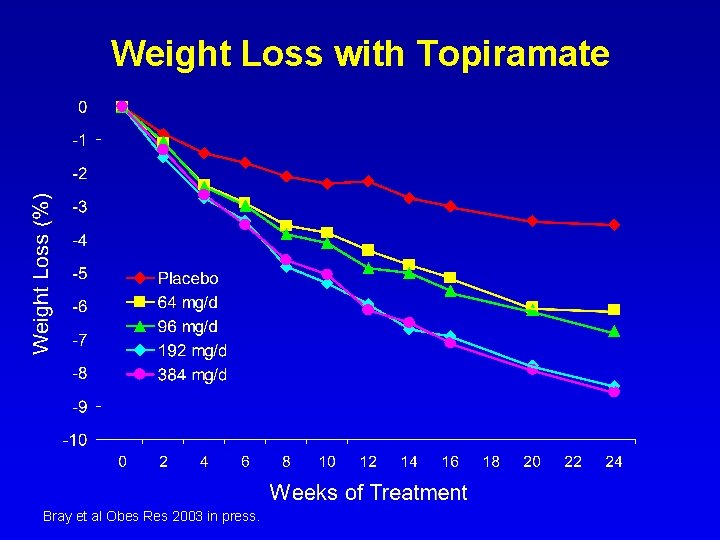
Weight Loss with Topiramate Bray et al Obes Res 2003 in press.
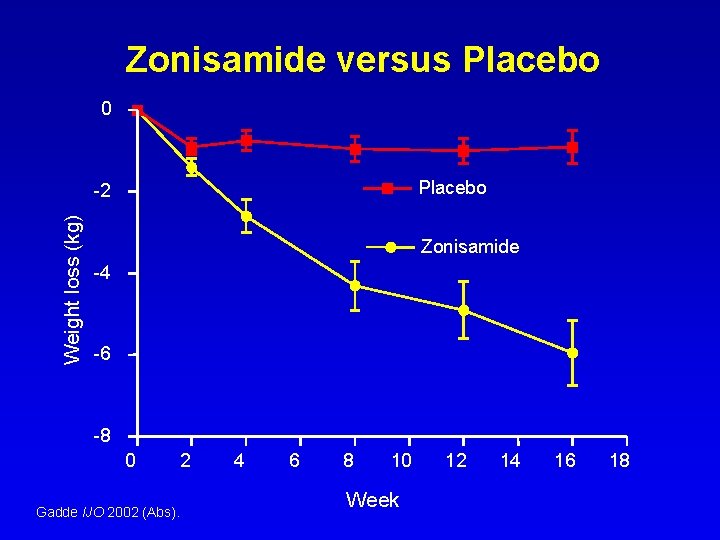
Zonisamide versus Placebo 0 Placebo Weight loss (kg) -2 Zonisamide -4 -6 -8 0 2 Gadde IJO 2002 (Abs). 4 6 8 10 Week 12 14 16 18
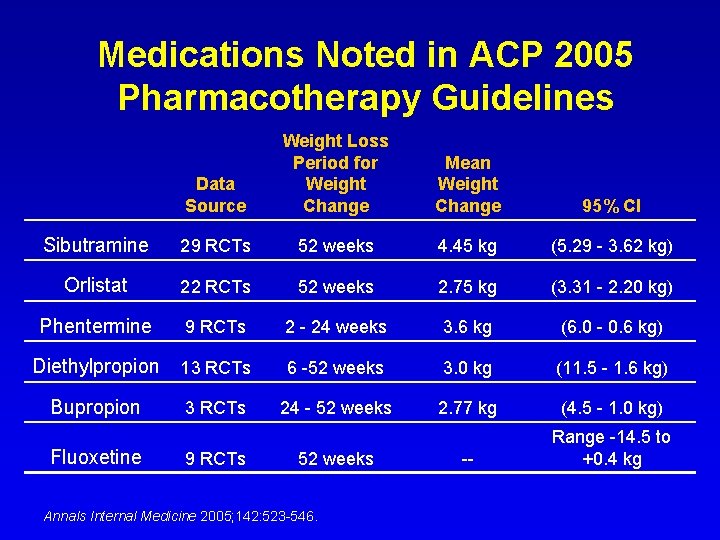
Medications Noted in ACP 2005 Pharmacotherapy Guidelines Data Source Weight Loss Period for Weight Change Mean Weight Change 95% CI Sibutramine 29 RCTs 52 weeks 4. 45 kg (5. 29 - 3. 62 kg) Orlistat 22 RCTs 52 weeks 2. 75 kg (3. 31 - 2. 20 kg) Phentermine 9 RCTs 2 - 24 weeks 3. 6 kg (6. 0 - 0. 6 kg) Diethylpropion 13 RCTs 6 -52 weeks 3. 0 kg (11. 5 - 1. 6 kg) Bupropion 3 RCTs 24 - 52 weeks 2. 77 kg (4. 5 - 1. 0 kg) -- Range -14. 5 to +0. 4 kg Fluoxetine 9 RCTs 52 weeks Annals Internal Medicine 2005; 142: 523 -546.
Obesity Pharmacotherapy Outline • How to apply drug trial data to clinical practice • Principles of obesity medication use in clinical practice • Medications approved for long-term use – – sibutramine (Meridia) orlistat (Xenical) • Medications approved for short term use – – phentermine others rarely used: mazindol, diethylpropion • Medications for use in special patients – – – the depressed obese patient – bupropion (Wellbutrin) and venlafaxine (Effexor) type 2 diabetes – metformin , pramlintide (Symlin), exendin-4 (Exenatide) patients with neuropsychiatric problems - topiramate (Topamax) and zonisamide (Zonegran) • Medications in development
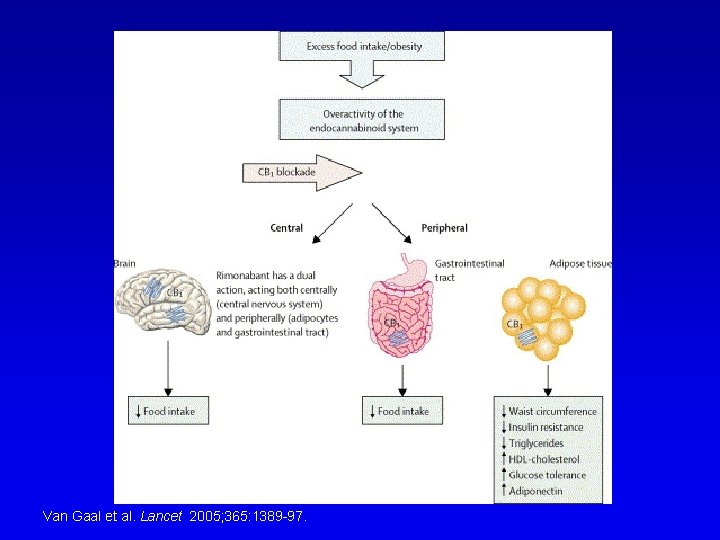
Van Gaal et al. Lancet 2005; 365: 1389 -97.
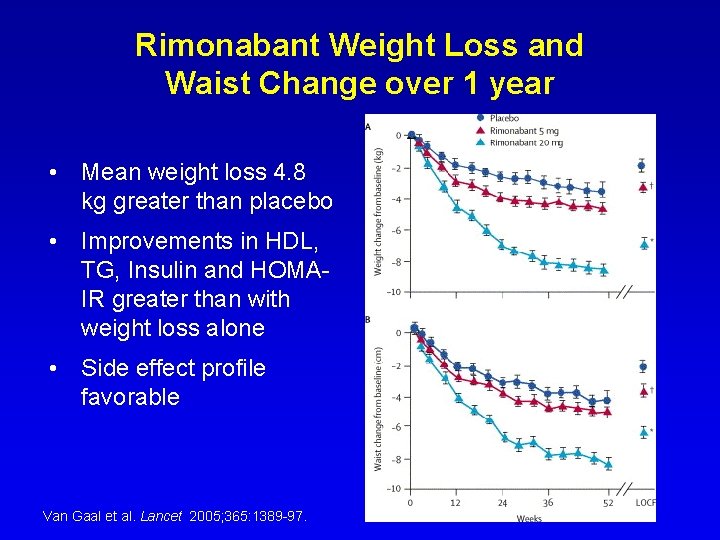
Rimonabant Weight Loss and Waist Change over 1 year • Mean weight loss 4. 8 kg greater than placebo • Improvements in HDL, TG, Insulin and HOMAIR greater than with weight loss alone • Side effect profile favorable Van Gaal et al. Lancet 2005; 365: 1389 -97.
Obesity Pharmacotherapy: What Does the Future Hold? • Epidemic of obesity and comorbidities is unabated. • Understanding of biology underlying obesity continues to expand. • New drugs are coming on market – rimonabant 2006. • Look AHEAD, SOS are evaluating mortality benefit of weight loss. • Obesity pharmacotherapy is gaining legitimacy.
Obesity Pharmacotherapy: What Does the Future Hold? • Medicating for obesity will follow the paradigm of other chronic diseases (HTN, DM). • Medications for obesity will not cure obesity. • Weight loss of 5 -10% will be seen with new medications. • Lifestyle will remain a cornerstone of medicating.
- Slides: 57