
Pharmacology of Growth hormone and Pituitary Adenomas Dr

- Slides: 39
Pharmacology of Growth hormone and Pituitary Adenomas Dr. Ishfaq Bukhari Dr. Aliah Alshanawani
Pituitary and Hypothalamus Pituitary and hypothalamus are the link between the nervous system and the endocrine system. Hypothalamus is also major regulator of body homeostasis 1. Homeostatic control includes regulating hunger, thirst, sex drive, sleep-wake cycles, body temperature, blood glucose. 2. Endocrine control via regulating the release of pituitary hormones. 3. Autonomic control via descending pathways to sympathetic and parasympathetic preganglionic neurons. 4. Limbic function via connections to limbic system regulating emotional behavior.
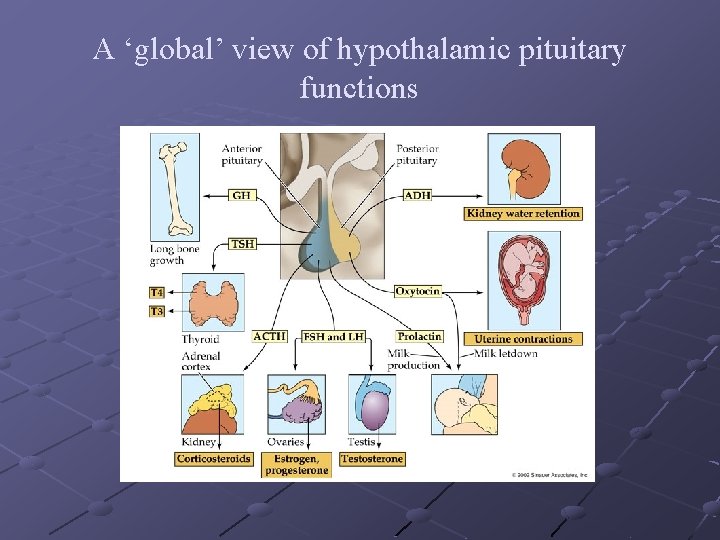
A ‘global’ view of hypothalamic pituitary functions
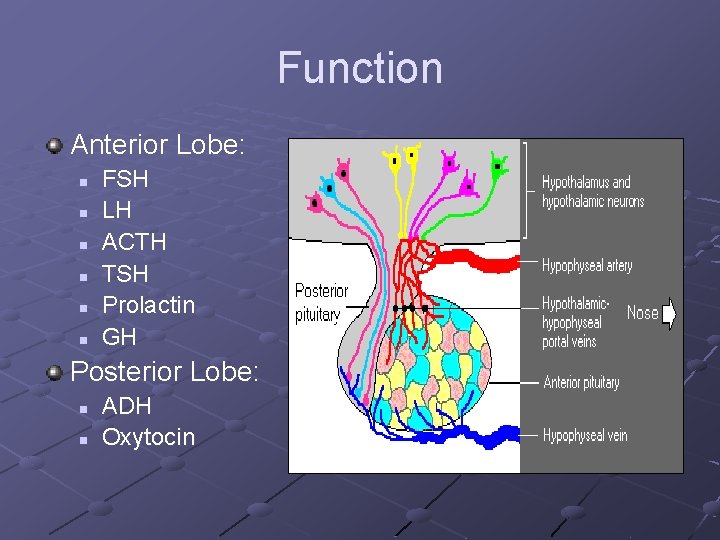
Function Anterior Lobe: n n n FSH LH ACTH TSH Prolactin GH Posterior Lobe: n n ADH Oxytocin
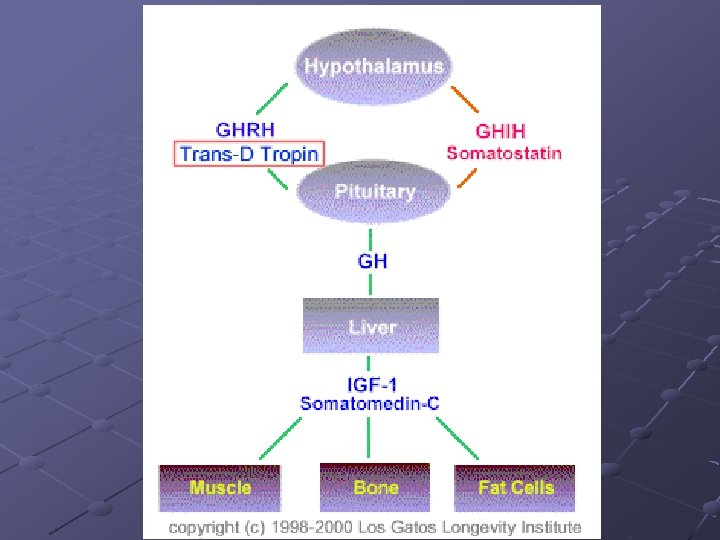
Anterior Pituitary: Growth Hormone (GH) Stimulates increase in size and mitotic rate of body cells, increases fat utilization Hypothalamic growth hormone releasing hormone (GHRH) stimulates secretion of GH; Somatostatin (SS) inhibits secretion of GH Enhances amino acid movement through membranes and promotes protein synthesis Promotes long bone growth
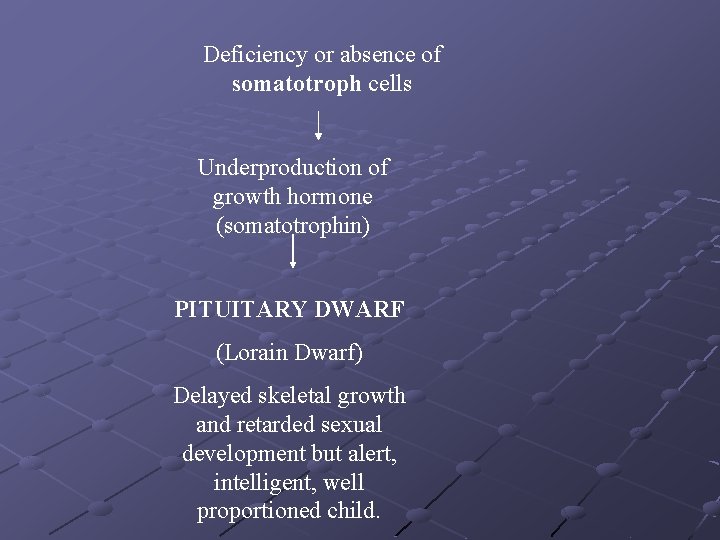
Deficiency or absence of somatotroph cells Underproduction of growth hormone (somatotrophin) PITUITARY DWARF (Lorain Dwarf) Delayed skeletal growth and retarded sexual development but alert, intelligent, well proportioned child.
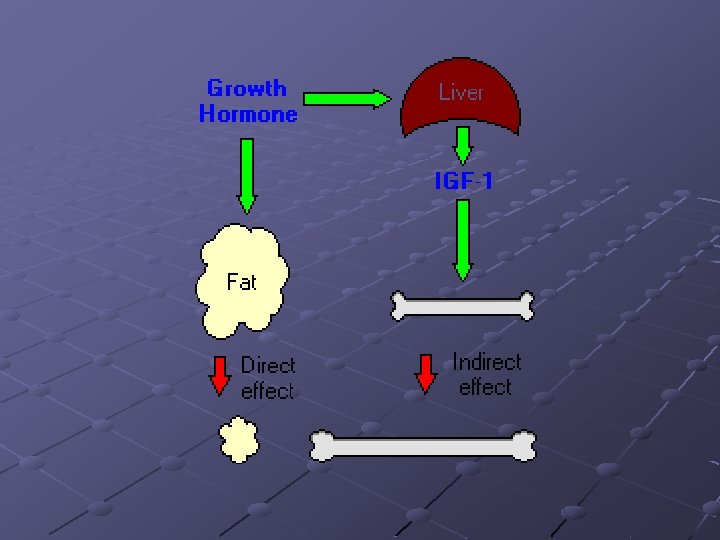
Direct Effects of GH Binds to adipocytes and causes them to break down triglycerides and prevents them from accumulating fat in the blood Releases insulin-like growth factor-1 (IGF 1) from the liver
Indirect Effects of GH Stimulates: n n Cartilage cells (chrondrocytes) growth Myoblasts growth and differentiation Amino Acid uptake Protein synthesis
Mechanism of Action: Binding of GH to its receptor activates the signaling cascade mediated by receptor associated to JAK tyrosine kinases The effects of GH are primarily mediated by insulin-like growth factor 1. (IGF-1) released by liver in response to GH.
Pituitary adenoma is a benign tumor of the anterior lobe of the pituitary that causes symptoms either by Underproduction: growth hormone deficiency, major problem in children’s growth, hypothyroidism,
or overproduction of the pituitary hormones Growth hormone excess resulting in acromegaly or gigantism. Prolactin excess leads to galactorrhoea, menstrual abnormalities and infertility Cushing disease resulting from adrenocorticotropic hormone (ACTH).
Clinical Presentation Prolactin – Amenorrhea, galactorrhea, impotence Growth hormone – Gigantism and acromegaly Corticotropin – Cushing’s disease, TSH - Hyperthyroidism
Pharmacology of Growth Hormone Deficiency Drugs Used: Synthetic GHRH (Sermorelin) Recombinant human growth hormone (Somatropin, Somatrem) Recombinant IGF 1 (Mecasermin)
Sermorelin: It is used if a patient possesses defective hypothalamic release of GHRH but normally functioning anterior pituitary somatotrophs Treatment with Recombinant Human Growth Hormone (Somatropin, Somatrem) Somatropin (synthetic growth hormone), which is a 191 -amino acid peptide, identical to the native form of h. GH
GH Indications: Documented growth failure in pediatric patients associated with: GH deficiency and Turner syndrome (increase height in girls ) Idiopathic short stature Wasting in patients with AIDS Short bowel syndrome in patients who are also receiving specialized nutritional support
Side Effects: Leukemia, rapid growth of melanocytic lesions Hypothyroidism Insulin resistance Arthralgia Increase in cytochrome P 450 activity
Treatment with Recombinant IGF 1 (Mecasermin) Mecasermin is used for children with severe IGF 1 deficiency due to mutations in the GH receptor (Laron dwarfism) or development of neutralizing antibodies against GH Its administered S. C, the common adverse effect is hypoglycemia, can be avoided by consumption of meal 20 min before or afrter the administration of drug.
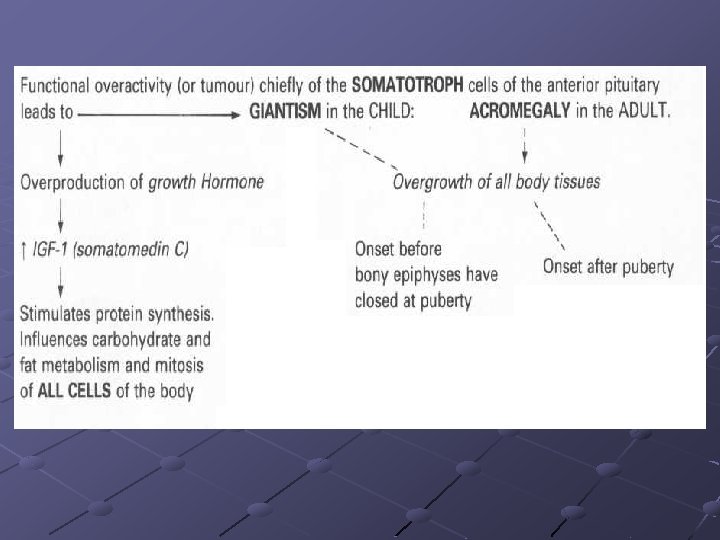
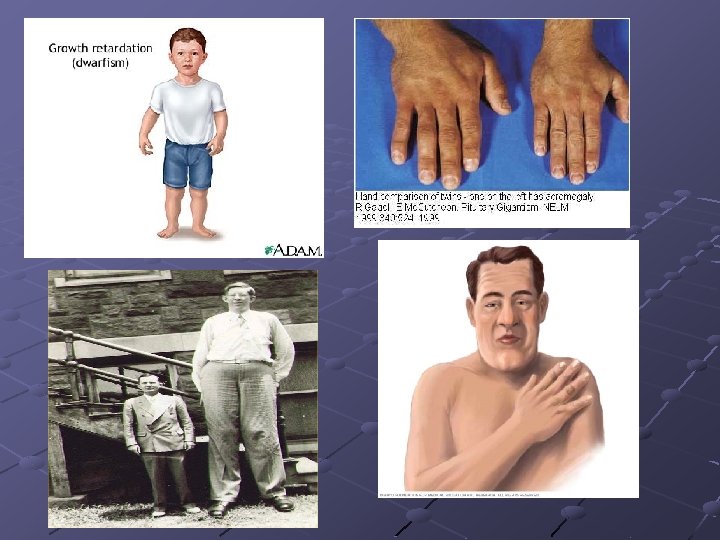
Features of Growth Hormone Excess This usually results from benign tumor of the anterior pituitary. (1) In children: It causes gigantism. occurs before the closure of epiphyses, because excess IGF 1 causes excessive longitudinal bone growth (2) In adults: It causes acromegaly (bones increase in size, including those of hands, feet and face).
Growth Hormone Antagonists
Growth Hormone Antagonists Drugs Used: Somatostatin analogues (Octreotide S. C, IM, Lanreotide (I. M) GH receptor antagonist (Pegvisomant) Dopamine receptor agonist only high doses (Bromocriptine - described under hyperprolactinemia)
Growth Hormone Antagonists Somatostatin analogues: Somatostatin physiologically inhibits GH secretion, but is rarely used clinically, since it has a very short half-life ( a few minutes) Octreotide is a synthetic long-lasting peptide analogue of somatostatin (45 times more potent) Side effects : Octreotide and lanreotide cause significant gastrointestinal disturbances, gallstones, and cardiac conduction abnormalities
Somatostatin analogues: Octreotide(very expensive) : 45 times more potent. n n half-life in plasma being 113 min suppress GH levels for 6– 12 h Given every 4 weeks Mechanism of action Inhibit GH secretion partially inhibits GH-induced IGF-1 generation reduce GHRH release
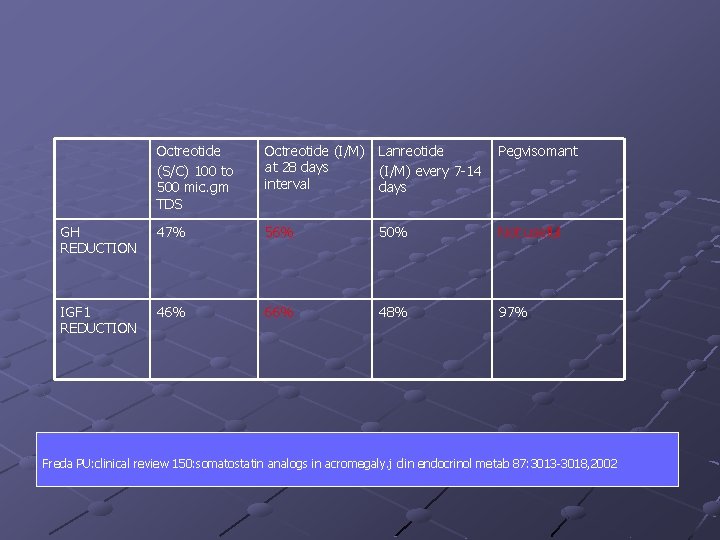
Octreotide (S/C) 100 to 500 mic. gm TDS Octreotide (I/M) Lanreotide at 28 days (I/M) every 7 -14 interval days Pegvisomant GH REDUCTION 47% 56% 50% Not useful IGF 1 REDUCTION 46% 66% 48% 97% Freda PU: clinical review 150: somatostatin analogs in acromegaly. j clin endocrinol metab 87: 3013 -3018, 2002
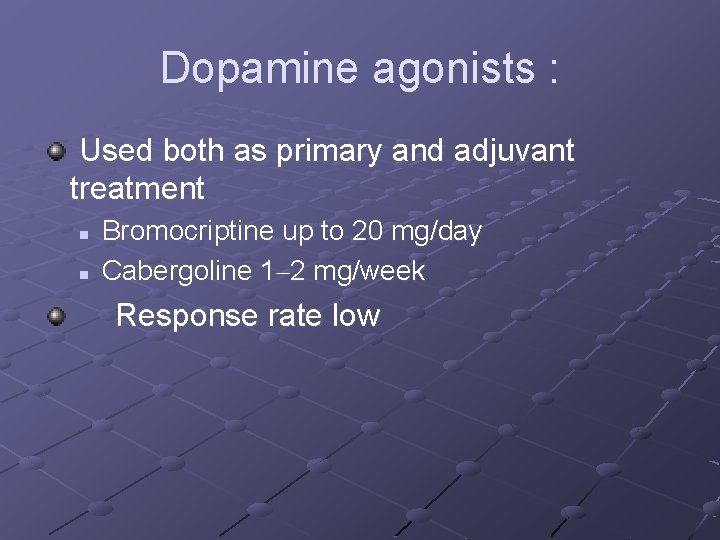
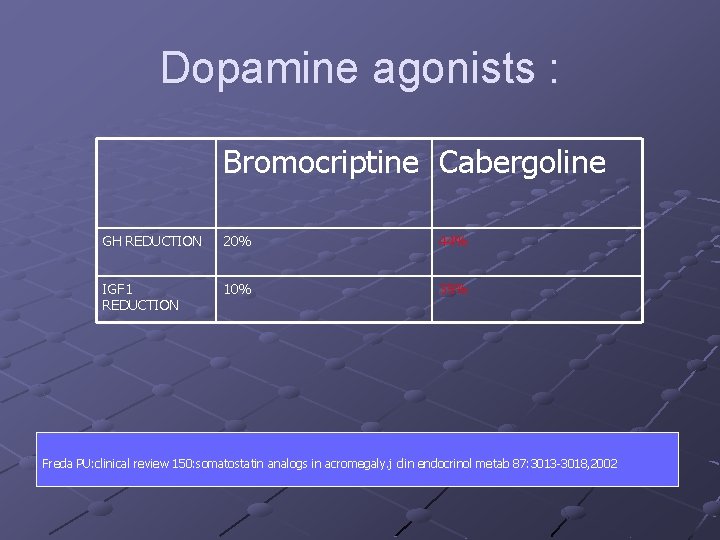
Dopamine agonists : Used both as primary and adjuvant treatment n n Bromocriptine up to 20 mg/day Cabergoline 1– 2 mg/week Response rate low
Dopamine agonists : Bromocriptine Cabergoline GH REDUCTION 20% 44% IGF 1 REDUCTION 10% 35% Freda PU: clinical review 150: somatostatin analogs in acromegaly. j clin endocrinol metab 87: 3013 -3018, 2002
GH-Receptor Antagonist : Pegvisomant given s. c: Check IGF 1 level every 4 -6 weeks Monitoring GH not useful Dose 10 -40 mg/d
Growth Hormone Antagonists Pegvisomant is a GH receptor antagonist approved for treatment of acromegaly. Normally, GH, which has 2 distinct receptor binding sites, initiates cellular signaling cascades by dimerizing 2 GH receptors. Pegvisomant is a long-acting derivative of a mutant GH that is able to cross-link GH receptors but is incapable of inducing the conformational changes required for receptor activation.
Dopamine D 2 Receptor Agonists Dopamine D 2 receptor agonists such as bromocriptine are more effective at inhibiting prolactin release than inhibiting GH release. However, high doses of D 2 receptor agonists have some efficacy in the treatment of small GHsecreting tumors.
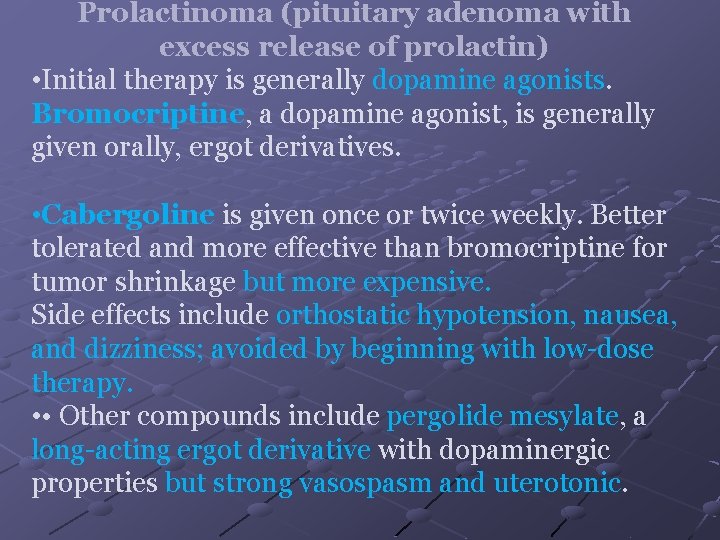
Prolactinoma (pituitary adenoma with excess release of prolactin) • Initial therapy is generally dopamine agonists. Bromocriptine, a dopamine agonist, is generally given orally, ergot derivatives. • Cabergoline is given once or twice weekly. Better tolerated and more effective than bromocriptine for tumor shrinkage but more expensive. Side effects include orthostatic hypotension, nausea, and dizziness; avoided by beginning with low-dose therapy. • • Other compounds include pergolide mesylate, a long-acting ergot derivative with dopaminergic properties but strong vasospasm and uterotonic.
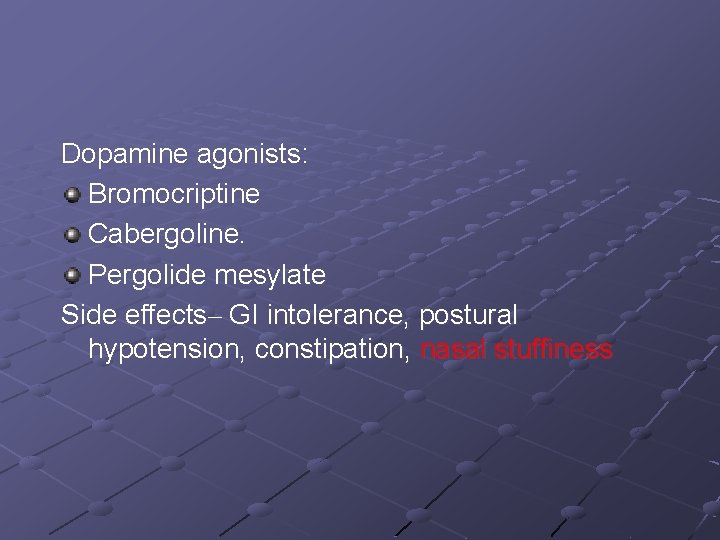
Dopamine agonists: Bromocriptine Cabergoline. Pergolide mesylate Side effects– GI intolerance, postural hypotension, constipation, nasal stuffiness
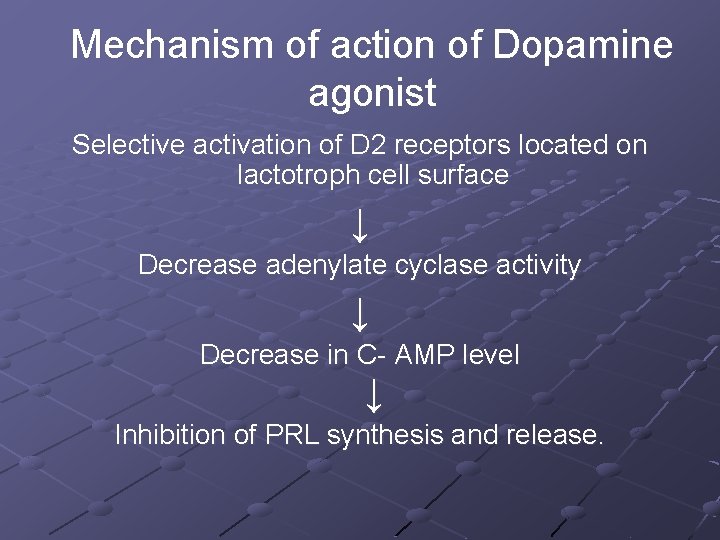
Mechanism of action of Dopamine agonist Selective activation of D 2 receptors located on lactotroph cell surface ↓ Decrease adenylate cyclase activity ↓ Decrease in C- AMP level ↓ Inhibition of PRL synthesis and release.
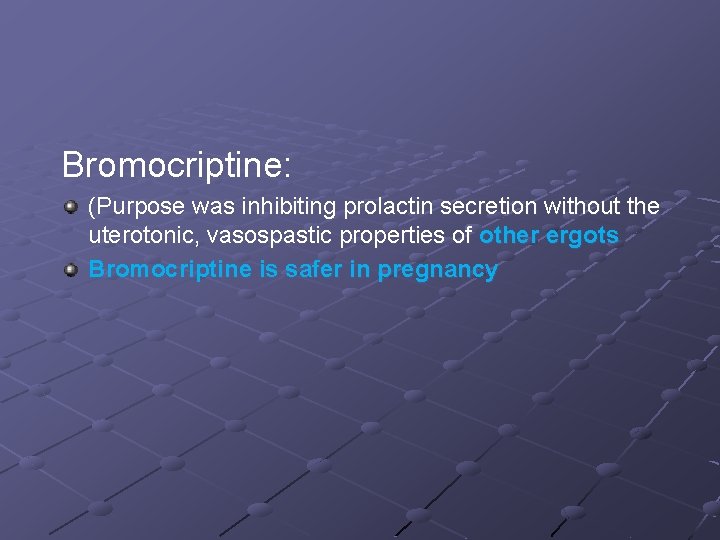
Bromocriptine: (Purpose was inhibiting prolactin secretion without the uterotonic, vasospastic properties of other ergots Bromocriptine is safer in pregnancy
Bromocriptine: The absorption rate from the GI tract is 25 -30%. Very high first-pass effect, with 93. 6% of a dose being metabolized and only 6. 5% of an absorbed dose reaching the systemic circulation unchanged Excreted via the biliary route into the feces start low dose at 2. 5 mg day at night before increasing to 2. 5 – 10 mg per day in divided doses Take with food to reduce side effects
Cabergoline (Ergot drug : n n more effective Well torlrated bu not sager in pregenancy more expensive given once or twice a week with a starting dose of 0. 25 mg 2 x week Titrate these based on prolactin levels and tolerability
THANK YOU