
Pharmacology Drugs that Affect the Cardiovascular System Topics

- Slides: 82
Pharmacology Drugs that Affect the Cardiovascular System
Topics • • Electrophysiology Vaughn-Williams classification Antihypertensives Hemostatic agents
Cardiac Function • Dependent upon – Adequate amounts of ATP – Adequate amounts of Ca++ – Coordinated electrical stimulus
Adequate Amounts of ATP • Needed to: – Maintain electrochemical gradients – Propagate action potentials – Power muscle contraction
Adequate Amounts of Calcium • Calcium is ‘glue’ that links electrical and mechanical events.
Coordinated Electrical Stimulation • Heart capable of automaticity • Two types of myocardial tissue – Contractile – Conductive • Impulses travel through ‘action potential superhighway’.
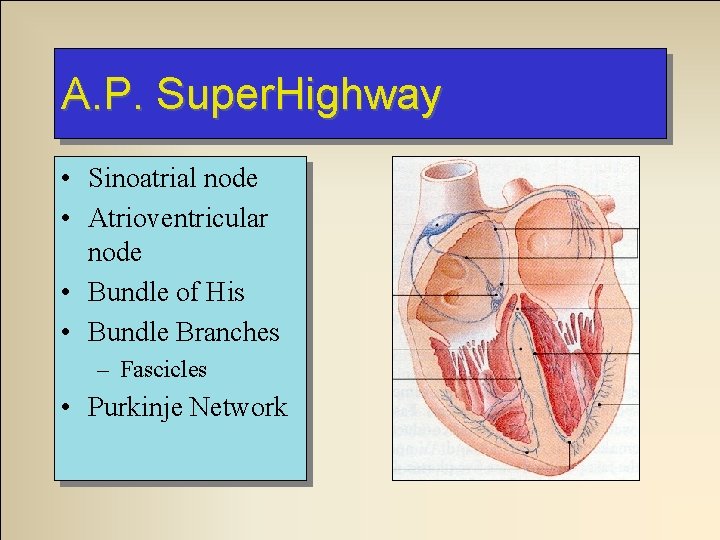
A. P. Super. Highway • Sinoatrial node • Atrioventricular node • Bundle of His • Bundle Branches – Fascicles • Purkinje Network
Electrophysiology • Two types of action potentials – Fast potentials • Found in contractile tissue – Slow potentials • Found in SA, AV node tissues
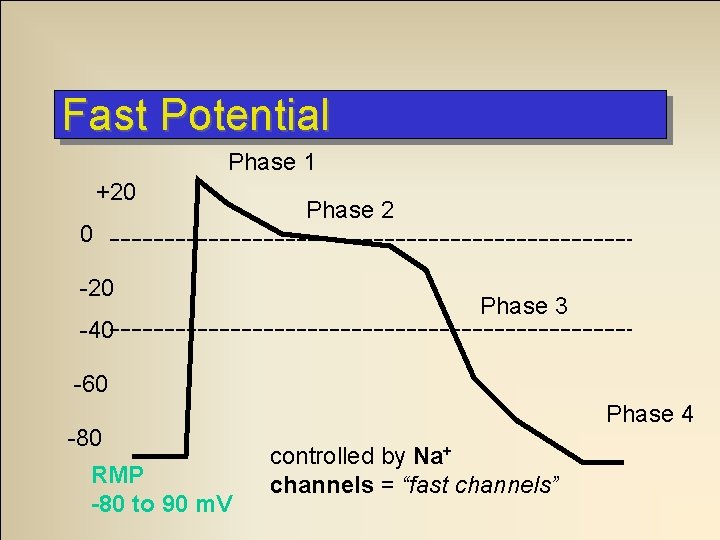
Fast Potential Phase 1 +20 0 -20 -40 Phase 2 Phase 3 -60 -80 RMP -80 to 90 m. V Phase 4 controlled by Na+ channels = “fast channels”
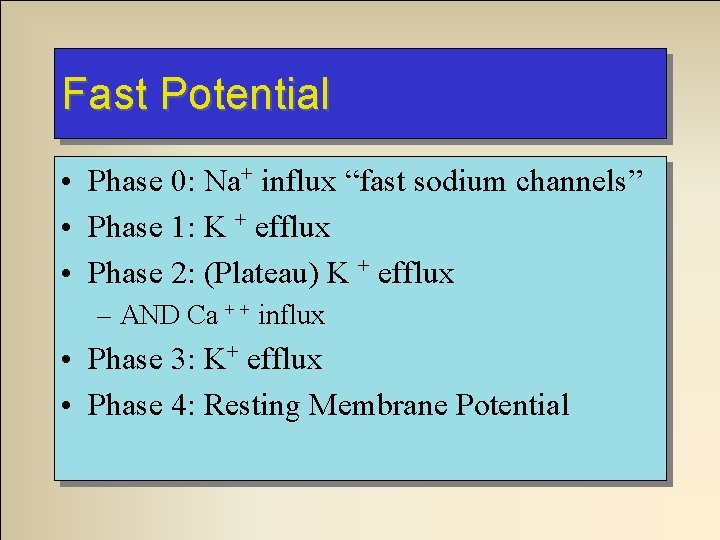
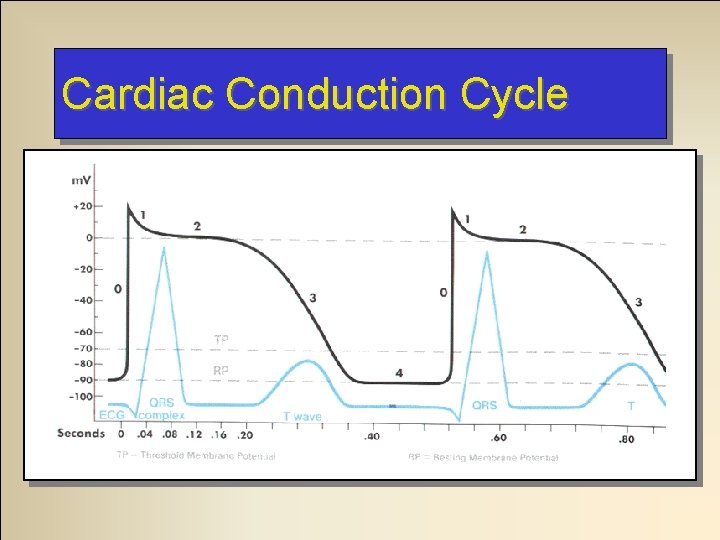
Fast Potential • Phase 0: Na+ influx “fast sodium channels” • Phase 1: K + efflux • Phase 2: (Plateau) K + efflux – AND Ca + + influx • Phase 3: K+ efflux • Phase 4: Resting Membrane Potential
Cardiac Conduction Cycle
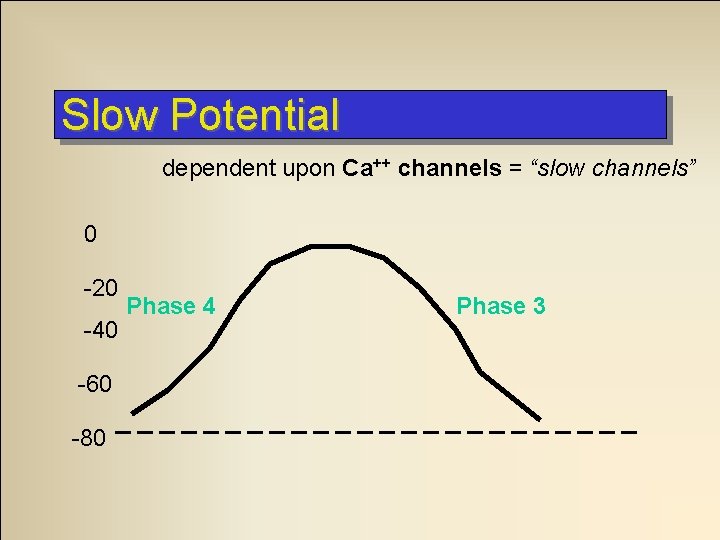
Slow Potential dependent upon Ca++ channels = “slow channels” 0 -20 -40 -60 -80 Phase 4 Phase 3
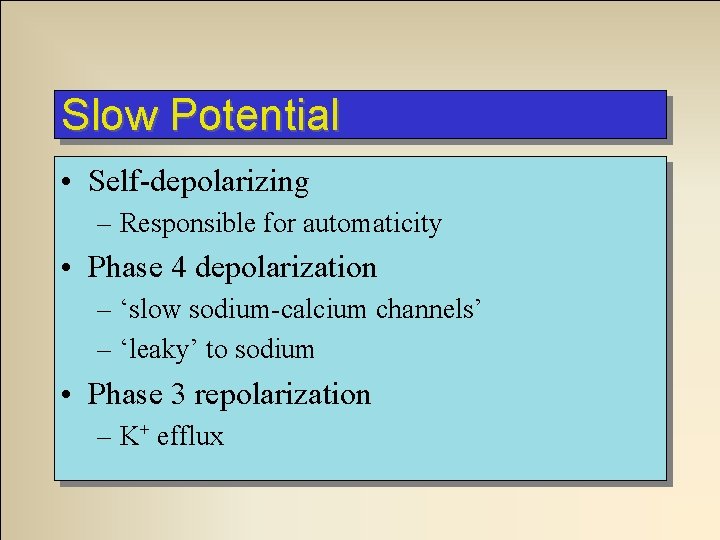
Slow Potential • Self-depolarizing – Responsible for automaticity • Phase 4 depolarization – ‘slow sodium-calcium channels’ – ‘leaky’ to sodium • Phase 3 repolarization – K+ efflux
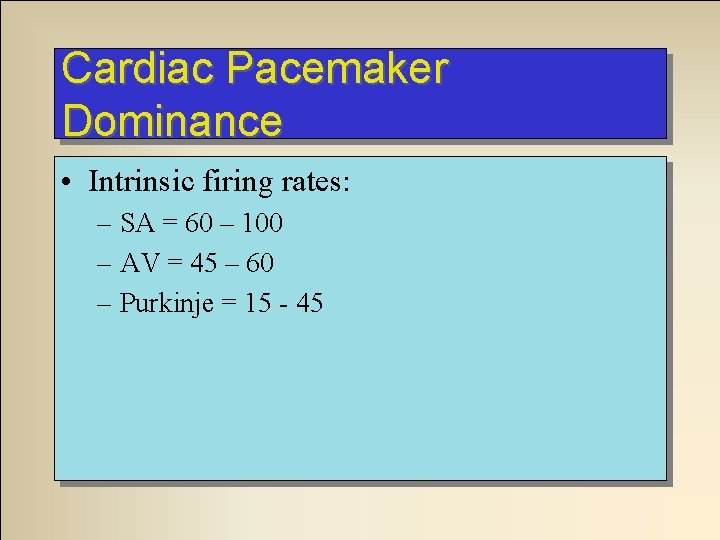
Cardiac Pacemaker Dominance • Intrinsic firing rates: – SA = 60 – 100 – AV = 45 – 60 – Purkinje = 15 - 45
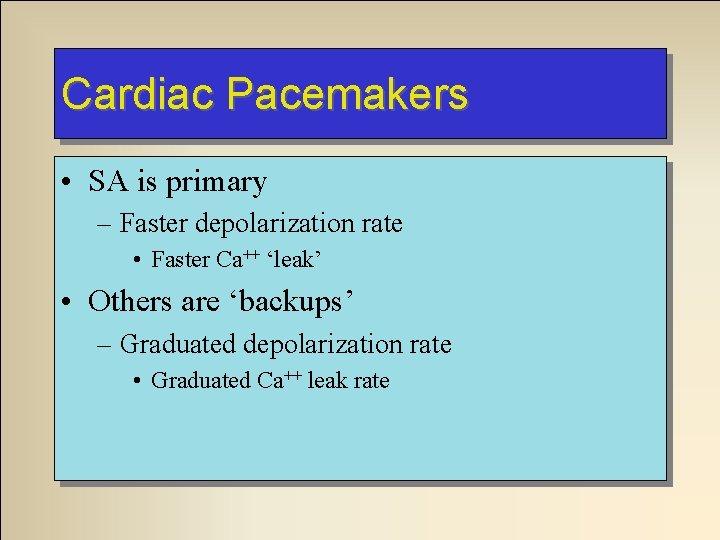
Cardiac Pacemakers • SA is primary – Faster depolarization rate • Faster Ca++ ‘leak’ • Others are ‘backups’ – Graduated depolarization rate • Graduated Ca++ leak rate
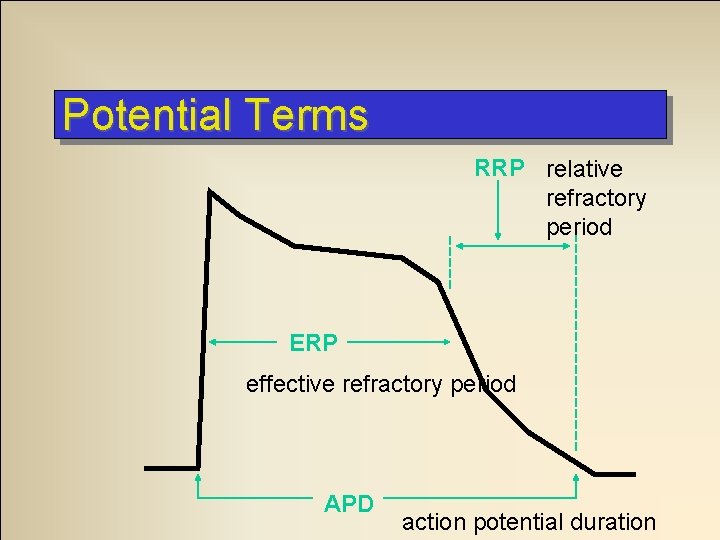
Potential Terms RRP relative refractory period ERP effective refractory period APD action potential duration
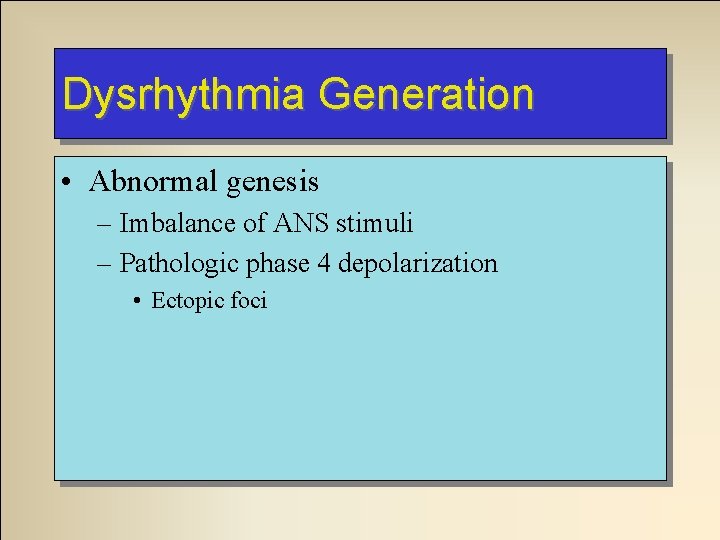
Dysrhythmia Generation • Abnormal genesis – Imbalance of ANS stimuli – Pathologic phase 4 depolarization • Ectopic foci
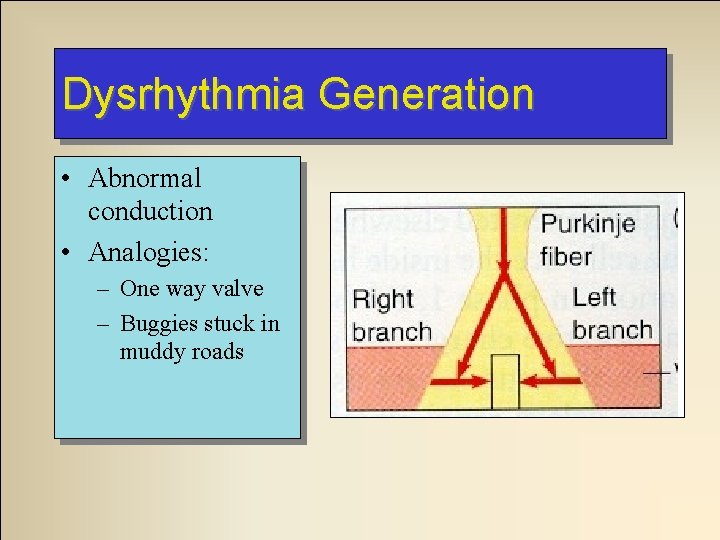
Dysrhythmia Generation • Abnormal conduction • Analogies: – One way valve – Buggies stuck in muddy roads
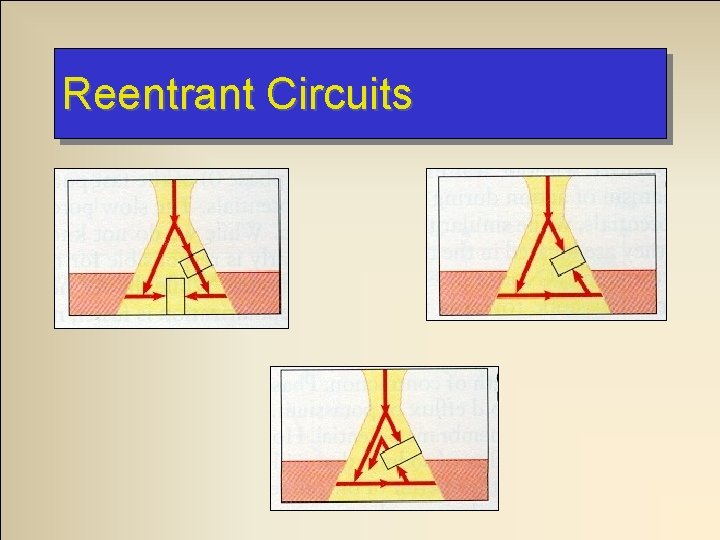
Reentrant Circuits
Warning! • All antidysrhythmics have arrythmogenic properties • In other words, they all can CAUSE dysrhythmias too!
AHA Recommendation Classifications • Describes weight of supporting evidence NOT mechanism • Class IIa • Class IIb • Indeterminant • Class III • View AHA definitions
Vaughn-Williams Classification • Class 1 – Ia – Ib – Ic • • Class III Class IV Misc • Description of mechanism NOT evidence
Class I: Sodium Channel Blockers • Decrease Na+ movement in phases 0 and 4 • Decreases rate of propagation (conduction) via tissue with fast potential (Purkinje) – Ignores those with slow potential (SA/AV) • Indications: ventricular dysrhythmias
Class Ia Agents • Slow conduction through ventricles • Decrease repolarization rate – Widen QRS and QT intervals • May promote Torsades Pointes! • PDQ: – procainamide (Pronestyl®) – disopyramide (Norpace®) – qunidine – (Quinidex®)
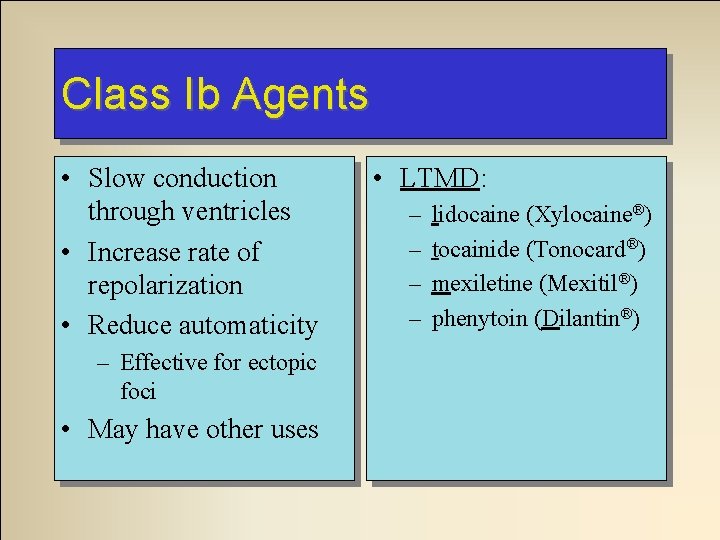
Class Ib Agents • Slow conduction through ventricles • Increase rate of repolarization • Reduce automaticity – Effective for ectopic foci • May have other uses • LTMD: – – lidocaine (Xylocaine®) tocainide (Tonocard®) mexiletine (Mexitil®) phenytoin (Dilantin®)
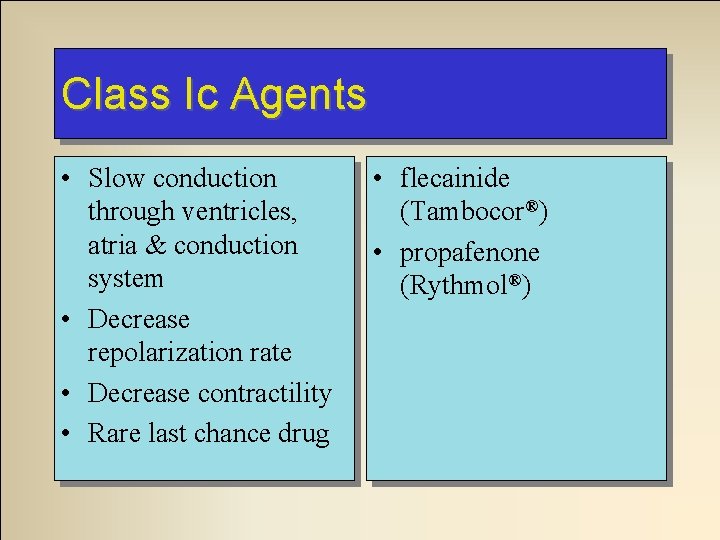
Class Ic Agents • Slow conduction through ventricles, atria & conduction system • Decrease repolarization rate • Decrease contractility • Rare last chance drug • flecainide (Tambocor®) • propafenone (Rythmol®)
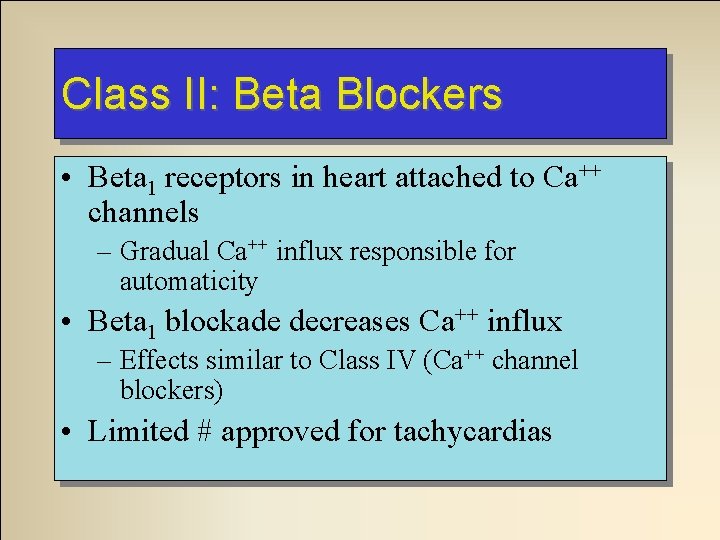
Class II: Beta Blockers • Beta 1 receptors in heart attached to Ca++ channels – Gradual Ca++ influx responsible for automaticity • Beta 1 blockade decreases Ca++ influx – Effects similar to Class IV (Ca++ channel blockers) • Limited # approved for tachycardias
Class II: Beta Blockers • propranolol (Inderal®) • acebutolol (Sectral®) • esmolol (Brevibloc®)
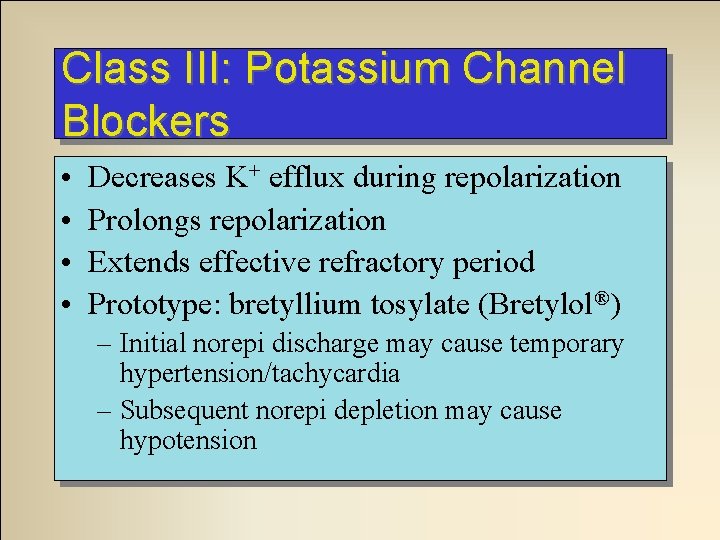
Class III: Potassium Channel Blockers • • Decreases K+ efflux during repolarization Prolongs repolarization Extends effective refractory period Prototype: bretyllium tosylate (Bretylol®) – Initial norepi discharge may cause temporary hypertension/tachycardia – Subsequent norepi depletion may cause hypotension
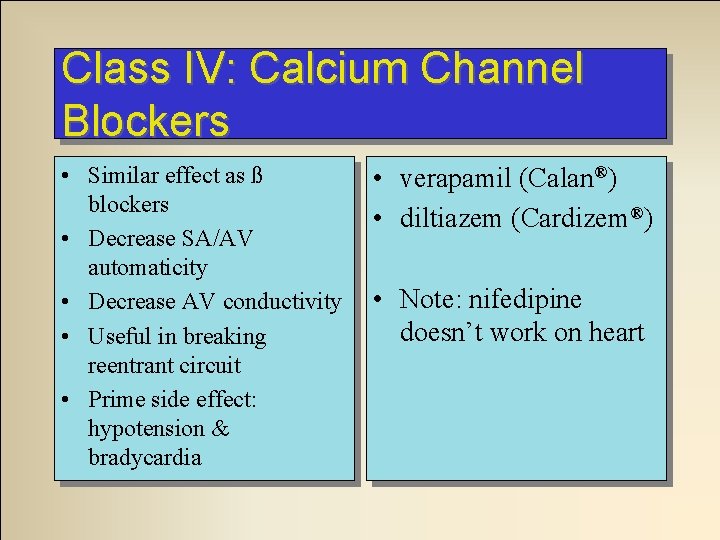
Class IV: Calcium Channel Blockers • Similar effect as ß blockers • Decrease SA/AV automaticity • Decrease AV conductivity • Useful in breaking reentrant circuit • Prime side effect: hypotension & bradycardia • verapamil (Calan®) • diltiazem (Cardizem®) • Note: nifedipine doesn’t work on heart
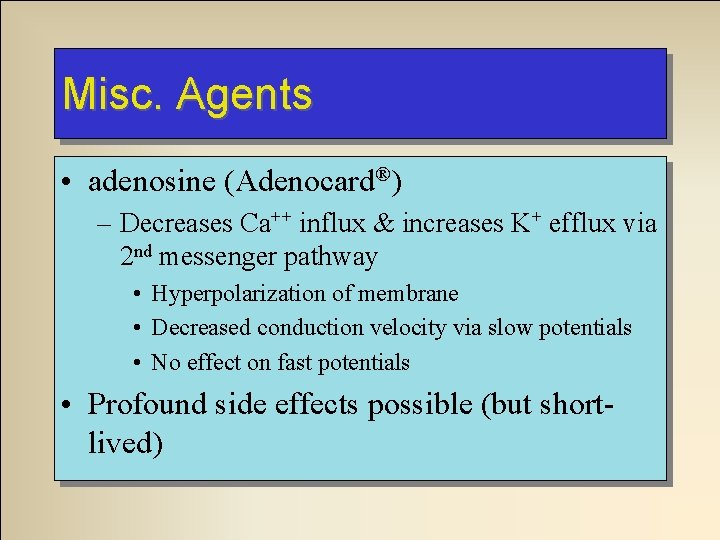
Misc. Agents • adenosine (Adenocard®) – Decreases Ca++ influx & increases K+ efflux via 2 nd messenger pathway • Hyperpolarization of membrane • Decreased conduction velocity via slow potentials • No effect on fast potentials • Profound side effects possible (but shortlived)
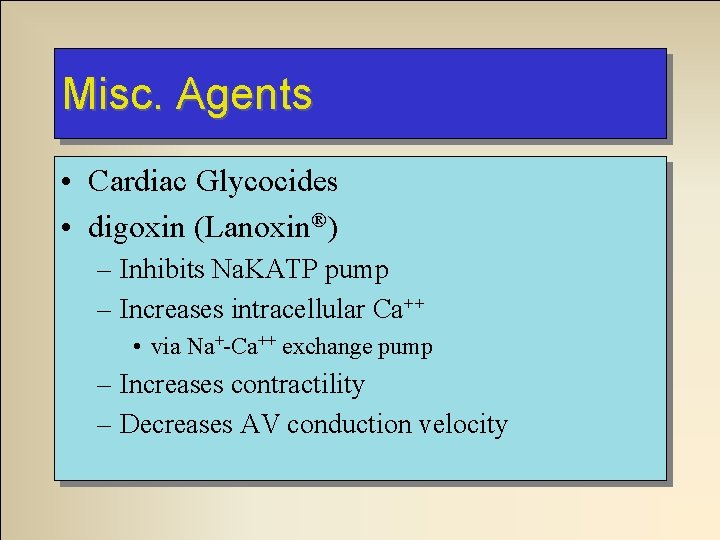
Misc. Agents • Cardiac Glycocides • digoxin (Lanoxin®) – Inhibits Na. KATP pump – Increases intracellular Ca++ • via Na+-Ca++ exchange pump – Increases contractility – Decreases AV conduction velocity
Pharmacology Antihypertensives
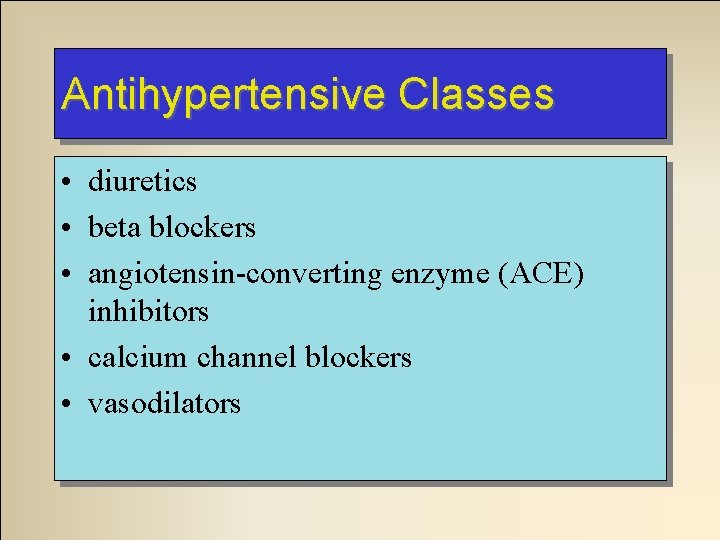
Antihypertensive Classes • diuretics • beta blockers • angiotensin-converting enzyme (ACE) inhibitors • calcium channel blockers • vasodilators
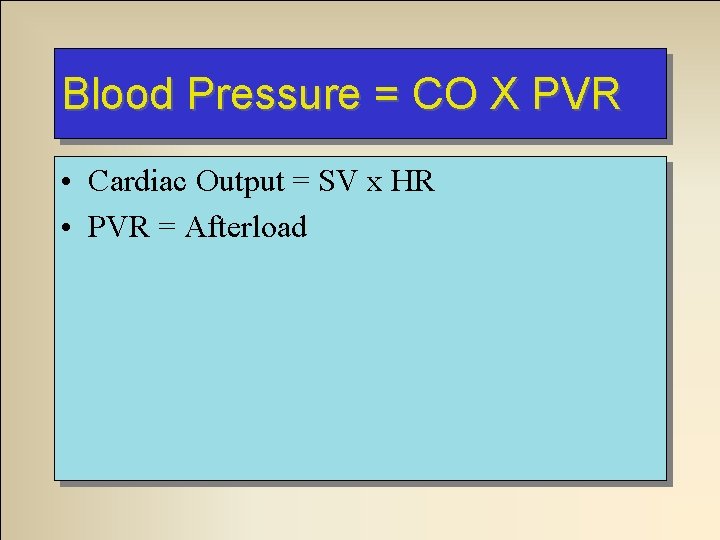
Blood Pressure = CO X PVR • Cardiac Output = SV x HR • PVR = Afterload
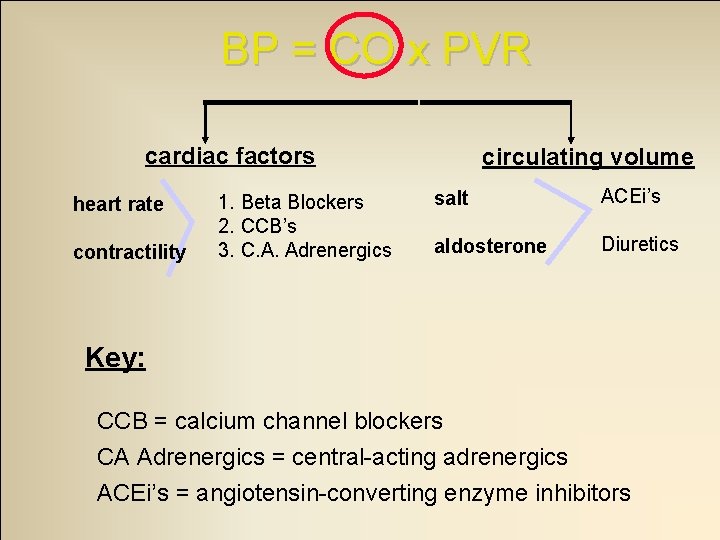
BP = CO x PVR cardiac factors heart rate contractility 1. Beta Blockers 2. CCB’s 3. C. A. Adrenergics circulating volume salt ACEi’s aldosterone Diuretics Key: CCB = calcium channel blockers CA Adrenergics = central-acting adrenergics ACEi’s = angiotensin-converting enzyme inhibitors
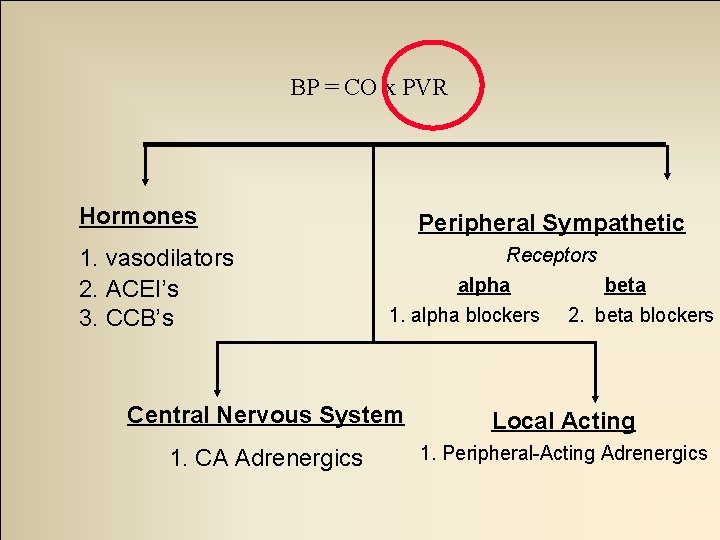
BP = CO x PVR Hormones 1. vasodilators 2. ACEI’s 3. CCB’s Peripheral Sympathetic Receptors alpha beta 1. alpha blockers 2. beta blockers Central Nervous System Local Acting 1. CA Adrenergics 1. Peripheral-Acting Adrenergics
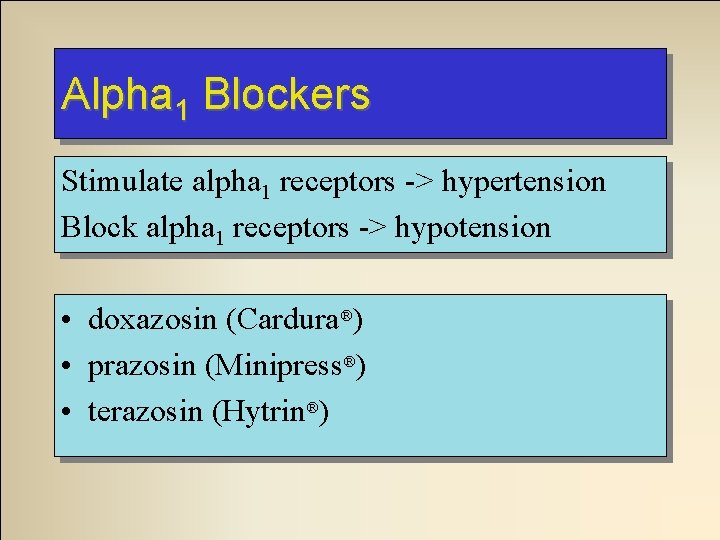
Alpha 1 Blockers Stimulate alpha 1 receptors -> hypertension Block alpha 1 receptors -> hypotension • doxazosin (Cardura®) • prazosin (Minipress®) • terazosin (Hytrin®)
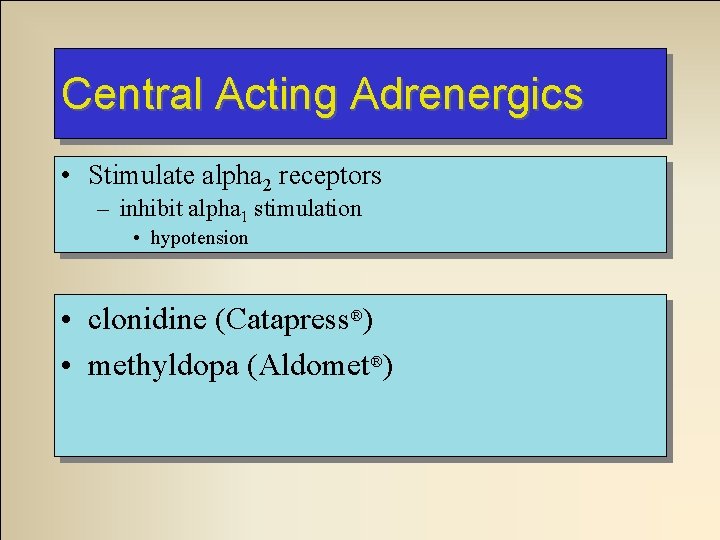
Central Acting Adrenergics • Stimulate alpha 2 receptors – inhibit alpha 1 stimulation • hypotension • clonidine (Catapress®) • methyldopa (Aldomet®)
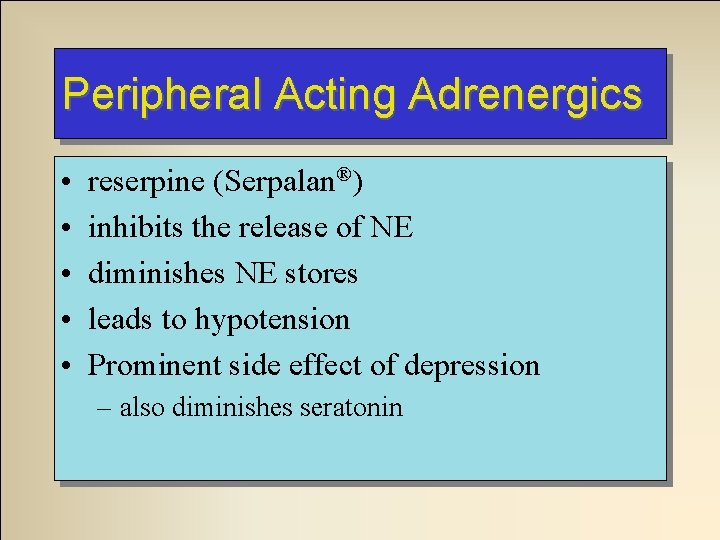
Peripheral Acting Adrenergics • • • reserpine (Serpalan®) inhibits the release of NE diminishes NE stores leads to hypotension Prominent side effect of depression – also diminishes seratonin
Adrenergic Side Effects • Common – dry mouth, drowsiness, sedation & constipation – orthostatic hypotension • Less common – headache, sleep disturbances, nausea, rash & palpitations
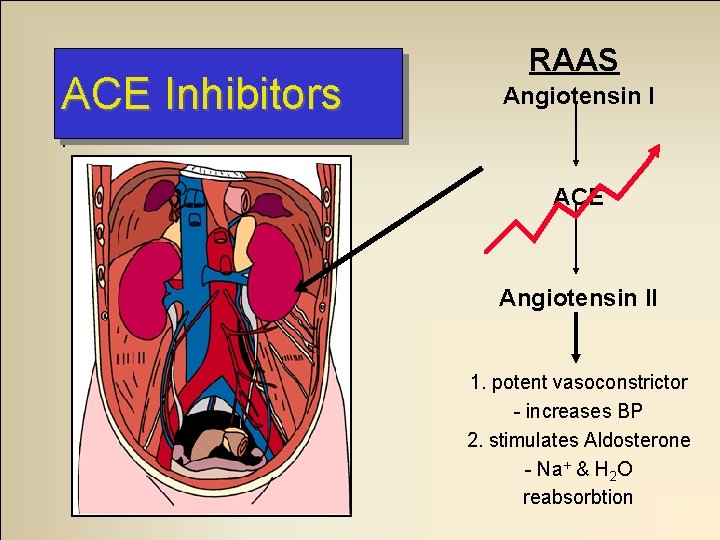
ACE Inhibitors RAAS Angiotensin I . ACE Angiotensin II 1. potent vasoconstrictor - increases BP 2. stimulates Aldosterone - Na+ & H 2 O reabsorbtion
Renin-Angiotensin Aldosterone System • • Angiotensin II = vasoconstrictor Constricts blood vessels & increases BP Increases SVR or afterload ACE-I blocks these effects decreasing SVR & afterload
ACE Inhibitors • Aldosterone secreted from adrenal glands cause sodium & water reabsorption • Increase blood volume • Increase preload • ACE-I blocks this and decreases preload
Angiotensin Converting Enzyme Inhibitors • • captopril (Capoten®) enalapril (Vasotec®) lisinopril (Prinivil® & Zestril®) quinapril (Accupril®) ramipril (Altace®) benazepril (Lotensin®) fosinopril (Monopril®)
Calcium Channel Blockers • Used for: • Angina • Tachycardias • Hypertension
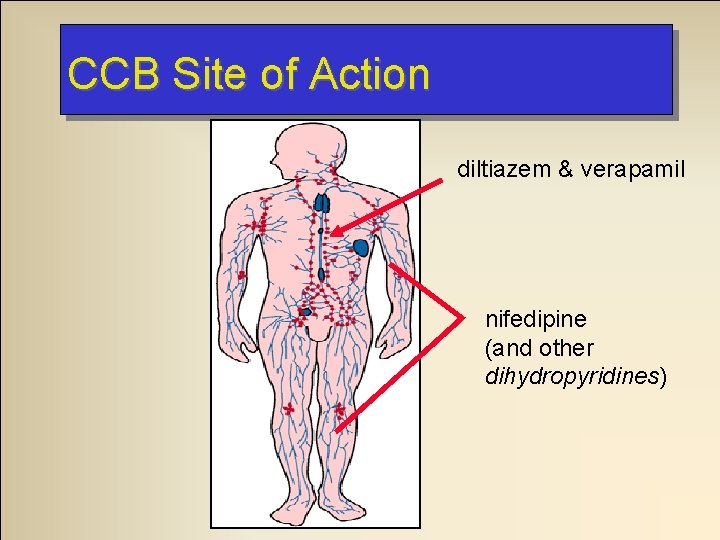
CCB Site of Action diltiazem & verapamil nifedipine (and other dihydropyridines)
CCB Action • diltiazem & verapamil • decrease automaticity & conduction in SA & AV nodes • decrease myocardial contractility • decreased smooth muscle tone • decreased PVR • nifedipine • decreased smooth muscle tone • decreased PVR
Side Effects of CCBs • Cardiovascular • hypotension, palpitations & tachycardia • Gastrointestinal • constipation & nausea • Other • rash, flushing & peripheral edema
Calcium Channel Blockers • diltiazem (Cardizem®) • verapamil (Calan®, Isoptin®) • nifedipine (Procardia®, Adalat®)
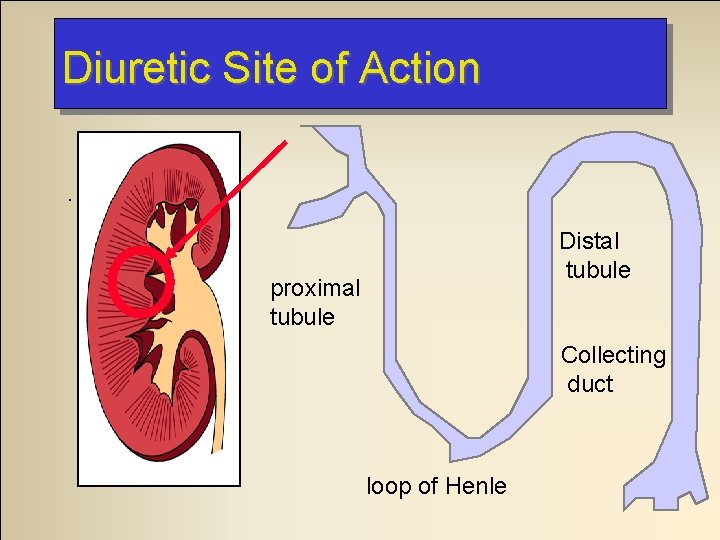
Diuretic Site of Action. Distal tubule proximal tubule Collecting duct loop of Henle
Mechanism • Water follows Na+ • 20 -25% of all Na+ is reabsorbed into the blood stream in the loop of Henle • 5 -10% in distal tubule & 3% in collecting ducts • If it can not be absorbed it is excreted with the urine • Blood volume = preload !
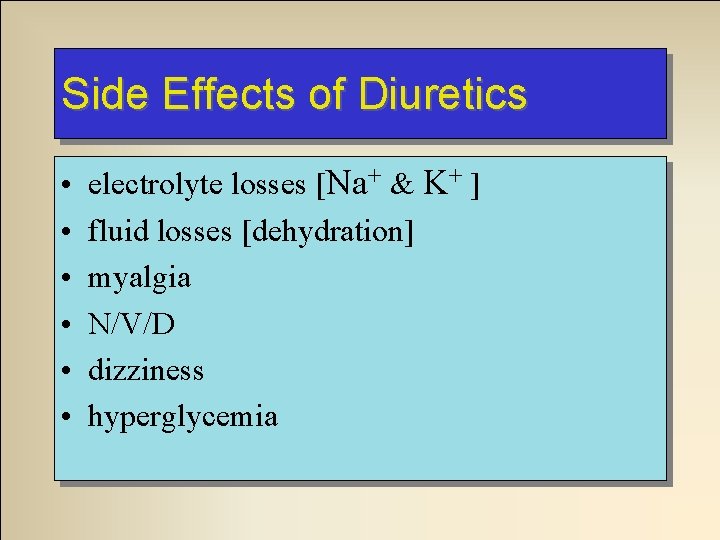
Side Effects of Diuretics • • • electrolyte losses [Na+ & K+ ] fluid losses [dehydration] myalgia N/V/D dizziness hyperglycemia
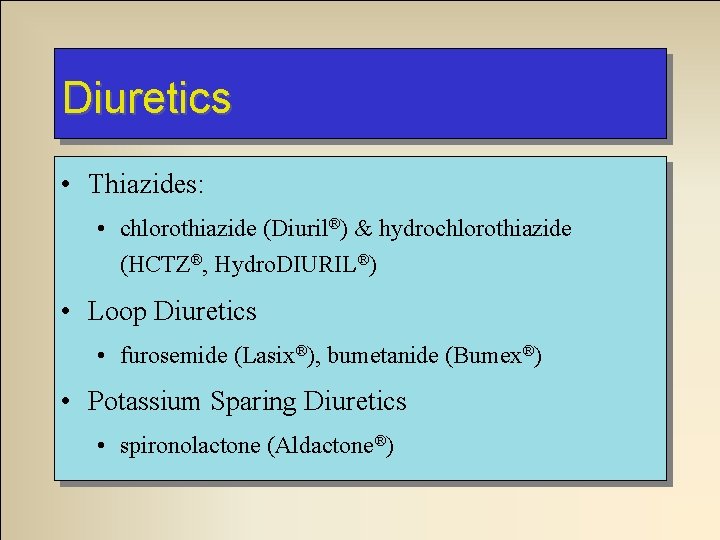
Diuretics • Thiazides: • chlorothiazide (Diuril®) & hydrochlorothiazide (HCTZ®, Hydro. DIURIL®) • Loop Diuretics • furosemide (Lasix®), bumetanide (Bumex®) • Potassium Sparing Diuretics • spironolactone (Aldactone®)
Mechanism of Vasodilators • Directly relaxes arteriole smooth muscle • Decrease SVR = decrease afterload
Side Effects of Vasodilators • hydralazine (Apresoline®) – Reflex tachycardia • sodium nitroprusside (Nipride®) – Cyanide toxicity in renal failure – CNS toxicity = agitation, hallucinations, etc.
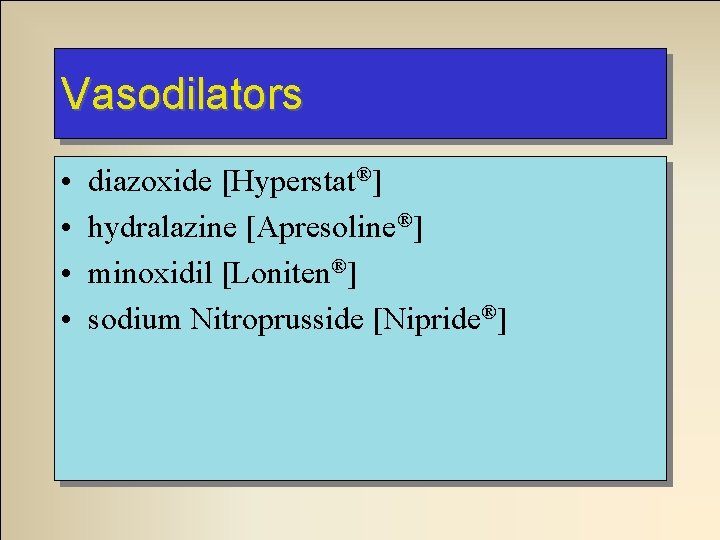
Vasodilators • • diazoxide [Hyperstat®] hydralazine [Apresoline®] minoxidil [Loniten®] sodium Nitroprusside [Nipride®]
Pharmacology Drugs Affecting Hemostasis
Hemostasis • Reproduce figure 11 -9, page 359 Sherwood
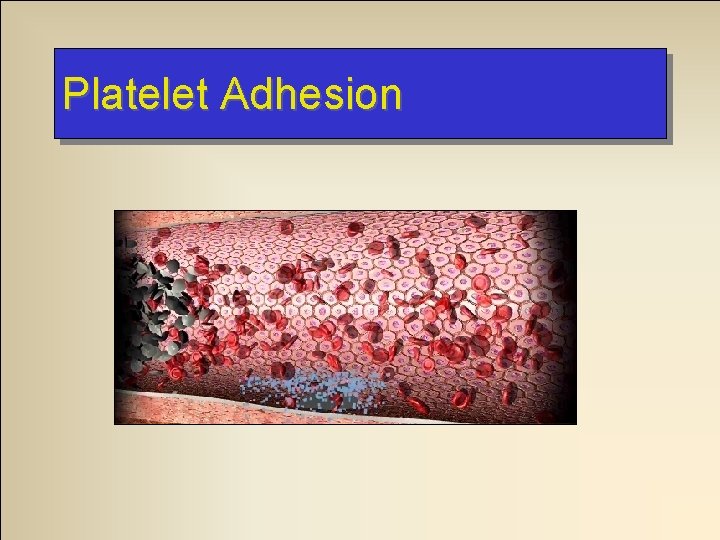
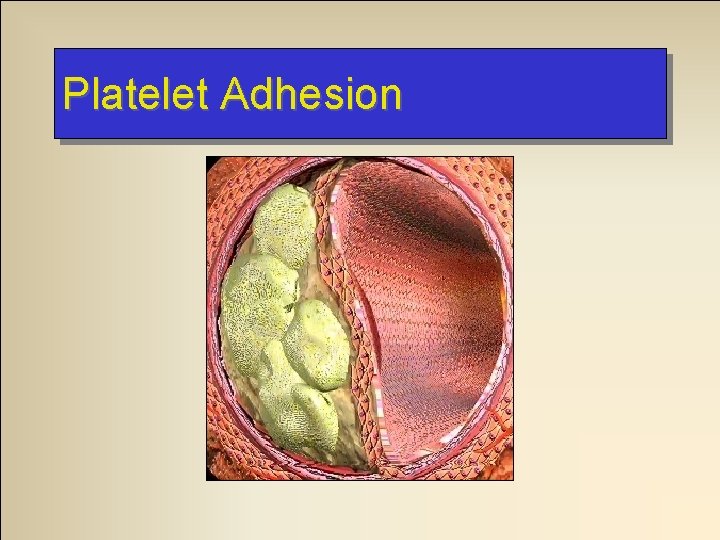
Platelet Adhesion
Coagulation Cascade • Reproduce following components of cascade: – Prothrombin -> thrombin • Fibrinogen -> fibrin – Plasminogen -> plasmin
Platelet Inhibitors • • Inhibit the aggregation of platelets Indicated in progressing MI, TIA/CVA Side Effects: uncontrolled bleeding No effect on existing thrombi
Aspirin – Inhibits COX • Arachidonic acid (COX) -> TXA 2 ( aggregation)
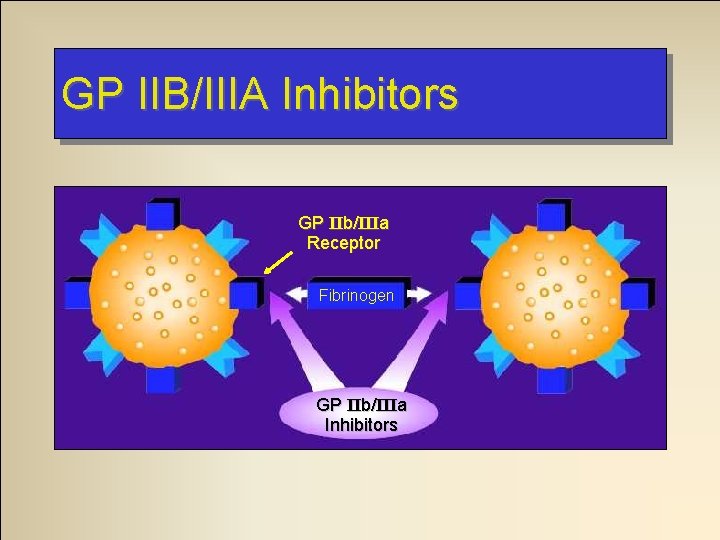
GP IIB/IIIA Inhibitors GP IIb/IIIa Receptor Fibrinogen GP IIb/IIIa Inhibitors
GP IIB/IIIA Inhibitors • abciximab (Reo. Pro®) • eptifibitide (Integrilin®) • tirofiban (Aggrastat®)
Anticoagulants • Interrupt clotting cascade at various points – No effect on platelets • Heparin & LMW Heparin (Lovenox®) • warfarin (Coumadin®)
Heparin • Endogenous – Released from mast cells/basophils • Binds with antithrombin III • Antithrombin III binds with and inactivates excess thrombin to regionalize clotting activity. – Most thrombin (80 -95%) captured in fibrin mesh. • Antithrombin-heparin complex 1000 X as effective as antithrombin III alone
Heparin • Measured in Units, not milligrams • Indications: – MI, PE, DVT, ischemic CVA • Antidote for heparin OD: protamine. – MOA: heparin is strongly negatively charged. Protamine is strongly positively charged.
warfarin (Coumadin®) • Factors II, VII, IX and X all vitamin K dependent enzymes • Warfarin competes with vitamin K in the synthesis of these enzymes. • Depletes the reserves of clotting factors. • Delayed onset (~12 hours) due to existing factors
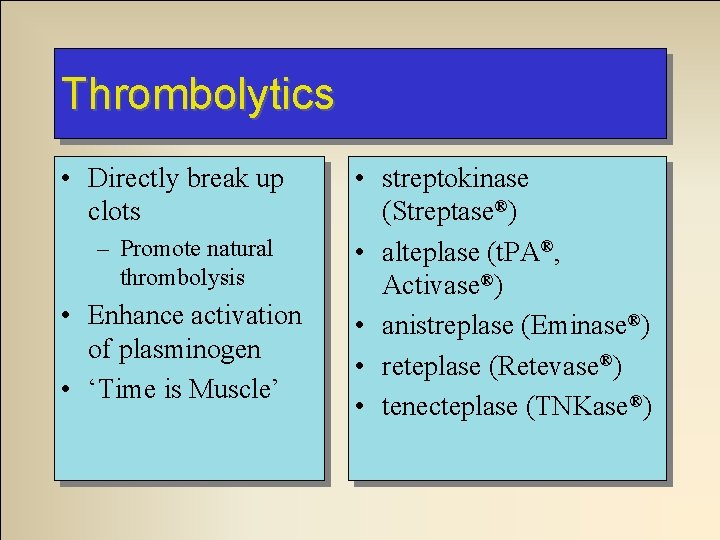
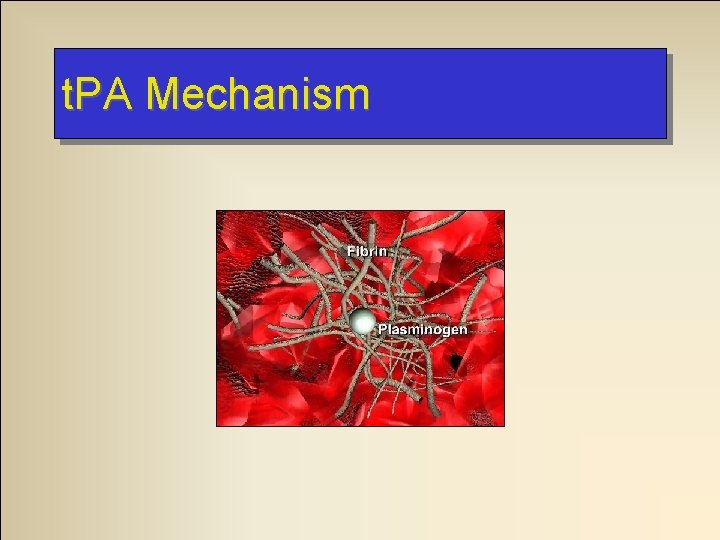
Thrombolytics • Directly break up clots – Promote natural thrombolysis • Enhance activation of plasminogen • ‘Time is Muscle’ • streptokinase (Streptase®) • alteplase (t. PA®, Activase®) • anistreplase (Eminase®) • reteplase (Retevase®) • tenecteplase (TNKase®)
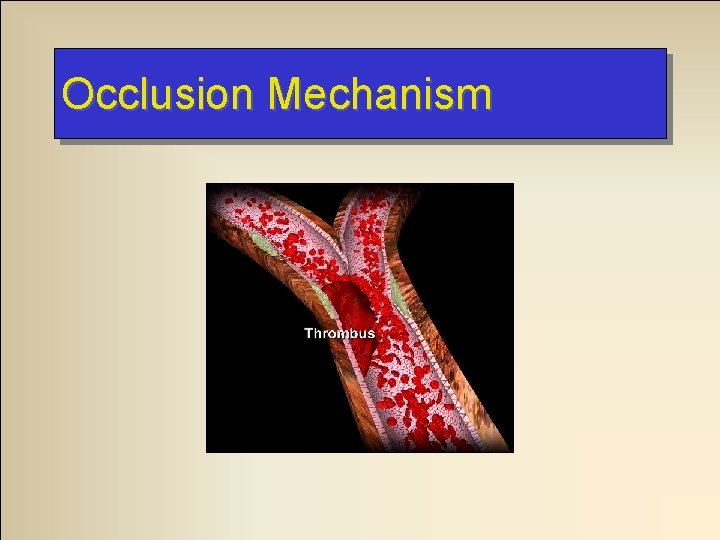
Occlusion Mechanism
t. PA Mechanism
Cholesterol Metabolism • Cholesterol important component in membranes and as hormone precursor • Synthesized in liver – Hydroxymethylglutaryl coenzyme A reductase – (HMG Co. A reductase) dependant • Stored in tissues for latter use • Insoluble in plasma (a type of lipid) – Must have transport mechanism
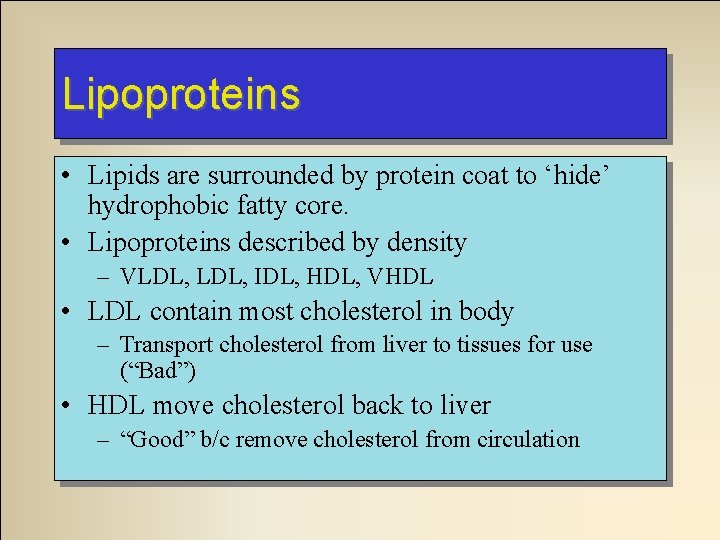
Lipoproteins • Lipids are surrounded by protein coat to ‘hide’ hydrophobic fatty core. • Lipoproteins described by density – VLDL, IDL, HDL, VHDL • LDL contain most cholesterol in body – Transport cholesterol from liver to tissues for use (“Bad”) • HDL move cholesterol back to liver – “Good” b/c remove cholesterol from circulation
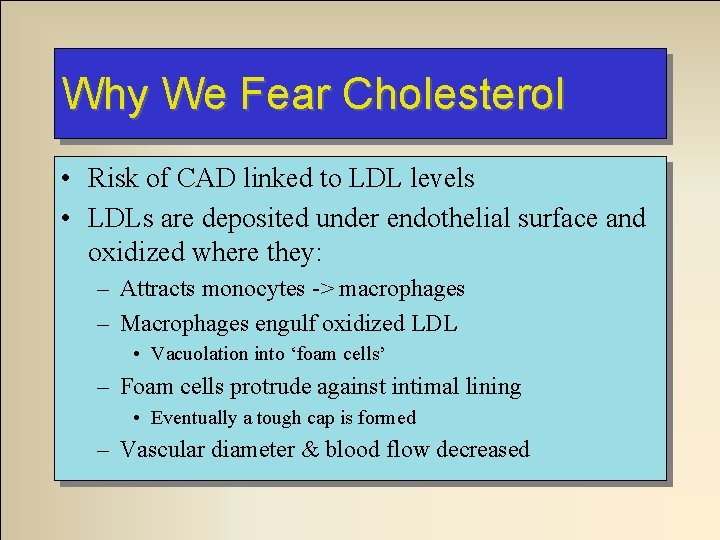
Why We Fear Cholesterol • Risk of CAD linked to LDL levels • LDLs are deposited under endothelial surface and oxidized where they: – Attracts monocytes -> macrophages – Macrophages engulf oxidized LDL • Vacuolation into ‘foam cells’ – Foam cells protrude against intimal lining • Eventually a tough cap is formed – Vascular diameter & blood flow decreased
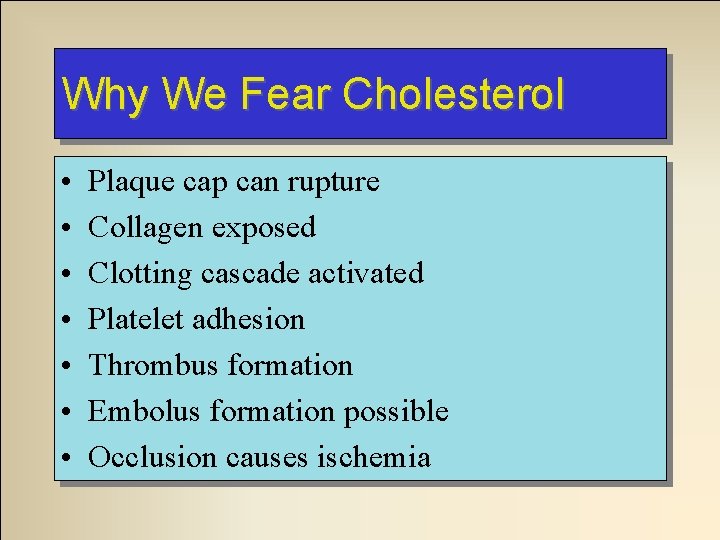
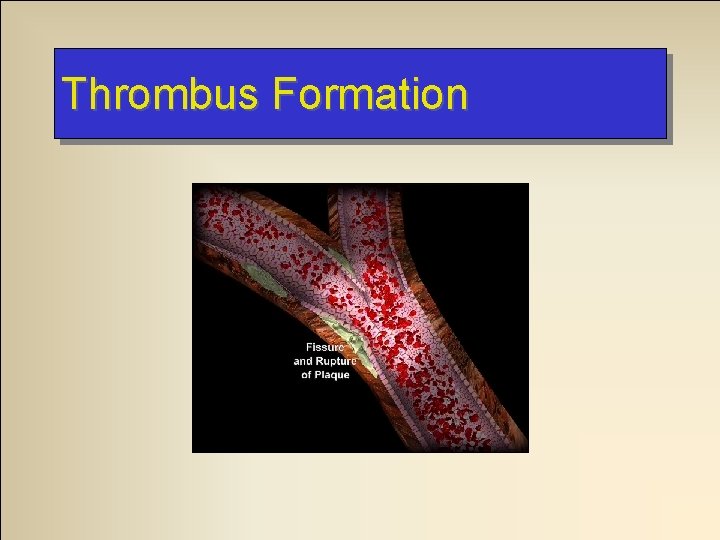
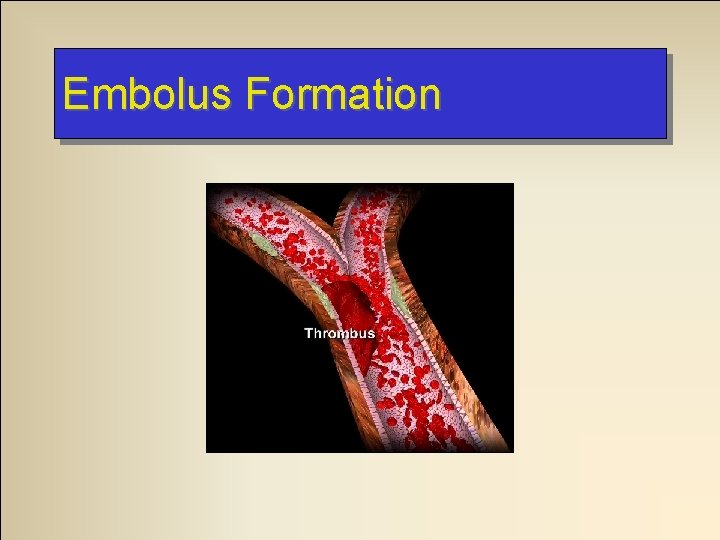
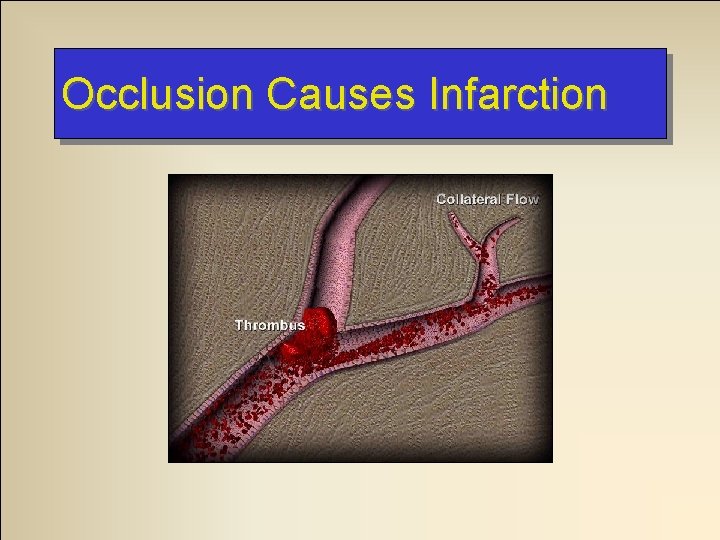
Why We Fear Cholesterol • • Plaque cap can rupture Collagen exposed Clotting cascade activated Platelet adhesion Thrombus formation Embolus formation possible Occlusion causes ischemia
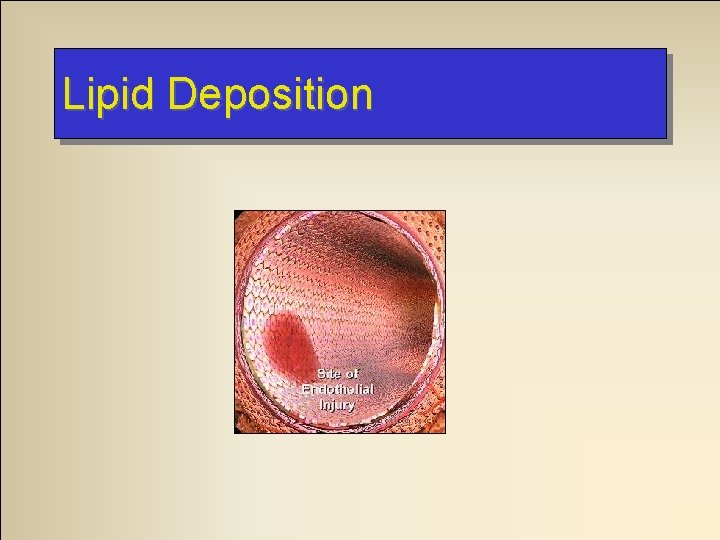
Lipid Deposition
Thrombus Formation
Platelet Adhesion
Embolus Formation
Occlusion Causes Infarction
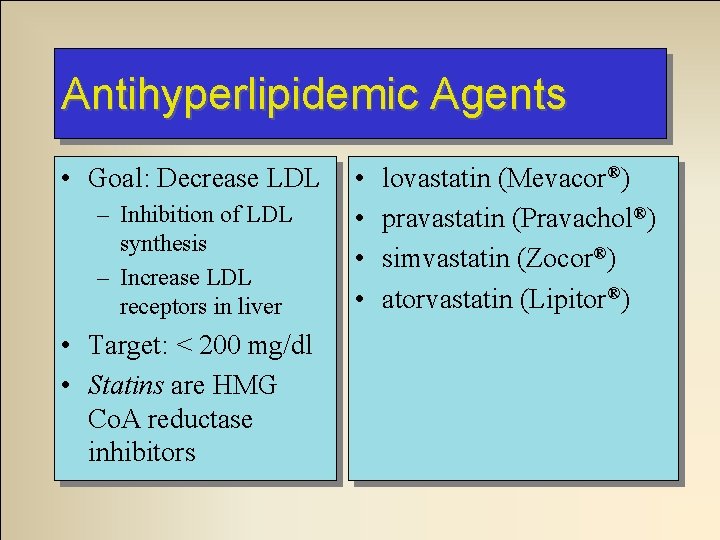
Antihyperlipidemic Agents • Goal: Decrease LDL – Inhibition of LDL synthesis – Increase LDL receptors in liver • Target: < 200 mg/dl • Statins are HMG Co. A reductase inhibitors • • lovastatin (Mevacor®) pravastatin (Pravachol®) simvastatin (Zocor®) atorvastatin (Lipitor®)