
PHARMACOLOGIC MANAGEMENT OF HEART FAILURE CAUSED BY SYSTOLIC
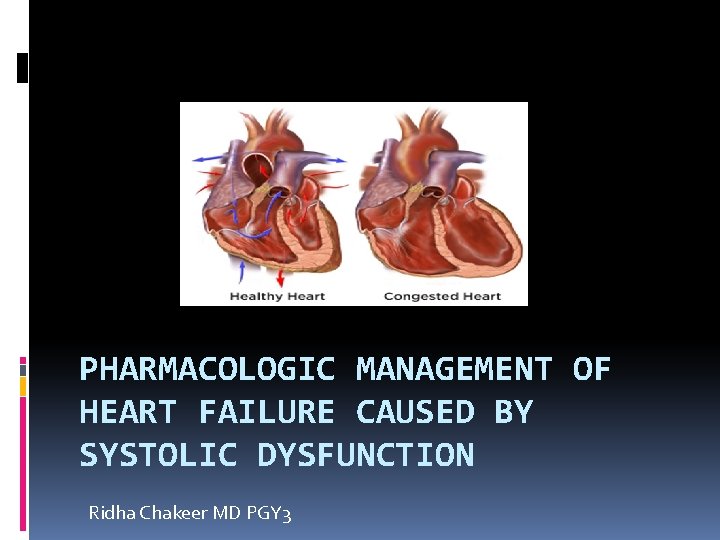
PHARMACOLOGIC MANAGEMENT OF HEART FAILURE CAUSED BY SYSTOLIC DYSFUNCTION Ridha Chakeer MD PGY 3
Objectives: KNOW THE DEFINITION OF CHF KNOW THE CLASSIFICATION OF CHF. PHARMACOLOGIC MANAGEMENT OF EACH CLASS. INDICATIONS AND CONTRAINDICATIONS FOR EACH CLASS.
Approximately 5. 2 million Americans are affected accounts for more than 3 million outpatient visits to primary care physicians each year. After a heart failure diagnosis, the one-year mortality rate is 20 percent.
Definition systolic dysfunction is most often defined as an ejection fraction below 35 to 40 percent
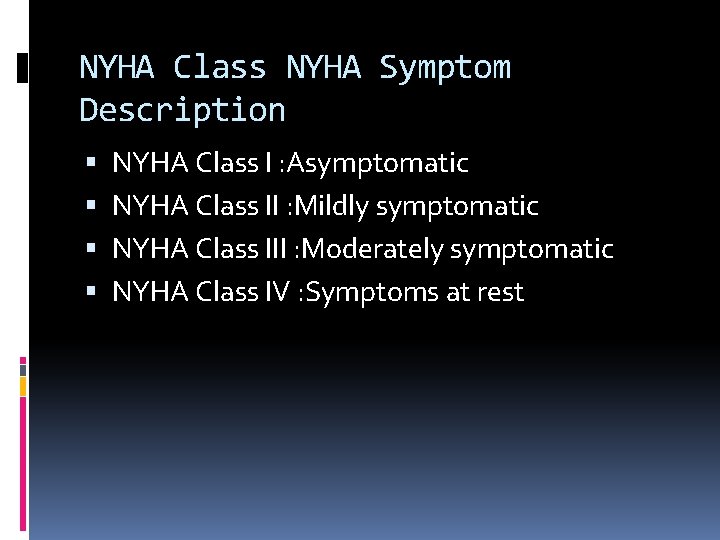
NYHA Class NYHA Symptom Description NYHA Class I : Asymptomatic NYHA Class II : Mildly symptomatic NYHA Class III : Moderately symptomatic NYHA Class IV : Symptoms at rest
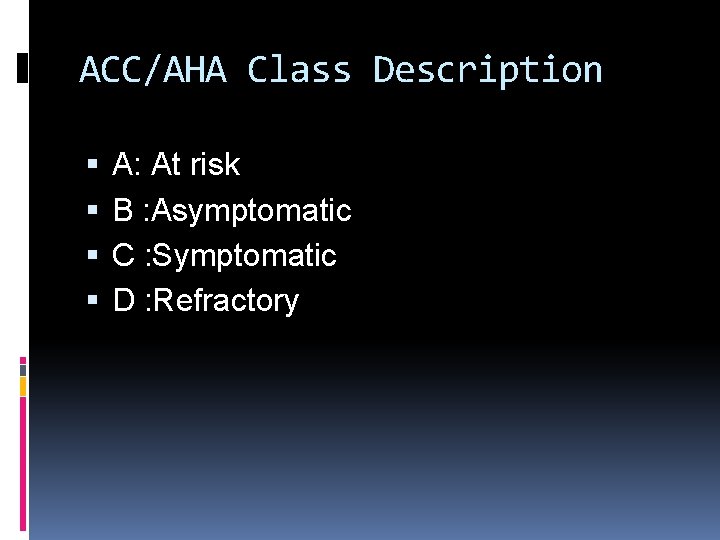
ACC/AHA Class Description A: At risk B : Asymptomatic C : Symptomatic D : Refractory
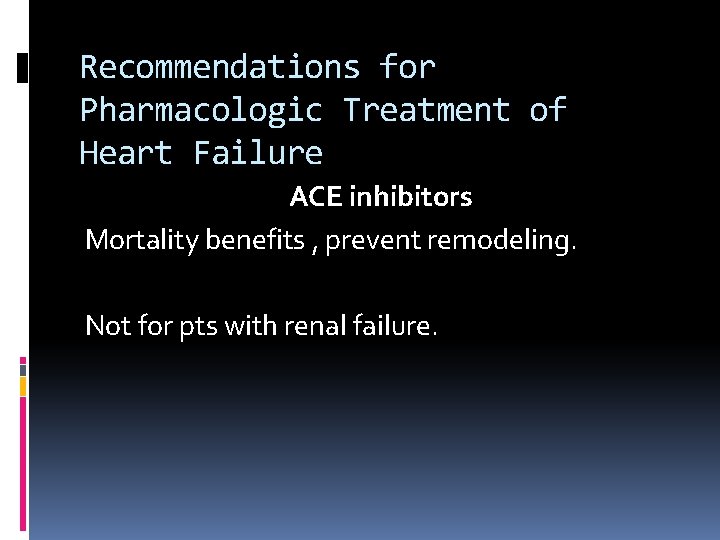
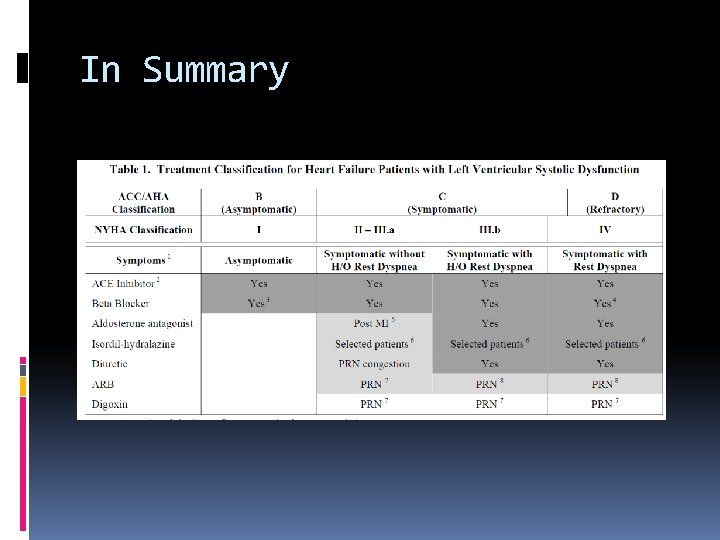
Recommendations for Pharmacologic Treatment of Heart Failure ACE inhibitors Mortality benefits , prevent remodeling. Not for pts with renal failure.
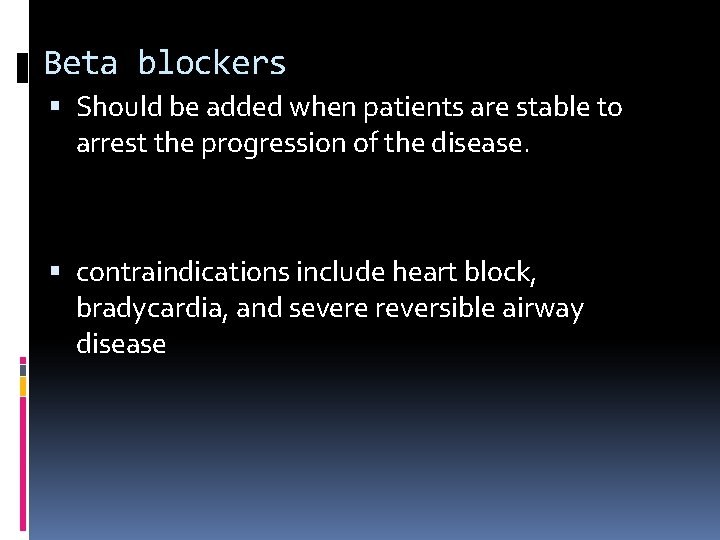
Beta blockers Should be added when patients are stable to arrest the progression of the disease. contraindications include heart block, bradycardia, and severe reversible airway disease
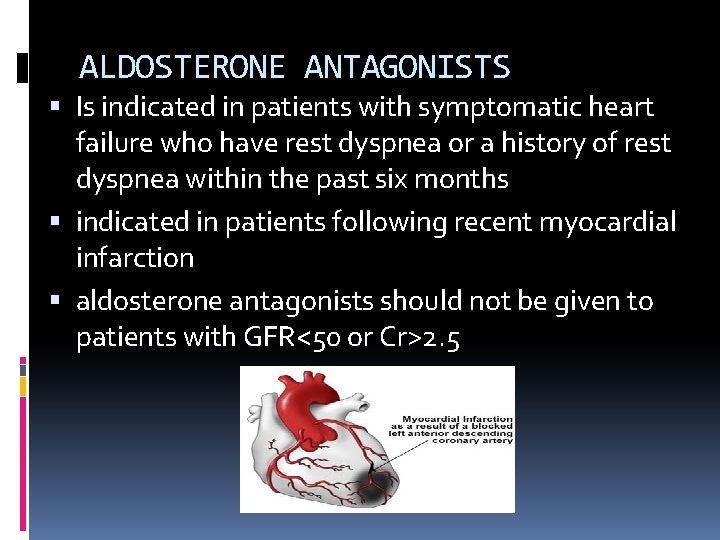
ALDOSTERONE ANTAGONISTS Is indicated in patients with symptomatic heart failure who have rest dyspnea or a history of rest dyspnea within the past six months indicated in patients following recent myocardial infarction aldosterone antagonists should not be given to patients with GFR<50 or Cr>2. 5
DIRECT-ACTING VASODILATORS among the first medications shown to improve survival in patients with heart failure combination of isosorbide dinitrate and hydralazine combo particularly effective in black patients may be used as a substitute agent in any patient with heart failure who is intolerant of ACE inhibitors
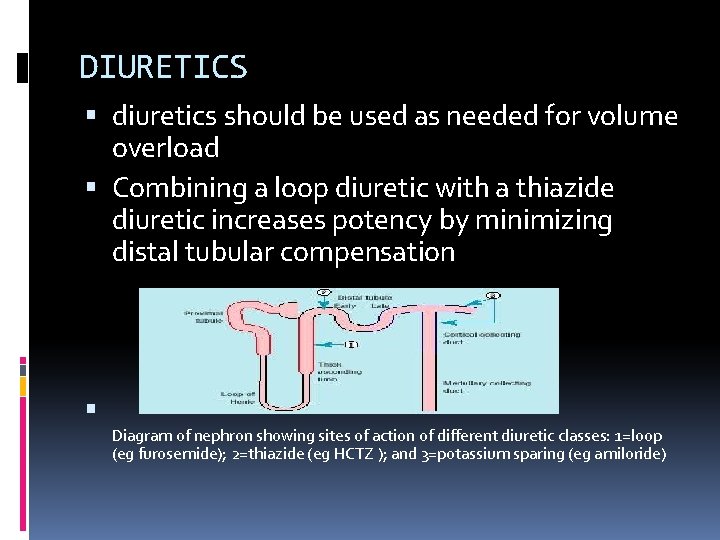
DIURETICS diuretics should be used as needed for volume overload Combining a loop diuretic with a thiazide diuretic increases potency by minimizing distal tubular compensation Diagram of nephron showing sites of action of different diuretic classes: 1=loop (eg furosemide); 2=thiazide (eg HCTZ ); and 3=potassium sparing (eg amiloride)
ARBs Evidence supports the use of ARBs as a substitute agent in patients who cannot tolerate ACE inhibitors ARBs can also safely be added to ACE inhibitors

Digoxin and Inotropes Digoxin is indicated for use in patients with heart failure and atrial fibrillation may improve symptoms and to decrease hospitalization rates in patients who remain symptomatic despite maximal therapy with diuretics, ACE inhibitors, and beta blockers
In Summary
- Slides: 14