
PHARMACOLOGIC AIDS for QUITTING SMOKING PHARMACOTHERAPY Clinicians should


- Slides: 52
PHARMACOLOGIC AIDS for QUITTING SMOKING
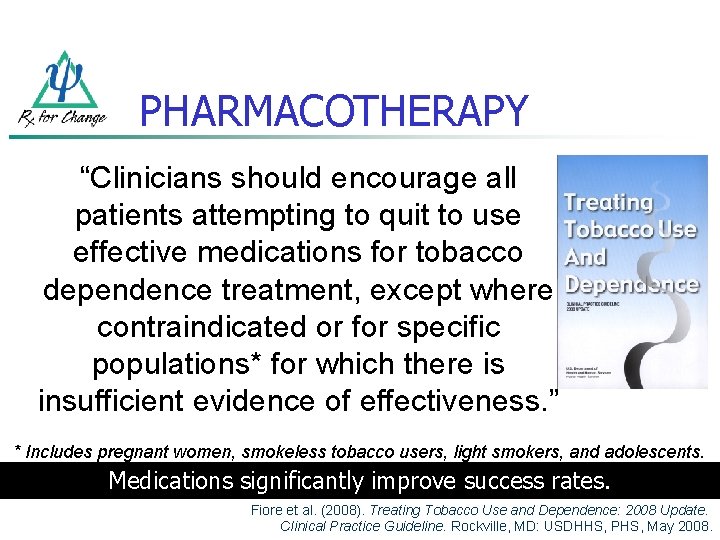
PHARMACOTHERAPY “Clinicians should encourage all patients attempting to quit to use effective medications for tobacco dependence treatment, except where contraindicated or for specific populations* for which there is insufficient evidence of effectiveness. ” * Includes pregnant women, smokeless tobacco users, light smokers, and adolescents. Medications significantly improve success rates. Fiore et al. (2008). Treating Tobacco Use and Dependence: 2008 Update. Clinical Practice Guideline. Rockville, MD: USDHHS, PHS, May 2008.
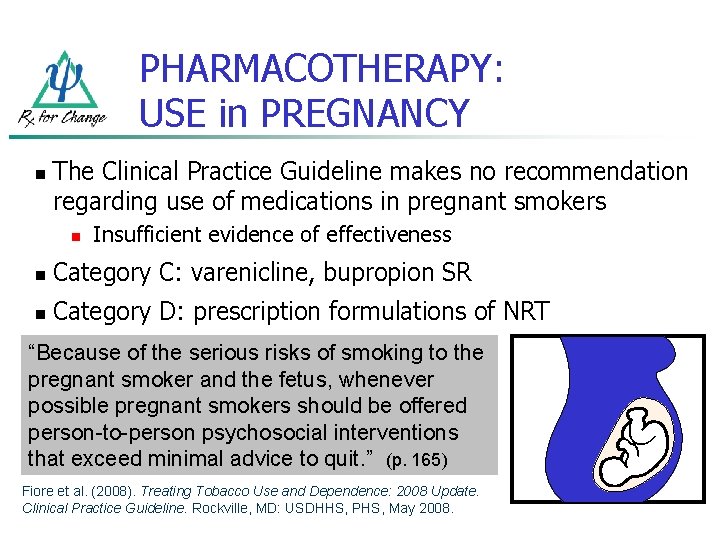
PHARMACOTHERAPY: USE in PREGNANCY n The Clinical Practice Guideline makes no recommendation regarding use of medications in pregnant smokers n Insufficient evidence of effectiveness n Category C: varenicline, bupropion SR n Category D: prescription formulations of NRT “Because of the serious risks of smoking to the pregnant smoker and the fetus, whenever possible pregnant smokers should be offered person-to-person psychosocial interventions that exceed minimal advice to quit. ” (p. 165) Fiore et al. (2008). Treating Tobacco Use and Dependence: 2008 Update. Clinical Practice Guideline. Rockville, MD: USDHHS, PHS, May 2008.
PHARMACOTHERAPY: OTHER SPECIAL POPULATIONS Pharmacotherapy is not recommended for: n Smokeless tobacco users n No FDA indication for smokeless tobacco cessation n Individuals smoking fewer than 10 cigarettes per day n Adolescents n n Nonprescription sales (patch, gum, lozenge) are restricted to adults ≥ 18 years of age NRT use in minors requires a prescription Recommended treatment is behavioral counseling. Fiore et al. (2008). Treating Tobacco Use and Dependence: 2008 Update. Clinical Practice Guideline. Rockville, MD: USDHHS, PHS, May 2008.
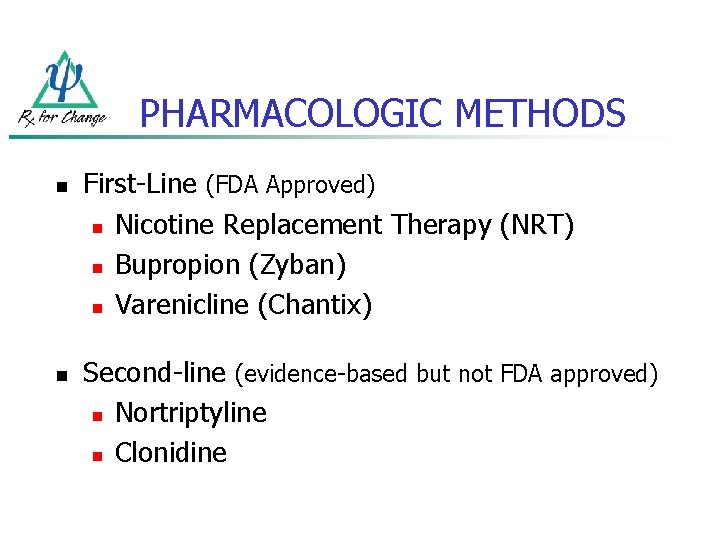
PHARMACOLOGIC METHODS n n First-Line (FDA Approved) n Nicotine Replacement Therapy (NRT) n Bupropion (Zyban) n Varenicline (Chantix) Second-line (evidence-based but not FDA approved) n Nortriptyline n Clonidine
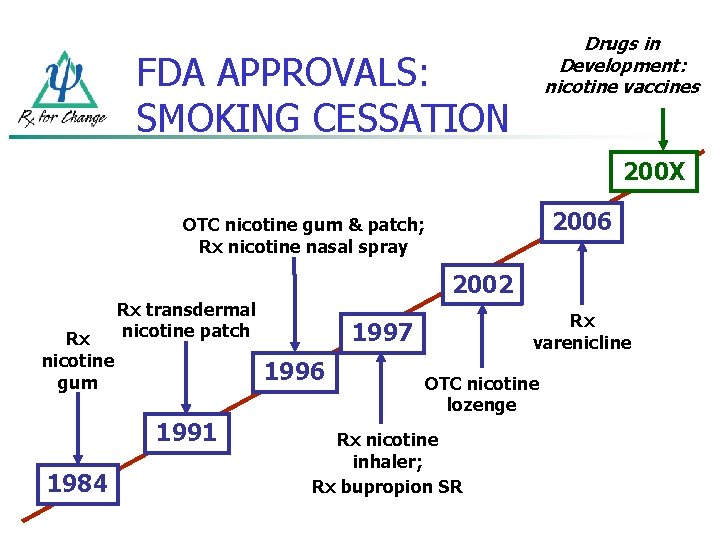
Drugs in Development: nicotine vaccines FDA APPROVALS: SMOKING CESSATION 200 X 2006 OTC nicotine gum & patch; Rx nicotine nasal spray Rx nicotine gum Rx transdermal nicotine patch Rx varenicline 1997 1996 1991 1984 2002 OTC nicotine lozenge Rx nicotine inhaler; Rx bupropion SR
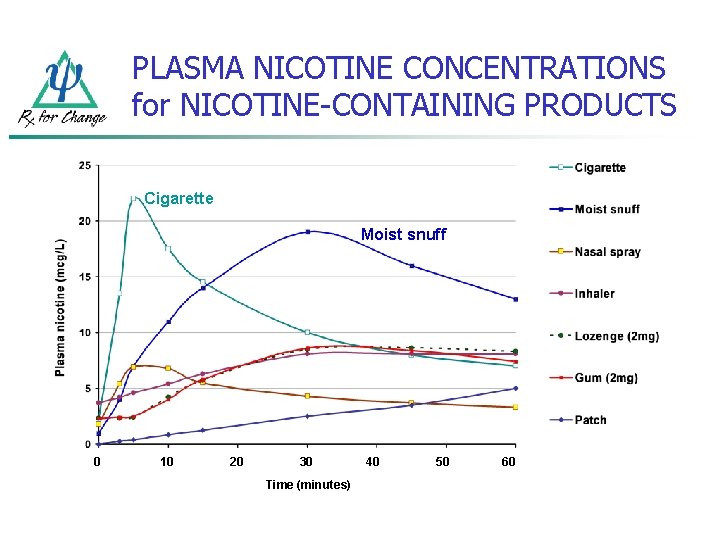
PLASMA NICOTINE CONCENTRATIONS for NICOTINE-CONTAINING PRODUCTS Cigarette Moist snuff 0 10 20 30 Time (minutes) 40 50 60
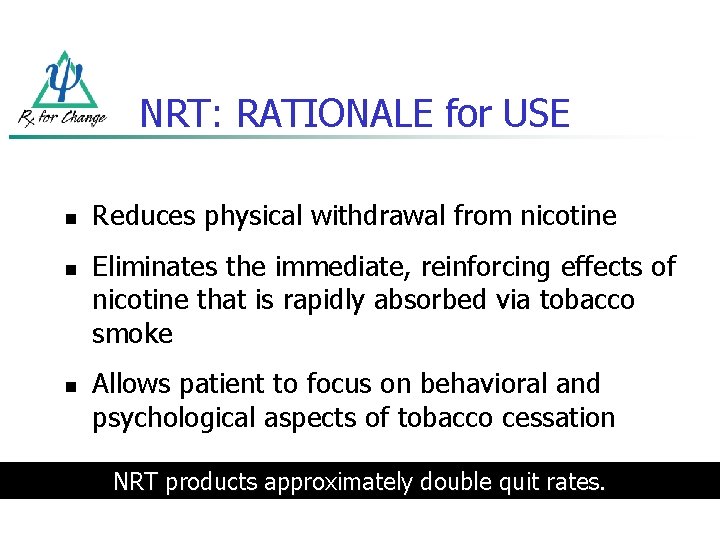
NRT: RATIONALE for USE n n n Reduces physical withdrawal from nicotine Eliminates the immediate, reinforcing effects of nicotine that is rapidly absorbed via tobacco smoke Allows patient to focus on behavioral and psychological aspects of tobacco cessation NRT products approximately double quit rates.
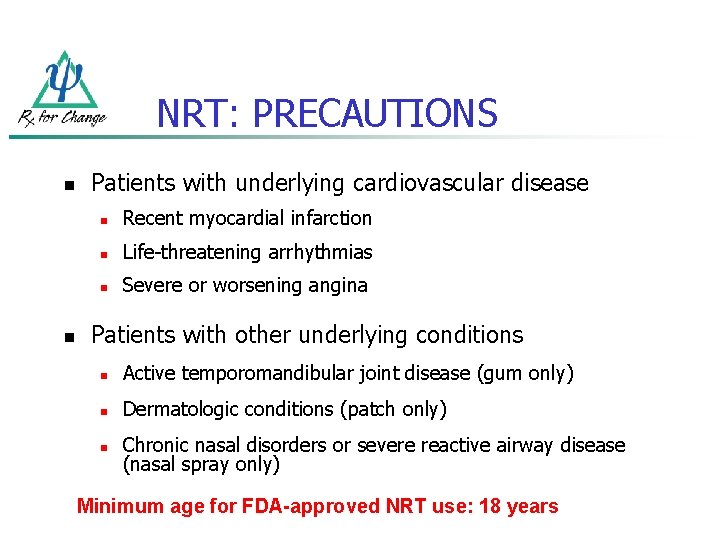
NRT: PRECAUTIONS n n Patients with underlying cardiovascular disease n Recent myocardial infarction n Life-threatening arrhythmias n Severe or worsening angina Patients with other underlying conditions n Active temporomandibular joint disease (gum only) n Dermatologic conditions (patch only) n Chronic nasal disorders or severe reactive airway disease (nasal spray only) Minimum age for FDA-approved NRT use: 18 years
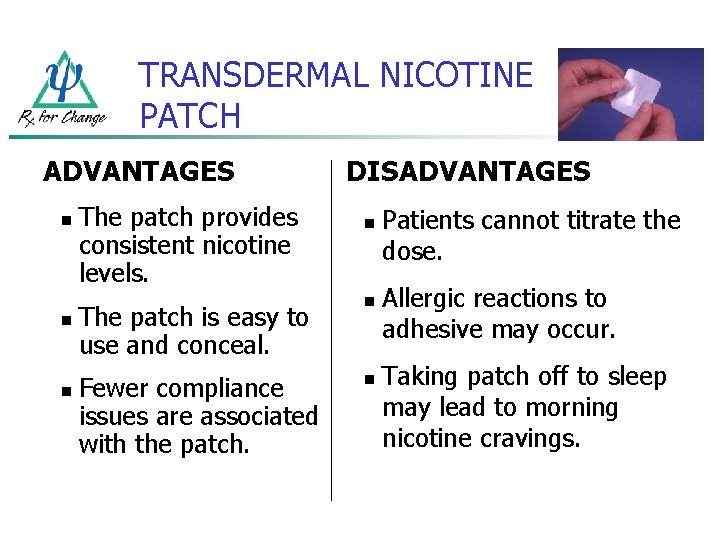
TRANSDERMAL NICOTINE PATCH ADVANTAGES n n n The patch provides consistent nicotine levels. DISADVANTAGES n The patch is easy to use and conceal. n Fewer compliance issues are associated with the patch. n Patients cannot titrate the dose. Allergic reactions to adhesive may occur. Taking patch off to sleep may lead to morning nicotine cravings.
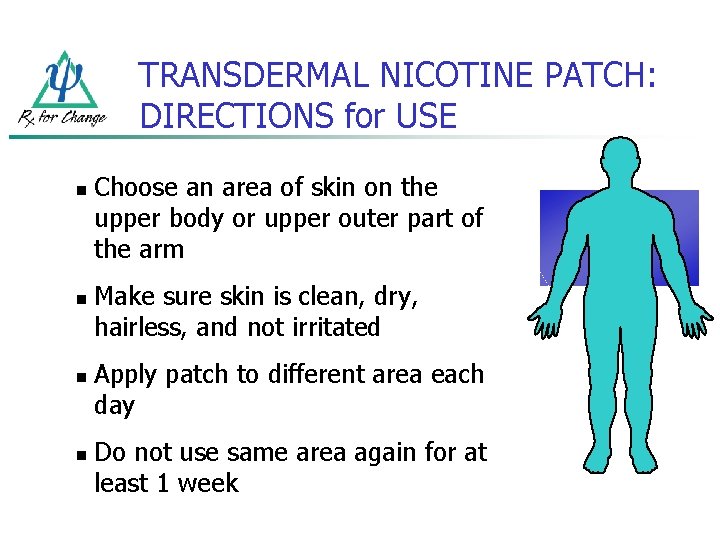
TRANSDERMAL NICOTINE PATCH: DIRECTIONS for USE n n Choose an area of skin on the upper body or upper outer part of the arm Make sure skin is clean, dry, hairless, and not irritated Apply patch to different area each day Do not use same area again for at least 1 week
TRANSDERMAL NICOTINE PATCH: DIRECTIONS for USE (cont’d) Remove patch from protective pouch n Peel off half of the backing from patch n
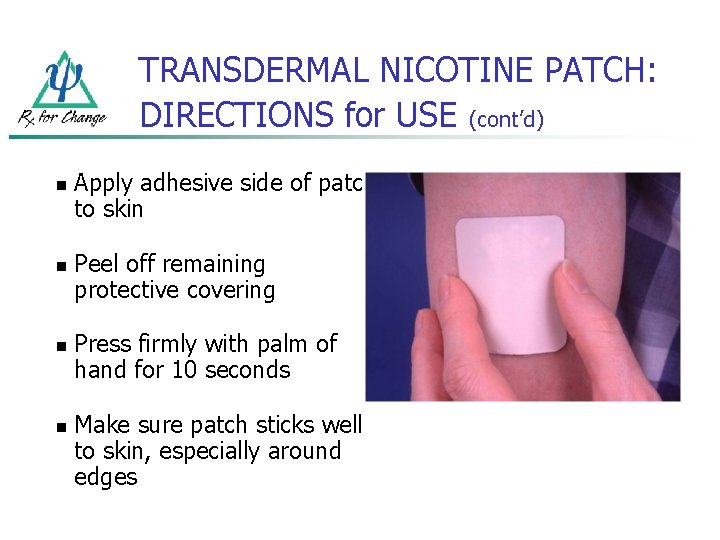
TRANSDERMAL NICOTINE PATCH: DIRECTIONS for USE (cont’d) n n Apply adhesive side of patch to skin Peel off remaining protective covering Press firmly with palm of hand for 10 seconds Make sure patch sticks well to skin, especially around edges
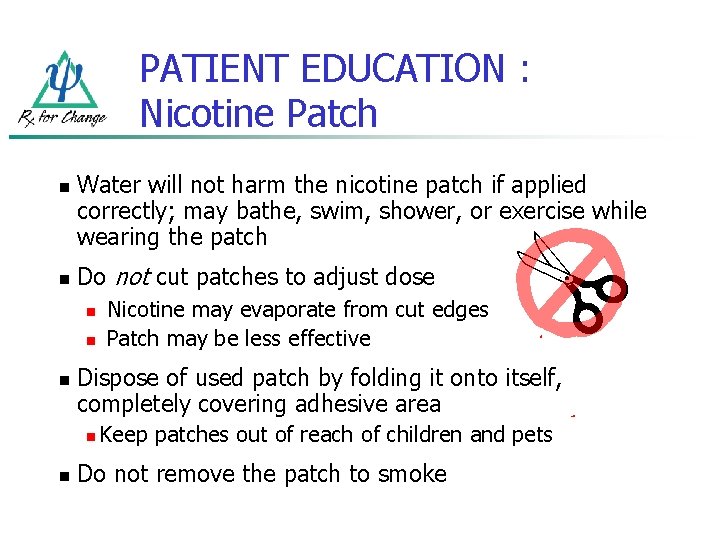
PATIENT EDUCATION : Nicotine Patch n n Water will not harm the nicotine patch if applied correctly; may bathe, swim, shower, or exercise while wearing the patch Do not cut patches to adjust dose n n n Dispose of used patch by folding it onto itself, completely covering adhesive area n n Nicotine may evaporate from cut edges Patch may be less effective Keep patches out of reach of children and pets Do not remove the patch to smoke
NICOTINE GUM & LOZENGE ADVANTAGES n n n DISADVANTAGES Patients can titrate therapy to manage withdrawal symptoms n May satisfy oral cravings n May delay weight gain n Gastrointestinal side effects may be bothersome Gum may be socially unacceptable and difficult to use with dentures Patients must use proper chewing technique to minimize adverse effects
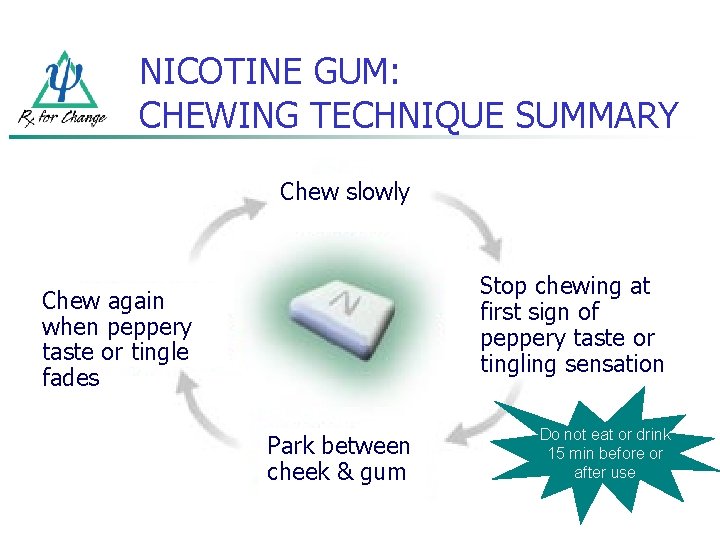
NICOTINE GUM: CHEWING TECHNIQUE SUMMARY Chew slowly Stop chewing at first sign of peppery taste or tingling sensation Chew again when peppery taste or tingle fades Park between cheek & gum Do not eat or drink 15 min before or after use
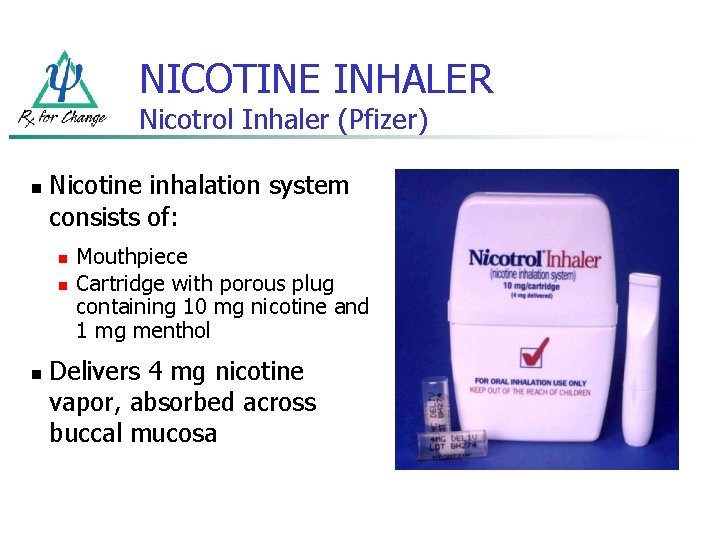
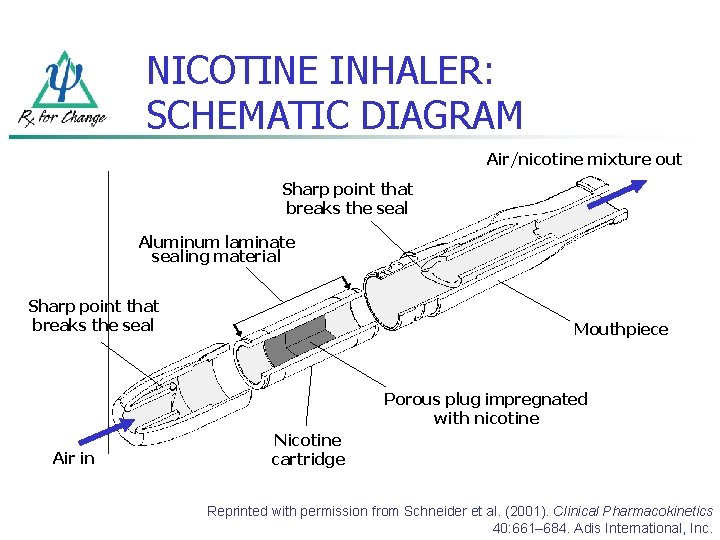
NICOTINE INHALER Nicotrol Inhaler (Pfizer) n Nicotine inhalation system consists of: n n n Mouthpiece Cartridge with porous plug containing 10 mg nicotine and 1 mg menthol Delivers 4 mg nicotine vapor, absorbed across buccal mucosa
NICOTINE INHALER: SCHEMATIC DIAGRAM Air/nicotine mixture out Sharp point that breaks the seal Aluminum laminate sealing material Sharp point that breaks the seal Mouthpiece Porous plug impregnated with nicotine Air in Nicotine cartridge Reprinted with permission from Schneider et al. (2001). Clinical Pharmacokinetics 40: 661– 684. Adis International, Inc.
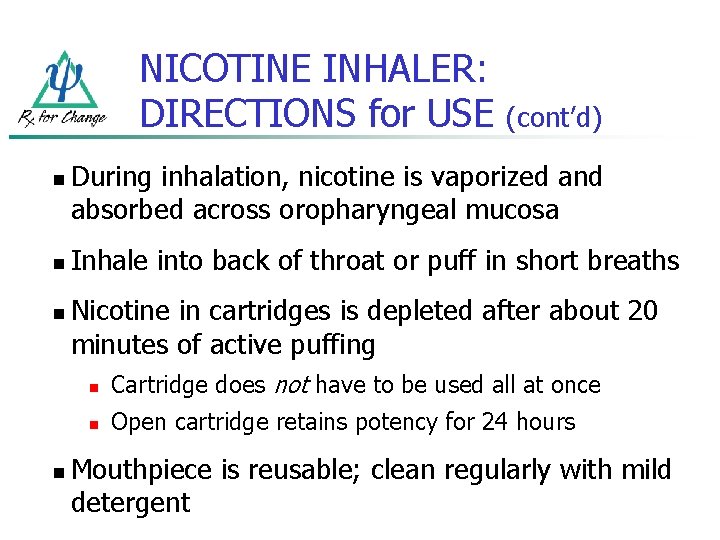
NICOTINE INHALER: DIRECTIONS for USE n n (cont’d) During inhalation, nicotine is vaporized and absorbed across oropharyngeal mucosa Inhale into back of throat or puff in short breaths Nicotine in cartridges is depleted after about 20 minutes of active puffing n Cartridge does not have to be used all at once n Open cartridge retains potency for 24 hours Mouthpiece is reusable; clean regularly with mild detergent
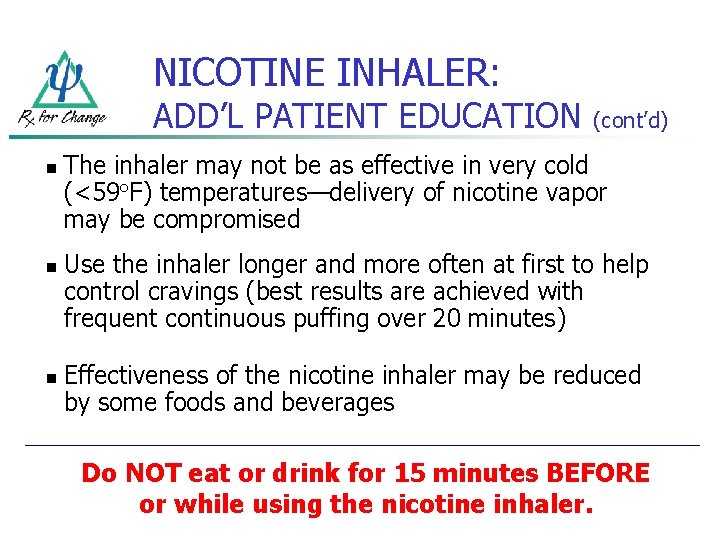
NICOTINE INHALER: ADD’L PATIENT EDUCATION n n n (cont’d) The inhaler may not be as effective in very cold (<59 F) temperatures—delivery of nicotine vapor may be compromised Use the inhaler longer and more often at first to help control cravings (best results are achieved with frequent continuous puffing over 20 minutes) Effectiveness of the nicotine inhaler may be reduced by some foods and beverages Do NOT eat or drink for 15 minutes BEFORE or while using the nicotine inhaler.
NICOTINE INHALER ADVANTAGES n n Patients can easily titrate therapy to manage withdrawal symptoms. The inhaler mimics hand-to-mouth ritual of smoking. DISADVANTAGES n n n Initial throat or mouth irritation can be bothersome. Cartridges should not be stored in very warm conditions or used in very cold conditions. Patients with underlying bronchospastic disease must use the inhaler with caution.
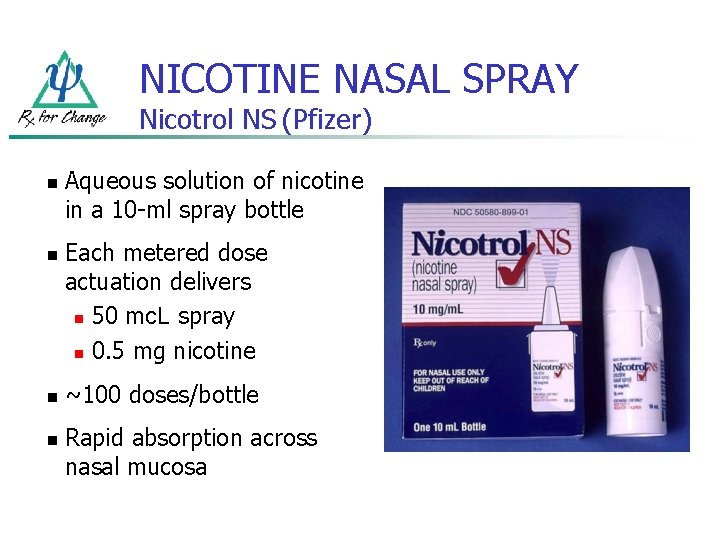
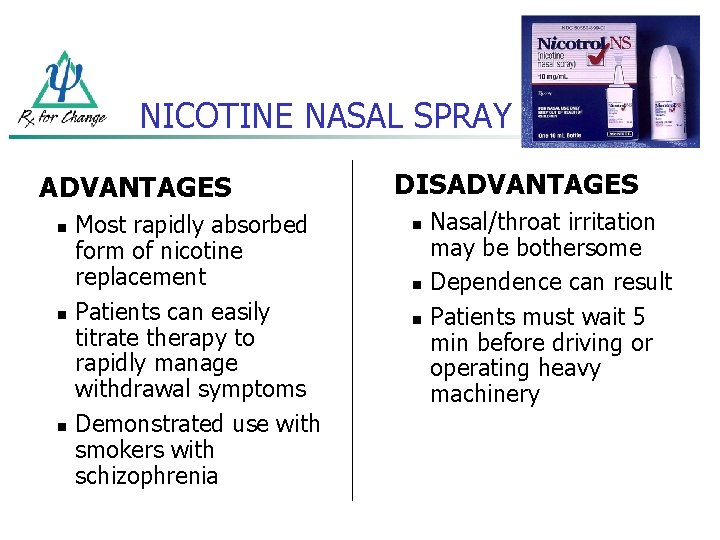
NICOTINE NASAL SPRAY Nicotrol NS (Pfizer) n n Aqueous solution of nicotine in a 10 -ml spray bottle Each metered dose actuation delivers n 50 mc. L spray n 0. 5 mg nicotine ~100 doses/bottle Rapid absorption across nasal mucosa
NICOTINE NASAL SPRAY: ADDITIONAL PATIENT EDUCATION n What to expect (first week): n n n Side effects should lessen over a few days n n Hot peppery feeling in back of throat or nose Sneezing Coughing Watery eyes Runny nose Regular use during the first week (or prior to quit date) will help develop tolerance to the irritant effects of the spray If side effects do not decrease after a week, contact health care provider
NICOTINE NASAL SPRAY ADVANTAGES n n n Most rapidly absorbed form of nicotine replacement Patients can easily titrate therapy to rapidly manage withdrawal symptoms Demonstrated use with smokers with schizophrenia DISADVANTAGES n n n Nasal/throat irritation may be bothersome Dependence can result Patients must wait 5 min before driving or operating heavy machinery
NRT: REDUCTION of DOSE n Dose tapering is not required when discontinuing treatment n Strategies for discontinuing use: n n Use lower dose patch/gum/lozenge Chew gum for 10– 15 min instead of 30 min Reduce the number of pieces used daily Substitute ordinary chewing gum/lozenge for NRT If patients experience significant withdrawal symptoms during tapering or discontinuing NRT, increase the dose and consider extending treatment.
BUPROPION: MECHANISM OF ACTION n n Atypical antidepressant thought to affect levels of various brain neurotransmitters n Dopamine n Norepinephrine Clinical effects n craving for cigarettes n symptoms of nicotine withdrawal
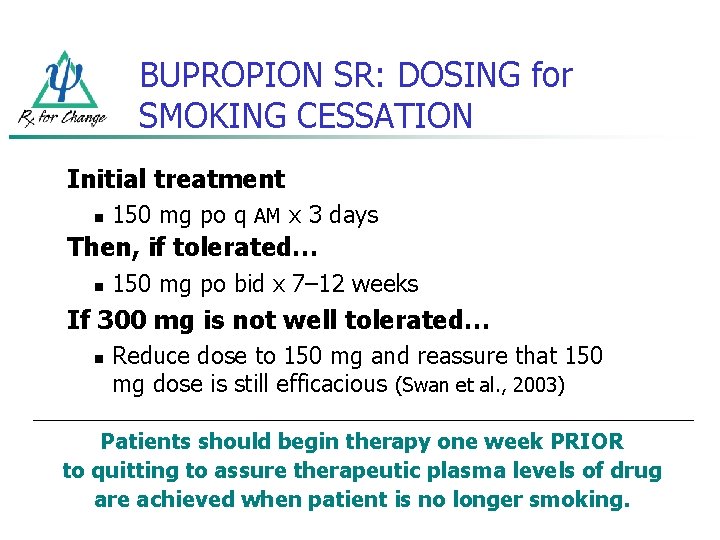
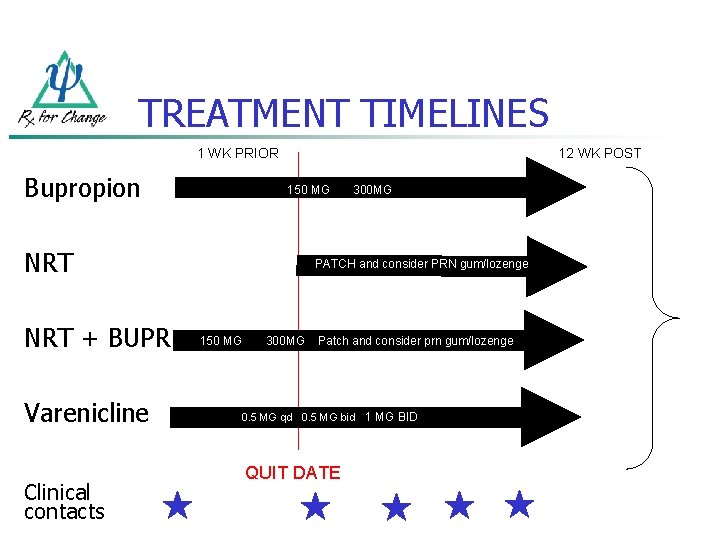
BUPROPION SR: DOSING for SMOKING CESSATION Initial treatment n 150 mg po q AM x 3 days Then, if tolerated… n 150 mg po bid x 7– 12 weeks If 300 mg is not well tolerated… n Reduce dose to 150 mg and reassure that 150 mg dose is still efficacious (Swan et al. , 2003) Patients should begin therapy one week PRIOR to quitting to assure therapeutic plasma levels of drug are achieved when patient is no longer smoking.
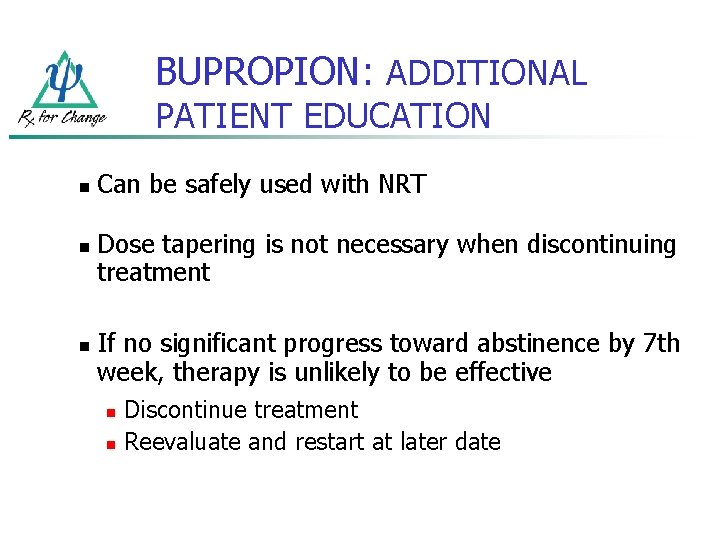
BUPROPION: ADDITIONAL PATIENT EDUCATION n n n Can be safely used with NRT Dose tapering is not necessary when discontinuing treatment If no significant progress toward abstinence by 7 th week, therapy is unlikely to be effective n n Discontinue treatment Reevaluate and restart at later date
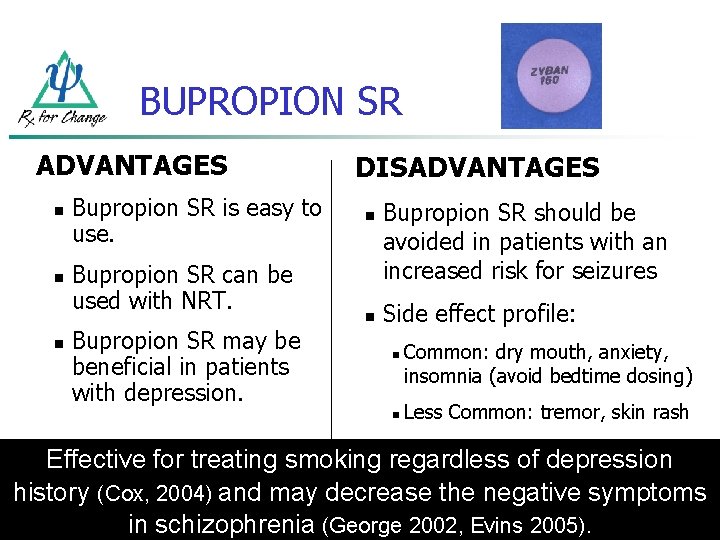
BUPROPION SR ADVANTAGES n n n Bupropion SR is easy to use. Bupropion SR can be used with NRT. Bupropion SR may be beneficial in patients with depression. DISADVANTAGES n n Bupropion SR should be avoided in patients with an increased risk for seizures Side effect profile: n n Common: dry mouth, anxiety, insomnia (avoid bedtime dosing) Less Common: tremor, skin rash Effective for treating smoking regardless of depression history (Cox, 2004) and may decrease the negative symptoms in schizophrenia (George 2002, Evins 2005).
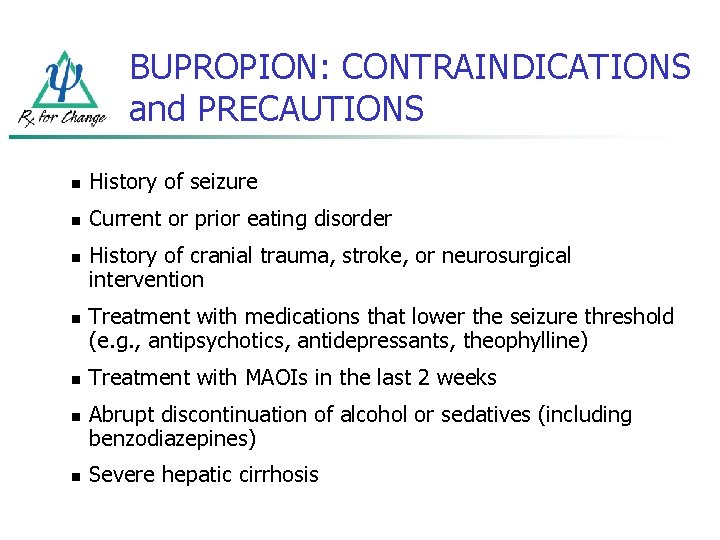
BUPROPION: CONTRAINDICATIONS and PRECAUTIONS n History of seizure n Current or prior eating disorder n n n History of cranial trauma, stroke, or neurosurgical intervention Treatment with medications that lower the seizure threshold (e. g. , antipsychotics, antidepressants, theophylline) Treatment with MAOIs in the last 2 weeks Abrupt discontinuation of alcohol or sedatives (including benzodiazepines) Severe hepatic cirrhosis
BUPROPION USE in OTHER PSYCHIATRIC DISORDERS n n n Bupropion commonly used for treating ADHD in patients with comorbid substance abuse (off label use) Bupropion for smoking cessation found to be well tolerated in patients with schizophrenia who are stabilized on an adequate antipsychotic regime. With bipolar disorder, bupropion suggested to have lower risk of activation of hypo/manic state relative to other antidepressants. Consider using a lower dose (150 mg) in selected cases. Monitor closely.
VARENICLINE: MECHANISM of ACTION n n Binds with high affinity and selectivity at 4 2 neuronal nicotinic acetylcholine receptors n Stimulates low-level agonist activity n Competitively inhibits binding of nicotine Clinical effects n n symptoms of nicotine withdrawal Blocks dopaminergic stimulation responsible for reinforcement & reward associated with smoking
VARENICLINE: PHARMACOKINETICS n n Absorption: Virtually complete after oral administration; not affected by food Metabolism: Undergoes minimal hepatic metabolism Elimination: Primarily renal through glomerular filtration and active tubular secretion; 92% excreted unchanged in urine Half-life: 24 hours
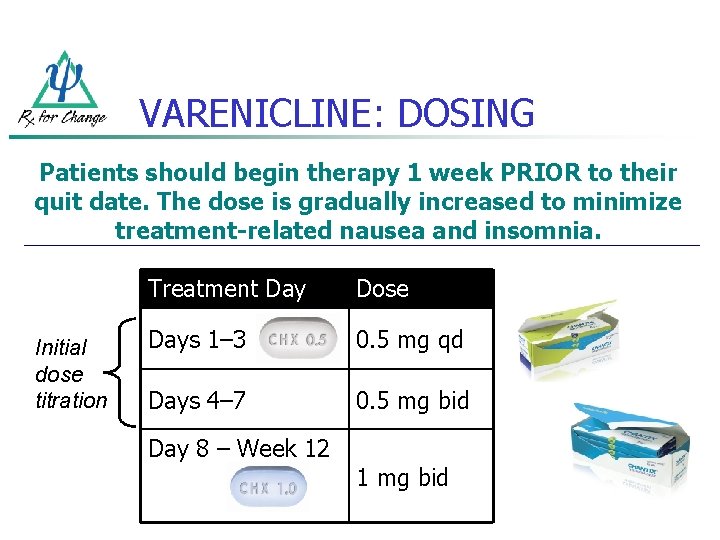
VARENICLINE: DOSING Patients should begin therapy 1 week PRIOR to their quit date. The dose is gradually increased to minimize treatment-related nausea and insomnia. Initial dose titration Treatment Day Dose Days 1– 3 0. 5 mg qd Days 4– 7 0. 5 mg bid Day 8 – Week 12 1 mg bid
VARENICLINE: ADDITIONAL PATIENT EDUCATION n n Doses should be taken after eating, with a full glass of water Nausea and insomnia are side effects that are usually temporary n n n If symptoms persist, notify your health care provider Dose tapering not necessary when discontinuing treatment Stop taking varenicline and contact a health-care provider immediately if agitation, depressed mood, suicidal thoughts or changes in behavior are noted
VARENICLINE: SUMMARY ADVANTAGES n n n Varenicline is an oral formulation with twice-aday dosing. DISADVANTAGES n n n Varenicline offers a new mechanism of action for persons who previously failed using other medications. Early industry-sponsored trials suggest this agent is superior to bupropion SR. Common side effects: n Nausea (in up to 33% of pts) Sleep disturbances (insomnia, abnormal dreams) n Constipation n Flatulence n Vomiting Post-marketing surveillance data indicate potential for neuropsychiatric symptoms.
FDA PUBLIC ADVISORY n Pfizer added warning label to package insert advising patients and caregivers that: n n the patient should stop taking CHANTIX and contact their healthcare provider immediately if agitation, depressed mood, or changes in behavior that are not typical for them are observed, or if the patient develops suicidal ideation or suicidal thoughts. Ongoing investigation http: //www. fda. gov/cder/drug/early_comm/varenicline. htm http: //www. fda. gov/medwatch/safety/2007/Chantix_PI. pdf
VARENICLINE: PRECAUTIONS n n n Not combined with NRT – increase in side effects including nausea, headache, vomiting, fatigue, etc. Not recommended for youth < 18 yrs old Dose adjustment may be required in presence of severe renal insufficiency (is removed by hemodialysis)
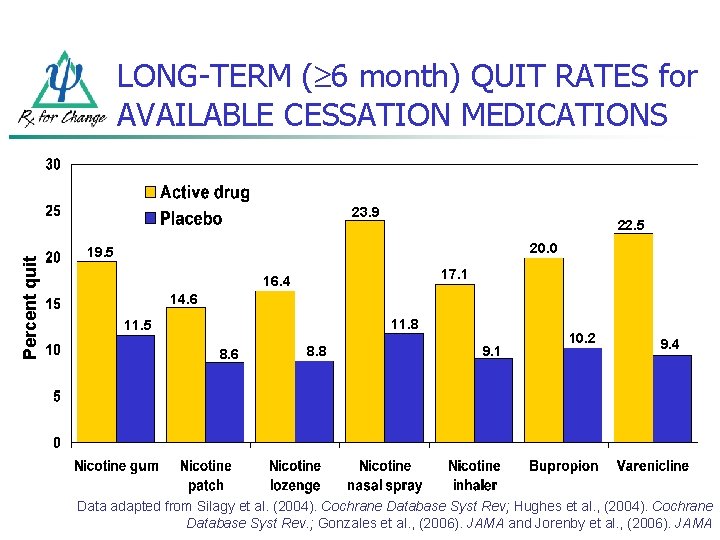
LONG-TERM ( 6 month) QUIT RATES for AVAILABLE CESSATION MEDICATIONS Percent quit 23. 9 22. 5 20. 0 19. 5 17. 1 16. 4 14. 6 11. 8 11. 5 8. 6 8. 8 9. 1 10. 2 9. 4 Data adapted from Silagy et al. (2004). Cochrane Database Syst Rev; Hughes et al. , (2004). Cochrane Database Syst Rev. ; Gonzales et al. , (2006). JAMA and Jorenby et al. , (2006). JAMA
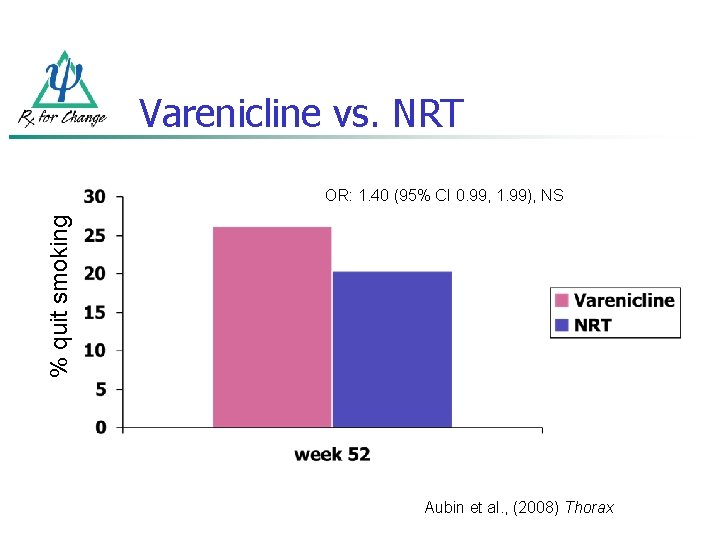
Varenicline vs. NRT % quit smoking OR: 1. 40 (95% CI 0. 99, 1. 99), NS Aubin et al. , (2008) Thorax
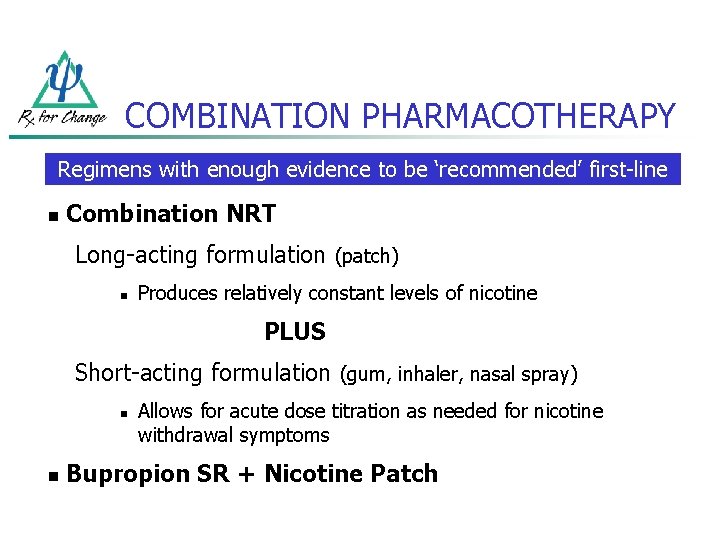
COMBINATION PHARMACOTHERAPY Regimens with enough evidence to be ‘recommended’ first-line n Combination NRT Long-acting formulation (patch) n Produces relatively constant levels of nicotine PLUS Short-acting formulation (gum, inhaler, nasal spray) n n Allows for acute dose titration as needed for nicotine withdrawal symptoms Bupropion SR + Nicotine Patch
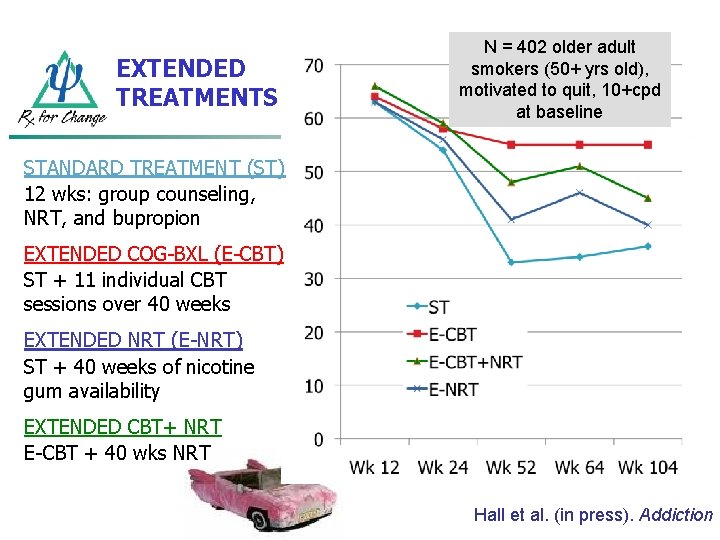
EXTENDED TREATMENTS N = 402 older adult smokers (50+ yrs old), motivated to quit, 10+cpd at baseline STANDARD TREATMENT (ST) 12 wks: group counseling, NRT, and bupropion EXTENDED COG-BXL (E-CBT) ST + 11 individual CBT sessions over 40 weeks EXTENDED NRT (E-NRT) ST + 40 weeks of nicotine gum availability EXTENDED CBT+ NRT E-CBT + 40 wks NRT Hall et al. (in press). Addiction
TREATMENT TIMELINES 1 WK PRIOR Bupropion 12 WK POST 150 MG NRT + BUPR Varenicline Clinical contacts 300 MG PATCH and consider PRN gum/lozenge 150 MG 300 MG Patch and consider prn gum/lozenge 0. 5 MG qd 0. 5 MG bid 1 MG BID QUIT DATE
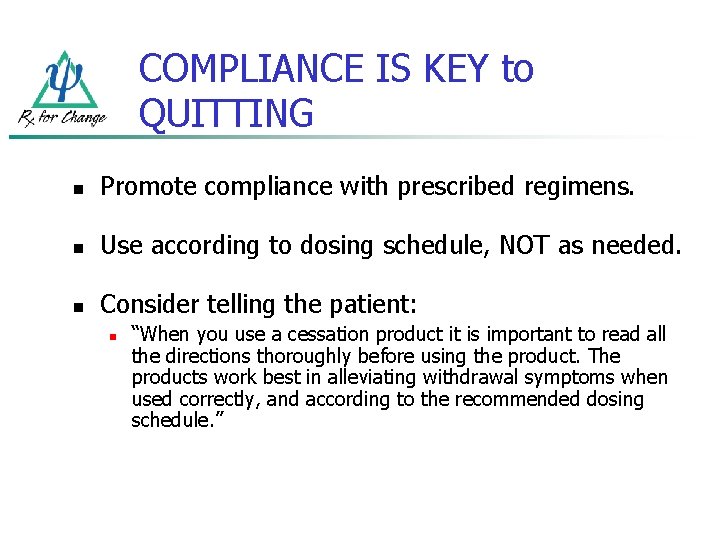
COMPLIANCE IS KEY to QUITTING n Promote compliance with prescribed regimens. n Use according to dosing schedule, NOT as needed. n Consider telling the patient: n “When you use a cessation product it is important to read all the directions thoroughly before using the product. The products work best in alleviating withdrawal symptoms when used correctly, and according to the recommended dosing schedule. ”
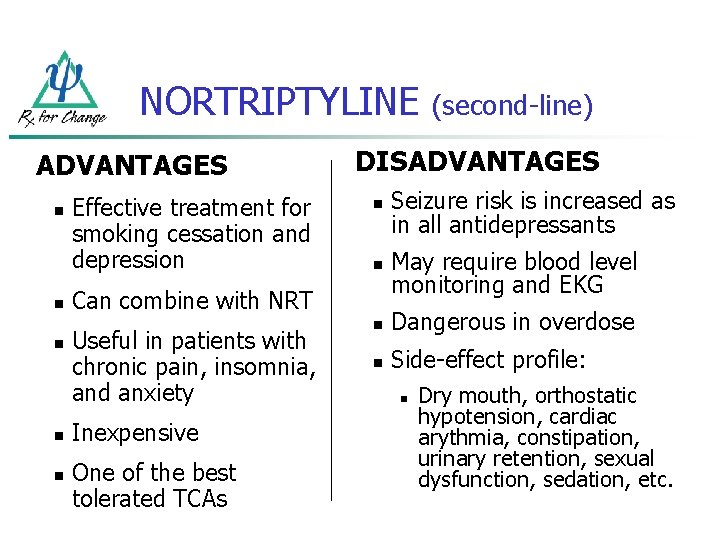
NORTRIPTYLINE ADVANTAGES n n n Effective treatment for smoking cessation and depression DISADVANTAGES n Seizure risk is increased as in all antidepressants n May require blood level monitoring and EKG n Dangerous in overdose n Side-effect profile: Can combine with NRT Useful in patients with chronic pain, insomnia, and anxiety Inexpensive One of the best tolerated TCAs (second-line) n Dry mouth, orthostatic hypotension, cardiac arythmia, constipation, urinary retention, sexual dysfunction, sedation, etc.
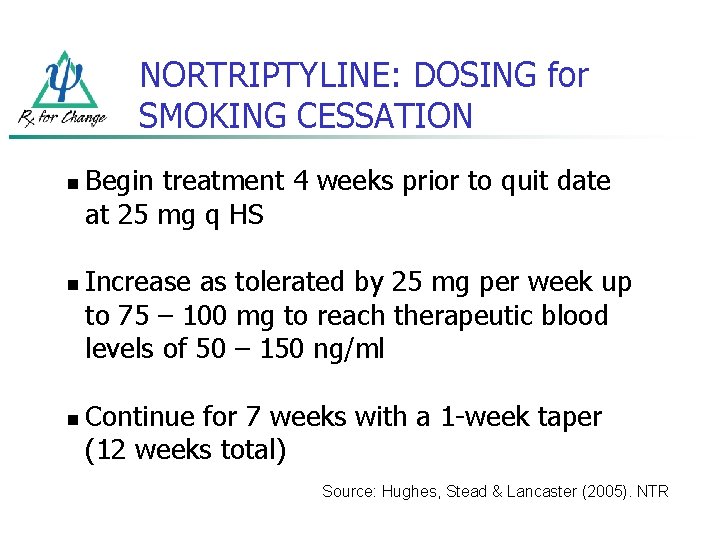
NORTRIPTYLINE: DOSING for SMOKING CESSATION n n n Begin treatment 4 weeks prior to quit date at 25 mg q HS Increase as tolerated by 25 mg per week up to 75 – 100 mg to reach therapeutic blood levels of 50 – 150 ng/ml Continue for 7 weeks with a 1 -week taper (12 weeks total) Source: Hughes, Stead & Lancaster (2005). NTR
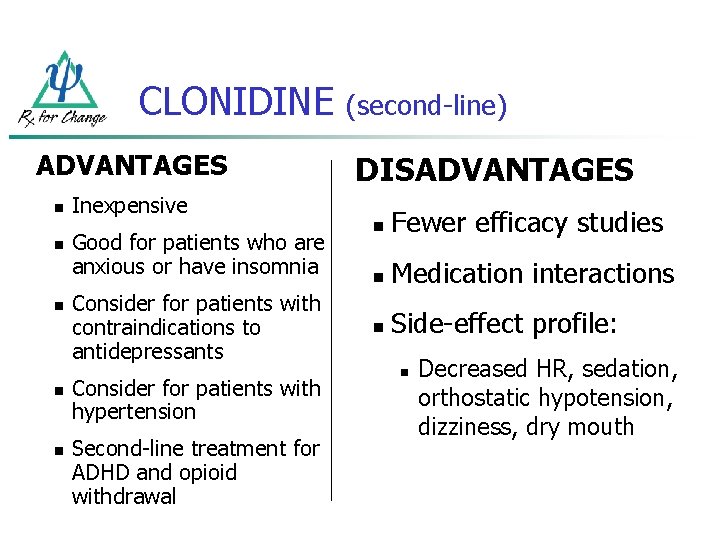
CLONIDINE ADVANTAGES n n n Inexpensive Good for patients who are anxious or have insomnia Consider for patients with contraindications to antidepressants Consider for patients with hypertension Second-line treatment for ADHD and opioid withdrawal (second-line) DISADVANTAGES n Fewer efficacy studies n Medication interactions n Side-effect profile: n Decreased HR, sedation, orthostatic hypotension, dizziness, dry mouth
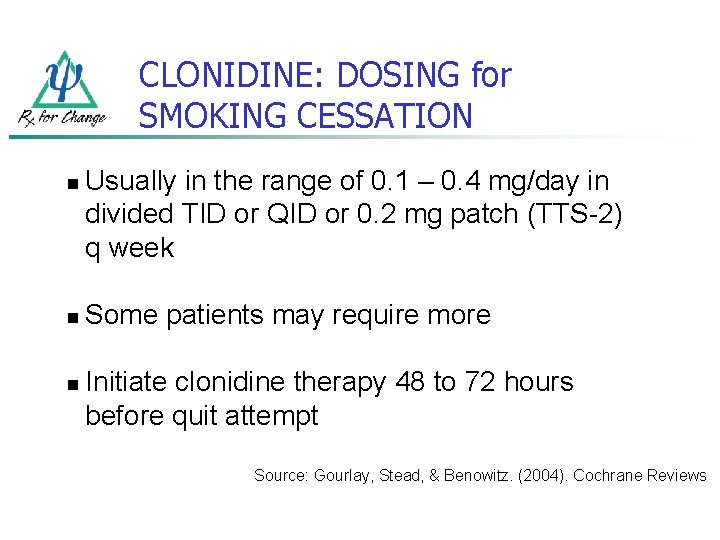
CLONIDINE: DOSING for SMOKING CESSATION n n n Usually in the range of 0. 1 – 0. 4 mg/day in divided TID or QID or 0. 2 mg patch (TTS-2) q week Some patients may require more Initiate clonidine therapy 48 to 72 hours before quit attempt Source: Gourlay, Stead, & Benowitz. (2004). Cochrane Reviews
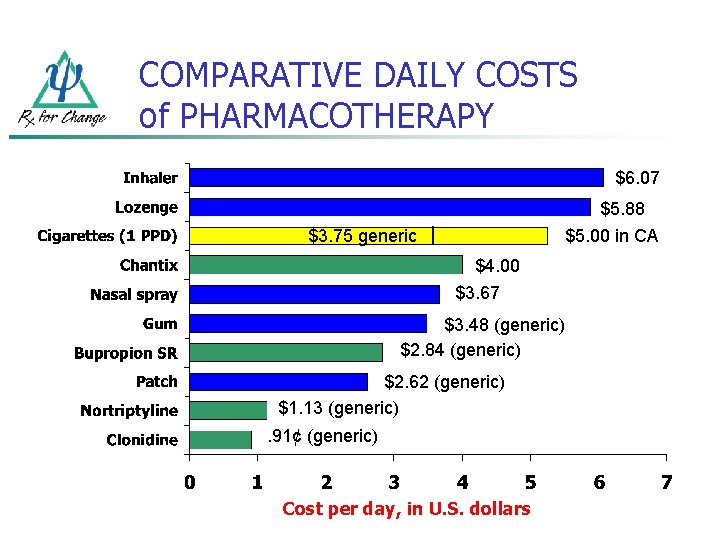
COMPARATIVE DAILY COSTS of PHARMACOTHERAPY $6. 07 $5. 88 $3. 75 generic $5. 00 in CA $4. 00 $3. 67 $3. 48 (generic) $2. 84 (generic) $2. 62 (generic) $1. 13 (generic). 91¢ (generic) Cost per day, in U. S. dollars
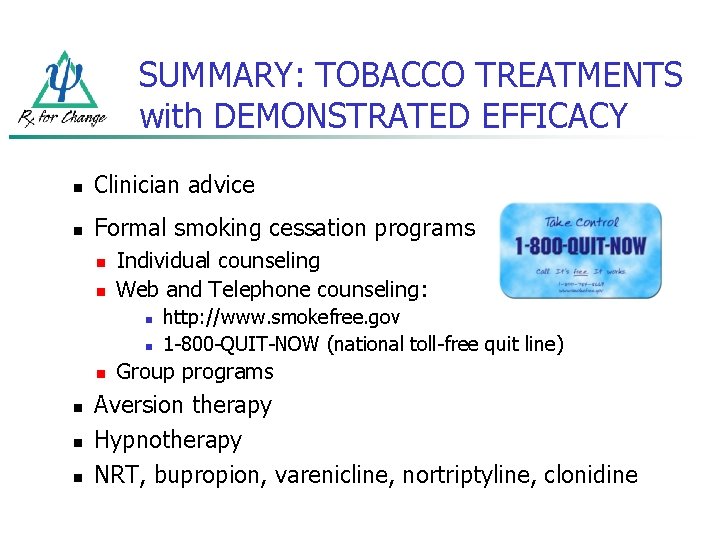
SUMMARY: TOBACCO TREATMENTS with DEMONSTRATED EFFICACY n Clinician advice n Formal smoking cessation programs n n Individual counseling Web and Telephone counseling: n n n http: //www. smokefree. gov 1 -800 -QUIT-NOW (national toll-free quit line) Group programs Aversion therapy Hypnotherapy NRT, bupropion, varenicline, nortriptyline, clonidine
TOBACCO TREATMENTS LACKING EVIDENCE of EFFICACY n SSRIs and SNRI n Herbal supplements n Anxiolytics: n Lobeline n Massage Therapy n Acupuncture n Nicotine Anonymous n n Sedative, hypnotics, buspirone Homeopathic treatments
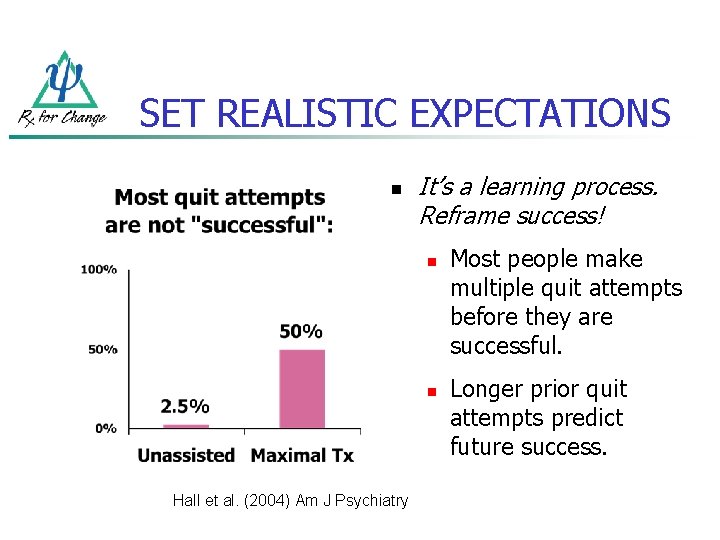
SET REALISTIC EXPECTATIONS n It’s a learning process. Reframe success! n n Hall et al. (2004) Am J Psychiatry Most people make multiple quit attempts before they are successful. Longer prior quit attempts predict future success.