
Pharmacokinetics and Drug Interactions HAIVN Harvard Medical School
- Slides: 33
Pharmacokinetics and Drug Interactions HAIVN Harvard Medical School AIDS Initiative in Vietnam 1
Learning Objectives By the end of this session, participants will be able to: n Describe 4 components of pharmacokinetics n Explain importance of the liver’s P 450 system in drug metabolism n Explain how an inducer and an inhibitor affect the blood level of CYP 450 substrates n Describe the most important drug-drug interactions 2
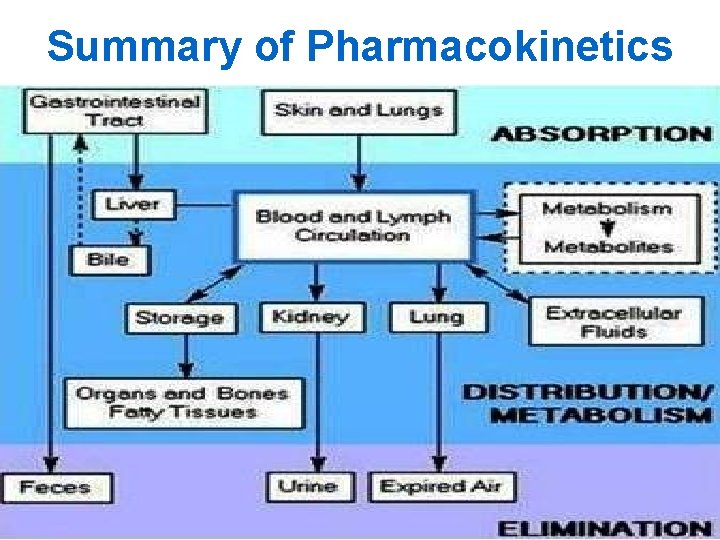
What is Pharmacokinetics? n The study of how drugs enter, interact with, and leave the body, including: • • n Absorption Distribution Metabolism Excretion Or, “what the body does to the drug” 3
Drug Absorption n The movement of a drug from its site of administration (stomach, vein, skin, etc. ) into the bloodstream 4
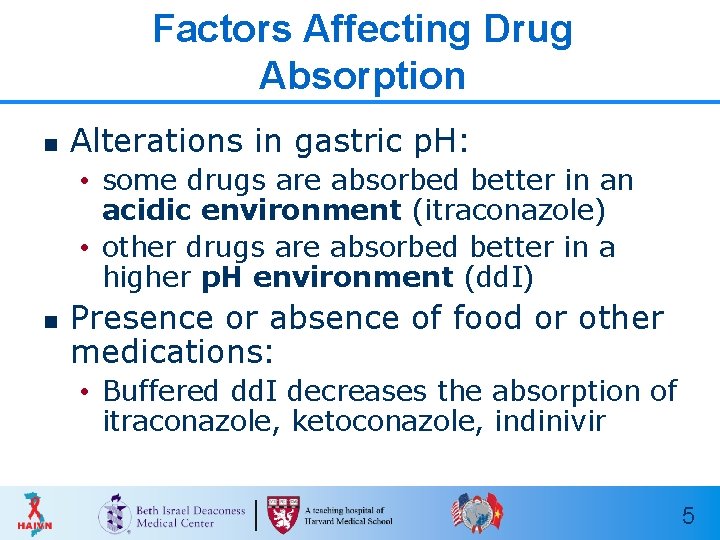
Factors Affecting Drug Absorption n Alterations in gastric p. H: • some drugs are absorbed better in an acidic environment (itraconazole) • other drugs are absorbed better in a higher p. H environment (dd. I) n Presence or absence of food or other medications: • Buffered dd. I decreases the absorption of itraconazole, ketoconazole, indinivir 5
Drug Distribution n Following absorption or systemic administration into the bloodstream, a drug distributes into interstitial and intracellular fluids and then finally into the body tissue 6
Factors Affecting Drug Distribution n Cardiac output and blood flow to organs and tissues Drug permeability and accumulation in tissues Protein binding: • Protein binding varies among ARVs • Protein levels may vary between and within patients 7
What is Drug Metabolism? n The process of transforming active drugs into inactive metabolites that can be more readily excreted from the body 8
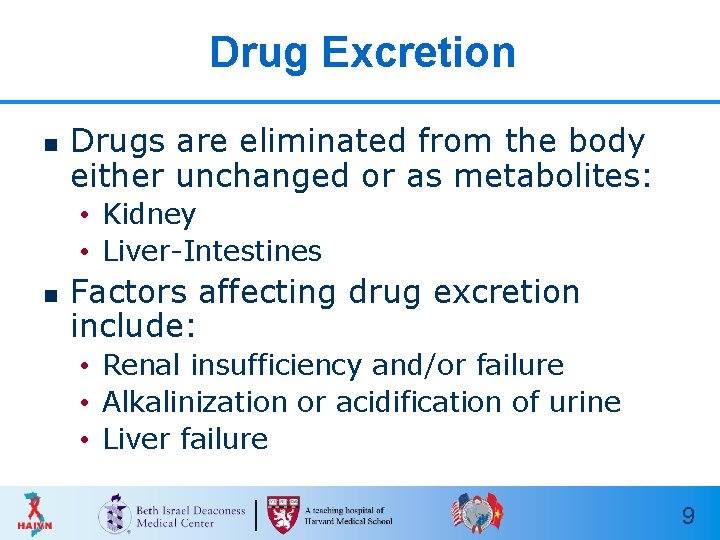
Drug Excretion n Drugs are eliminated from the body either unchanged or as metabolites: • Kidney • Liver-Intestines n Factors affecting drug excretion include: • Renal insufficiency and/or failure • Alkalinization or acidification of urine • Liver failure 9
Summary of Pharmacokinetics 10 10
Role of CYP 450 in Metabolism 11
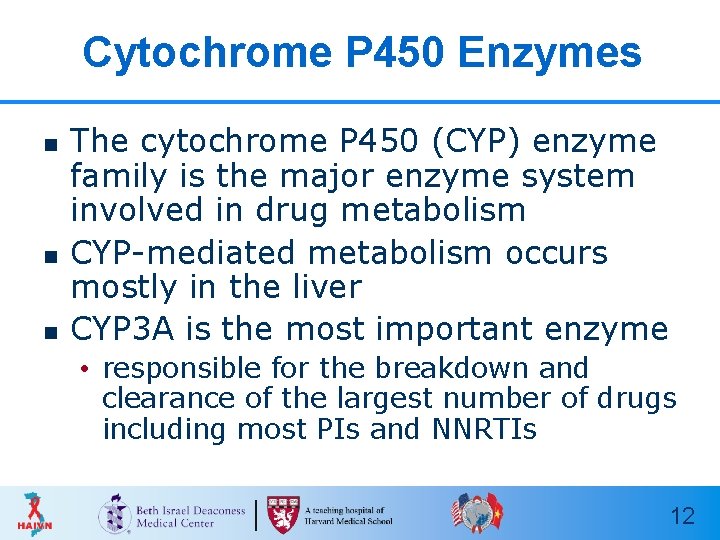
Cytochrome P 450 Enzymes n n n The cytochrome P 450 (CYP) enzyme family is the major enzyme system involved in drug metabolism CYP-mediated metabolism occurs mostly in the liver CYP 3 A is the most important enzyme • responsible for the breakdown and clearance of the largest number of drugs including most PIs and NNRTIs 12
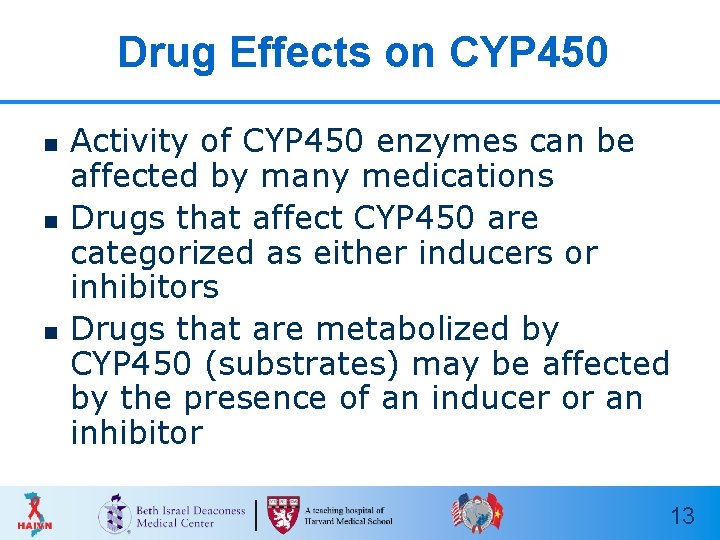
Drug Effects on CYP 450 n n n Activity of CYP 450 enzymes can be affected by many medications Drugs that affect CYP 450 are categorized as either inducers or inhibitors Drugs that are metabolized by CYP 450 (substrates) may be affected by the presence of an inducer or an inhibitor 13
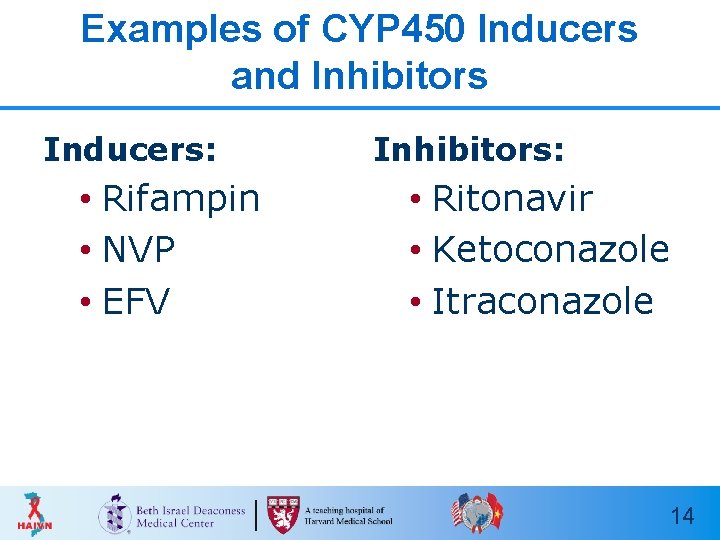
Examples of CYP 450 Inducers and Inhibitors Inducers: • Rifampin • NVP • EFV Inhibitors: • Ritonavir • Ketoconazole • Itraconazole 14
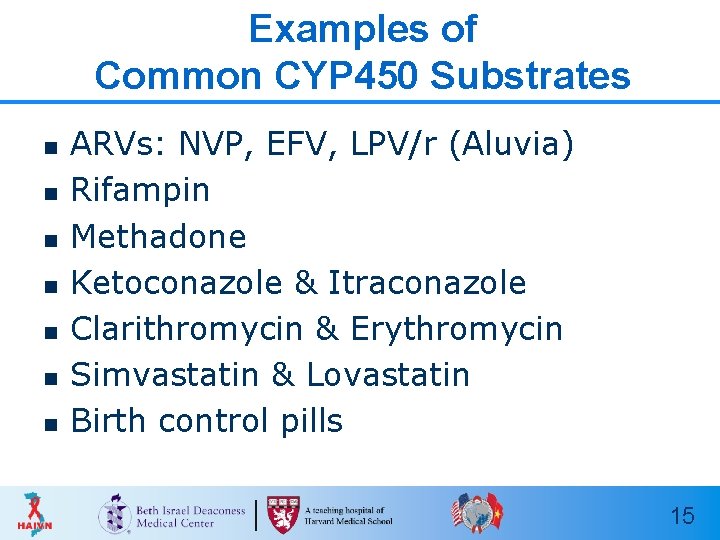
Examples of Common CYP 450 Substrates n n n n ARVs: NVP, EFV, LPV/r (Aluvia) Rifampin Methadone Ketoconazole & Itraconazole Clarithromycin & Erythromycin Simvastatin & Lovastatin Birth control pills 15
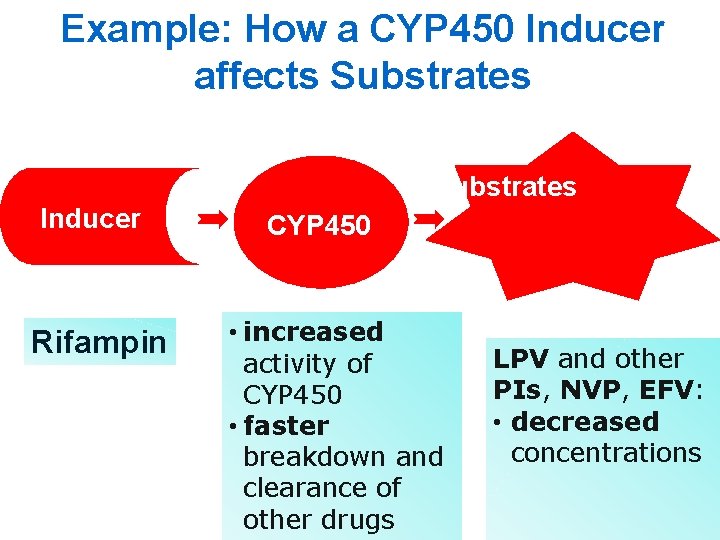
Example: How a CYP 450 Inducer affects Substrates Inducer Rifampin Substrates CYP 450 • increased activity of CYP 450 • faster breakdown and clearance of other drugs LPV and other PIs, NVP, EFV: • decreased concentrations 16
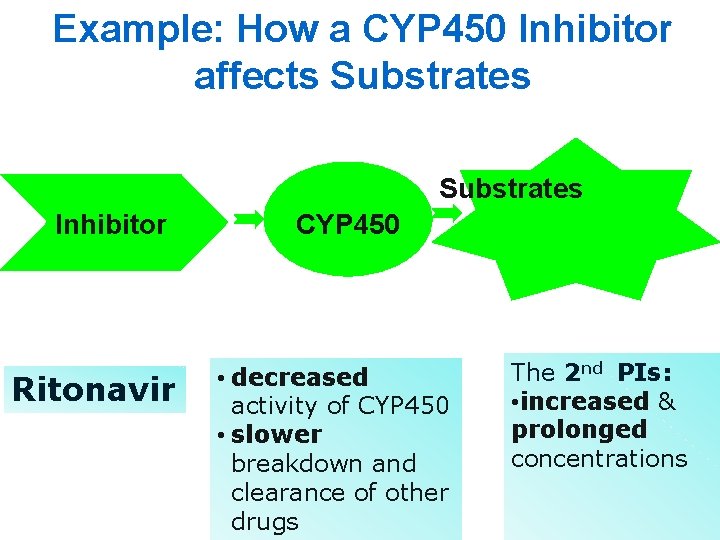
Example: How a CYP 450 Inhibitor affects Substrates Inhibitor Ritonavir CYP 450 • decreased activity of CYP 450 • slower breakdown and clearance of other drugs The 2 nd PIs: • increased & prolonged concentrations 17
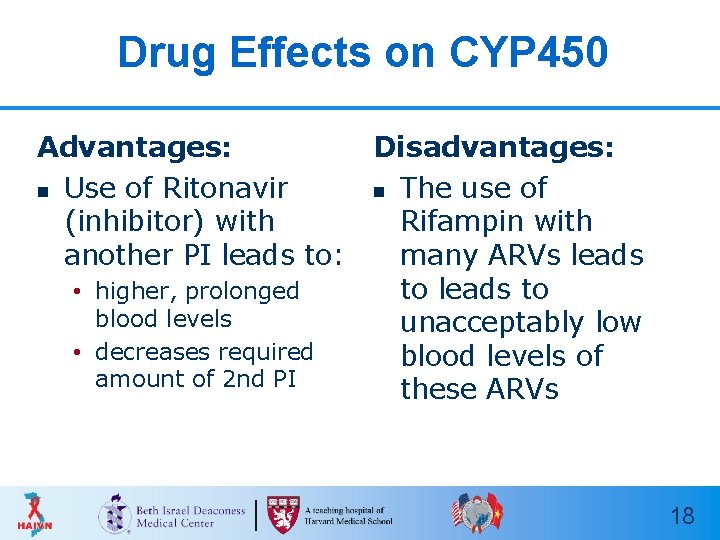
Drug Effects on CYP 450 Advantages: n Use of Ritonavir (inhibitor) with another PI leads to: • higher, prolonged blood levels • decreases required amount of 2 nd PI Disadvantages: n The use of Rifampin with many ARVs leads to unacceptably low blood levels of these ARVs 18
Key Drug Interactions with ARVs 19
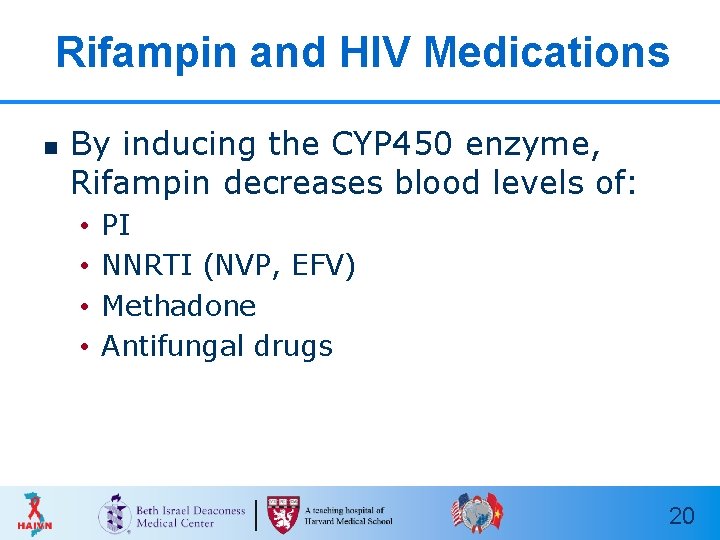
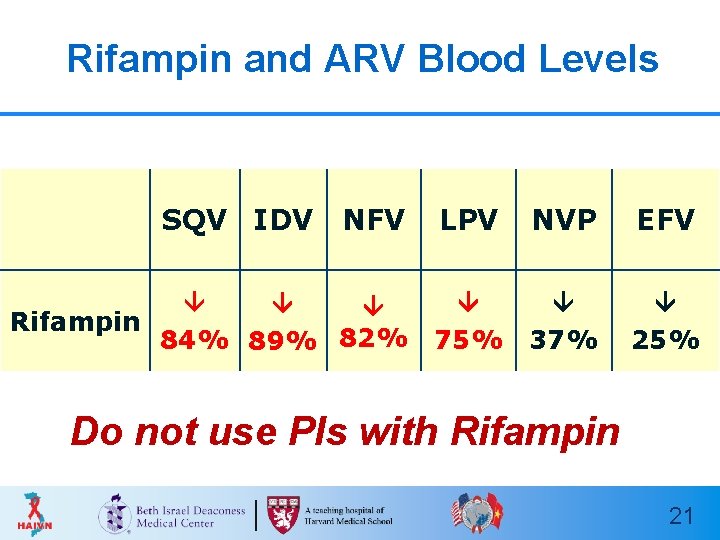
Rifampin and HIV Medications n By inducing the CYP 450 enzyme, Rifampin decreases blood levels of: • • PI NNRTI (NVP, EFV) Methadone Antifungal drugs 20
Rifampin and ARV Blood Levels Finch et al. Arch Intern Med 2002; 162: 985 -92 SQV IDV Rifampin NFV LPV NVP EFV 84% 89% 82% 75% 37% 25% Do not use PIs with Rifampin 21
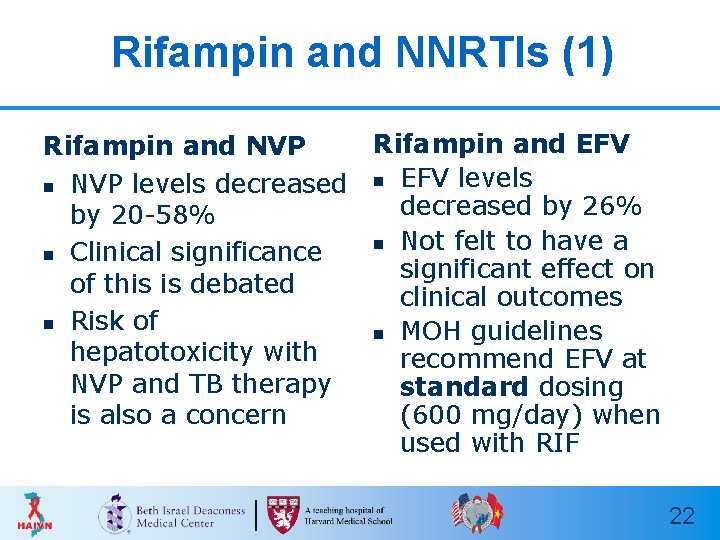
Rifampin and NNRTIs (1) Rifampin and EFV Rifampin and NVP n EFV levels n NVP levels decreased by 26% by 20 -58% n Not felt to have a n Clinical significance significant effect on of this is debated clinical outcomes n Risk of n MOH guidelines hepatotoxicity with recommend EFV at NVP and TB therapy standard dosing is also a concern (600 mg/day) when used with RIF 22
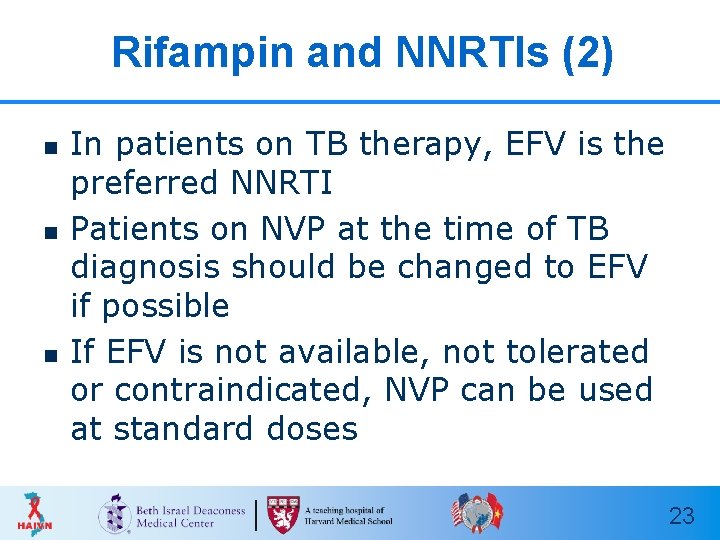
Rifampin and NNRTIs (2) n n n In patients on TB therapy, EFV is the preferred NNRTI Patients on NVP at the time of TB diagnosis should be changed to EFV if possible If EFV is not available, not tolerated or contraindicated, NVP can be used at standard doses 23
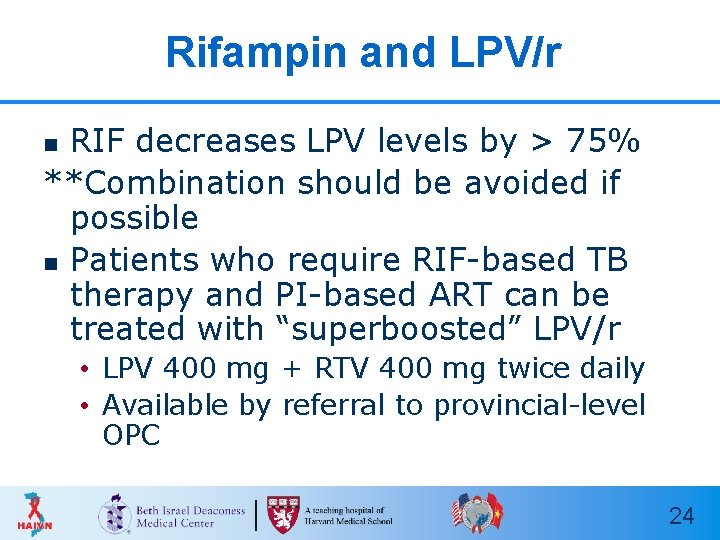
Rifampin and LPV/r RIF decreases LPV levels by > 75% **Combination should be avoided if possible n Patients who require RIF-based TB therapy and PI-based ART can be treated with “superboosted” LPV/r n • LPV 400 mg + RTV 400 mg twice daily • Available by referral to provincial-level OPC 24
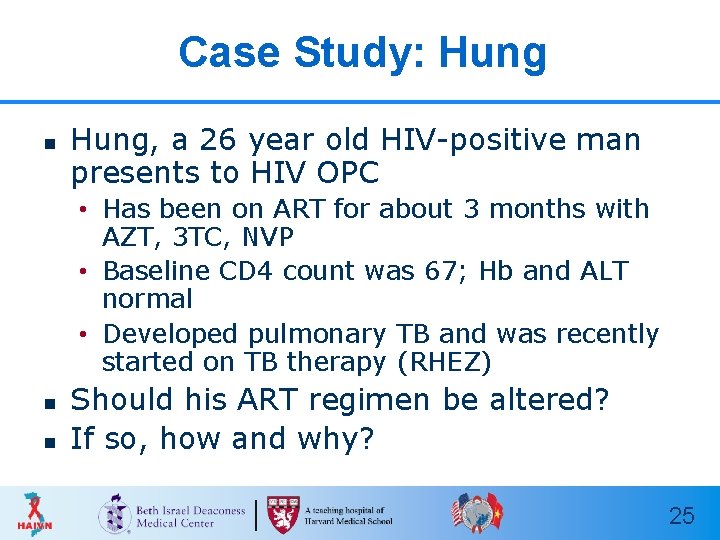
Case Study: Hung n Hung, a 26 year old HIV-positive man presents to HIV OPC • Has been on ART for about 3 months with AZT, 3 TC, NVP • Baseline CD 4 count was 67; Hb and ALT normal • Developed pulmonary TB and was recently started on TB therapy (RHEZ) n n Should his ART regimen be altered? If so, how and why? 25
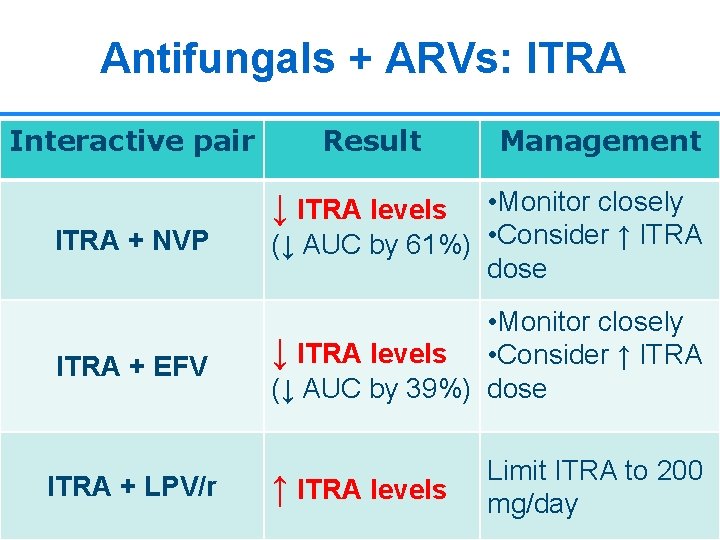
Antifungals + ARVs: ITRA Interactive pair ITRA + NVP ITRA + EFV ITRA + LPV/r Result Management • Monitor closely (↓ AUC by 61%) • Consider ↑ ITRA dose ↓ ITRA levels • Monitor closely ↓ ITRA levels • Consider ↑ ITRA (↓ AUC by 39%) dose ↑ ITRA levels Limit ITRA to 200 mg/day 26
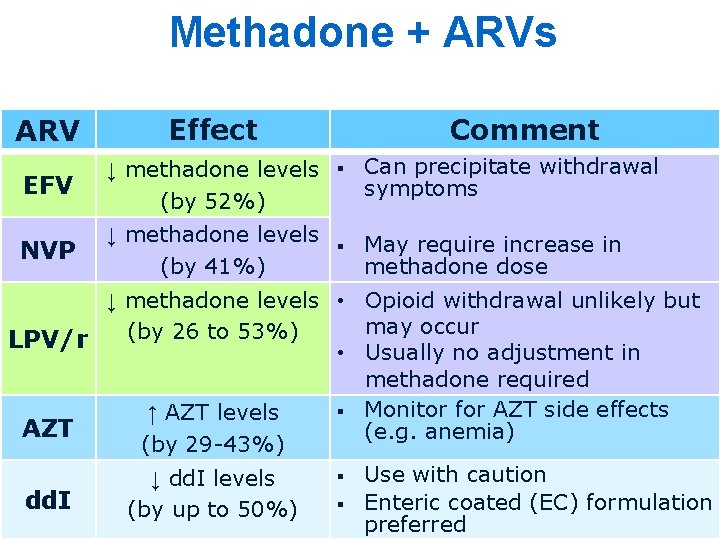
Methadone + ARVs Source: US Guidelines for the Use of Antiretroviral Agents in HIV-1 -Infected Adults and Adolescents, January 10, 2011. ARV Effect EFV ↓ methadone levels (by 52%) NVP ↓ methadone levels (by 41%) Comment § Can precipitate withdrawal symptoms § May require increase in methadone dose ↓ methadone levels • Opioid withdrawal unlikely but may occur (by 26 to 53%) LPV/r • Usually no adjustment in methadone required § Monitor for AZT side effects ↑ AZT levels AZT (e. g. anemia) (by 29 -43%) § Use with caution ↓ dd. I levels dd. I § Enteric coated (EC) formulation (by up to 50%) 27 preferred
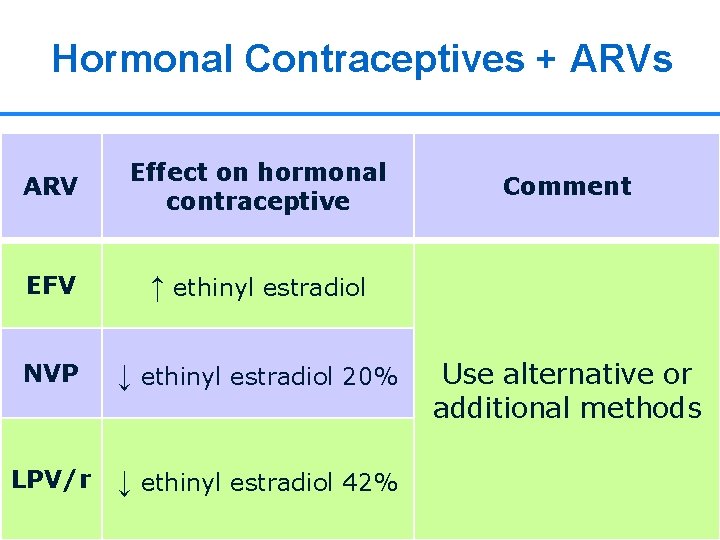
Hormonal Contraceptives + ARVs ARV Effect on hormonal contraceptive EFV ↑ ethinyl estradiol NVP ↓ ethinyl estradiol 20% LPV/r ↓ ethinyl estradiol 42% Comment Use alternative or additional methods 28
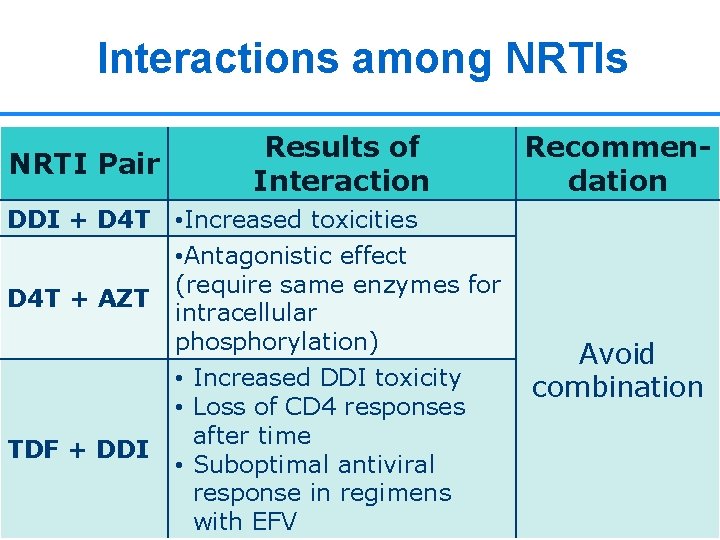
Interactions among NRTIs NRTI Pair DDI + D 4 T + AZT TDF + DDI Results of Interaction Recommendation • Increased toxicities • Antagonistic effect (require same enzymes for intracellular phosphorylation) • Increased DDI toxicity • Loss of CD 4 responses after time • Suboptimal antiviral response in regimens with EFV Avoid combination 29
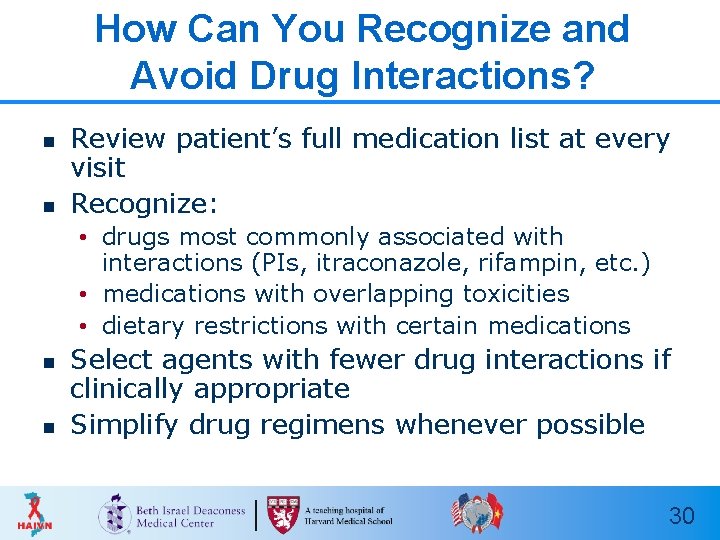
How Can You Recognize and Avoid Drug Interactions? n n Review patient’s full medication list at every visit Recognize: • drugs most commonly associated with interactions (PIs, itraconazole, rifampin, etc. ) • medications with overlapping toxicities • dietary restrictions with certain medications n n Select agents with fewer drug interactions if clinically appropriate Simplify drug regimens whenever possible 30
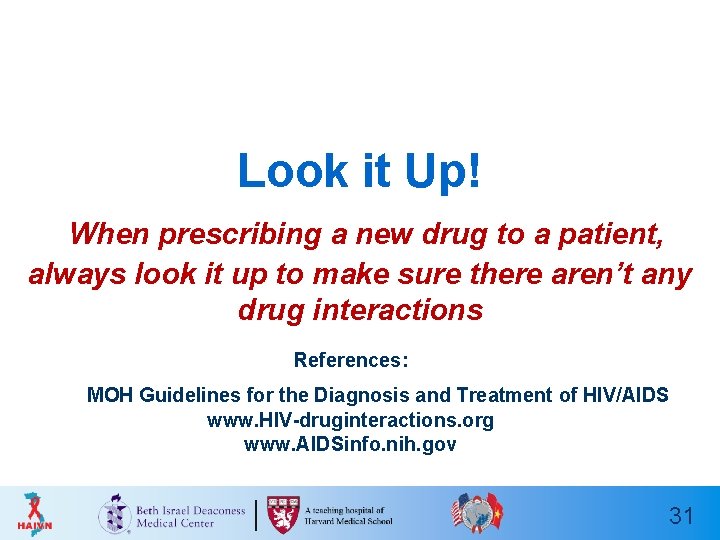
Look it Up! When prescribing a new drug to a patient, always look it up to make sure there aren’t any drug interactions References: MOH Guidelines for the Diagnosis and Treatment of HIV/AIDS www. HIV-druginteractions. org www. AIDSinfo. nih. gov 31
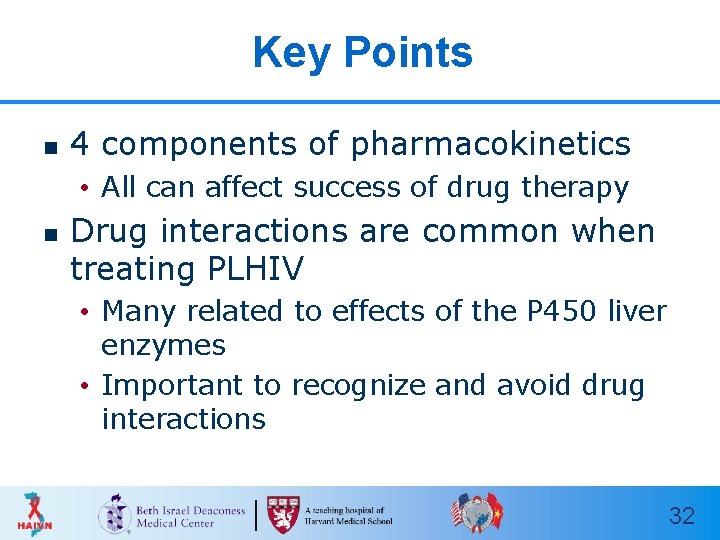
Key Points n 4 components of pharmacokinetics • All can affect success of drug therapy n Drug interactions are common when treating PLHIV • Many related to effects of the P 450 liver enzymes • Important to recognize and avoid drug interactions 32
Thank you! Questions? 33