
Pharmacognosy Alkaloids lec 8 Purine alkaloids Sometimes called

- Slides: 14
Pharmacognosy Alkaloids lec 8
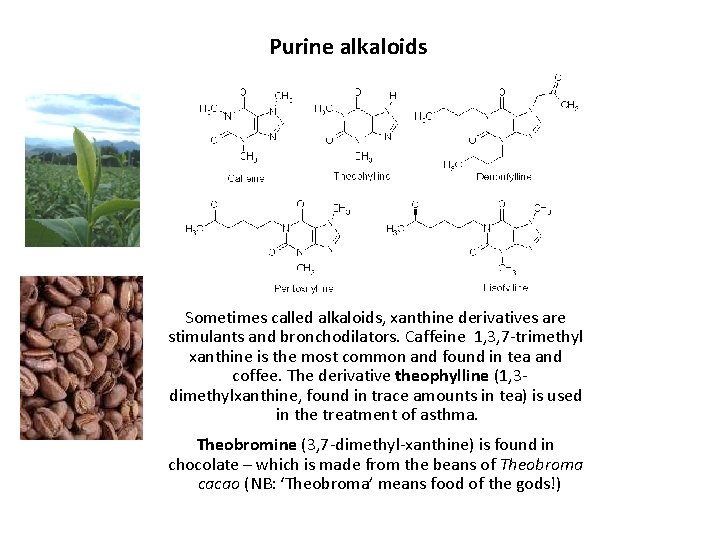
Purine alkaloids Sometimes called alkaloids, xanthine derivatives are stimulants and bronchodilators. Caffeine 1, 3, 7 -trimethyl xanthine is the most common and found in tea and coffee. The derivative theophylline (1, 3 dimethylxanthine, found in trace amounts in tea) is used in the treatment of asthma. Theobromine (3, 7 -dimethyl-xanthine) is found in chocolate – which is made from the beans of Theobroma cacao (NB: ‘Theobroma’ means food of the gods!)
Caffeine Occurs in Coffee , tea , cacao, cola and mate. Although can be produce synthetically , but usually prepared from tea. Solubility in water can be markedly increased by the presence of citric acid or benzoic acid , medicinal compounds of this class are citrated caffeine which is suitable for intramuscular injection To treat circulatory failure Caffeine and related derivatives are CNS stimulant. Green tea is prepared in China and Japan By rapidly drying the fresh leaves in copper pans over a mild artificial heat. Black tea the fresh leaves are left until fermentation began.
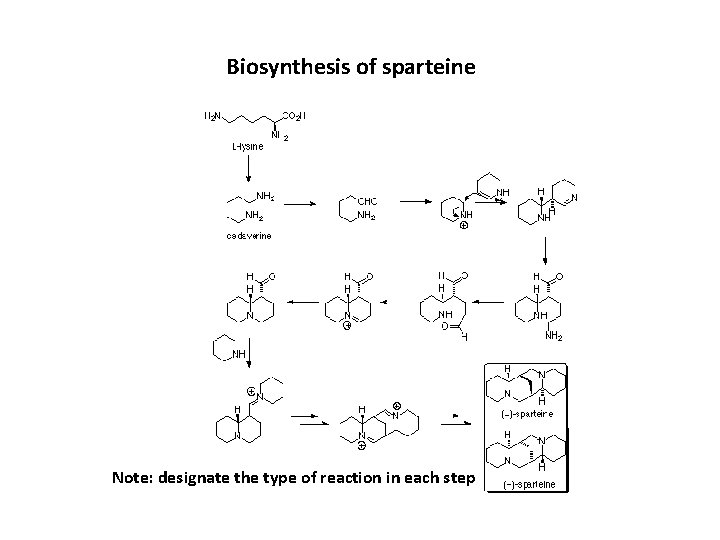
Lupinane alkaloid Quinolizidine The most important alkaloid is Sparteine is a class of antiarrythmic agent a sodium channel blocker. It is an alkaloid and can be extracted from scoparius broom. It is the predominant alkaloid in Lupinus mutabilis, and is thought to chelate the bivalents calcium and magnesium It is not FDA approved for human use as an antiarrhythmic agent, and it is not included in. is used as oxytocic (stimulate contraction of uterus It is also used as a chiral base in Organic synthesis
Biosynthesis of sparteine Note: designate the type of reaction in each step
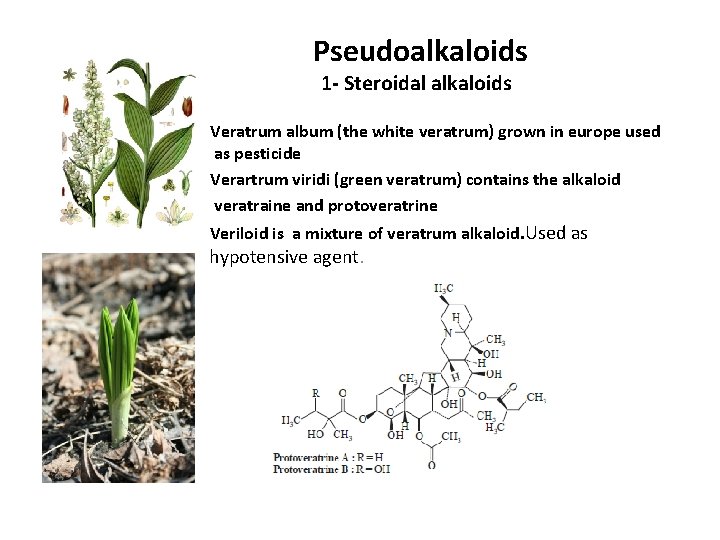
Pseudoalkaloids 1 - Steroidal alkaloids Veratrum album (the white veratrum) grown in europe used as pesticide Verartrum viridi (green veratrum) contains the alkaloid veratraine and protoveratrine Veriloid is a mixture of veratrum alkaloid. Used as hypotensive agent.
Verartrum toxicity Veratrum species produce highly toxic steroidal alkaloids only when the plants are in active growth. During the winter months, when the plant enters its dormant stage, it degrades and metabolizes most of its toxic alkaloids. Herbalists and Native Americans who used this plant for medicinal purposes harvested the roots during the winter months when the levels of toxic constituents were at their lowest. The roots of V. nigrum and V. schindleri have been used in Chinese herbalist (where plants of this genus are known as "li lu is used internally as a powerful emetic of last resort, and topically to kill external parasites, treat tinea and stop itching. . Some herbalists refuse to prescribe li lu internally, citing the extreme difficulty in preparing a safe and effective dosage
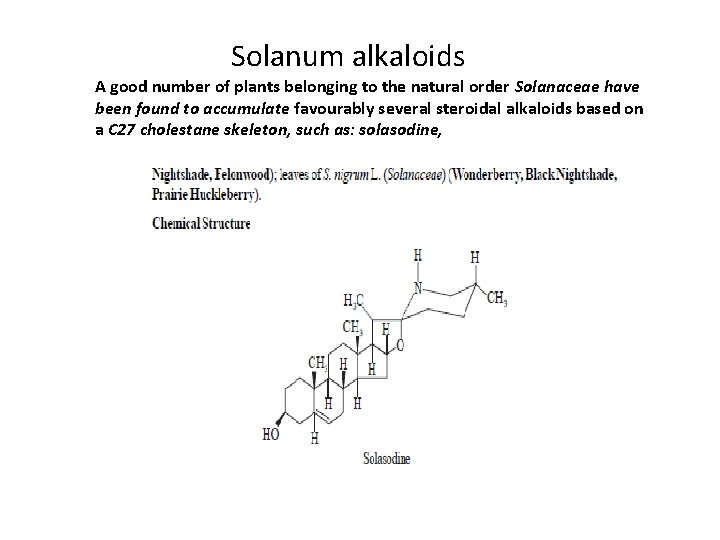
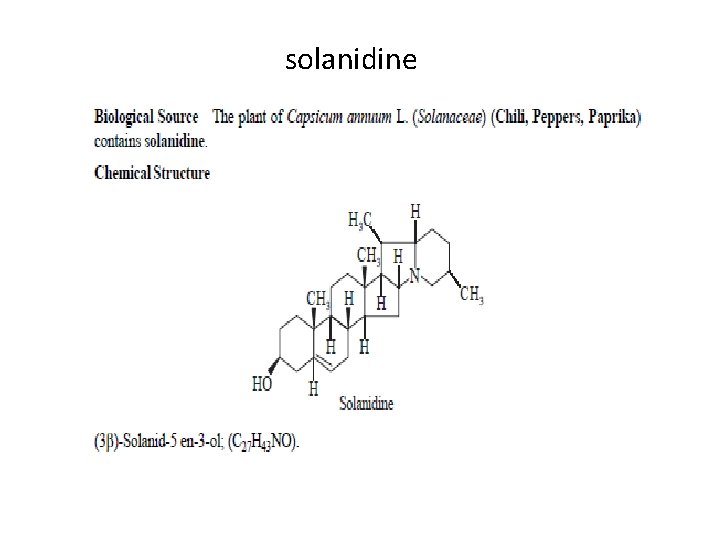
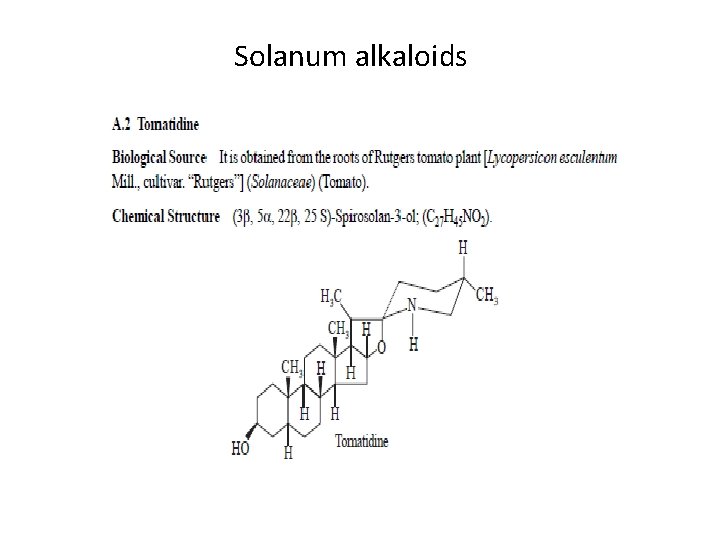
Solanum alkaloids A good number of plants belonging to the natural order Solanaceae have been found to accumulate favourably several steroidal alkaloids based on a C 27 cholestane skeleton, such as: solasodine,
solanidine
Solanum alkaloids
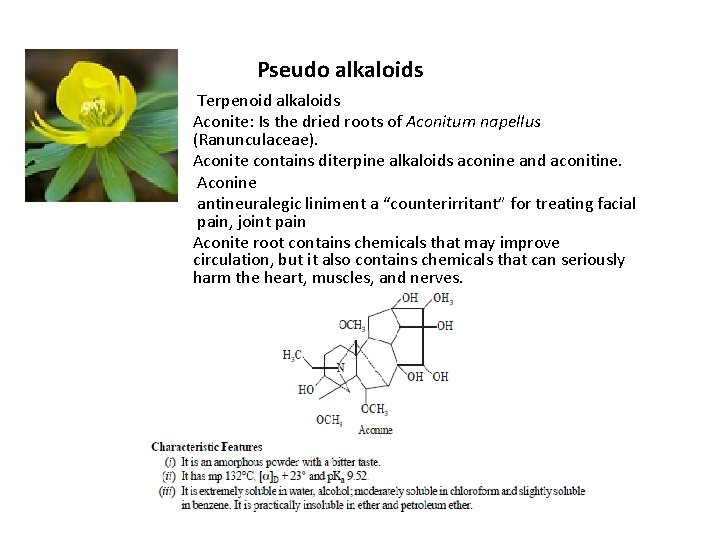
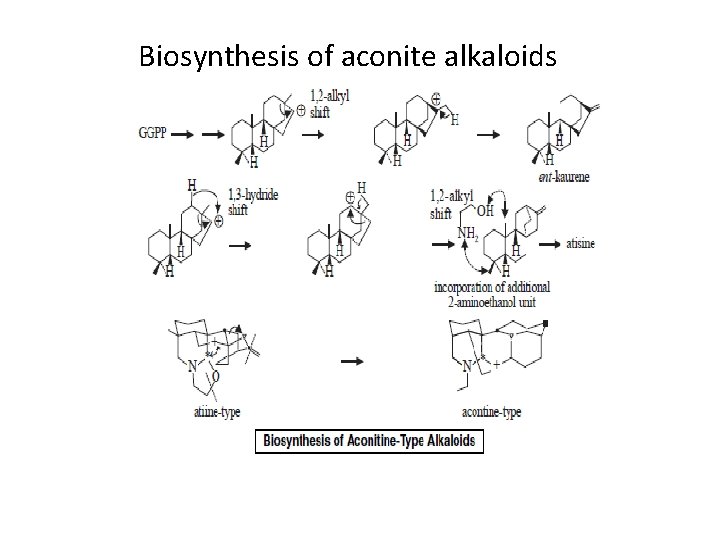
Pseudo alkaloids Terpenoid alkaloids Aconite: Is the dried roots of Aconitum napellus (Ranunculaceae). Aconite contains diterpine alkaloids aconine and aconitine. Aconine antineuralegic liniment a “counterirritant” for treating facial pain, joint pain Aconite root contains chemicals that may improve circulation, but it also contains chemicals that can seriously harm the heart, muscles, and nerves.
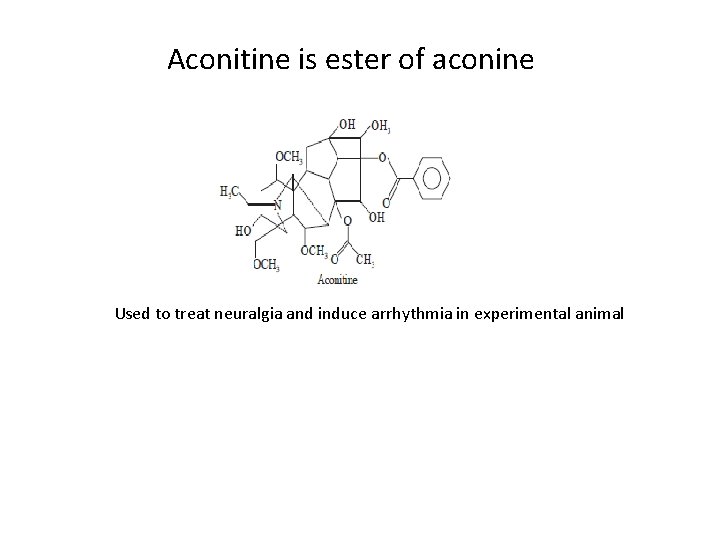
Aconitine is ester of aconine Used to treat neuralgia and induce arrhythmia in experimental animal
Biosynthesis of aconite alkaloids
Thank you for listining THE END