
PHARMACODYNAMIC PRINCIPLES Chapter 3 Pharmacodynamic Principles PHARMACODYNAMICS q
- Slides: 38
PHARMACODYNAMIC PRINCIPLES Chapter 3
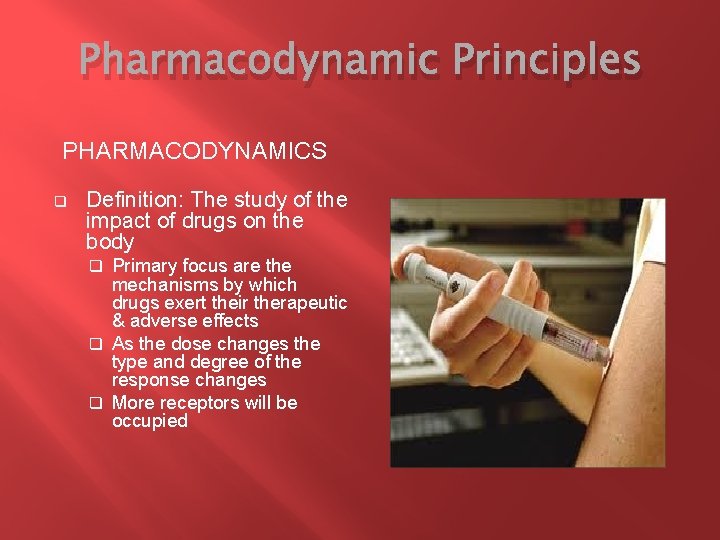
Pharmacodynamic Principles PHARMACODYNAMICS q Definition: The study of the impact of drugs on the body Primary focus are the mechanisms by which drugs exert their therapeutic & adverse effects q As the dose changes the type and degree of the response changes q More receptors will be occupied q
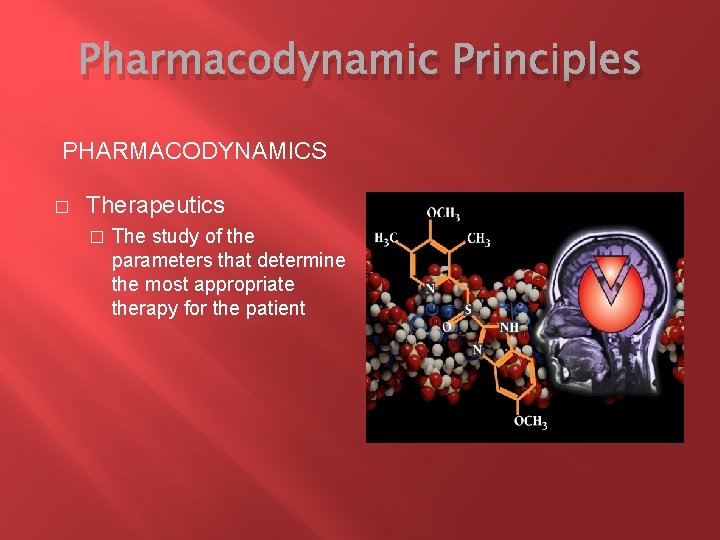
Pharmacodynamic Principles PHARMACODYNAMICS � Therapeutics � The study of the parameters that determine the most appropriate therapy for the patient
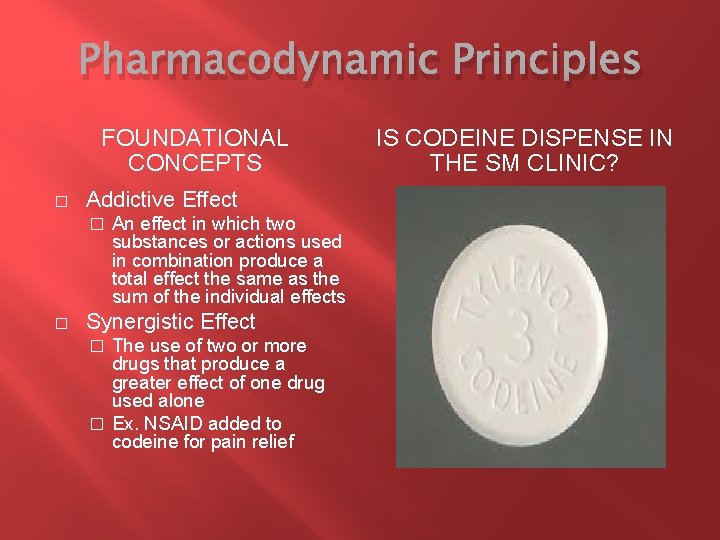
Pharmacodynamic Principles FOUNDATIONAL CONCEPTS � Addictive Effect � � An effect in which two substances or actions used in combination produce a total effect the same as the sum of the individual effects Synergistic Effect The use of two or more drugs that produce a greater effect of one drug used alone � Ex. NSAID added to codeine for pain relief � IS CODEINE DISPENSE IN THE SM CLINIC?
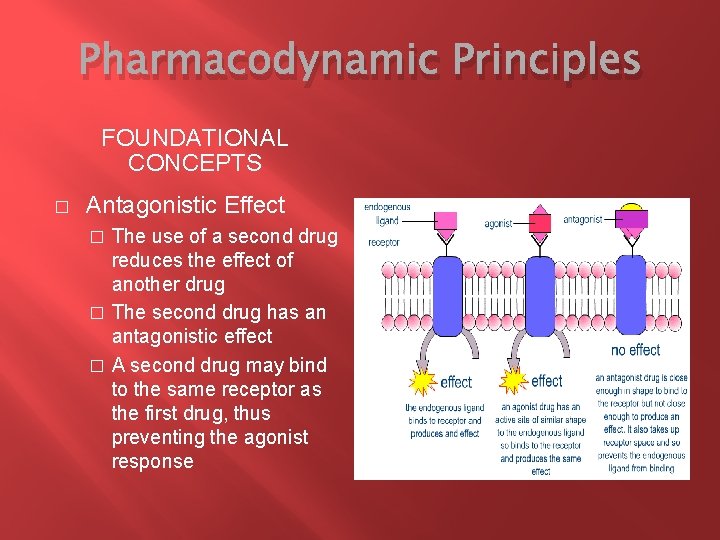
Pharmacodynamic Principles FOUNDATIONAL CONCEPTS � Antagonistic Effect The use of a second drug reduces the effect of another drug � The second drug has an antagonistic effect � A second drug may bind to the same receptor as the first drug, thus preventing the agonist response �
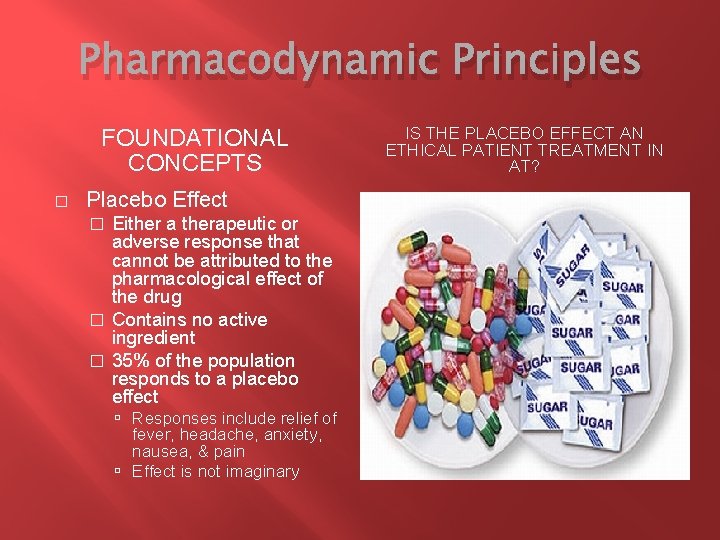
Pharmacodynamic Principles FOUNDATIONAL CONCEPTS � Placebo Effect Either a therapeutic or adverse response that cannot be attributed to the pharmacological effect of the drug � Contains no active ingredient � 35% of the population responds to a placebo effect � Responses include relief of fever, headache, anxiety, nausea, & pain Effect is not imaginary IS THE PLACEBO EFFECT AN ETHICAL PATIENT TREATMENT IN AT?
Pharmacodynamic Principles FOUNDATIONAL CONCEPTS � If a patient is convinced that pain relief is imminent upon administration of an analgesic, a placebo effect may bring greater relief than what would be expected from the drug alone CAN A PLACEBO BE USED AS A DIABETIC TREATMENT?
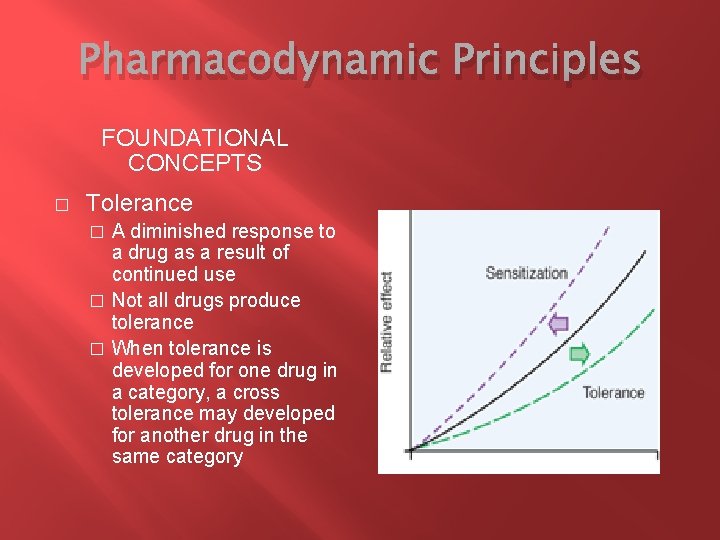
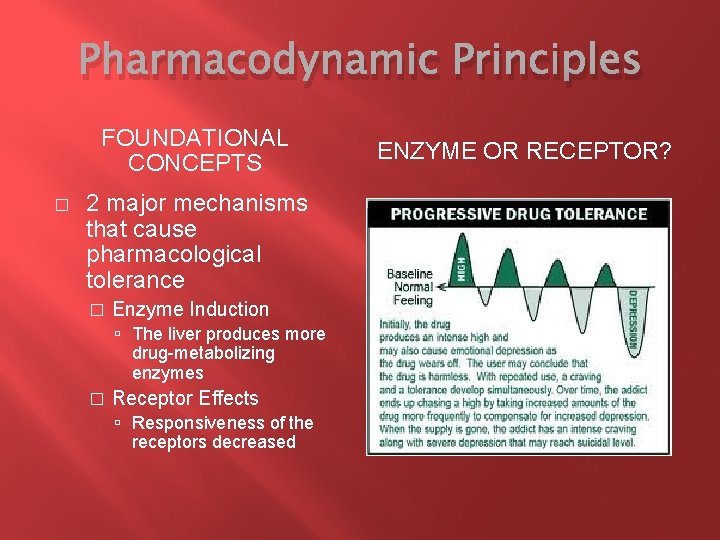
Pharmacodynamic Principles FOUNDATIONAL CONCEPTS � Tolerance A diminished response to a drug as a result of continued use � Not all drugs produce tolerance � When tolerance is developed for one drug in a category, a cross tolerance may developed for another drug in the same category �
Pharmacodynamic Principles FOUNDATIONAL CONCEPTS � 2 major mechanisms that cause pharmacological tolerance � Enzyme Induction The liver produces more drug-metabolizing enzymes � Receptor Effects Responsiveness of the receptors decreased ENZYME OR RECEPTOR?
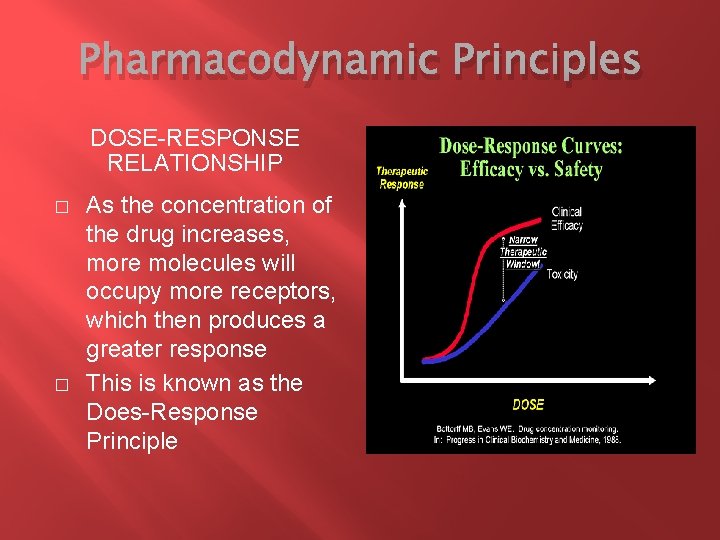
Pharmacodynamic Principles DOSE-RESPONSE RELATIONSHIP � � As the concentration of the drug increases, more molecules will occupy more receptors, which then produces a greater response This is known as the Does-Response Principle
Pharmacodynamic Principles SINGLE DOSE � Potency The dose of a drug required to produce a particular effect relative to the dose of another drug that acts by a similar mechanism to produce the same effect � Caffeine vs Amphetamines � CAFFEINE OR AMPHETAMINES?
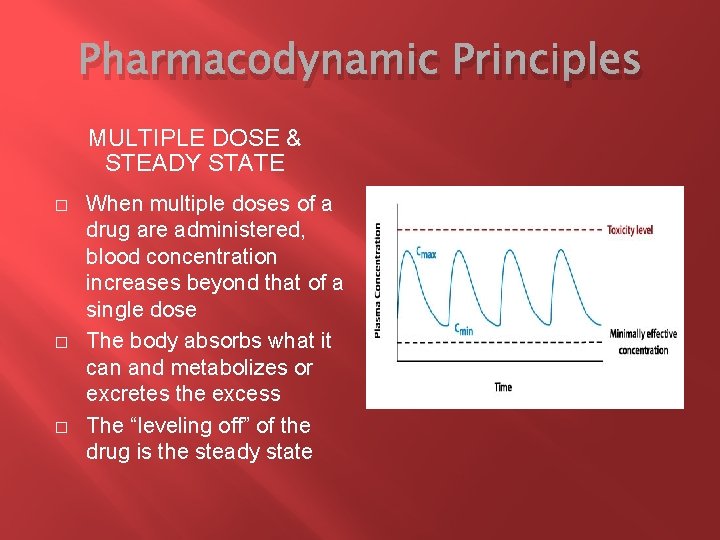
Pharmacodynamic Principles MULTIPLE DOSE & STEADY STATE � � � When multiple doses of a drug are administered, blood concentration increases beyond that of a single dose The body absorbs what it can and metabolizes or excretes the excess The “leveling off” of the drug is the steady state
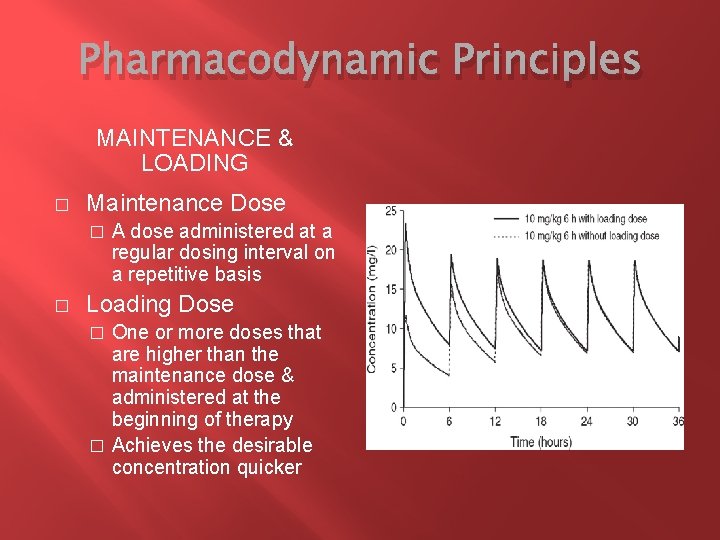
Pharmacodynamic Principles MAINTENANCE & LOADING � Maintenance Dose � � A dose administered at a regular dosing interval on a repetitive basis Loading Dose One or more doses that are higher than the maintenance dose & administered at the beginning of therapy � Achieves the desirable concentration quicker �
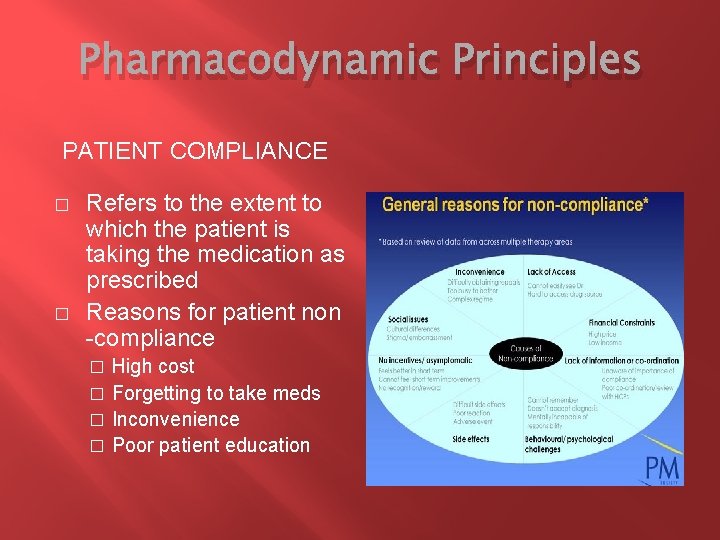
Pharmacodynamic Principles PATIENT COMPLIANCE � � Refers to the extent to which the patient is taking the medication as prescribed Reasons for patient non -compliance High cost � Forgetting to take meds � Inconvenience � Poor patient education �
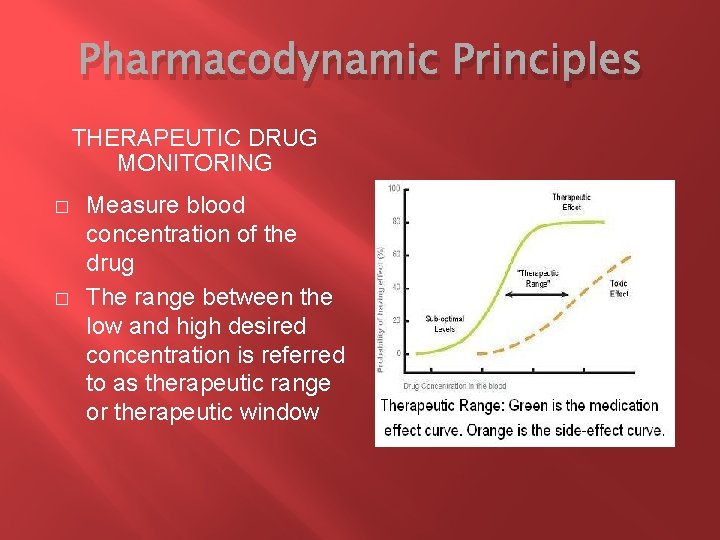
Pharmacodynamic Principles THERAPEUTIC DRUG MONITORING � � Measure blood concentration of the drug The range between the low and high desired concentration is referred to as therapeutic range or therapeutic window
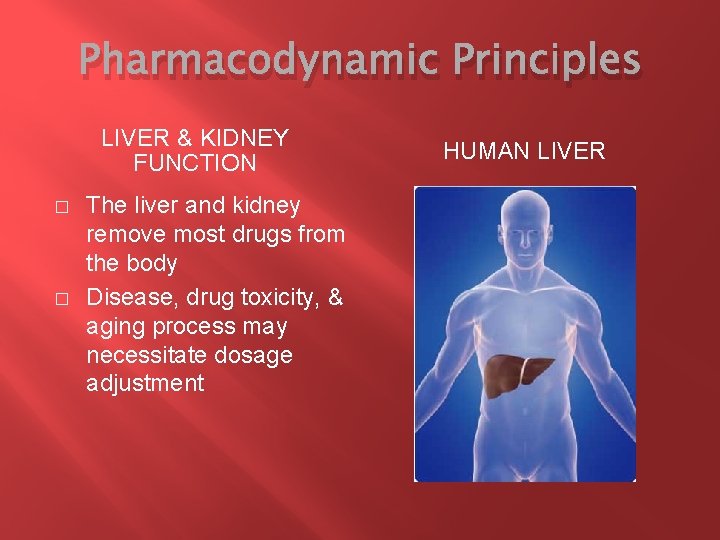
Pharmacodynamic Principles LIVER & KIDNEY FUNCTION � � The liver and kidney remove most drugs from the body Disease, drug toxicity, & aging process may necessitate dosage adjustment HUMAN LIVER
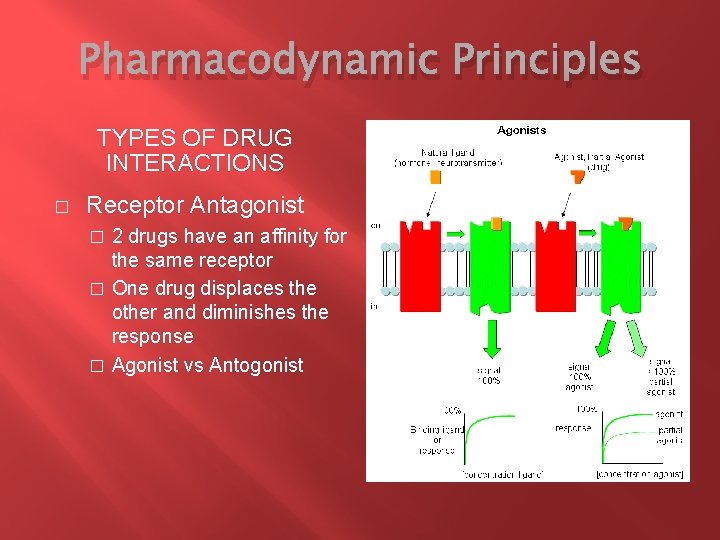
Pharmacodynamic Principles TYPES OF DRUG INTERACTIONS � Receptor Antagonist 2 drugs have an affinity for the same receptor � One drug displaces the other and diminishes the response � Agonist vs Antogonist �
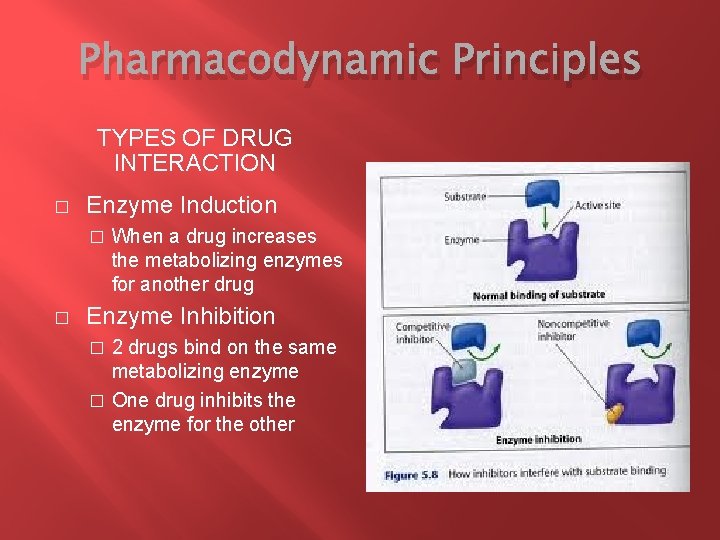
Pharmacodynamic Principles TYPES OF DRUG INTERACTION � Enzyme Induction � � When a drug increases the metabolizing enzymes for another drug Enzyme Inhibition 2 drugs bind on the same metabolizing enzyme � One drug inhibits the enzyme for the other �
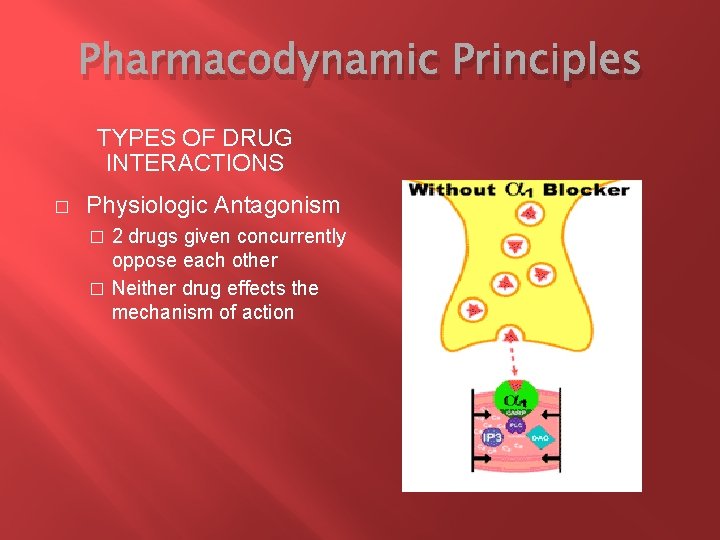
Pharmacodynamic Principles TYPES OF DRUG INTERACTIONS � Physiologic Antagonism 2 drugs given concurrently oppose each other � Neither drug effects the mechanism of action �
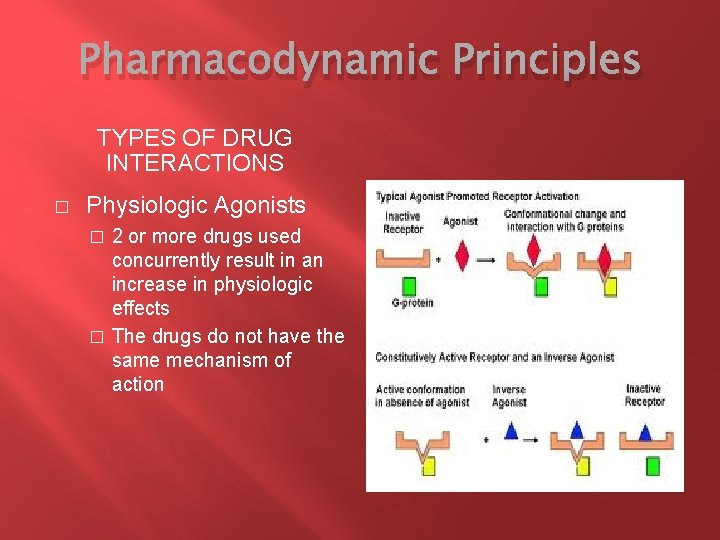
Pharmacodynamic Principles TYPES OF DRUG INTERACTIONS � Physiologic Agonists 2 or more drugs used concurrently result in an increase in physiologic effects � The drugs do not have the same mechanism of action �
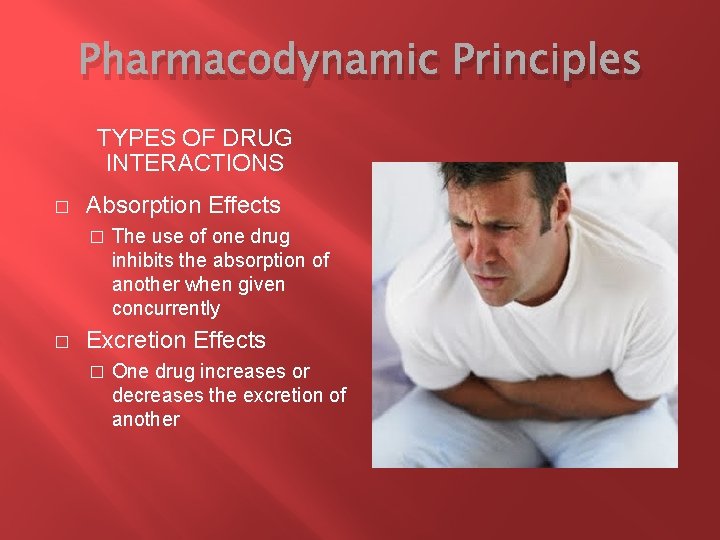
Pharmacodynamic Principles TYPES OF DRUG INTERACTIONS � Absorption Effects � � The use of one drug inhibits the absorption of another when given concurrently Excretion Effects � One drug increases or decreases the excretion of another
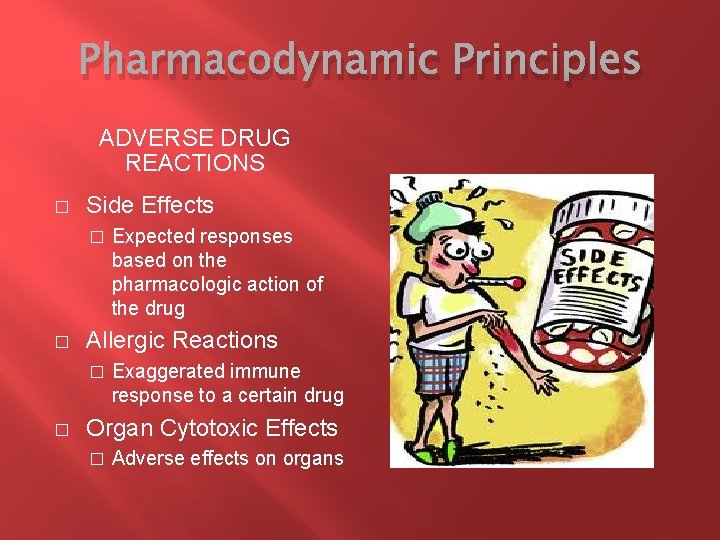
Pharmacodynamic Principles ADVERSE DRUG REACTIONS � Side Effects � � Allergic Reactions � � Expected responses based on the pharmacologic action of the drug Exaggerated immune response to a certain drug Organ Cytotoxic Effects � Adverse effects on organs
Pharmacodynamic Principles ADVERSE DRUG REACTIONS � Idiosyncratic Reactions � � Drug-drug Interactions � � Reaction that is particular to an individual or defined group of people Interaction of 2 or more drugs that result in a disadvantage to a patient Drug-food Interactions � Interaction of a drug with food that results in an adverse patient reaction
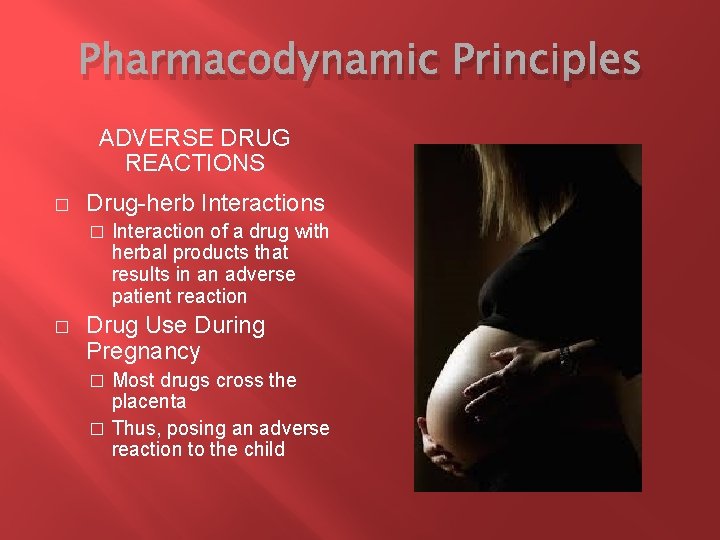
Pharmacodynamic Principles ADVERSE DRUG REACTIONS � Drug-herb Interactions � � Interaction of a drug with herbal products that results in an adverse patient reaction Drug Use During Pregnancy Most drugs cross the placenta � Thus, posing an adverse reaction to the child �
MEDICATION MANAGEMENT IN ATHLETIC TRAINING FACILITIES Chapter 4
Medication Management STATE VS FEDERAL � If a state & federal laws are in conflict, follow the stricter code of the two
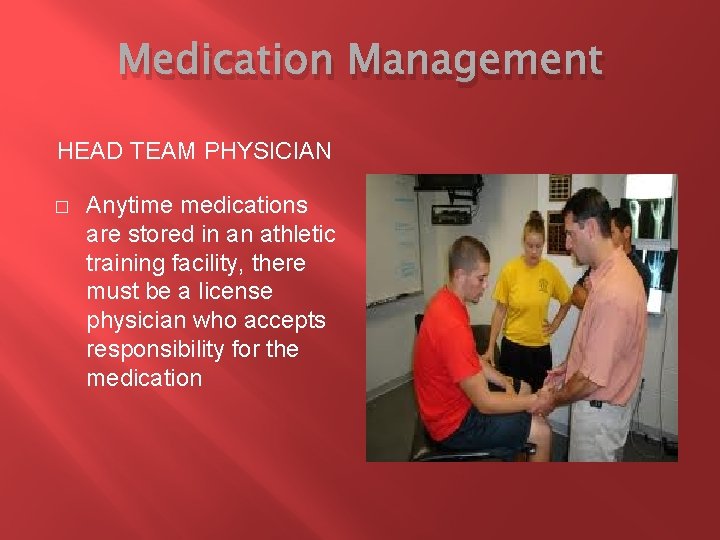
Medication Management HEAD TEAM PHYSICIAN � Anytime medications are stored in an athletic training facility, there must be a license physician who accepts responsibility for the medication
Medication Management TEAM PHARMACY � � � In a best-practice situation, each athletic training facility should have a designated team pharmacy The team pharmacy is required to be licensed by the state & DEA The athletic trainer should maintain a copy of the team pharmacy license
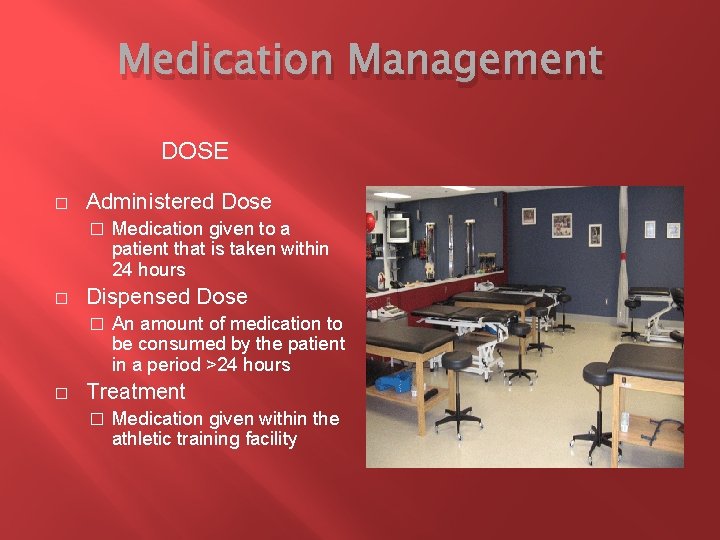
Medication Management DOSE � Administered Dose � � Dispensed Dose � � Medication given to a patient that is taken within 24 hours An amount of medication to be consumed by the patient in a period >24 hours Treatment � Medication given within the athletic training facility
Medication Management AUTHORIZATION � Patient � � Illegal for anyone to pick up a medication for someone other than an immediate family member or without permission in writing Unsecured Medication � Federal law states that all medications are to be locked & secured
Medication Management POLICIES & PROCEDURES � A policy & procedure manual in regards to medications should be kept on file in the facility
Medication Management EXPIRED MEDICATIONS � There is no justification for expired medication to be stored or dispensed in a facility
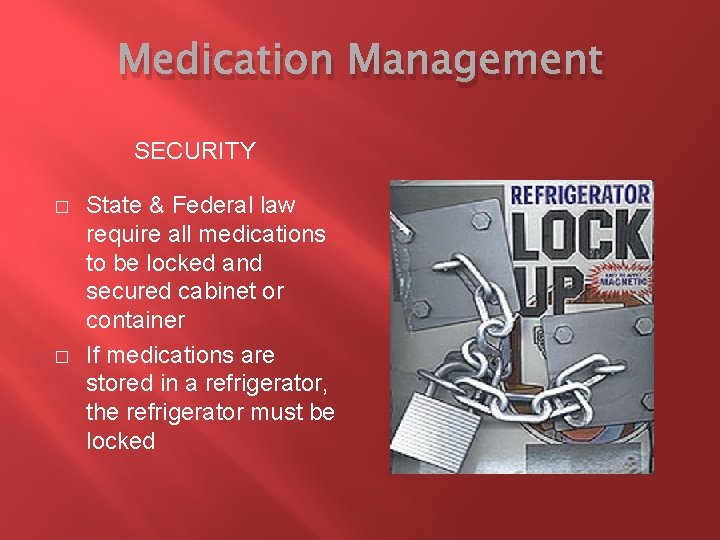
Medication Management SECURITY � � State & Federal law require all medications to be locked and secured cabinet or container If medications are stored in a refrigerator, the refrigerator must be locked
Medication Management STORAGE � Most medications must be stored at room temperature
Medication Management TRAVELING WITH MEDICATIONS � Medications that have not been dispensed and labeled must be transported by a licensed individual
Medication Management INTERNATIONAL TRAVEL � � Follow the policy & procedure manual of the facility Follow international law
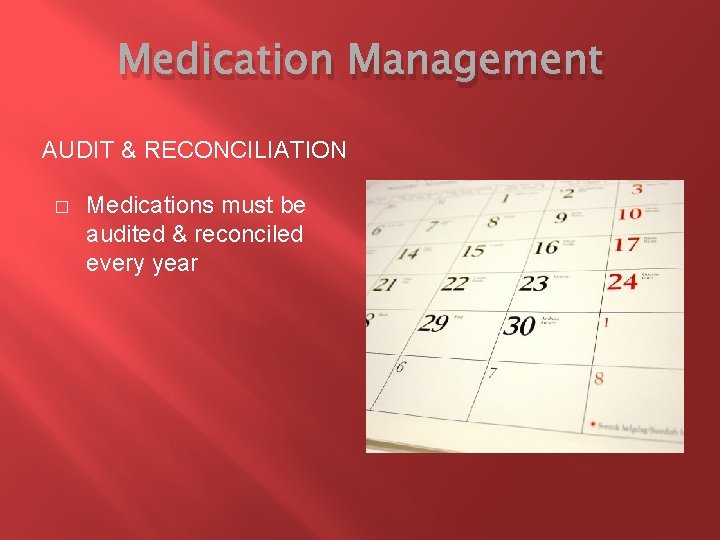
Medication Management AUDIT & RECONCILIATION � Medications must be audited & reconciled every year
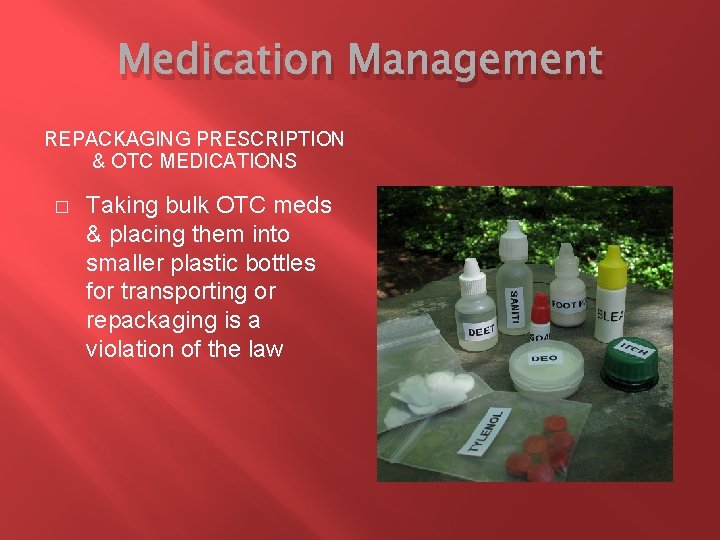
Medication Management REPACKAGING PRESCRIPTION & OTC MEDICATIONS � Taking bulk OTC meds & placing them into smaller plastic bottles for transporting or repackaging is a violation of the law