
Pharmaceutical Chemistry Antipsychotic Drugs By Assist Prof Karima
Pharmaceutical Chemistry Antipsychotic Drugs By Assist. Prof. Karima Fadhil Ali Al mustansiriya university College of pharmacy
Antipsychotics Drugs Psychotic illness is a compilation of multiple disorders, including schizophrenia, the manic phase of bipolar syndrome, acute idiopathic psychosis, and other conditions marked by severe agitation , yet the term “psychosis” is most often associated with schizophrenia. Although the etiology of schizophrenia is unknown, the principal neurochemical theories focus on DA and, more recently, on glutamate and serotonin.
Schizophrenia A mental disorder where person shows behavioral and cognitive dysfunction Positive symptoms: abnormality of normal function leading to presence of inappropriate behaviors – Delusions (false belief)and hallucination (false perception), speech disturbances Negative symptoms: loss of normal function leading to absence of appropriate behaviors – lack of motivation, social withdrawal, lack of interest in fun activity, doesn’t respond to questions
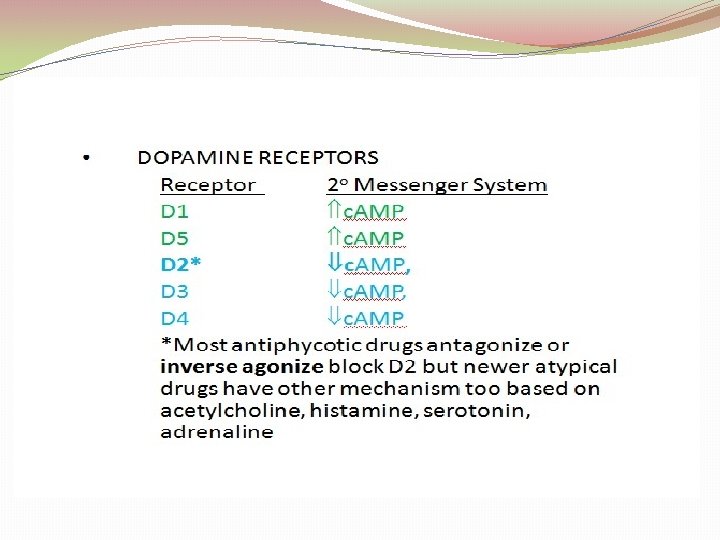
The basis of the DA hypothesis of schizophrenia (DHS) lies in the capacity of antipsychotic drugs to block DA receptors (D 2 receptor subtype) positively correlated to their clinical potency in alleviating the symptoms of schizophrenia. We don’t know the exact cause but it is believed that excess of dopamine activity is the reason for the disease. Individuals with schizophrenia may have decreased densities of D 1 receptors in the prefrontal cortex.
Presynaptic D 1 receptors within the prefrontal cortex are believed to modulate glutamatergic activity, directly effecting working memory in individuals with schizophrenia. The positive symptoms are believed to be derived from D 2 receptor hyperactivity.
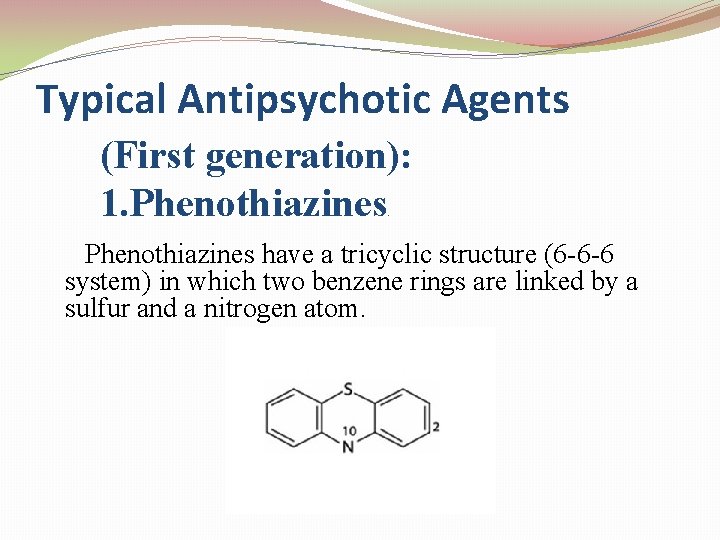
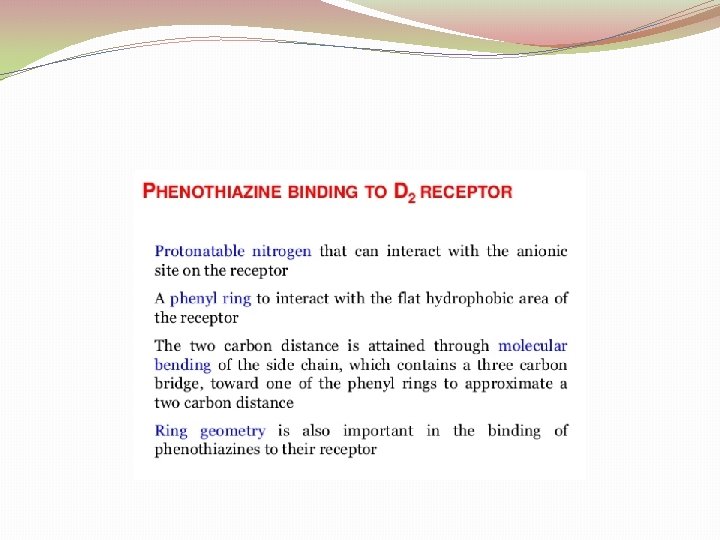
Typical Antipsychotic Agents (First generation): 1. Phenothiazines have a tricyclic structure (6 -6 -6 system) in which two benzene rings are linked by a sulfur and a nitrogen atom.
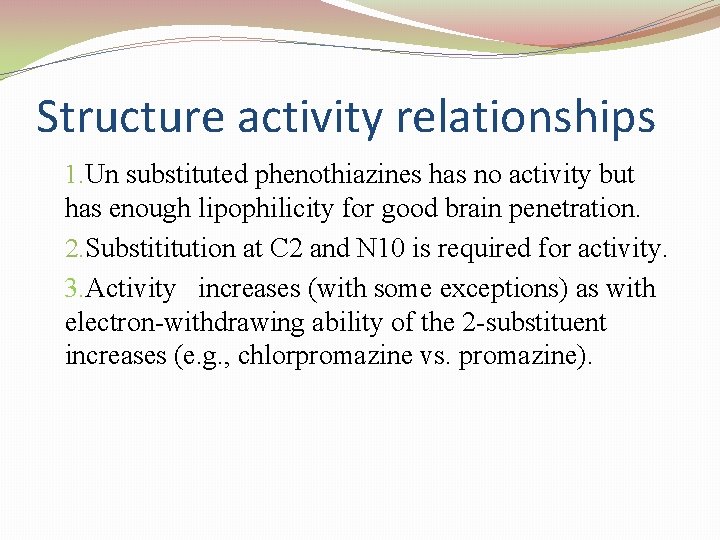
Structure activity relationships 1. Un substituted phenothiazines has no activity but has enough lipophilicity for good brain penetration. 2. Substititution at C 2 and N 10 is required for activity. 3. Activity increases (with some exceptions) as with electron-withdrawing ability of the 2 -substituent increases (e. g. , chlorpromazine vs. promazine).
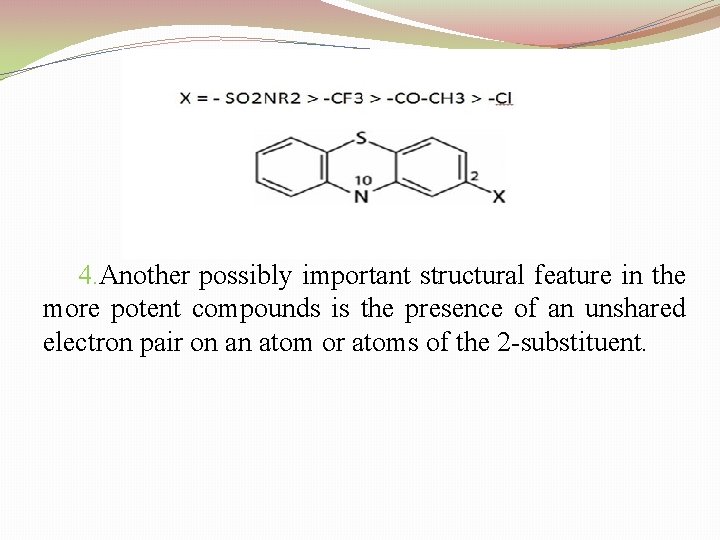
4. Another possibly important structural feature in the more potent compounds is the presence of an unshared electron pair on an atom or atoms of the 2 -substituent.
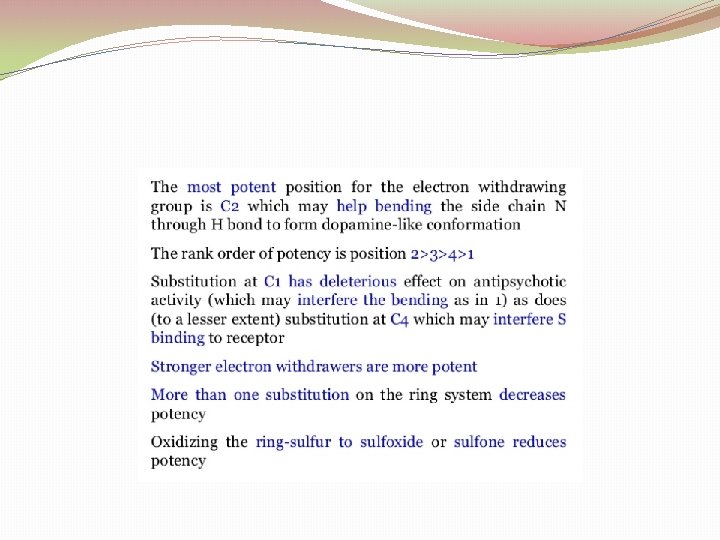
5. Substitution at the 3 -position can improve activity over non substituted compounds but not as significantly as substitution at the 2 -position. 6. Substitution at position 1 has a deleterious effect on antipsychotic activity, as does (to a lesser extent) substitution at the 4 -position.
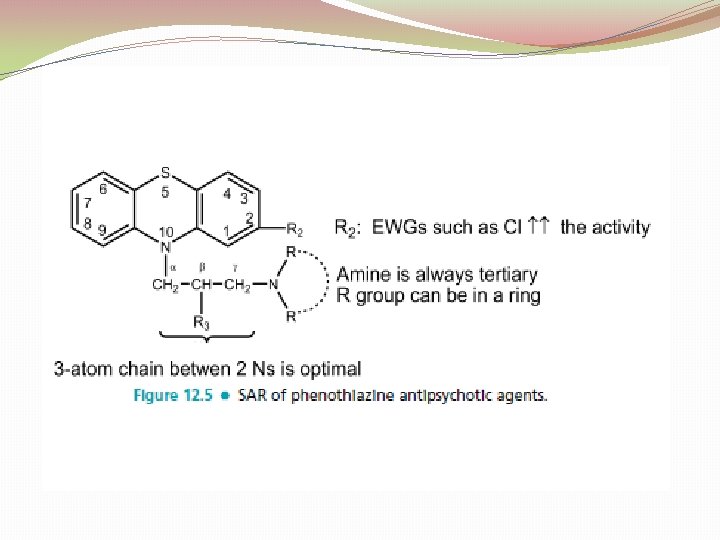
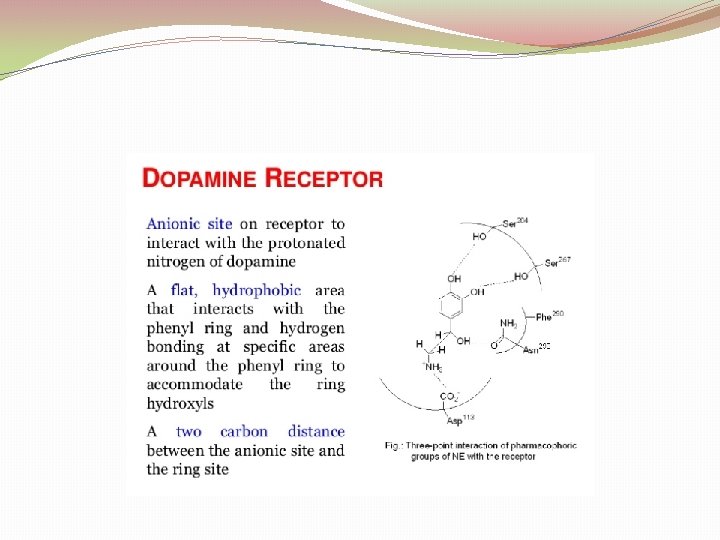
The significance of these substituent effects could be that the hydrogen atom of the protonated amino group of the side chain H-bonds with an electron pair of an atom of the 2 -substituent to develop a DA-like arrangement. Conformational studies on chlorpromazine reveal that tilting of the side chain toward ring A allows favorable van der Waals interactions of the side chain with the chlorine substituent. The resulting conformation permits the superimposition of DA. Substitution at the 1 -position sterically hinders the ability of the side chain to approach ring A.
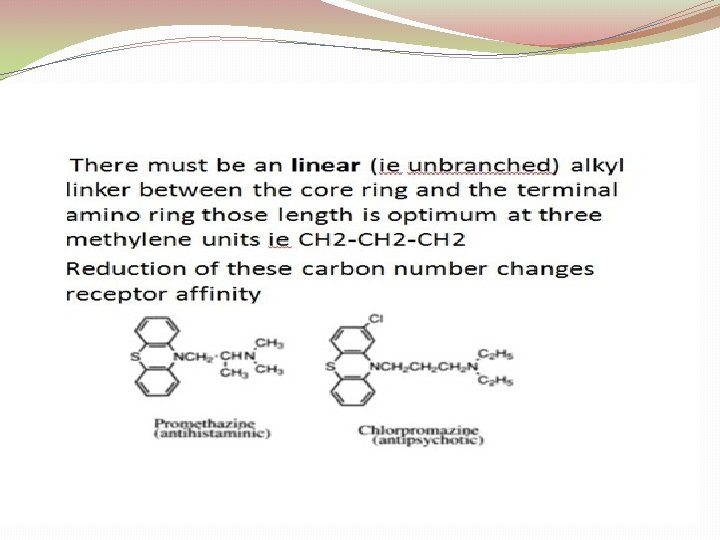
On the other hand, a substituent at the 3 - position will be too far from the side chain to provide van der Waals attraction. A trifluoromethyl group will give more van der Waals contacts with the side chain than a chloro substituent and, in fact, triflupromazine is more potent than chlorpromazine. As a general rule, electron-withdrawing groups at the 2 position increase the antipsychotic efficacy (chlorpromazine vs. promazine). Molecular models indicate that a shorter or a branched side chain prohibits the assumption of the DA-like conformation caused by van der Waals repulsive forces between the side chain and the phenothiazine ring.
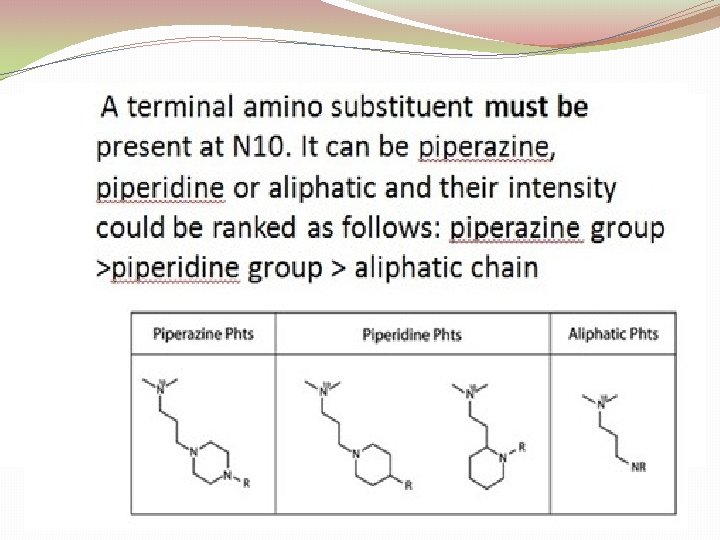
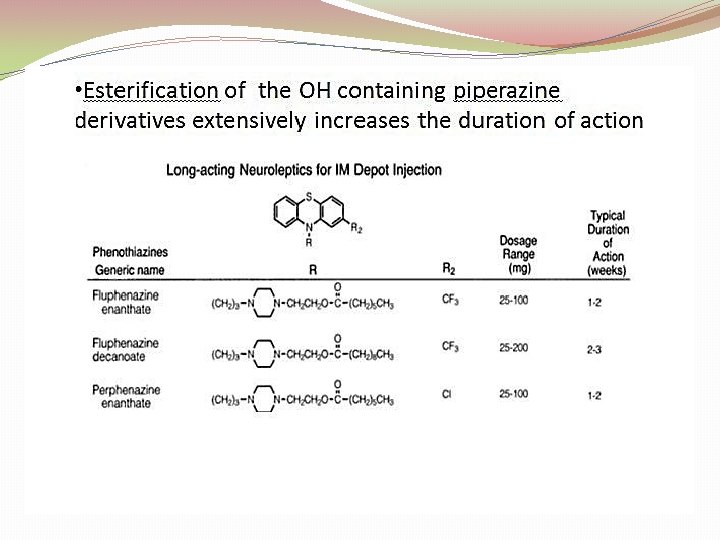
The nature of the substituent on the side chain amine may also influence the conformation of the phenothiazine side chain. A piperazine ring affords more van der Waals contacts with the 2 -substituent than does an alkylamino side chain. Piperazinyl phenothiazines are more potent in the anti schizophrenic effects.
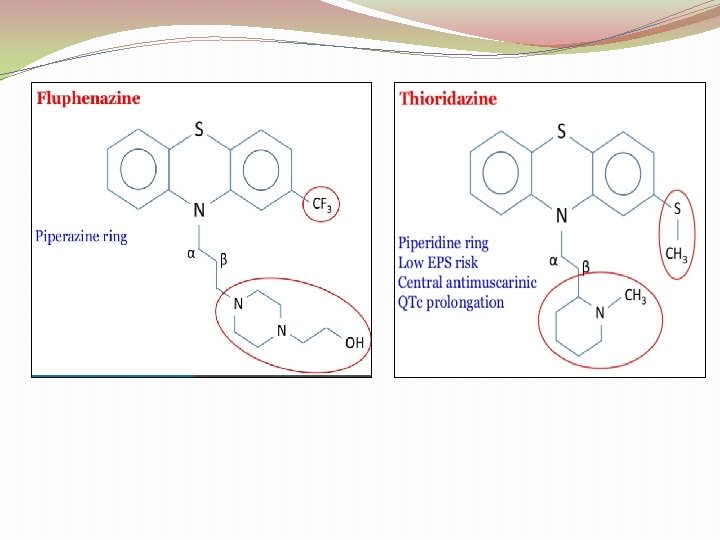
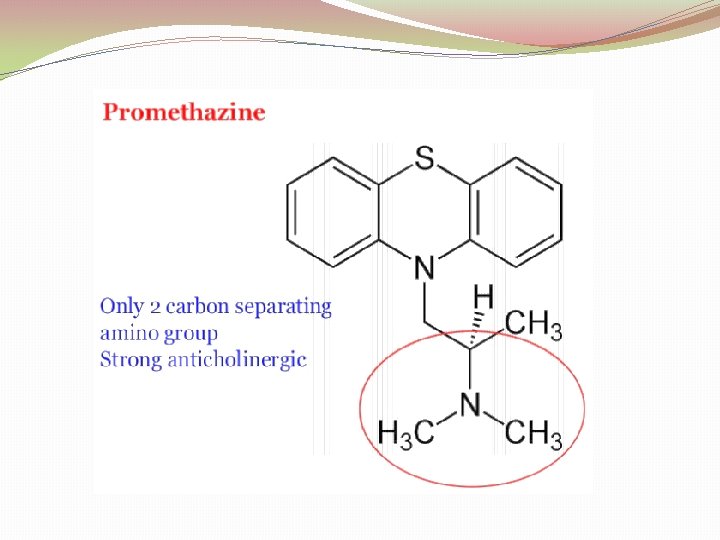
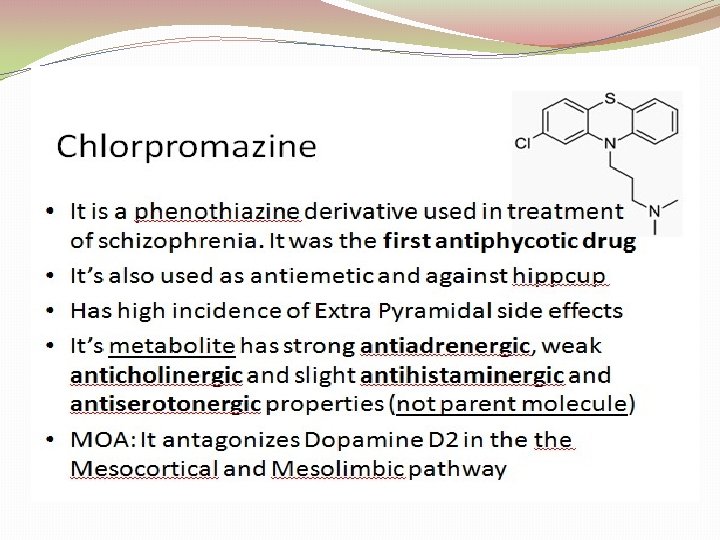

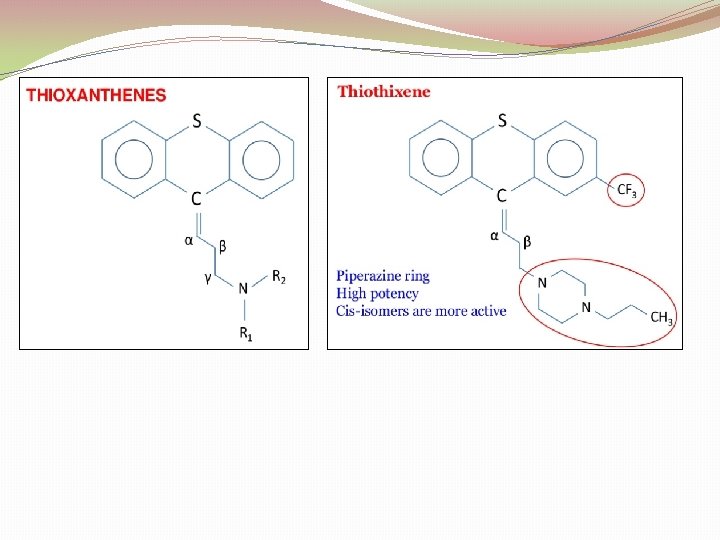
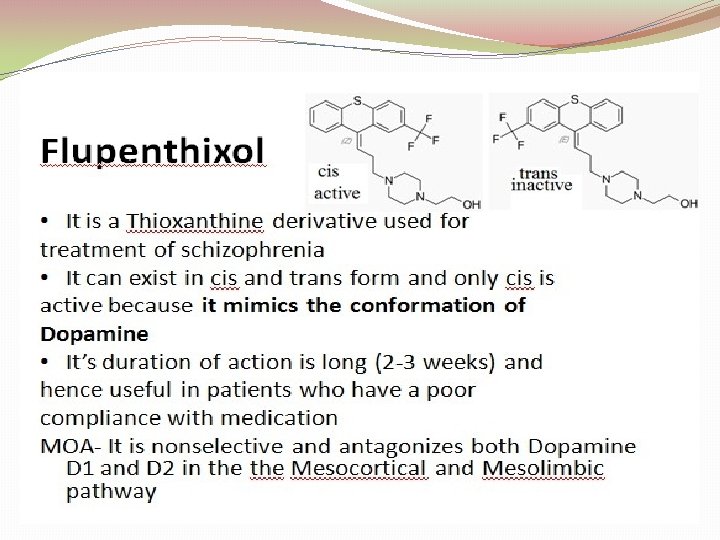
2. Thioxanthenes: The structural difference between thioxanthene and phenothiazines is the bio isosteric replacement of the N at the 10 -position by a carbon atom in the thioxanthenes. The side chain (R 10) in the thioxanthenes is attached by a double bond to the tricyclic system. This portion of the molecule is not involved in the interaction with the receptor, but it serves to position correctly the other elements of the molecule. Thioxanthenes that have a double bond in the side chain can be either cis- or trans-isomers
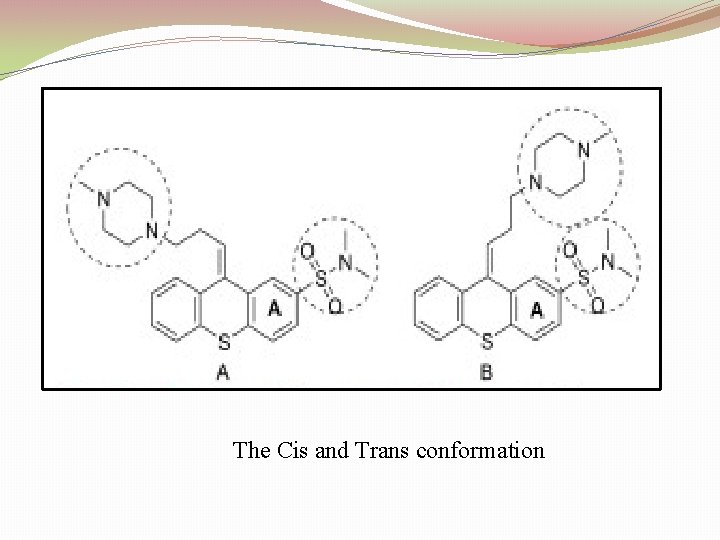
The Cis and Trans conformation
The active form is the cis-isomer, which can be perfectly superimposed with the phenothiazine and the DA molecules, meaning that the Z-configuration is the preferred one for optimal receptor affinity. In general, thioxanthenes are more potent than the structurally related phenothiazines. In the thioxanthenes, the substituent at the 2 -position does not govern the side chain in the same way as with the phenothiazines to assume a DA-like conformation. The cis or trans conformation of un substituted thioxanthenes does not show any differential potency. For thioxanthenes, the 2 - substituent of the cis form provides a closer approximation of the side chain toward ring A, enabling the substituent to enter into the van der Waals attractive forces with the side chain.

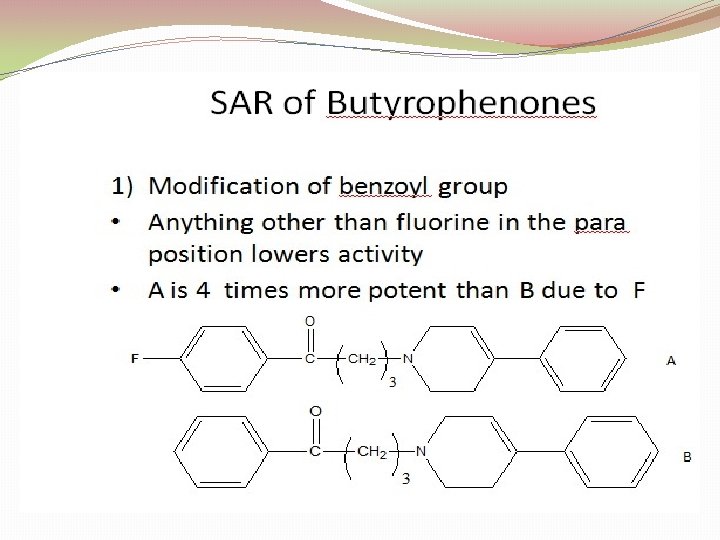
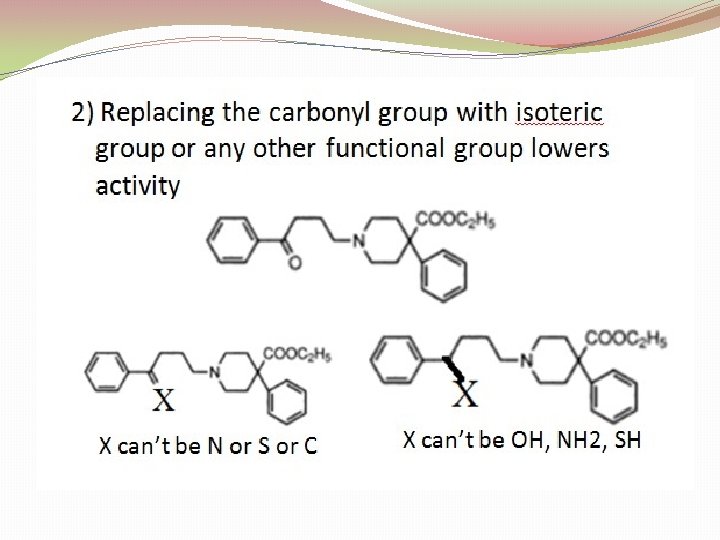
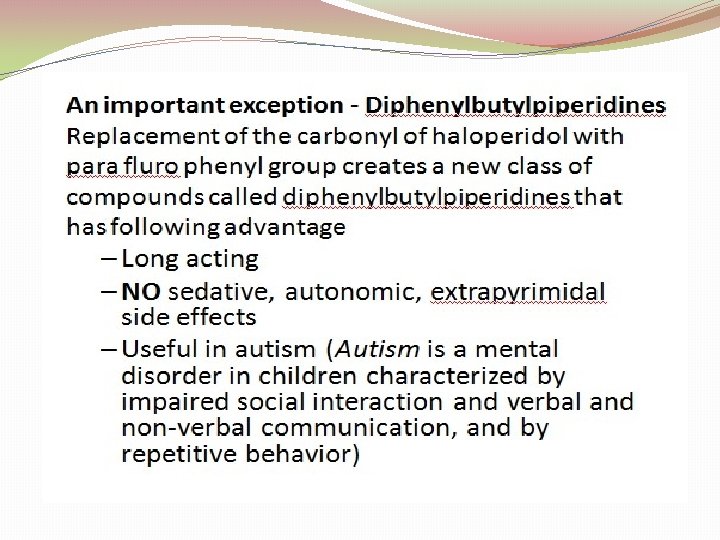
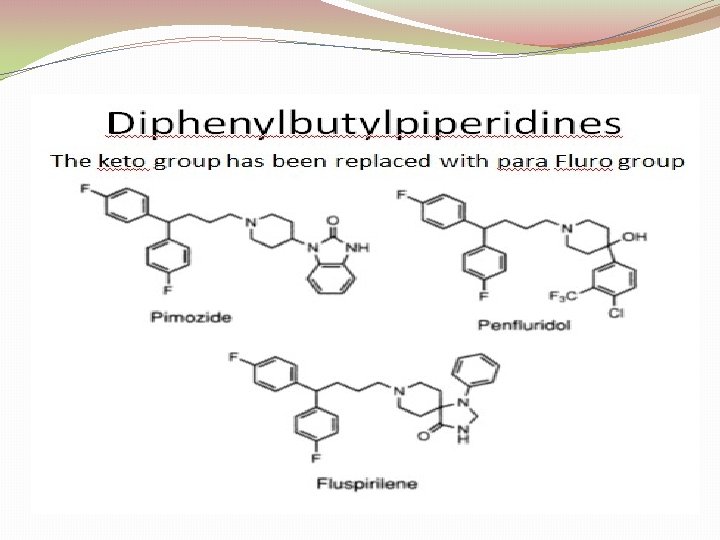
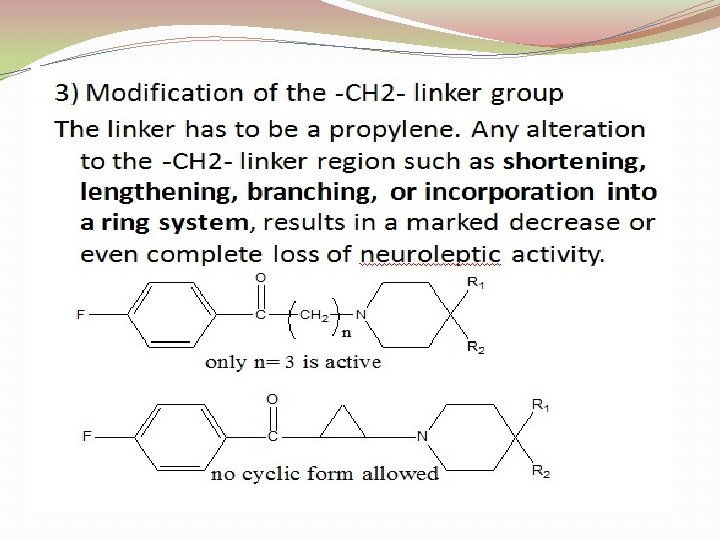
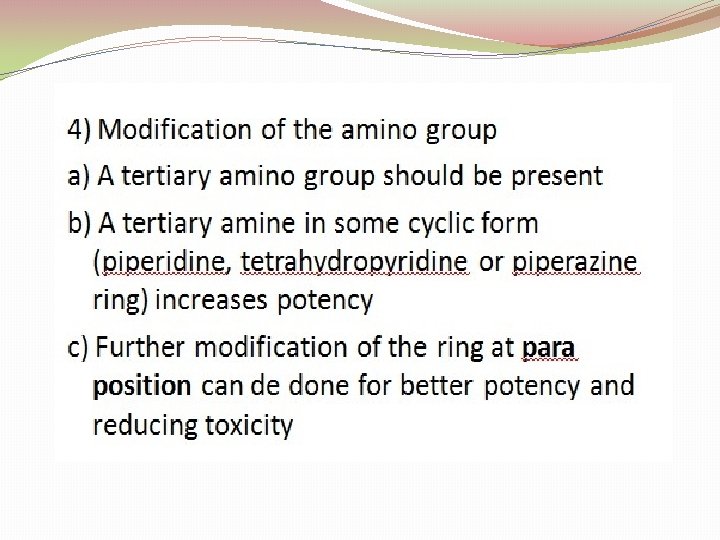
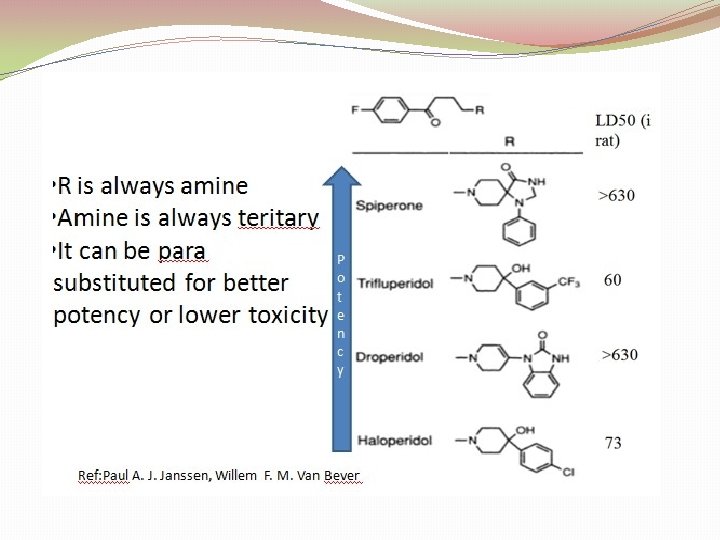
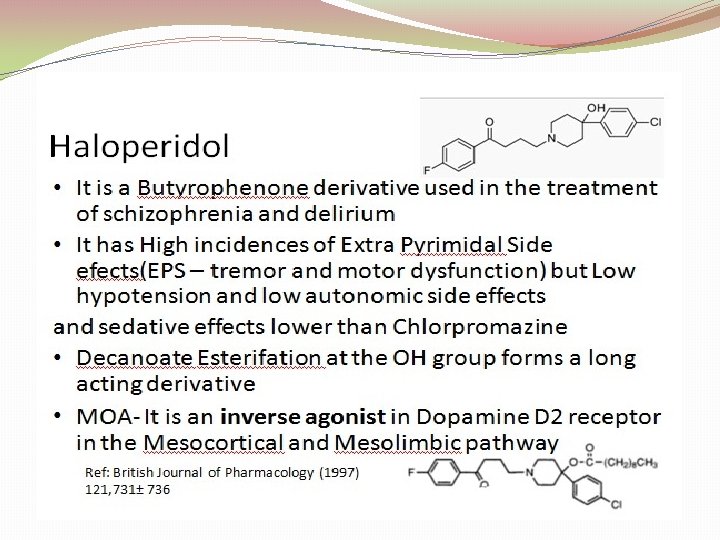
3. Butyrophenones And Related Structures:
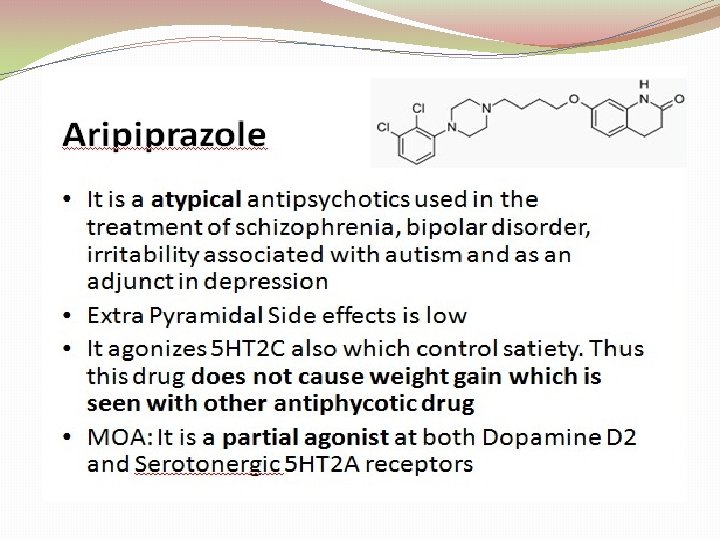
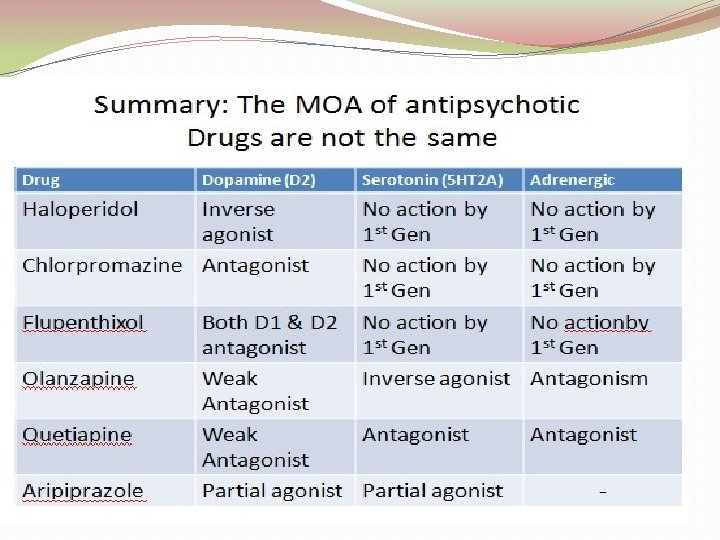
Atypical Antipsychotic Agents (second-generations) Include drugs such as clozapine, olanzapine, quetiapine, risperidone, aripiprazole, and ziprasidone. Atypical antipsychotics have generally shown to provide a greater reduction in both the positive and negative symptoms of schizophrenia, as well as an improvement in cognitive function.
Thus, atypical antipsychotics are currently considered to be the first line of treatment for individuals with schizophrenia. Affinity for 5 -HT 2 A receptors is a feature of several of the recently developed atypical antipsychotics. Many researchers believe that D 2 receptor antagonism, coupled with 5 -HT 2 A receptor antagonism, is responsible for the differentiation of effects observed with atypical anti psychotics. .
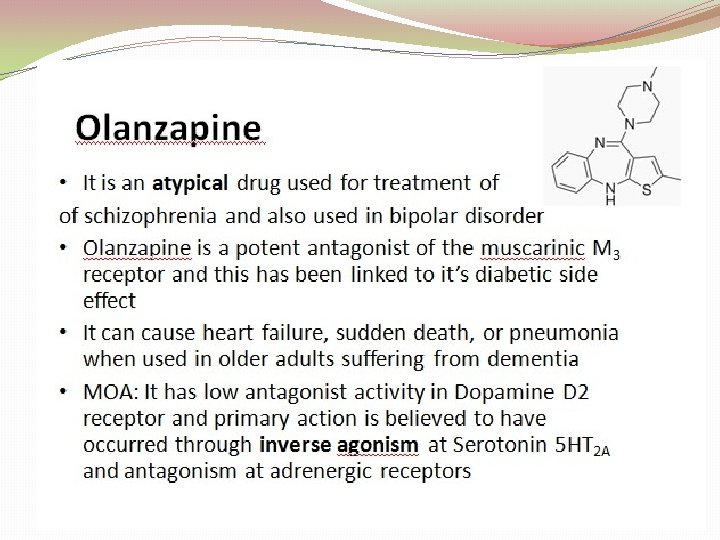
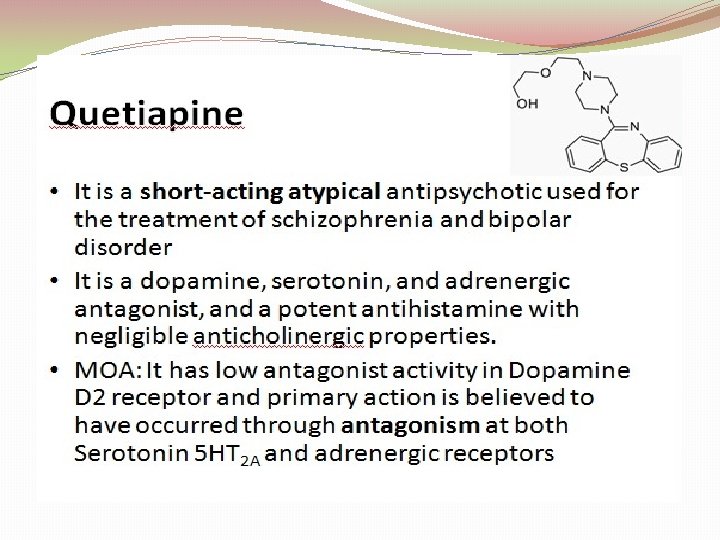

- Slides: 45