
PH 1600 Introductory Astronomy Lecture 8 Jupiter Uranus
- Slides: 52
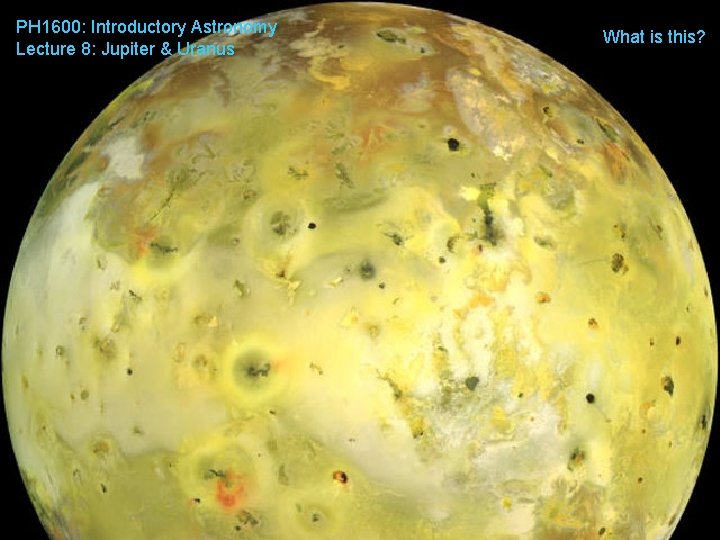
PH 1600: Introductory Astronomy Lecture 8: Jupiter & Uranus What is this?
PH 1600: Introductory Astronomy Lecture 8: Jupiter & Uranus Next Lecture: Saturn & Neptune School: Michigan Technological University Professor: Robert Nemiroff Online Course Web. CT pages: http: //courses. mtu. edu/ This class can be taken online ONLY, class attendance is not required!
You are responsible for… ¡ ¡ ¡ Lecture material Listed wikipedia entries l But not higher math APODs posted during the semester l ¡ APOD review every week during lecture Completing the Quizzes l l l Homework quizzes 1, 2 & 3 already due Homework 4 quiz due before 5 pm today See Web. CT at http: //courses. mtu. edu/
Wikipedia entries: ¡ ¡ Gas Giant Jupiter l l ¡ Io_(moon) Europa_(moon) Callisto_(moon) Ganymede_(moon) Uranus 4
Jovian Planets ¡ ¡ ¡ Jupiter, Saturn, Uranus, Neptune Large massive planets Rings Many moons Expansive and thick gaseous atmospheres
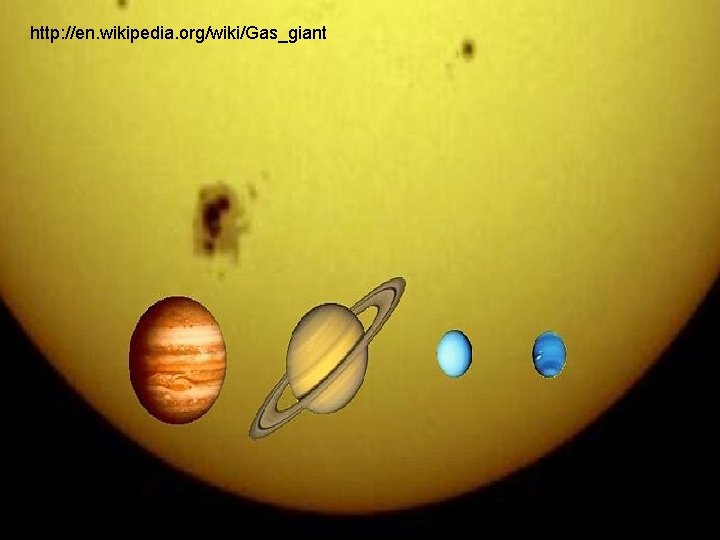
http: //en. wikipedia. org/wiki/Gas_giant 6
Jupiter ¡ ¡ ¡ Largest planet in Solar System Planet Radius is 11. 2 times Earth Orbital radius is 5. 2 times Earth Orbital period is 12 Earth years Upper clouds l l ¡ Liquid middle mostly Hydrogen Core of heavy elements Visited by spacecraft in 1970 s l Pioneer 11, 12; Voyager 1, 2
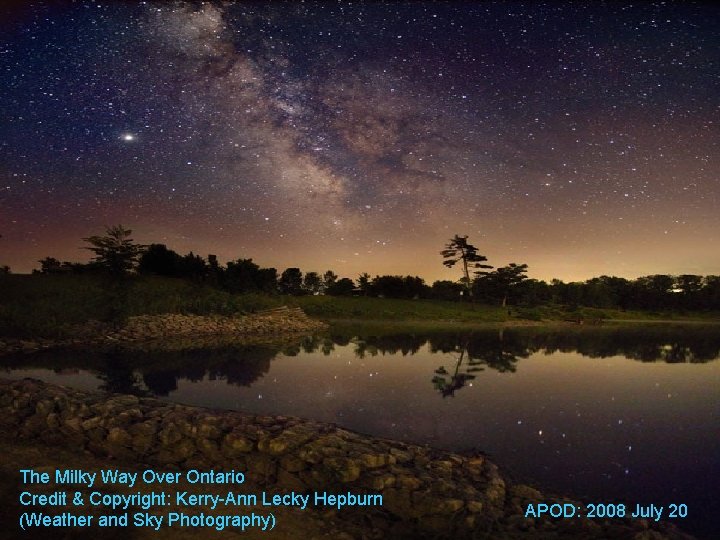
The Milky Way Over Ontario Credit & Copyright: Kerry-Ann Lecky Hepburn (Weather and Sky Photography) APOD: 2008 July 20
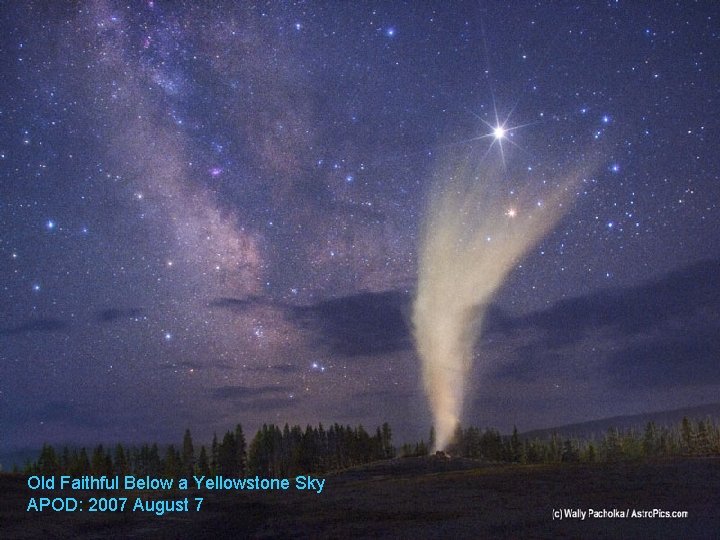
Old Faithful Below a Yellowstone Sky APOD: 2007 August 7
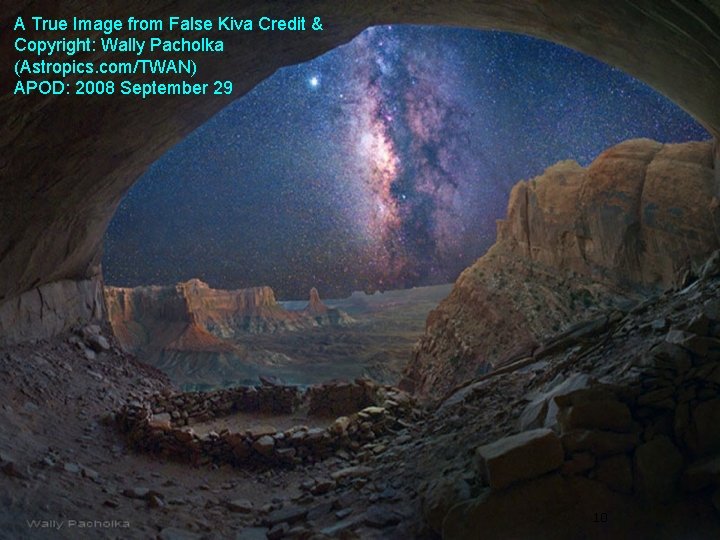
A True Image from False Kiva Credit & Copyright: Wally Pacholka (Astropics. com/TWAN) APOD: 2008 September 29 10
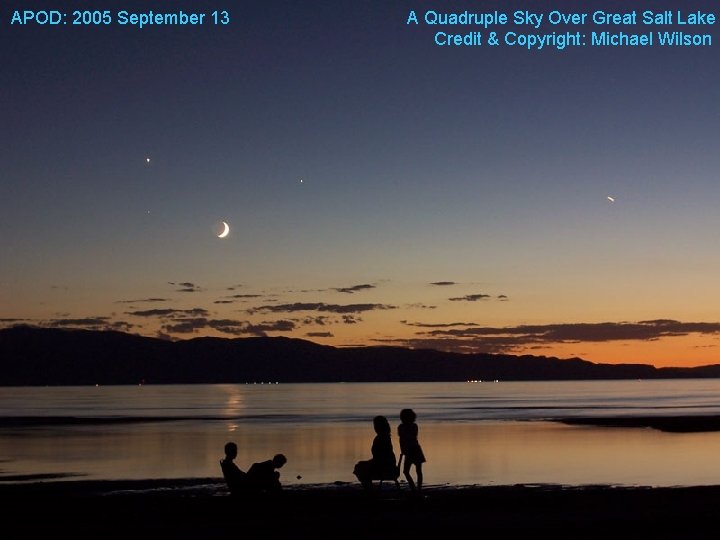
APOD: 2005 September 13 A Quadruple Sky Over Great Salt Lake Credit & Copyright: Michael Wilson
Jupiter: Composition ¡ Core: rocky? l ¡ Mantle: strange “metal” l l ¡ ~10% of radius? Metallic hydrogen: ~80% radius Liquid hydrogen Atmosphere: Gas l Outer ~1, 000 km 12
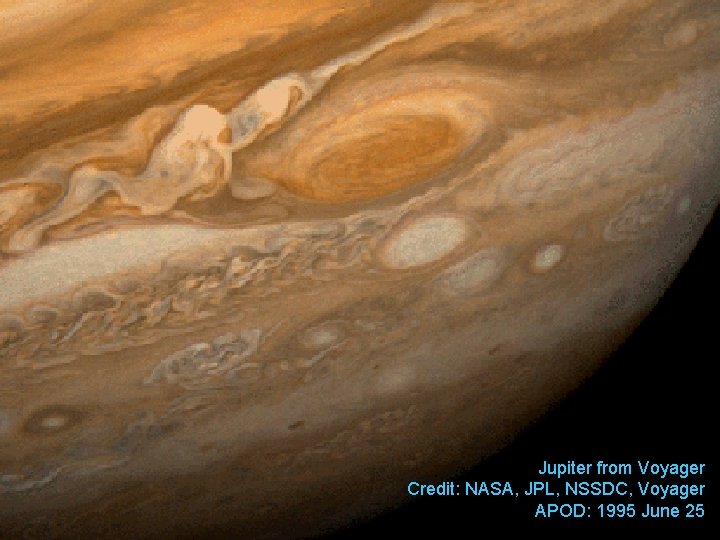
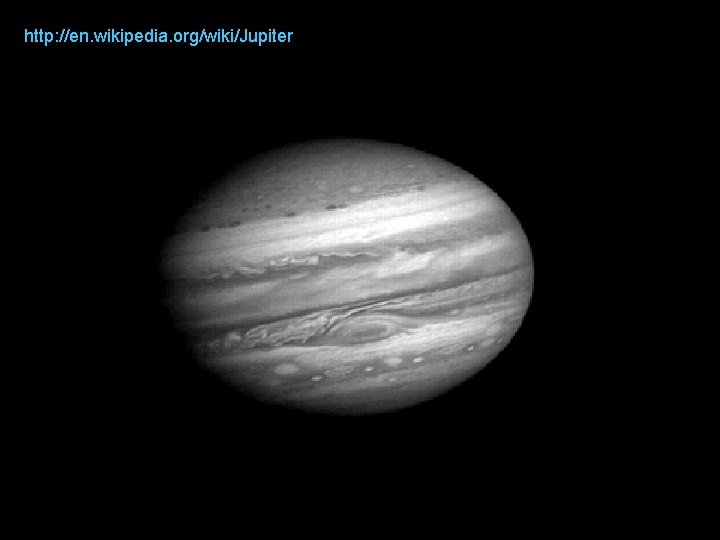
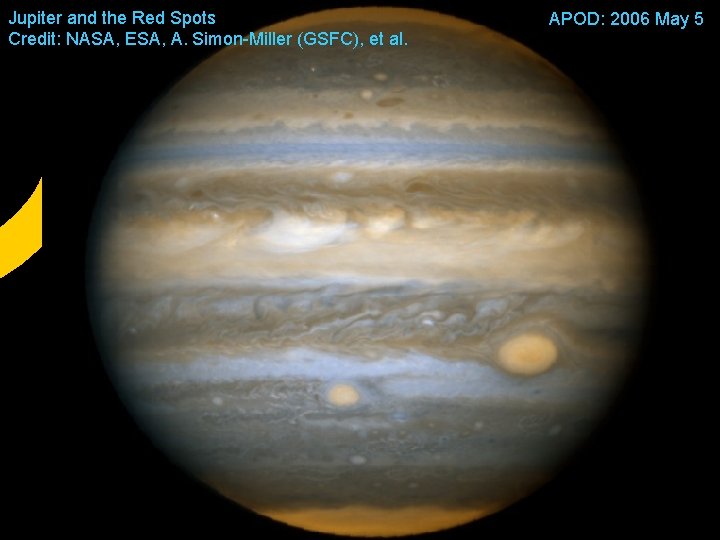
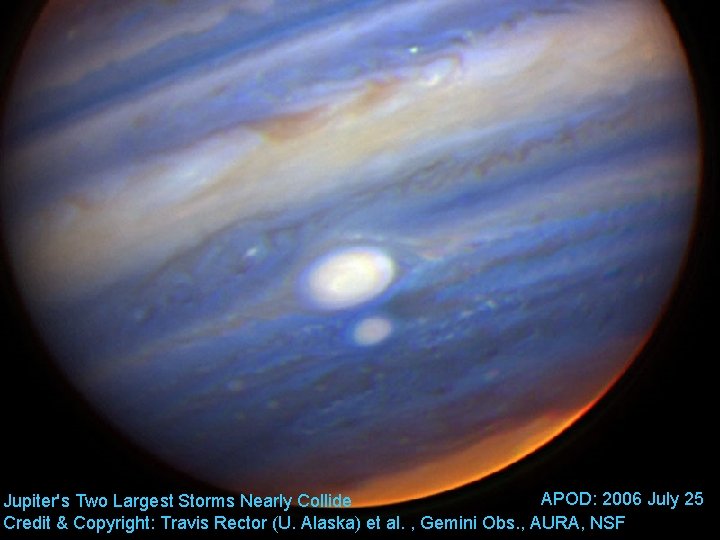
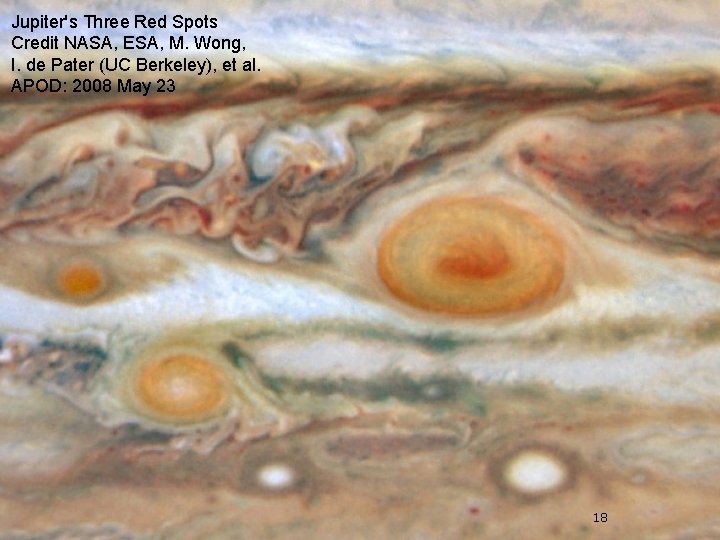
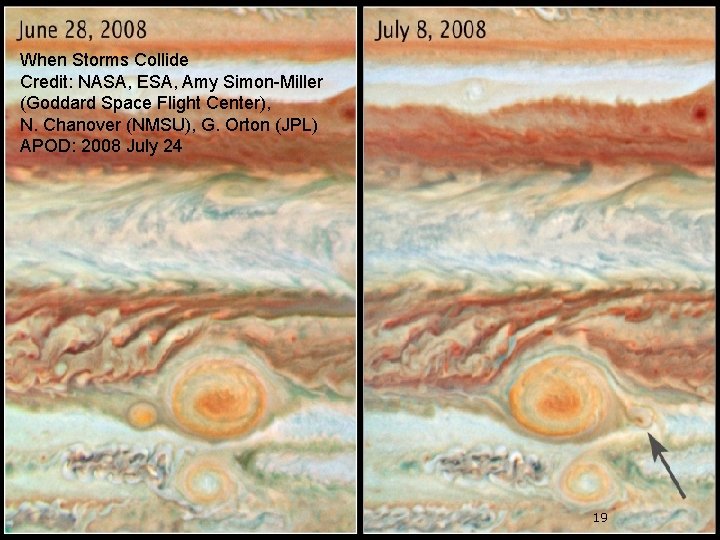
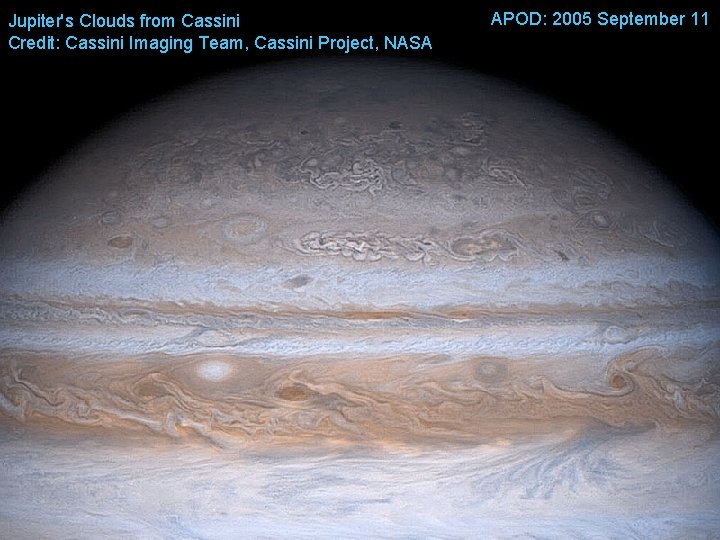
Jupiter’s Atmosphere ¡ ¡ Mostly Hydrogen, then Helium Rotates in about 10 hours Zones and belts Giant hurricane-like storm systems l l l ¡ Colors have unknown cause l ¡ Great Red Spot Recently: Two smaller red spots Always: Smaller white spots Hydrogen and Helium are transparent Radiates more energy than receives from the Sun
Jupiter from Voyager Credit: NASA, JPL, NSSDC, Voyager APOD: 1995 June 25
http: //en. wikipedia. org/wiki/Jupiter 15
Jupiter and the Red Spots Credit: NASA, ESA, A. Simon-Miller (GSFC), et al. APOD: 2006 May 5
APOD: 2006 July 25 Jupiter's Two Largest Storms Nearly Collide Credit & Copyright: Travis Rector (U. Alaska) et al. , Gemini Obs. , AURA, NSF
Jupiter's Three Red Spots Credit NASA, ESA, M. Wong, I. de Pater (UC Berkeley), et al. APOD: 2008 May 23 18
When Storms Collide Credit: NASA, ESA, Amy Simon-Miller (Goddard Space Flight Center), N. Chanover (NMSU), G. Orton (JPL) APOD: 2008 July 24 19
Jupiter's Clouds from Cassini Credit: Cassini Imaging Team, Cassini Project, NASA APOD: 2005 September 11
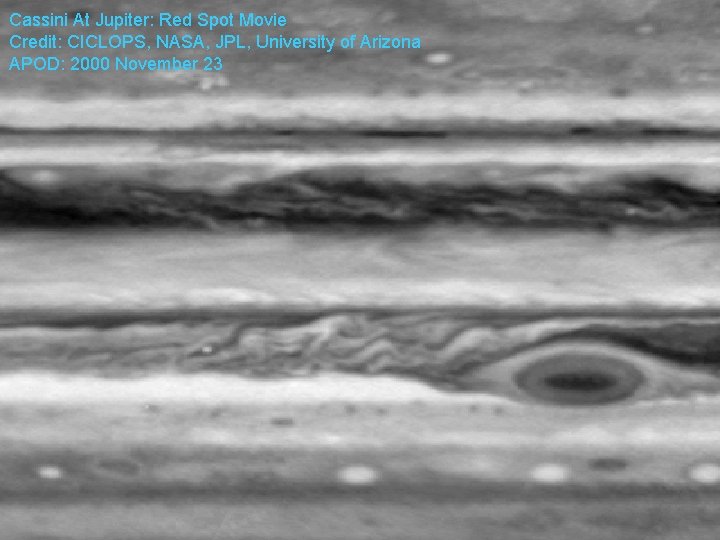
Cassini At Jupiter: Red Spot Movie Credit: CICLOPS, NASA, JPL, University of Arizona APOD: 2000 November 23
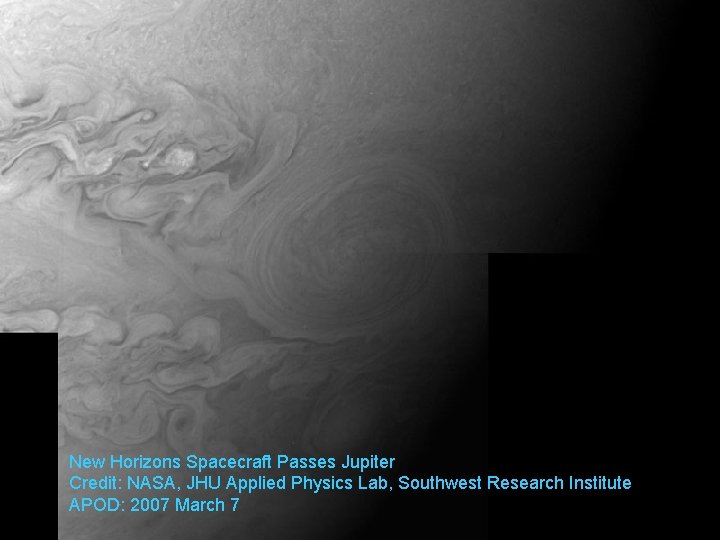
New Horizons Spacecraft Passes Jupiter Credit: NASA, JHU Applied Physics Lab, Southwest Research Institute APOD: 2007 March 7
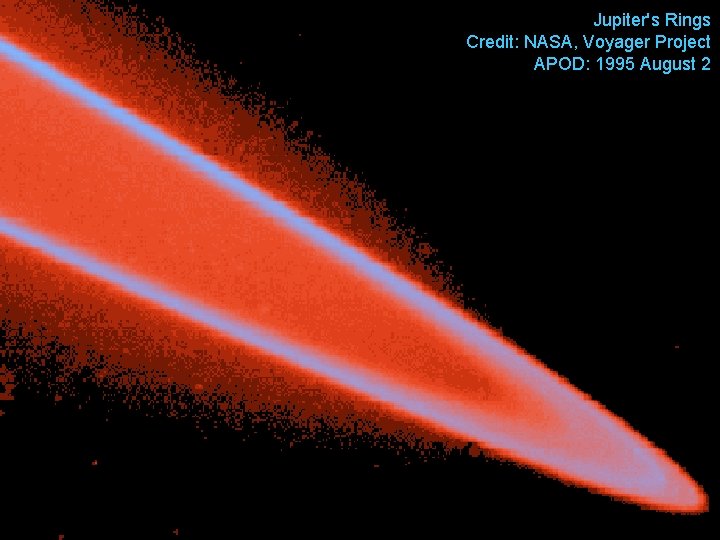
Jupiter's Rings Credit: NASA, Voyager Project APOD: 1995 August 2
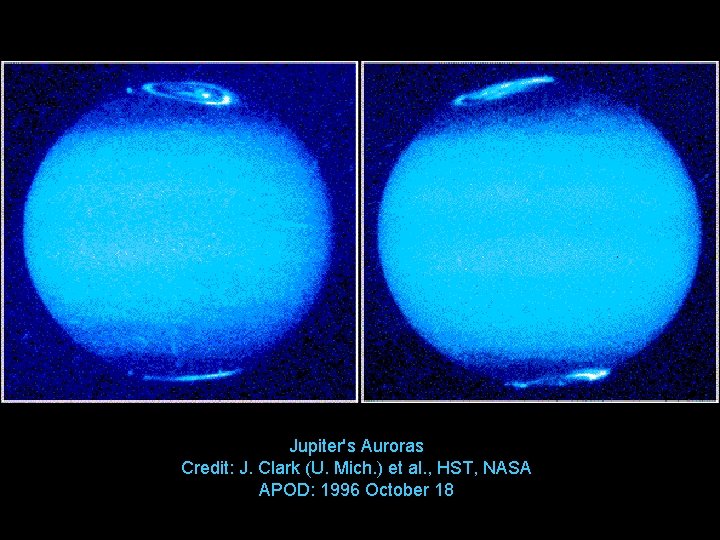
Jupiter's Auroras Credit: J. Clark (U. Mich. ) et al. , HST, NASA APOD: 1996 October 18
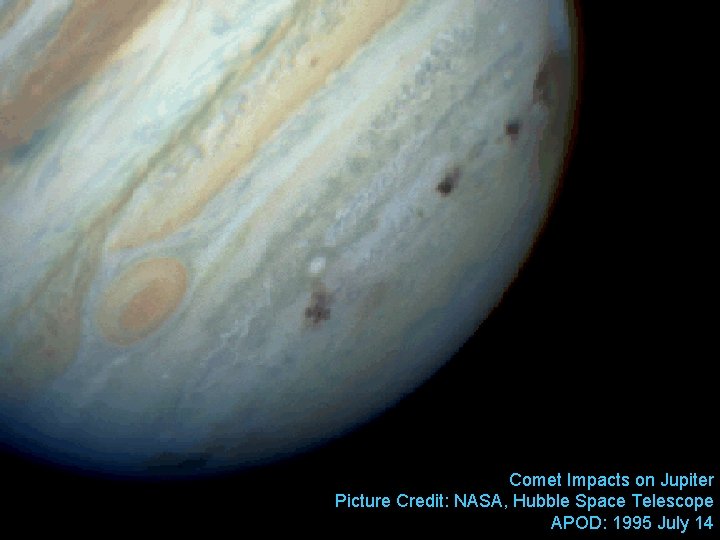
Comet Impacts on Jupiter Picture Credit: NASA, Hubble Space Telescope APOD: 1995 July 14
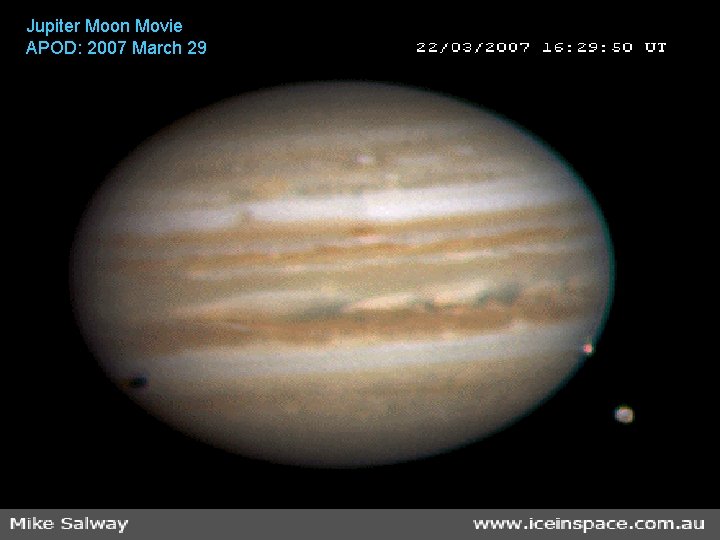
Jupiter Moon Movie APOD: 2007 March 29
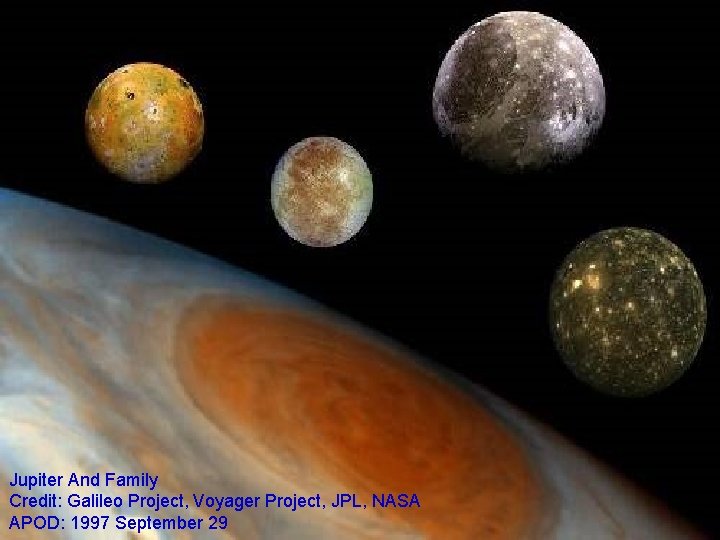
Jupiter’s Moons ¡ Four largest: Galilean Moons l ¡ ¡ Europa, Callisto, Ganymede, Io Many smaller moons Jupiter has a few small rings
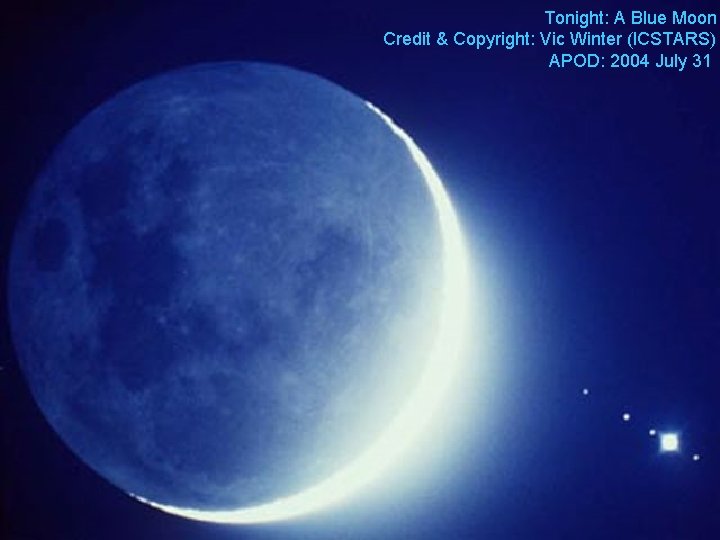
Tonight: A Blue Moon Credit & Copyright: Vic Winter (ICSTARS) APOD: 2004 July 31
Jupiter And Family Credit: Galileo Project, Voyager Project, JPL, NASA APOD: 1997 September 29
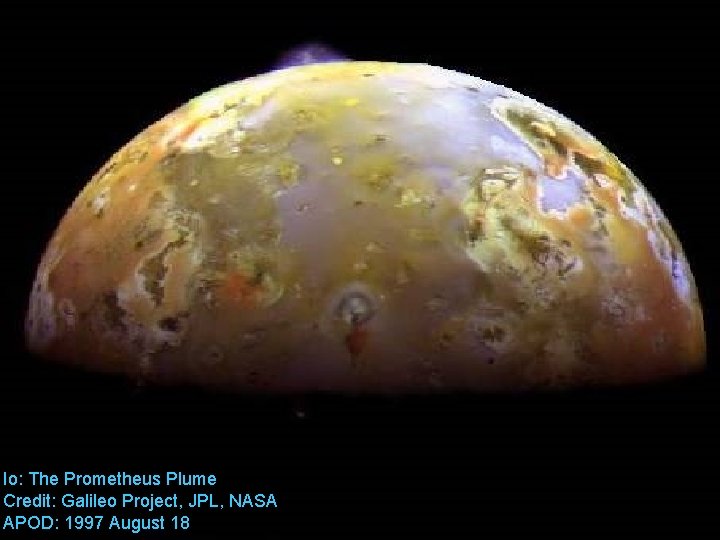
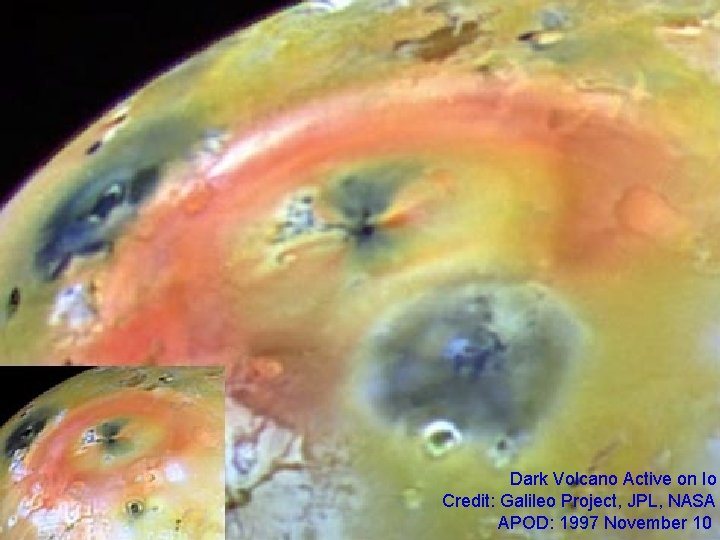
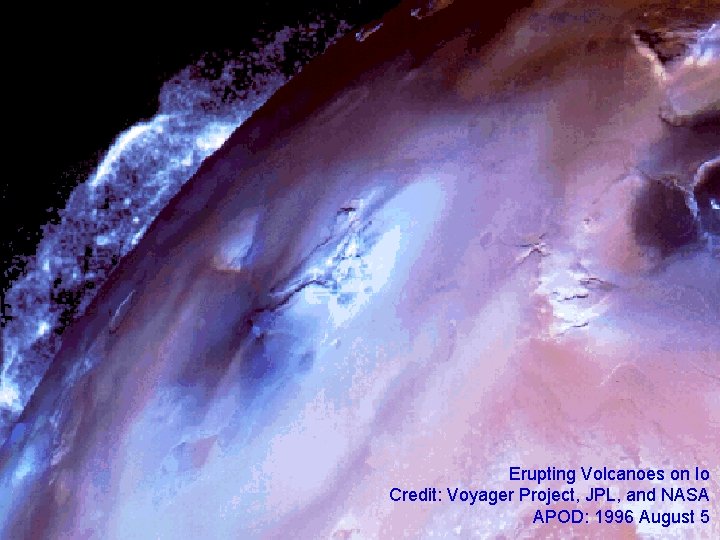
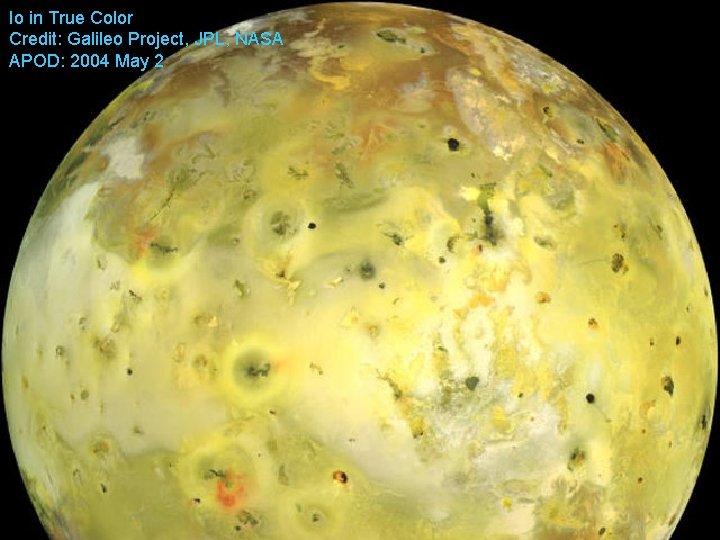
Io ¡ ¡ ¡ “Eye-oh” Very few craters Hundreds of active volcanoes Flex heated by Jupiter, Ganymede, & Europa Moon turns inside out every few million years Yellow color caused by Sulfur
Io: The Prometheus Plume Credit: Galileo Project, JPL, NASA APOD: 1997 August 18
Dark Volcano Active on Io Credit: Galileo Project, JPL, NASA APOD: 1997 November 10
Erupting Volcanoes on Io Credit: Voyager Project, JPL, and NASA APOD: 1996 August 5
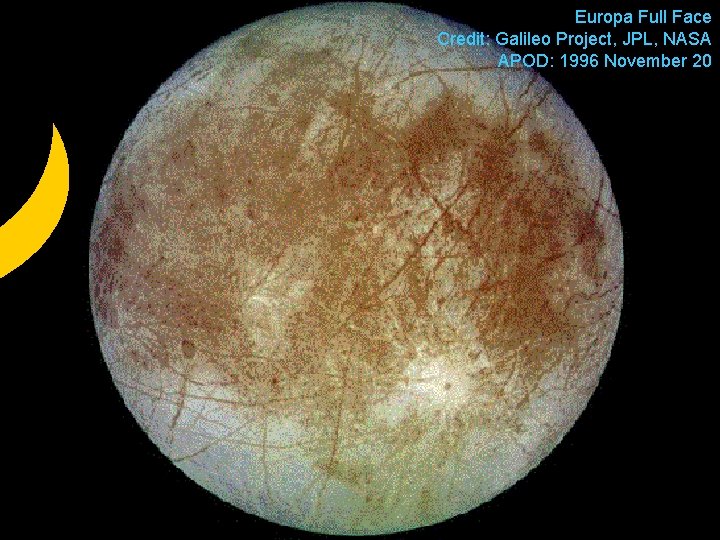
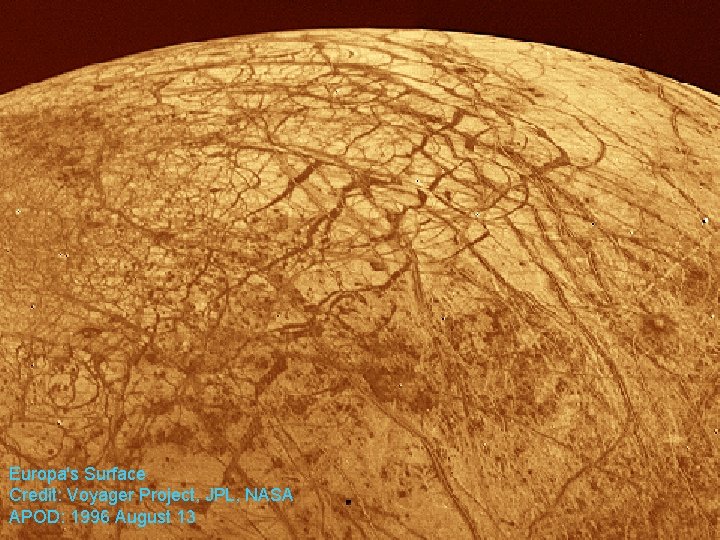
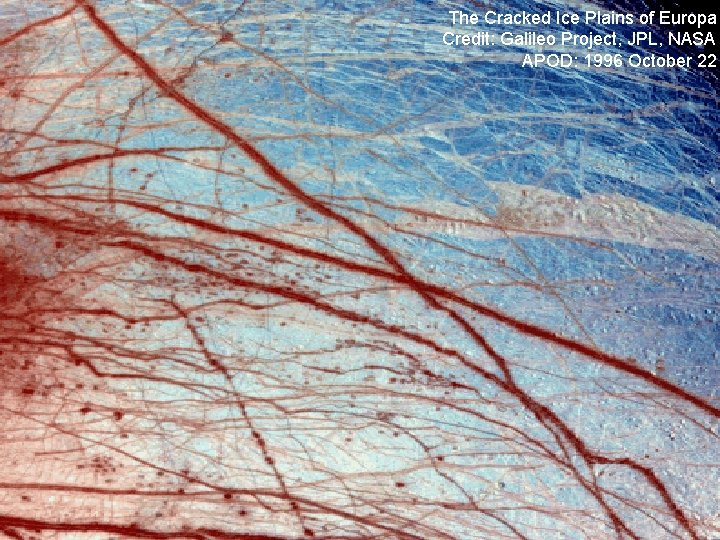
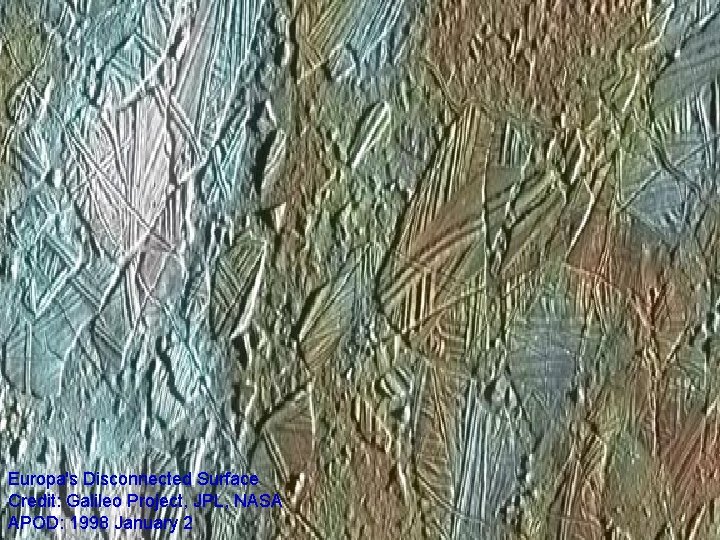
Europa ¡ ¡ ¡ Highest albedo of any Galilean moon Tidal and/or radioactive heating makes the interior of Europa unusually warm Possibly water oceans with life beneath the surface Mostly frozen water ice with a mix of rock Ice plates move like Earth’s tectonic plates
Europa Full Face Credit: Galileo Project, JPL, NASA APOD: 1996 November 20
Europa's Surface Credit: Voyager Project, JPL, NASA APOD: 1996 August 13
The Cracked Ice Plains of Europa Credit: Galileo Project, JPL, NASA APOD: 1996 October 22
Europa's Disconnected Surface Credit: Galileo Project, JPL, NASA APOD: 1998 January 2
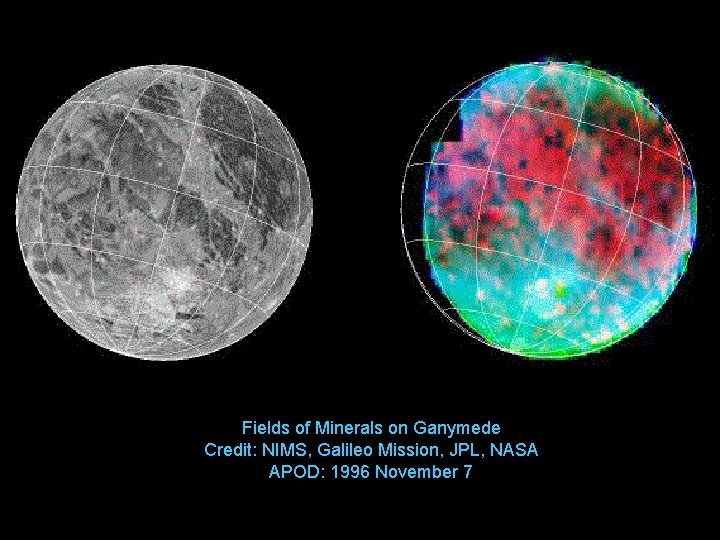
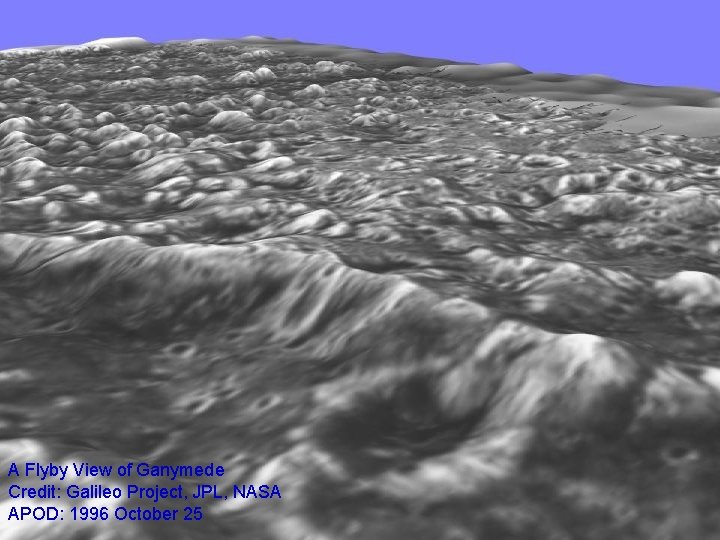
Ganymede ¡ Largest moon in the Solar System l l ¡ ¡ Larger than planet Mercury Less dense than Mercury Mostly frozen water-ice over a rocky core Strange grooved terrain is younger than most impact craters
Fields of Minerals on Ganymede Credit: NIMS, Galileo Mission, JPL, NASA APOD: 1996 November 7
A Flyby View of Ganymede Credit: Galileo Project, JPL, NASA APOD: 1996 October 25
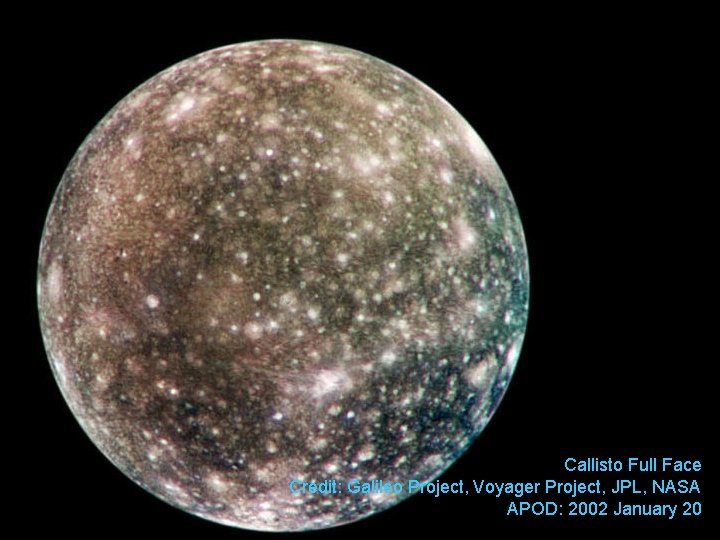
Callisto ¡ ¡ ¡ Looks like giant smashed ice-ball Dark ice-covered world Has large impact craters that show concentric rings Strangely, very few craters are smaller than 100 meters across Possibly oceans deep inside
Callisto Full Face Credit: Galileo Project, Voyager Project, JPL, NASA APOD: 2002 January 20
Uranus ¡ ¡ Excuse me? Very similar to Neptune Planet radius is 4 times Earth Spin axis is very tilted l ¡ ¡ Orbital radius is 19 times Earth Orbital period is 84 Earth Years Many small moons, rings Atmosphere almost featureless l ¡ Strange seasons Mostly Hydrogen and Helium Visited by Voyager 2 in 1986
Uranus: Composition ¡ Core: center l l ¡ Middle: Mantle l l ¡ Rock Out to ~20% radius Ices: water, ammonia, methane Hot dense fluid Out to ~80% radius Most of Uranus’ mass Atmosphere l l Gas: hydrogen, helium Outer ~20% radius, very little mass 45
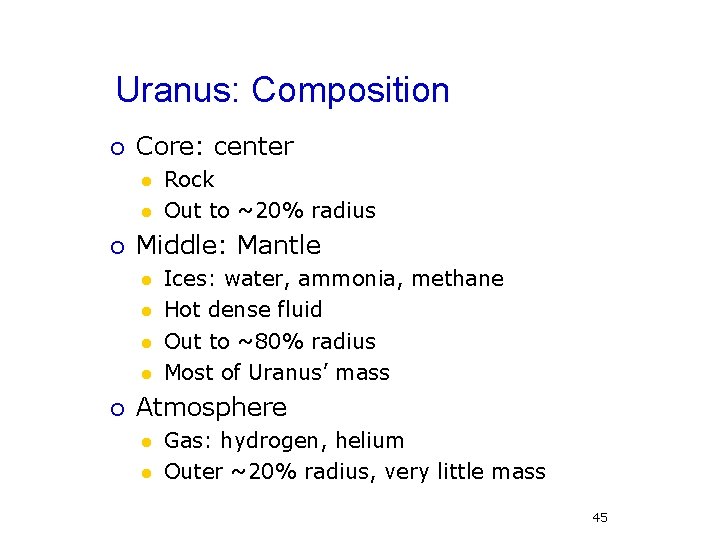
Uranus: The Tilted Planet Credit: Voyager 2, NASA APOD: 1997 November 15
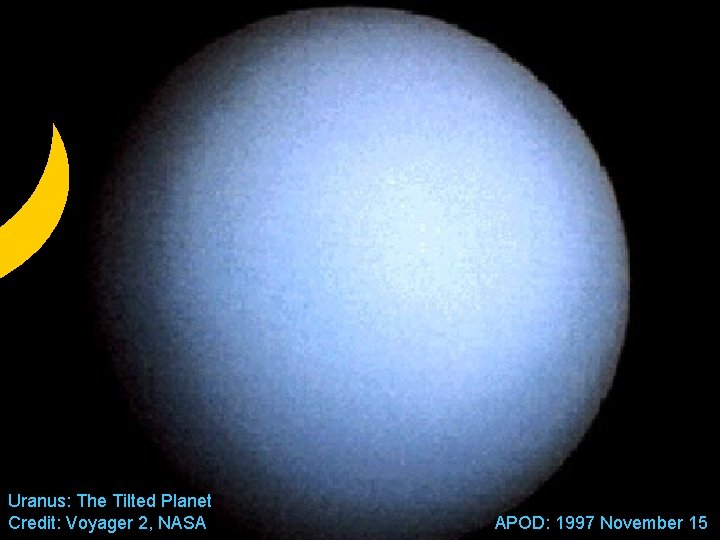
A Sharper View of a Tilted Planet Credit: Lawrence Sromovsky, (Univ. Wisconsin-Madison), Keck Observatory APOD: 2004 November 18
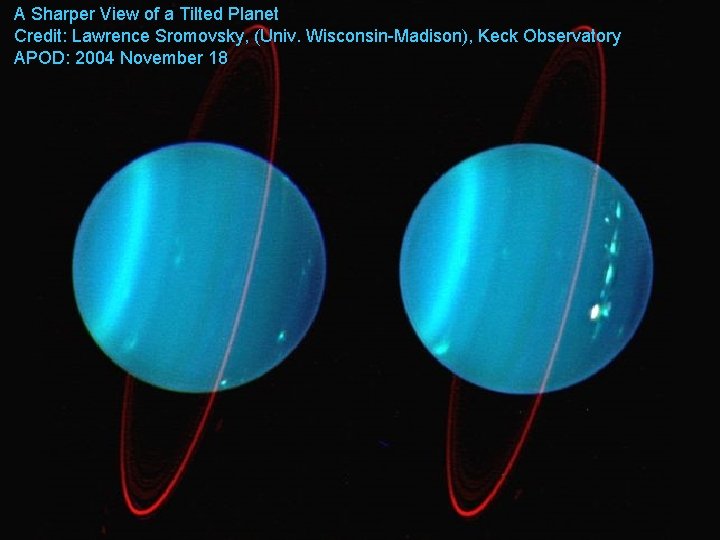
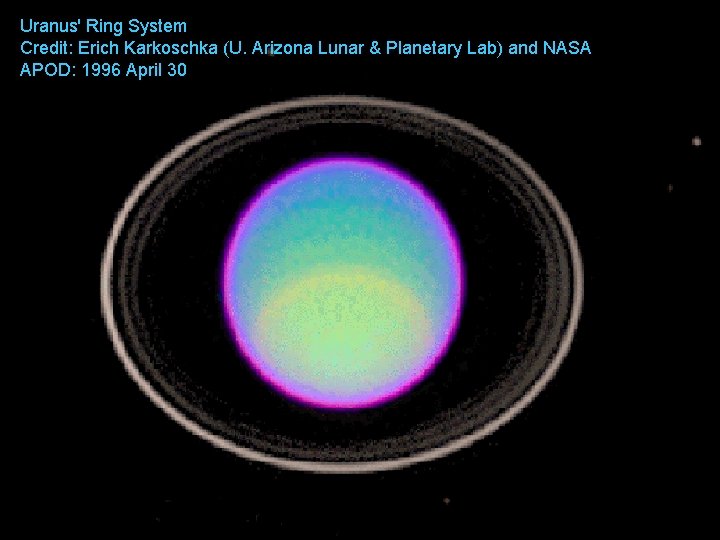
Uranus' Ring System Credit: Erich Karkoschka (U. Arizona Lunar & Planetary Lab) and NASA APOD: 1996 April 30
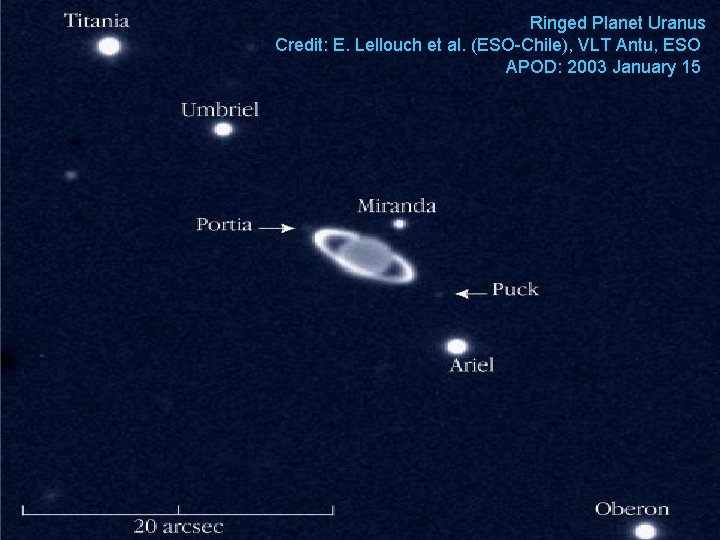
Ringed Planet Uranus Credit: E. Lellouch et al. (ESO-Chile), VLT Antu, ESO APOD: 2003 January 15
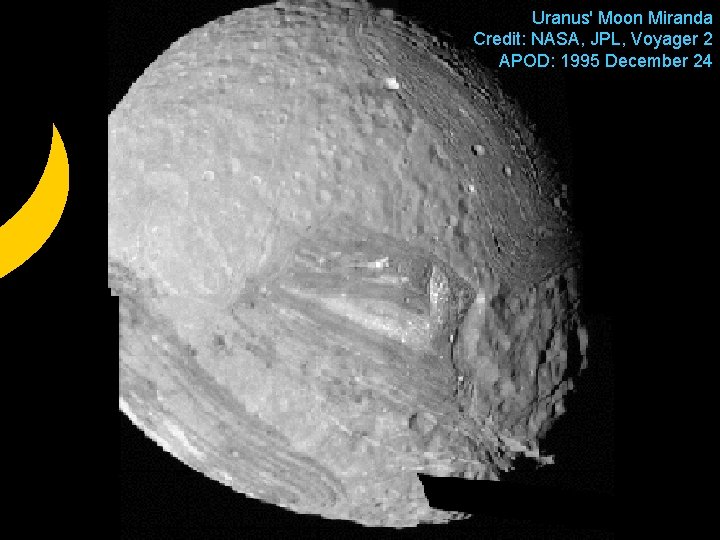
Uranus' Moon Miranda Credit: NASA, JPL, Voyager 2 APOD: 1995 December 24
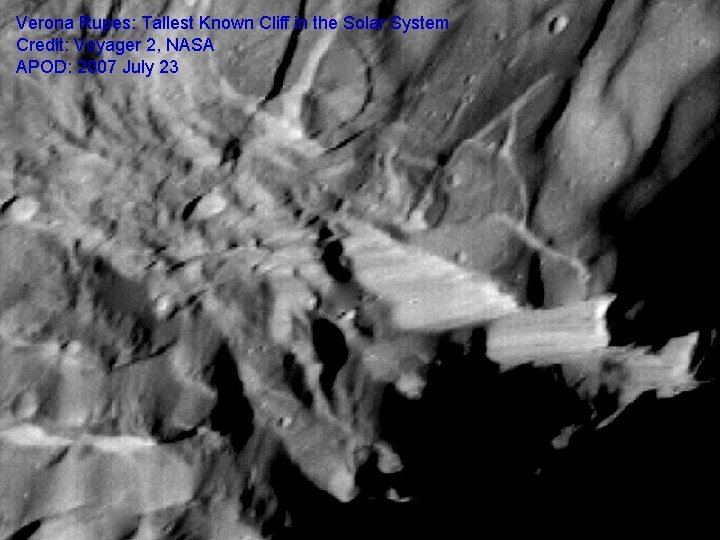
Verona Rupes: Tallest Known Cliff in the Solar System Credit: Voyager 2, NASA APOD: 2007 July 23
Io in True Color Credit: Galileo Project, JPL, NASA APOD: 2004 May 2