
PH 1 a circular motion Centrifugalcentripetal force Sergi
- Slides: 28
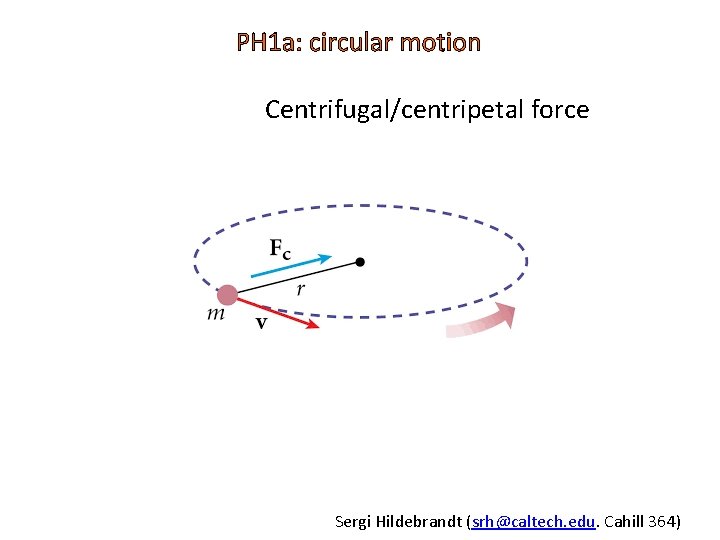
PH 1 a: circular motion Centrifugal/centripetal force Sergi Hildebrandt (srh@caltech. edu. Cahill 364)
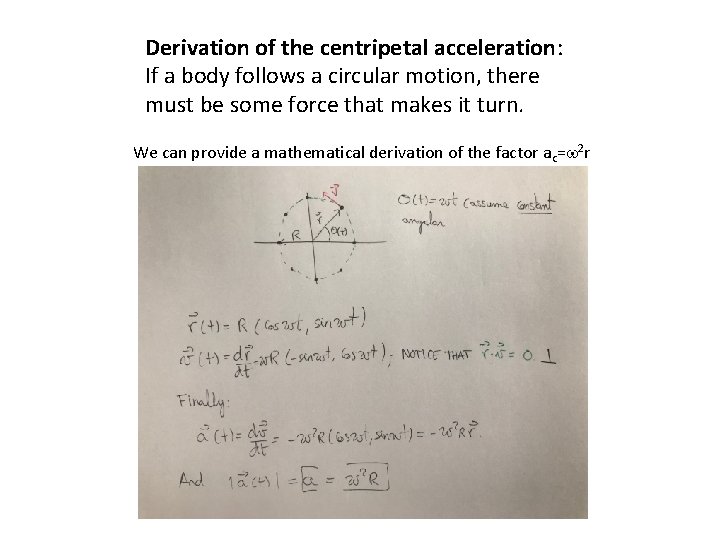
Derivation of the centripetal acceleration: If a body follows a circular motion, there must be some force that makes it turn. We can provide a mathematical derivation of the factor ac=w 2 r
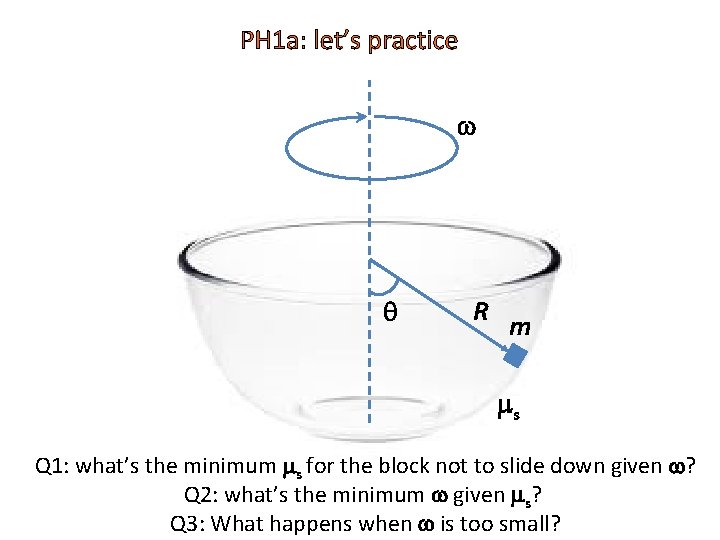
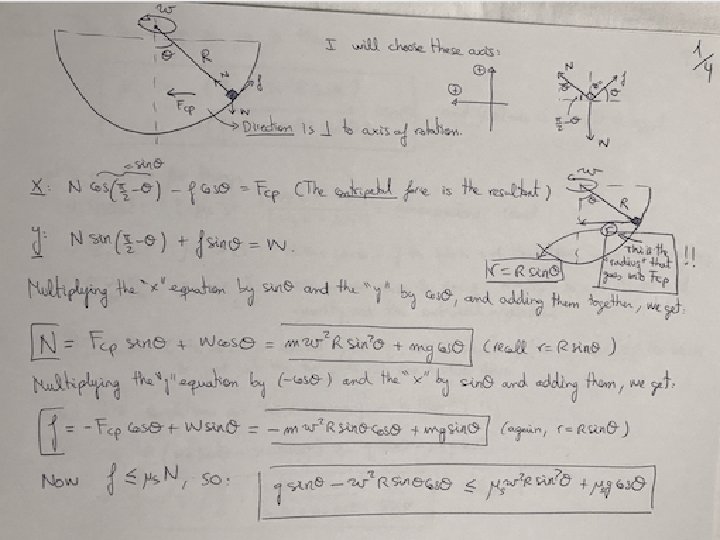
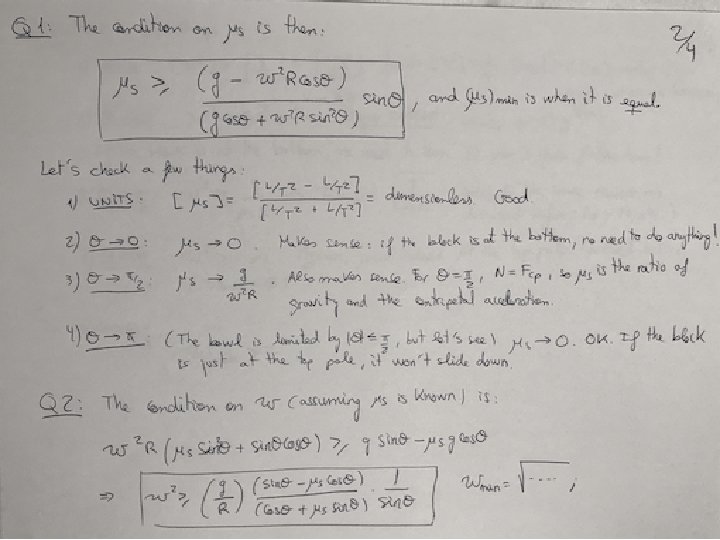
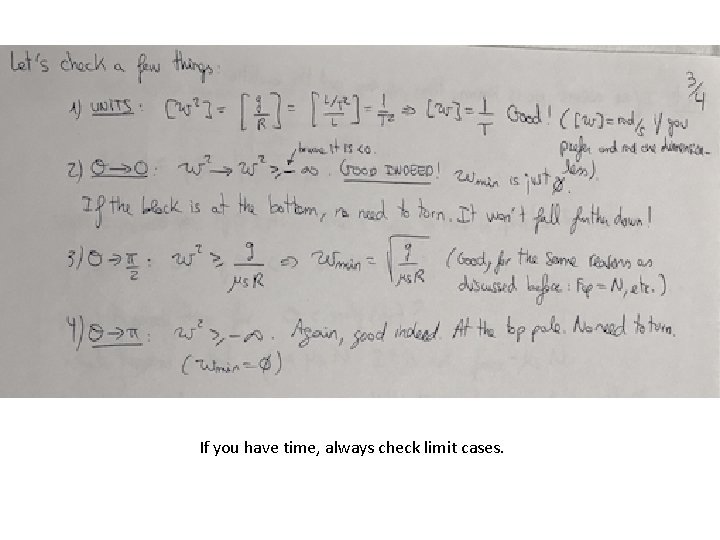
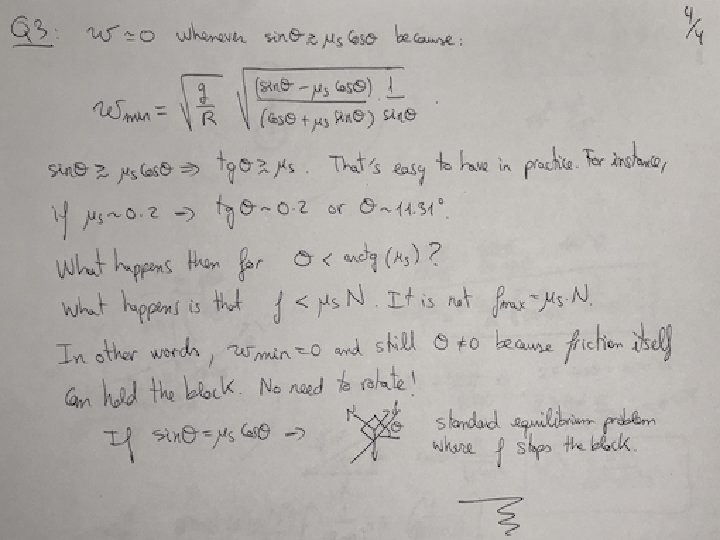
PH 1 a: let’s practice w q R m ms Q 1: what’s the minimum ms for the block not to slide down given w? Q 2: what’s the minimum w given ms? Q 3: What happens when w is too small?
If you have time, always check limit cases.
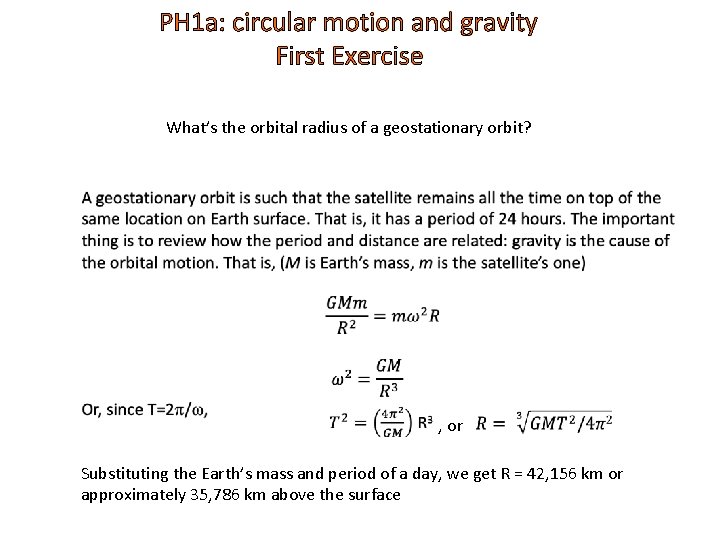
PH 1 a: circular motion and gravity First Exercise What’s the orbital radius of a geostationary orbit? , or Substituting the Earth’s mass and period of a day, we get R = 42, 156 km or approximately 35, 786 km above the surface
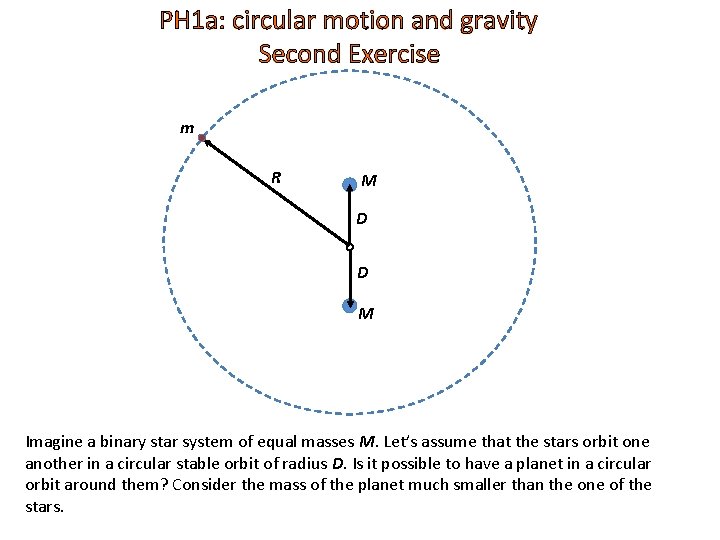
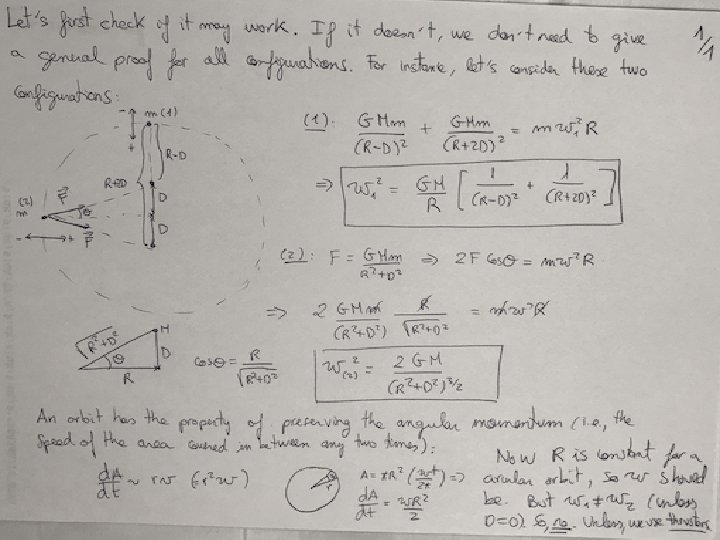
PH 1 a: circular motion and gravity Second Exercise m R M D o D M Imagine a binary star system of equal masses M. Let’s assume that the stars orbit one another in a circular stable orbit of radius D. Is it possible to have a planet in a circular orbit around them? Consider the mass of the planet much smaller than the one of the stars.
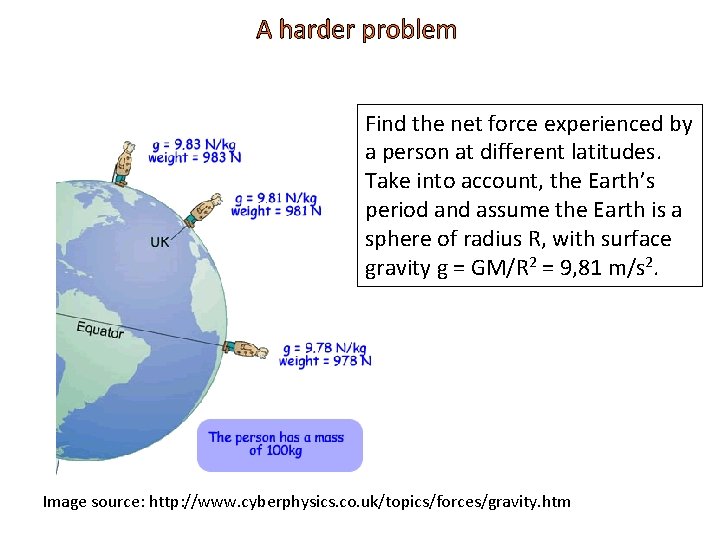
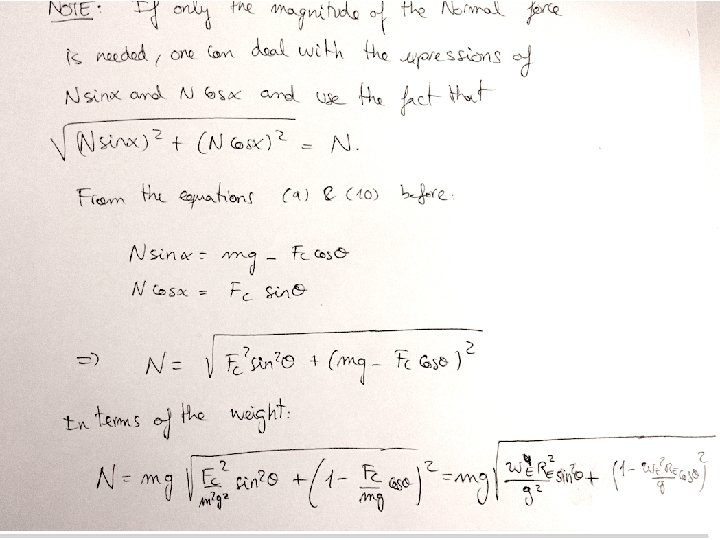
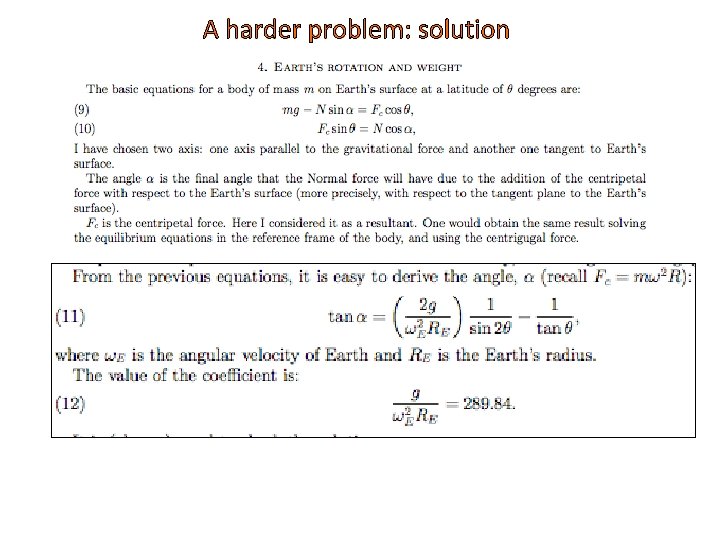
A harder problem Find the net force experienced by a person at different latitudes. Take into account, the Earth’s period and assume the Earth is a sphere of radius R, with surface gravity g = GM/R 2 = 9, 81 m/s 2. Image source: http: //www. cyberphysics. co. uk/topics/forces/gravity. htm
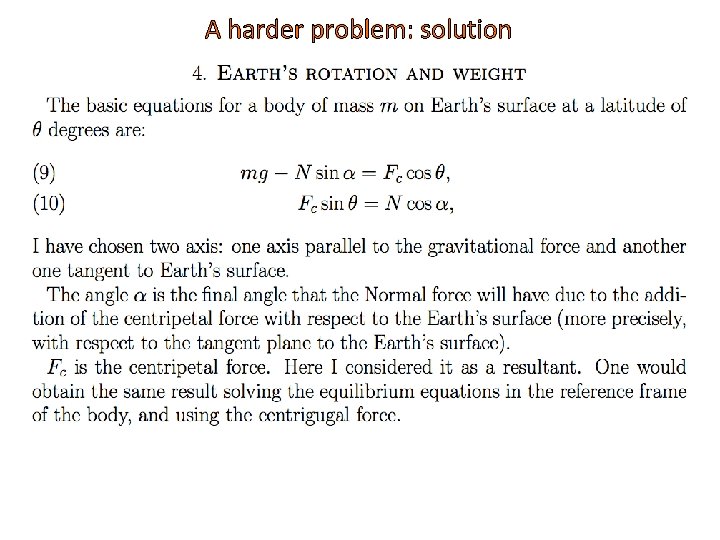
A harder problem: solution
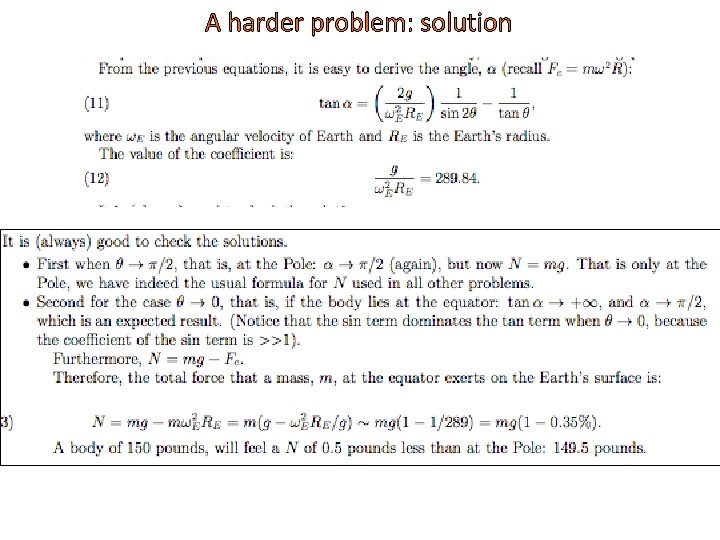
A harder problem: solution
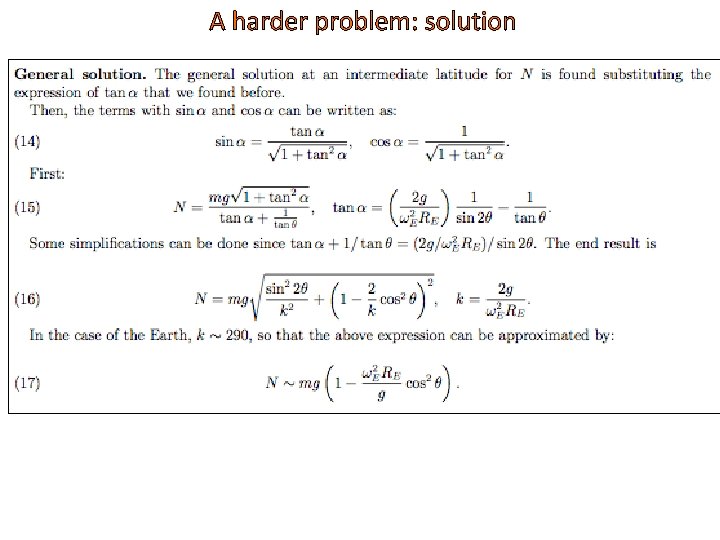
A harder problem: solution
A harder problem: solution
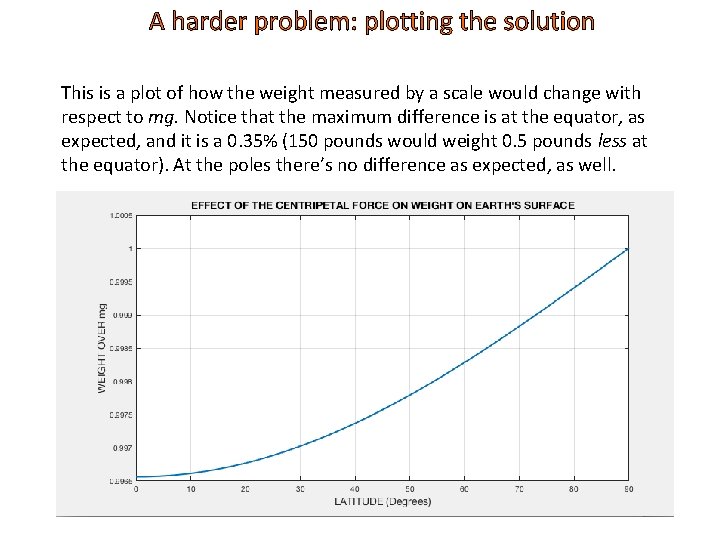
A harder problem: plotting the solution This is a plot of how the weight measured by a scale would change with respect to mg. Notice that the maximum difference is at the equator, as expected, and it is a 0. 35% (150 pounds would weight 0. 5 pounds less at the equator). At the poles there’s no difference as expected, as well.
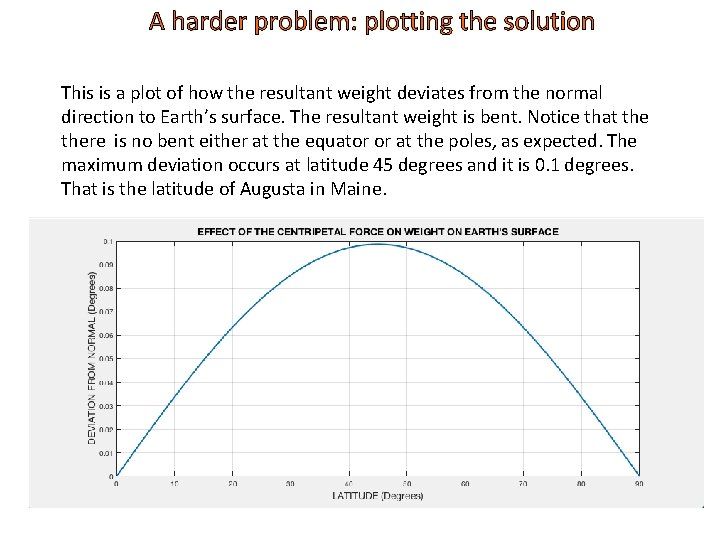
A harder problem: plotting the solution This is a plot of how the resultant weight deviates from the normal direction to Earth’s surface. The resultant weight is bent. Notice that there is no bent either at the equator or at the poles, as expected. The maximum deviation occurs at latitude 45 degrees and it is 0. 1 degrees. That is the latitude of Augusta in Maine.
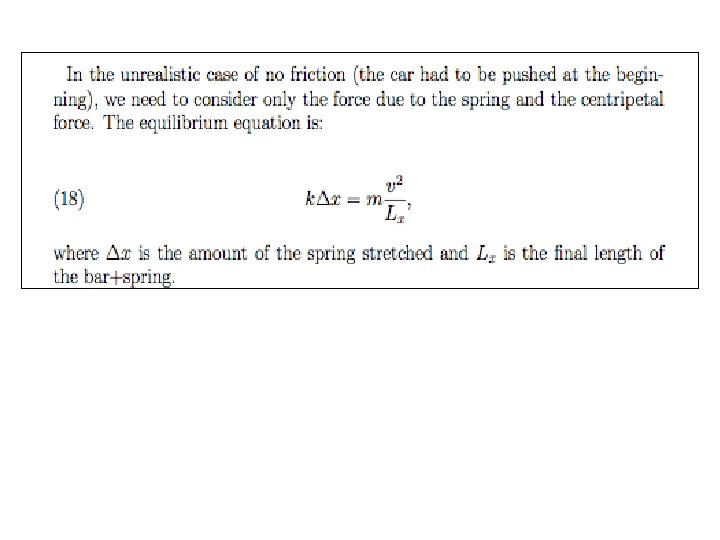
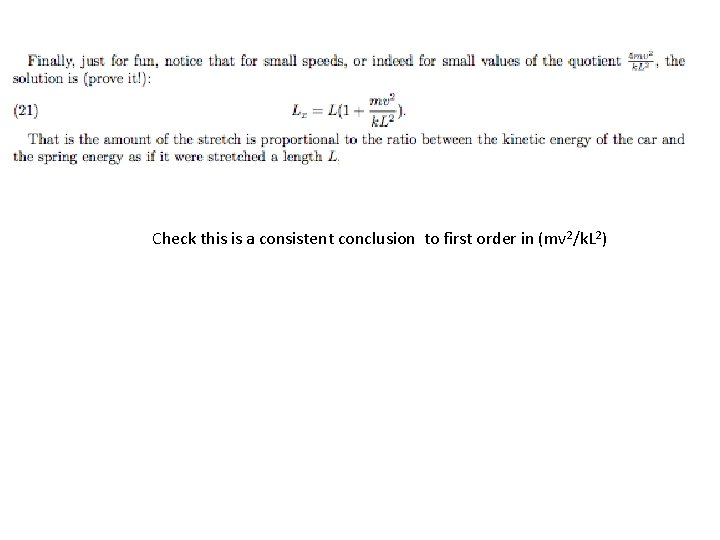
Check this is a consistent conclusion to first order in (mv 2/k. L 2)
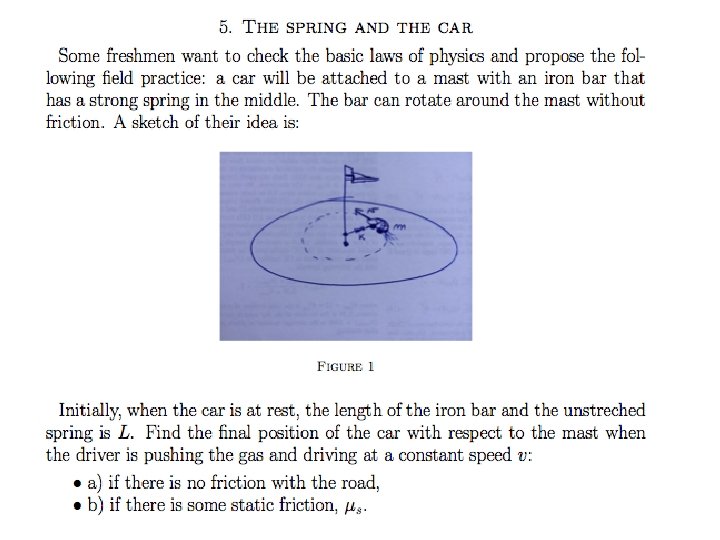
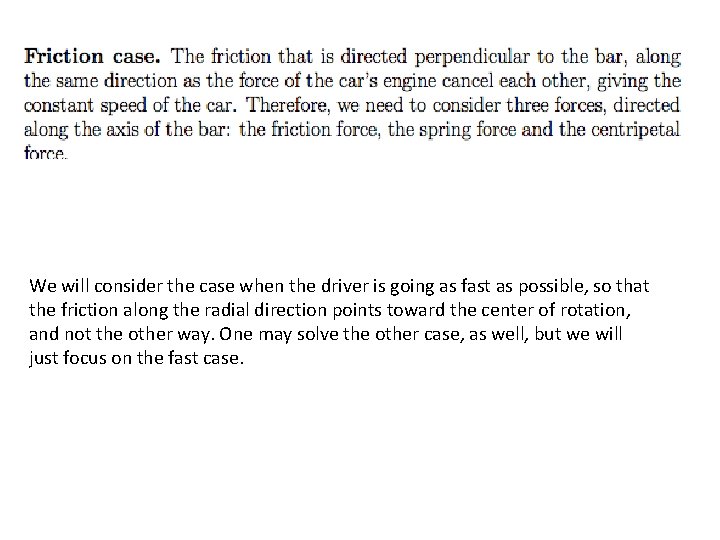
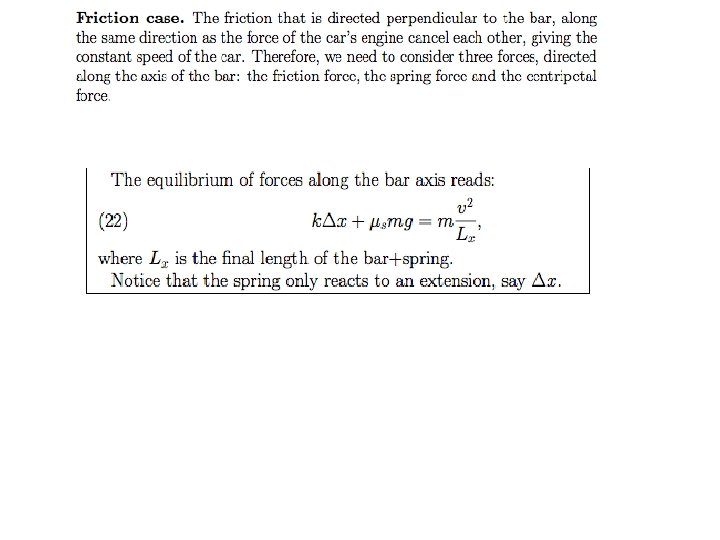
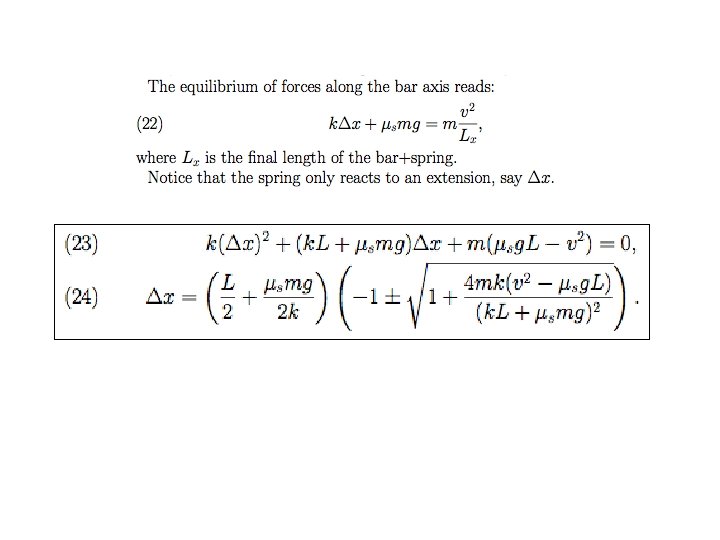
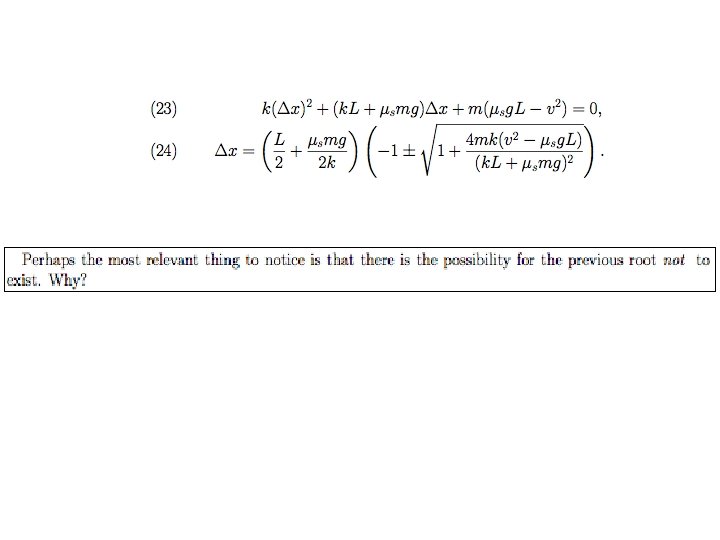
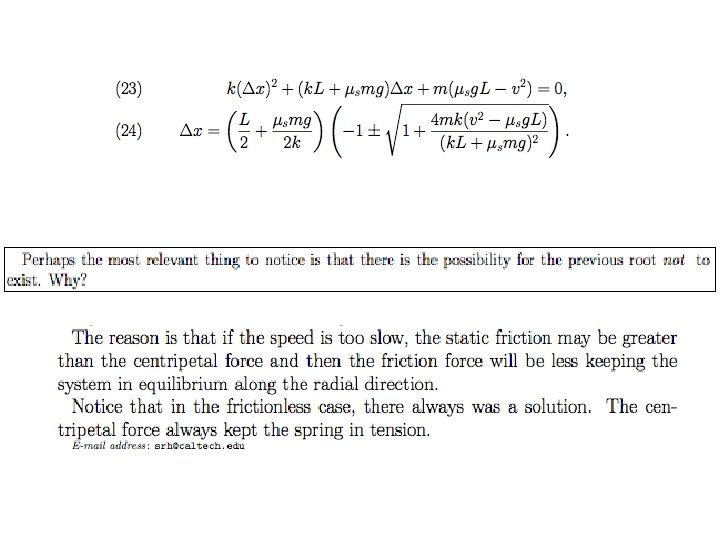
We will consider the case when the driver is going as fast as possible, so that the friction along the radial direction points toward the center of rotation, and not the other way. One may solve the other case, as well, but we will just focus on the fast case.