
PGCE School Experience Placement 1 Preplacement Meeting Expectations

- Slides: 24
PGCE School Experience Placement 1 Pre-placement Meeting Expectations and Outcomes
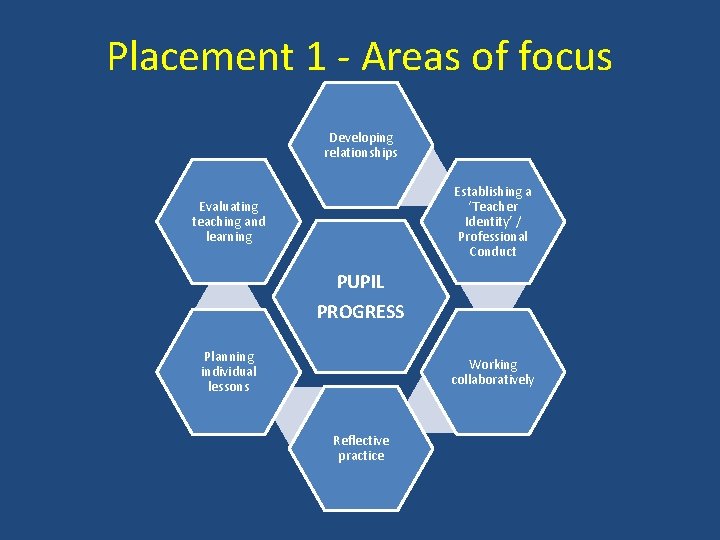
Placement 1 - Areas of focus Developing relationships Establishing a ‘Teacher Identity’ / Professional Conduct Evaluating teaching and learning PUPIL PROGRESS Planning individual lessons Working collaboratively Reflective practice
Key Documentation • • School Experience Handbook Guidelines for Planning and Assessment Placement 1 checklist Documents to support planning, evaluation and assessment on Elearn – Elearn. glos. ac. uk – Username: itementor 2017 (SD= sdpgcement 2017) – Password: itementor 887 (SD= sdpgce 277)
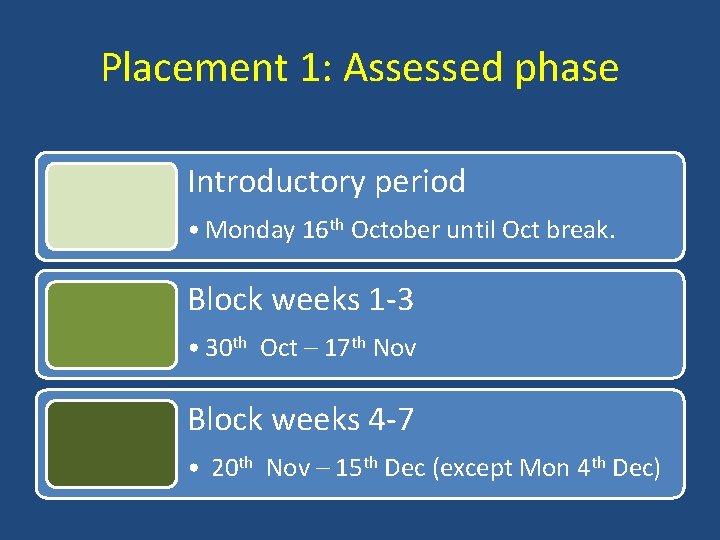
Placement 1: Assessed phase Introductory period • Monday 16 th October until Oct break. Block weeks 1 -3 • 30 th Oct – 17 th Nov Block weeks 4 -7 • 20 th Nov – 15 th Dec (except Mon 4 th Dec)
Placement Development • Carefully structured to recognise different starting points • Flexible weekly guidance provided in handbook • Placement Progress Review Point At all points of the placement, student teachers are expected to have a positive impact on pupil progress (with individuals and/or groups and/or whole class)
Student Teachers Evidencing Practice • School Experience File; • Second support file PDP – tracking progress against Level Descriptors • Lesson observations and discussion with Mentor / Link Tutor • PDP Used to provide formative and summative assessment of Student Teachers.
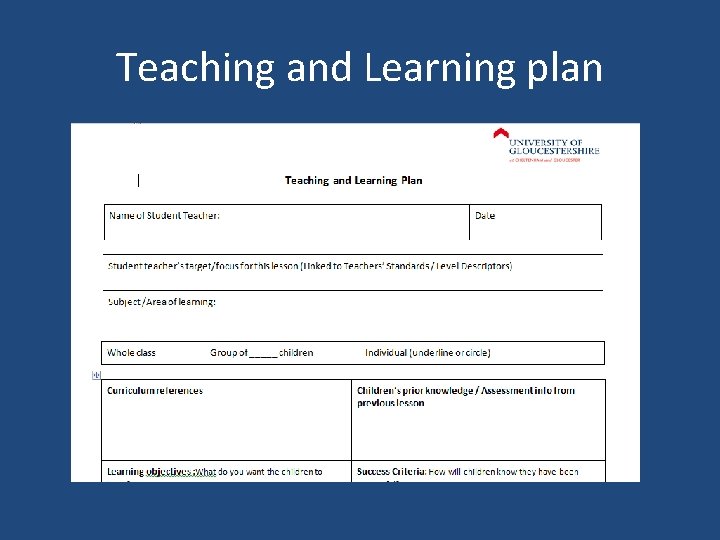
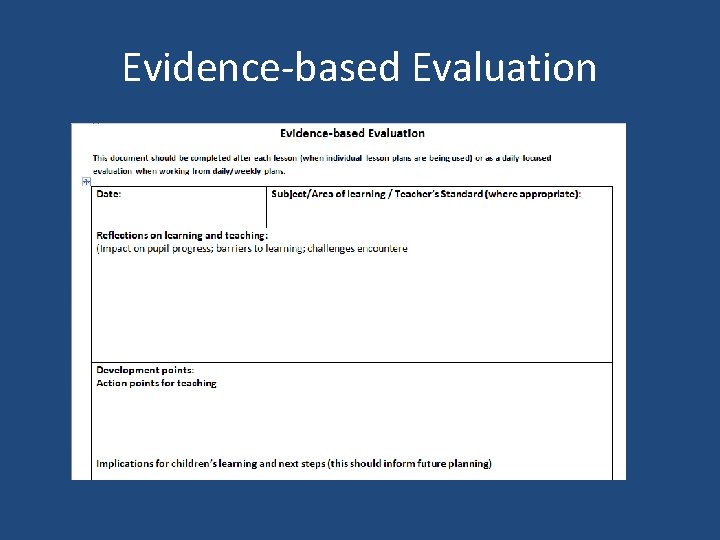
Planning and Evaluation • EVERY planned taught interaction (with individual, group or whole class) needs a teaching and learning plan. (Form 4) • EVERY taught interaction needs to be reflected upon using an Evidence-Based Evaluation (Form 5) • Plans can be printed or handwritten. Need to be accessible and in school file
Teaching and Learning plan
Evidence-based Evaluation
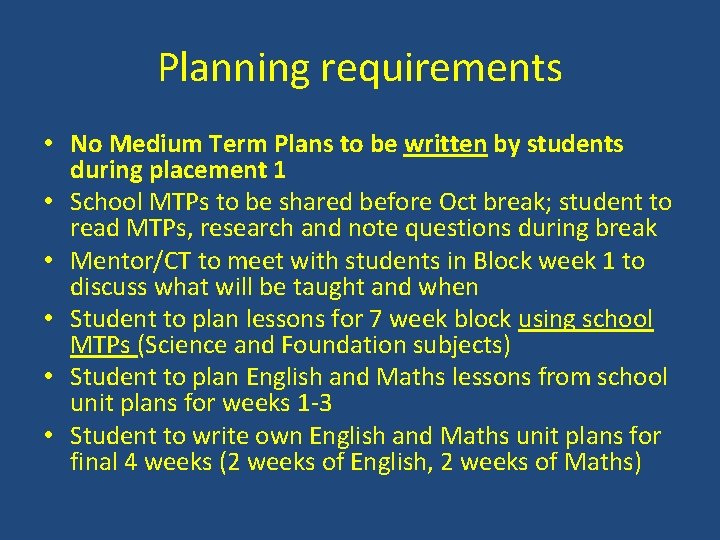
Planning requirements • No Medium Term Plans to be written by students during placement 1 • School MTPs to be shared before Oct break; student to read MTPs, research and note questions during break • Mentor/CT to meet with students in Block week 1 to discuss what will be taught and when • Student to plan lessons for 7 week block using school MTPs (Science and Foundation subjects) • Student to plan English and Maths lessons from school unit plans for weeks 1 -3 • Student to write own English and Maths unit plans for final 4 weeks (2 weeks of English, 2 weeks of Maths)
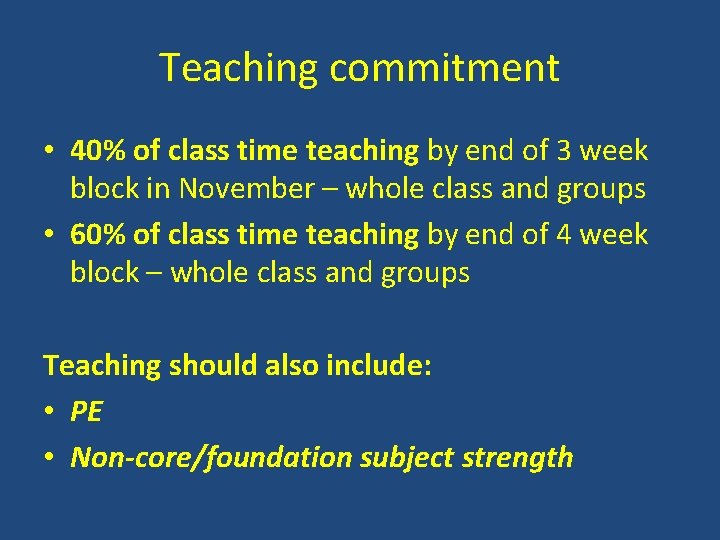
Teaching commitment • 40% of class time teaching by end of 3 week block in November – whole class and groups • 60% of class time teaching by end of 4 week block – whole class and groups Teaching should also include: • PE • Non-core/foundation subject strength
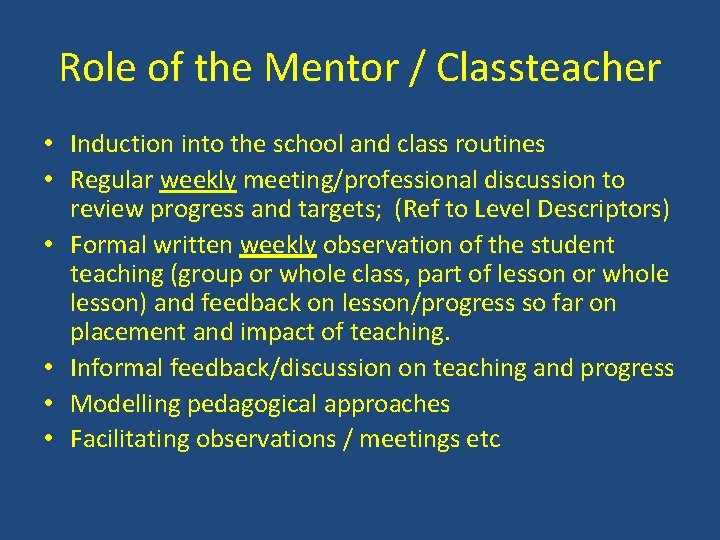
Role of the Mentor / Classteacher • Induction into the school and class routines • Regular weekly meeting/professional discussion to review progress and targets; (Ref to Level Descriptors) • Formal written weekly observation of the student teaching (group or whole class, part of lesson or whole lesson) and feedback on lesson/progress so far on placement and impact of teaching. • Informal feedback/discussion on teaching and progress • Modelling pedagogical approaches • Facilitating observations / meetings etc
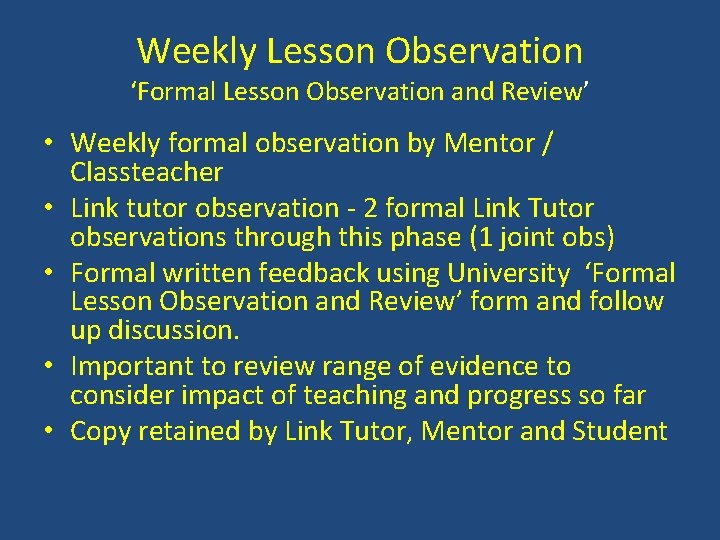
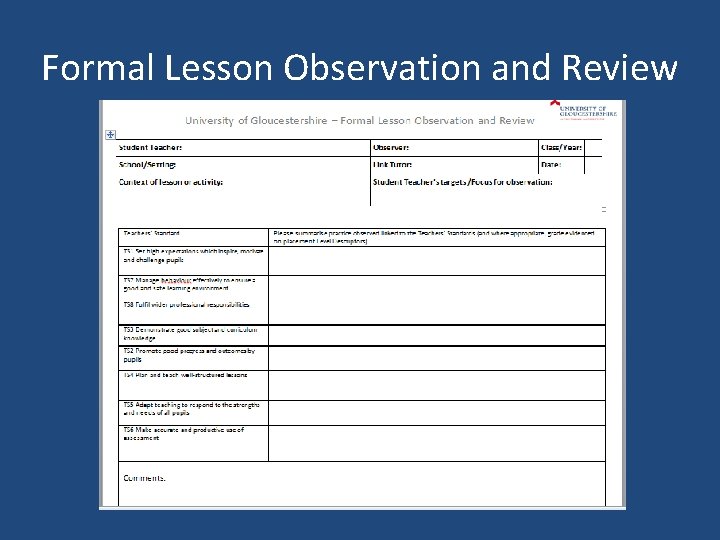
Weekly Lesson Observation ‘Formal Lesson Observation and Review’ • Weekly formal observation by Mentor / Classteacher • Link tutor observation - 2 formal Link Tutor observations through this phase (1 joint obs) • Formal written feedback using University ‘Formal Lesson Observation and Review’ form and follow up discussion. • Important to review range of evidence to consider impact of teaching and progress so far • Copy retained by Link Tutor, Mentor and Student
Formal Lesson Observation and Review
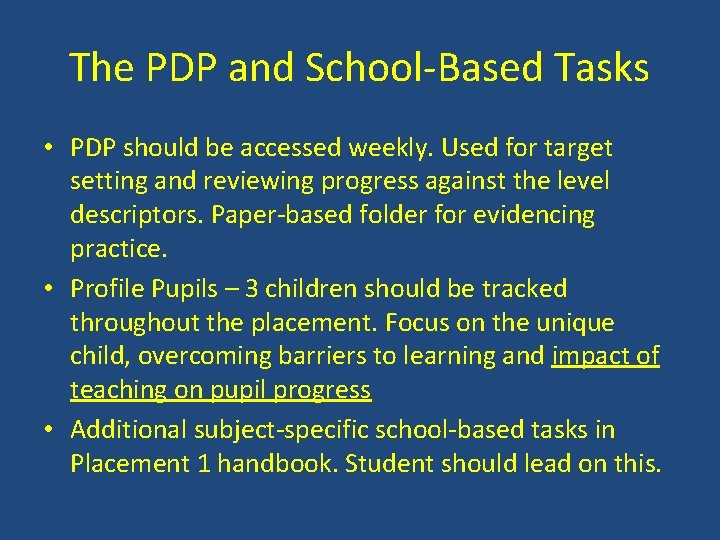
The PDP and School-Based Tasks • PDP should be accessed weekly. Used for target setting and reviewing progress against the level descriptors. Paper-based folder for evidencing practice. • Profile Pupils – 3 children should be tracked throughout the placement. Focus on the unique child, overcoming barriers to learning and impact of teaching on pupil progress • Additional subject-specific school-based tasks in Placement 1 handbook. Student should lead on this.
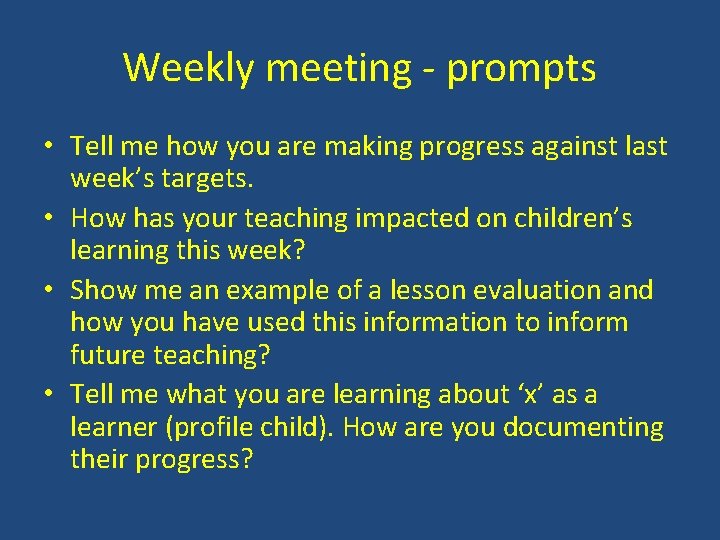
Weekly meeting - prompts • Tell me how you are making progress against last week’s targets. • How has your teaching impacted on children’s learning this week? • Show me an example of a lesson evaluation and how you have used this information to inform future teaching? • Tell me what you are learning about ‘x’ as a learner (profile child). How are you documenting their progress?
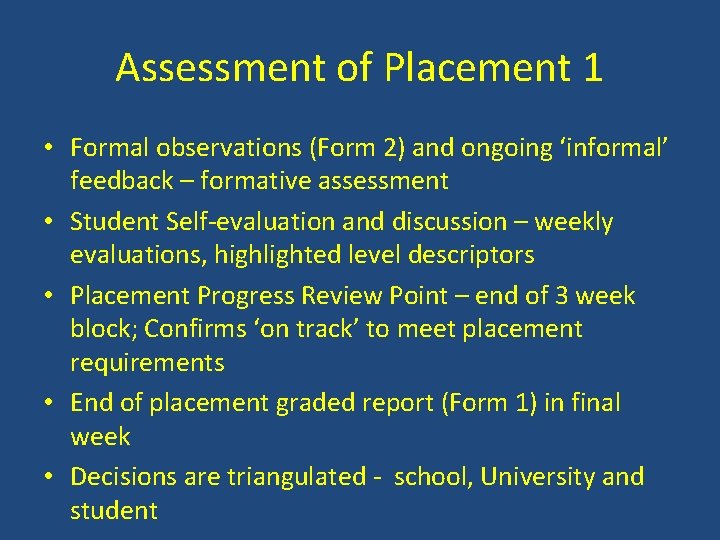
Assessment of Placement 1 • Formal observations (Form 2) and ongoing ‘informal’ feedback – formative assessment • Student Self-evaluation and discussion – weekly evaluations, highlighted level descriptors • Placement Progress Review Point – end of 3 week block; Confirms ‘on track’ to meet placement requirements • End of placement graded report (Form 1) in final week • Decisions are triangulated - school, University and student
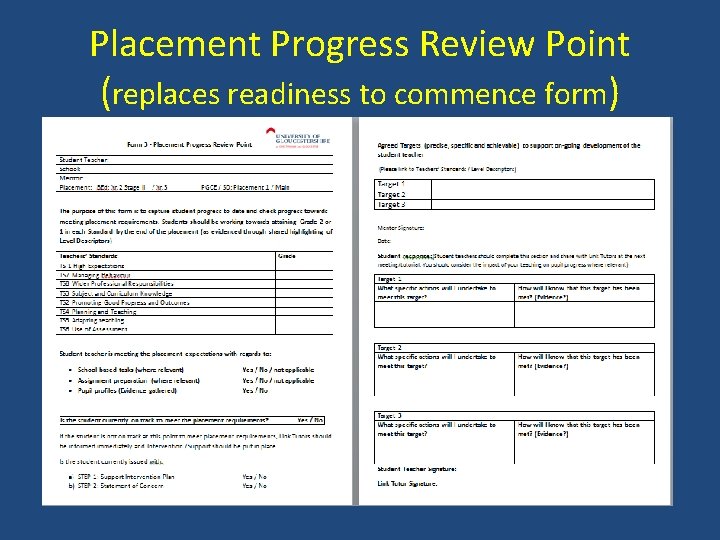
Placement Progress Review Point (replaces readiness to commence form)
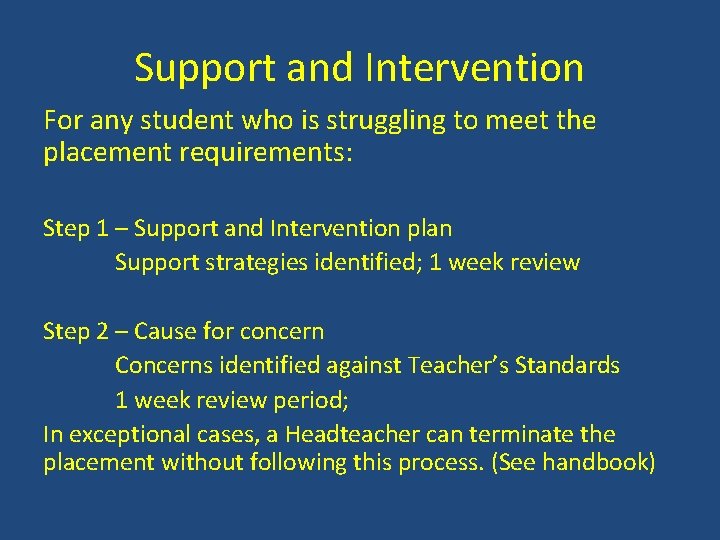
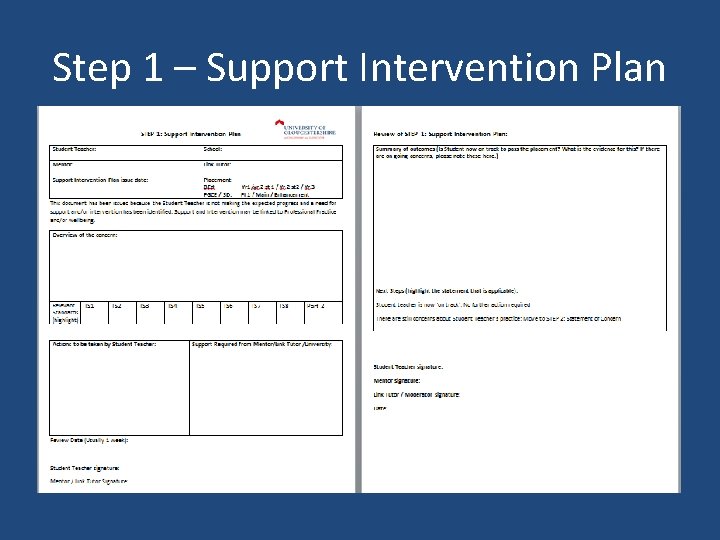
Support and Intervention For any student who is struggling to meet the placement requirements: Step 1 – Support and Intervention plan Support strategies identified; 1 week review Step 2 – Cause for concern Concerns identified against Teacher’s Standards 1 week review period; In exceptional cases, a Headteacher can terminate the placement without following this process. (See handbook)
Step 1 – Support Intervention Plan
Support for students • School staff – HT, mentor, class teacher, teaching assistants, pupils • University staff – Link tutor, Personal Tutor, Rachel Eperjesi, Vicki Parfitt, Fiona Hunt • Student Services / Helpzone • Peers • Family
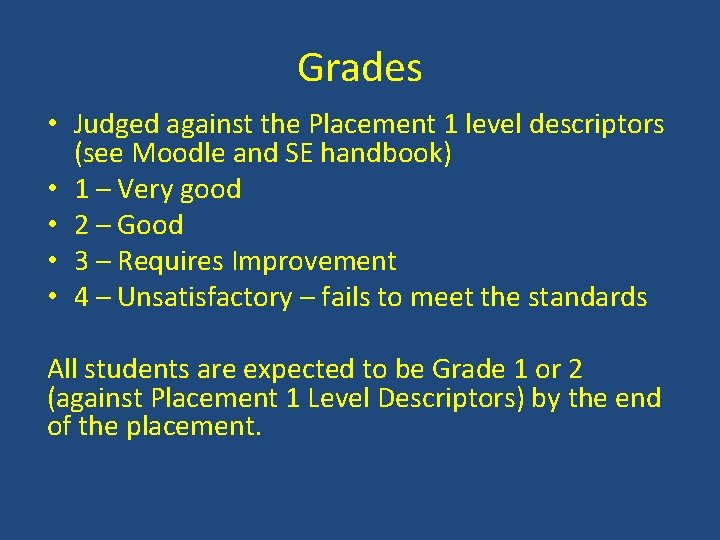
Grades • Judged against the Placement 1 level descriptors (see Moodle and SE handbook) • 1 – Very good • 2 – Good • 3 – Requires Improvement • 4 – Unsatisfactory – fails to meet the standards All students are expected to be Grade 1 or 2 (against Placement 1 Level Descriptors) by the end of the placement.
University Contacts • Jane Moore - Module Leader (jmoore@glos. ac. uk) • Rachel Eperjesi – PGCE Course Leader (reperjesi@glos. ac. uk) • Partnership Office (Primaryplacements@glos. ac. uk) All students will have a University Link Tutor and a Personal Tutor. The Link Tutor is the first point of contact for the school/setting.