
Pg80 Populations Communities and Ecosystem Dynamics WS PKT





- Slides: 68
Pg#80: Populations & Communities and Ecosystem Dynamics (WS PKT) EQ: What types of factors affect a population? Biology
Why do populations change? • Environmental factors must be in balance: • homeostasis. • Balance can be upset by natural disasters. . . biotic (living) or abiotic (nonliving): – Drought, fire, earthquake. . . (abiotic) – Disease, predation. . . (biotic) • . . . or Non-natural disasters which include Human activities –Pollution –Habitat destruction • Deforestation to make paper –Habitat Fragmentation • Building freeways through forests, etc.
Come up with 2 examples of habitat destruction then share with your neighbor 1 a & b, 1 c
Per 4 Examples
Per 5 Examples 1. Dynamite fishing affects whole reef fish population 2. Cut down trees to make palm oil destroys gorillas habitat 3. Building in nesting grounds for Sphinx moths puts caterpillars at risk for squishing 4. Cutting down trees for paper affects squirrels/birds by losing nests 5. Plastic bags in ocean get eaten by sea life and they think they’re full and die
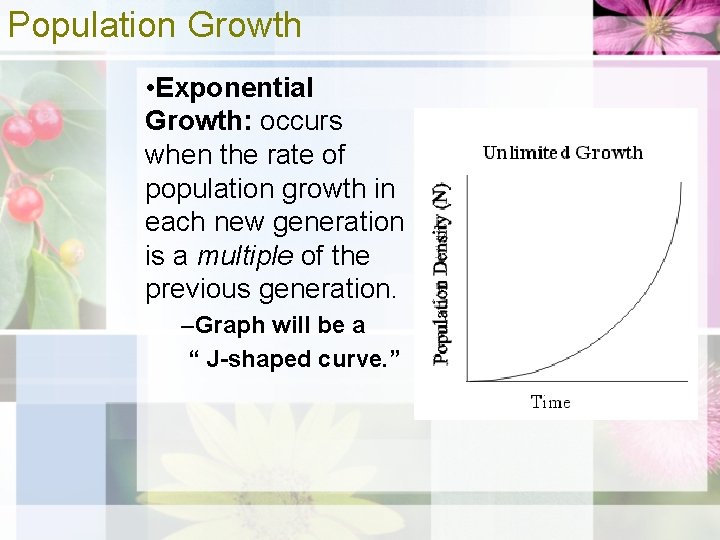
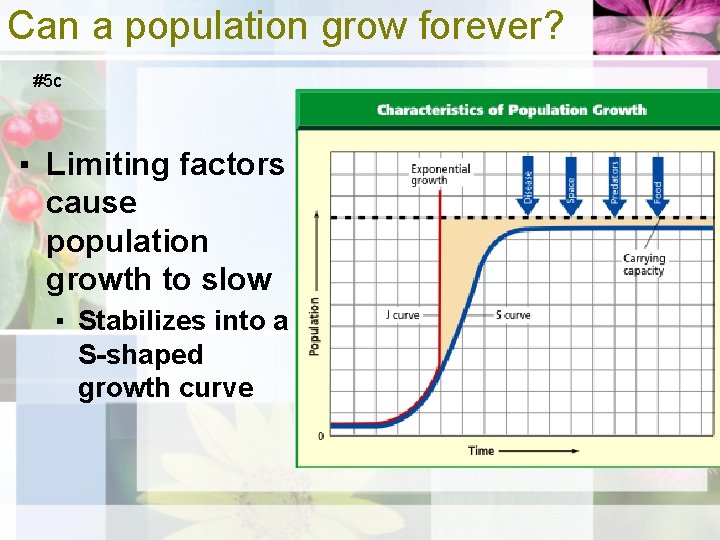
Population Growth • Exponential Growth: occurs when the rate of population growth in each new generation is a multiple of the previous generation. –Graph will be a “ J-shaped curve. ”
Can a population grow forever? • Discuss with your neighbor: • Partner A first 30 seconds: Decide whether or not a population can grow forever. Explain your reasoning. • Partner B next 30 seconds: Give at least 3 reasons that would negatively affect a growing population (stop its growth). Explain your thinking.
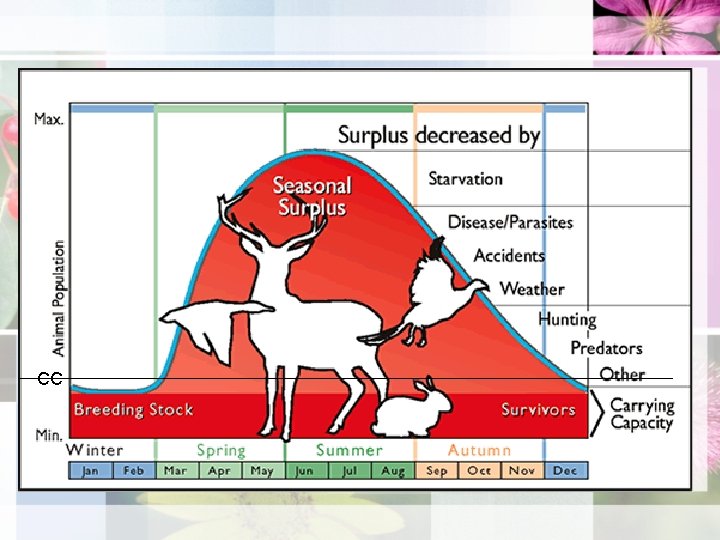
CC
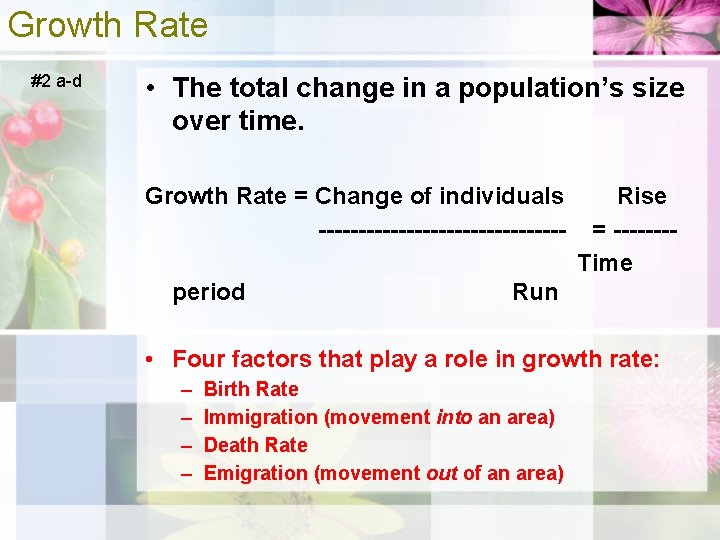
Growth Rate #2 a-d • The total change in a population’s size over time. Growth Rate = Change of individuals ---------------period Rise = -------Time Run • Four factors that play a role in growth rate: – – Birth Rate Immigration (movement into an area) Death Rate Emigration (movement out of an area)
Tell your neighbor: A/C: What does Biotic mean? B/D: Abiotic?
Exponential growth meets the real world #3 & #4 Decide #5 • Limiting Factors: any biotic or abiotic resources in the environment that limits the size of a population. • Carrying Capacity: number of individuals in a population that an environment can support over a relatively long period of time.
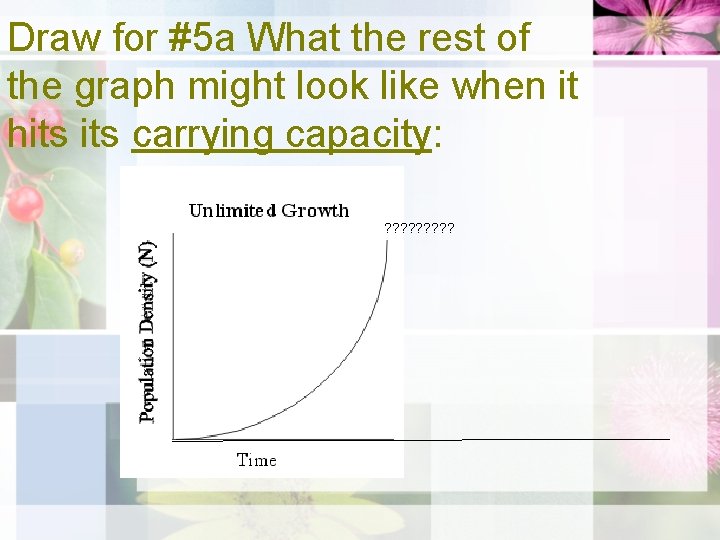
Draw for #5 a What the rest of the graph might look like when it hits carrying capacity: ? ? ? ? ?
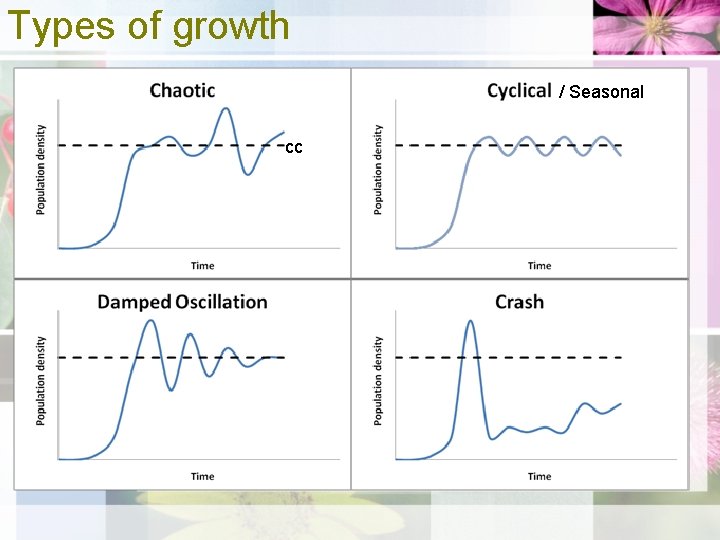
Types of growth / Seasonal cc
Can a population grow forever? #5 c ▪ Limiting factors cause population growth to slow ▪ Stabilizes into a S-shaped growth curve
Limits on Population Growth • Limiting factors in the environment keep the population size in check in two ways: – Will cause a decrease in the birth rate OR an increase in the death rate.
Carrying Capacity • Ex: Food supplies – As the food supply dwindles, the birth rate drops and the death rate rises, causing the population growth to slow down. – Population levels will equal off as the carrying capacity is reached. – When the birth rate and the death rate of the population become roughly equal the population size stabilizes.
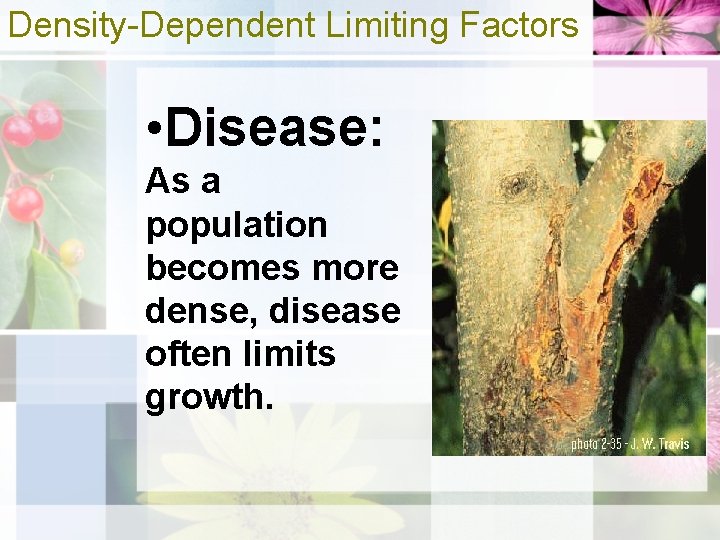
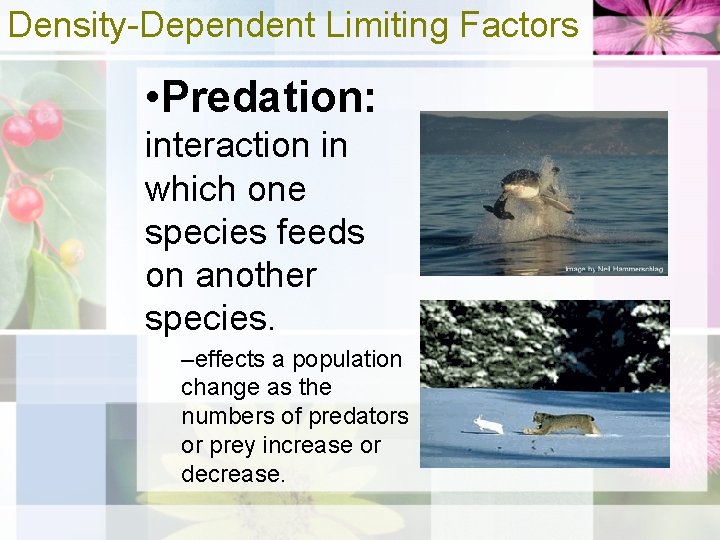
Limiting Factors: 2 types #6 • Density-dependent limiting factors: factors that comes into operation only when the number of organisms per unit of space reaches a maximum level. – Examples: Disease spread better with a denser population, Competition gets worse, and predation gets worse/easier. . .
Density-Dependent Limiting Factors • Disease: As a population becomes more dense, disease often limits growth.
Density-Dependent Limiting Factors • Competition: an interaction in which organisms try to obtain a share of the same limited resources.
Density-Dependent Limiting Factors • Predation: interaction in which one species feeds on another species. –effects a population change as the numbers of predators or prey increase or decrease.
Density-Independent Limiting Factors • Factors that affect all populations regardless of their population density. – Examples: weather, seasonal cycles (climate), natural disasters, and many human activities, ex: pollution.
Go back to blue vocabulary matrix pg #79 and fill in definitions & example/picture
Abiotic & Biotic Cut & Paste pg#81 1 Scissors/pair & 1 tape or glue/4 students
HW: Lab “What’s the Limit? ” Carrying Capacity Graphing WS (Repro scorpions) Due WEDS
Day 2 Weds (WS #8)
Communities • A population’s niche includes all its interaction with other species in its community. ~role/job Ex: The niche of a vulture is to clean up all the dead carcasses in a habitat • Symbiotic relationships form. – Symbiosis: when one species interacts with another over a period of time. – Three types: mutualism, parasitism, and commensalism
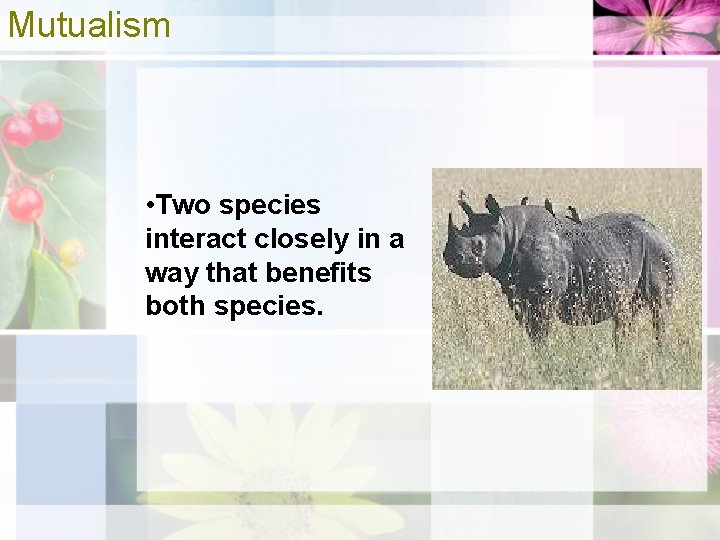
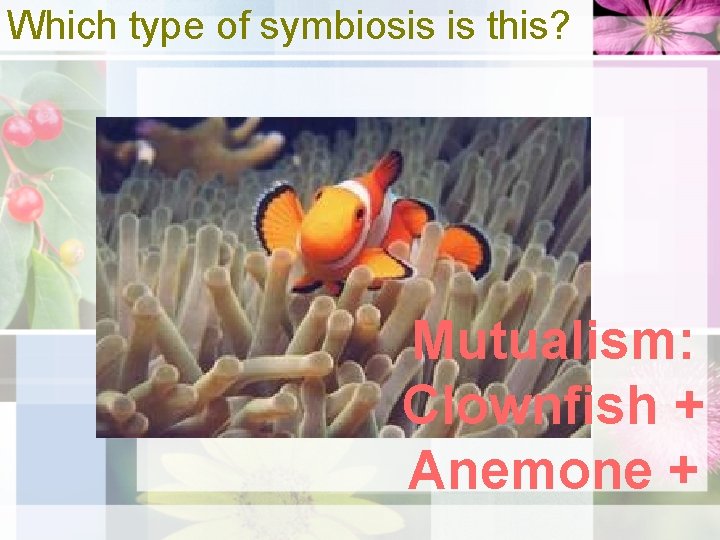
Mutualism • Two species interact closely in a way that benefits both species.
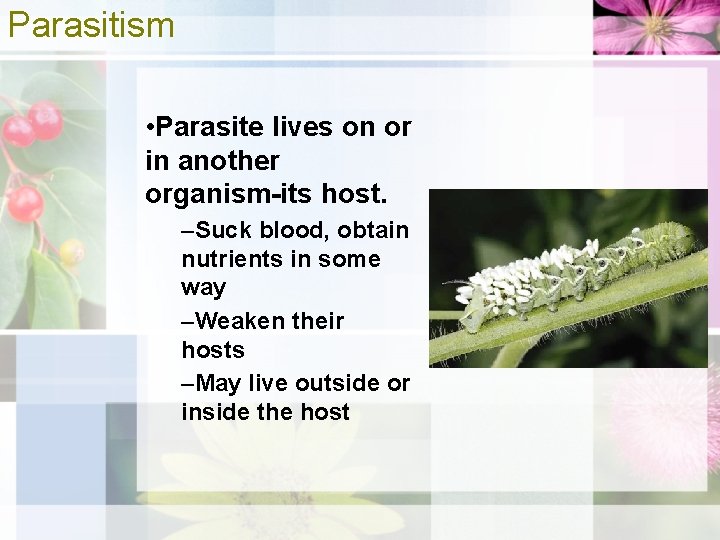
Parasitism • Parasite lives on or in another organism-its host. –Suck blood, obtain nutrients in some way –Weaken their hosts –May live outside or inside the host
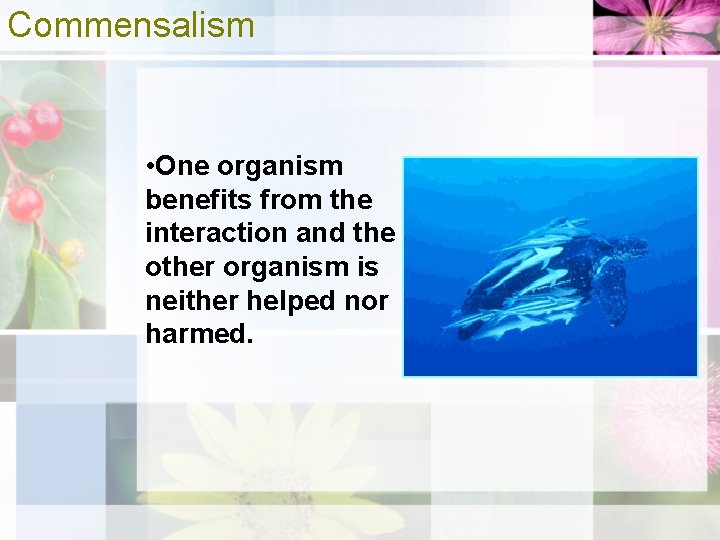
Commensalism • One organism benefits from the interaction and the other organism is neither helped nor harmed.
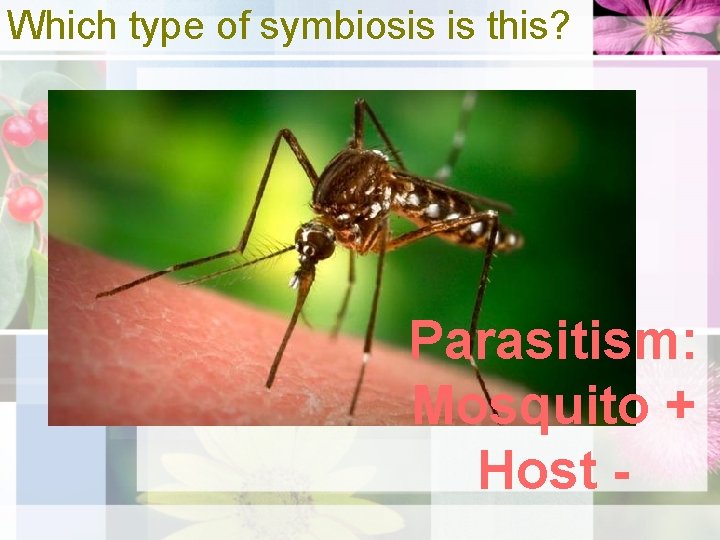
Which type of symbiosis is this? Parasitism: Mosquito + Host -
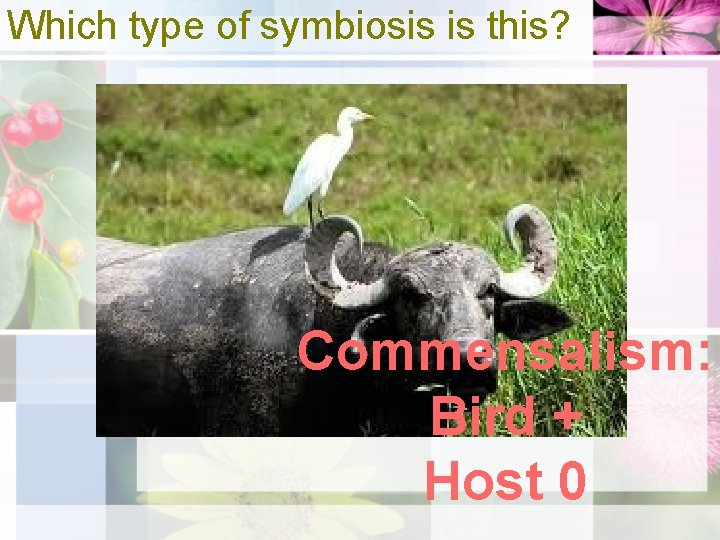
Which type of symbiosis is this? Commensalism: Bird + Host 0
Which type of symbiosis is this? Mutualism: Clownfish + Anemone +
Ecological Succession #9 • Change over time in the community resulting in new populations of organisms gradually replacing existing ones. – Examples: After natural disturbances (flood, fire), after human activities (deforestation).
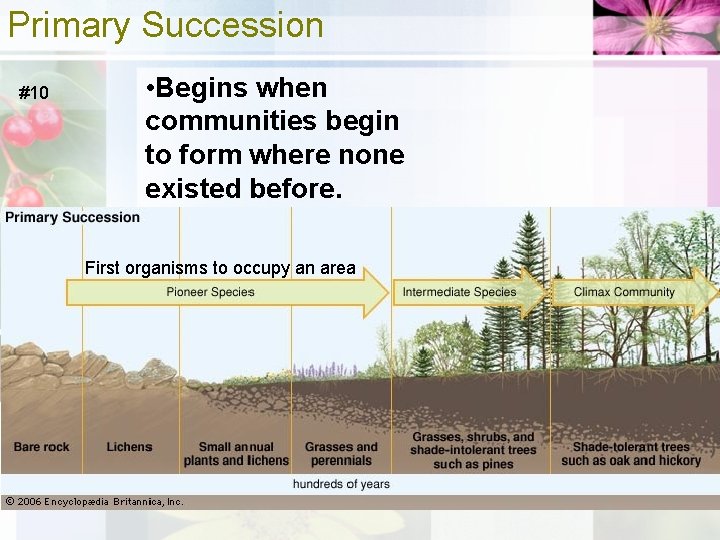
Primary Succession #10 • Begins when communities begin to form where none existed before. First organisms to occupy an area
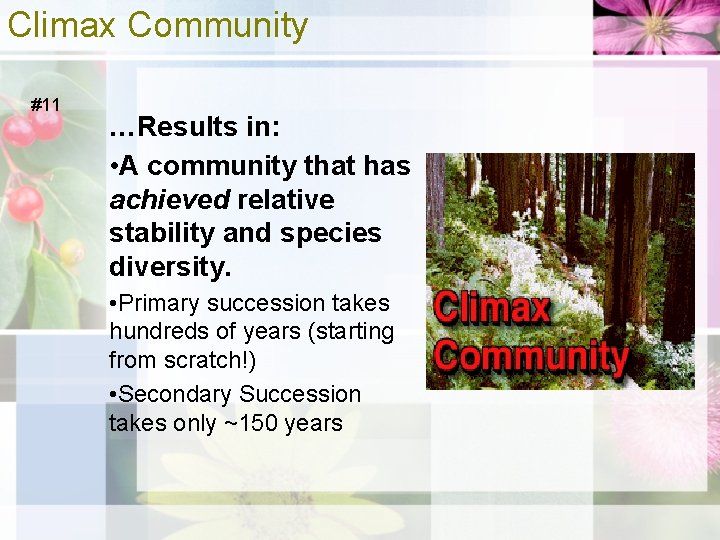
Climax Community #11 …Results in: • A community that has achieved relative stability and species diversity. • Primary succession takes hundreds of years (starting from scratch!) • Secondary Succession takes only ~150 years
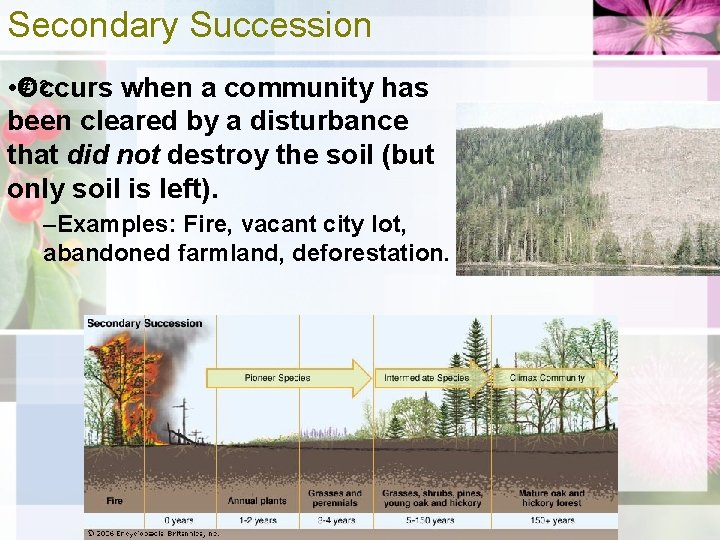
Secondary Succession #12 • Occurs when a community has been cleared by a disturbance that did not destroy the soil (but only soil is left). –Examples: Fire, vacant city lot, abandoned farmland, deforestation.
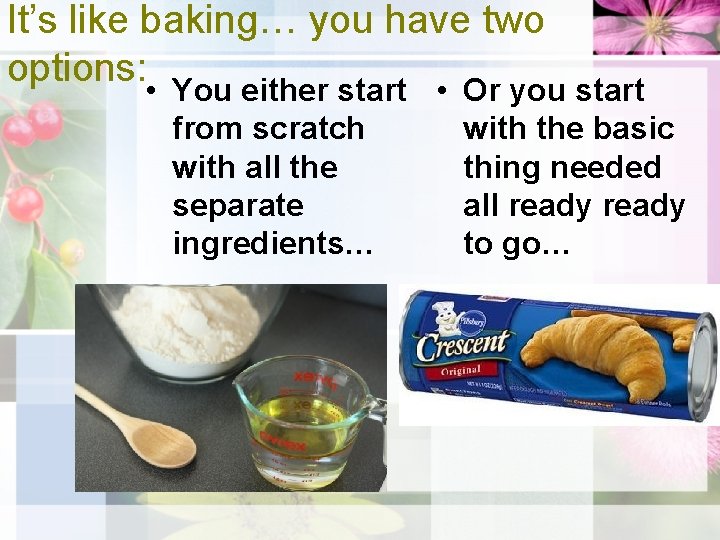
It’s like baking… you have two options: • You either start • Or you start from scratch with all the separate ingredients… with the basic thing needed all ready to go…
Symbiotic Relationships WS Ecology Menu Time
Succession WS (Repro)
Day 3 WS #13 Food Webs, 10% Rule, & Nutrient Cycles
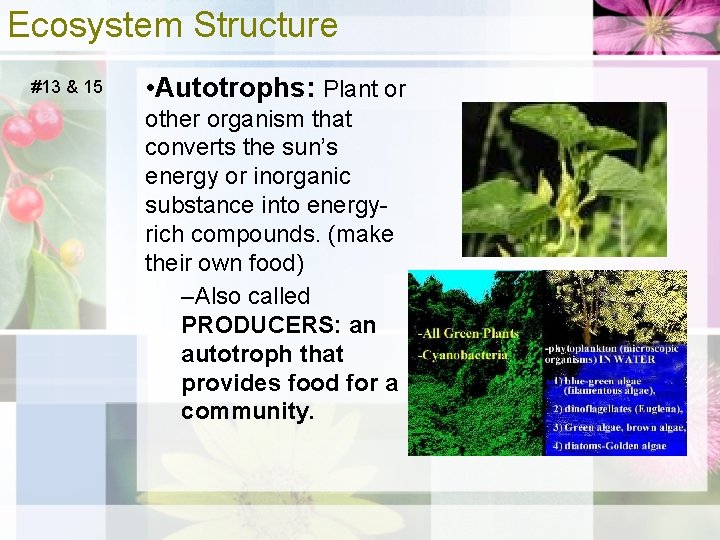
Ecosystem Structure #13 & 15 • Autotrophs: Plant or other organism that converts the sun’s energy or inorganic substance into energyrich compounds. (make their own food) –Also called PRODUCERS: an autotroph that provides food for a community.
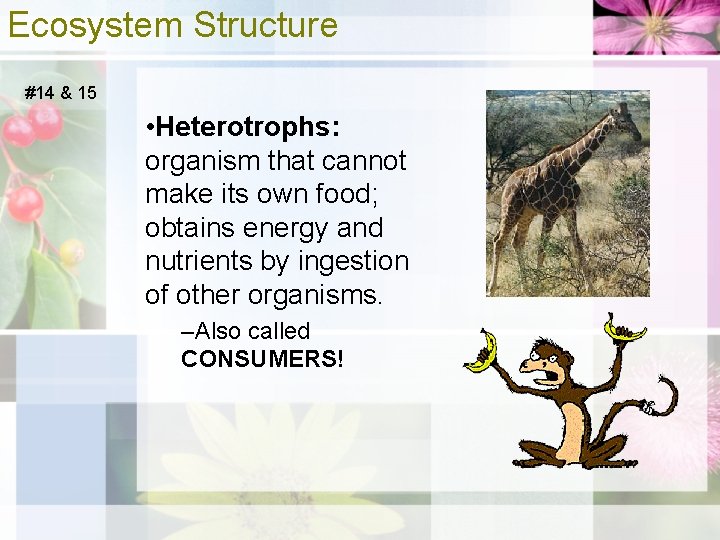
Ecosystem Structure #14 & 15 • Heterotrophs: organism that cannot make its own food; obtains energy and nutrients by ingestion of other organisms. –Also called CONSUMERS!
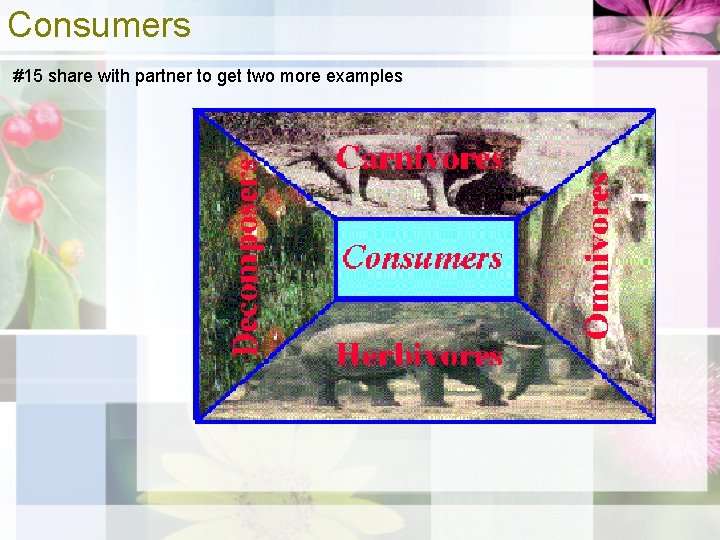
Consumers #15 share with partner to get two more examples
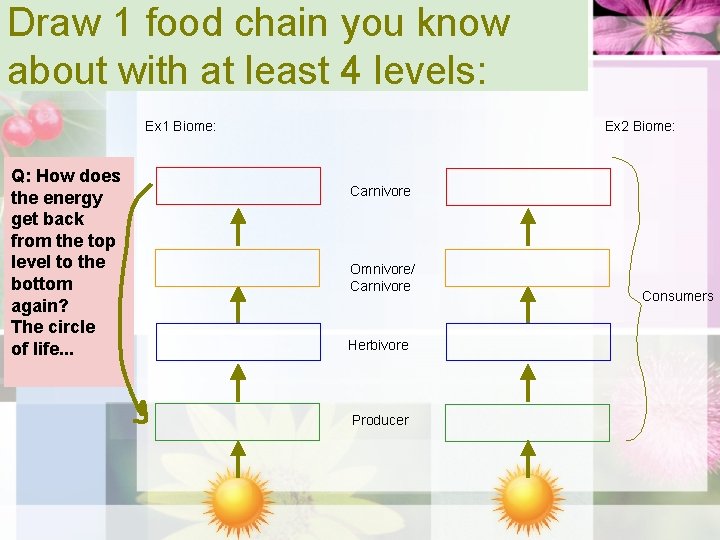
Draw 1 food chain you know about with at least 4 levels: Ex 1 Biome: Q: How does the energy get back from the top level to the bottom again? The circle of life. . . Ex 2 Biome: Carnivore Omnivore/ Carnivore Herbivore Producer Consumers
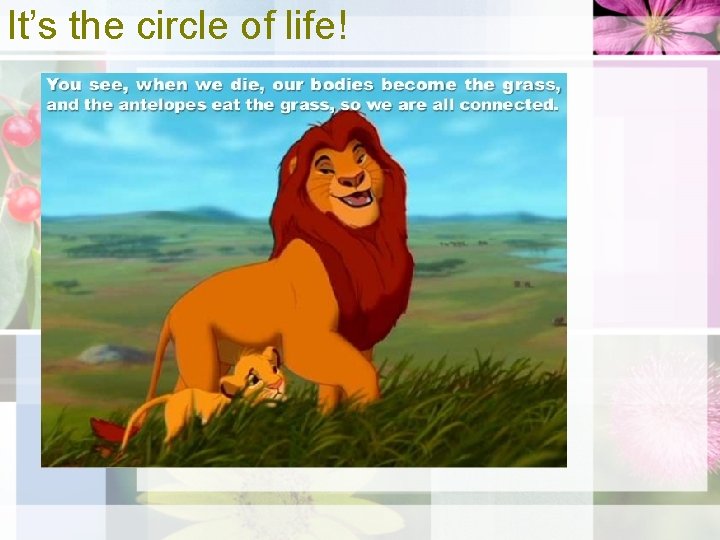
It’s the circle of life!
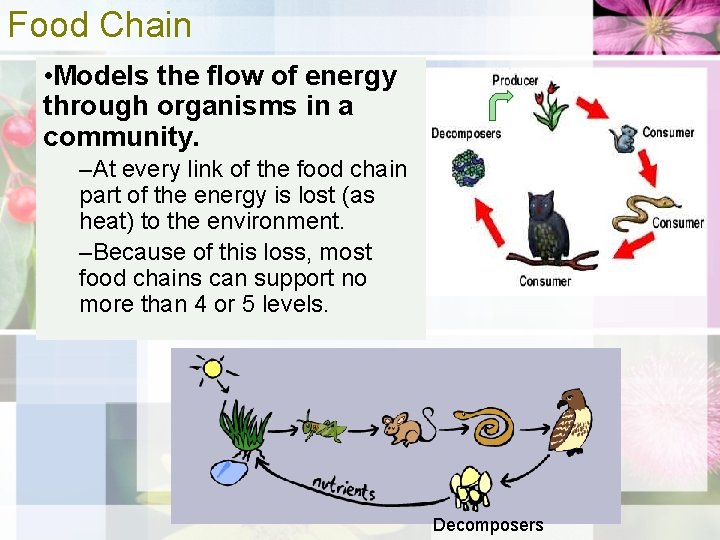
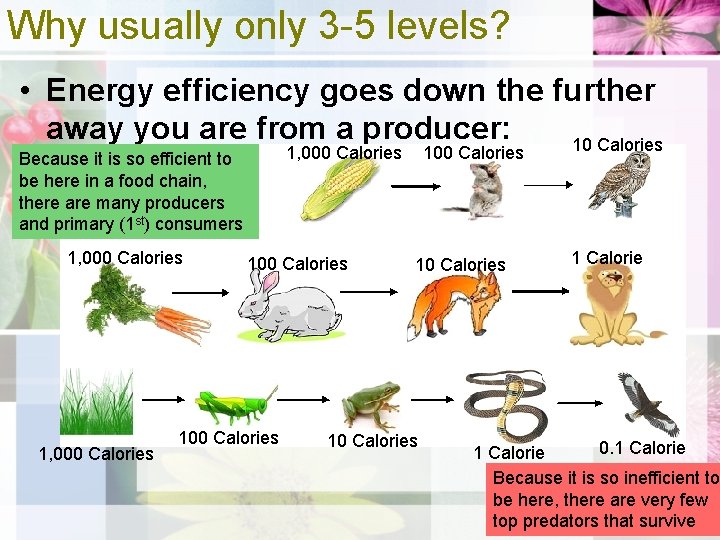
Food Chain • Models the flow of energy through organisms in a community. –At every link of the food chain part of the energy is lost (as heat) to the environment. –Because of this loss, most food chains can support no more than 4 or 5 levels. Decomposers
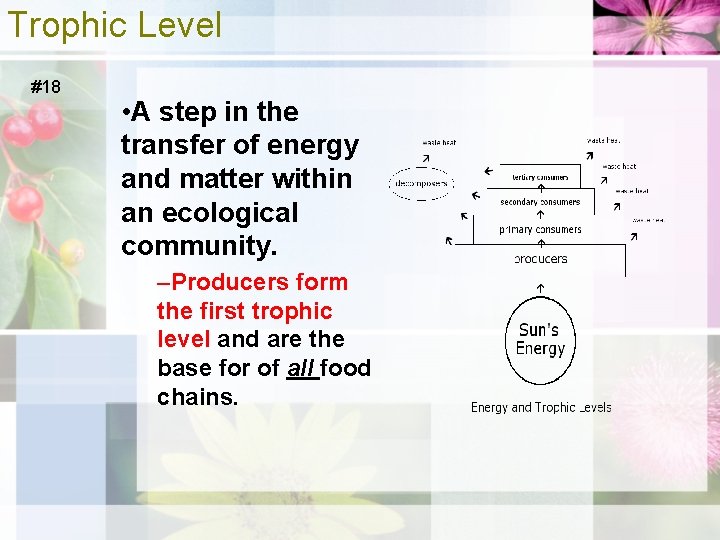
Trophic Level #18 • A step in the transfer of energy and matter within an ecological community. –Producers form the first trophic level and are the base for of all food chains.
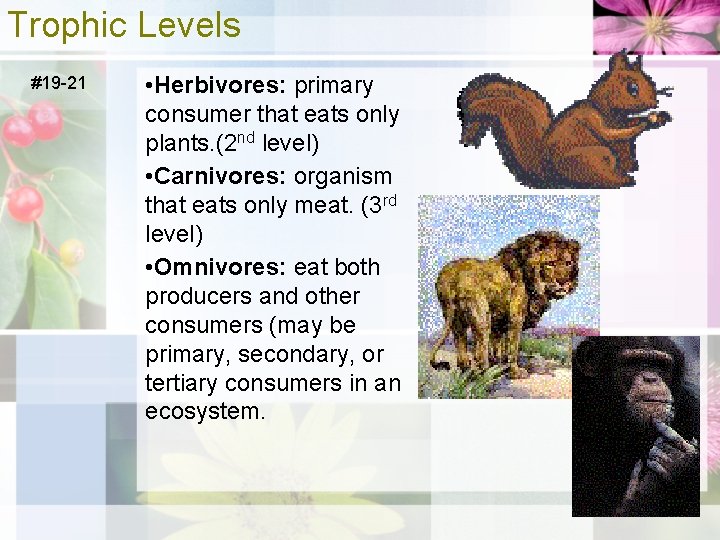
Trophic Levels #19 -21 • Herbivores: primary consumer that eats only plants. (2 nd level) • Carnivores: organism that eats only meat. (3 rd level) • Omnivores: eat both producers and other consumers (may be primary, secondary, or tertiary consumers in an ecosystem.
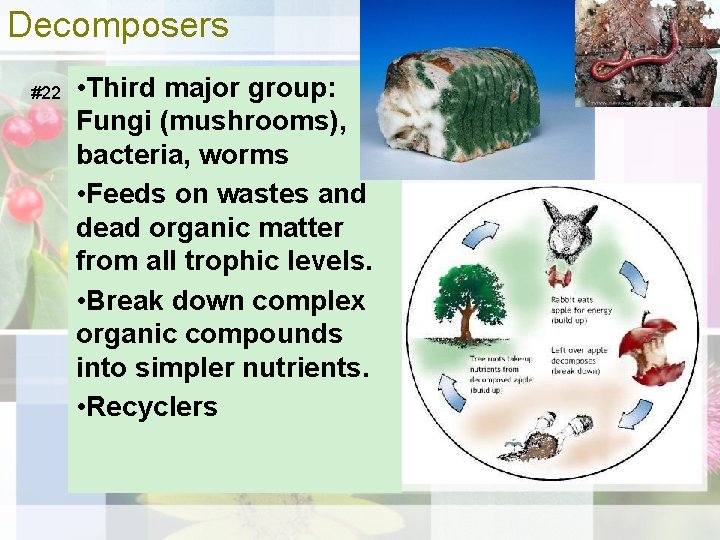
Decomposers #22 • Third major group: Fungi (mushrooms), bacteria, worms • Feeds on wastes and dead organic matter from all trophic levels. • Break down complex organic compounds into simpler nutrients. • Recyclers
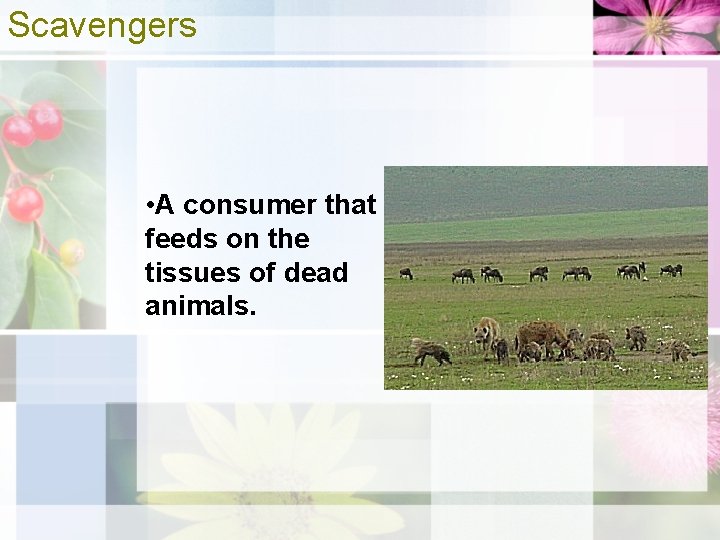
Scavengers • A consumer that feeds on the tissues of dead animals.
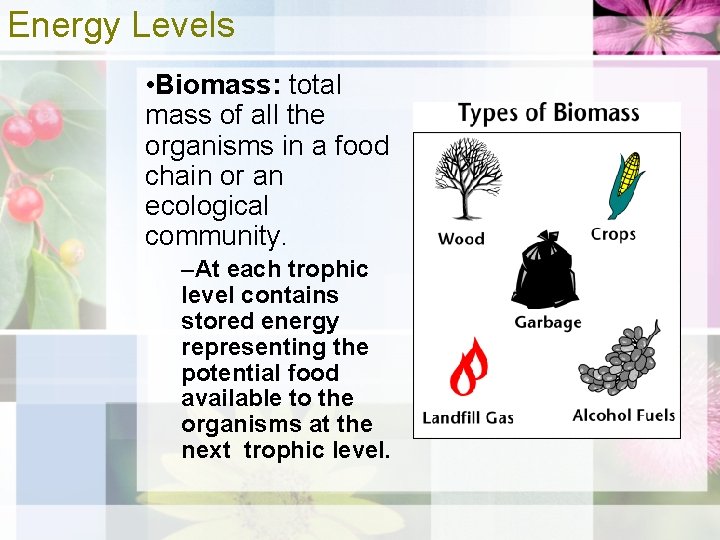
Energy Levels • Biomass: total mass of all the organisms in a food chain or an ecological community. –At each trophic level contains stored energy representing the potential food available to the organisms at the next trophic level.
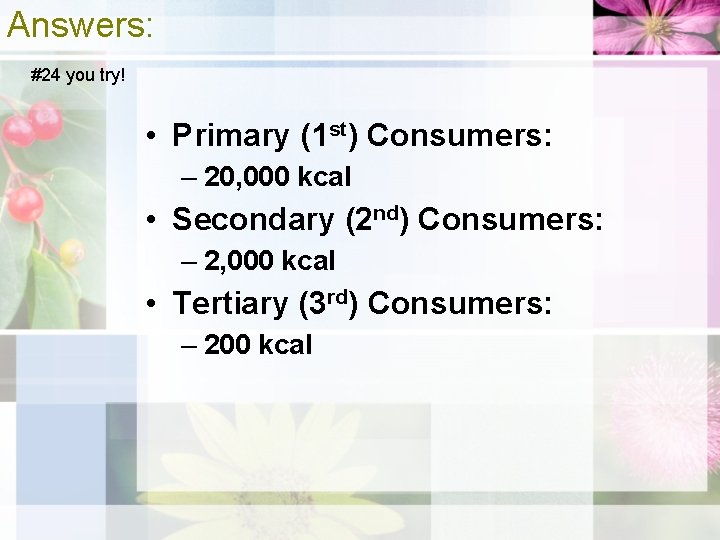
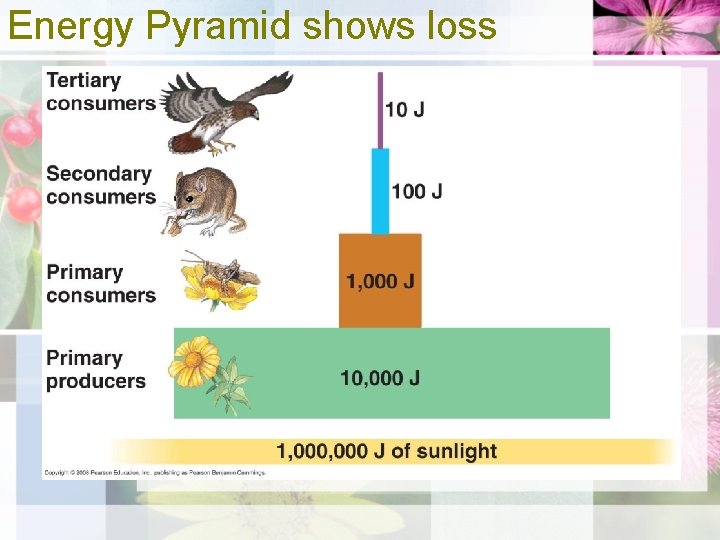
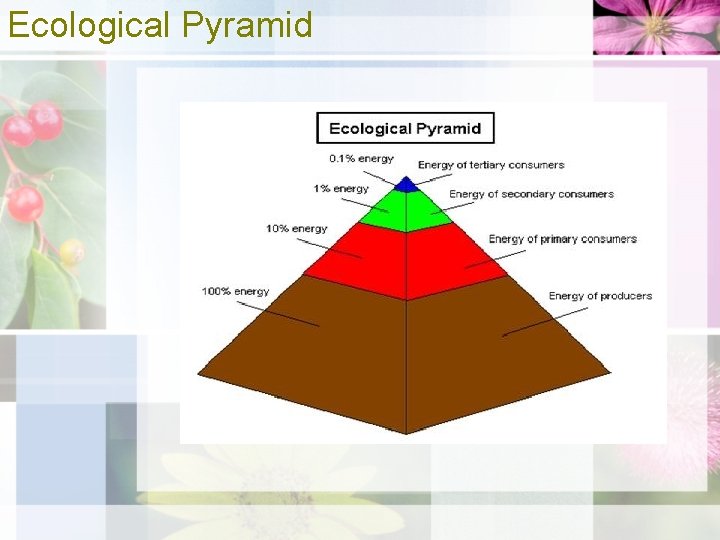
Ecological Pyramid • Shows the relationships between producers and consumers at the trophic levels in an ecosystem. – The energy level available at each trophic level is about 1/10 (10%) the energy available from the trophic level below it, the other 90% is lost as body heat. – This pattern of energy transfer is sometimes called the 10 percent law. • Ex: If the producers in the energy pyramid supply 200, 000 kilocalories of energy, how many kilocalories will be passed on the each higher trophic level, assuming the 10 percent law?
Why usually only 3 -5 levels? • Energy efficiency goes down the further away you are from a producer: 10 Calories 1, 000 Calories Because it is so efficient to be here in a food chain, there are many producers and primary (1 st) consumers 1, 000 Calories 100 Calories 10 Calories 1 Calorie 0. 1 Calorie Because it is so inefficient to be here, there are very few top predators that survive
Answers: #24 you try! • Primary (1 st) Consumers: – 20, 000 kcal • Secondary (2 nd) Consumers: – 2, 000 kcal • Tertiary (3 rd) Consumers: – 200 kcal
Energy Pyramid shows loss
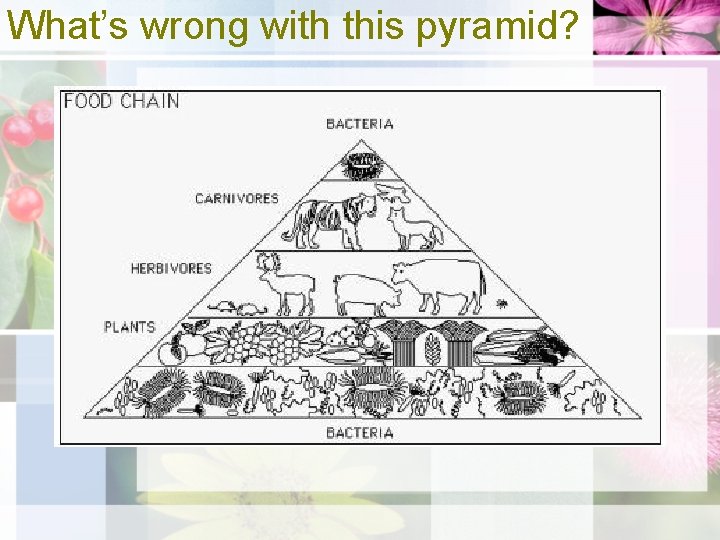
Ecological Pyramid
What’s wrong with this pyramid?
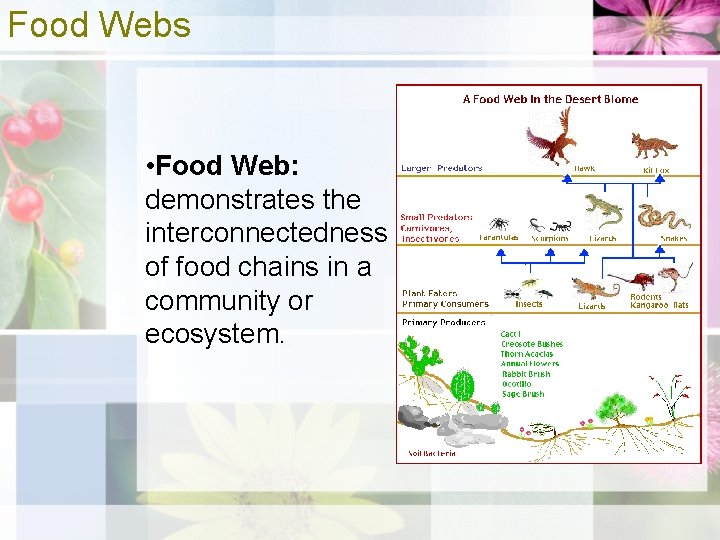
Food Webs • Food Web: demonstrates the interconnectedness of food chains in a community or ecosystem.
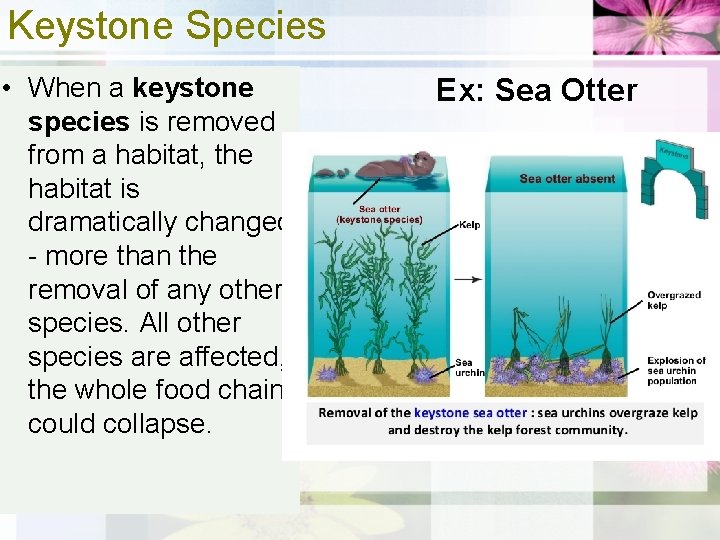
Keystone Species • When a keystone species is removed from a habitat, the habitat is dramatically changed - more than the removal of any other species. All other species are affected, the whole food chain could collapse. Ex: Sea Otter
Make an Energy Pyramid Activity All do
Keystone Species Video & Demo Arch
Nutrient Cycles Day 4 if time
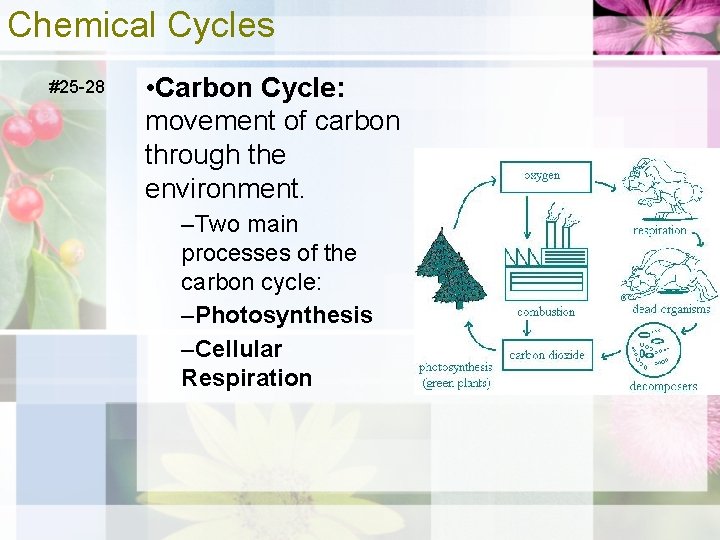
Chemical Cycles #25 -28 • Carbon Cycle: movement of carbon through the environment. –Two main processes of the carbon cycle: –Photosynthesis –Cellular Respiration
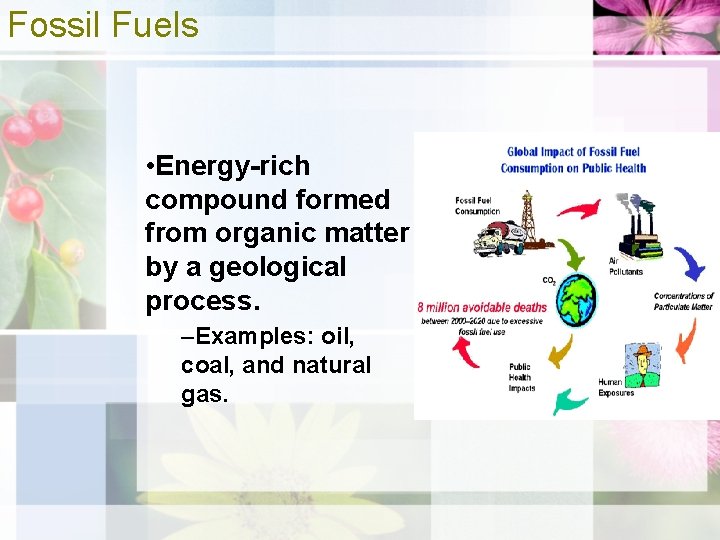
Fossil Fuels • Energy-rich compound formed from organic matter by a geological process. –Examples: oil, coal, and natural gas.
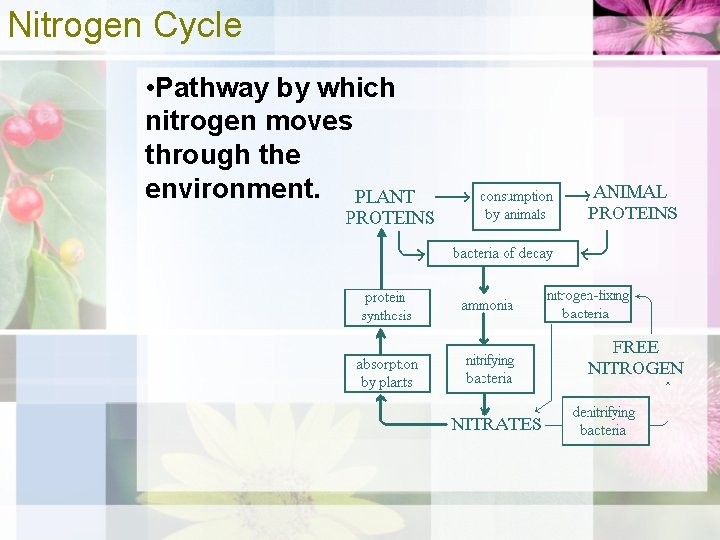
Nitrogen Cycle • Pathway by which nitrogen moves through the environment.
Nitrogen Fixation • Conversion of atmospheric nitrogen gas into useable nitrogen compounds. – Lightning causes some nitrogen fixation by forming nitrogen oxides from nitrogen and oxygen in the air. – Most nitrogen fixation is carried out by bacteria. • Nitrogen fixing bacteria live in soil, water, nodules on roots of plants
Nitrogen Cycle • Nitrogen gas is converted into ammonia which is quickly dissolved in water to form ammonium ions. • Plants use nitrogen compounds they absorb to make amino acids, proteins, and other needed substances. • Decomposers play an important role in the nitrogen cycle by breaking down the nitrogen containing animal wastes and the remains of the dead organisms. • Denitrification: Process of returning nitrogen gas to the atmosphere.
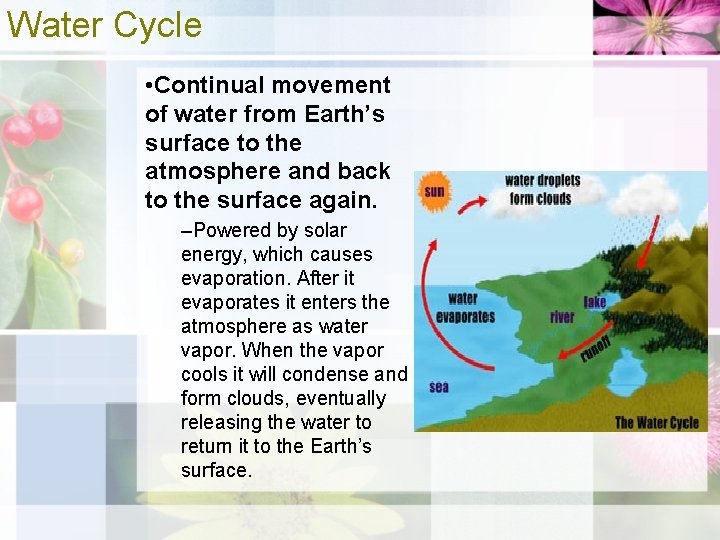
Water Cycle • Continual movement of water from Earth’s surface to the atmosphere and back to the surface again. –Powered by solar energy, which causes evaporation. After it evaporates it enters the atmosphere as water vapor. When the vapor cools it will condense and form clouds, eventually releasing the water to return it to the Earth’s surface.