
PFMEA Training for Industry DMAICTools com Image Source

- Slides: 14
PFMEA Training for Industry DMAICTools. com Image Source: Dassault Systems World class industrial robots, printers, and machinery
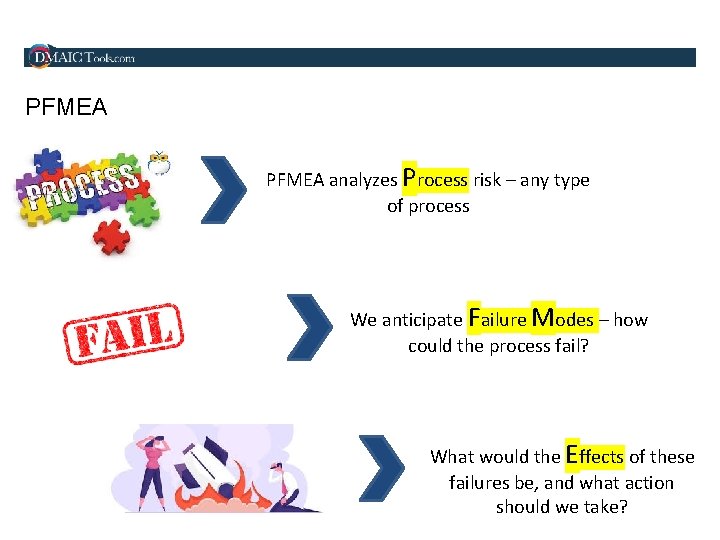
PFMEA analyzes Process risk – any type of process We anticipate Failure Modes – how could the process fail? What would the Effects of these failures be, and what action should we take?
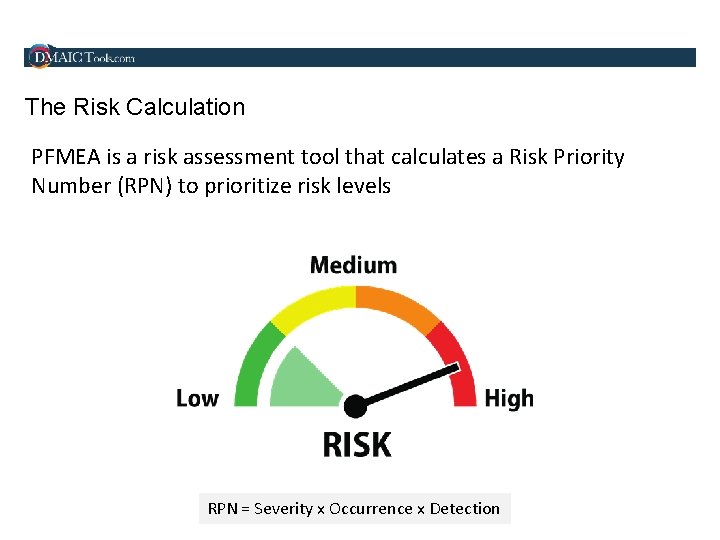
The Risk Calculation PFMEA is a risk assessment tool that calculates a Risk Priority Number (RPN) to prioritize risk levels RPN = Severity x Occurrence x Detection
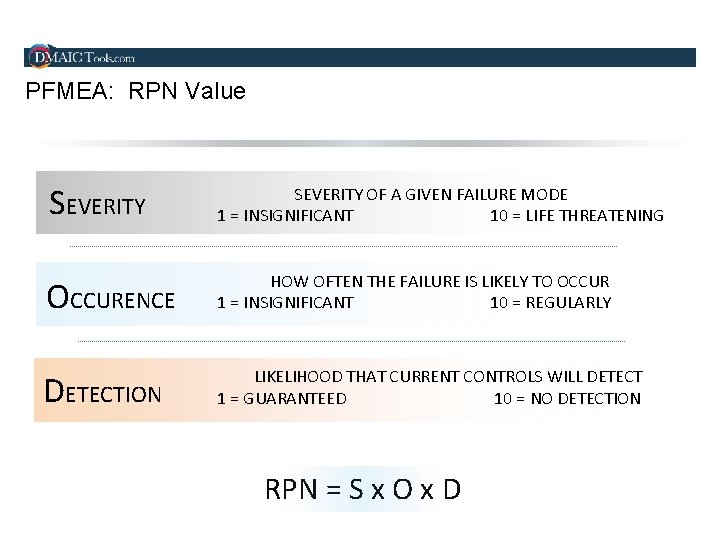
PFMEA: RPN Value SEVERITY OF A GIVEN FAILURE MODE 1 = INSIGNIFICANT 10 = LIFE THREATENING OCCURENCE HOW OFTEN THE FAILURE IS LIKELY TO OCCUR 1 = INSIGNIFICANT 10 = REGULARLY DETECTION LIKELIHOOD THAT CURRENT CONTROLS WILL DETECT 1 = GUARANTEED 10 = NO DETECTION RPN = S x O x D
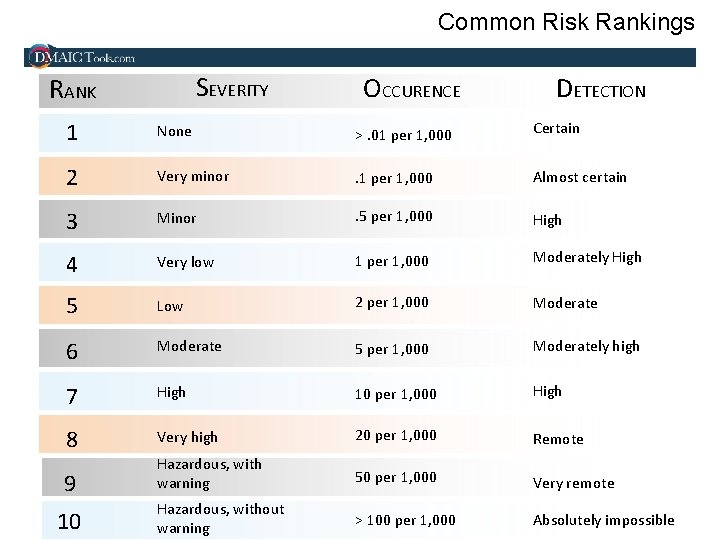
Common Risk Rankings SEVERITY RANK OCCURENCE DETECTION 1 None >. 01 per 1, 000 Certain 2 Very minor . 1 per 1, 000 Almost certain 3 Minor . 5 per 1, 000 High 4 Very low 1 per 1, 000 Moderately High 5 Low 2 per 1, 000 Moderate 6 Moderate 5 per 1, 000 Moderately high 7 High 10 per 1, 000 High 8 Very high 20 per 1, 000 Remote 9 Hazardous, with warning 50 per 1, 000 Very remote Hazardous, without warning > 100 per 1, 000 Absolutely impossible 10
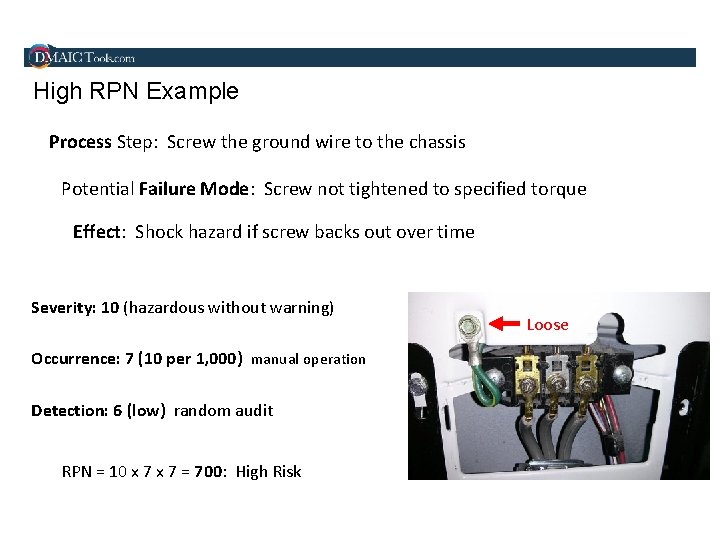
High RPN Example Process Step: Screw the ground wire to the chassis Potential Failure Mode: Screw not tightened to specified torque Effect: Shock hazard if screw backs out over time Severity: 10 (hazardous without warning) Occurrence: 7 (10 per 1, 000) manual operation Detection: 6 (low) random audit RPN = 10 x 7 = 700: High Risk Loose
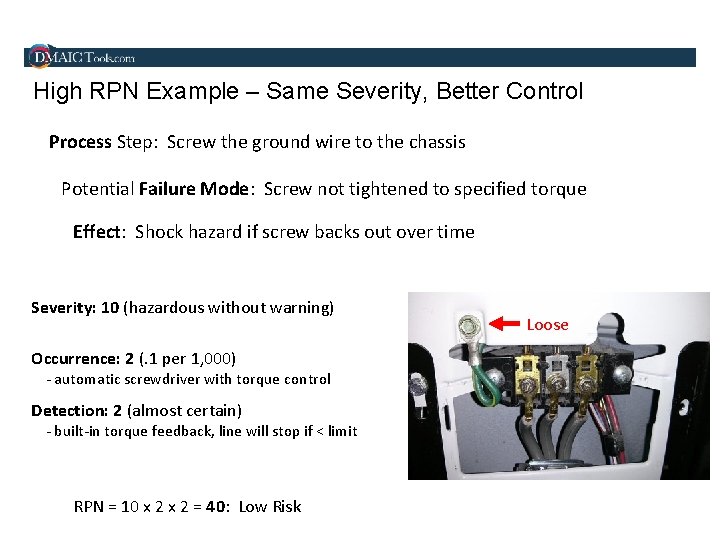
High RPN Example – Same Severity, Better Control Process Step: Screw the ground wire to the chassis Potential Failure Mode: Screw not tightened to specified torque Effect: Shock hazard if screw backs out over time Severity: 10 (hazardous without warning) Occurrence: 2 (. 1 per 1, 000) - automatic screwdriver with torque control Detection: 2 (almost certain) - built-in torque feedback, line will stop if < limit RPN = 10 x 2 = 40: Low Risk Loose
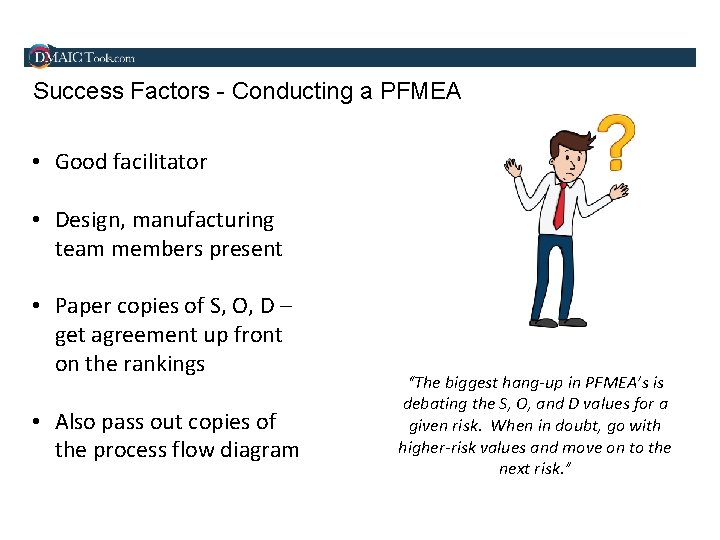
Success Factors - Conducting a PFMEA • Good facilitator • Design, manufacturing team members present • Paper copies of S, O, D – get agreement up front on the rankings • Also pass out copies of the process flow diagram “The biggest hang-up in PFMEA’s is debating the S, O, and D values for a given risk. When in doubt, go with higher-risk values and move on to the next risk. ”
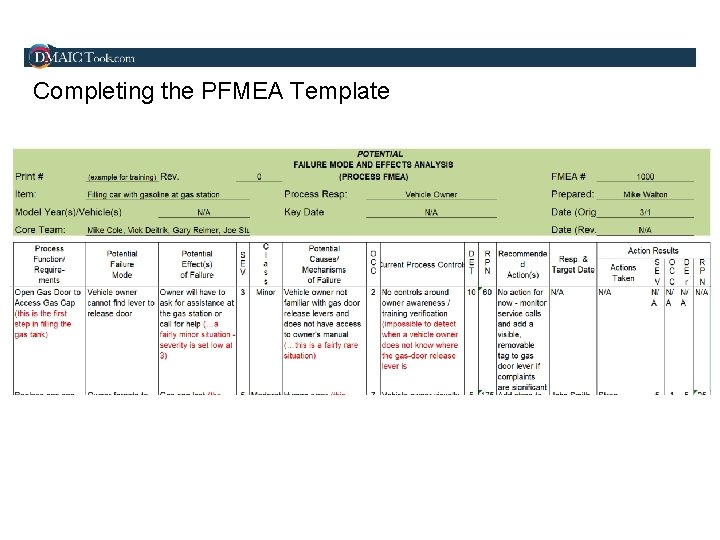
Completing the PFMEA Template
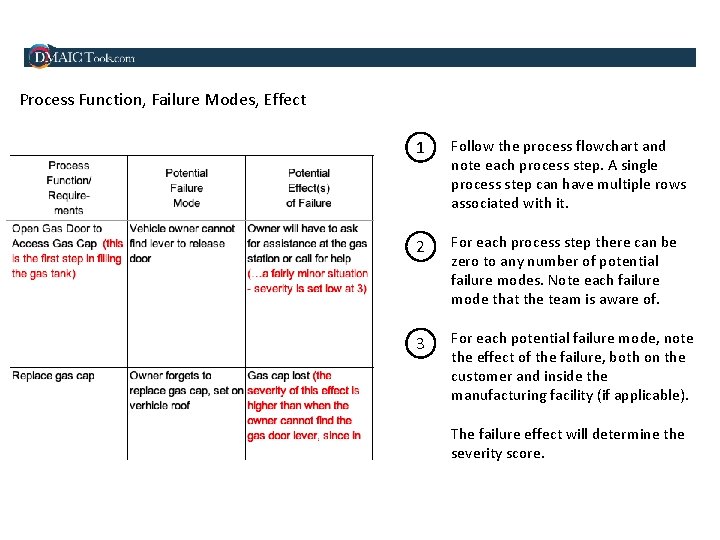
Process Function, Failure Modes, Effect 1 Follow the process flowchart and note each process step. A single process step can have multiple rows associated with it. 2 For each process step there can be zero to any number of potential failure modes. Note each failure mode that the team is aware of. 3 For each potential failure mode, note the effect of the failure, both on the customer and inside the manufacturing facility (if applicable). The failure effect will determine the severity score.
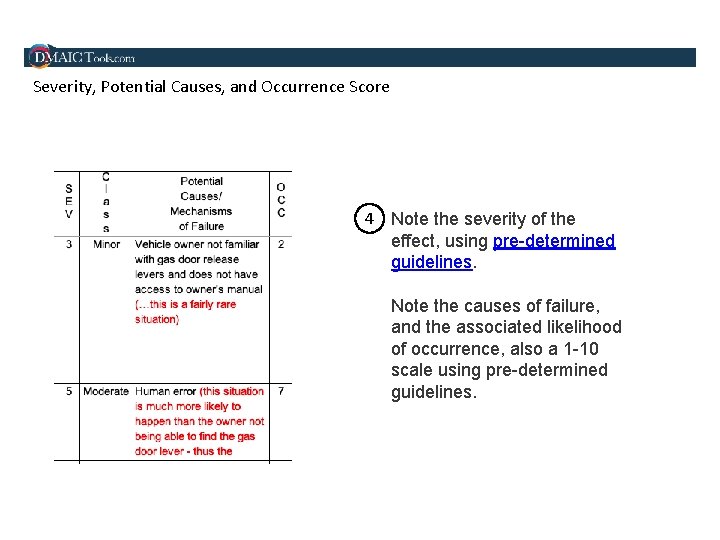
Severity, Potential Causes, and Occurrence Score 4 Note the severity of the effect, using pre-determined guidelines. Note the causes of failure, and the associated likelihood of occurrence, also a 1 -10 scale using pre-determined guidelines.
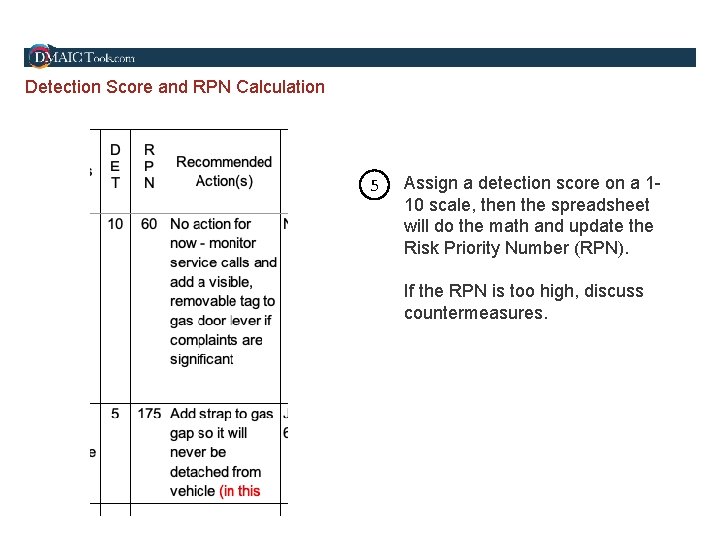
Detection Score and RPN Calculation 5 Assign a detection score on a 110 scale, then the spreadsheet will do the math and update the Risk Priority Number (RPN). If the RPN is too high, discuss countermeasures.
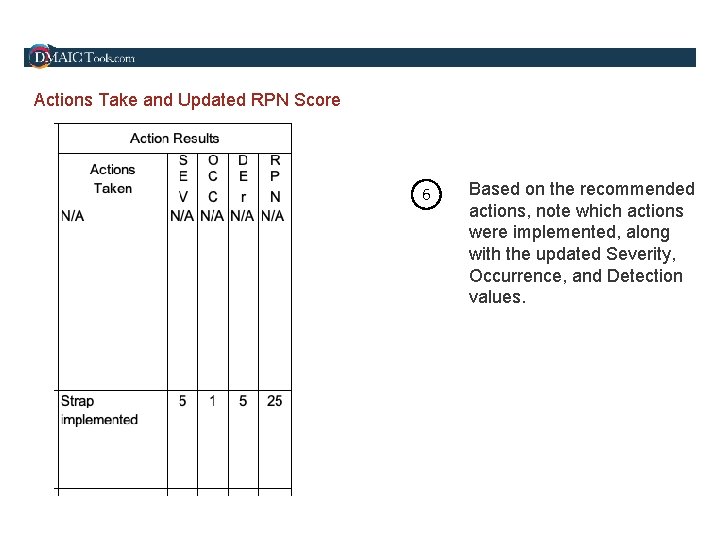
Actions Take and Updated RPN Score 6 Based on the recommended actions, note which actions were implemented, along with the updated Severity, Occurrence, and Detection values.
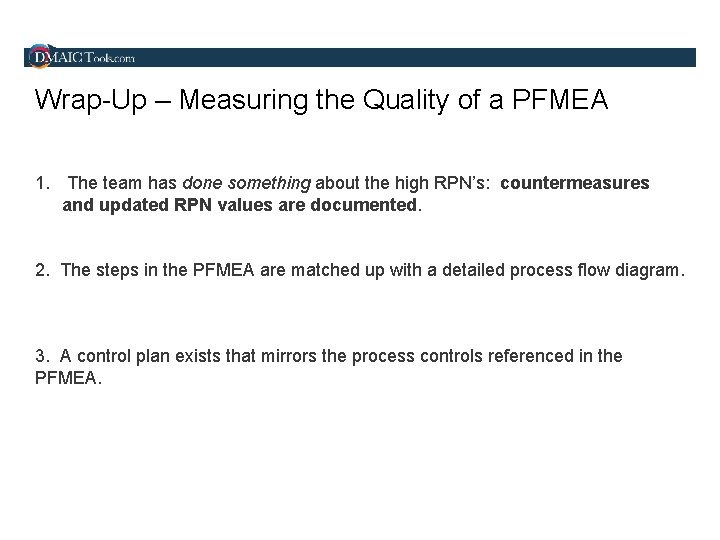
Wrap-Up – Measuring the Quality of a PFMEA 1. The team has done something about the high RPN’s: countermeasures and updated RPN values are documented. 2. The steps in the PFMEA are matched up with a detailed process flow diagram. 3. A control plan exists that mirrors the process controls referenced in the PFMEA.