
PFF AMBASSADOR PROGRAM Understanding Pulmonary Fibrosis DISCLAIMER Medical
PFF AMBASSADOR PROGRAM Understanding Pulmonary Fibrosis
DISCLAIMER Medical Advice Disclaimer The goal of this presentation is to create awareness, foster discussion and share medically accurate information about pulmonary fibrosis (PF). This information is not intended to be a substitute for medical advice offered by a health care professional. If you desire or need advice or referral information, please consult your health care provider or contact the PFF Patient Communication Center (PCC). (Toll Free) 844 -Talk-PFF or pcc@pulmonaryfibrosis. org
What is Pulmonary Fibrosis?
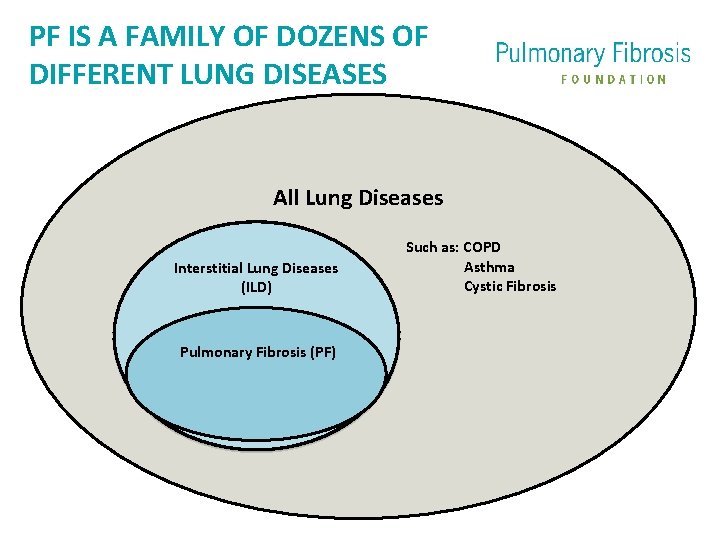
PF IS A FAMILY OF DOZENS OF DIFFERENT LUNG DISEASES All Lung Diseases Interstitial Lung Diseases (ILD) Pulmonary Fibrosis (PF) Such as: COPD Asthma Cystic Fibrosis
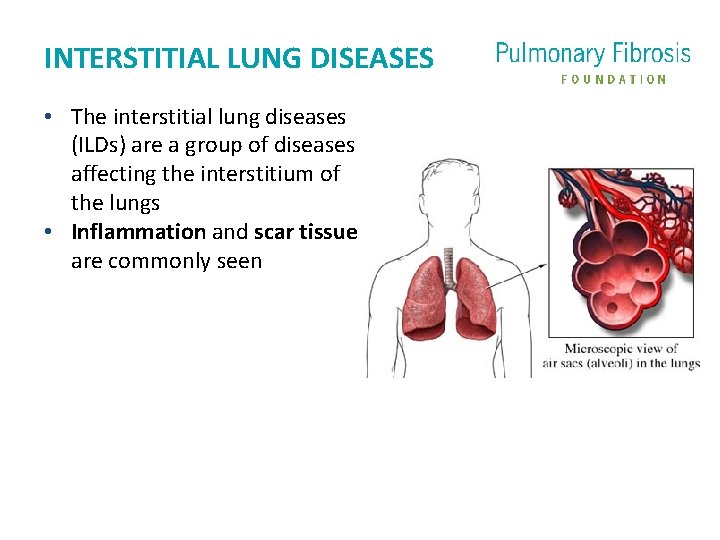
INTERSTITIAL LUNG DISEASES • The interstitial lung diseases (ILDs) are a group of diseases affecting the interstitium of the lungs • Inflammation and scar tissue are commonly seen
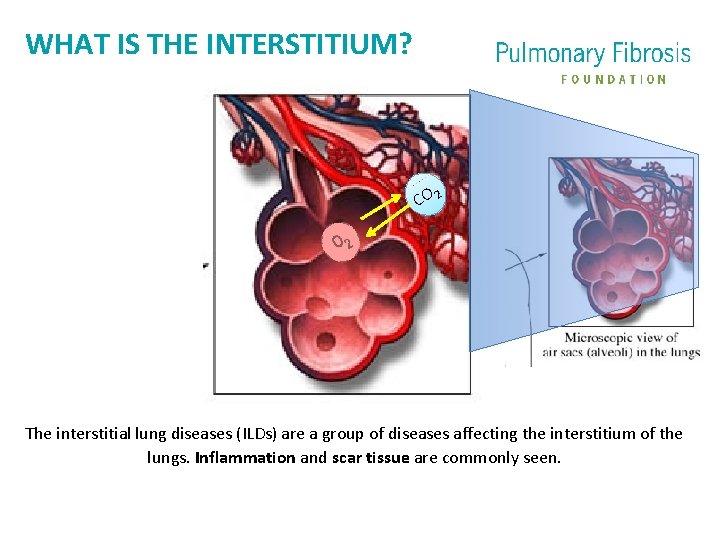
WHAT IS THE INTERSTITIUM? CO 2 The interstitial lung diseases (ILDs) are a group of diseases affecting the interstitium of the lungs. Inflammation and scar tissue are commonly seen.
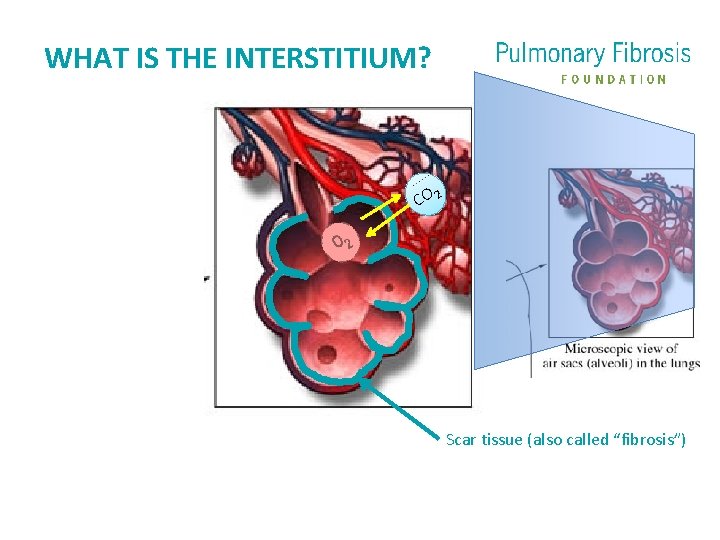
WHAT IS THE INTERSTITIUM? CO 2 Scar tissue (also called “fibrosis”)
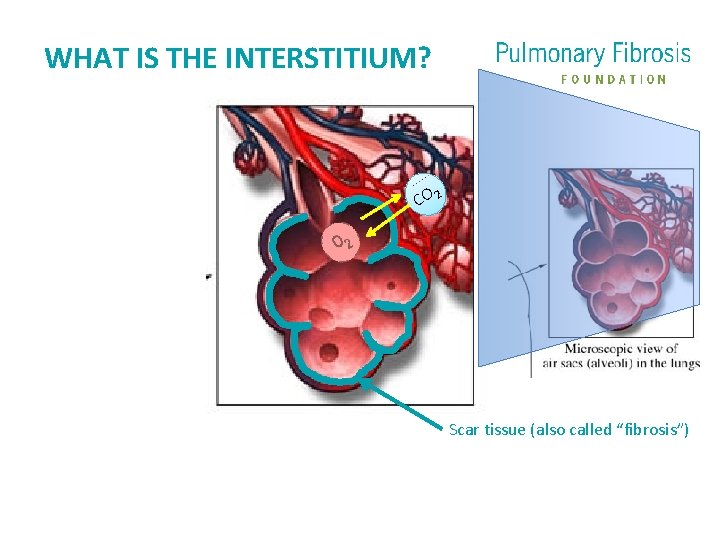
WHAT IS THE INTERSTITIUM? CO 2 Scar tissue (also called “fibrosis”)
What Causes PF?
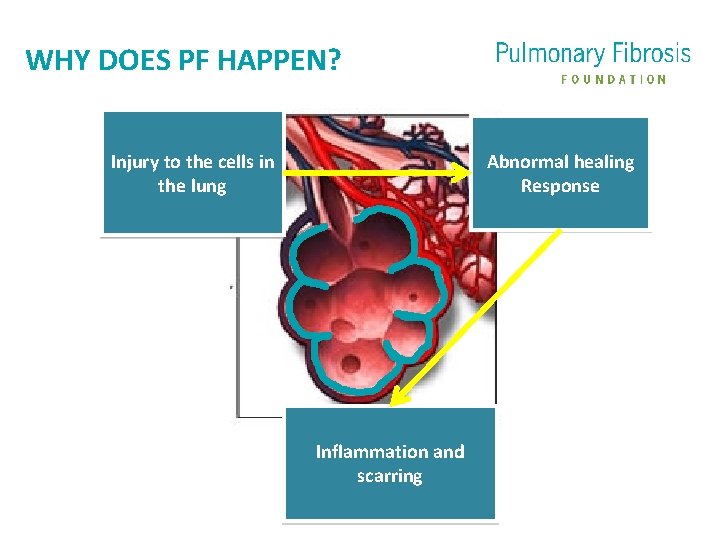
WHY DOES PF HAPPEN? Abnormal healing Response Injury to the cells in the lung Inflammation and scarring 10
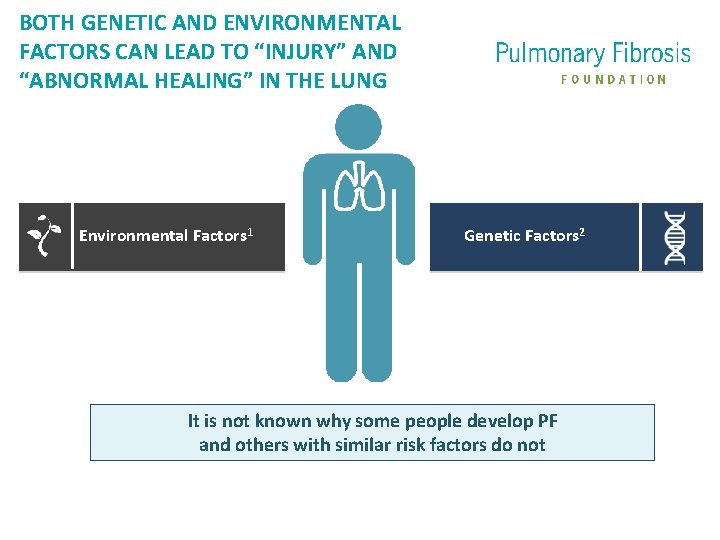
BOTH GENETIC AND ENVIRONMENTAL FACTORS CAN LEAD TO “INJURY” AND “ABNORMAL HEALING” IN THE LUNG Environmental Factors 1 Genetic Factors 2 It is not known why some people develop PF and others with similar risk factors do not
SOMETIMES WE CAN IDENTIFY THE CAUSE OF PF • Medication side effects • Radiation therapy to the chest • Exposure to mold, birds, fibers, dusts, and other factors • Autoimmune diseases, such as rheumatoid arthritis, scleroderma, Sjogren’s syndrome • In many cases, however, we cannot identify a specific cause of PF
SOMETIMES WE CANNOT IDENTIFY THE CAUSE OF PF • The word “idiopathic” means “the cause is unknown” • We don’t know the cause of Idiopathic Pulmonary Fibrosis (IPF) • There are many other types of PF for which the cause is also unknown • Even when we might know the “cause” of someone’s PF, we often still don’t understand why they were susceptible to that “cause” and others were not
GENETIC RISK OF PF AND IPF • If there is one other family member with IPF or pulmonary fibrosis (PF), the disease may be an inherited form • Up to 20% of cases of IPF may be due to inherited forms of the disease • Even when IPF is inherited, outward symptoms and underlying disease progression may be different between affected family members The Pulmonary Fibrosis Foundation (PFF) supports a genetics counseling program to help family members understand the disease and their risks of becoming sick with PF
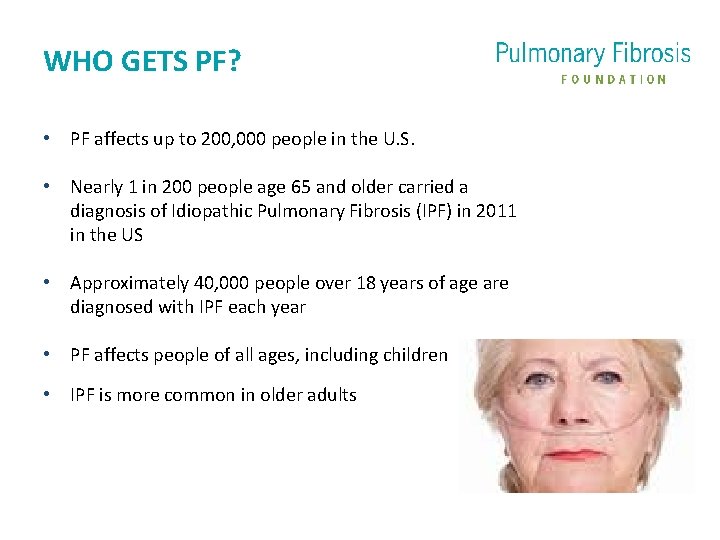
WHO GETS PF? • PF affects up to 200, 000 people in the U. S. • Nearly 1 in 200 people age 65 and older carried a diagnosis of Idiopathic Pulmonary Fibrosis (IPF) in 2011 in the US • Approximately 40, 000 people over 18 years of age are diagnosed with IPF each year • PF affects people of all ages, including children • IPF is more common in older adults

How is PF Diagnosed?
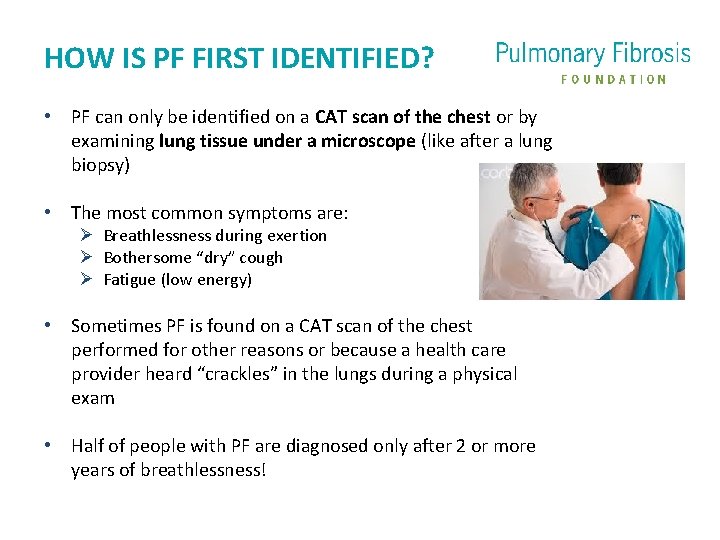
HOW IS PF FIRST IDENTIFIED? • PF can only be identified on a CAT scan of the chest or by examining lung tissue under a microscope (like after a lung biopsy) • The most common symptoms are: Ø Breathlessness during exertion Ø Bothersome “dry” cough Ø Fatigue (low energy) • Sometimes PF is found on a CAT scan of the chest performed for other reasons or because a health care provider heard “crackles” in the lungs during a physical exam • Half of people with PF are diagnosed only after 2 or more years of breathlessness!
HOW DO DOCTORS DIAGNOSE PF? • A focused history and physical examination is important to help identify some of the “known causes” of PF • A High-Resolution CAT scan (HRCT) of the chest is a critical test to help diagnose PF correctly Ø A regular CAT scan identify the presence of PF Ø An HRCT can help diagnose the type of PF • Blood tests are also important, since they can point your doctor to some of the “known causes” of PF • If a firm diagnosis cannot be reached after a history and physical, an HRCT, and blood tests, your doctors might consider performing a biopsy of the lung
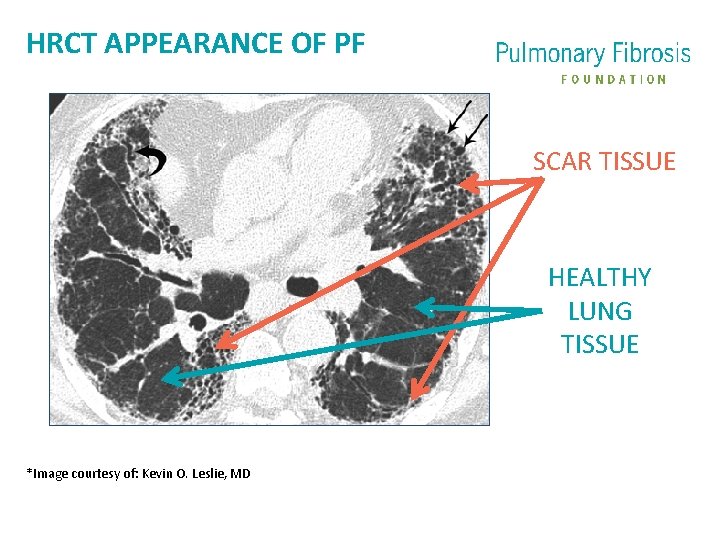
HRCT APPEARANCE OF PF SCAR TISSUE HEALTHY LUNG TISSUE Dense scarring *Image courtesy of: Kevin O. Leslie, MD.
What Happens After Diagnosis?
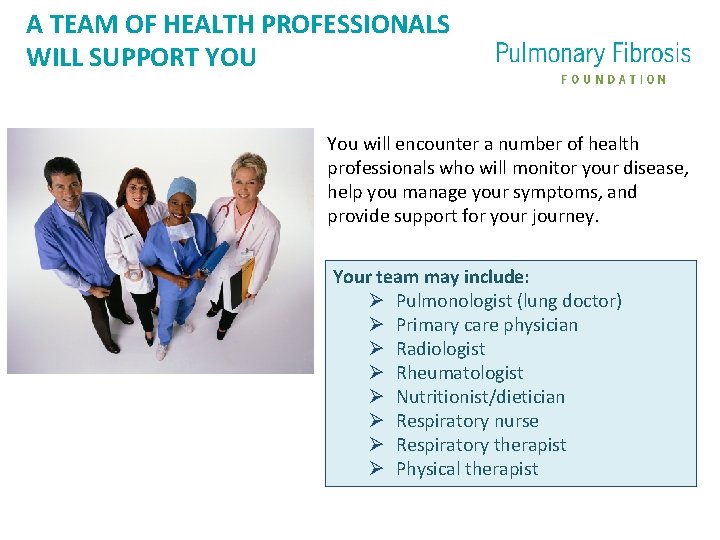
A TEAM OF HEALTH PROFESSIONALS WILL SUPPORT YOU You will encounter a number of health professionals who will monitor your disease, help you manage your symptoms, and provide support for your journey. Your team may include: Ø Pulmonologist (lung doctor) Ø Primary care physician Ø Radiologist Ø Rheumatologist Ø Nutritionist/dietician Ø Respiratory nurse Ø Respiratory therapist Ø Physical therapist
THE EXACT COURSE OF DISEASE PROGRESSION IN PF IS UNPREDICTABLE • There is no known way to reverse the scar tissue that is already present in the lungs • Inflammation, on the other hand, can sometimes improve or even go away completely • No one can predict how your disease will change over time. Some people will get worse quickly, others will remain stable for some time, and other will improve • Based on an individual’s unique characteristics, your doctor might be able to give you a sense of best and worst case scenarios of what the future may hold for you
PROGRESSION OF SYMPTOMS VARIES FROM PERSON TO PERSON • As PF progresses, symptoms will increase • Increased breathlessness with exertion, eventually even at rest • Dry cough may become more hacking, and may include bouts of coughing that cannot be controlled • Many will require supplemental oxygen as the disease progresses. At first with exertion and/or sleep, but eventually even at rest
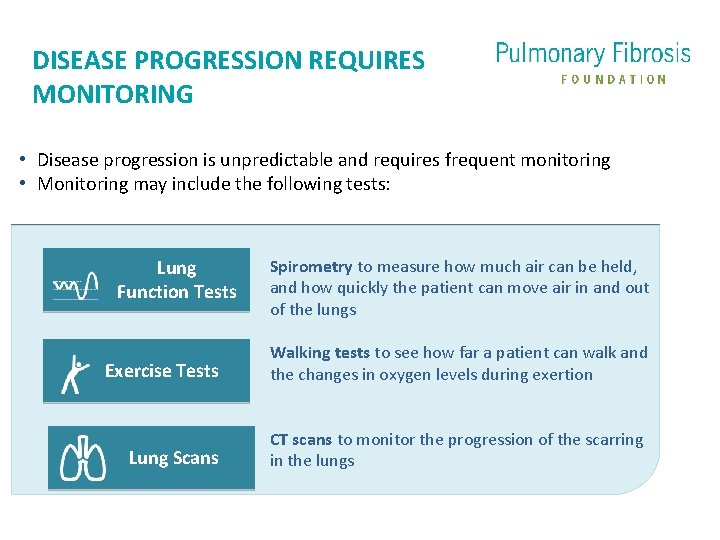
DISEASE PROGRESSION REQUIRES MONITORING • Disease progression is unpredictable and requires frequent monitoring • Monitoring may include the following tests: Lung Function Tests Spirometry to measure how much air can be held, and how quickly the patient can move air in and out of the lungs Exercise Tests Walking tests to see how far a patient can walk and the changes in oxygen levels during exertion Lung Scans CT scans to monitor the progression of the scarring in the lungs
What Treatment Options are Available for PF?
THE MOST IMPORTANT TREATMENTS FOR PF • Smoking cessation • If your disease is of “known cause, ” talk to your doctor about targeting the cause • Supplemental oxygen and pulmonary rehabilitation can help reduce symptoms
SUPPLEMENTAL OXYGEN • Many people with PF experience low oxygen levels in their blood during exertion, sleep, or even at rest • Low blood oxygen levels are harmful! Ø Puts strain on the heart and other organs Ø Often leads to breathlessness and/or cough Ø Limits activity level and quality-of-life
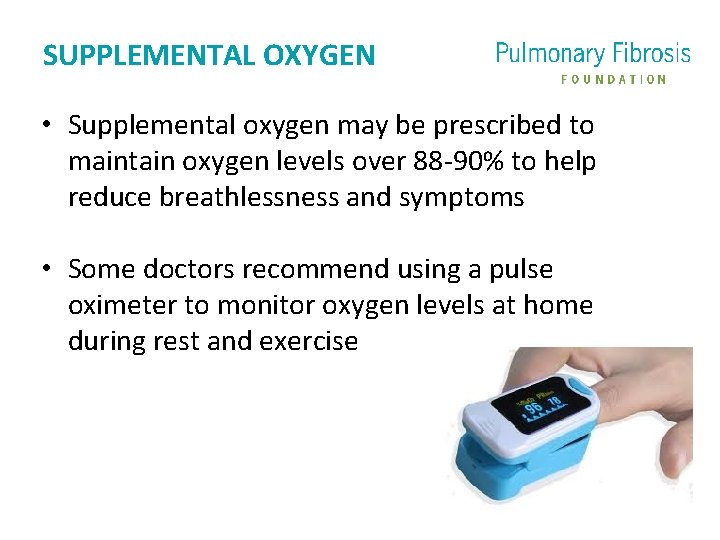
SUPPLEMENTAL OXYGEN • Supplemental oxygen may be prescribed to maintain oxygen levels over 88 -90% to help reduce breathlessness and symptoms • Some doctors recommend using a pulse oximeter to monitor oxygen levels at home during rest and exercise
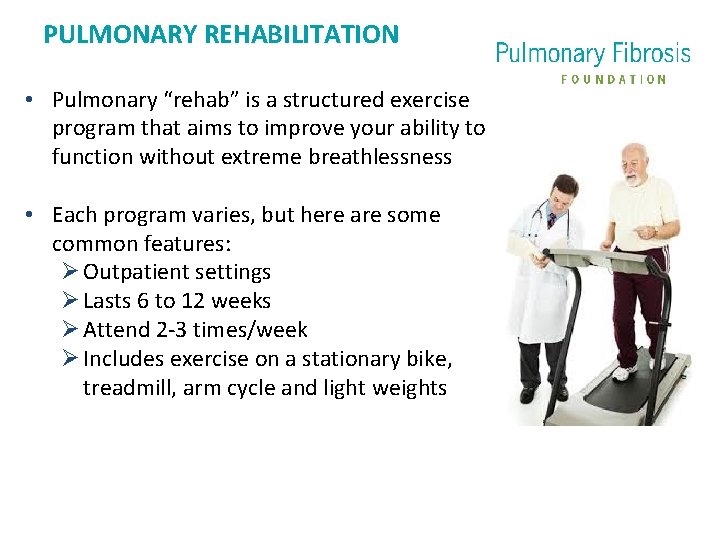
PULMONARY REHABILITATION • Pulmonary “rehab” is a structured exercise program that aims to improve your ability to function without extreme breathlessness • Each program varies, but here are some common features: Ø Outpatient settings Ø Lasts 6 to 12 weeks Ø Attend 2 -3 times/week Ø Includes exercise on a stationary bike, treadmill, arm cycle and light weights
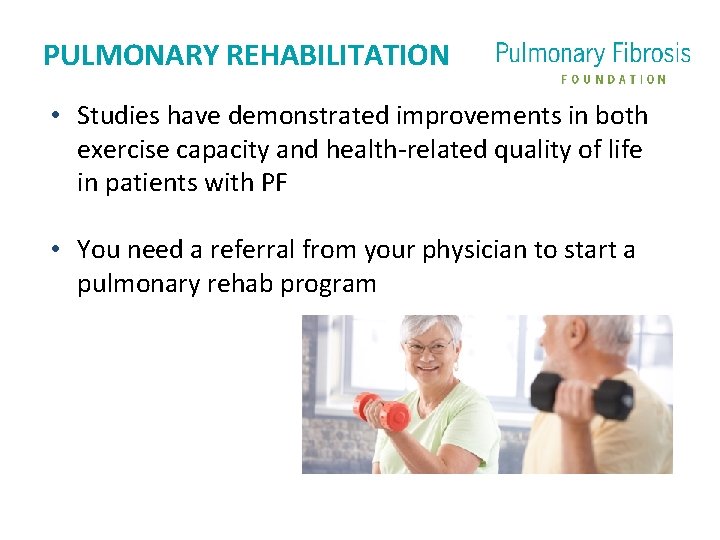
PULMONARY REHABILITATION • Studies have demonstrated improvements in both exercise capacity and health-related quality of life in patients with PF • You need a referral from your physician to start a pulmonary rehab program
THERAPIES FOR PF • In addition to oxygen and pulmonary rehabilitation, there are otherapies that may be available to help you manage your PF Ø Corticosteroids, such as prednisone, can help some people ‒ Not recommended for chronic treatment of IPF Ø Treatment of acid reflux (GERD), sleep apnea, cough, and other symptoms and conditions helps some people with PF Ø Two new drugs were approved by the FDA in October 2014 for the treatment of IPF • Management of PF is individualized to each person. Please consult your physician for the course of treatment that is right for you
IPF-SPECIFIC THERAPIES • Pirfenidone (Esbriet®) and Nintedanib (Ofev®) are two “anti-fibrotic” treatments that were approved by the FDA in October 2014 to treat IPF • Each of these drugs slows the progression of IPF over time • Neither drug improves the symptoms of IPF • These drugs may not be right for everyone. If you have IPF, talk to your doctor about these medications
LUNG TRANSPLANTATION • Lung transplantation is the surgical replacement of one or both lungs with one or two lungs from a donor • Lung transplantation helps about 1, 000 people with PF each year in the U. S. Ø Breathlessness and cough completely resolve Ø No oxygen requirement Ø Most people live longer with a transplant than without one
LUNG TRANSPLANTATION • There also many risks and complications that people face after a lung transplant • Early referral is very important • There is no firm upper age limit
RESEARCH & CLINICAL TRIALS IN PF • Research into the causes of PF is ongoing around the world • There also a number of clinical trials that are testing potential new medicines that may slow disease progression • You can find out more at: Ø www. Clinical. Trials. gov Ø www. Pulmonary. Fibrosis. org
PALLIATIVE CARE • At the time of any serious diagnosis, such as PF, palliative care (or supportive care) should be offered alongside care focused on recovery and prolonging life, such as lung transplant evaluation and participation in research studies • Palliative care is appropriate for anyone who has a chronic or serious illness at any stage of the disease
WHAT IS PALLIATIVE CARE? • Palliative care helps to address emotional, social and spiritual concerns as well as provide support for your caregivers • It often involves a multidisciplinary approach: Ø Physicians, nurses, social workers, psychologists, other health care professionals • Helps address your advanced care plans, specifically allowing you to direct your wishes to be better prepared for the disease course • Published studies show that patients involved in palliative care live longer and have a better quality of life, by giving you better control of your symptoms and better control of your destiny. Overall, this gives you a better sense of control of your disease
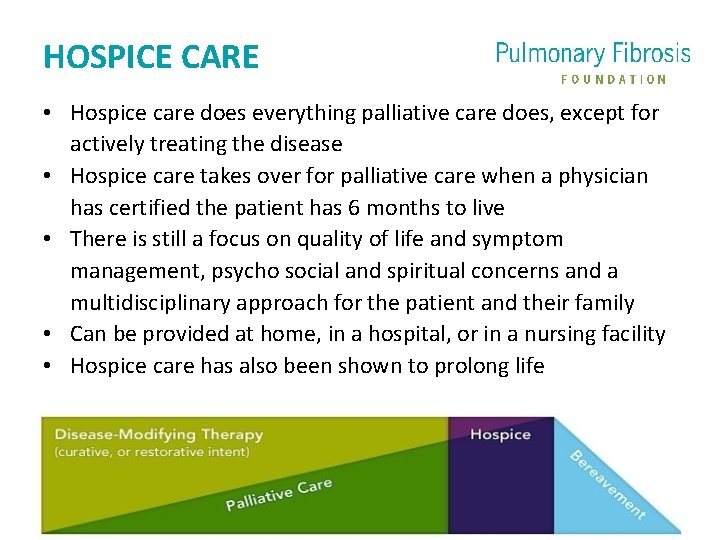
HOSPICE CARE • Hospice care does everything palliative care does, except for actively treating the disease • Hospice care takes over for palliative care when a physician has certified the patient has 6 months to live • There is still a focus on quality of life and symptom management, psycho social and spiritual concerns and a multidisciplinary approach for the patient and their family • Can be provided at home, in a hospital, or in a nursing facility • Hospice care has also been shown to prolong life 38
What Support and Information is Available to Me?
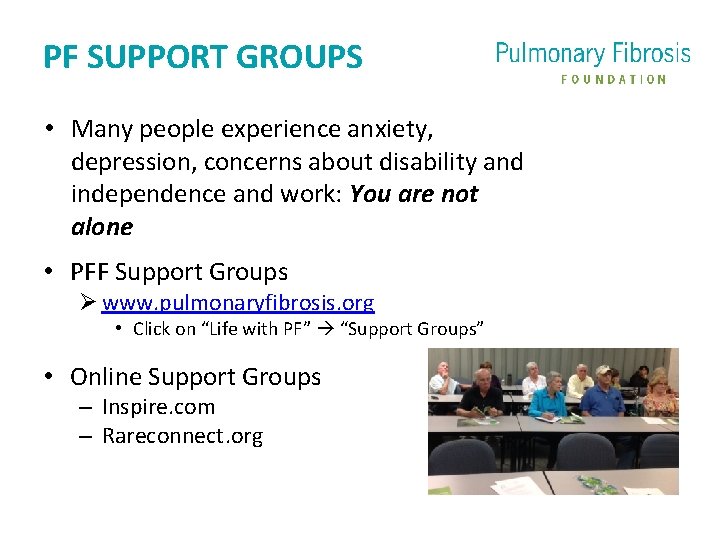
PF SUPPORT GROUPS • Many people experience anxiety, depression, concerns about disability and independence and work: You are not alone • PFF Support Groups Ø www. pulmonaryfibrosis. org • Click on “Life with PF” “Support Groups” • Online Support Groups – Inspire. com – Rareconnect. org
PFF RESOURCES • PFF Patient Communication Center Ø Call 844 -Talk. PFF (844. 825. 5733) or email pcc@pulmonaryfibrosis. org with questions! • PFF website: www. pulmonaryfibrosis. org Ø Life with PF section ‒ Information about PF, treatment options, and maintaining your health ‒ Find a PFF Care Center Network site or local ILD center ‒ Watch our archive of Disease Education Webinars or download educational materials ‒ Find a local PF support group or join our online support community on Inspire. com • Attend the PFF Summit 2015 Ø November 12 -14 th in Washington D. C. Ø www. pffsummit. org for more information
SUMMARY • PF is a family of serious lung diseases with scarring in the walls of the airsacs of the lungs • Each person with PF is different Ø Treatment and prognosis will be different for each person • There are now two FDA approved therapies that slow the progression of IPF as well as therapies to help with symptom management in PF Ø Be sure to talk with your physician about the course of treatment that is appropriate for you. • After your diagnosis, it is important to maintain a healthy lifestyle and find support through the Pulmonary Fibrosis Foundation

Thank you.
- Slides: 43