
PFAS Sampling Learning Objectives Understand why PFAS sampling
PFAS Sampling

Learning Objectives Understand why PFAS sampling is different than other sampling events Understand for PFAS special considerations needed when sampling Understand best practices for preparing for a PFAS sampling event 2
Why is a PFAS sampling event different from other sampling events? PFAS are ubiquitous and have been used to manufacture items for personal uses and environmental site investigations Much of our typical sampling equipment and items in the sampling environment contain or may contain PFAS Lowering of screening criteria and detection limits in labs Images from MS Office Clip. Art 3
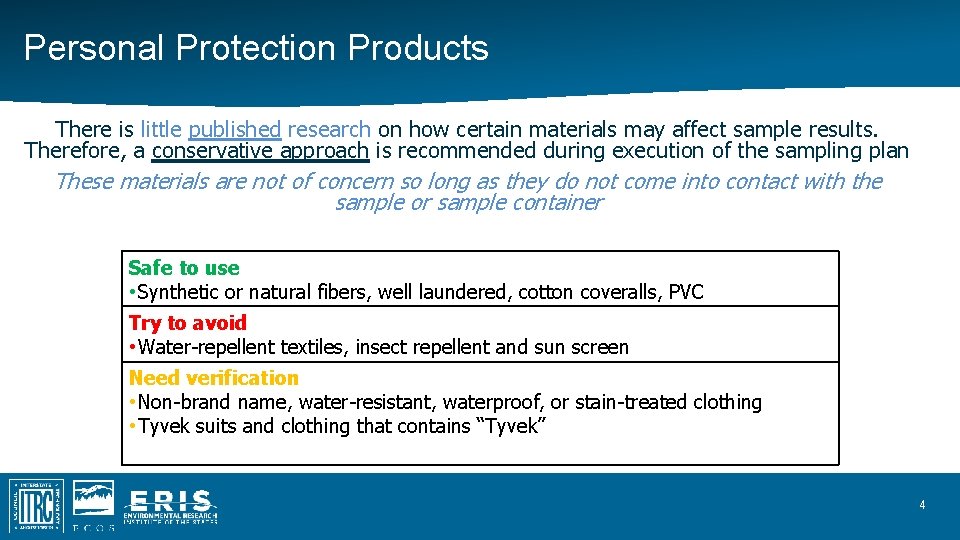
Personal Protection Products There is little published research on how certain materials may affect sample results. Therefore, a conservative approach is recommended during execution of the sampling plan These materials are not of concern so long as they do not come into contact with the sample or sample container Safe to use • Synthetic or natural fibers, well laundered, cotton coveralls, PVC Try to avoid • Water-repellent textiles, insect repellent and sun screen Need verification • Non-brand name, water-resistant, waterproof, or stain-treated clothing • Tyvek suits and clothing that contains “Tyvek” 4
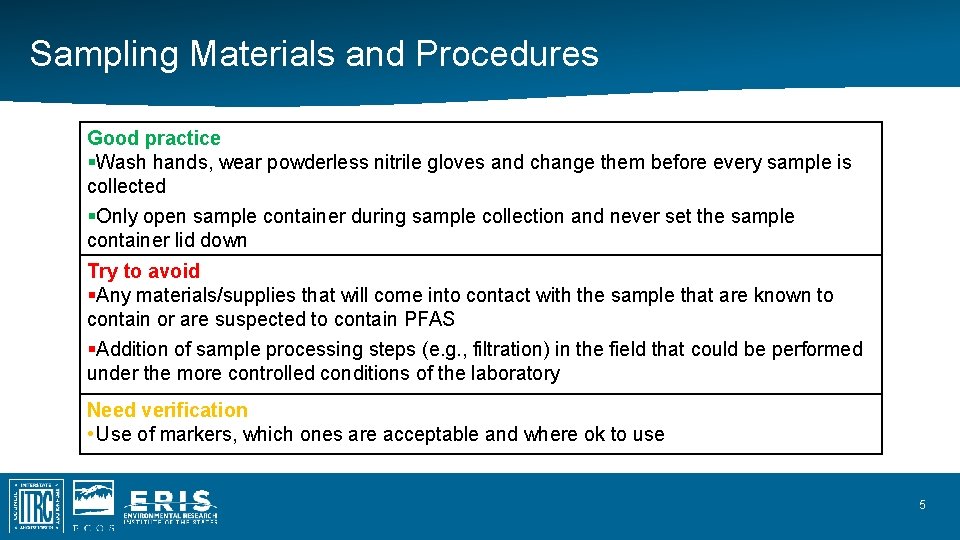
Sampling Materials and Procedures Good practice §Wash hands, wear powderless nitrile gloves and change them before every sample is collected §Only open sample container during sample collection and never set the sample container lid down Try to avoid §Any materials/supplies that will come into contact with the sample that are known to contain or are suspected to contain PFAS §Addition of sample processing steps (e. g. , filtration) in the field that could be performed under the more controlled conditions of the laboratory Need verification • Use of markers, which ones are acceptable and where ok to use 5
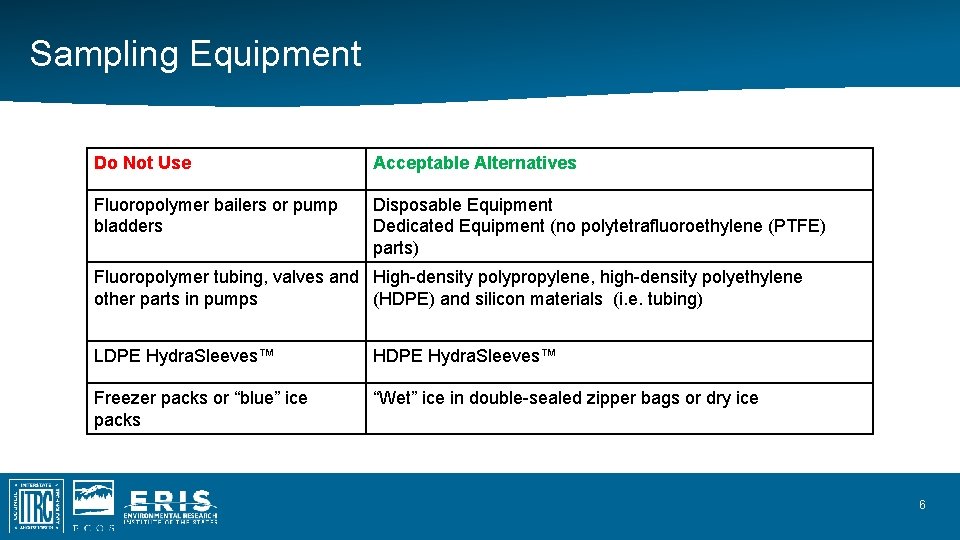
Sampling Equipment Do Not Use Acceptable Alternatives Fluoropolymer bailers or pump bladders Disposable Equipment Dedicated Equipment (no polytetrafluoroethylene (PTFE) parts) Fluoropolymer tubing, valves and High-density polypropylene, high-density polyethylene other parts in pumps (HDPE) and silicon materials (i. e. tubing) LDPE Hydra. Sleeves™ HDPE Hydra. Sleeves™ Freezer packs or “blue” ice packs “Wet” ice in double-sealed zipper bags or dry ice 6
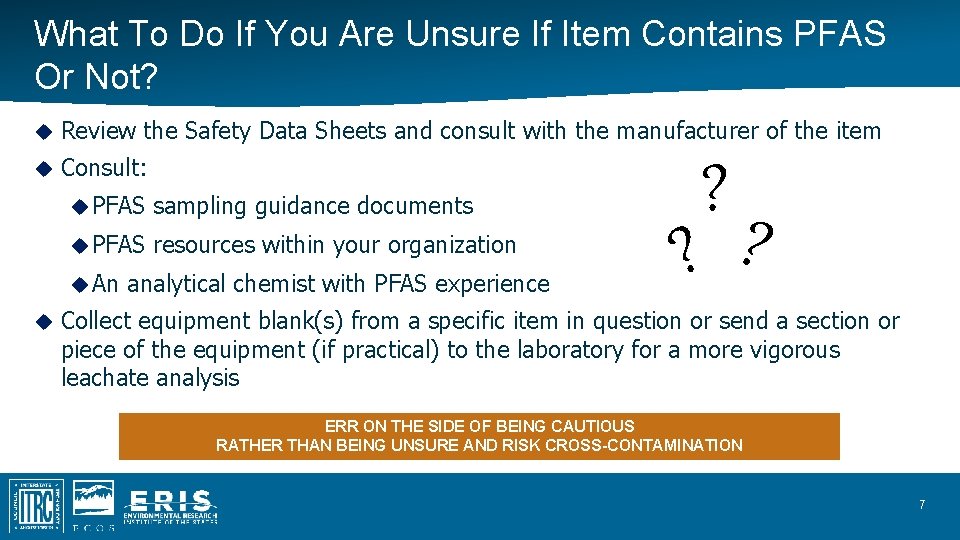
What To Do If You Are Unsure If Item Contains PFAS Or Not? Review the Safety Data Sheets and consult with the manufacturer of the item Consult: PFAS sampling guidance documents PFAS resources within your organization An analytical chemist with PFAS experience ? ? ? Collect equipment blank(s) from a specific item in question or send a section or piece of the equipment (if practical) to the laboratory for a more vigorous leachate analysis ERR ON THE SIDE OF BEING CAUTIOUS RATHER THAN BEING UNSURE AND RISK CROSS-CONTAMINATION 7
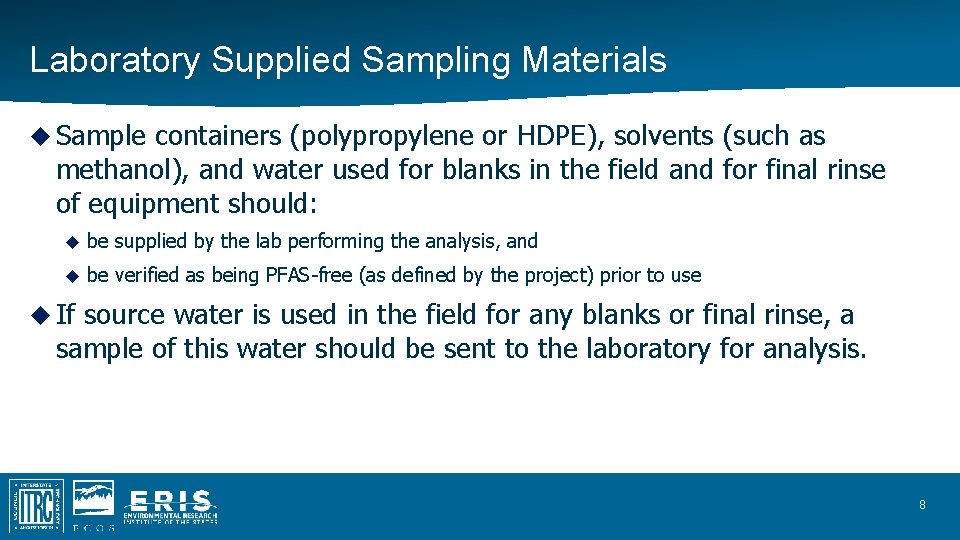
Laboratory Supplied Sampling Materials Sample containers (polypropylene or HDPE), solvents (such as methanol), and water used for blanks in the field and for final rinse of equipment should: be supplied by the lab performing the analysis, and be verified as being PFAS-free (as defined by the project) prior to use If source water is used in the field for any blanks or final rinse, a sample of this water should be sent to the laboratory for analysis. 8
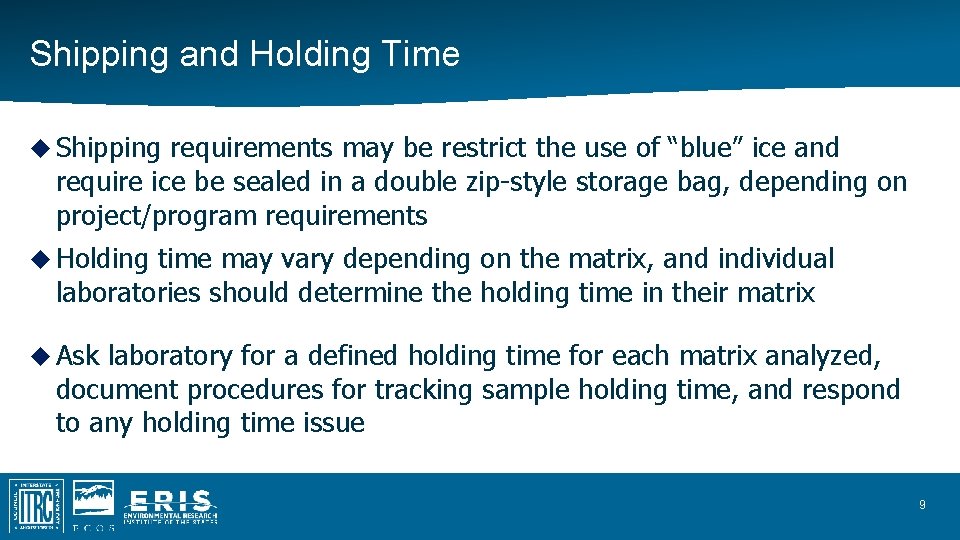
Shipping and Holding Time Shipping requirements may be restrict the use of “blue” ice and require ice be sealed in a double zip-style storage bag, depending on project/program requirements Holding time may vary depending on the matrix, and individual laboratories should determine the holding time in their matrix Ask laboratory for a defined holding time for each matrix analyzed, document procedures for tracking sample holding time, and respond to any holding time issue 9
Sampling Event Preparation Consider the overarching objectives of the project and conceptual site model will influence the fundamentals of any sampling and analysis program • Site history (e. g. , potential sources, quantities used) as an indicator of potential level of PFAS • Project Action Levels Develop a project-specific sampling and analysis plan (SAP) which addresses the increased risk of contamination and project-specific considerations 10

PFAS Sampling Guidance/SOPs To differentiate PFAS sampling procedures from normal non-PFAS sampling procedures To inform all field personnel on how to collect or handle PFAS samples and also how to perform subsurface activities to avoid contamination Well installation/abandonment Field monitoring Hydraulic Testing To improve sampling consistency/data quality 11
QA/QC Sample Collection Using blanks to evaluate composition or suitable nature of equipment/supplies for sampling, and to assess possibility of cross-contamination during sampling/transport/storage Pre-investigation equipment blanks (decon water, methanol, new equipment, plastic bags as sample containers, sun screen, insect repellents, anything you are unsure of) Equipment blanks to assess adequacy of decontamination process and/or evaluate potential contamination from equipment. Field blanks to assess contamination from field conditions. Recommended frequency: one blank/day/matrix or one blank/20 samples/matrix, whichever more frequent. Field reagent blanks (USEPA Method 537. 1) should originate from the laboratory for all drinking-water programs (minimum of 1/event). Trip blank to assess cross‑contamination introduced from laboratory/during shipping procedures (1/cooler). 12
Planning Laboratory Analysis Project team must discuss with the laboratory: the PFAS to be analyzed and project reporting levels, the volume of sample required to achieve the lab reporting levels, project the sample preparation requirements, and number of bottles needed, including QC samples. Provide laboratory information on high concentration samples Request laboratory screen all samples prior to sample preparation (additional containers will be needed for this) 13
Takeaway Messages Increased risk of contamination during sampling requires PFASspecific sampling procedures Increased field QC is needed due to contamination risk Communication with Laboratory is key in planning a sampling event 14
PFAS Analysis
Learning Objectives Understand current state of PFAS analytical methods Understand basics of compound-specific PFAS analysis Understand alternative analytical techniques and how they can be useful 16
Published PFAS Analytical Methods USEPA 537. 1 Compound-Specific Analyses (18 PFAS) Drinking Water Laboratories § § § allowed some modifications, but not: Sample collection/preservation Extraction Quality control Multi-laboratory validated method Shoemaker, Tettenhorst 2018 17
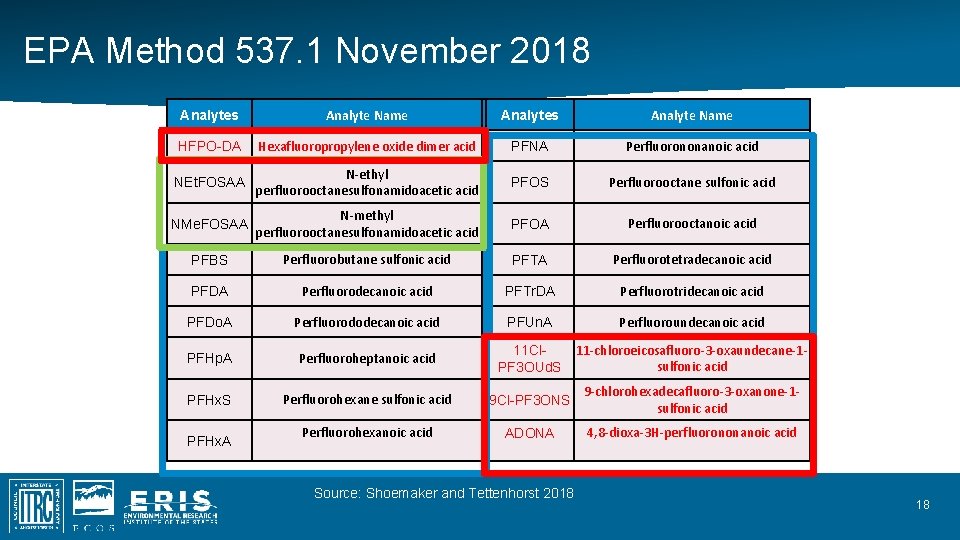
EPA Method 537. 1 November 2018 Analytes Analyte Name HFPO-DA Hexafluoropropylene oxide dimer acid PFNA Perfluorononanoic acid NEt. FOSAA N-ethyl perfluorooctanesulfonamidoacetic acid PFOS Perfluorooctane sulfonic acid NMe. FOSAA N-methyl perfluorooctanesulfonamidoacetic acid PFOA Perfluorooctanoic acid PFBS Perfluorobutane sulfonic acid PFTA Perfluorotetradecanoic acid PFDA Perfluorodecanoic acid PFTr. DA Perfluorotridecanoic acid PFDo. A Perfluorododecanoic acid PFUn. A Perfluoroundecanoic acid PFHp. A Perfluoroheptanoic acid 11 Cl. PF 3 OUd. S 11 -chloroeicosafluoro-3 -oxaundecane-1 sulfonic acid PFHx. S Perfluorohexane sulfonic acid 9 Cl-PF 3 ONS 9 -chlorohexadecafluoro-3 -oxanone-1 sulfonic acid Perfluorohexanoic acid ADONA 4, 8 -dioxa-3 H-perfluorononanoic acid PFHx. A Source: Shoemaker and Tettenhorst 2018 18
Other Published PFAS Analytical Methods ISO Method 25101 (ISO 2009) Compound-Specific § PFOA § PFOS Unfiltered Analyses (2 PFAS) Drinking Water, Ground Water, and Surface Water Multi-laboratory validated method 19
Other Published PFAS Analytical Methods ASTM D 7979 -17 (ASTM 2017) Compound-Specific Analyses (21 PFAS) Water, Sludge, Influent, Effluent, and Wastewater Single laboratory validated method ASTM D 7968 -17 a (ASTM 2017) Compound-Specific Analyses (21 PFAS) Soil Single laboratory validated method 20
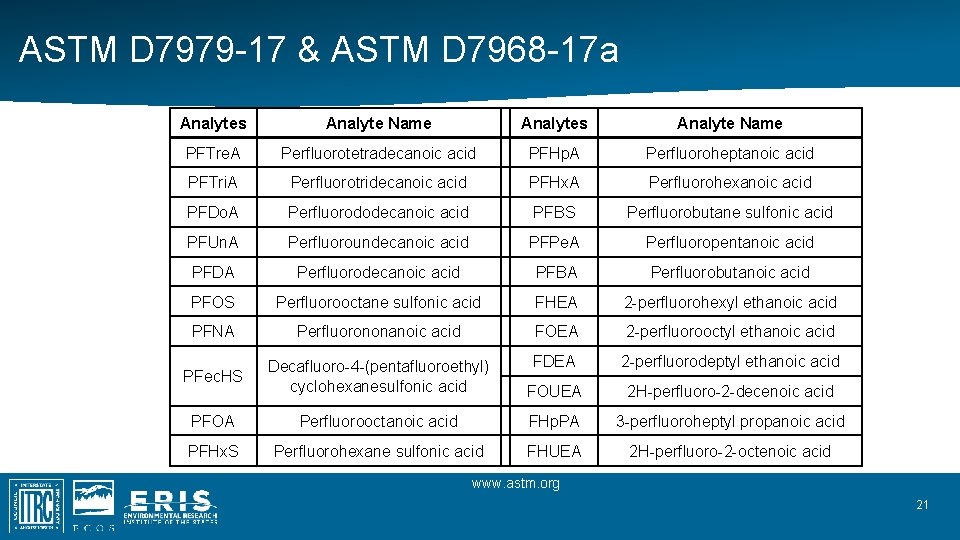
ASTM D 7979 -17 & ASTM D 7968 -17 a Analytes Analyte Name PFTre. A Perfluorotetradecanoic acid PFHp. A Perfluoroheptanoic acid PFTri. A Perfluorotridecanoic acid PFHx. A Perfluorohexanoic acid PFDo. A Perfluorododecanoic acid PFBS Perfluorobutane sulfonic acid PFUn. A Perfluoroundecanoic acid PFPe. A Perfluoropentanoic acid PFDA Perfluorodecanoic acid PFBA Perfluorobutanoic acid PFOS Perfluorooctane sulfonic acid FHEA 2 -perfluorohexyl ethanoic acid PFNA Perfluorononanoic acid FOEA 2 -perfluorooctyl ethanoic acid PFec. HS Decafluoro-4 -(pentafluoroethyl) cyclohexanesulfonic acid FDEA 2 -perfluorodeptyl ethanoic acid FOUEA 2 H-perfluoro-2 -decenoic acid PFOA Perfluorooctanoic acid FHp. PA 3 -perfluoroheptyl propanoic acid PFHx. S Perfluorohexane sulfonic acid FHUEA 2 H-perfluoro-2 -octenoic acid www. astm. org 21
PFAS Methods In Development USEPA Method 533 Compound-Specific Drinking Analyses (targeting 25 PFAS) Water Addresses compounds that were not included in Method 537. 1 due to poor performance Multi-laboratory Publish validated method draft method in 2019 Source: USEPA PFAS Research Webinar - Methods and Guidance for Sampling and Analyzing Environmental Media, November 28, 2018 22
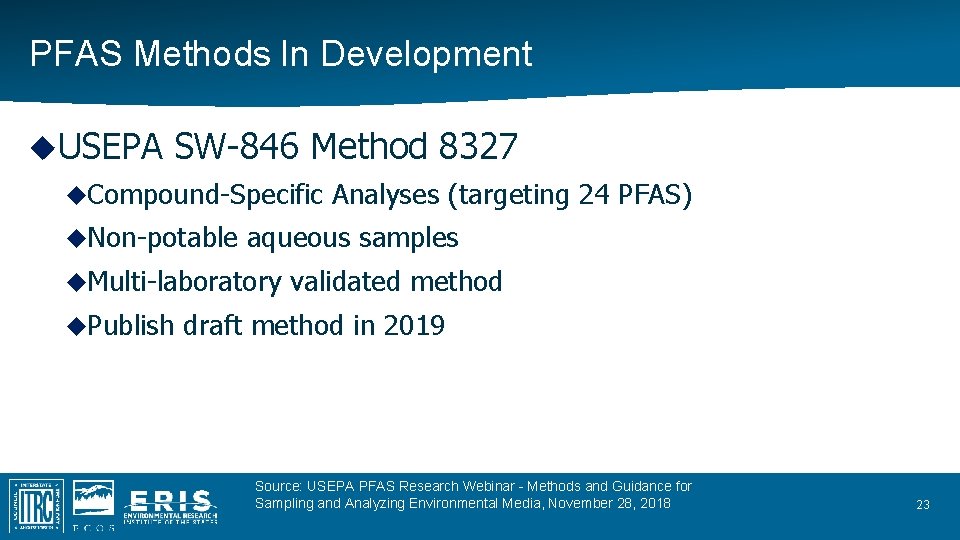
PFAS Methods In Development USEPA SW-846 Method 8327 Compound-Specific Non-potable aqueous samples Multi-laboratory Publish Analyses (targeting 24 PFAS) validated method draft method in 2019 Source: USEPA PFAS Research Webinar - Methods and Guidance for Sampling and Analyzing Environmental Media, November 28, 2018 23
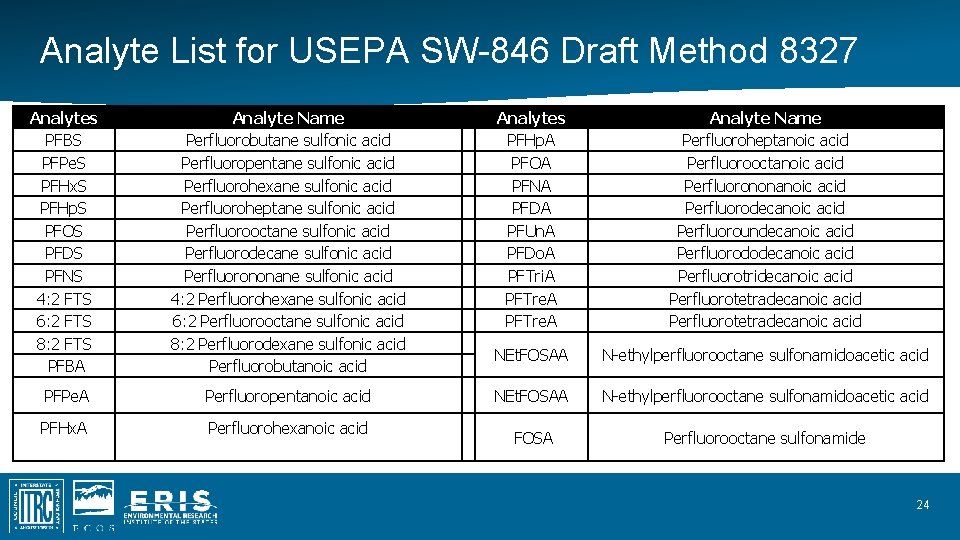
Analyte List for USEPA SW-846 Draft Method 8327 Analytes PFBS PFPe. S PFHx. S PFHp. S PFOS PFDS PFNS 4: 2 FTS 6: 2 FTS 8: 2 FTS PFBA Analyte Name Perfluorobutane sulfonic acid Perfluoropentane sulfonic acid Perfluorohexane sulfonic acid Perfluoroheptane sulfonic acid Perfluorooctane sulfonic acid Perfluorodecane sulfonic acid Perfluorononane sulfonic acid 4: 2 Perfluorohexane sulfonic acid 6: 2 Perfluorooctane sulfonic acid 8: 2 Perfluorodexane sulfonic acid Perfluorobutanoic acid PFPe. A Perfluoropentanoic acid PFHx. A Perfluorohexanoic acid Analytes PFHp. A PFOA PFNA PFDA PFUn. A PFDo. A PFTri. A PFTre. A Analyte Name Perfluoroheptanoic acid Perfluorooctanoic acid Perfluorononanoic acid Perfluorodecanoic acid Perfluoroundecanoic acid Perfluorododecanoic acid Perfluorotridecanoic acid Perfluorotetradecanoic acid NEt. FOSAA N-ethylperfluorooctane sulfonamidoacetic acid FOSA Perfluorooctane sulfonamide 24
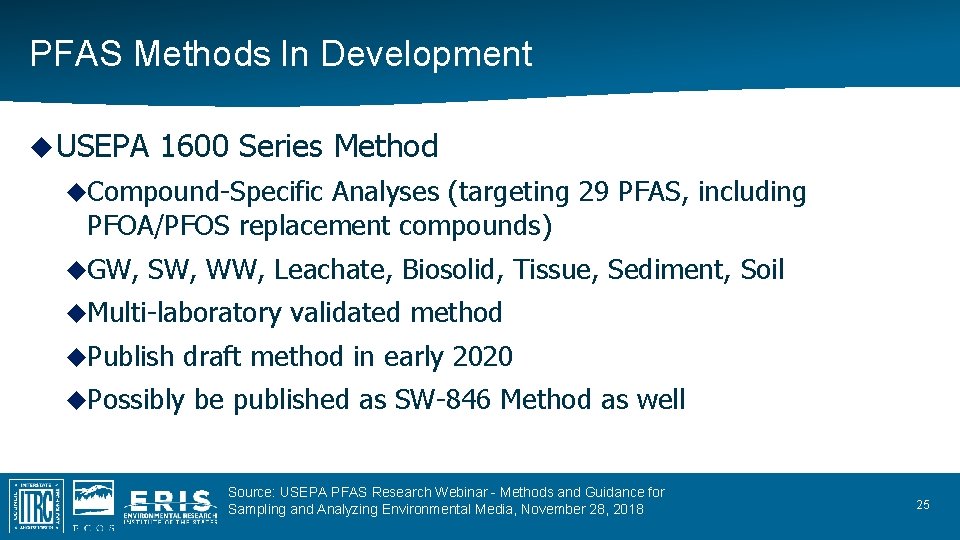
PFAS Methods In Development USEPA 1600 Series Method Compound-Specific Analyses (targeting 29 PFAS, including PFOA/PFOS replacement compounds) GW, SW, WW, Leachate, Biosolid, Tissue, Sediment, Soil Multi-laboratory Publish validated method draft method in early 2020 Possibly be published as SW-846 Method as well Source: USEPA PFAS Research Webinar - Methods and Guidance for Sampling and Analyzing Environmental Media, November 28, 2018 25
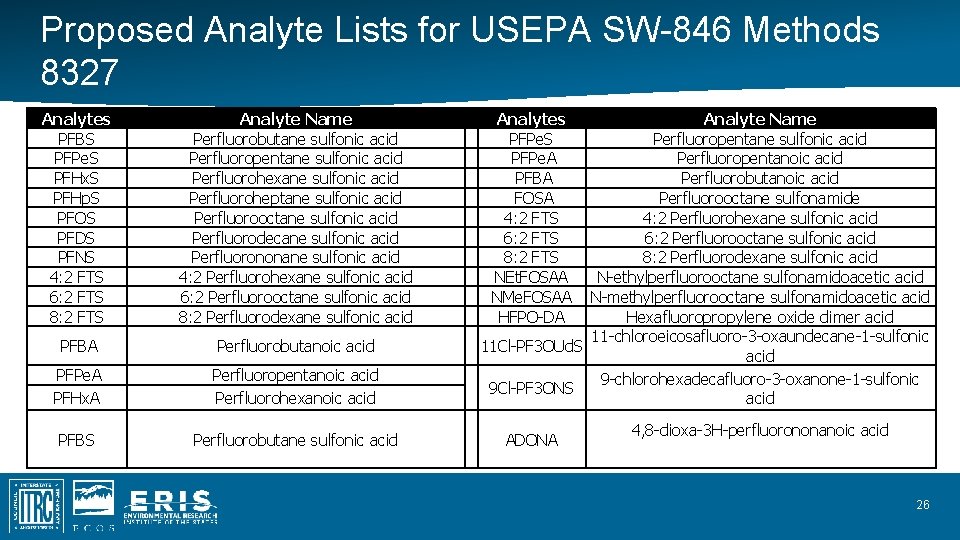
Proposed Analyte Lists for USEPA SW-846 Methods 8327 Analytes PFBS PFPe. S PFHx. S PFHp. S PFOS PFDS PFNS 4: 2 FTS 6: 2 FTS 8: 2 FTS Analyte Name Perfluorobutane sulfonic acid Perfluoropentane sulfonic acid Perfluorohexane sulfonic acid Perfluoroheptane sulfonic acid Perfluorooctane sulfonic acid Perfluorodecane sulfonic acid Perfluorononane sulfonic acid 4: 2 Perfluorohexane sulfonic acid 6: 2 Perfluorooctane sulfonic acid 8: 2 Perfluorodexane sulfonic acid PFBA Perfluorobutanoic acid PFPe. A PFHx. A Perfluoropentanoic acid Perfluorohexanoic acid PFBS Perfluorobutane sulfonic acid Analytes PFPe. S PFPe. A PFBA FOSA 4: 2 FTS 6: 2 FTS 8: 2 FTS NEt. FOSAA NMe. FOSAA HFPO-DA Analyte Name Perfluoropentane sulfonic acid Perfluoropentanoic acid Perfluorobutanoic acid Perfluorooctane sulfonamide 4: 2 Perfluorohexane sulfonic acid 6: 2 Perfluorooctane sulfonic acid 8: 2 Perfluorodexane sulfonic acid N-ethylperfluorooctane sulfonamidoacetic acid N-methylperfluorooctane sulfonamidoacetic acid Hexafluoropropylene oxide dimer acid 11 -chloroeicosafluoro-3 -oxaundecane-1 -sulfonic 11 Cl-PF 3 OUd. S acid 9 -chlorohexadecafluoro-3 -oxanone-1 -sulfonic 9 Cl-PF 3 ONS acid ADONA 4, 8 -dioxa-3 H-perfluorononanoic acid 26
PFAS Methods In Development ISO/DIS 21675 Compound-Specific Non-filtered aqueous samples Multi-laboratory Published Analyses validated method draft method in 2018 www. iso. org Source: USEPA PFAS Research Webinar - Methods and Guidance for Sampling and Analyzing Environmental Media, November 28, 2018 27
PFAS Methods In Development Method for the Determination of Specific Residual PFAS in AFFF and AR-AFFF Compound-Specific AFFF Analyses (targeting 29 PFAS) and AR-AFFF samples Multi-laboratory Publish validated method multi-laboratory validated method in early 2020 Source: USEPA PFAS Research Webinar - Methods and Guidance for Sampling and Analyzing Environmental Media, November 28, 2018 28
Compound-Specific Analysis of PFAS All utilize liquid chromatography tandem mass spectrometry (LCMS/MS) Do not address neutral/volatile PFAS (i. e. , fluorotelomer alcohols and derivatized PFCAs) Some of the same equipment and supply concerns associated with field sampling apply to sample analysis Adsorption Type Issues of container for sample extracts and standards 29
Compound-Specific Analysis of PFAS Some of the same equipment and supply concerns associated with field sampling apply to sample analysis Potential for contamination Disposable plastic (or glass) tubes, vials, etc. , preferred (glass is OK with solvent) Avoid polytetrafluoroethylene (PTFE) Lots of method blanks - need to check (routinely) for blank issues Generally prefer “Optima” or LC-MS grade solvents Highest grade acids (e. g. , acetic acid), bases (e. g. , NH 4 OH), etc. generally best, but can be contaminated as well 30
Compound-Specific Analysis of PFAS Standards must be analyzed in order to identify and quantify individual PFAS Technical Isomeric Grade Mixtures 31
Branched & Linear PFAS from ECF chemistry: ~22 ± 1. 2% branched and 78 ± 1. 2% linear isomer 1 Branched and linear isomers of PFAS (including PFCAs) produced by ECF seen in consumer products, groundwater, sediment, soil, wastewater, landfills Observing branched isomers depends on chromatography branched isomers 10 co-eluting in single peak linear isomer Linear isomers have greater retention on C 18 analytical columns - branched isomers are more compact (elute earlier) If ignoring the branched peak, concentrations will be low by ~ 25% Telomer chemistry theoretically produces predominantly linear PFAS, however, final product may contain branched isomers. Giesy and Kannan, 2002; Schultz et al. , 2003; Benskin et al. 2010; Riddell et al. 2009 1 Figure courtesy C. Higgins 32
Compound-Specific Analysis of PFAS Sample Soil preparation can affect quantitation and Biota Organic solvent (methanol, acetonitrile) used to get PFAS into solution Number/Duration of soil solvent rinses Homogenize entire sample received Clean-up steps (i. e. , SPE) 33
Compound-Specific Analysis of PFAS Sample preparation can affect quantitation Aqueous Amount of sample extracted Low PFAS Concentrations: Whole sample with sample bottle rinses High PFAS Concentrations: Subsample of sample collected in the field SPE extraction Extraction solvent solution composition used to elute PFAS from SPE Clean-up steps (i. e. , SPE) 34
Compound-Specific Analysis of PFAS Quantitation External scheme matters standard quantitation Surrogates added prior to sample preparation Quantitation does not account for bias associated with sample preparation or instrumentation Data review must include evaluation of surrogate recoveries Internal standard quantitation Surrogates added before sample preparation and internal standards added to aliquot of extract prior to analysis Quantitation does not account for bias associated with sample preparation but DOES account for instrumentation bias Internal standard recoveries matter 35
Compound-Specific Analysis of PFAS Quantitation Isotope scheme matters dilution quantitation Isotopically labeled standards added before sample preparation Quantitation accounts for bias associated with sample preparation AND instrumentation Isotopically labeled standard recoveries matter 36
Compound-Specific Analysis of PFAS Currently there are no published EPA review and/or validation criteria to evaluate LC-MS/MS data for non-potable water or solid media Guidance, Data Review and Validation Guidelines for Perfluoralkyl Substances (PFASs) Analyzed Using EPA Method 537 (EPA 910 -R-18 -001, November 2018) USEPA Do. D/DOE Guidance, Do. D and DOE Quality Systems Manual (QSM) for Environmental Laboratories, Version 5. 2, Final Updated, 2018 (https: //www. denix. osd. mil/edqw/documents/ ) USEPA Technical Brief “Per-and Polyfluoroalkyl Substances (PFAS): Reviewing Analytical Methods Data for Environmental Samples. ” April 2019 37
Less-Standardized Analyses Particle-Induced Gamma Emission (PIGE) spectroscopy measures elemental fluorine from a sample isolated on a thin surface Precursor Analysis by Total Oxidizable Precursor (TOP) Assay measures PFAA precursors or polyfluorinated compounds that can be converted to PFAAs LC quadrupole time-of-flight mass spectrometry (LC-QTo. F-MS) tentatively identifies PFAS structures through library matches Extractable/Absorbable Organic Fluorine (EOF/AOF) measures fluorine in a sample as fluoride 38
- Slides: 38