
PETROCHEMICAL TECHNOLOGY CHE 464 Professor Yahia Abobakr Alhamed
PETROCHEMICAL TECHNOLOGY CHE 464 Professor Yahia Abobakr Alhamed Chairman Chemical and materials Engineering Department King Abdulaziz University Office: building 45 _Room 201 E-mail: yhamed@kau. edu. sa
Course Outline TEXT BOOK Sami Matar and Lewis F. Hatch, Chemistry of Petrochemical Processes, Second Edition, Gulf Professional Publishing, 2001

Course Outline (Cont) • Grade Distribution – Major Exam I = 20 – Major Exam II = 20 – Term Paper = 20 – Final Exam = 40
Course Outline (Cont)
Course Outline (Cont)
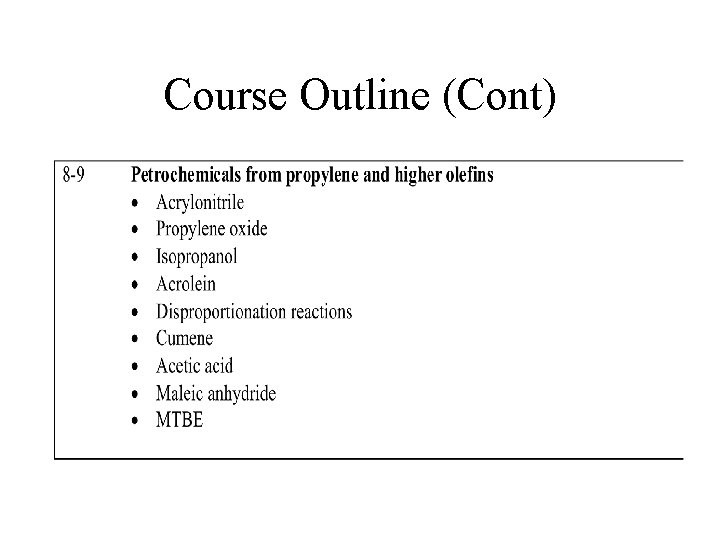
Course Outline (Cont)
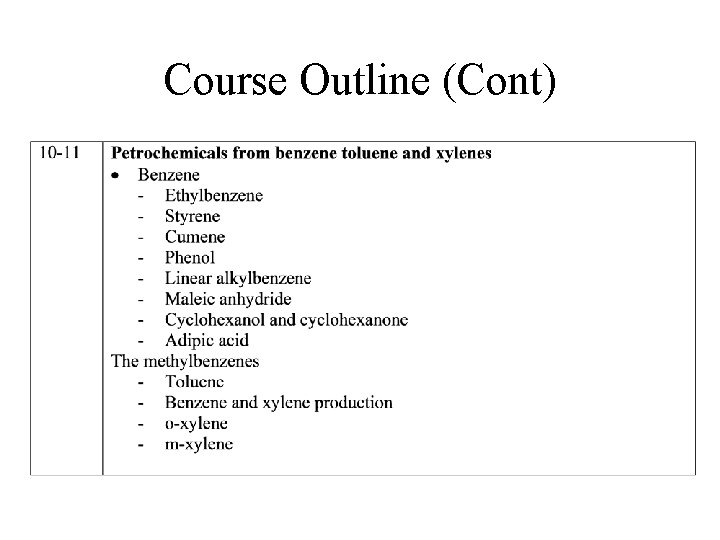
Course Outline (Cont)
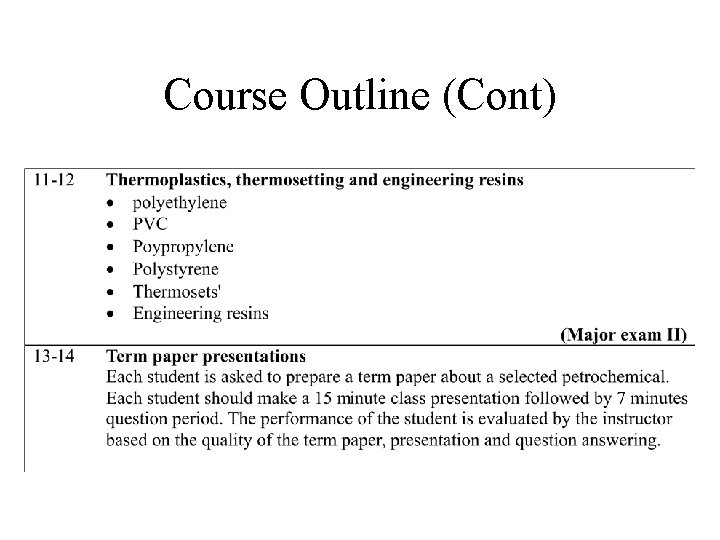
Course Outline (Cont)

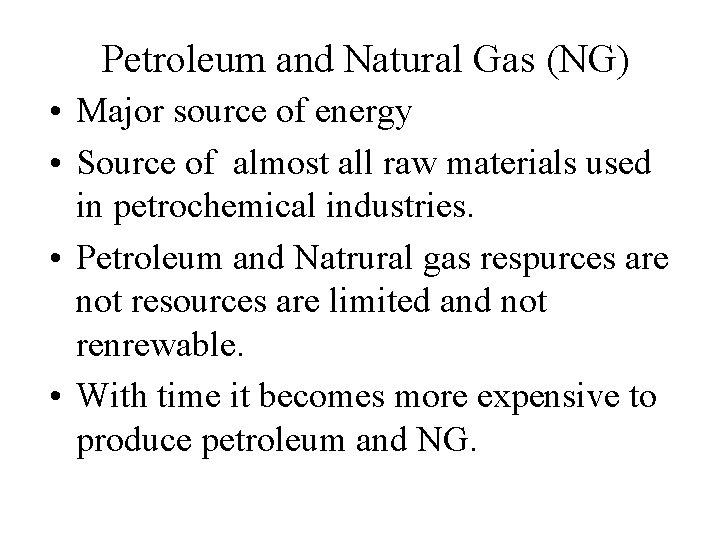
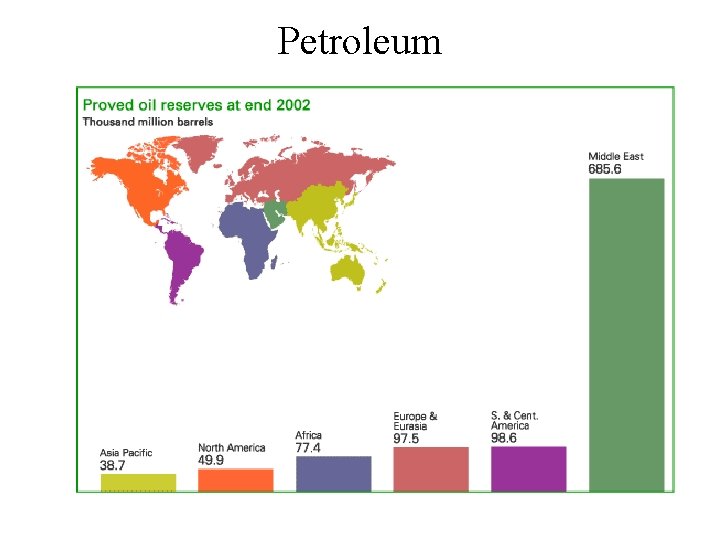
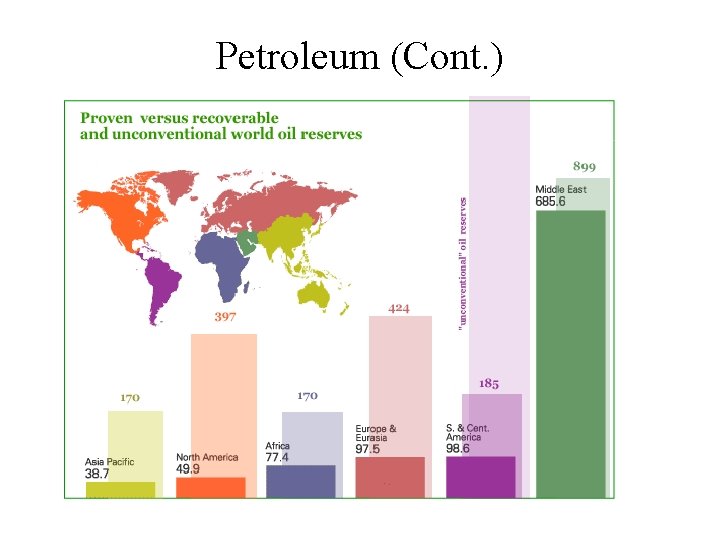
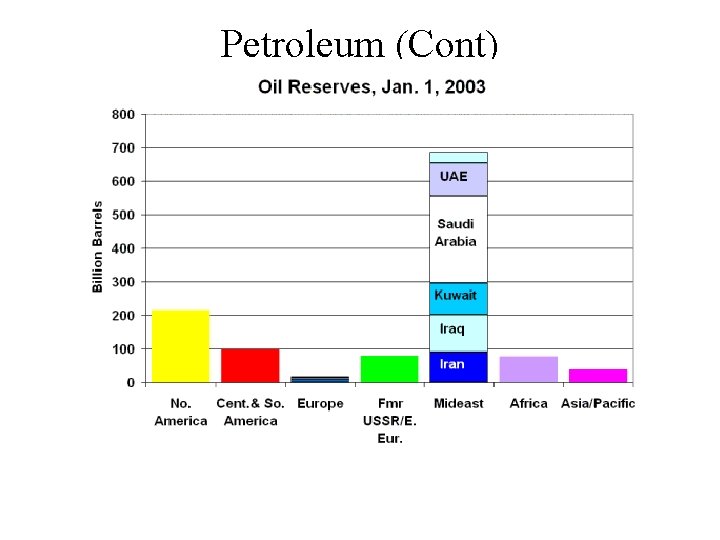
Petroleum and Natural Gas (NG) • Major source of energy • Source of almost all raw materials used in petrochemical industries. • Petroleum and Natrural gas respurces are not resources are limited and not renrewable. • With time it becomes more expensive to produce petroleum and NG.
Petroleum
Petroleum (Cont. )
Petroleum (Cont)
Petroleum (Cont)
COMPOSITION OF CRUDE OILS (Cont. ) The crude oil mixture is composed of the following groups: • 1. Hydrocarbon compounds (compounds made of carbon and hydrogen). • 2. Non-hydrocarbon compounds. • 3. Organometallic compounds and inorganic salts (metallic com- pounds).
COMPOSITION OF CRUDE OILS (Cont. ) Hydrocarbon Compounds (Cont. ) – All hydrocarbon classes are present in the crude mixture, except alkenes and alkynes. • Alkanes (Paraffins) • Cn. H 2 n+2. • C 1 to C 3 alkanes are usually found associated with crude oils in a dissolved state. • Normal alkanes (n-alkanes, n-paraffins) • Isoparaffins
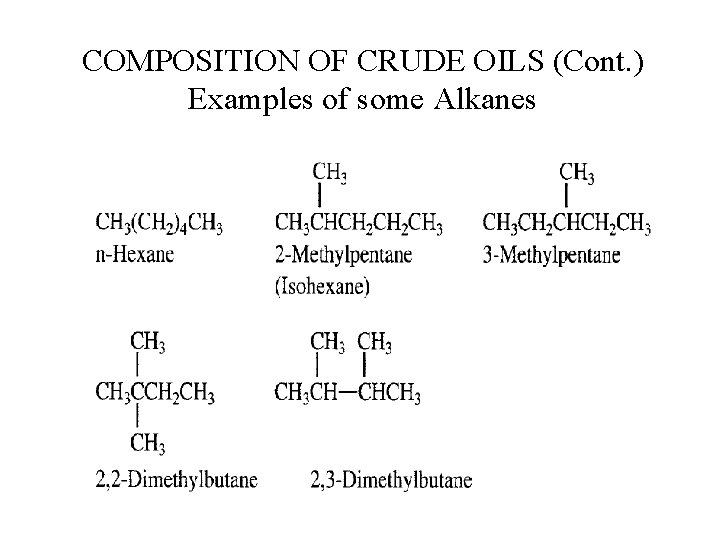
COMPOSITION OF CRUDE OILS (Cont. ) Examples of some Alkanes
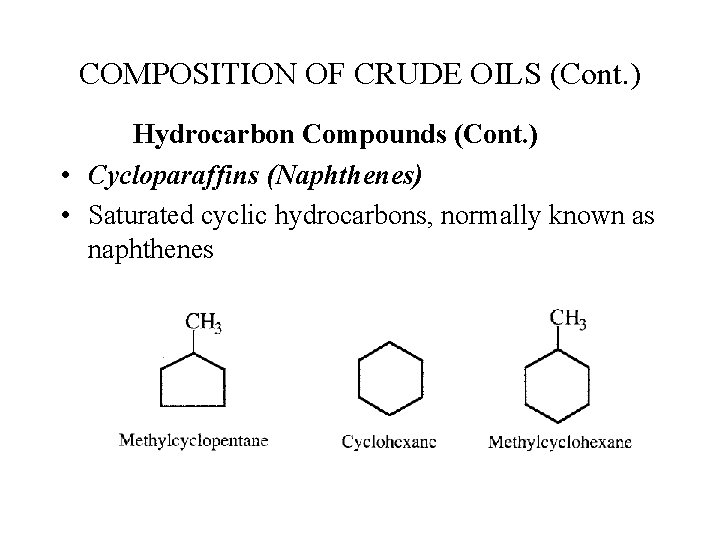
COMPOSITION OF CRUDE OILS (Cont. ) Hydrocarbon Compounds (Cont. ) • Cycloparaffins (Naphthenes) • Saturated cyclic hydrocarbons, normally known as naphthenes
COMPOSITION OF CRUDE OILS (Cont. ) Hydrocarbon Compounds (Cont. ) Aromatic Compounds • Lower members of aromatic compounds are present in small amounts (e. g. Benzene, toluene, and xylenes (BTX) ) in crude oils and light petroleum fractions. • Binuclear aromatic hydrocarbons are found in fractions heavier than naphtha. • Trinuclear and polynuclear aromatic hydrocarbons, in com bination with heterocyclic compounds, are major constituents of heavy crudes and crude residues.
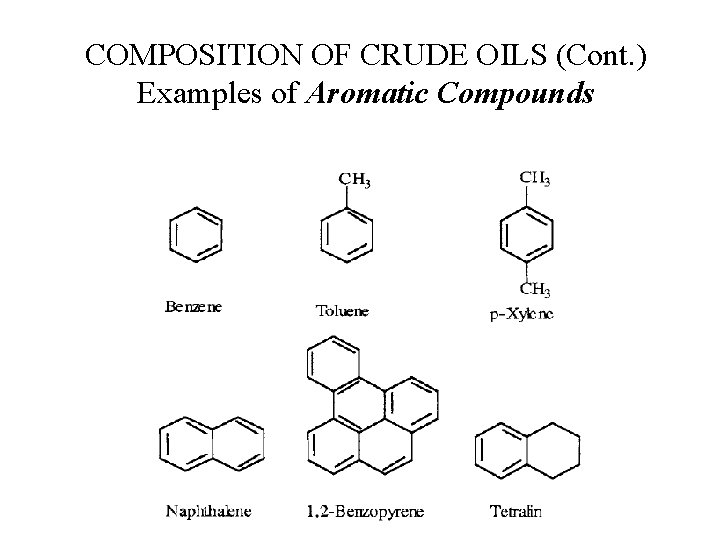
COMPOSITION OF CRUDE OILS (Cont. ) Examples of Aromatic Compounds
COMPOSITION OF CRUDE OILS (Cont. ) Sulfur Compounds • H 2 S is the only important inorganic sulfur compound found in crude oil and it is very corrosive. • Organosulfur compounds classification: – Acidic sulfur compounds are thiols (mercaptans). – Non-acidic sulfur compounds are thiophene, sulfides, and disulfides.
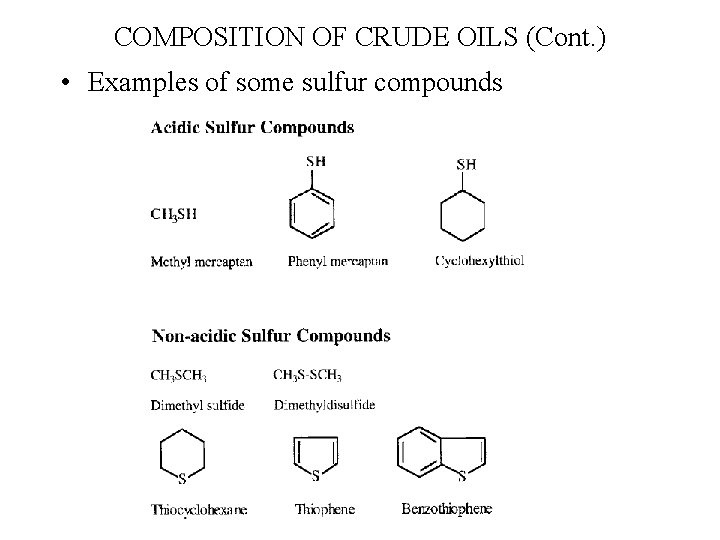
COMPOSITION OF CRUDE OILS (Cont. ) • Examples of some sulfur compounds
COMPOSITION OF CRUDE OILS (Cont. ) • • • Nitrogen Compounds The nitrogen content 0. 1 wt% to 0. 9 wt% Nitrogen compounds are concentrated in heavier petroleum fractions and residues. Basic nitrogen compounds are mainly those having apyridine ring. Non-basic compounds have a pyrrole structure. Both pyridine and pyrrole are stable compounds due to their aromatic nature.
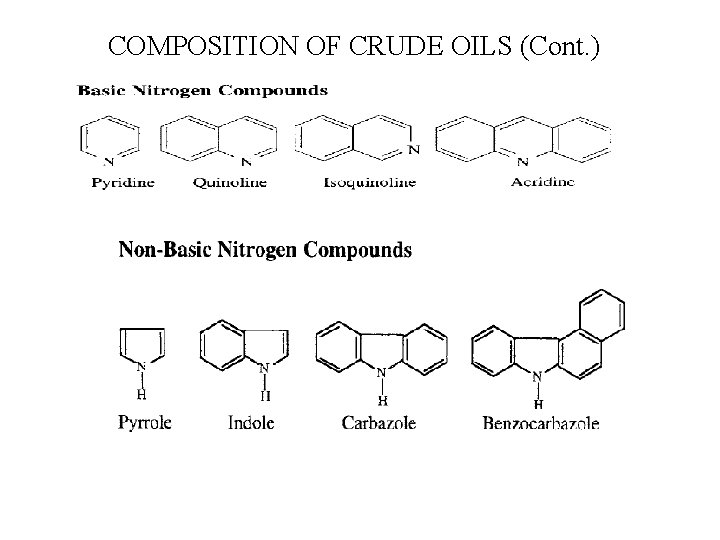
COMPOSITION OF CRUDE OILS (Cont. )
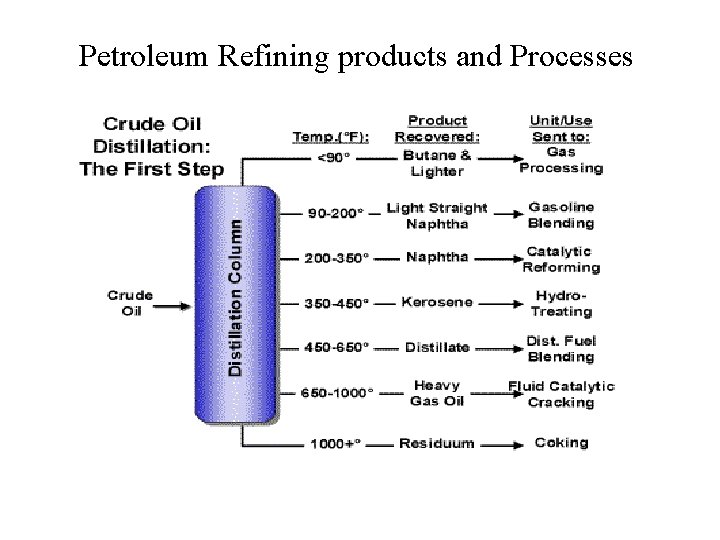
Petroleum Refining products and Processes
Petroleum Refining products and Processes (Cont. ) Vacuum Distillation - Feed is Residue: >C 20 -Avoiding high temperatures -Tarry residue results -Vaccum gas oil (Top product) -Fuel oils in power stations and ships, 'base' oil in lubricating oils, bitumen/asphalt
Natural Gas (NG) and Associated Gas (AG) Natural Gas (NG): A mixture of C 1 to C 3 hydrocarbons (mainly CH 4) + small amounts of N 2, CO 2 and H 2 S. Found in gas reservoirs with no oil present (non-associated gas) Associated Gas (AG): Present in contact with and/or dissolved in crude oil and is coproduced with it. • NG and AG are used mainly as an energy source and basic raw material for petrochemical industry.
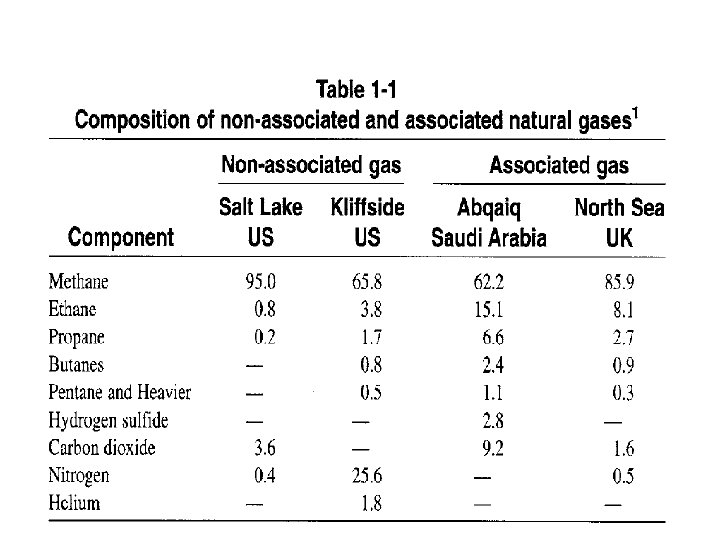
Natural Gas (NG) and Associated Gas (AG) (cont. ) Liquefied Petroleum Gas (LPG) - produced as a by-product of natural gas processing, associated gas or during refining and processing operations of petroleum. - Mainly contains propane and butane - Used mainly as domestic fuel and basic raw material for petrochemical industry.
Natural Gas (NG) and Associated Gas (AG) (cont. ) Dry natural Gas: It is a gas that does not contain an appreciable amount of condensable hydrocarbons. Wet natural Gas Contains more than 0. 3 gallons of condensable per 1000 cu. ft.
Natural Gas (NG) and Associated Gas (AG) (cont. ) Sour Natural Gas: - Contains appreciable amounts of hydrogen sulfide and carbon dioxide. - Needs to remove the acid gases mainly by absorption in amines or caustic solutions
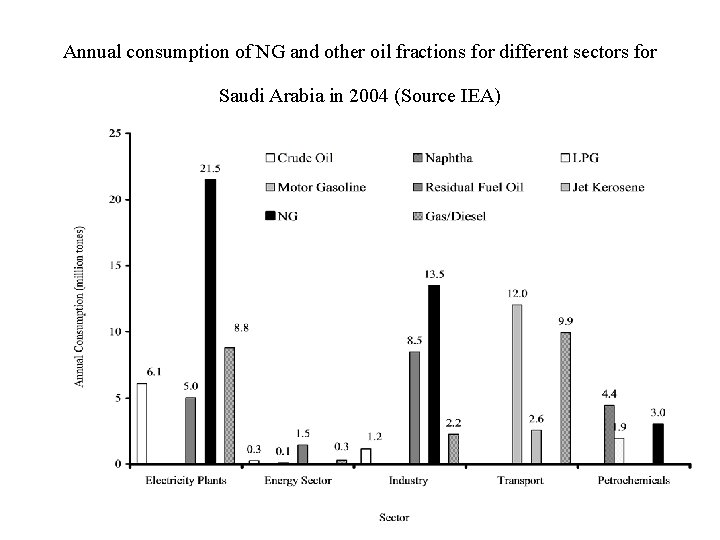
Annual consumption of NG and other oil fractions for different sectors for Saudi Arabia in 2004 (Source IEA)
More information about Petrochemicals • http: //csis. org/program/energy-and-nationalsecurity • http: //www. icis. com/v 2/chemicals/9076567/vinylchloride/pricing. html
Types of Chemical Reactors Ideal Reactor: - Plug flow Reactor - Mixed flow reactor - Batch Reactor
Most Common Units Encountered in Petrochemical Plants • • • Reactors of different types Distillation Columns Strippers Absorption and Adsorption Columns Packed bed Scuppers Settlers Compressors Gas-solid and liquid – solid separators (e. g. filters, cyclones … etc. ) • Heat exchangers • , and others
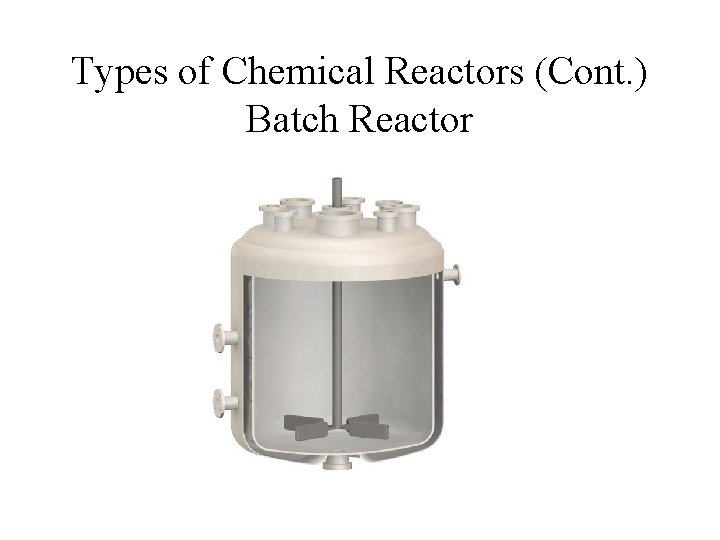
Types of Chemical Reactors (Cont. ) Batch Reactor
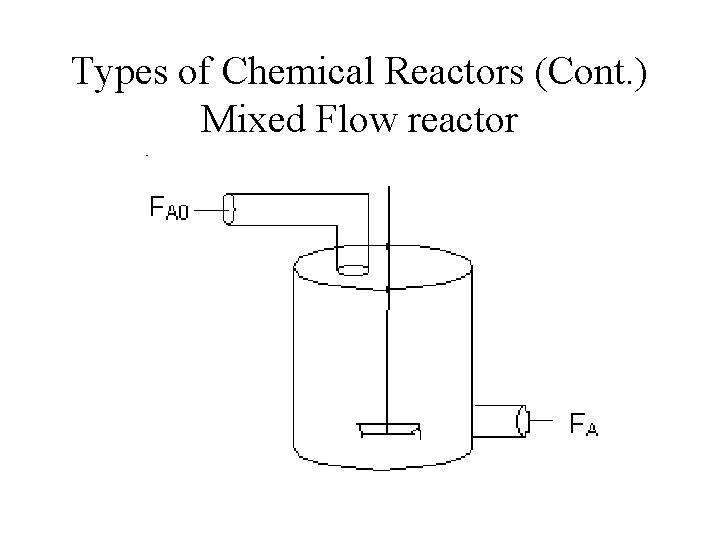
Types of Chemical Reactors (Cont. ) Mixed Flow reactor
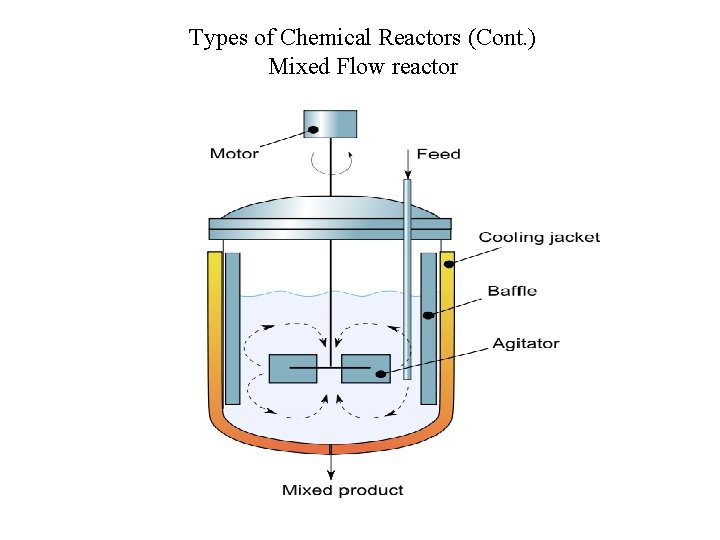
Types of Chemical Reactors (Cont. ) Mixed Flow reactor
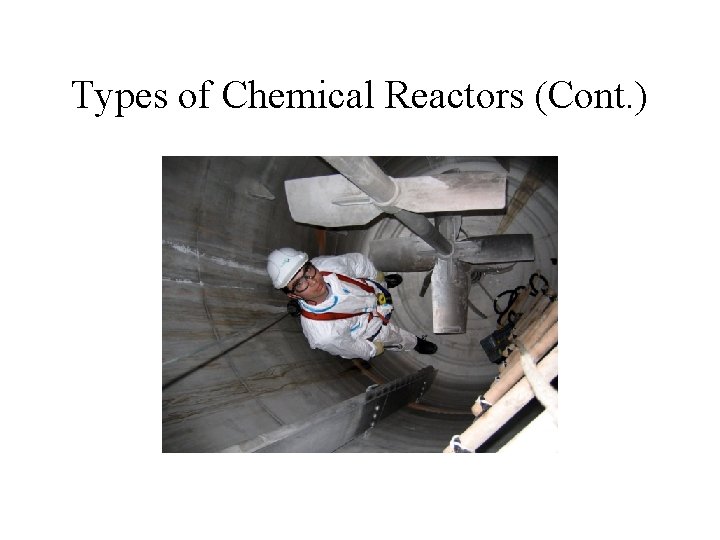
Types of Chemical Reactors (Cont. )
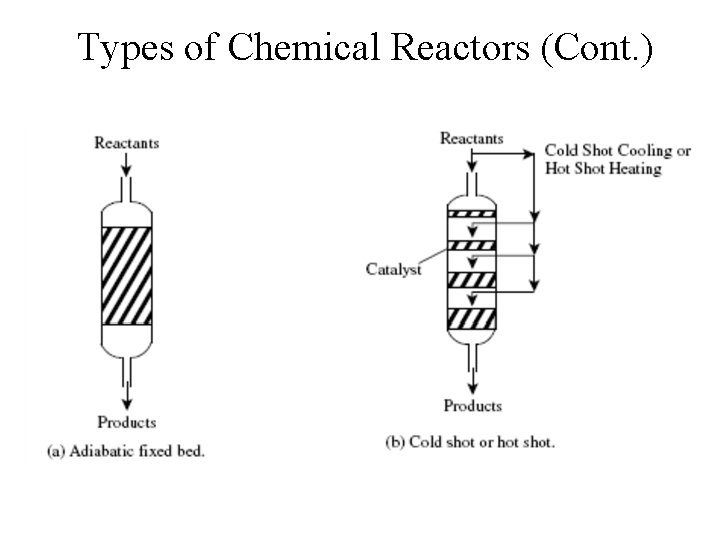
Types of Chemical Reactors (Cont. )
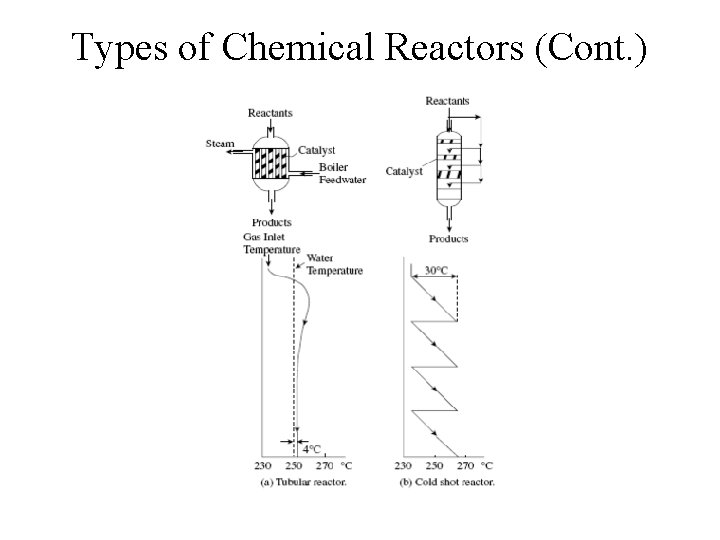
Types of Chemical Reactors (Cont. )
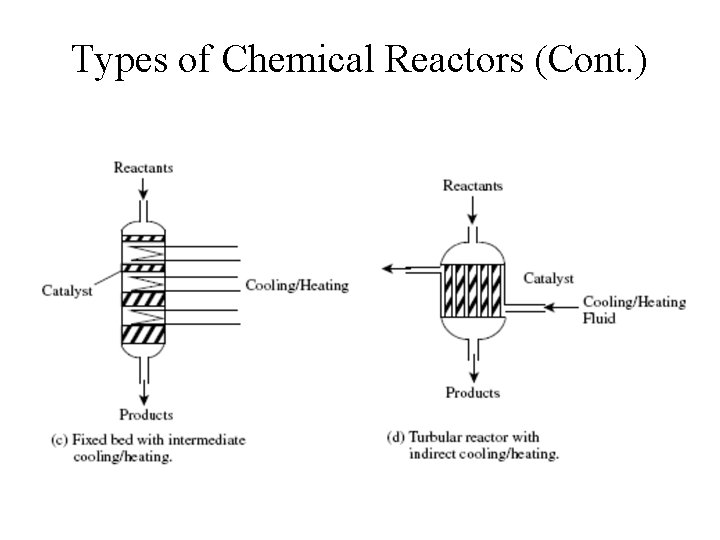
Types of Chemical Reactors (Cont. )
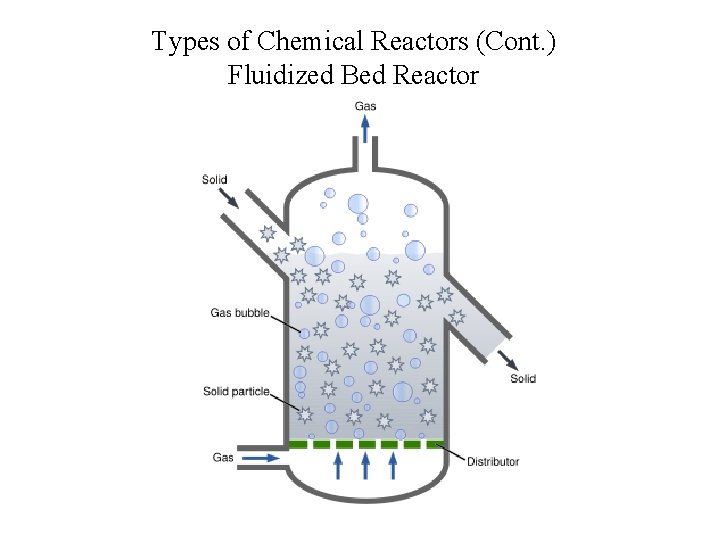
Types of Chemical Reactors (Cont. ) Fluidized Bed Reactor
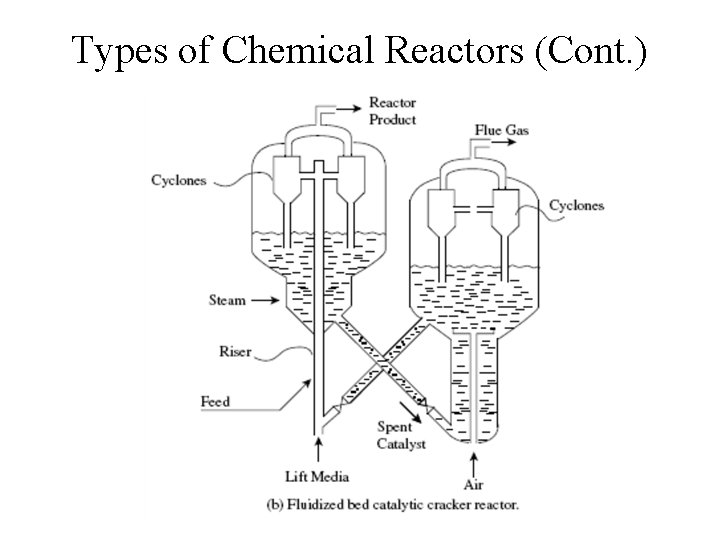
Types of Chemical Reactors (Cont. )
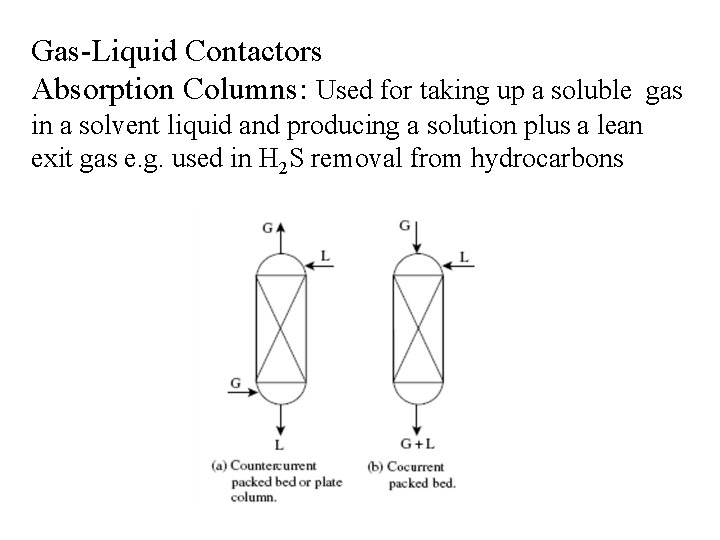
Gas-Liquid Contactors Absorption Columns: Used for taking up a soluble gas in a solvent liquid and producing a solution plus a lean exit gas e. g. used in H 2 S removal from hydrocarbons
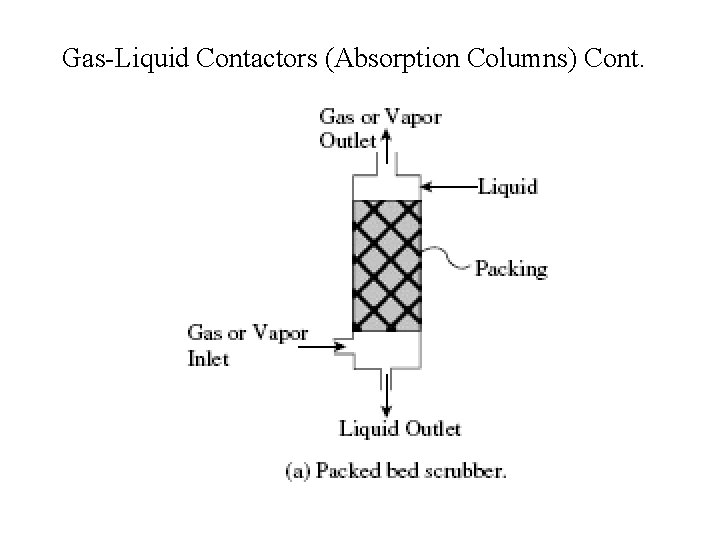
Gas-Liquid Contactors (Absorption Columns) Cont.
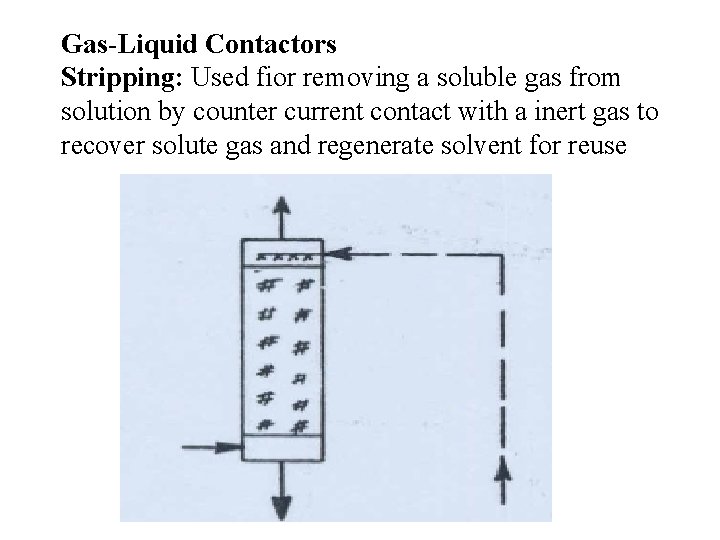
Gas-Liquid Contactors Stripping: Used fior removing a soluble gas from solution by counter current contact with a inert gas to recover solute gas and regenerate solvent for reuse
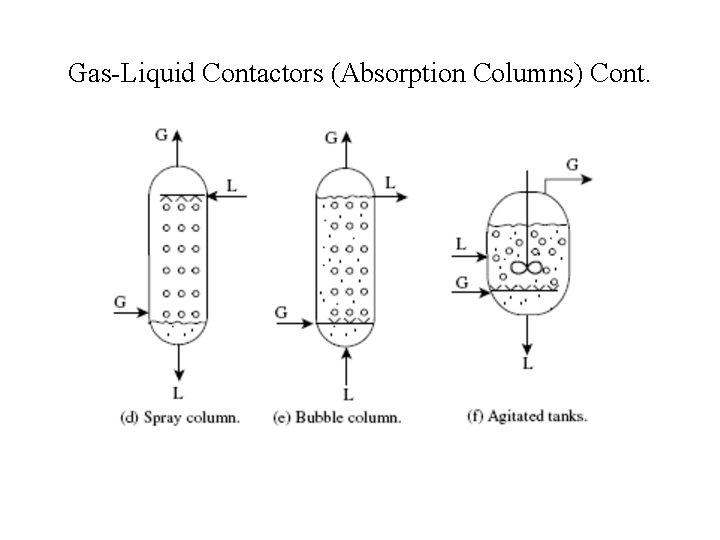
Gas-Liquid Contactors (Absorption Columns) Cont.
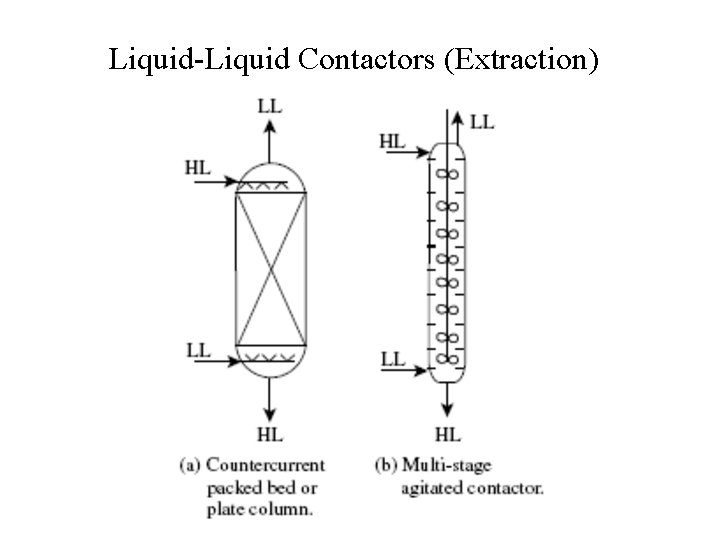
Liquid-Liquid Contactors (Extraction)
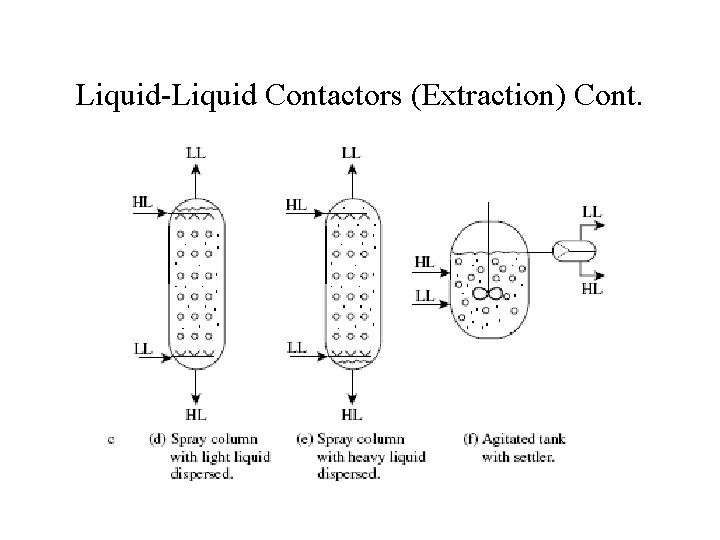
Liquid-Liquid Contactors (Extraction) Cont.
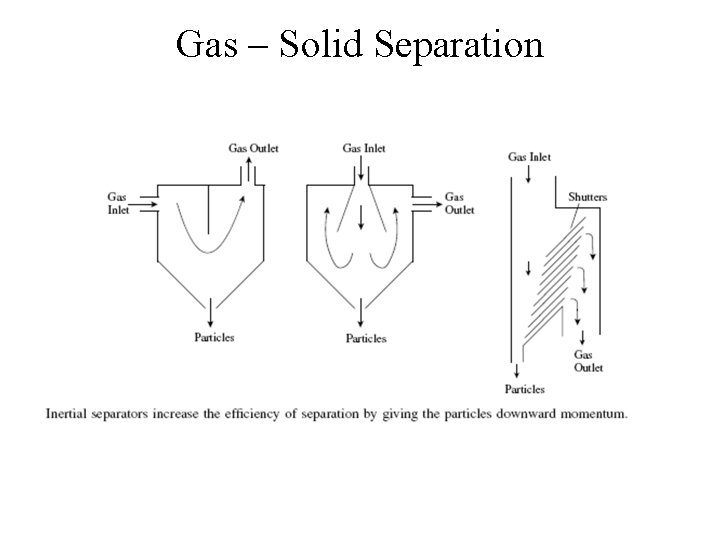
Gas – Solid Separation
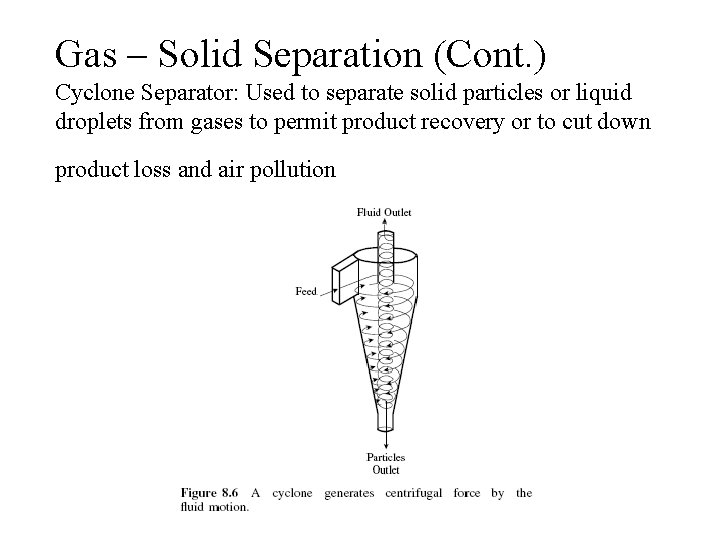
Gas – Solid Separation (Cont. ) Cyclone Separator: Used to separate solid particles or liquid droplets from gases to permit product recovery or to cut down product loss and air pollution
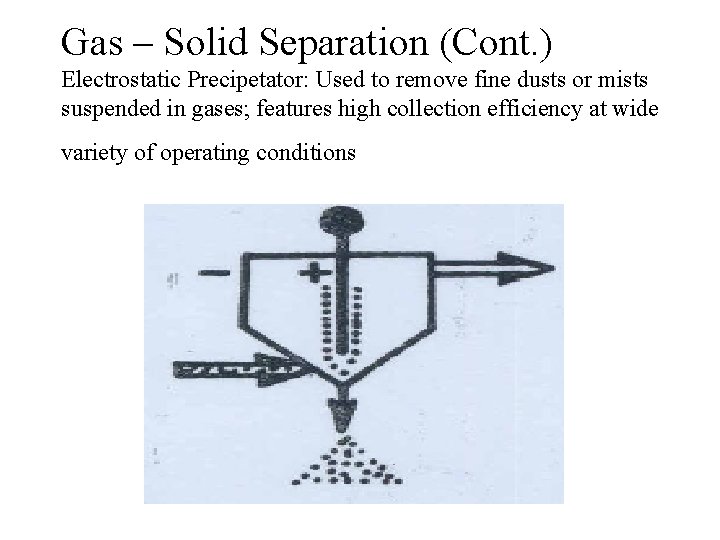
Gas – Solid Separation (Cont. ) Electrostatic Precipetator: Used to remove fine dusts or mists suspended in gases; features high collection efficiency at wide variety of operating conditions
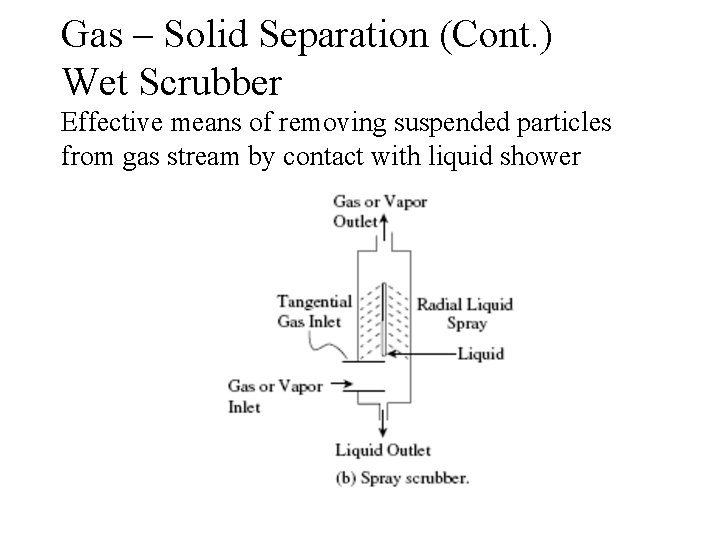
Gas – Solid Separation (Cont. ) Wet Scrubber Effective means of removing suspended particles from gas stream by contact with liquid shower
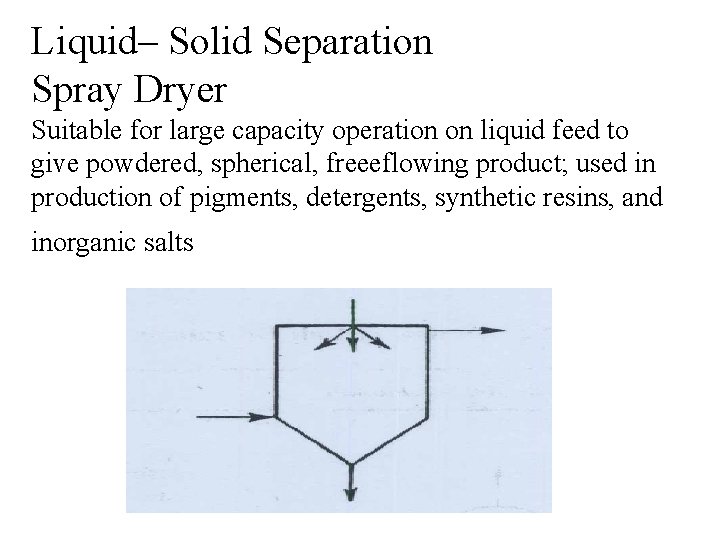
Liquid– Solid Separation Spray Dryer Suitable for large capacity operation on liquid feed to give powdered, spherical, freeeflowing product; used in production of pigments, detergents, synthetic resins, and inorganic salts
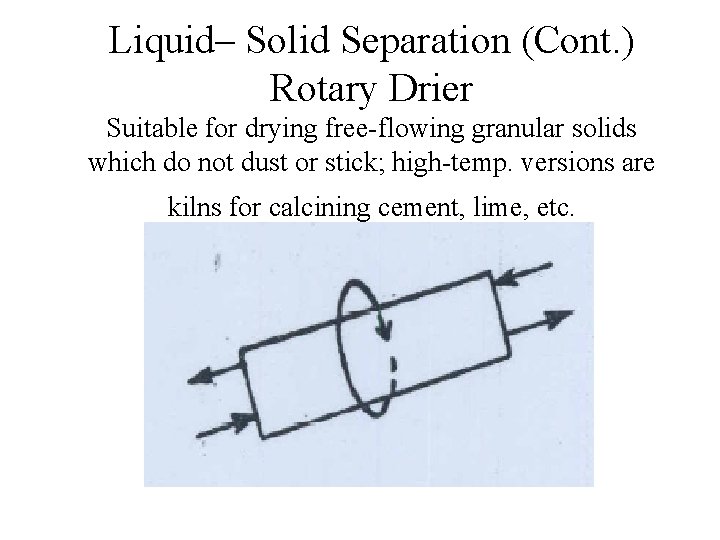
Liquid– Solid Separation (Cont. ) Rotary Drier Suitable for drying free-flowing granular solids which do not dust or stick; high-temp. versions are kilns for calcining cement, lime, etc.
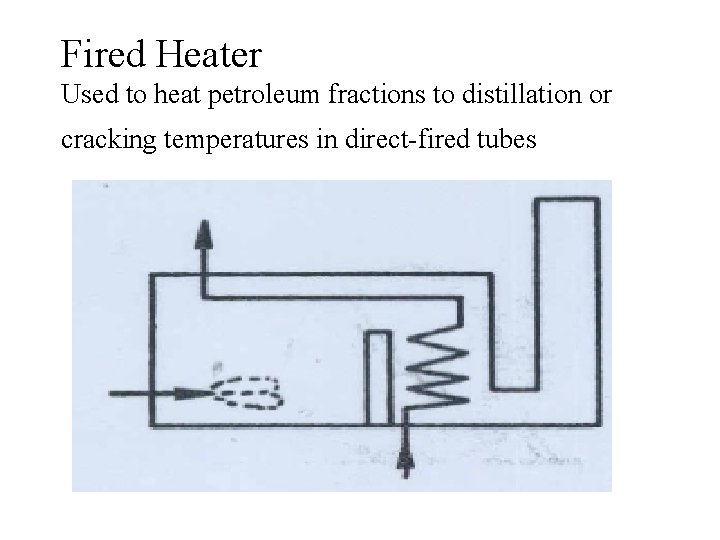
Fired Heater Used to heat petroleum fractions to distillation or cracking temperatures in direct-fired tubes
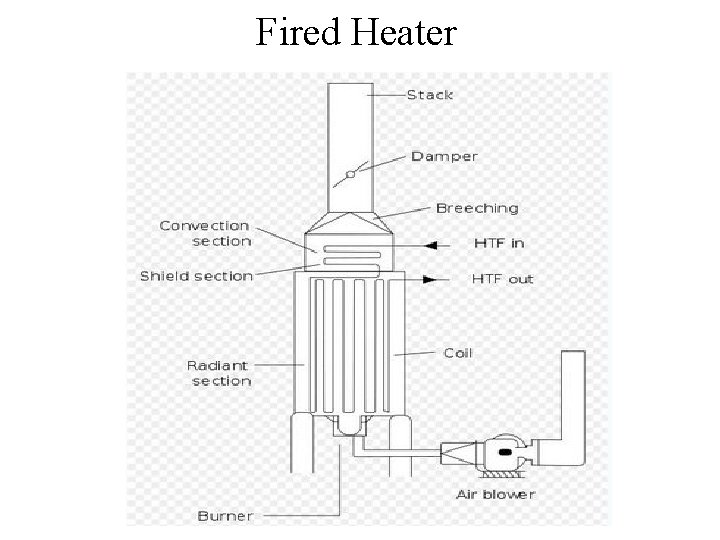
Fired Heater
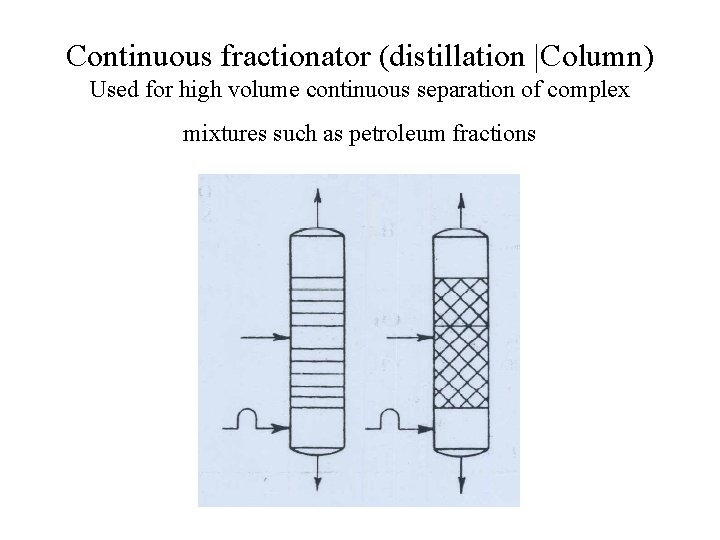
Continuous fractionator (distillation |Column) Used for high volume continuous separation of complex mixtures such as petroleum fractions





- Slides: 64