
Petrified Fossils Molds and Casts Carbon Films Preserved
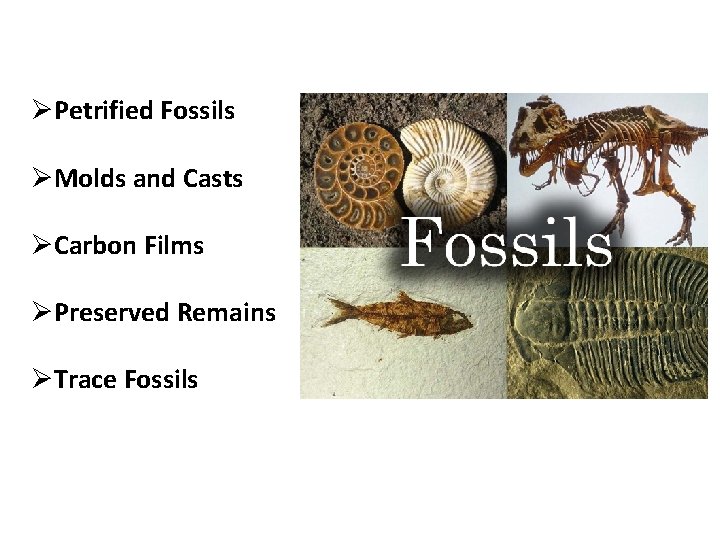
ØPetrified Fossils ØMolds and Casts ØCarbon Films ØPreserved Remains ØTrace Fossils
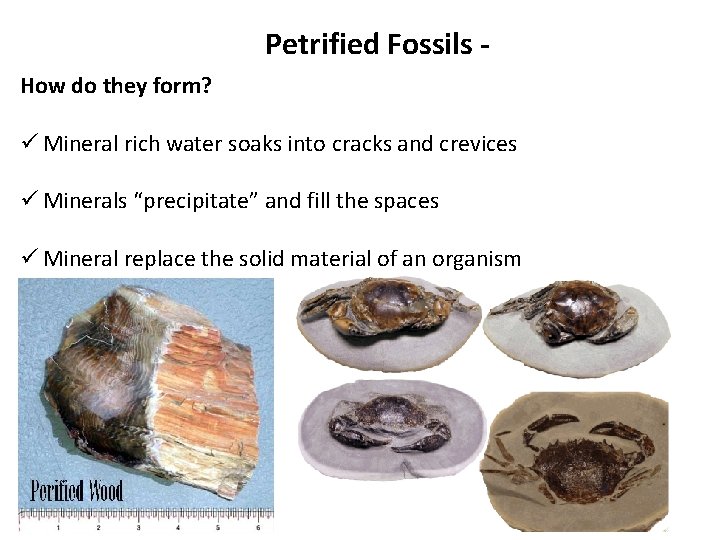
Petrified Fossils How do they form? ü Mineral rich water soaks into cracks and crevices ü Minerals “precipitate” and fill the spaces ü Mineral replace the solid material of an organism
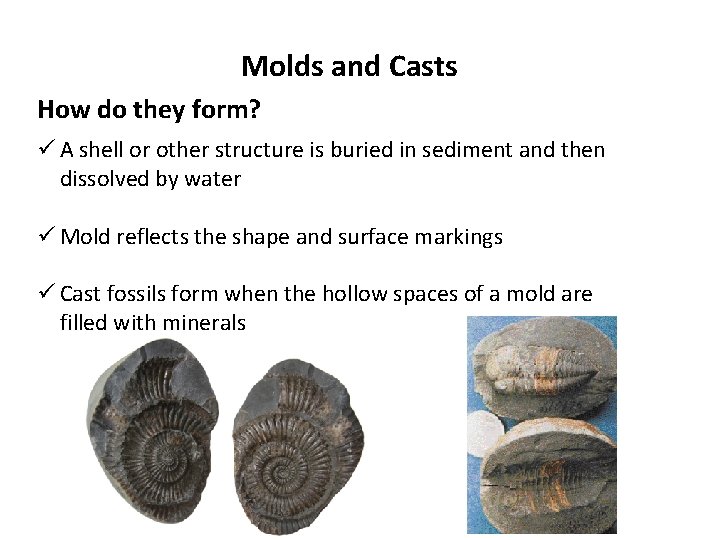
Molds and Casts How do they form? ü A shell or other structure is buried in sediment and then dissolved by water ü Mold reflects the shape and surface markings ü Cast fossils form when the hollow spaces of a mold are filled with minerals
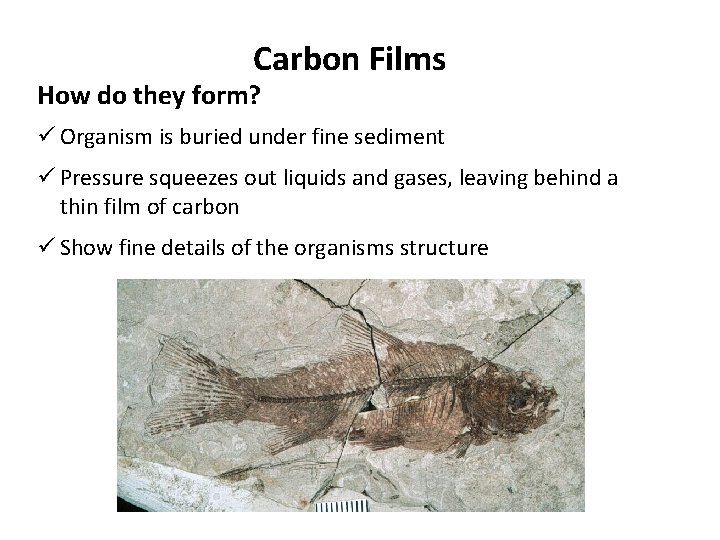
Carbon Films How do they form? ü Organism is buried under fine sediment ü Pressure squeezes out liquids and gases, leaving behind a thin film of carbon ü Show fine details of the organisms structure
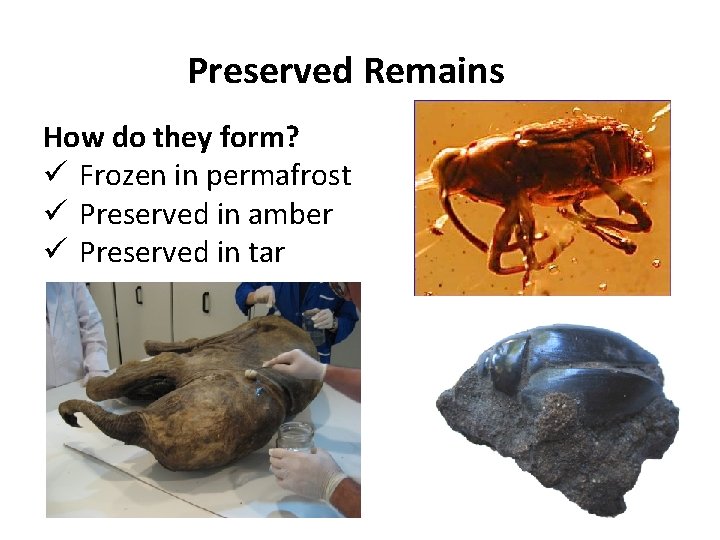
Preserved Remains How do they form? ü Frozen in permafrost ü Preserved in amber ü Preserved in tar
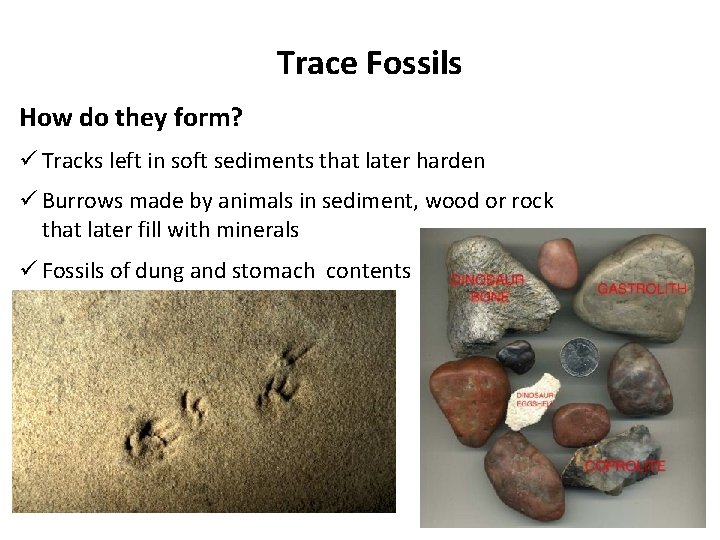
Trace Fossils How do they form? ü Tracks left in soft sediments that later harden ü Burrows made by animals in sediment, wood or rock that later fill with minerals ü Fossils of dung and stomach contents
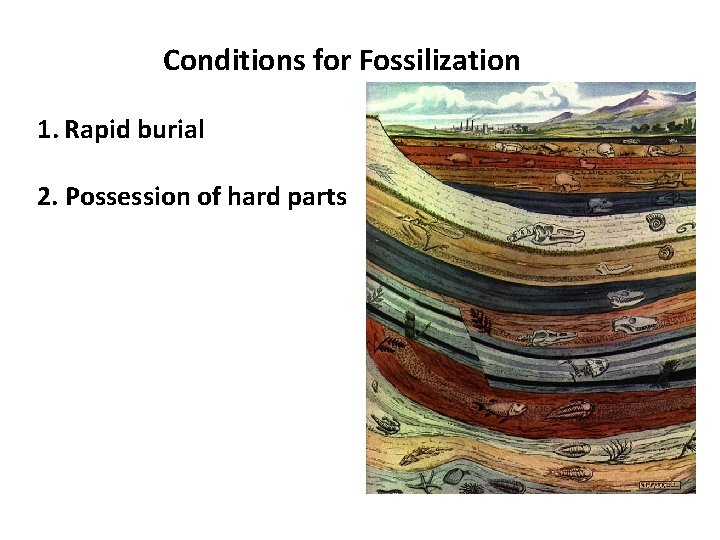
Conditions for Fossilization 1. Rapid burial 2. Possession of hard parts
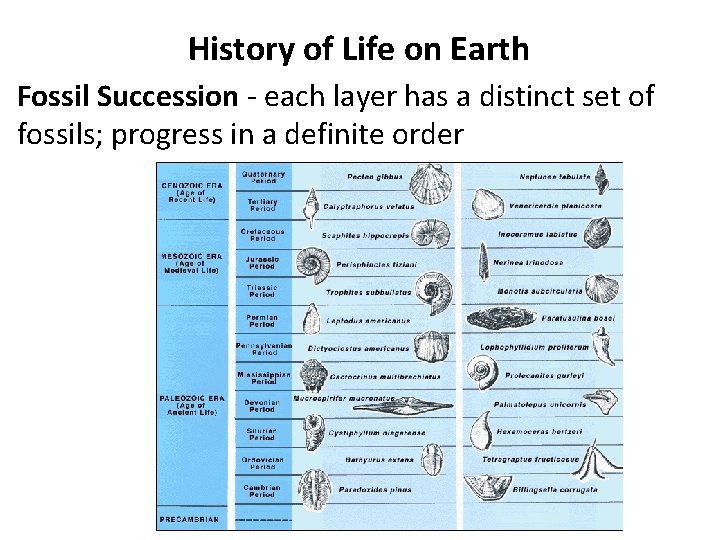
History of Life on Earth Fossil Succession - each layer has a distinct set of fossils; progress in a definite order
Theory of Evolution – life changes over time from simpler to more complex organisms Natural Selection: individuals that are better adapted to the environment are more likely to survive and reproduce Adaptations: traits that affect an organisms ability to survive
Interpreting the Fossil Record ØCorrelate rock layers ü Index fossils – geographically widespread and abundant; existed for a limited time ü Groups of fossils to establish relative age ØReconstruct past environments ü Use adaptations of fossils to get clues about the environment they lived in
- Slides: 10