
Peter Paul Rubens Andromeda c 1638 Staatliche Museen

Peter Paul Rubens, Andromeda, c. 1638, Staatliche Museen, Berlin
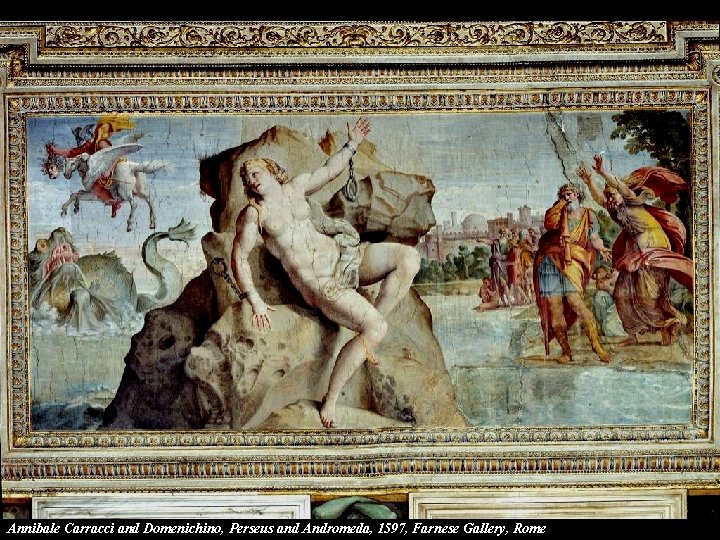
Annibale Carracci and Domenichino, Perseus and Andromeda, 1597, Farnese Gallery, Rome
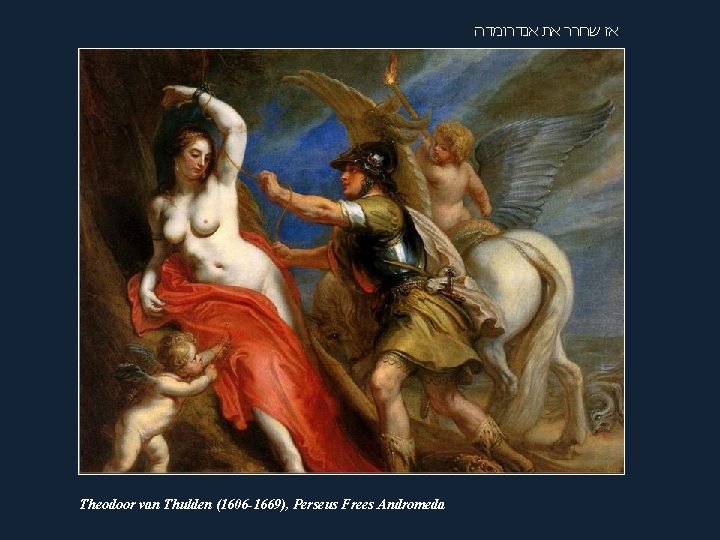
אז שחרר את אנדרומדה Theodoor van Thulden (1606 -1669), Perseus Frees Andromeda
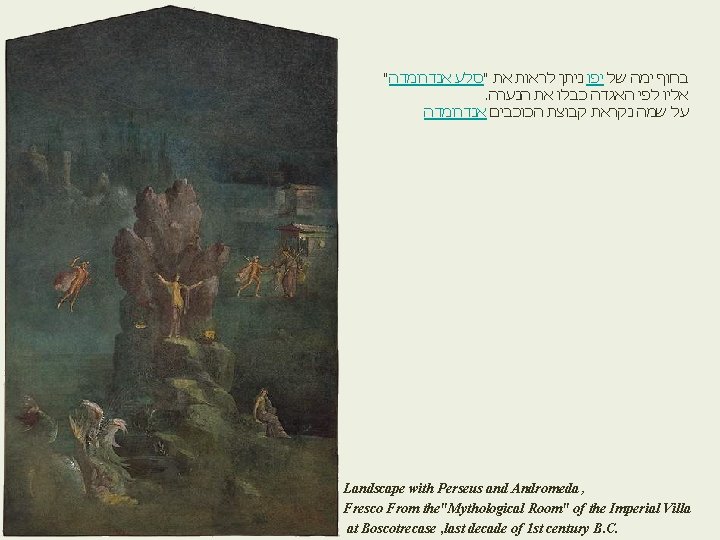
" בחוף ימה של יפו ניתן לראות את "סלע אנדרומדה . אליו לפי האגדה כבלו את הנערה על שמה נקראת קבוצת הכוכבים אנדרומדה Landscape with Perseus and Andromeda , Fresco From the"Mythological Room" of the Imperial Villa at Boscotrecase , last decade of 1 st century B. C.
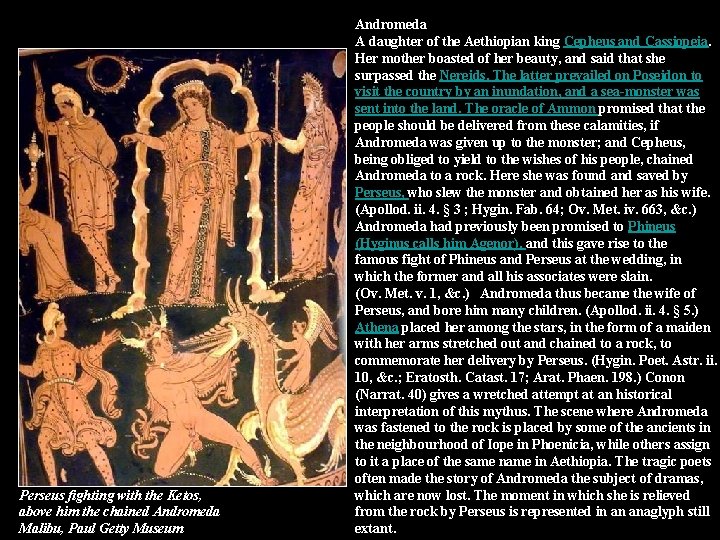
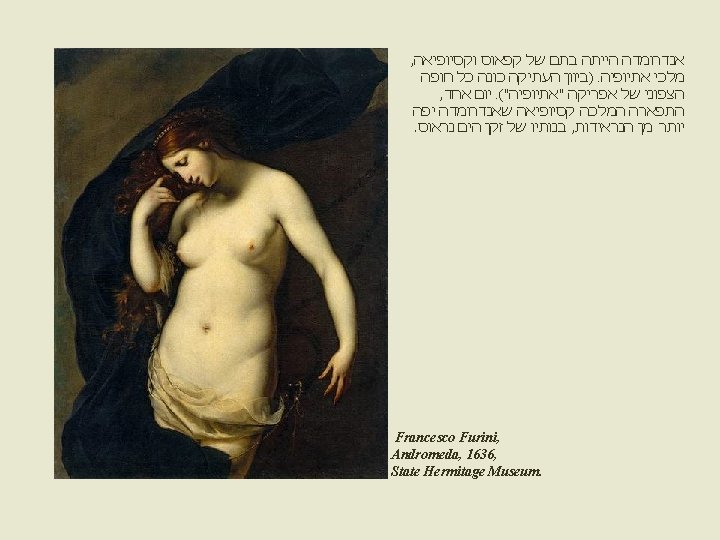
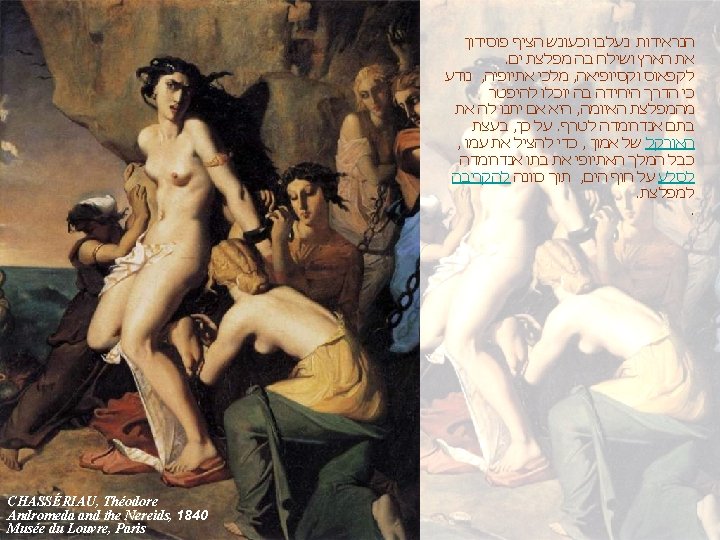
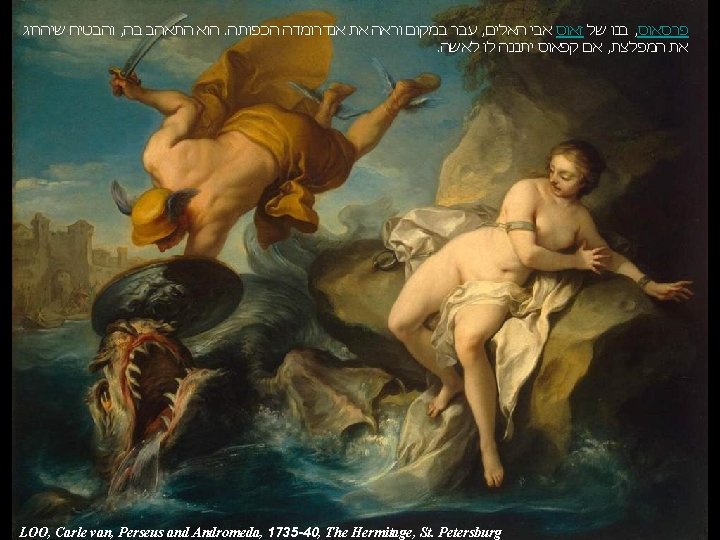
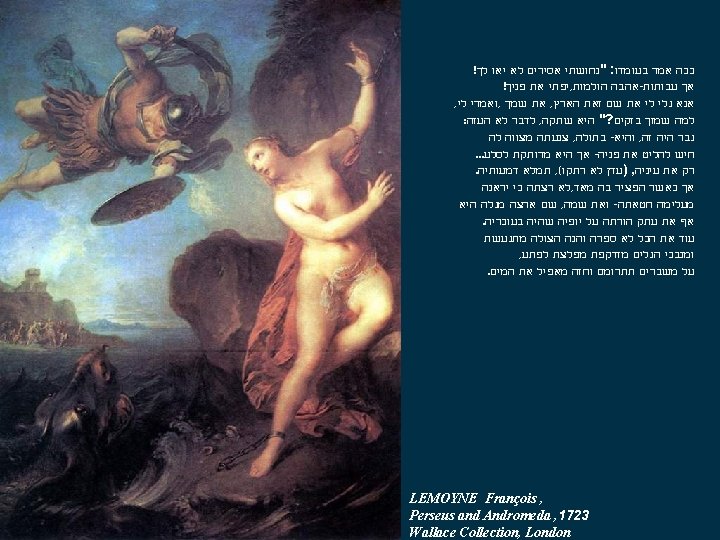
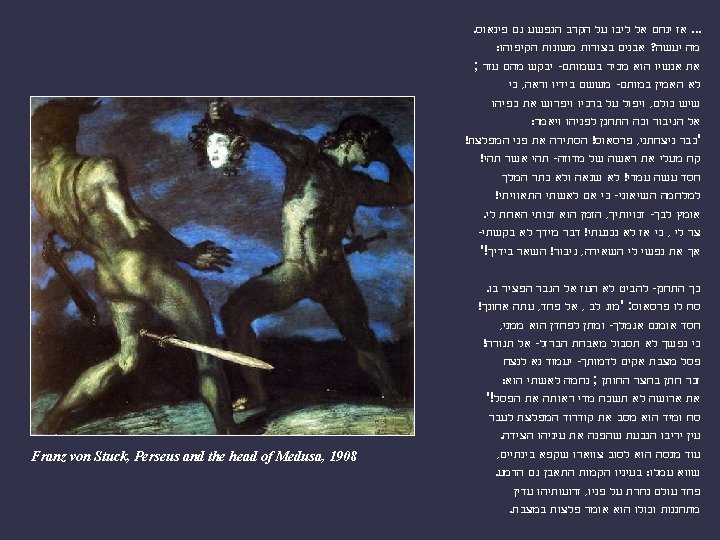
Perseus fighting with the Ketos, above him the chained Andromeda Malibu, Paul Getty Museum Andromeda A daughter of the Aethiopian king Cepheus and Cassiopeia. Her mother boasted of her beauty, and said that she surpassed the Nereids. The latter prevailed on Poseidon to visit the country by an inundation, and a sea-monster was sent into the land. The oracle of Ammon promised that the people should be delivered from these calamities, if Andromeda was given up to the monster; and Cepheus, being obliged to yield to the wishes of his people, chained Andromeda to a rock. Here she was found and saved by Perseus, who slew the monster and obtained her as his wife. (Apollod. ii. 4. § 3 ; Hygin. Fab. 64; Ov. Met. iv. 663, &c. ) Andromeda had previously been promised to Phineus (Hyginus calls him Agenor), and this gave rise to the famous fight of Phineus and Perseus at the wedding, in which the former and all his associates were slain. (Ov. Met. v. 1, &c. ) Andromeda thus became the wife of Perseus, and bore him many children. (Apollod. ii. 4. § 5. ) Athena placed her among the stars, in the form of a maiden with her arms stretched out and chained to a rock, to commemorate her delivery by Perseus. (Hygin. Poet. Astr. ii. 10, &c. ; Eratosth. Catast. 17; Arat. Phaen. 198. ) Conon (Narrat. 40) gives a wretched attempt at an historical interpretation of this mythus. The scene where Andromeda was fastened to the rock is placed by some of the ancients in the neighbourhood of Iope in Phoenicia, while others assign to it a place of the same name in Aethiopia. The tragic poets often made the story of Andromeda the subject of dramas, which are now lost. The moment in which she is relieved from the rock by Perseus is represented in an anaglyph still extant.
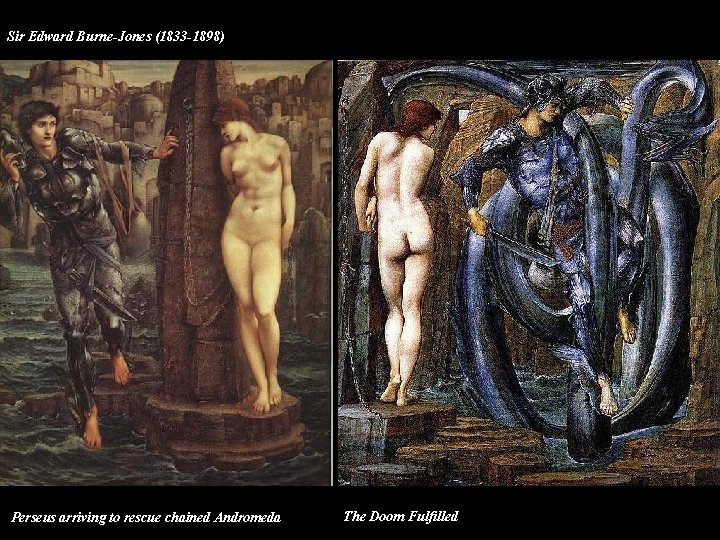
Sir Edward Burne-Jones (1833 -1898) Perseus arriving to rescue chained Andromeda The Doom Fulfilled
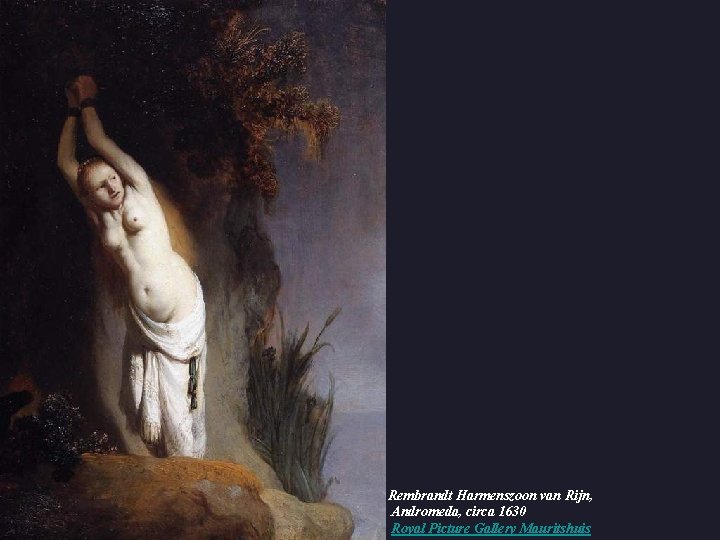
Rembrandt Harmenszoon van Rijn, Andromeda, circa 1630 Royal Picture Gallery Mauritshuis
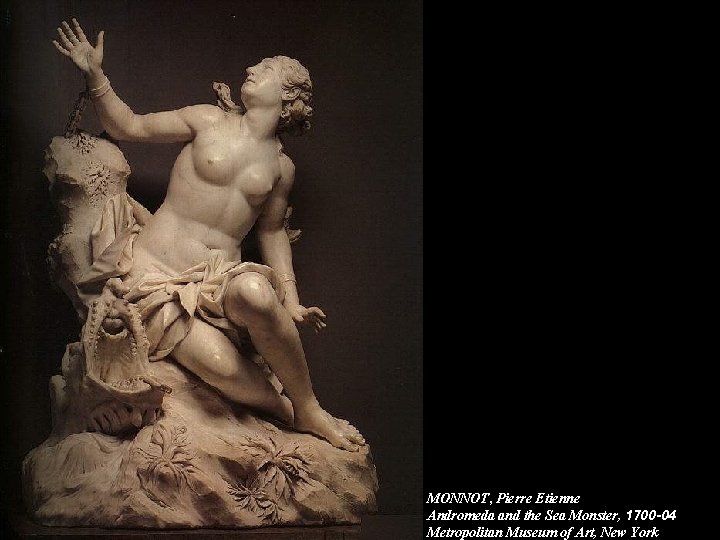
MONNOT, Pierre Etienne Andromeda and the Sea Monster, 1700 -04 Metropolitan Museum of Art, New York
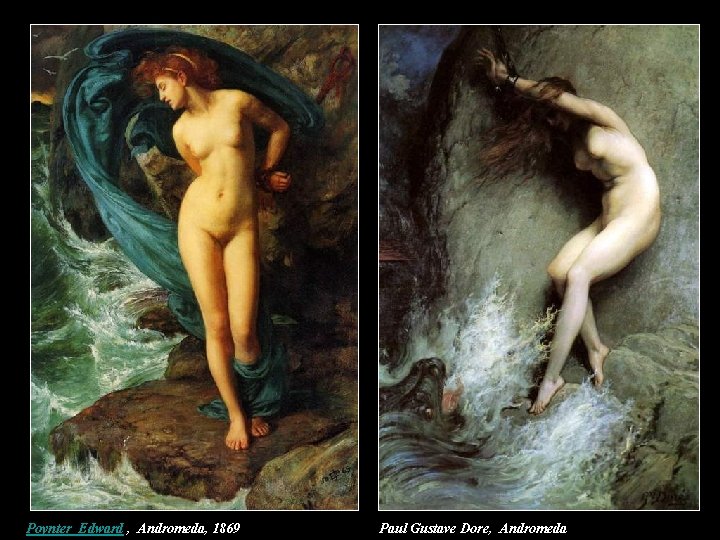
Poynter Edward , Andromeda, 1869 Paul Gustave Dore, Andromeda
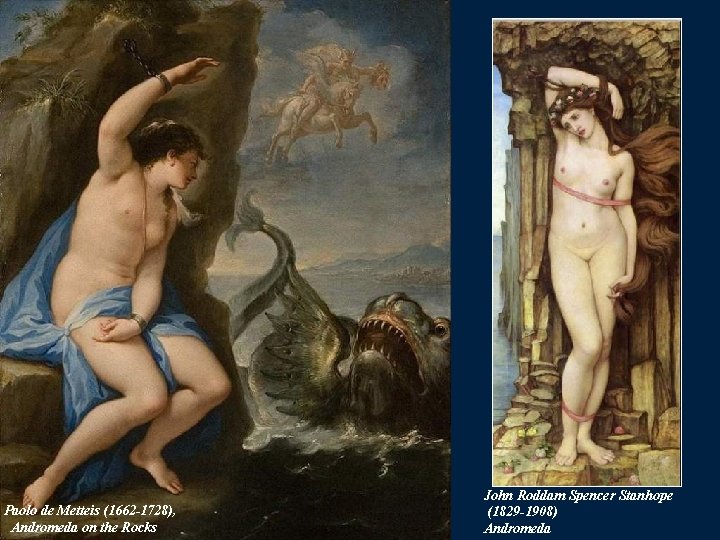
Paolo de Metteis (1662 -1728), Andromeda on the Rocks John Roddam Spencer Stanhope (1829 -1908) Andromeda
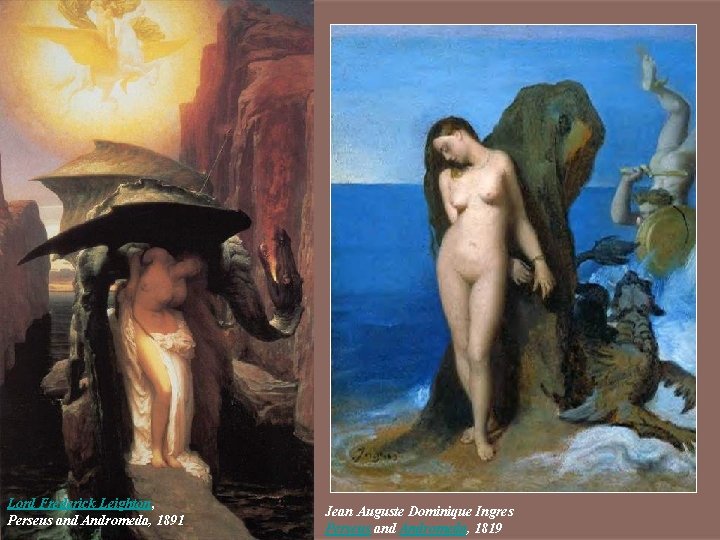
Lord Frederick Leighton, Perseus and Andromeda, 1891 Jean Auguste Dominique Ingres Perseus and Andromeda, 1819
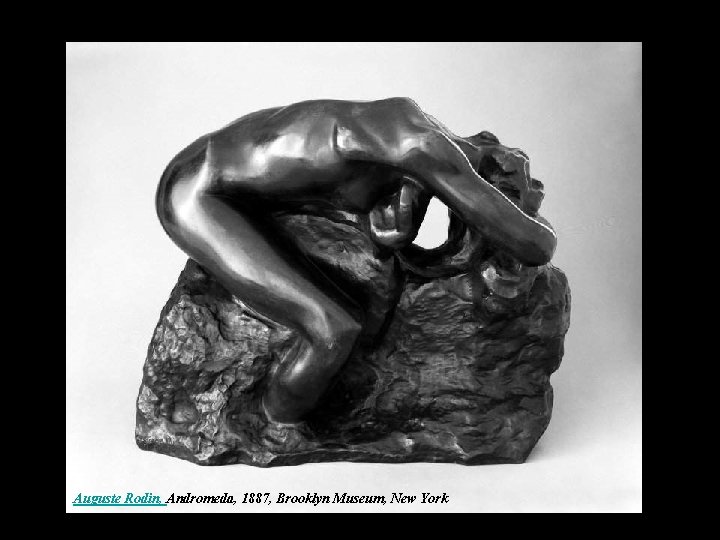
Auguste Rodin, Andromeda, 1887, Brooklyn Museum, New York
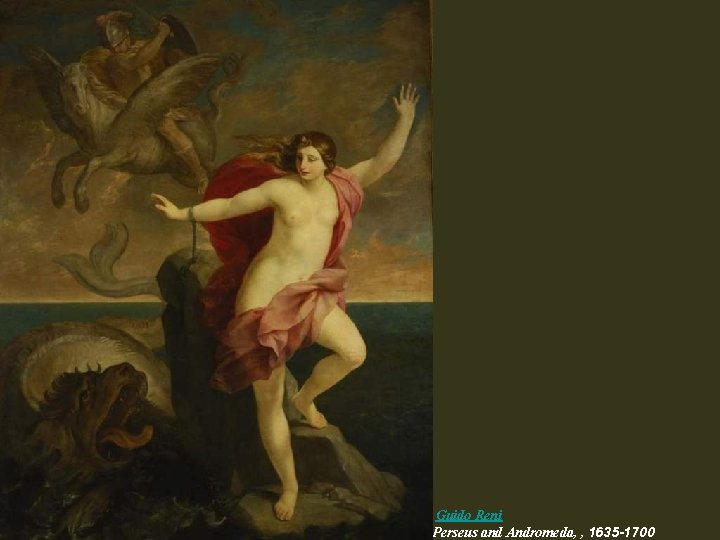
Guido Reni Perseus and Andromeda, , 1635 -1700
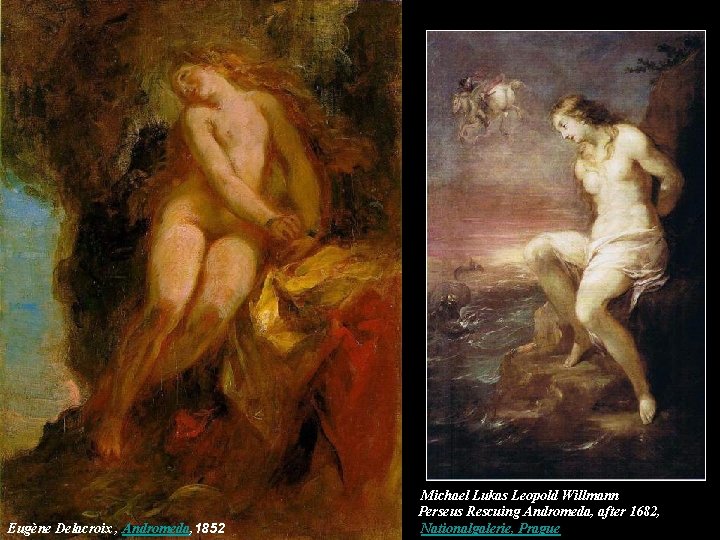
Eugène Delacroix , Andromeda, 1852 Michael Lukas Leopold Willmann Perseus Rescuing Andromeda, after 1682, Nationalgalerie, Prague
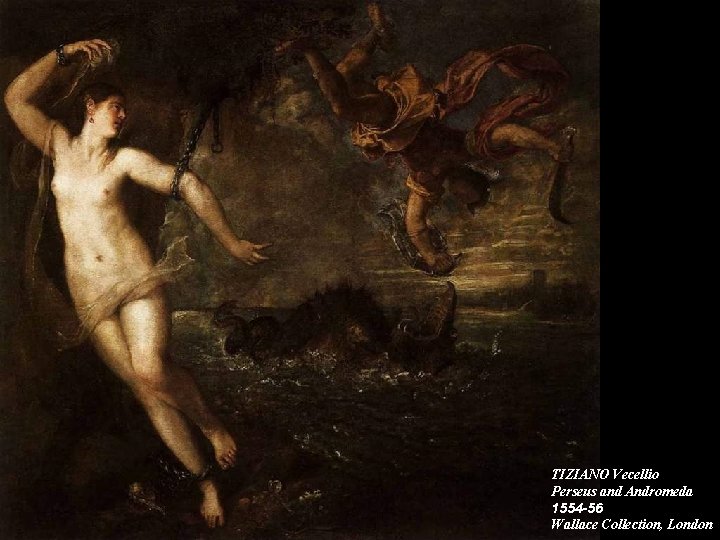
TIZIANO Vecellio Perseus and Andromeda 1554 -56 Wallace Collection, London
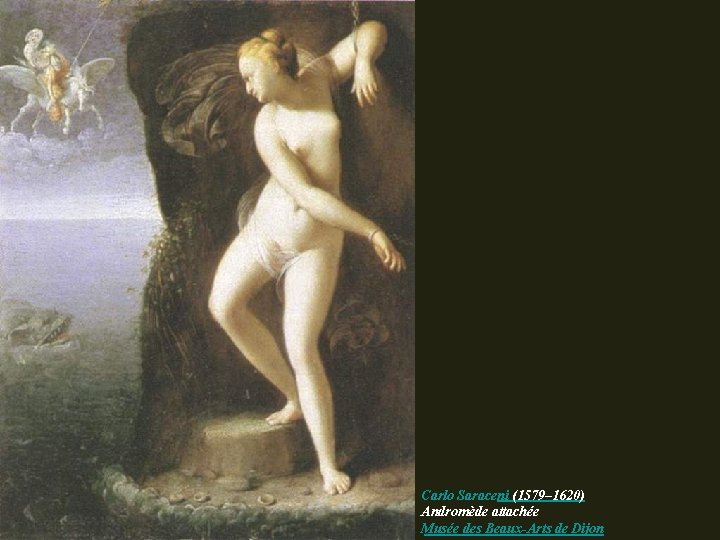
Carlo Saraceni (1579– 1620) Andromède attachée Musée des Beaux-Arts de Dijon
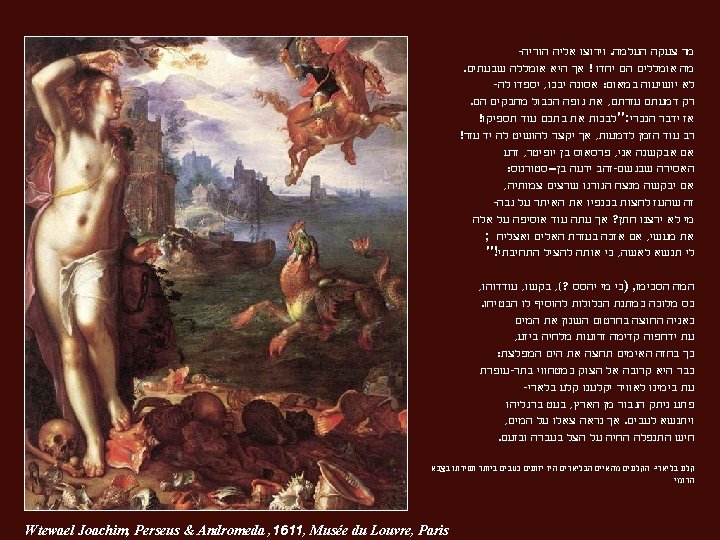
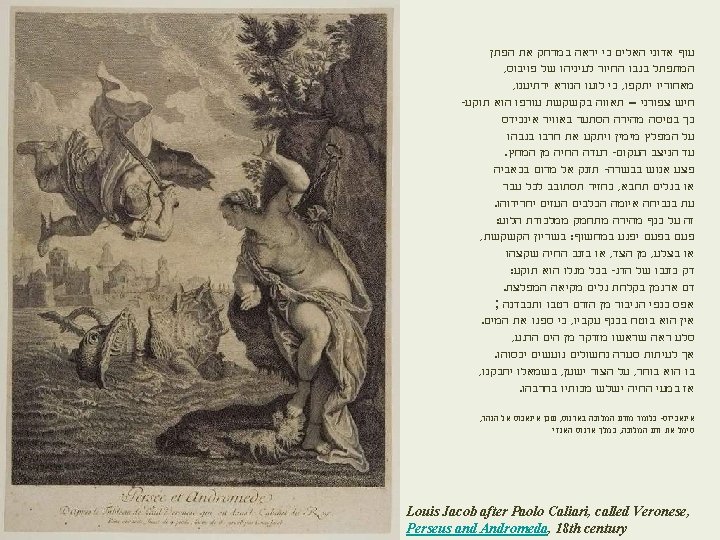
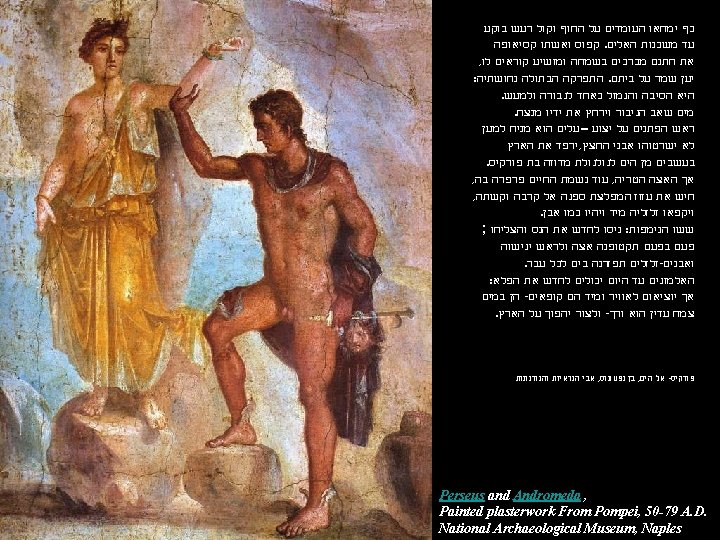
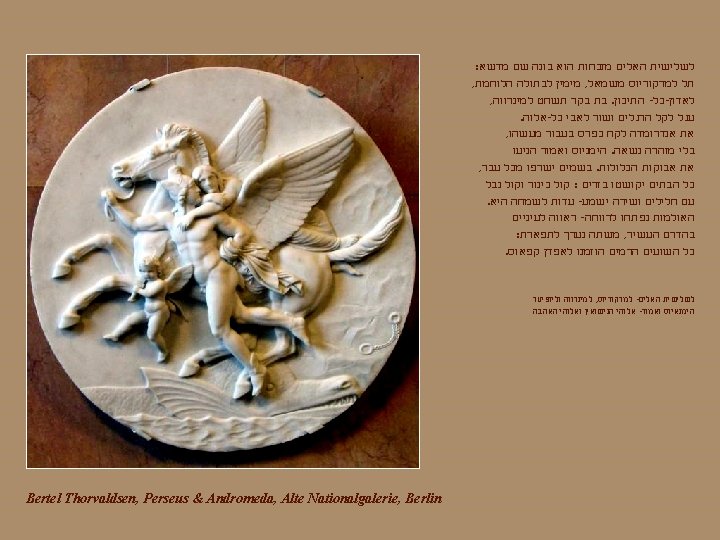
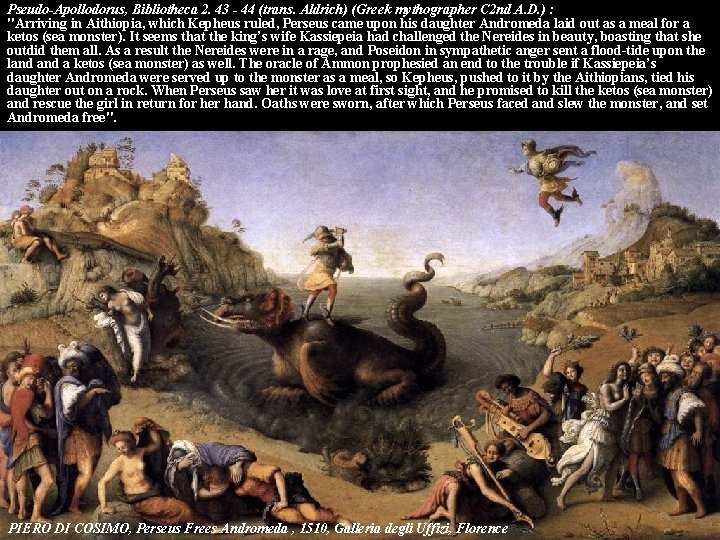
Pseudo-Apollodorus, Bibliotheca 2. 43 - 44 (trans. Aldrich) (Greek mythographer C 2 nd A. D. ) : "Arriving in Aithiopia, which Kepheus ruled, Perseus came upon his daughter Andromeda laid out as a meal for a ketos (sea monster). It seems that the king’s wife Kassiepeia had challenged the Nereides in beauty, boasting that she outdid them all. As a result the Nereides were in a rage, and Poseidon in sympathetic anger sent a flood-tide upon the land a ketos (sea monster) as well. The oracle of Ammon prophesied an end to the trouble if Kassiepeia’s daughter Andromeda were served up to the monster as a meal, so Kepheus, pushed to it by the Aithiopians, tied his daughter out on a rock. When Perseus saw her it was love at first sight, and he promised to kill the ketos (sea monster) and rescue the girl in return for her hand. Oaths were sworn, after which Perseus faced and slew the monster, and set Andromeda free". PIERO DI COSIMO, Perseus Frees Andromeda , 1510, Galleria degli Uffizi, Florence
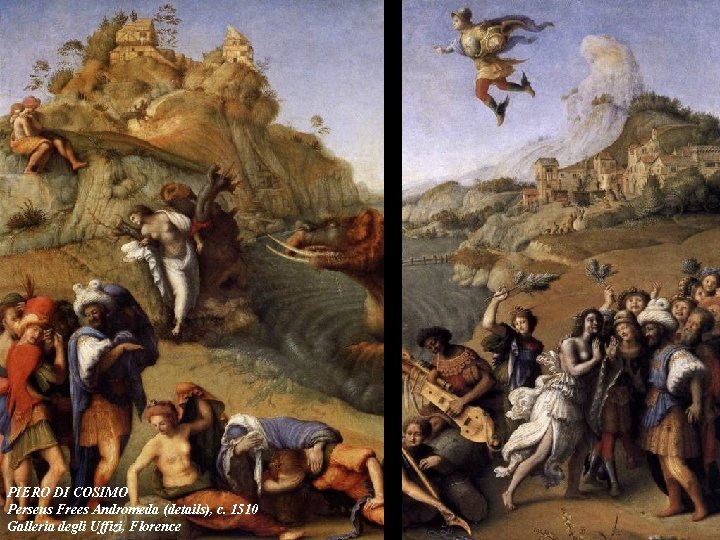
PIERO DI COSIMO Perseus Frees Andromeda (details), c. 1510 Galleria degli Uffizi, Florence
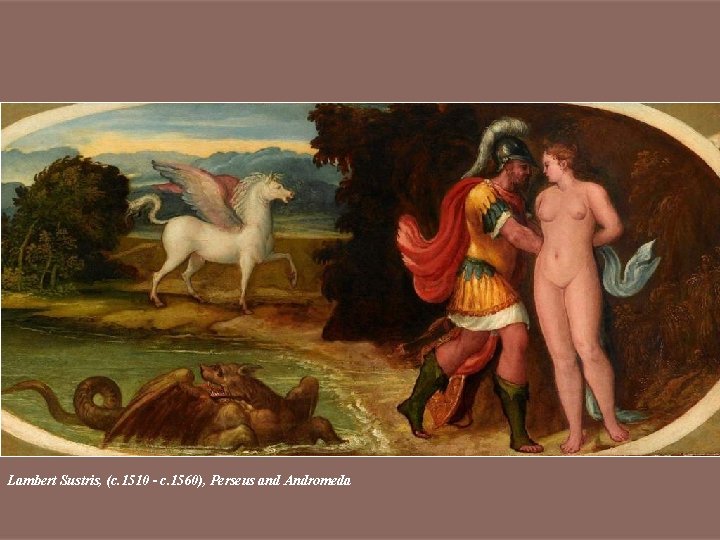
Lambert Sustris, (c. 1510 - c. 1560), Perseus and Andromeda
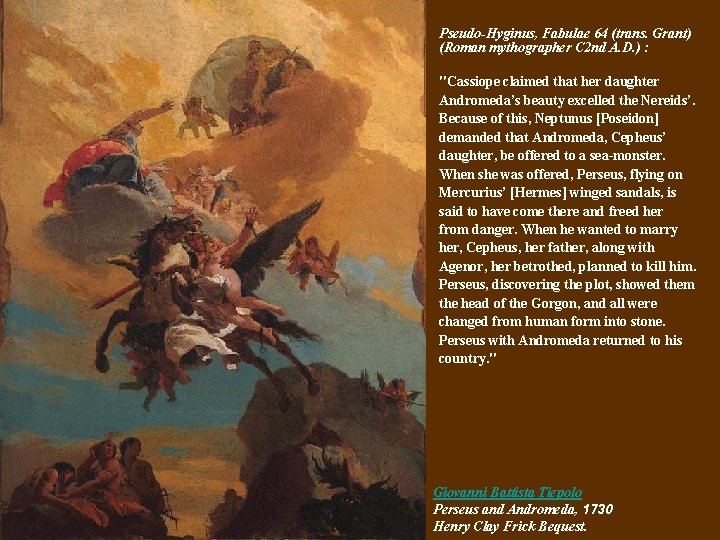
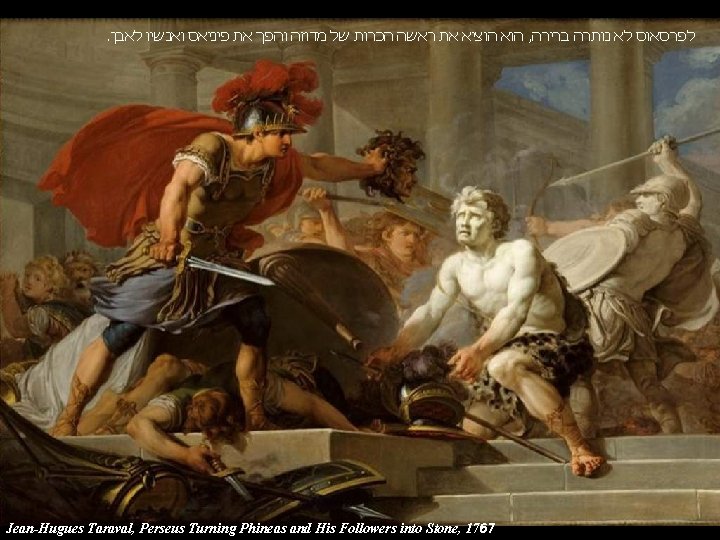
Pseudo-Hyginus, Fabulae 64 (trans. Grant) (Roman mythographer C 2 nd A. D. ) : "Cassiope claimed that her daughter Andromeda’s beauty excelled the Nereids’. Because of this, Neptunus [Poseidon] demanded that Andromeda, Cepheus’ daughter, be offered to a sea-monster. When she was offered, Perseus, flying on Mercurius’ [Hermes] winged sandals, is said to have come there and freed her from danger. When he wanted to marry her, Cepheus, her father, along with Agenor, her betrothed, planned to kill him. Perseus, discovering the plot, showed them the head of the Gorgon, and all were changed from human form into stone. Perseus with Andromeda returned to his country. " Giovanni Battista Tiepolo Perseus and Andromeda, 1730 Henry Clay Frick Bequest.
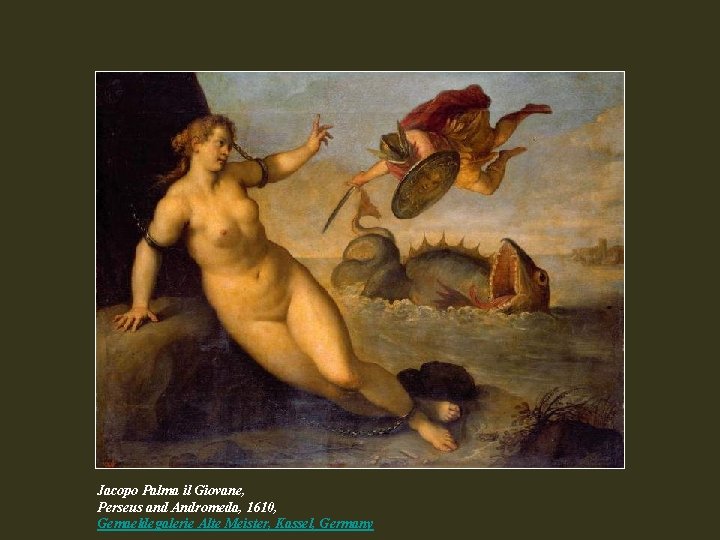
Jacopo Palma il Giovane, Perseus and Andromeda, 1610, Gemaeldegalerie Alte Meister, Kassel, Germany
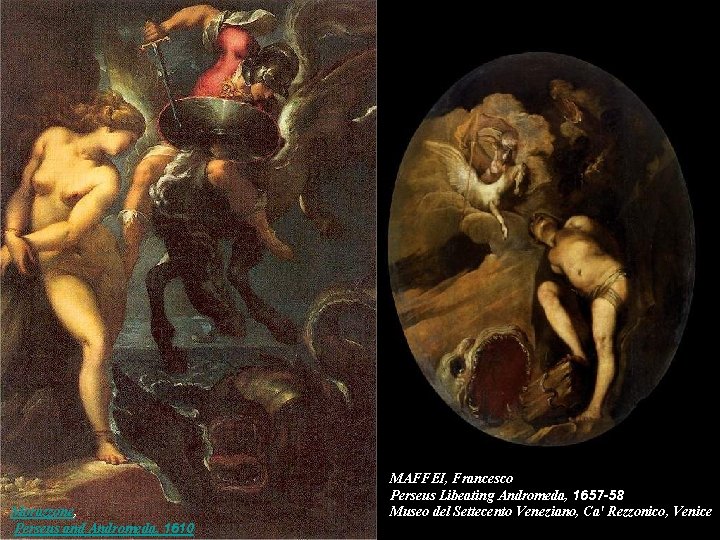
Morazzone, Perseus and Andromeda, 1610 MAFFEI, Francesco Perseus Libeating Andromeda, 1657 -58 Museo del Settecento Veneziano, Ca' Rezzonico, Venice
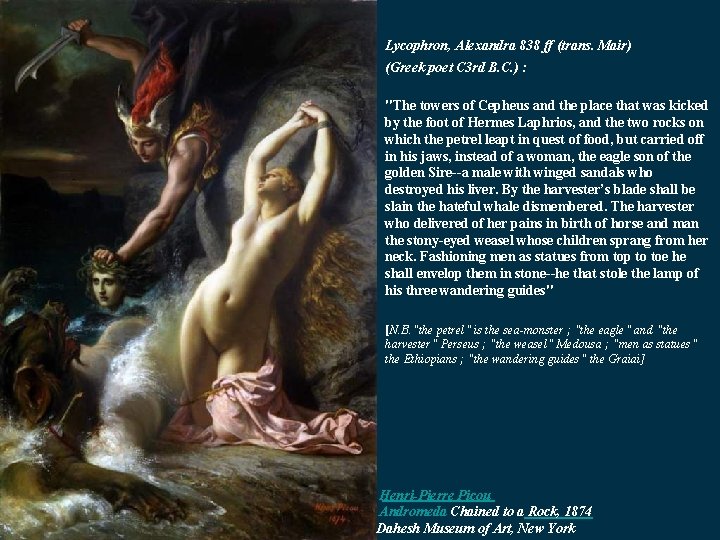
Lycophron, Alexandra 838 ff (trans. Mair) (Greek poet C 3 rd B. C. ) : "The towers of Cepheus and the place that was kicked by the foot of Hermes Laphrios, and the two rocks on which the petrel leapt in quest of food, but carried off in his jaws, instead of a woman, the eagle son of the golden Sire--a male with winged sandals who destroyed his liver. By the harvester’s blade shall be slain the hateful whale dismembered. The harvester who delivered of her pains in birth of horse and man the stony-eyed weasel whose children sprang from her neck. Fashioning men as statues from top to toe he shall envelop them in stone--he that stole the lamp of his three wandering guides" [N. B. "the petrel" is the sea-monster ; "the eagle" and "the harvester" Perseus ; "the weasel" Medousa ; "men as statues" the Ethiopians ; "the wandering guides" the Graiai] Henri-Pierre Picou Andromeda Chained to a Rock, 1874 Dahesh Museum of Art, New York
Philostratus the Elder, Imagines 1. 29 (trans. Fairbanks) (Greek rhetorician C 3 rd A. D. ) : "[Ostensibly a description of an ancient Greek painting at Neapolis (Naples) : ] Perseus. No, this is not the Red Sea (thalassa Erythra) nor are these inhabitants of India, but Aithiopes (Ethiopians) and a Greek man in Aithiopia. And of the exploit which I think the man undertook voluntarily for love, my boy, you must have heard--the exploit of Perseus who, they say, slew in Aithiopia a Ketos (sea-monster) from the Atlantikos (sea of Atlas), which was making its way against herds and the people of this land. Now the painter glorifies this tale and shows his pity for Andromeda in that she was given over to the Ketos (monster). The contest is already finished and the Ketos (monster) lies stretched out on the strand, weltering in streams of blood--the reason the sea is red--while Eros (Love) frees Andromeda from her bonds. Eros is painted with wings as usual, but here, as it not usual, he is a young man, panting and still showing the effects of his toil; for before the deed Perseus put up a prayer to Eros that he should come and with him swoop down upon the creature, and Eros came, for he heard the Greek’s prayer. The maiden is charming in that she is fair of skin though in Aithiopia, and charming is the very beauty of her form; she would surpass a Lydian girl in daintiness, an Attic girl in stateliness, a Spartan in sturdiness. Her beauty is enhanced by the circumstances of the moment; for she seems to be incredulous, her joy is mingled with fear, and as she gazes at Perseus she begins to send a smile towards him. He, not far from the maiden, lies in the sweet fragrant grass, dripping sweat on the ground and keeping the Gorgo’s head hidden lest people see it and be turned to stone. Many cow-herds come offering him milk and wine to drink, charming Aithiopes with their strange colouring and their grim smiles; and they show that they are pleased, and most of them look alike, Perseus welcomes their gifts and, supporting himself on his left elbow, he lefts his chest, filled with breath through panting, and keeps his gaze upon the maiden, and lets the wind blow out his chlamys, which is purple and spattered with drops of blood and with the flecks which the creature breathed upon it in the struggle. Let he children of Pelops perish when it comes to a comparison with the shoulder of Perseus! for beautiful as he is and ruddy of face, his bloom has been enhanced by his toil and his veins are swollen, as is wont to happen when the breath comes quickly. Much gratitude does he win from the maiden. " [N. B. Philostratus locates this myth on the Atlantic coast of Africa rather than the Red Sea. "Aithiopes" was a generic term meaning black African. ]
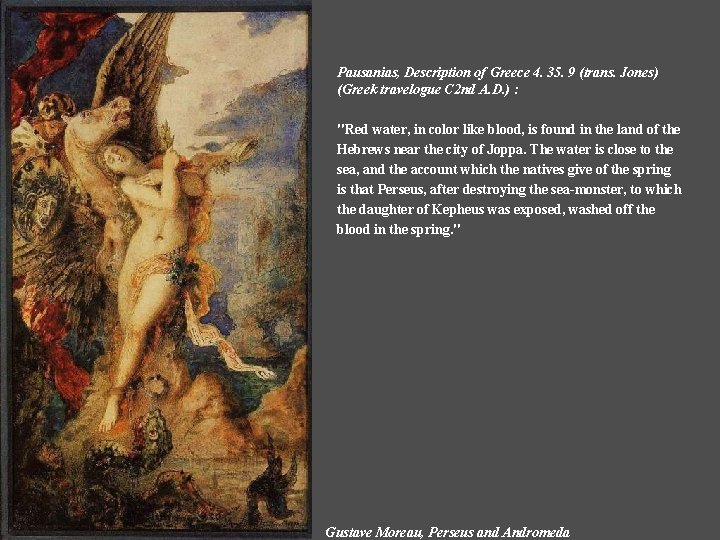
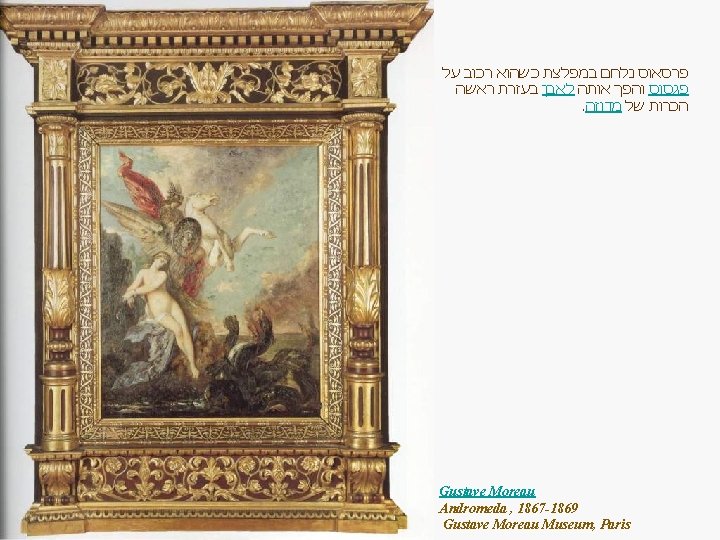
Pausanias, Description of Greece 4. 35. 9 (trans. Jones) (Greek travelogue C 2 nd A. D. ) : "Red water, in color like blood, is found in the land of the Hebrews near the city of Joppa. The water is close to the sea, and the account which the natives give of the spring is that Perseus, after destroying the sea-monster, to which the daughter of Kepheus was exposed, washed off the blood in the spring. " Gustave Moreau, Perseus and Andromeda
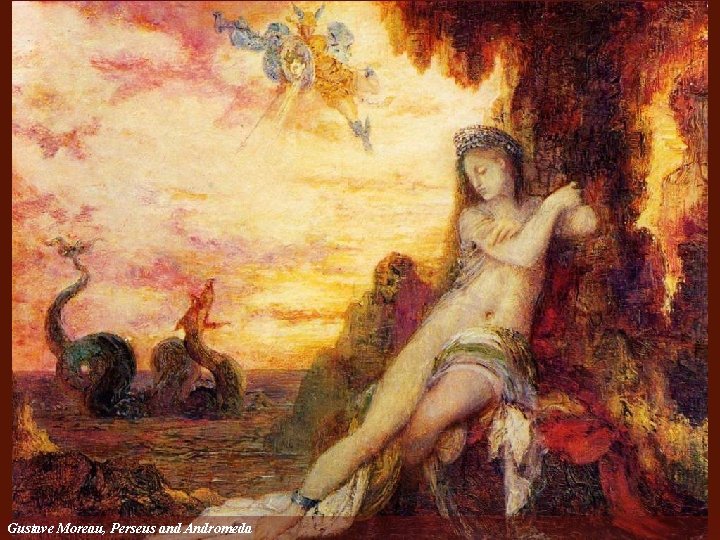
Gustave Moreau, Perseus and Andromeda
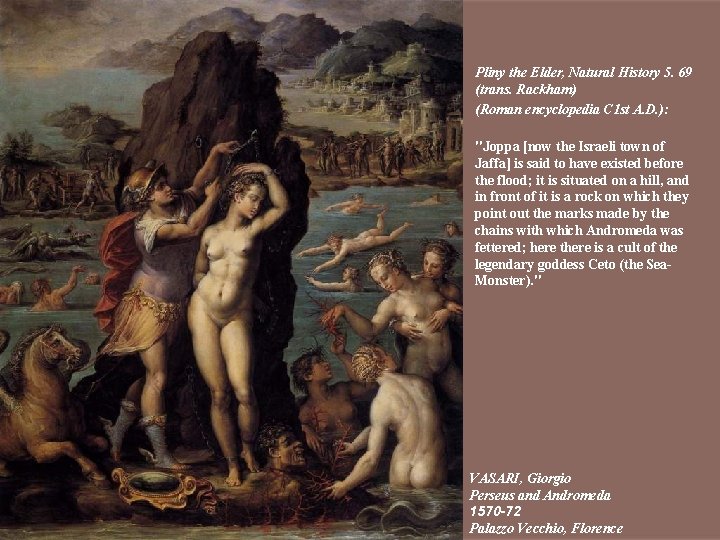
Pliny the Elder, Natural History 5. 69 (trans. Rackham) (Roman encyclopedia C 1 st A. D. ): "Joppa [now the Israeli town of Jaffa] is said to have existed before the flood; it is situated on a hill, and in front of it is a rock on which they point out the marks made by the chains with which Andromeda was fettered; here there is a cult of the legendary goddess Ceto (the Sea. Monster). " VASARI, Giorgio Perseus and Andromeda 1570 -72 Palazzo Vecchio, Florence
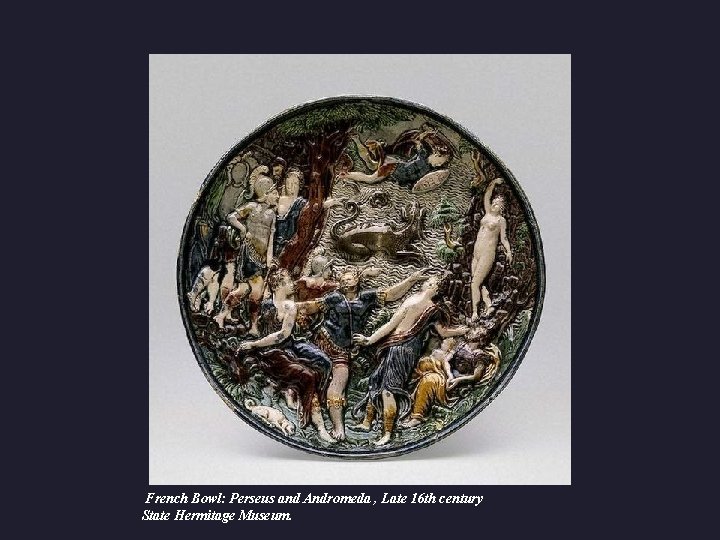
French Bowl: Perseus and Andromeda , Late 16 th century State Hermitage Museum.
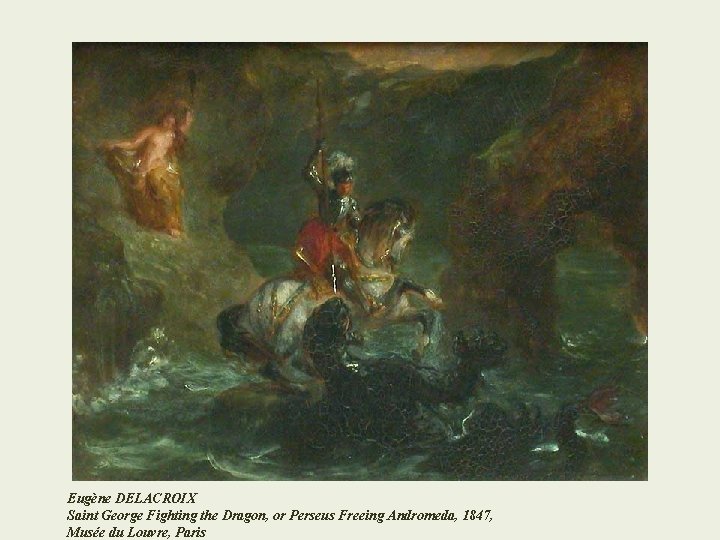
Eugène DELACROIX Saint George Fighting the Dragon, or Perseus Freeing Andromeda, 1847, Musée du Louvre, Paris
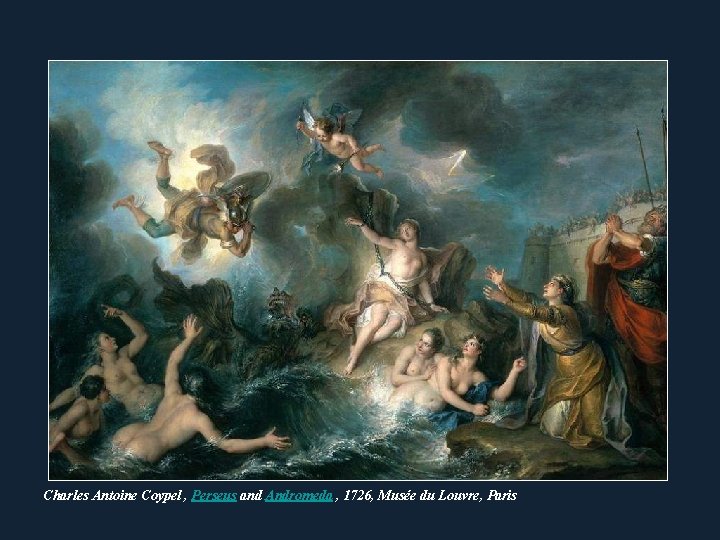
Charles Antoine Coypel , Perseus and Andromeda , 1726, Musée du Louvre, Paris
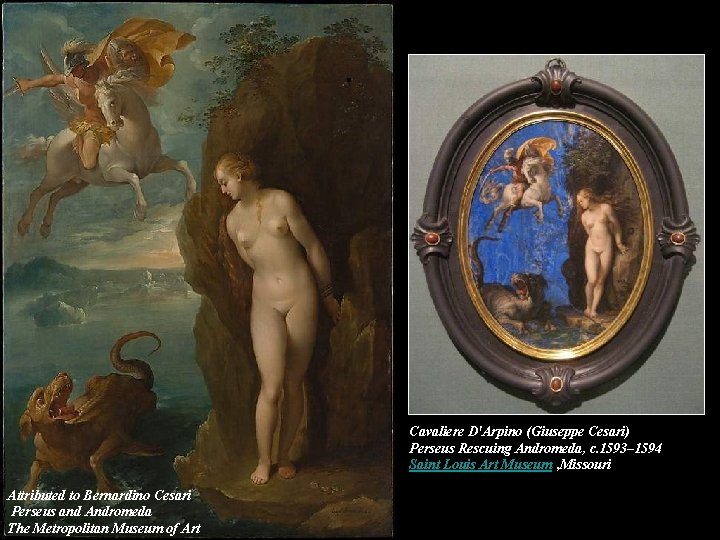
. Cavaliere D'Arpino (Giuseppe Cesari) Perseus Rescuing Andromeda, c. 1593– 1594 Saint Louis Art Museum , Missouri Attributed to Bernardino Cesari Perseus and Andromeda The Metropolitan Museum of Art
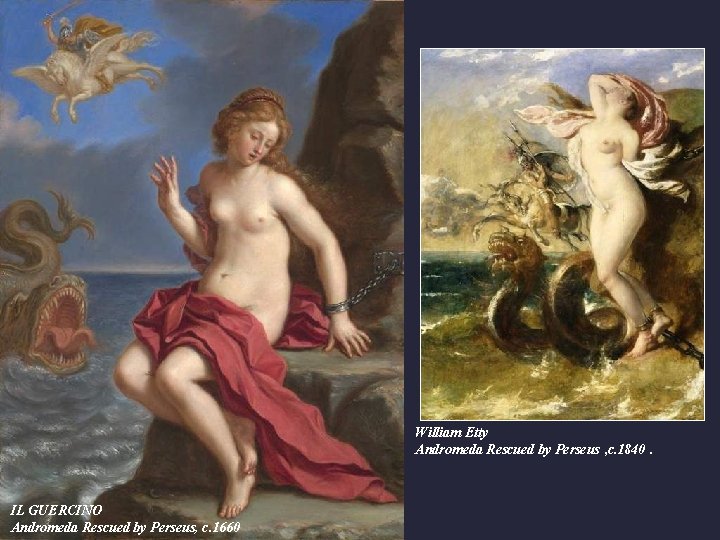
William Etty Andromeda Rescued by Perseus , c. 1840. IL GUERCINO Andromeda Rescued by Perseus, c. 1660
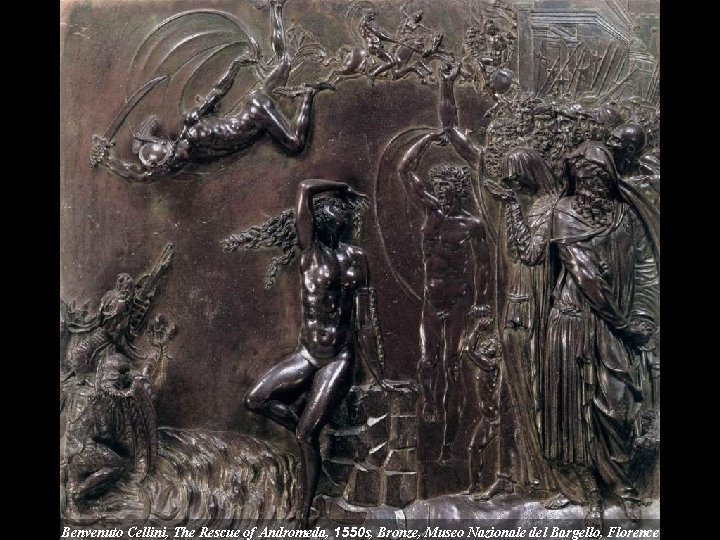
Benvenuto Cellini, The Rescue of Andromeda, 1550 s, Bronze, Museo Nazionale del Bargello, Florence
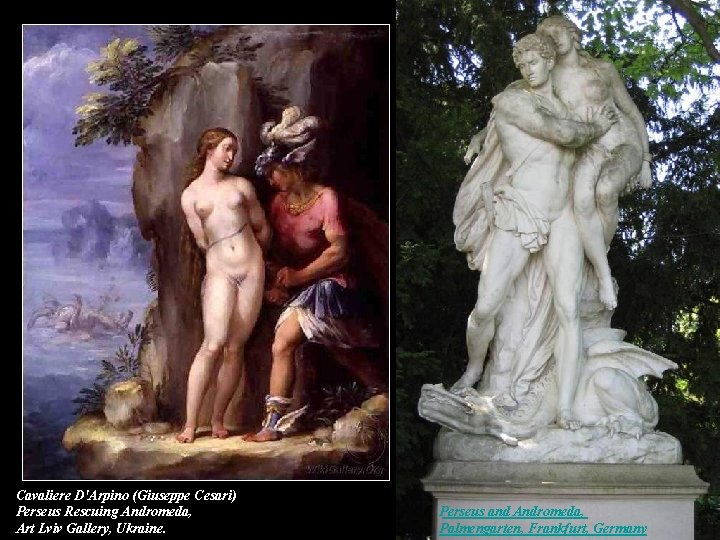
Cavaliere D'Arpino (Giuseppe Cesari) Perseus Rescuing Andromeda, Art Lviv Gallery, Ukraine. Perseus and Andromeda, Palmengarten, Frankfurt, Germany
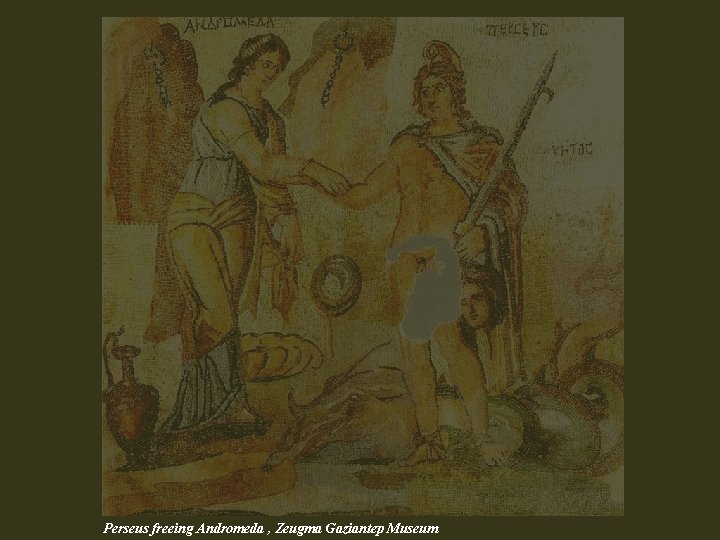
Perseus freeing Andromeda , Zeugma Gaziantep Museum
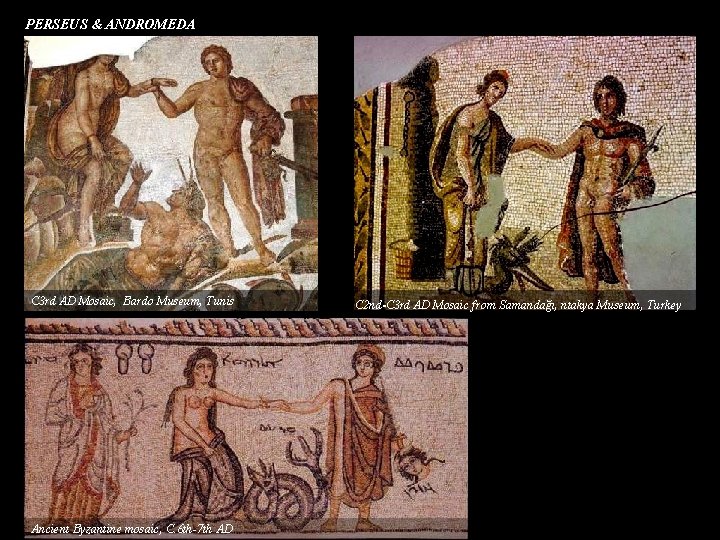
PERSEUS & ANDROMEDA A C 3 rd AD Mosaic, Bardo Museum, Tunis Ancient Byzantine mosaic, C. 6 th-7 th AD C 2 nd-C 3 rd AD Mosaic from Samandağı, ntakya Museum, Turkey
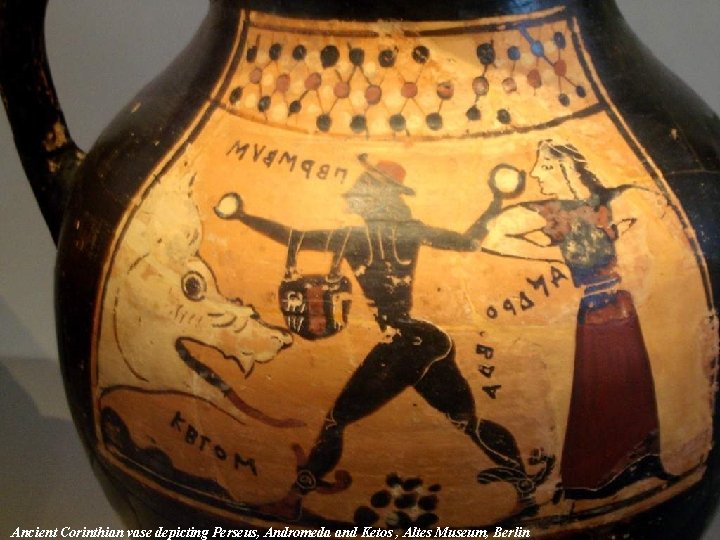
Ancient Corinthian vase depicting Perseus, Andromeda and Ketos , Altes Museum, Berlin
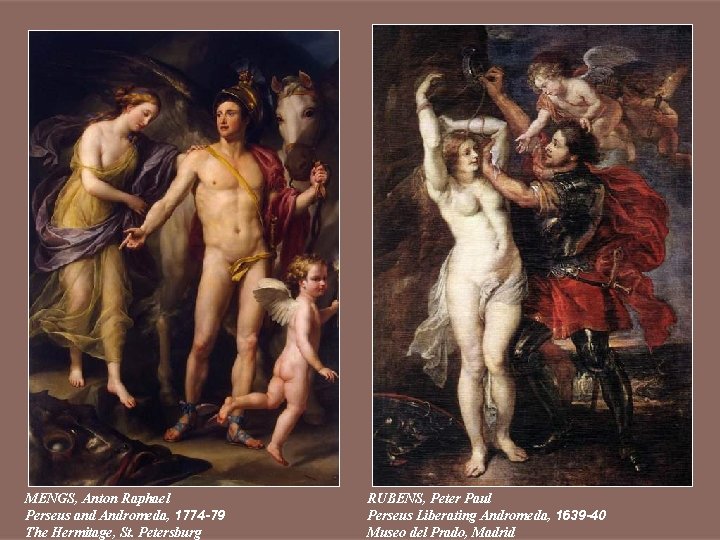
MENGS, Anton Raphael Perseus and Andromeda, 1774 -79 The Hermitage, St. Petersburg RUBENS, Peter Paul Perseus Liberating Andromeda, 1639 -40 Museo del Prado, Madrid
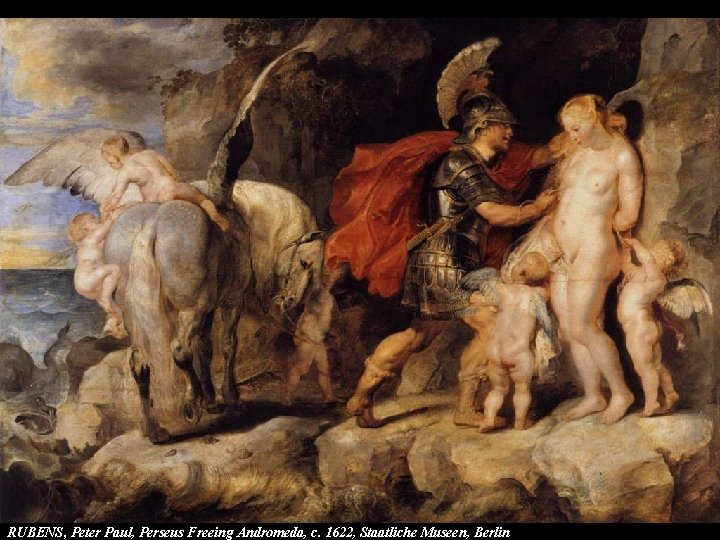
RUBENS, Peter Paul, Perseus Freeing Andromeda, c. 1622, Staatliche Museen, Berlin
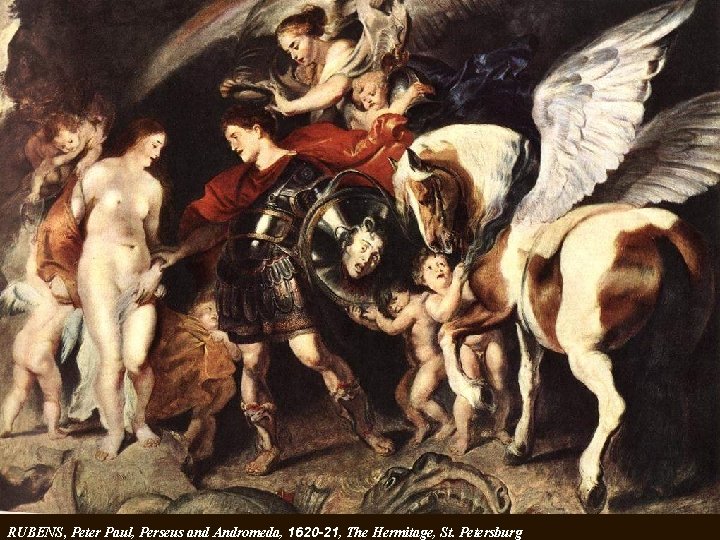
RUBENS, Peter Paul, Perseus and Andromeda, 1620 -21, The Hermitage, St. Petersburg
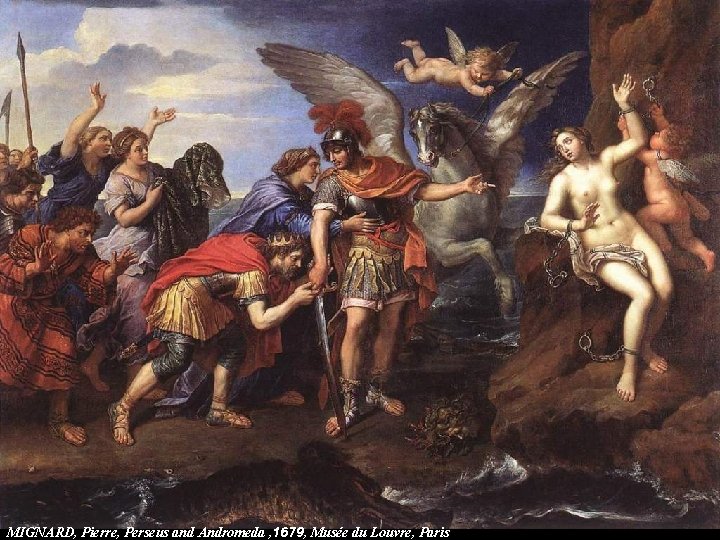
MIGNARD, Pierre, Perseus and Andromeda , 1679, Musée du Louvre, Paris
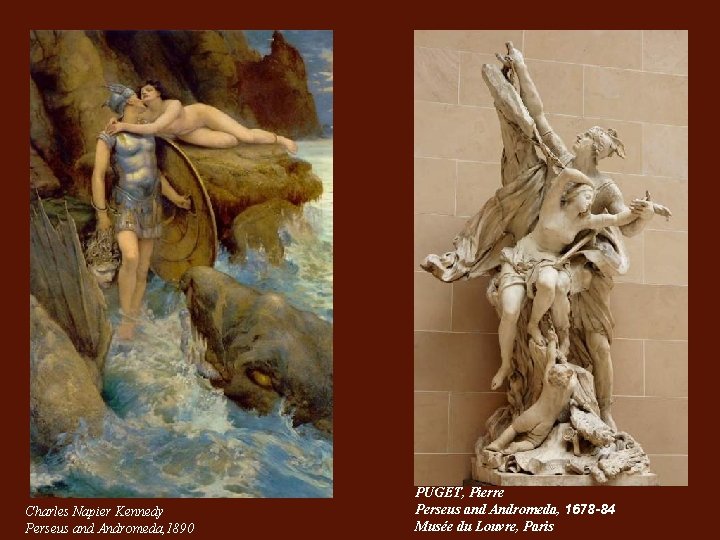
Charles Napier Kennedy Perseus and Andromeda, 1890 PUGET, Pierre Perseus and Andromeda, 1678 -84 Musée du Louvre, Paris
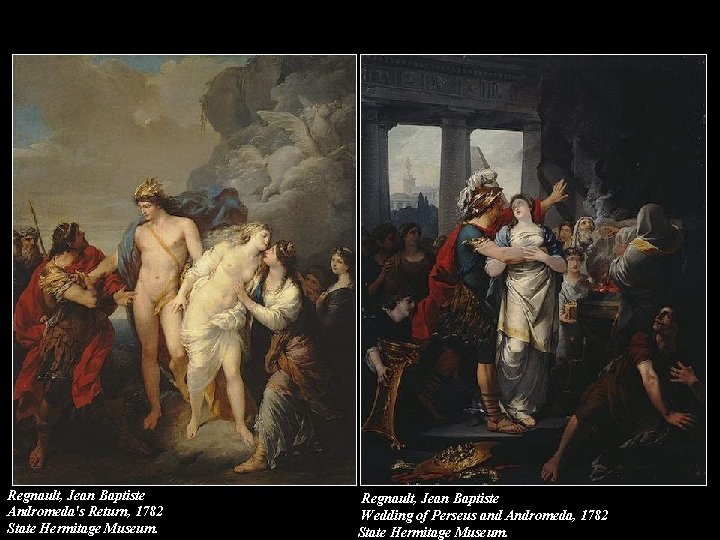
Regnault, Jean Baptiste Andromeda's Return, 1782 State Hermitage Museum. Regnault, Jean Baptiste Wedding of Perseus and Andromeda, 1782 State Hermitage Museum.
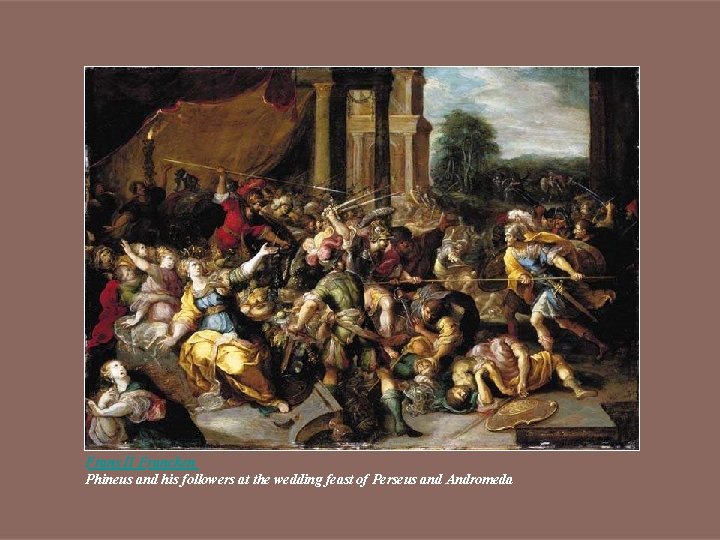
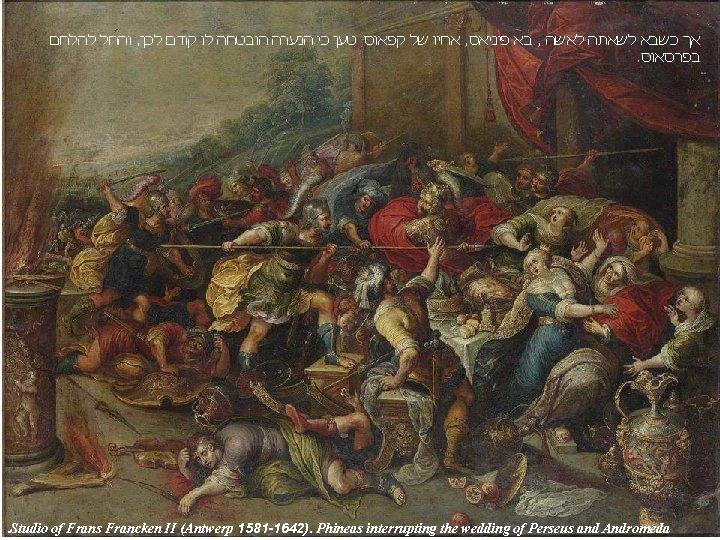
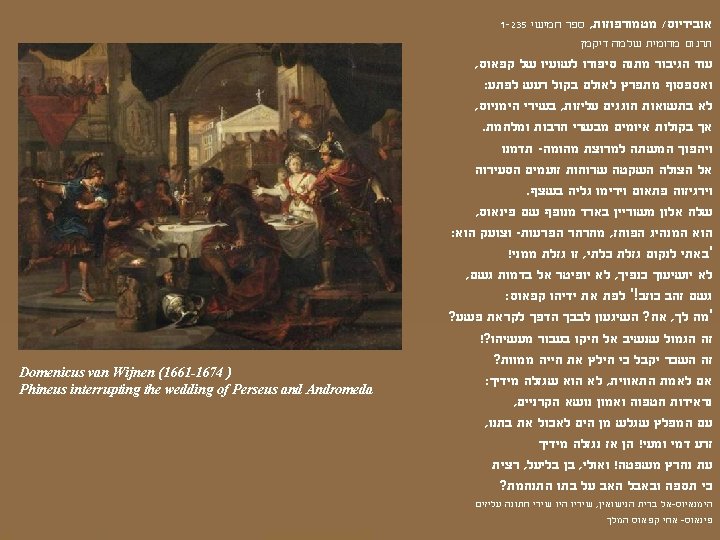
Frans II Francken Phineus and his followers at the wedding feast of Perseus and Andromeda
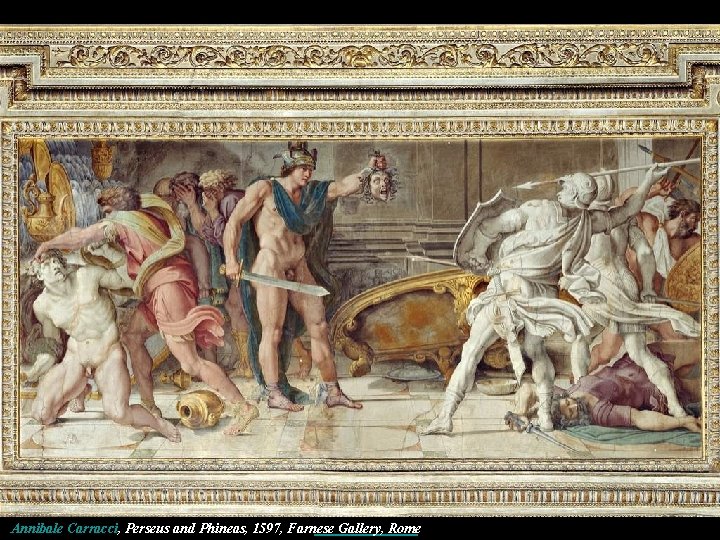
Annibale Carracci, Perseus and Phineas, 1597, Farnese Gallery, Rome
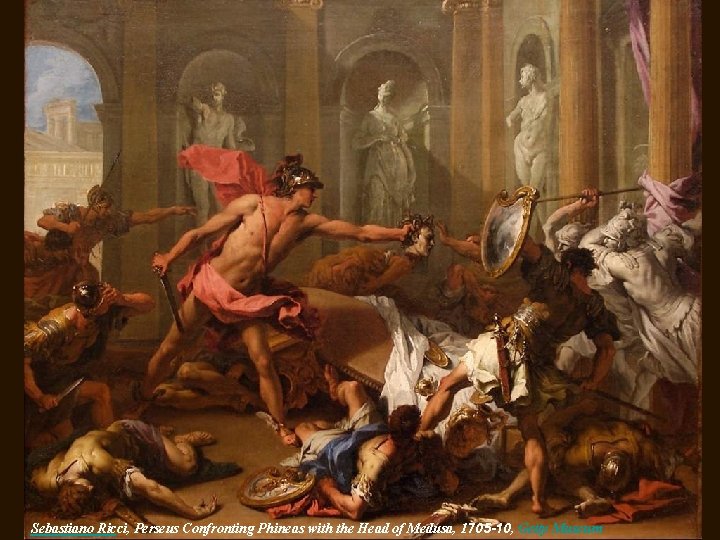
Sebastiano Ricci, Perseus Confronting Phineas with the Head of Medusa, 1705 -10, Getty Museum
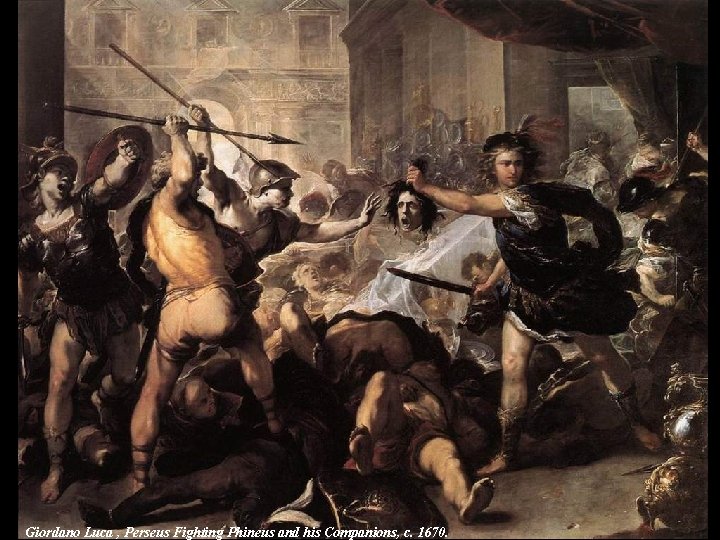
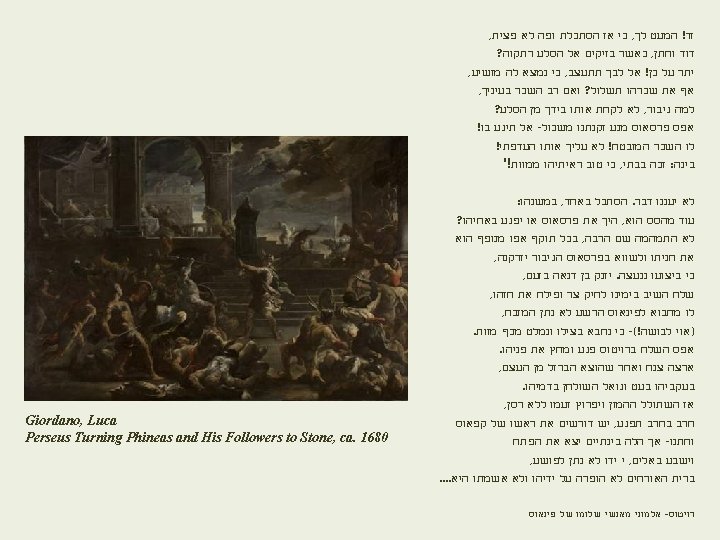
Giordano Luca , Perseus Fighting Phineus and his Companions, c. 1670.
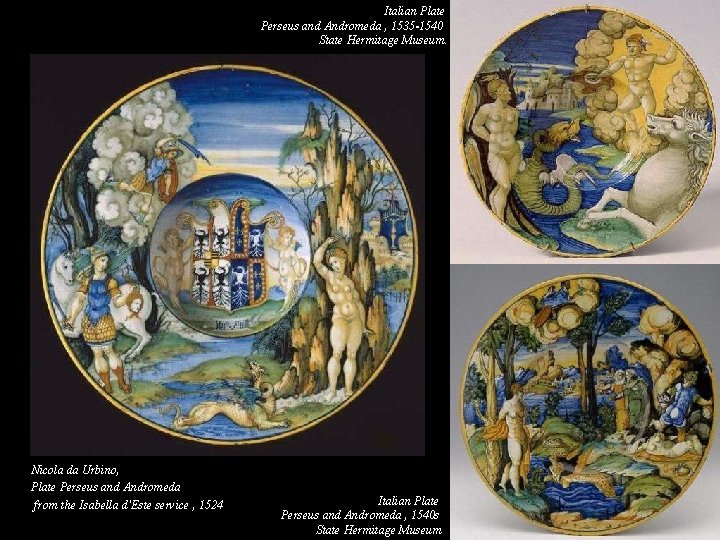
Italian Plate Perseus and Andromeda , 1535 -1540 State Hermitage Museum. Nicola da Urbino, Plate Perseus and Andromeda from the Isabella d'Este service , 1524 Italian Plate Perseus and Andromeda , 1540 s State Hermitage Museum
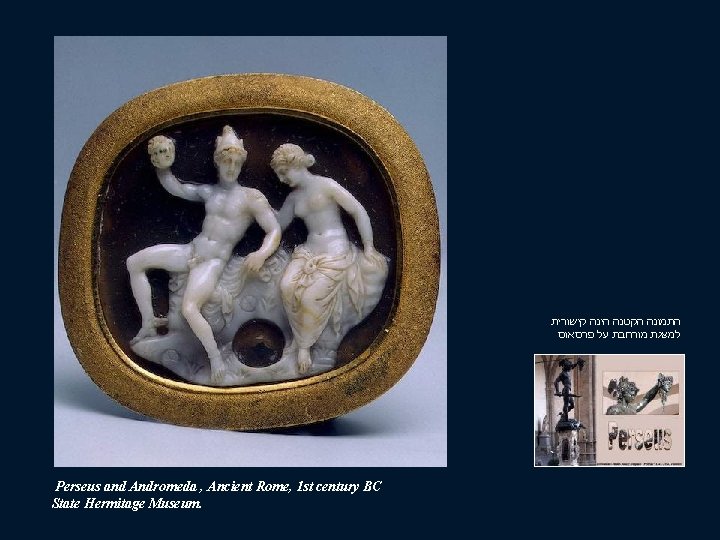
התמונה הקטנה הינה קישורית למצגת מורחבת על פרסאוס Perseus and Andromeda , Ancient Rome, 1 st century BC State Hermitage Museum.
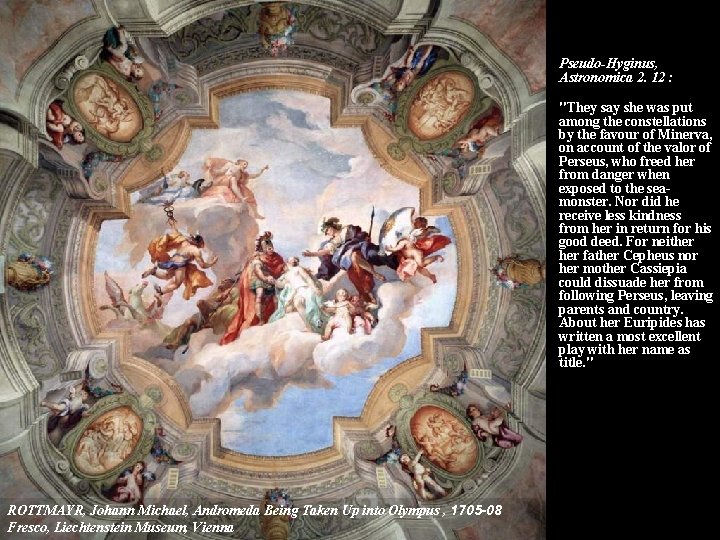
Pseudo-Hyginus, Astronomica 2. 12 : "They say she was put among the constellations by the favour of Minerva, on account of the valor of Perseus, who freed her from danger when exposed to the seamonster. Nor did he receive less kindness from her in return for his good deed. For neither father Cepheus nor her mother Cassiepia could dissuade her from following Perseus, leaving parents and country. About her Euripides has written a most excellent play with her name as title. " ROTTMAYR, Johann Michael, Andromeda Being Taken Up into Olympus , 1705 -08 Fresco, Liechtenstein Museum, Vienna
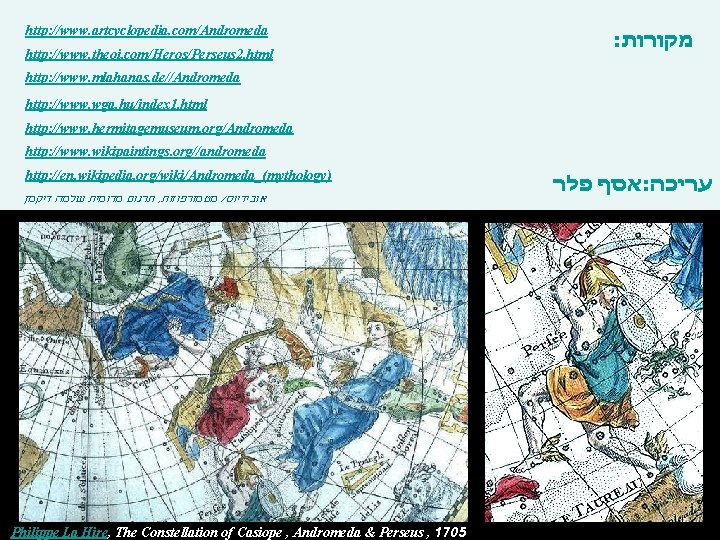
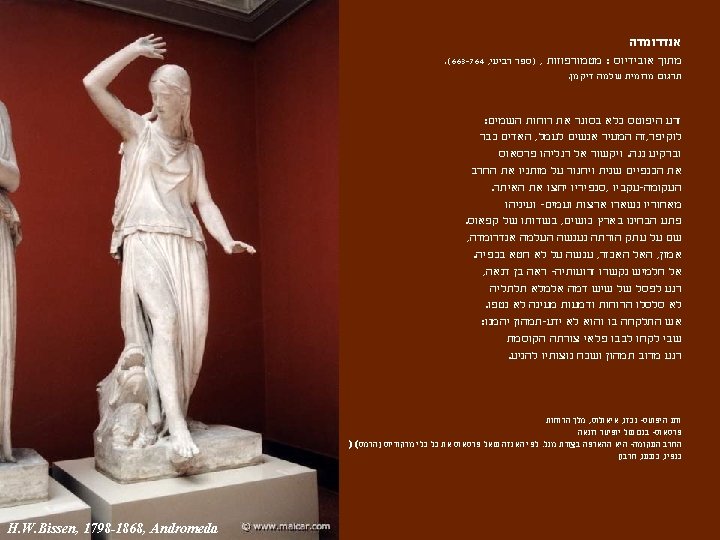
http: //www. artcyclopedia. com/Andromeda http: //www. theoi. com/Heros/Perseus 2. html : מקורות http: //www. mlahanas. de//Andromeda http: //www. wga. hu/index 1. html http: //www. hermitagemuseum. org/Andromeda http: //www. wikipaintings. org//andromeda http: //en. wikipedia. org/wiki/Andromeda_(mythology) תרגום מרומית שלמה דיקמן , מטמורפוזות / אובידיוס Philippe La Hire, The Constellation of Casiope , Andromeda & Perseus , 1705 אסף פלר : עריכה
- Slides: 68