
Peter Nortons Introduction to Computers Chapter 4 Storing



- Slides: 21
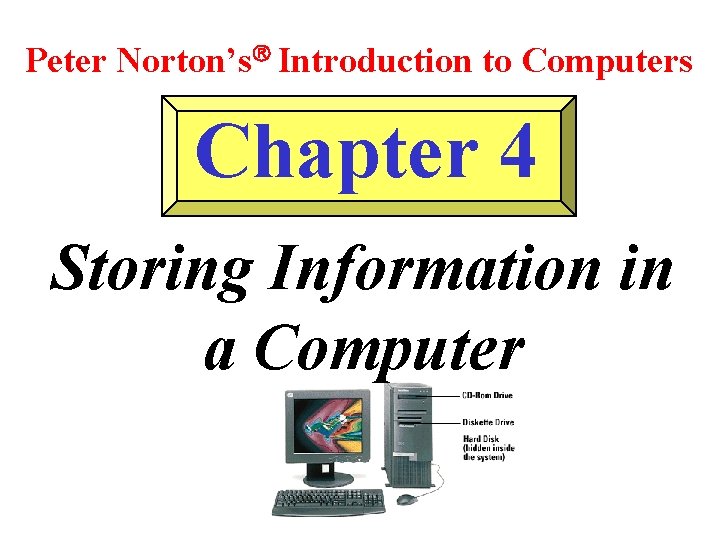
Peter Norton’s Introduction to Computers Chapter 4 Storing Information in a Computer
Learning Objectives: • List four common types of storage devices. • Name three common uses of floppy disks. • Name the four data disk areas on floppy and hard disks. • List three ways tape drives differ from disk drives. • Identify four types of optical storage devices. • Name and describe the four main disk drive interface standards.
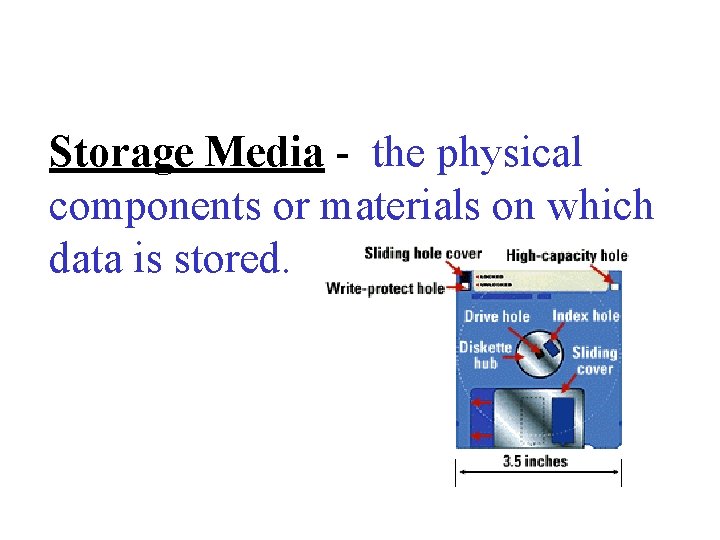
Storage Media - the physical components or materials on which data is stored.
Storage Devices - the hardware components that write data to, and read it from, storage media.
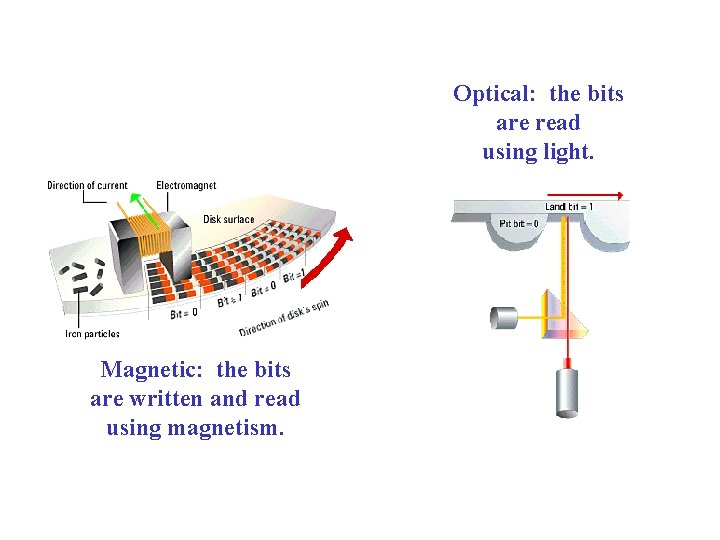
Types of Storage: • Magnetic • Optical
Optical: the bits are read using light. Magnetic: the bits are written and read using magnetism.
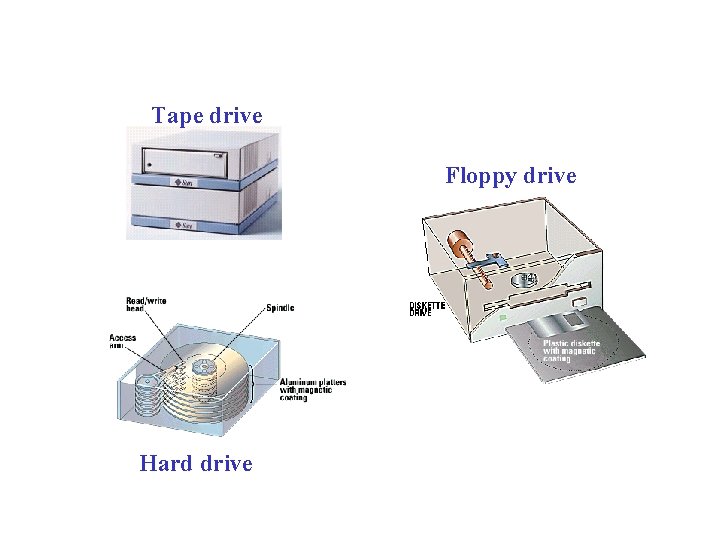
Magnetic Storage Devices: • Diskettes • Hard disks • Removable hard disks • Magnetic tape
Tape drive Floppy drive Hard drive
Optical Storage Devices: • Compact Disk Read-Only Memory (CD-ROM) • Write Once, Read Many (WORM) • Phase-Change Rewritable disks • Magneto-optical disks
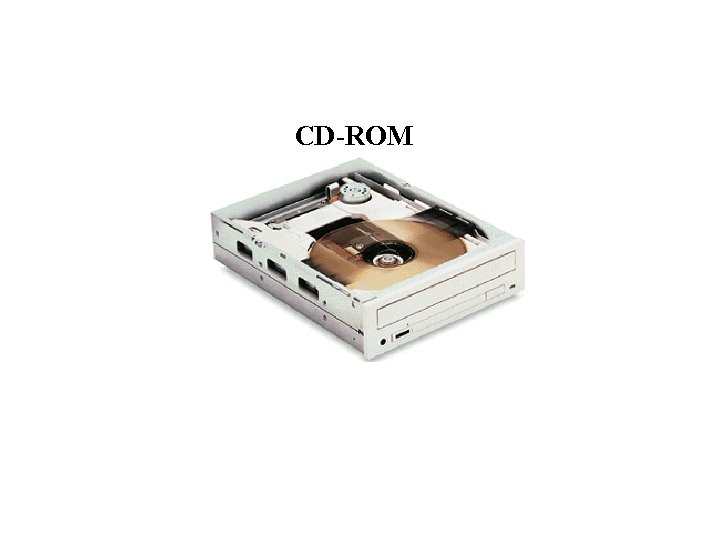
CD-ROM
Factors that Affect Drive Performance: • Average Access Time • Data-transfer Rate
Average Access Time - the average time it takes a read/write head to move from one place on the recording medium to any other place on the medium.
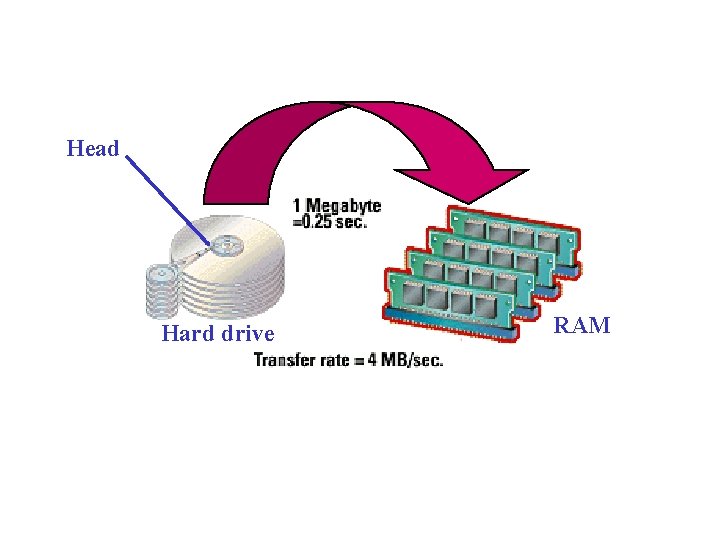
Data-transfer Rate - a measure of how long it takes the device to read or write a given amount of data.
Head Hard drive RAM
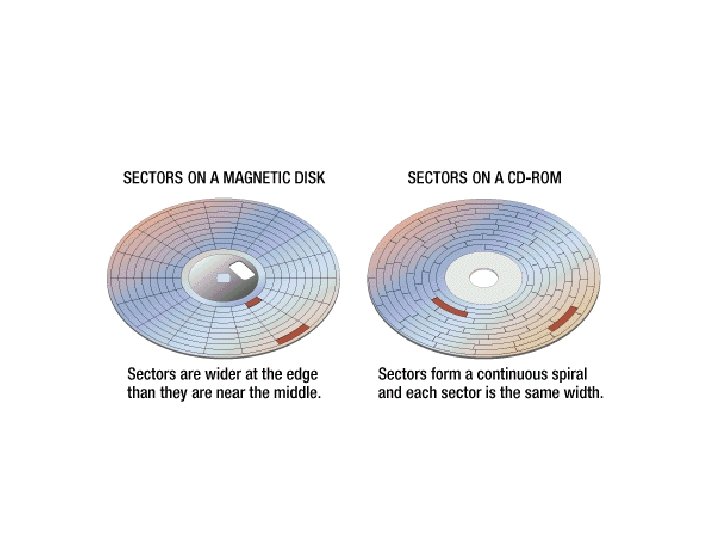
Formatting - the process of mapping a diskette by dividing it into Tracks and Sectors.
Tracks - a set of magnetic concentric circles. Sector - a pie-like slice of disk.
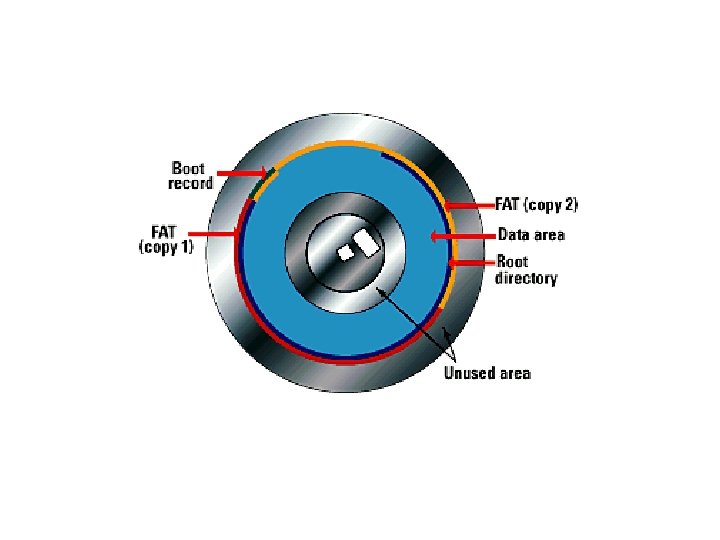
Four Areas of a Disk: • The boot record • The file-allocation table (FAT) • The root folder or directory • The data area
Drive-Interface Standards: • Integrated Drive Electronics (IDE) • Enhanced Small Device Interface (ESDI) • Small Computer System Interface (SCSI)
Learning Objectives: Chapter 4 Review • List four common types of storage devices. • Name three common uses of floppy disks. • Name the four data disk areas on floppy and hard disks. • List three ways tape drives differ from disk drives. • Identify four types of optical storage devices. • Name and describe the four main disk drive interface standards.