
Peter J Russell CHAPTER 1 Genetics An Introduction


- Slides: 72
Peter J. Russell CHAPTER 1 Genetics: An Introduction edited by Yue-Wen Wang Ph. D. Dept. of Agronomy, 台大農藝系 NTU 遺傳學 601 20000 1
Classical and Modern Genetics • 1. Humans have long understood that offspring tend to resemble parents, and have selectively bred animals and plants for many centuries. The principles of heredity were first explained by Mendel in the mid nineteenth century, using defined crosses of pea plants. 台大農藝系 遺傳學 601 20000 2
Classical and Modern Genetics • 2. In the last century, genetics has become an important biological tool, using mutants to gain an understanding of specific processes. This work has included: • a. Analyzing heredity in populations. • b. Analyzing evolutionary processes. • c. Identifying genes that control steps in processes. • d. Mapping genes. • e. Determining products of genes. • f. Analyzing molecular features of genes and regulation of gene expression. 台大農藝系 遺傳學 601 20000 3
Classical and Modern Genetics • 3. Recent important milestones in genetics include: • a. Berg’s construction (1972) of the first recombinant DNA molecule in vitro. • b. Boyer and Cohen’s first cloning (1973) of a recombinant DNA molecule. • c. Invention by Mullis (1986) of the polymerase chain reaction (PCR) to amplify specific DNA sequences 台大農藝系 遺傳學 601 20000 4
Classical and Modern Genetics • 4. Completion of genomic sequencing for an increasing number of organisms has spawned the new field of genomics. Knowledge of individual genes and their regulation will be important to basic biological research, as well as to specific applications such as medical genetics. • 5. Powerful new techniques in genetics raise important ethical, legal and social issues that will need thoughtful solutions. 台大農藝系 遺傳學 601 20000 5
Basic Concepts of Genetics • The concepts and processes of genetics summarized here are intended as a review from the introductory biology course. 台大農藝系 遺傳學 601 20000 6
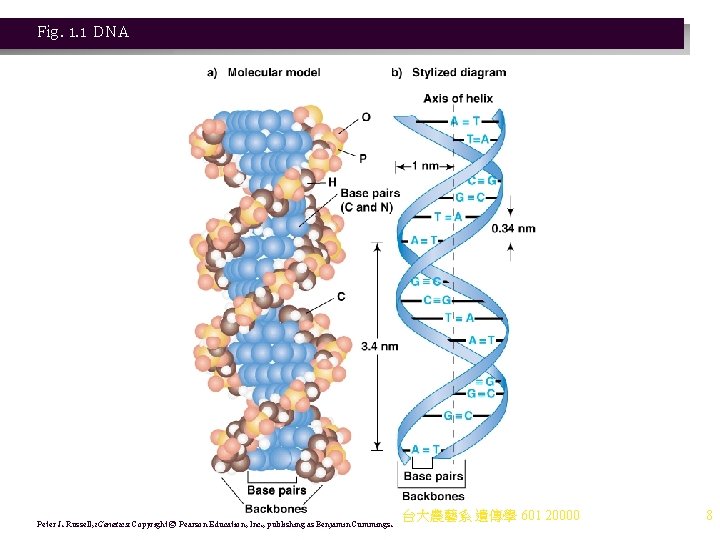
DNA, Genes and Chromosomes • 1. Genetic material of both eukaryotes and prokaryotes is DNA (deoxyribonucleic acid). Many viruses also have DNA, but some have RNA genomes instead. • 2. DNA has two chains, each made of nucleotides composed of a deoxyribose sugar, a phosphate group and a base. The chains form a double helix (Figure 1. 1). 台大農藝系 遺傳學 601 20000 7
Fig. 1. 1 DNA Peter J. Russell, i. Genetics: Copyright © Pearson Education, Inc. , publishing as Benjamin Cummings. 台大農藝系 遺傳學 601 20000 8
DNA, Genes and Chromosomes • 3. There are four bases in DNA: A (adenine), G (guanine), C (cytosine) and T (thymine). • a. In RNA, U (uracil) replaces T. • b. The sequence of bases determines the genetic information. • c. Genes are specific sequences of nucleotides that pass traits from parents to offspring. 台大農藝系 遺傳學 601 20000 9
DNA, Genes and Chromosomes • 4. Genetic material in cells is organized into chromosomes (literally “colored body” because it stains with biological dyes). • a. Prokaryotes generally have one circular chromosome. • b. Eukaryotes generally have: • i. Linear chromosomes in their nuclei, with different species having different numbers of chromosomes. • ii. DNA in organelles (e. g. , mitochondria and chloroplasts) that is usually a circular molecule. 台大農藝系 遺傳學 601 20000 10
Transmission of Genetic Information • 1. Transmission of traits from parents to offspring was addressed in Mendel’s work with peas. • a. He selected strains that differed in particular traits (e. g. , smooth or wrinkled seeds, purple or white flowers) (Figure 1. 2). • b. After making genetic crosses, he counted the appearance of traits in the progeny and analyzed the results mathematically. • c. He concluded that each organism contains two copies of each gene, one from each parent, and that alternative versions of the genes (alleles) exist (e. g. , pea seed color alleles are yellow, Y, and green, y). 台大農藝系 遺傳學 601 20000 11
Transmission of Genetic Information • 2. An organism that has the same alleles for a trait is homozygous (e. g. , YY or yy). An organism with two different alleles (e. g. , Yy) is heterozygous. • 3. The complete genetic makeup of an organism is its genotype. All observable traits of an organism are its phenotype. The genotype interacts with both internal and external environments of the organism to produce the phenotype. 台大農藝系 遺傳學 601 20000 12
Transmission of Genetic Information • 4. Mendel considered the factors controlling the phenotypes he observed in peas. • a. He deduced that the factors (now called genes) segregate randomly into gametes (Mendel’s first law, the Principle of Segregation). • b. The two factors for a particular trait assort independently of factors controlling other traits (Mendel’s second law, the Principle of Independent Assortment). • c. An example is seed color in peas: • i. True-breeding plants with yellow seeds (YY) are crossed with truebreeding plants with green seeds (yy). • ii. The progeny (F 1) have yellow seeds, and a heterozygous genotype (Yy). • iii. When the progeny self-pollinate, the F 2 contains threeyellow: 1 green, with genotypic ratios of 1 YY : 2 Yy : 1 yy. 台大農藝系 遺傳學 601 20000 13
Transmission of Genetic Information • 5. Mendel died in 1884, the material basis of gene segregation was shown until 1902. • 6. In 1902, Sutton and Boveri proposed that genes are on chromosomes and their movement explainable by the segregation of chromosomes during meiosis. 台大農藝系 遺傳學 601 20000 14
Expression of Genetic Information • 1. Gene expression is the process by which a gene produces its product and the product carries out its function. • 2. Beadle and Tatum (1941) showed in the fungus Neurospora crassa that there is a relationship between a gene and each enzyme needed in a biochemical pathway, resulting in the one gene-one enzyme hypothesis (now modified to one gene-one polypeptide, since not all proteins are enzymes and some require more than one polypeptide). 台大農藝系 遺傳學 601 20000 15
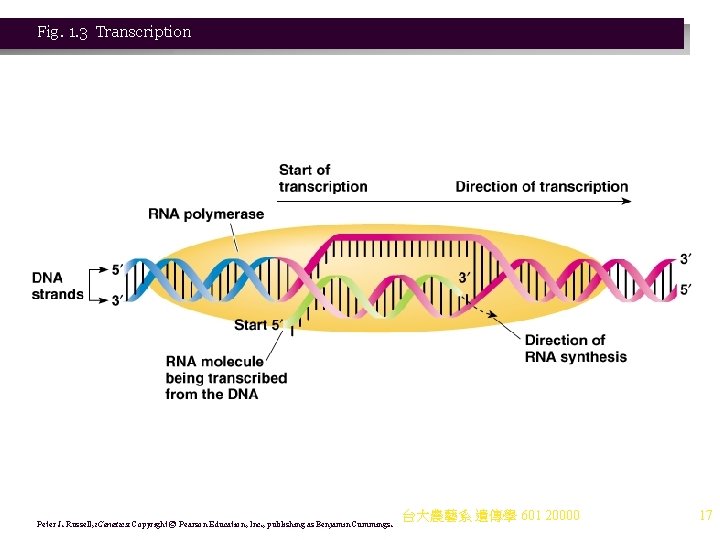
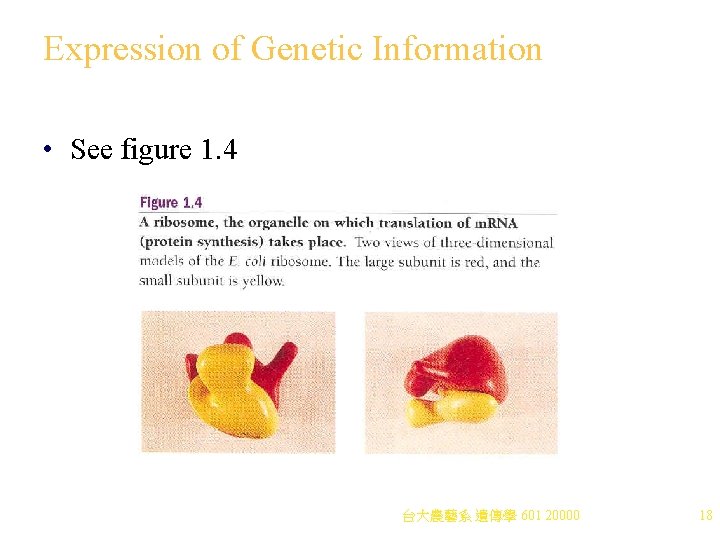
Expression of Genetic Information • 3. Production of proteins requires two steps: • a. Transcription involves an enzyme (RNA polymerase) making an RNA copy of part of one DNA strand. There are four main classes of RNA: • i. Messenger RNAs (m. RNA), which specify the amino acid sequence of a protein by using codons of the genetic code. • ii. Transfer RNAs (t. RNA). • iii. Ribosomal RNAs (r. RNA). • iv. Small nuclear RNAs (sn. RNA), found only in eukaryotes. • b. Translation converts the information in m. RNA into the amino acid sequence of a protein using ribosomes, large complexes of r. RNAs and proteins. 台大農藝系 遺傳學 601 20000 16
Fig. 1. 3 Transcription Peter J. Russell, i. Genetics: Copyright © Pearson Education, Inc. , publishing as Benjamin Cummings. 台大農藝系 遺傳學 601 20000 17
Expression of Genetic Information • See figure 1. 4 台大農藝系 遺傳學 601 20000 18
Expression of Genetic Information • 4. Only some of the genes in a cell are active at any given time, and activity also varies by tissue type and developmental stage. Regulation of gene expression is not completely understood, but it has been shown to involve an array of controlling signals. • a. Jacob and Monod (1961) proposed the operon model to explain prokaryotic gene regulation, showing that a genetic switch is used to control production of the enzymes needed to metabolize lactose. Similar systems control many genes in bacteria and their viruses. • b. Genetic switches used in eukaryotes are different and more complex, with much remaining to be learned about their function. 台大農藝系 遺傳學 601 20000 19
Sources of Genetic Variation • Genetic differences between organisms arise from mutations, recombination and selection. All three are necessary for the process of evolution. • a. Mutations (heritable changes in the genetic material) may be spontaneous or induced. Only those that escape the cell’s DNA repair mechanisms are fixed in the genome and passed to the next generation. • b. Recombination (exchange of genetic material) is produced by enzymes that cut and rejoin DNA molecules. • i. In eukaryotes, recombination via crossing-over is common in meiosis and occurs more rarely in mitosis. • ii. In prokaryotes, recombination may occur when two DNA molecules with similar sequences become aligned. • c. Selection (favoring particular combinations of genes in a given environment) was described by Darwin. Its main consequence is to change the frequency of genes affecting traits under selection. Different genotypes contribute alleles to the next generation in proportion to their selective advantage. 台大農藝系 遺傳學 601 20000 20
Geneticists and Genetics Research • 1. Enormous amounts of genetic research have been done, typically using the hypothetico-deductive method of investigation, which consists of: • a. Making observations. • b. Forming hypotheses to explain the observations. • c. Making experimental predictions based on the hypotheses. • d. Testing the predictions, resulting in new observations and another cycle of research. 台大農藝系 遺傳學 601 20000 21
Geneticists and Genetics Research • 2. Research is unpredictable, which helps motivate scientists by making the work exciting. (An example of unpredictability is Mc. Clintock’s work with corn kernel color, which led to the discovery of transposons). 台大農藝系 遺傳學 601 20000 22
The Subdisciplines of Genetics • 1. Genetics is often divided into four subdisciplines: • a. Transmission (classical) genetics deals with movement of genes • and genetic traits from parents to offspring, and with genetic recombination. • b. Molecular genetics deals with the molecular structure and function of genes. • c. Population genetics studies heredity in groups for traits determined by one or a few genes. • d. Quantitative genetics studies group hereditary for traits determined by many genes simultaneously. 台大農藝系 遺傳學 601 20000 23
The Subdisciplines of Genetics • 2. Historically, transmission genetics developed first, followed by population, quantitative and finally molecular genetics. • 3. Genes influence all aspects of an organism’s life, and are relevant to all fields of biology. 台大農藝系 遺傳學 601 20000 24
Basic and Applied Research • 1. Basic research is done to understand fundamental phenomena, regardless of usefulness for immediate applications. Most of the information in this book comes from basic research. The results of basic research are used to fuel basic and applied research. • 2. Applied research has the goal of an immediate application, and is important in agriculture and medicine, producing improved livestock and crop plants, as well as diagnostic tests and treatments for diseases. 台大農藝系 遺傳學 601 20000 25
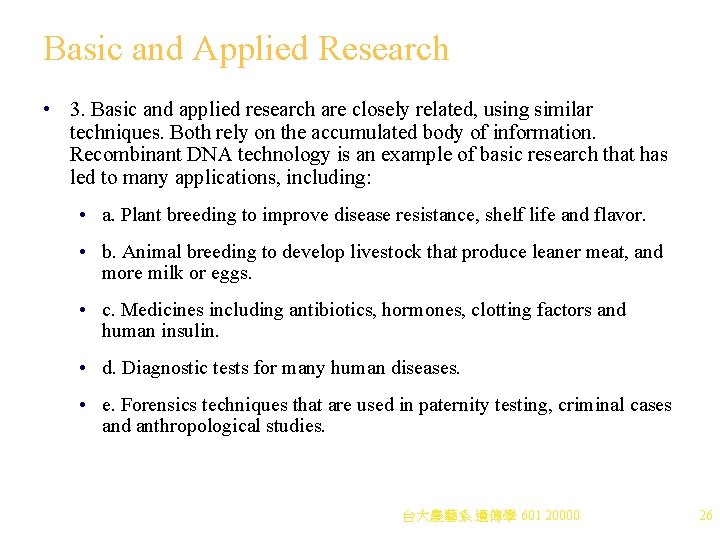
Basic and Applied Research • 3. Basic and applied research are closely related, using similar techniques. Both rely on the accumulated body of information. Recombinant DNA technology is an example of basic research that has led to many applications, including: • a. Plant breeding to improve disease resistance, shelf life and flavor. • b. Animal breeding to develop livestock that produce leaner meat, and more milk or eggs. • c. Medicines including antibiotics, hormones, clotting factors and human insulin. • d. Diagnostic tests for many human diseases. • e. Forensics techniques that are used in paternity testing, criminal cases and anthropological studies. 台大農藝系 遺傳學 601 20000 26
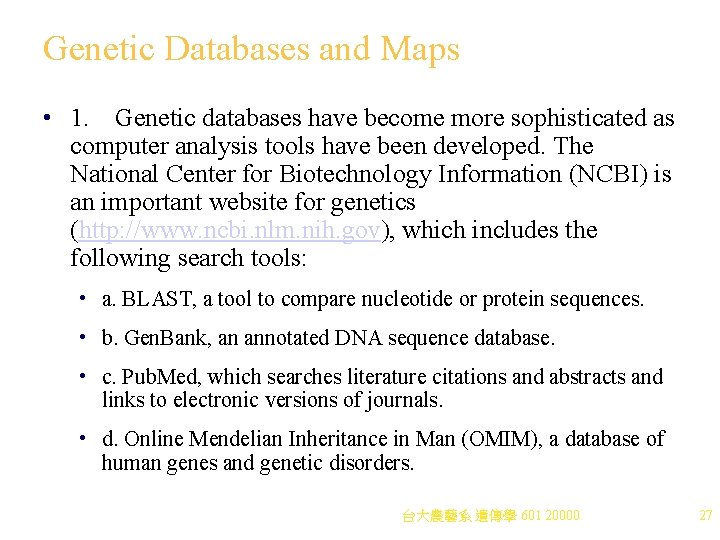
Genetic Databases and Maps • 1. Genetic databases have become more sophisticated as computer analysis tools have been developed. The National Center for Biotechnology Information (NCBI) is an important website for genetics (http: //www. ncbi. nlm. nih. gov), which includes the following search tools: • a. BLAST, a tool to compare nucleotide or protein sequences. • b. Gen. Bank, an annotated DNA sequence database. • c. Pub. Med, which searches literature citations and abstracts and links to electronic versions of journals. • d. Online Mendelian Inheritance in Man (OMIM), a database of human genes and genetic disorders. 台大農藝系 遺傳學 601 20000 27
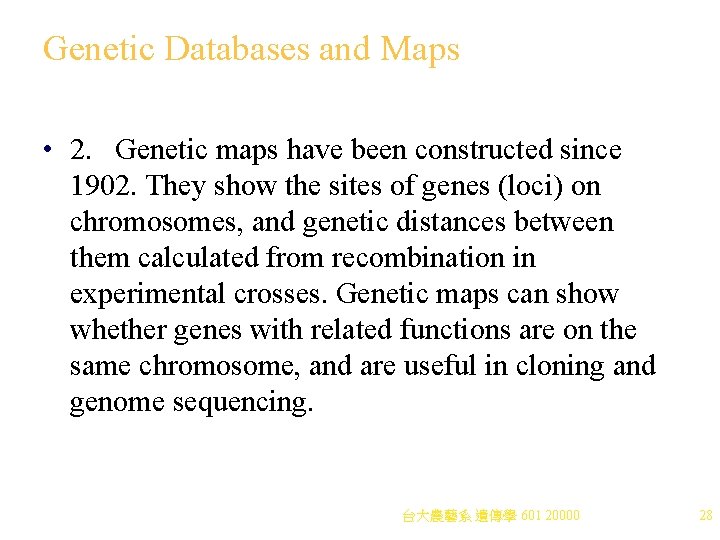
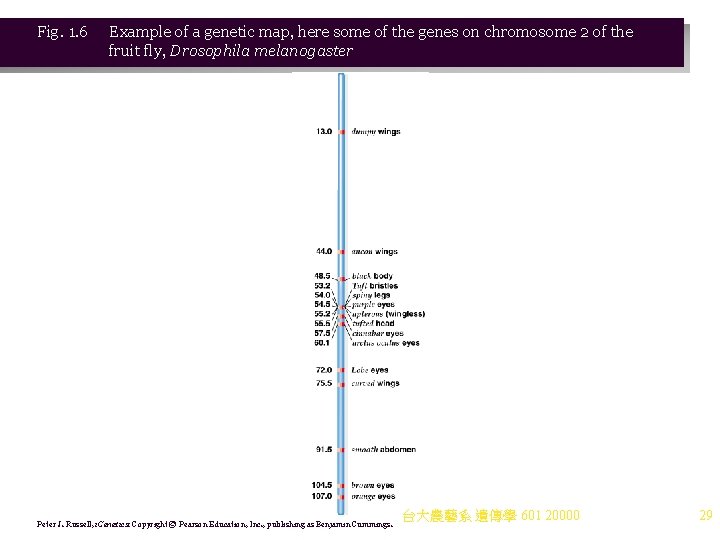
Genetic Databases and Maps • 2. Genetic maps have been constructed since 1902. They show the sites of genes (loci) on chromosomes, and genetic distances between them calculated from recombination in experimental crosses. Genetic maps can show whether genes with related functions are on the same chromosome, and are useful in cloning and genome sequencing. 台大農藝系 遺傳學 601 20000 28
Fig. 1. 6 Example of a genetic map, here some of the genes on chromosome 2 of the fruit fly, Drosophila melanogaster Peter J. Russell, i. Genetics: Copyright © Pearson Education, Inc. , publishing as Benjamin Cummings. 台大農藝系 遺傳學 601 20000 29
Model Organisms • 1. Many organisms are used in genetic research. Desirable qualities for an experimental organism include: • a. A well-known genetic history. • b. A short life cycle so generations can be studied in a relatively short time. • c. A large number of offspring from each mating. • d. Ease of growing and handling the organism. • e. Marked genetic variation within the population. 台大農藝系 遺傳學 601 20000 30
Cellular Reproduction • 1. Genes are transmitted to offspring during reproduction. The segregation of chromosomes results in the segregation of genes during meiosis in eukaryotic cells. • 2. Basic information to review: • a. Organizational features of eukaryotic cells, and differences from prokaryotes. • b. General structure of eukaryotic chromosomes. • c. Transmission of chromosomes during cell division by mitosis. • d. Transmission of chromosomes during reproduction by meiosis. 台大農藝系 遺傳學 601 20000 31
Eukaryotic Cells • 1. Eukaryotes keep their DNA in the nucleus, a discrete structure bounded by a nuclear envelope (absent in prokaryotes). • 2. Eukaryotes can be unicellular or multicellular. 台大農藝系 遺傳學 601 20000 32
Eukaryotic Cells • 3. These eukaryotes are used in much of current genetic research: • a. Saccharomyces cerevisiae (a unicellular baking yeast). • b. Drosophila melanogaster (fruit fly). • c. Caenorhabditis elegans (a nematode worm). • d. Arabidopsis thaliana (a small weed in the mustard family). • e. Mus musculus (mouse). • f. Homo sapiens (human). 台大農藝系 遺傳學 601 20000 33
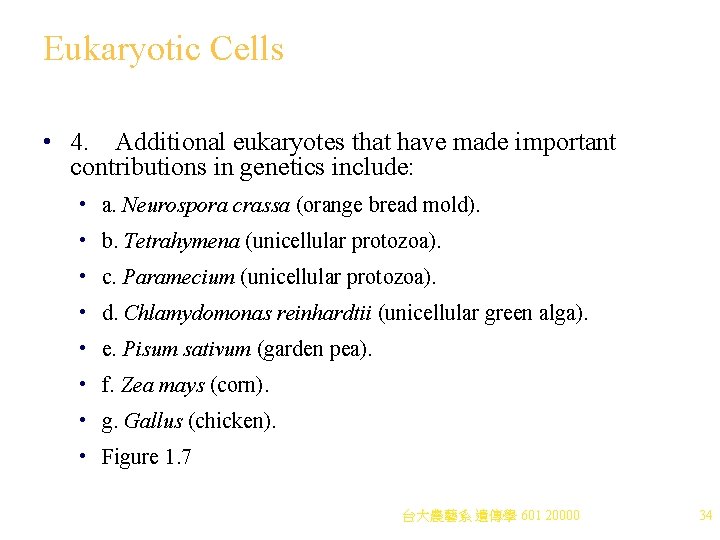
Eukaryotic Cells • 4. Additional eukaryotes that have made important contributions in genetics include: • a. Neurospora crassa (orange bread mold). • b. Tetrahymena (unicellular protozoa). • c. Paramecium (unicellular protozoa). • d. Chlamydomonas reinhardtii (unicellular green alga). • e. Pisum sativum (garden pea). • f. Zea mays (corn). • g. Gallus (chicken). • Figure 1. 7 台大農藝系 遺傳學 601 20000 34
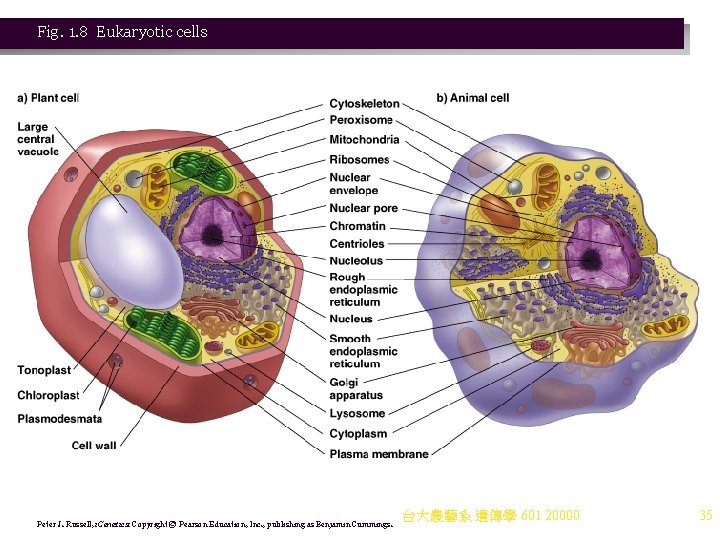
Fig. 1. 8 Eukaryotic cells Peter J. Russell, i. Genetics: Copyright © Pearson Education, Inc. , publishing as Benjamin Cummings. 台大農藝系 遺傳學 601 20000 35
Eukaryotic Cells • 5. Generalized features of higher plant and animal cells are (Figure 1. 8): • a. A plasma membrane encloses the cytoplasm in both. • b. Plant cells have a rigid cell wall. • c. In both, the nucleus contains DNA complexed with proteins and organized into chromosomes. • d. The nuclear envelope is two layers of semipermeable membrane with pores that allow movement of materials (e. g. , ribosomes) between nucleoplasm and cytoplasm. 台大農藝系 遺傳學 601 20000 36
Eukaryotic Cells • e. The cytoplasm contains many materials and organelles. Important in genetics are: • i. Centrioles (basal bodies) are in cytoplasm of nearly all animals, but not in most plants. In animals, a pair of centrioles is associated with the centrosome region of the cytoplasm where spindle fibers are organized in mitosis or meiosis. • ii. The endoplasmic reticulum (ER) is a double membrane system that runs through the cell. ER with ribosomes attached collects proteins that will be secreted from the cell or localized to an organelle. • iii. Ribosomes synthesize proteins, either free in the cytoplasm or attached to the cytoplasmic side of the ER. • iv. Mitochondria are large organelles surrounded by double membrane that play a key role in energy processing for the cell. They contain their own DNA encoding some mitochondrial proteins, r. RNAs and t. RNAs. • v. Chloroplasts are photosynthetic structures that occur in plants. The organelle has a triple membrane layer, and includes a genome encoding some of the genes needed for organelle functions. 台大農藝系 遺傳學 601 20000 37
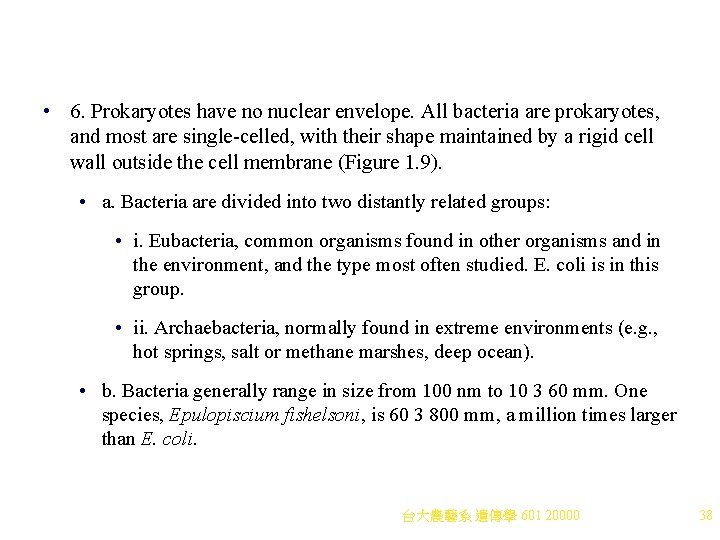
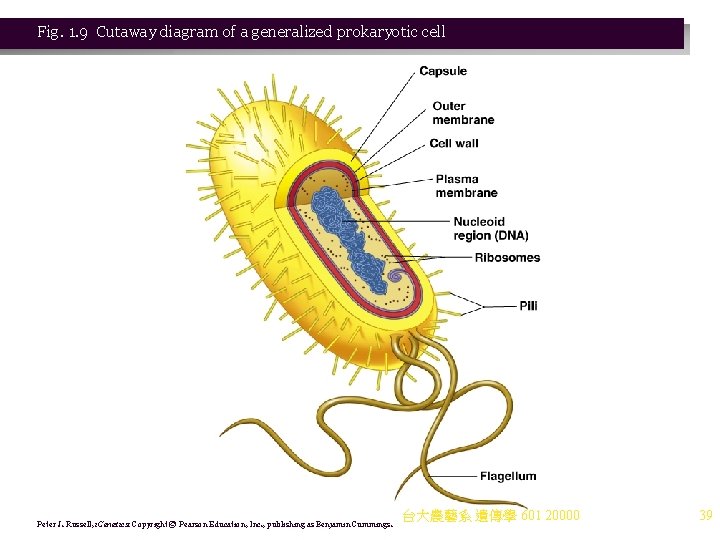
• 6. Prokaryotes have no nuclear envelope. All bacteria are prokaryotes, and most are single-celled, with their shape maintained by a rigid cell wall outside the cell membrane (Figure 1. 9). • a. Bacteria are divided into two distantly related groups: • i. Eubacteria, common organisms found in other organisms and in the environment, and the type most often studied. E. coli is in this group. • ii. Archaebacteria, normally found in extreme environments (e. g. , hot springs, salt or methane marshes, deep ocean). • b. Bacteria generally range in size from 100 nm to 10 3 60 mm. One species, Epulopiscium fishelsoni, is 60 3 800 mm, a million times larger than E. coli. 台大農藝系 遺傳學 601 20000 38
Fig. 1. 9 Cutaway diagram of a generalized prokaryotic cell Peter J. Russell, i. Genetics: Copyright © Pearson Education, Inc. , publishing as Benjamin Cummings. 台大農藝系 遺傳學 601 20000 39
Eukaryotic Chromosomes • 1. Eukaryotes have multiple linear chromosomes in a number characteristic of the species. Most have two versions of each chromosome, and so are diploid (2 N). • a. Diploid cells are produced by haploid (N) gametes that fuse to form a zygote. The zygote then undergoes development, forming a new individual. • b. Examples of diploid organisms are humans (23 pairs) and Drosophila melanogaster (4 pairs). The yeast Saccharomyces cerevisiae is haploid (16 chromosomes). 台大農藝系 遺傳學 601 20000 40
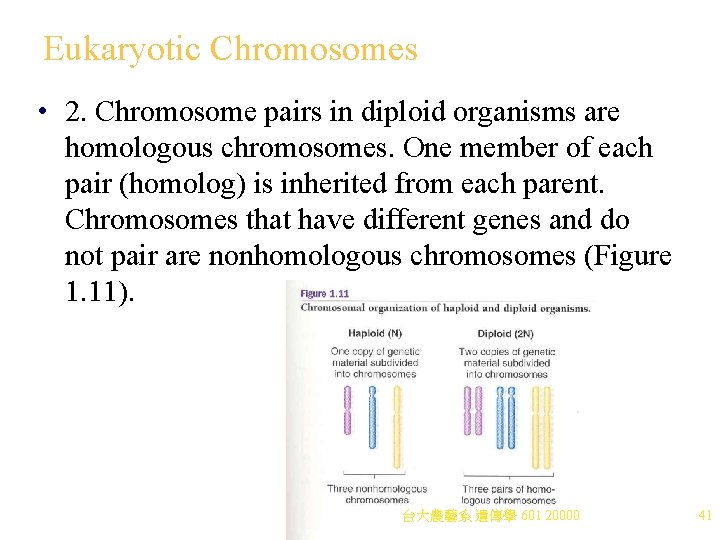
Eukaryotic Chromosomes • 2. Chromosome pairs in diploid organisms are homologous chromosomes. One member of each pair (homolog) is inherited from each parent. Chromosomes that have different genes and do not pair are nonhomologous chromosomes (Figure 1. 11). 台大農藝系 遺傳學 601 20000 41
Eukaryotic Chromosomes • 3. Animals and some plants have male and female cells with distinct chromosome sets, due to sex chromosomes. One sex has a matched pair (e. g. , human females with XX) and the other has an unmatched pair (human male with XY). Autosomes are chromosomes other than sex chromosomes. 台大農藝系 遺傳學 601 20000 42
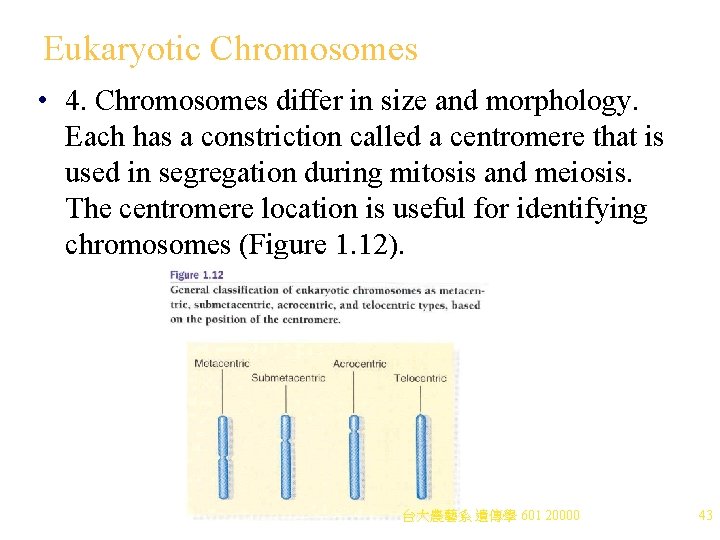
Eukaryotic Chromosomes • 4. Chromosomes differ in size and morphology. Each has a constriction called a centromere that is used in segregation during mitosis and meiosis. The centromere location is useful for identifying chromosomes (Figure 1. 12). 台大農藝系 遺傳學 601 20000 43
Eukaryotic Chromosomes • a. Metacentric means the centromere is approximately in the center of the chromosome, producing two equal arms. • b. Submetacentric means one arm is somewhat longer than the other. • c. Acrocentric chromosomes have one long arm and a short stalk and often a bulb (satellite) as the other arm. • d. Telocentric chromosomes have only one arm, because the centromere is at the end. 台大農藝系 遺傳學 601 20000 44
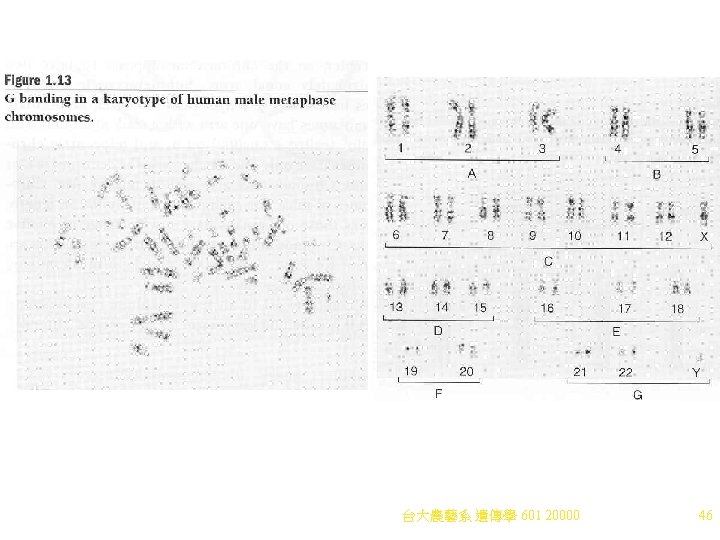
Eukaryotic Chromosomes • 5. A karyotype shows the complete set of chromosomes in a cell. Metaphase chromosomes are used because they are easiest to see under the microscope after staining. The karyotype is species-specific. • a. The karyotype for a normal human male has 22 pairs of autosomes, and 1 each of X and Y (Figure 1. 13). • b. Human chromosomes are numbered from largest (1) to smallest (although 21 is actually smaller than 22). • c. Human chromosomes with similar morphologies are grouped (A through G). 台大農藝系 遺傳學 601 20000 45
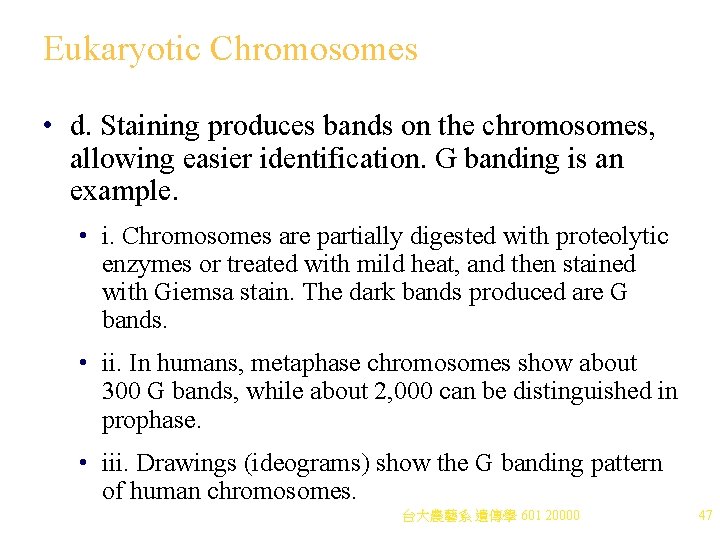
Eukaryotic Chromosomes • d. Staining produces bands on the chromosomes, allowing easier identification. G banding is an example. • i. Chromosomes are partially digested with proteolytic enzymes or treated with mild heat, and then stained with Giemsa stain. The dark bands produced are G bands. • ii. In humans, metaphase chromosomes show about 300 G bands, while about 2, 000 can be distinguished in prophase. • iii. Drawings (ideograms) show the G banding pattern of human chromosomes. 台大農藝系 遺傳學 601 20000 47
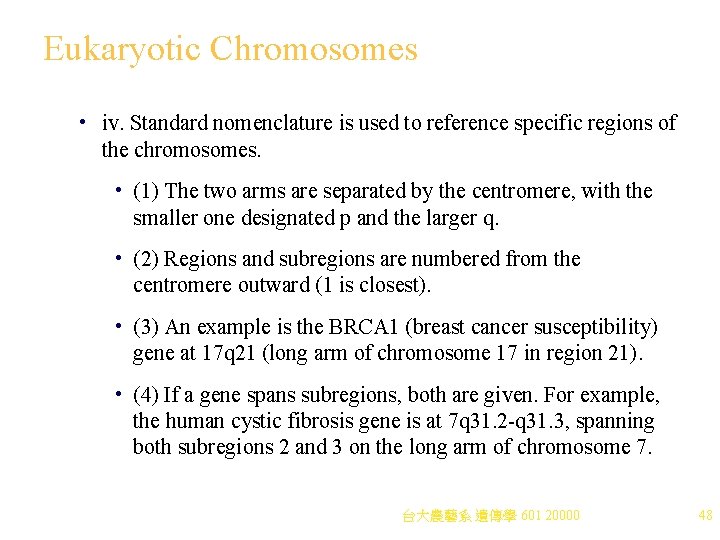
Eukaryotic Chromosomes • iv. Standard nomenclature is used to reference specific regions of the chromosomes. • (1) The two arms are separated by the centromere, with the smaller one designated p and the larger q. • (2) Regions and subregions are numbered from the centromere outward (1 is closest). • (3) An example is the BRCA 1 (breast cancer susceptibility) gene at 17 q 21 (long arm of chromosome 17 in region 21). • (4) If a gene spans subregions, both are given. For example, the human cystic fibrosis gene is at 7 q 31. 2 -q 31. 3, spanning both subregions 2 and 3 on the long arm of chromosome 7. 台大農藝系 遺傳學 601 20000 48
Mitosis • Mitosis animation 台大農藝系 遺傳學 601 20000 49
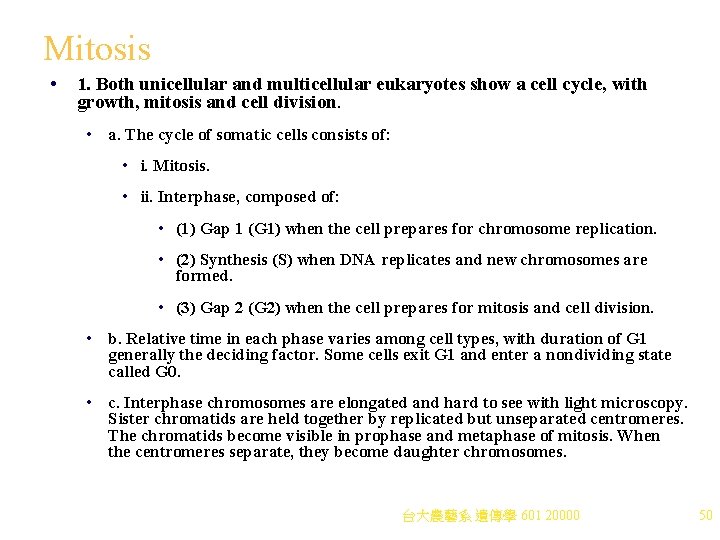
Mitosis • 1. Both unicellular and multicellular eukaryotes show a cell cycle, with growth, mitosis and cell division. • a. The cycle of somatic cells consists of: • i. Mitosis. • ii. Interphase, composed of: • (1) Gap 1 (G 1) when the cell prepares for chromosome replication. • (2) Synthesis (S) when DNA replicates and new chromosomes are formed. • (3) Gap 2 (G 2) when the cell prepares for mitosis and cell division. • b. Relative time in each phase varies among cell types, with duration of G 1 generally the deciding factor. Some cells exit G 1 and enter a nondividing state called G 0. • c. Interphase chromosomes are elongated and hard to see with light microscopy. Sister chromatids are held together by replicated but unseparated centromeres. The chromatids become visible in prophase and metaphase of mitosis. When the centromeres separate, they become daughter chromosomes. 台大農藝系 遺傳學 601 20000 50
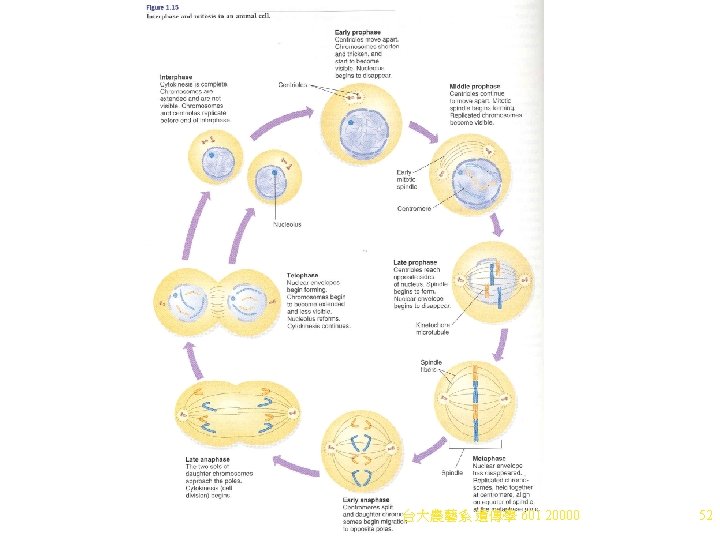
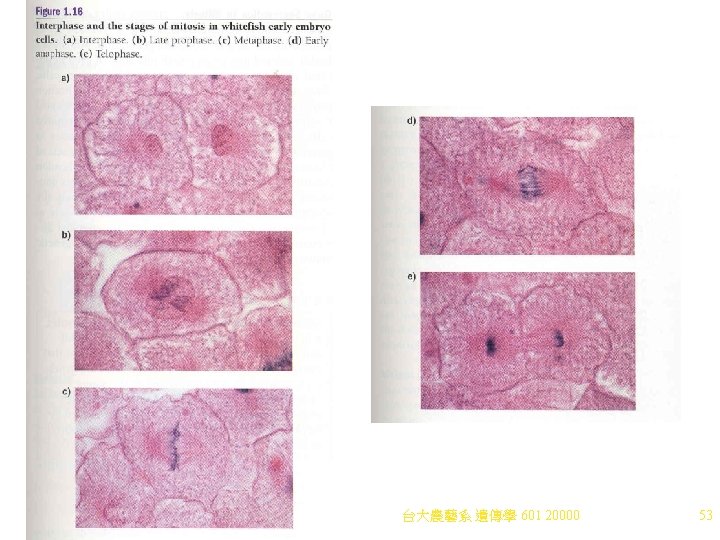
Mitosis • Mitosis is a continuous process, but geneticists divide it into 4 cytologically distinguishable stages (Figures 1. 15 and 1. 16): 台大農藝系 遺傳學 601 20000 51
Prophase is characterized by chromosomes condensing to a form visible by light microscopy. • i. The mitotic spindle, composed of microtubules made of tubulins, begins to form. • ii. In animal cells, the centrioles replicate and become the focus for the aster (radial array of microtubules). During prophase, asters move from near each other and the nuclear envelope to the poles of the cell, spanned by the mitotic spindle. • iii. The nucleoli in the nucleus cease to be discrete areas. • iv. The nuclear envelope breaks down. • v. Kinetochores form on the centromeres and become attached to kinetochore microtubules (Figure 1. 17). 台大農藝系 遺傳學 601 20000 54
Metaphase begins when the nuclear envelope has completely disappeared. • i. The kinetochore microtubules orient the chromosomes with their centromeres in a plane between the spindle poles, the metaphase plate. • ii. A protein scaffold causes the chromosomes to reach a highly condensed state (Figure 1. 18). 台大農藝系 遺傳學 601 20000 55
Anaphase begins when the centromeres of the sister chromatids separate. • i. The chromatids separate (disjunction) and daughter chromosomes move toward opposite poles by kinetochore microtubules. • ii. Shape of the chromosomes moving toward the poles is defined by their centromere locations. • iii. Cytokinesis usually begins near the end of anaphase. 台大農藝系 遺傳學 601 20000 56
Telophase is when migration of daughter chromosomes is completed. • i. Chromosomes begin to uncoil and form interphase chromosomes. • ii. Nuclear envelope forms around each chromosome group. • iii. Spindle microtubules disappear. • iv. Nucleoli reform. • v. Nuclear division is complete. 台大農藝系 遺傳學 601 20000 57
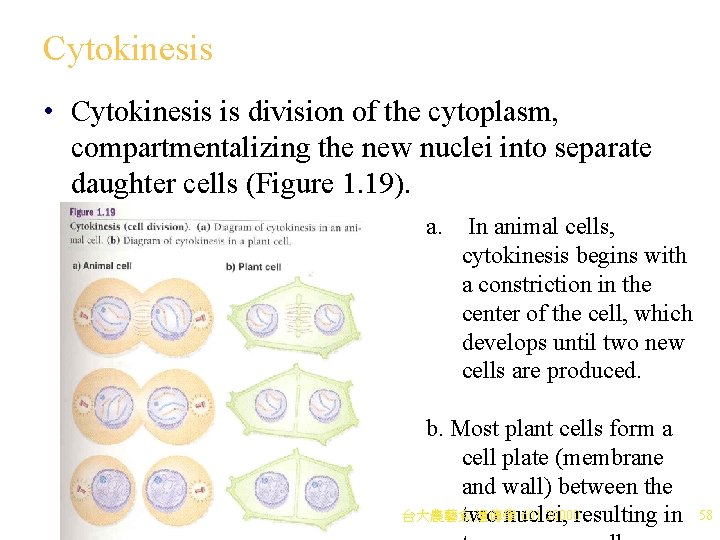
Cytokinesis • Cytokinesis is division of the cytoplasm, compartmentalizing the new nuclei into separate daughter cells (Figure 1. 19). a. In animal cells, cytokinesis begins with a constriction in the center of the cell, which develops until two new cells are produced. b. Most plant cells form a cell plate (membrane and wall) between the 台大農藝系 遺傳學 601 20000 resulting in two nuclei, 58
Mitosis • Gene segregation in mitosis is highly ordered, so that each new cell receives a complete set of chromosomes (pairs in a diploid cell, and one of each type in a haploid cell). 台大農藝系 遺傳學 601 20000 59
Meiosis • Meiosis animation • Meiosis is two successive divisions of a diploid nucleus after only one DNA replication cycle. The result is haploid gametes (animals) or meiospores (plants). The two rounds of division in meiosis are meiosis I and meiosis II, each with a series of stages. Cytokinesis usually accompanies meiosis, producing four haploid cells from a single diploid cell. 台大農藝系 遺傳學 601 20000 60
Meiosis I is when the chromosome information is reduced from diploid to haploid. It has four stages: • Prophase I • Leptonema • Zygonema • Pachynema • Diplonema • diakinesis • Metaphase I • Anaphase I • Telophase I 台大農藝系 遺傳學 601 20000 61
Meiosis I Prophase I - leptonema • Prophase I is very similar to prophase of mitosis, except that homologous chromosomes pair and undergo crossing-over. • i. Leptonema is when chromosomes begin to coil, committing the cell to the meiotic process. Homologous chromosomes pair during the leptomene stage. 台大農藝系 遺傳學 601 20000 62
Meiosis I Prophase I - zygonema • ii. Crossing-over is reciprocal exchange of chromosome segments between homologous chromosomes. If the homologs are not identical, new gene combinations (recombinant chromosomes) can result, but usually no genetic material is added or lost. • iii. In zygonema, synapsis occurs. Synapsis is a tight association between homologous chromosomes. The synaptonemal complex consists of a tetrad of the four chromatids at maximum condensation. 台大農藝系 遺傳學 601 20000 63
Meiosis I Prophase I - pachynema • iv. Pachynema follows, when the synaptonemal complex is disassembled and chromosomes start to elongate. 台大農藝系 遺傳學 601 20000 64
Meiosis I Prophase I - diplonema • v. Diplonema is when chromosomes begin to move apart, and chiasmata (singular is chiasma) formed by crossingover become visible (Figure 1. 21). • (1) Human oocytes arrest in diplonema in the 7 th month of fetal development, and remain there until an oocyte is activated to prepare for ovulation. • (2) Preparation for ovulation takes the oocyte through meiosis I. • (3) Fertilization causes meiosis II to occur, allowing fusion with the sperm nucleus to form a zygote. 台大農藝系 遺傳學 601 20000 65
Meiosis I Prophase I - diakinesis • vi. Diakinesis involves breakdown of the nucleoli and nuclear envelope, and assembly of the spindle. This is the phase where chromosomes are most easily counted. • vii. Sex chromosomes are not homologous, but behave as if they were due to a pseudoautosomal region shared between X and Y. 台大農藝系 遺傳學 601 20000 66
Meiosis I metaphase I, anaphase I, telophase I • b. Metaphase I starts with the nuclear envelope completely broken down, bivalents (pairs of homologs) aligned at the equatorial plane, the spindle completely formed, and microtubules attached to kinetochores. It is distinguishable from metaphase of mitosis because independent alignment of homologous chromosomes does not occur. • c. Anaphase I is when bivalents separate, with chromosomes of each homologous pair disjoining. Resulting dyads migrate toward opposite poles, where new nuclei will form. This migration assumes that: • i. Centromeres derived from each parent will migrate randomly toward each pole. • ii. Each pole will receive a haploid complement of replicated centromeres with associated chromosomes. • iii. Sister chromatids will remain attached to each other (the major difference from mitosis). • d. Telophase I has dyads completing migration to the poles, and usually formation of a nuclear envelope around each haploid grouping. Cytokinesis follows in most species, forming two haploid cells. 台大農藝系 遺傳學 601 20000 67
Meiosis II is very similar to mitotic division. • a. Prophase II involves chromosome condensation. • b. Metaphase II includes spindle formation, with centromeres lining up on the equator. • c. Anaphase II involves splitting of the centromeres, with chromosomes pulled to opposite poles. • d. Telophase II takes place as a nuclear envelope forms around each set of chromosomes. • e. Cytokinesis usually takes place, and chromosomes become elongated and invisible with light microscopy. 台大農藝系 遺傳學 601 20000 68
Meiosis v. s. mitosis • 4. After both rounds of meiotic division, four haploid cells (gametes in animals) are usually produced. Each has one chromosome from each homologous pair, but these are not exact copies due to crossing-over. Figure 1. 22 compares mitosis and meiosis. 台大農藝系 遺傳學 601 20000 69
Meiosis has three significant results • a. Haploid cells are produced because two rounds of division follow only one round of chromosome replication. Fusion of haploid cells restores the diploid number, maintaining a constant chromosome number through generations in sexually reproducing organisms. • b. Alignment of paternally and maternally derived chromosomes is random in metaphase I, resulting in random combinations of chromosomes in each nucleus generated (Figure 1. 24). • i. The number of possible chromosome arrangements at the meiosis I metaphase plate is 2 n 21 (n is the number of chromosome pairs). • ii. The number of possible chromosome combinations in nuclei produced by meiosis is 2 n. • iii. Due to differences between paternally and maternally derived chromosomes, many possibilities exist. Nuclei produced by meiosis will be genetically distinct from parental cells, and from one another. • c. Crossing-over between maternal and paternal chromatid pairs during meiosis I provides still more variation, making the number of possible progeny nuclei extremely large. 台大農藝系 遺傳學 601 20000 70
Meiosis in animals and plants is somewhat distinct animal • a. In diploid animals, the only haploid cells are gametes produced by meiosis and used in sexual reproduction. Gametes are produced by specialized cells (Figure 1. 26). • • i. In males, spermatogenesis produces spermatozoa within the testes. • (1) Primordial germ cells (primary spermatogonia) undergo mitosis to produce secondary spermatogonia. • (2) Secondary spermatogonia transform into primary spermatocytes (meiocytes) which undergo meiosis I, giving rise to two secondary spermatocytes. • (3) Each secondary spermatocyte undergoes meiosis II, producing haploid spermatids that differentiate into spermatozoa. ii. In females, oogenesis produces eggs (oocytes) in the ovary. • (1) Primordial germ cells (primary oogonia) undergo mitosis to produce secondary oogonia. • (2) Secondary oogonia transform into primary oocytes, which grow until the end of oogenesis. • (3) Primary oocytes undergo meiosis I and unequal cytokinesis, producing a large secondary oocyte, and a small cell called the first polar body. • (4) The secondary oocyte produces two haploid cells in meiosis II. One is a very small cell, the second polar body, and the other rapidly matures into an ovum. • (5) The first polar body may or may not divide during meiosis I. Polar bodies have no function in most species and degenerate, so that a round of meiosis produces only one viable gamete, the ovum. Human oocytes form in the fetus, completing meiosis only after fertilization. 台大農藝系 遺傳學 601 20000 71
Meiosis in animals and plants is somewhat distinct - plant • b. Sexually reproducing plants typically have two phases, gametophyte (haploid) in which gametes are produced, and sporophyte (diploid) in which meiosis produces haploid spores. • i. Angiosperms (flowering plants) contain stamens (male) and pistils (female) in either the same or different flowers. • • (1) Stamens consist of a stalk (filament) and anther, which releases pollen grains. Pollen grains are immature gametophytes (gamete-producing structures). • (2) The pistil contains female gametophytes, and consists of a stigma (the surface to which pollen sticks), a style, down which the pollen tube grows, and an ovary at the base which contains the ovules. Each ovule contains a female gametophyte (embryo sac) with a single egg cell. After fertilization, the ovule develops into a seed. ii. Plants are unique among living organisms in producing gametes from gametophytes. The two distinct reproductive phases are called alternation of generations, with meiosis and fertilization the transition points between stages. • (1) Meiosis creates haploid spores that produce the haploid gametophyte generation. In angiosperms, the spores become the pollen and embryo sac that are used in fertilization. • (2) Fertilization begins the diploid sporophyte generation, producing a plant that will ultimately make spores by meiosis, completing the cycle. 台大農藝系 遺傳學 601 20000 72