
Pests Diseases Insects Anatomy Insects Small animals that
- Slides: 51
Pests & Diseases
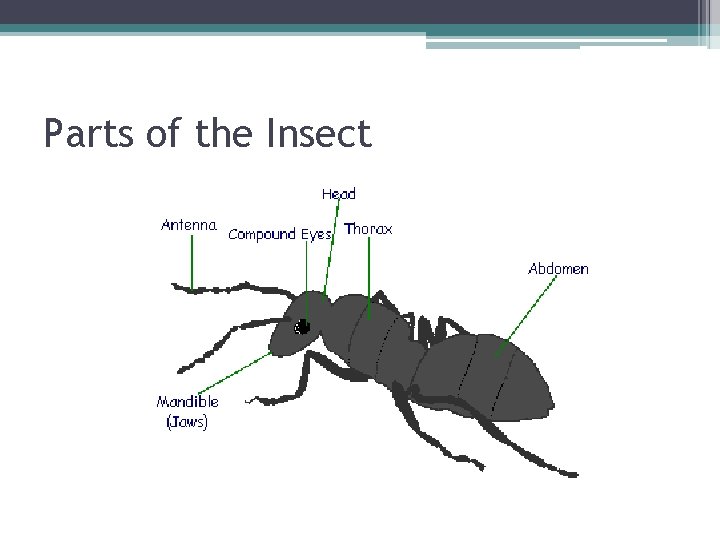
Insects - Anatomy • Insects ▫ Small animals that have three body regions and three pairs or six legs. ▫ The three body regions are…. �Head �Thorax �Abdomen
Parts of the Insect
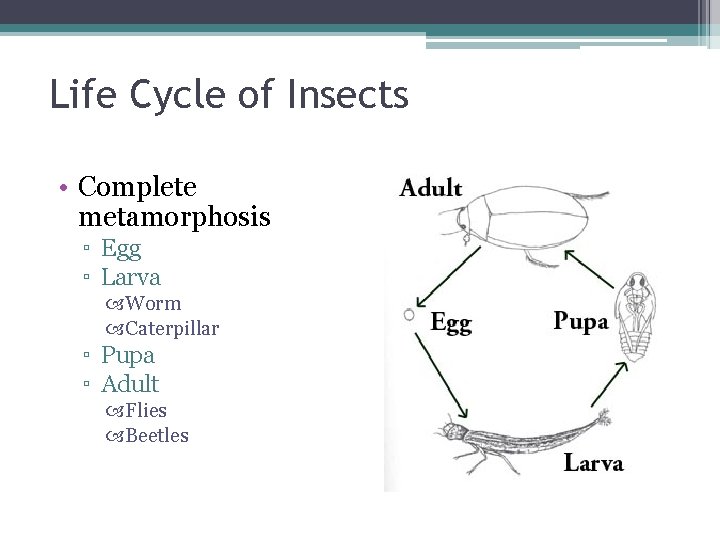
Life Cycle of Insects • Complete metamorphosis ▫ Egg ▫ Larva Worm Caterpillar ▫ Pupa ▫ Adult Flies Beetles
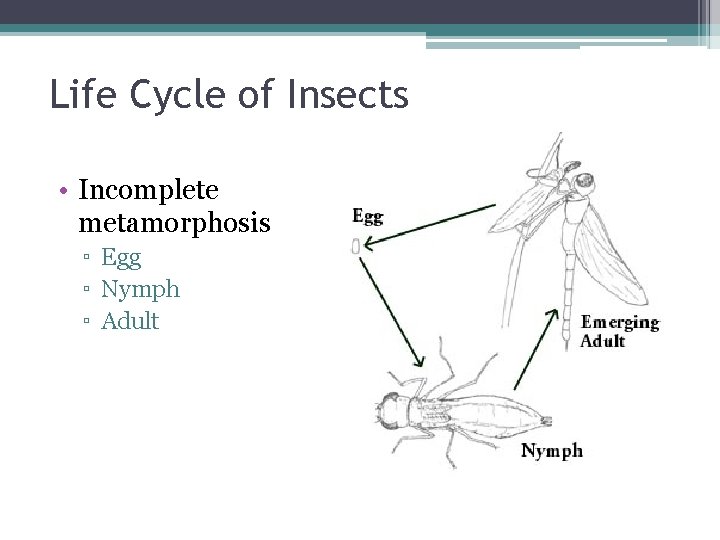
Life Cycle of Insects • Incomplete metamorphosis ▫ Egg ▫ Nymph ▫ Adult
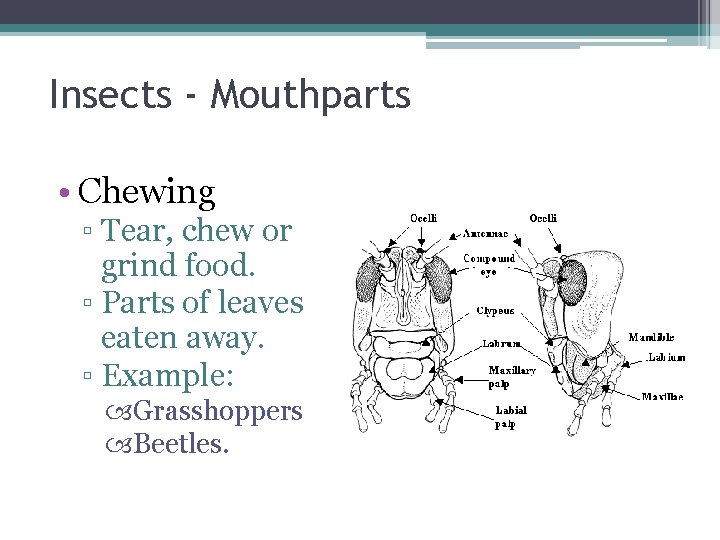
Insects - Mouthparts • Chewing ▫ Tear, chew or grind food. ▫ Parts of leaves eaten away. ▫ Example: Grasshoppers Beetles.
Insects - Mouthparts • Piercing-sucking ▫ Punctures plant & sucks sap. • Rasping-sucking ▫ Rasps or breaks surface and suck sap. ▫ Example: Thrips
Insects - Mouthparts • Siphoning ▫ Have a coiled tube they dip into liquid food such as nectar and draw it in. • Sponging ▫ Have two sponge-like structures that collect liquid food and move it into the food canal. ▫ Example: Housefly
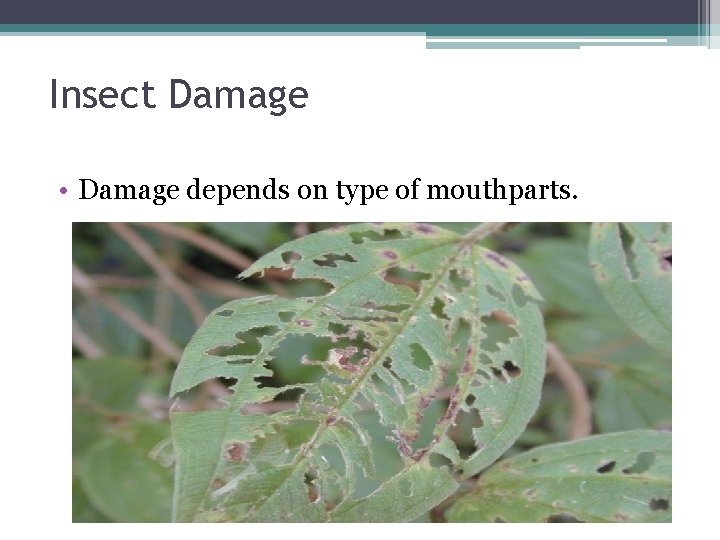
Insect Damage • Damage depends on type of mouthparts.
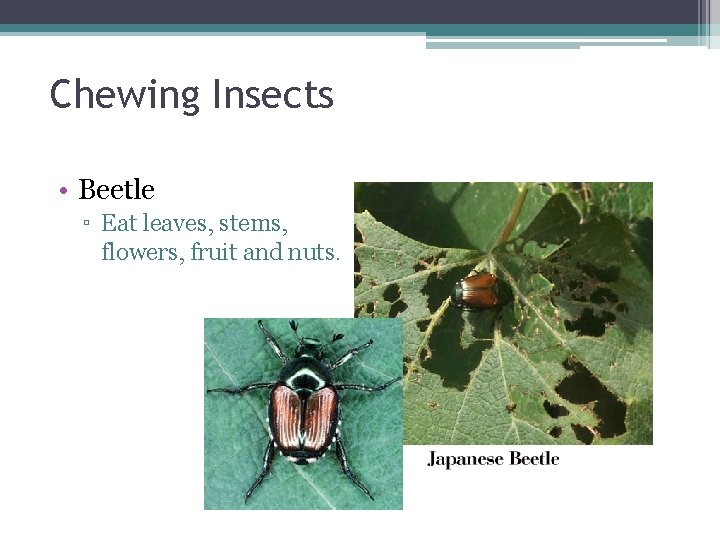
Chewing Insects • Beetle ▫ Eat leaves, stems, flowers, fruit and nuts.
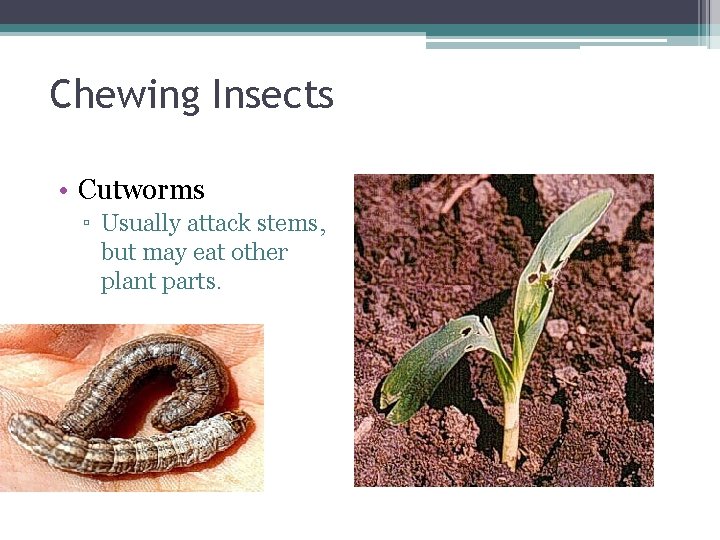
Chewing Insects • Cutworms ▫ Usually attack stems, but may eat other plant parts.
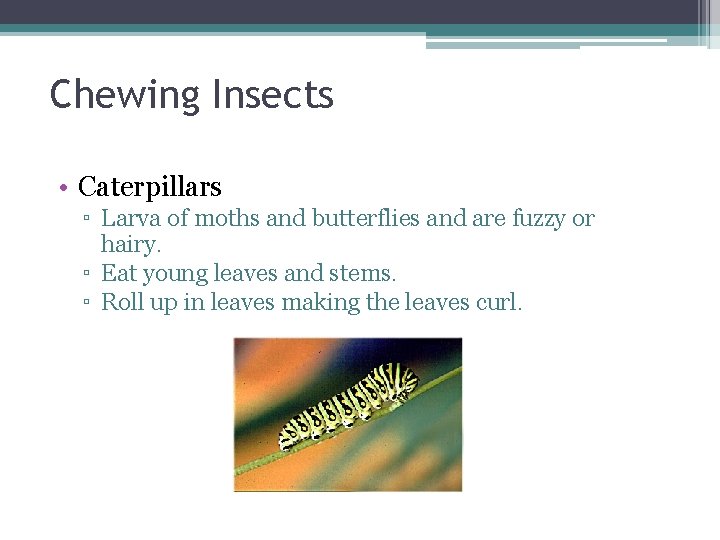
Chewing Insects • Caterpillars ▫ Larva of moths and butterflies and are fuzzy or hairy. ▫ Eat young leaves and stems. ▫ Roll up in leaves making the leaves curl.
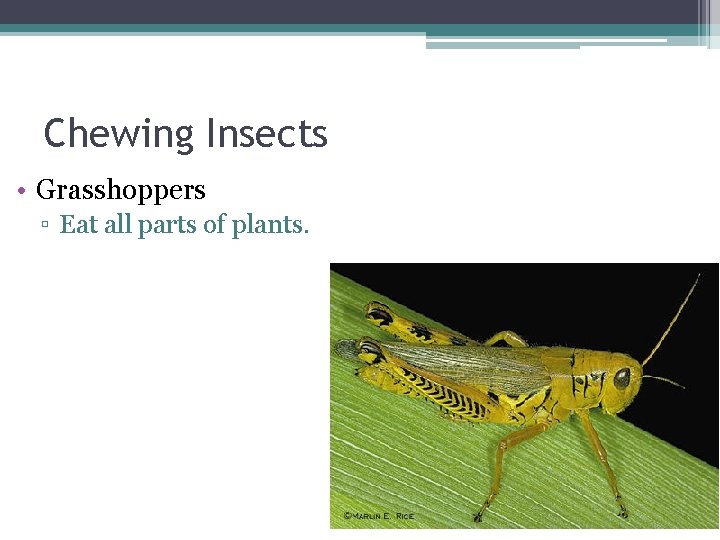
Chewing Insects • Grasshoppers ▫ Eat all parts of plants.
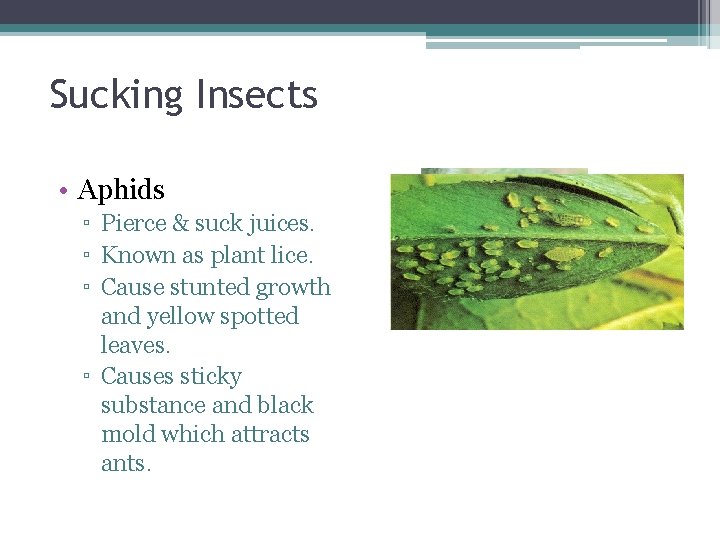
Sucking Insects • Aphids ▫ Pierce & suck juices. ▫ Known as plant lice. ▫ Cause stunted growth and yellow spotted leaves. ▫ Causes sticky substance and black mold which attracts ants.
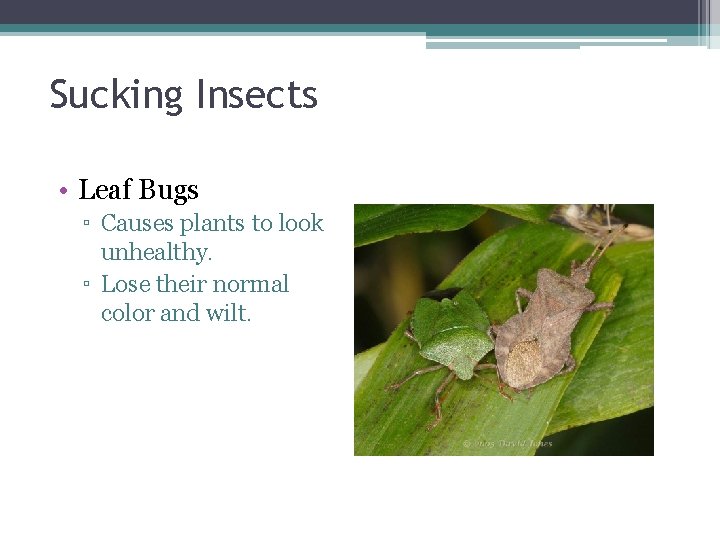
Sucking Insects • Leaf Bugs ▫ Causes plants to look unhealthy. ▫ Lose their normal color and wilt.
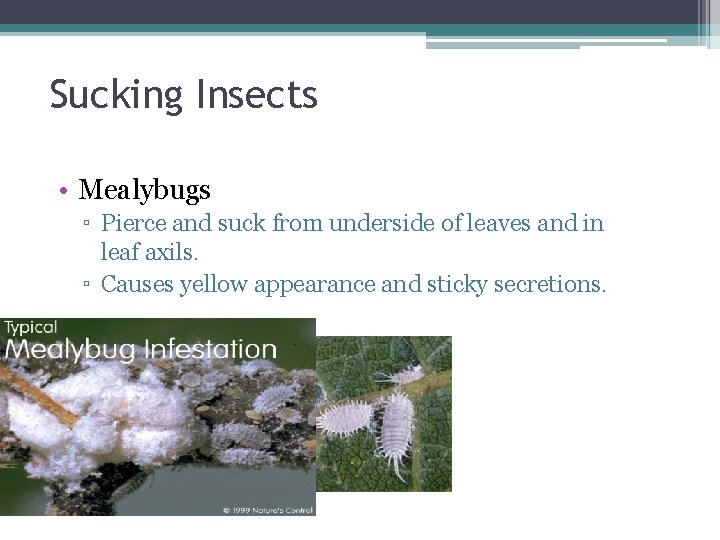
Sucking Insects • Mealybugs ▫ Pierce and suck from underside of leaves and in leaf axils. ▫ Causes yellow appearance and sticky secretions.
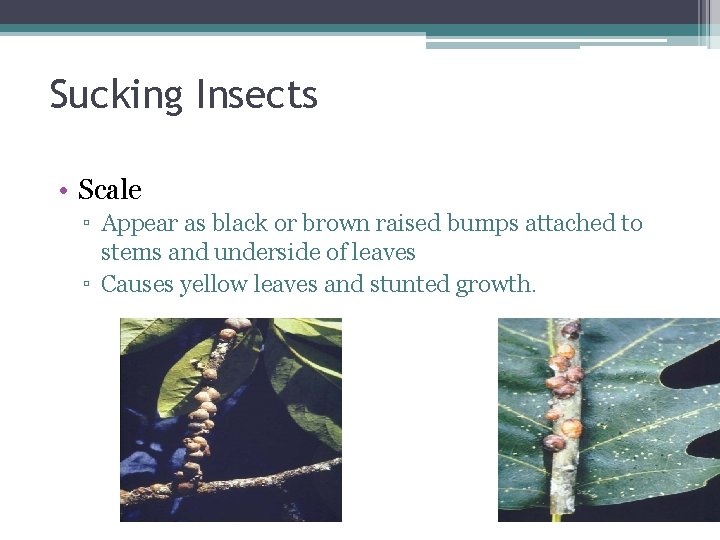
Sucking Insects • Scale ▫ Appear as black or brown raised bumps attached to stems and underside of leaves ▫ Causes yellow leaves and stunted growth.
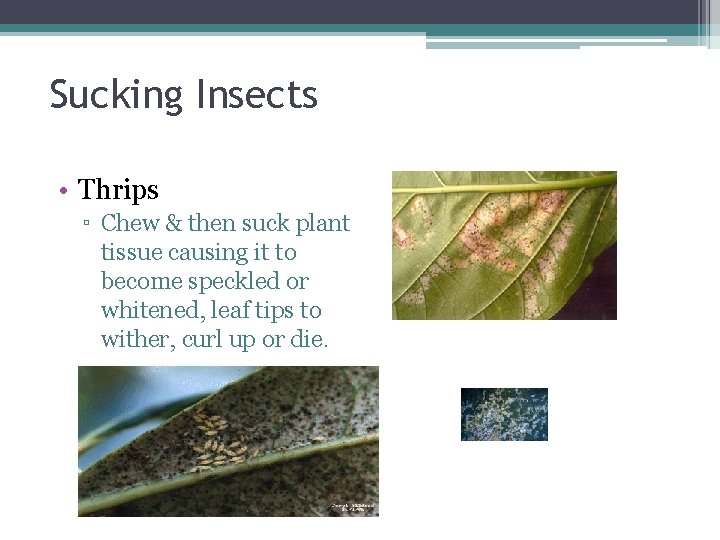
Sucking Insects • Thrips ▫ Chew & then suck plant tissue causing it to become speckled or whitened, leaf tips to wither, curl up or die.
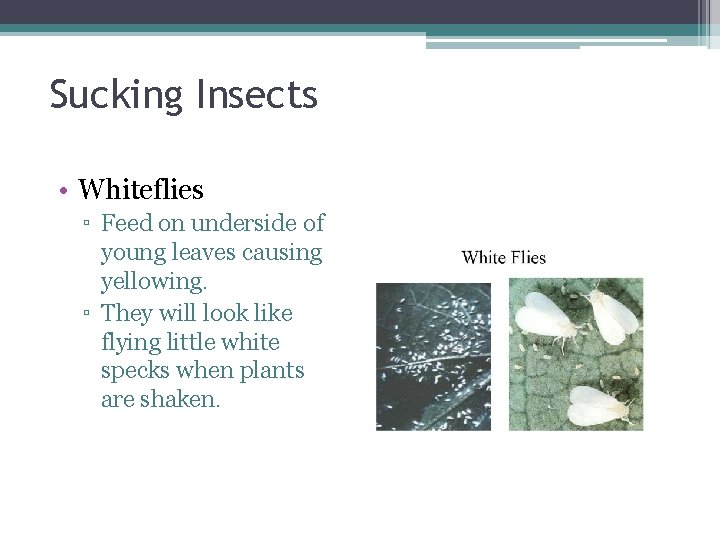
Sucking Insects • Whiteflies ▫ Feed on underside of young leaves causing yellowing. ▫ They will look like flying little white specks when plants are shaken.
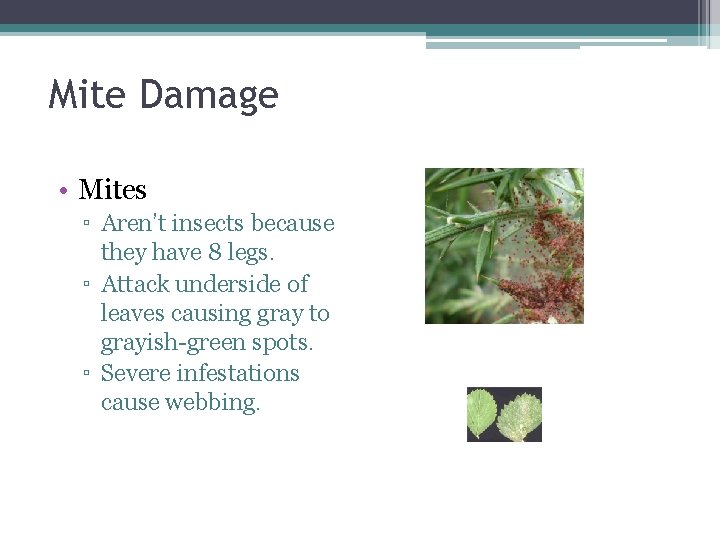
Mite Damage • Mites ▫ Aren’t insects because they have 8 legs. ▫ Attack underside of leaves causing gray to grayish-green spots. ▫ Severe infestations cause webbing.
Controlling Insects
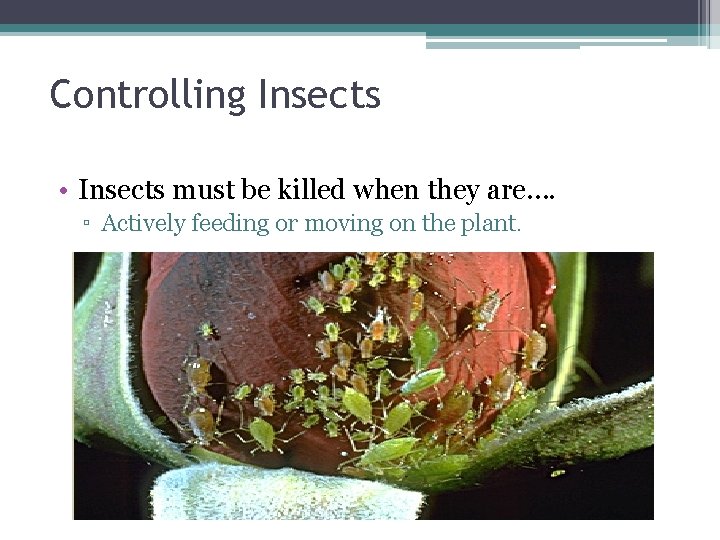
Controlling Insects • Insects must be killed when they are…. ▫ Actively feeding or moving on the plant.
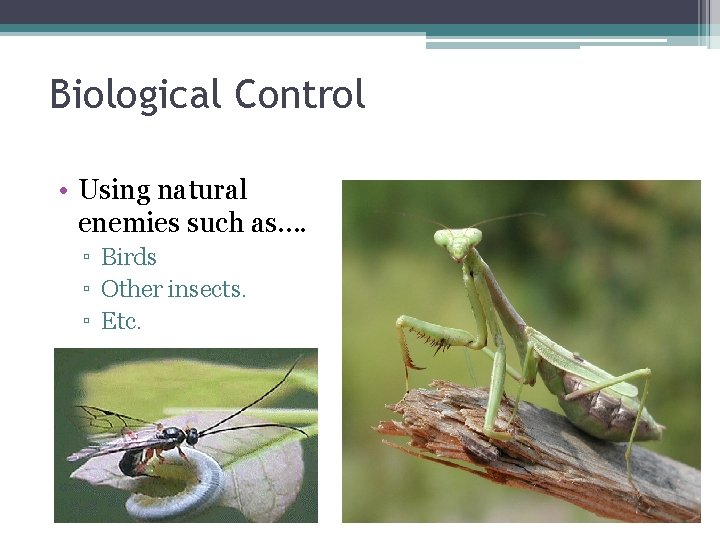
Biological Control • Using natural enemies such as…. ▫ Birds ▫ Other insects. ▫ Etc.
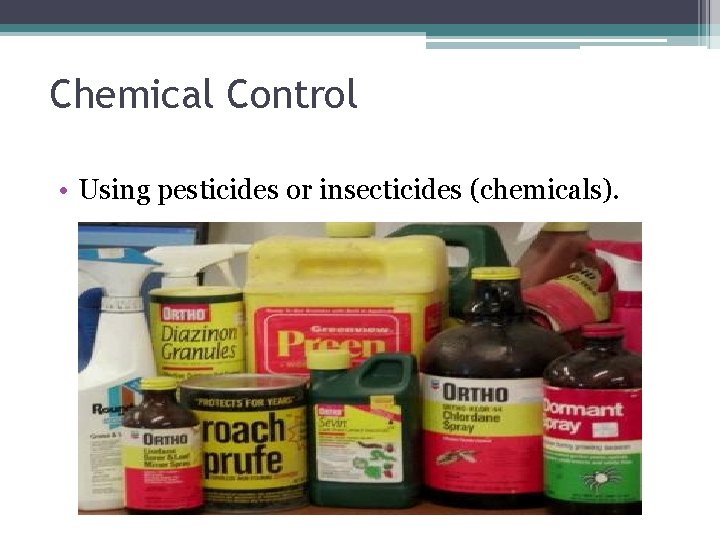
Chemical Control • Using pesticides or insecticides (chemicals).
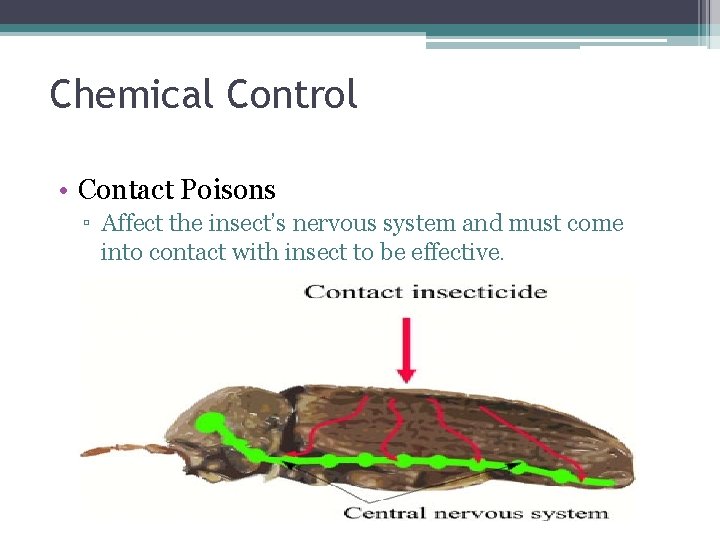
Chemical Control • Contact Poisons ▫ Affect the insect’s nervous system and must come into contact with insect to be effective.
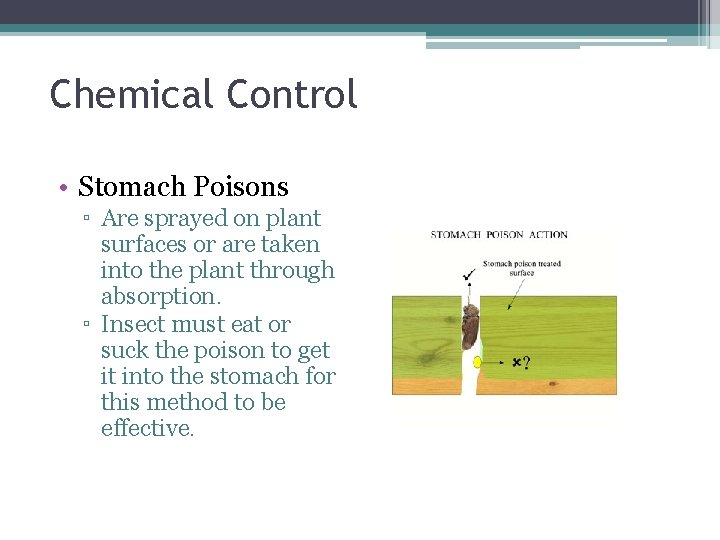
Chemical Control • Stomach Poisons ▫ Are sprayed on plant surfaces or are taken into the plant through absorption. ▫ Insect must eat or suck the poison to get it into the stomach for this method to be effective.
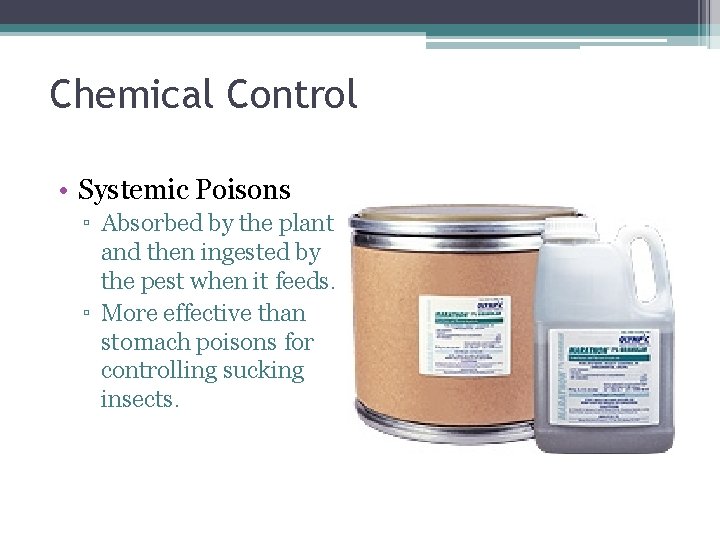
Chemical Control • Systemic Poisons ▫ Absorbed by the plant and then ingested by the pest when it feeds. ▫ More effective than stomach poisons for controlling sucking insects.
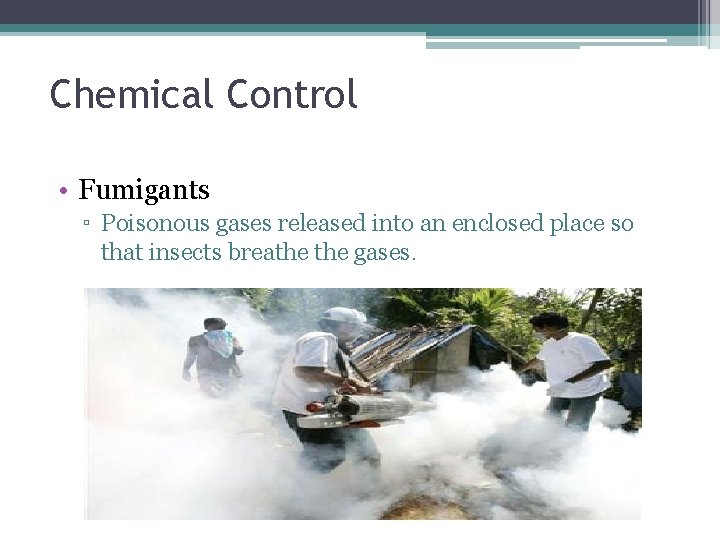
Chemical Control • Fumigants ▫ Poisonous gases released into an enclosed place so that insects breathe gases.
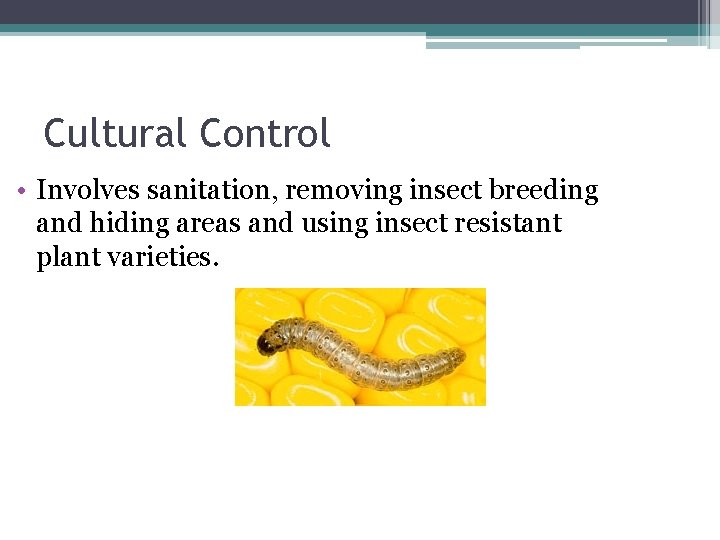
Cultural Control • Involves sanitation, removing insect breeding and hiding areas and using insect resistant plant varieties.
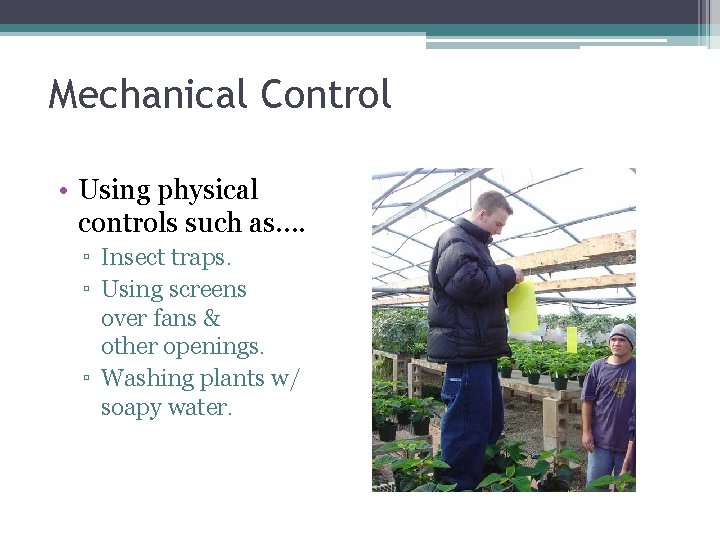
Mechanical Control • Using physical controls such as…. ▫ Insect traps. ▫ Using screens over fans & other openings. ▫ Washing plants w/ soapy water.
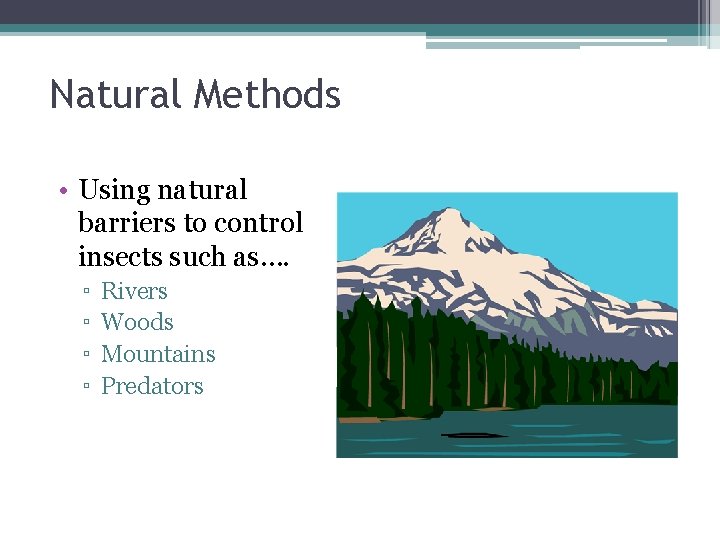
Natural Methods • Using natural barriers to control insects such as…. ▫ ▫ Rivers Woods Mountains Predators
Quarantine • Physically isolating insects from healthy plants.
Combining Methods • Using a combination of control methods is called…. ▫ Integrated Pest Management (IPM) or…. ▫ Integrated Control
Plant Diseases
What is a Disease? ? ? • A plant disorder caused by an infectious pathogen or agent.
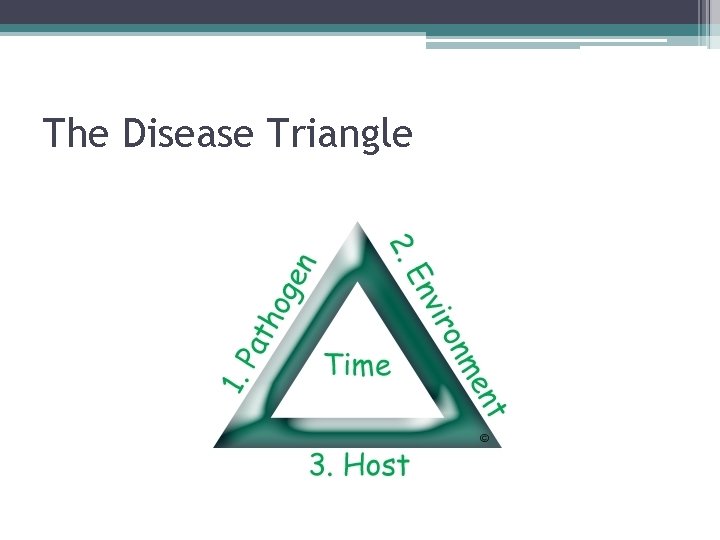
Conditions Needed for a Disease • Three conditions are necessary for a disease in a plant. ▫ Host plant ▫ Disease causing organism or pathogen must be present. ▫ Favorable environment for disease organism to develop.
The Disease Triangle
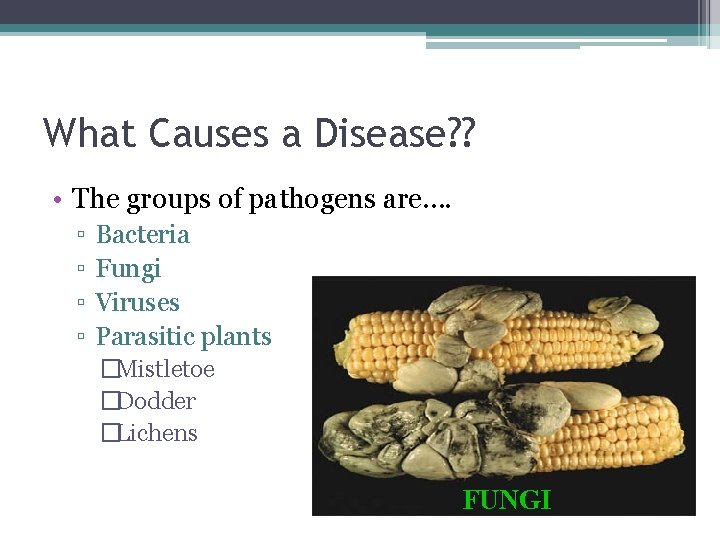
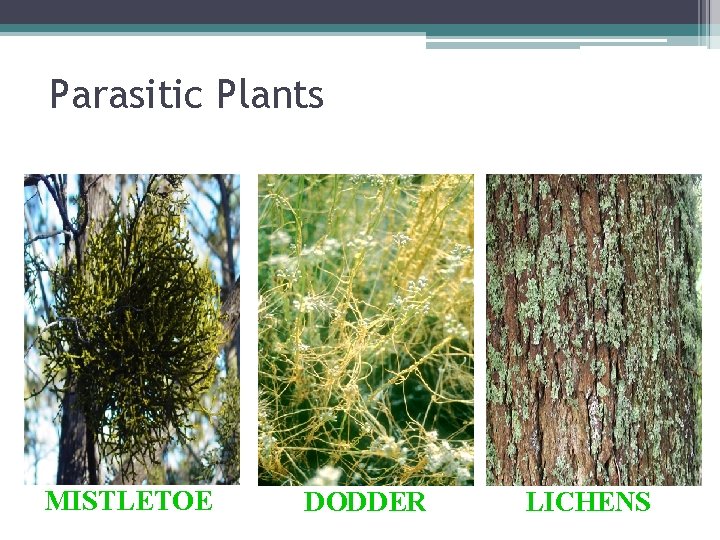
What Causes a Disease? ? • The groups of pathogens are…. ▫ ▫ Bacteria Fungi Viruses Parasitic plants �Mistletoe �Dodder �Lichens FUNGI
Parasitic Plants MISTLETOE DODDER LICHENS
Controlling Diseases • Warm temperatures and moist conditions in greenhouse plant production make most horticulture plant diseases worse because…. ▫ Environmental conditions that support diseasecausing pathogens. • Preventing plant diseases is better than treating the diseases. • Plant diseases must be identified before they can be treated.
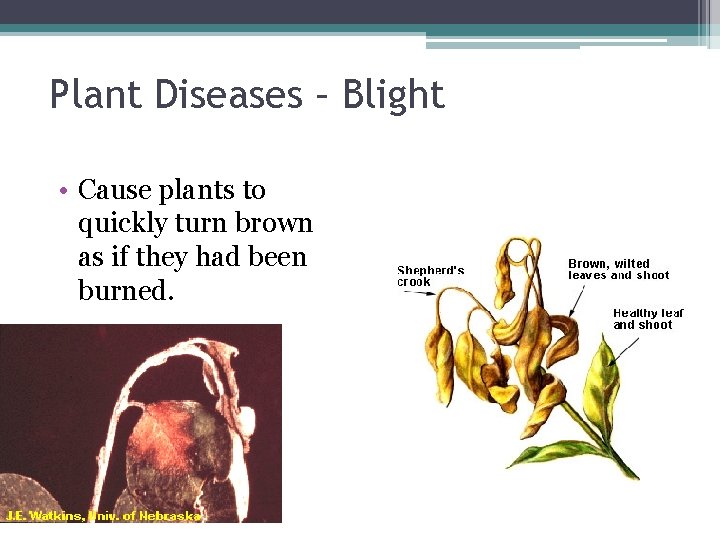
Plant Diseases – Blight • Cause plants to quickly turn brown as if they had been burned.
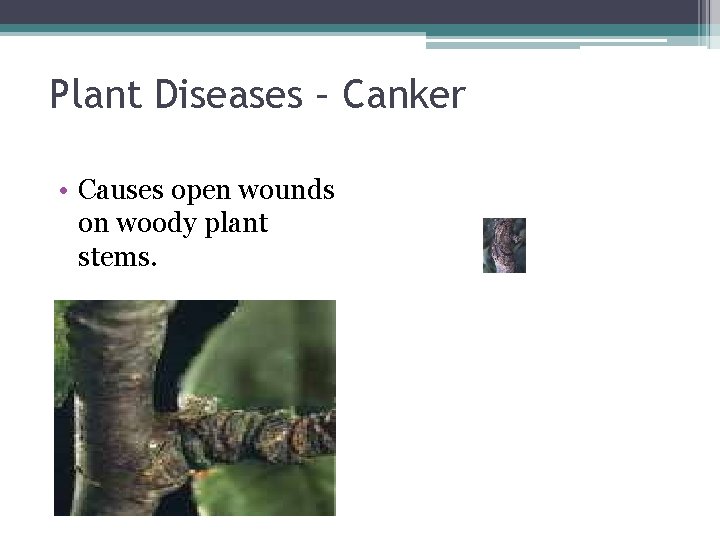
Plant Diseases – Canker • Causes open wounds on woody plant stems.
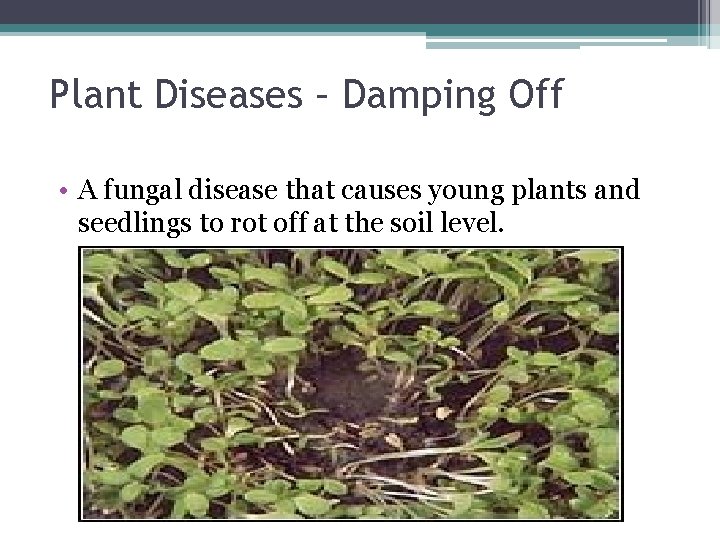
Plant Diseases – Damping Off • A fungal disease that causes young plants and seedlings to rot off at the soil level.
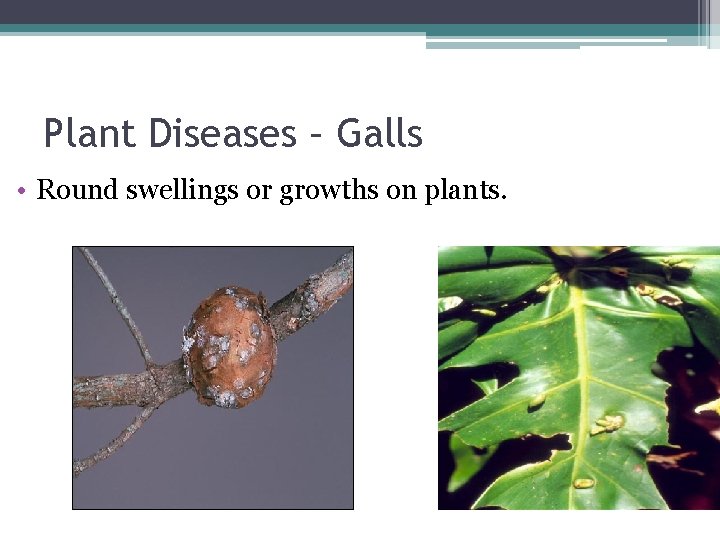
Plant Diseases – Galls • Round swellings or growths on plants.
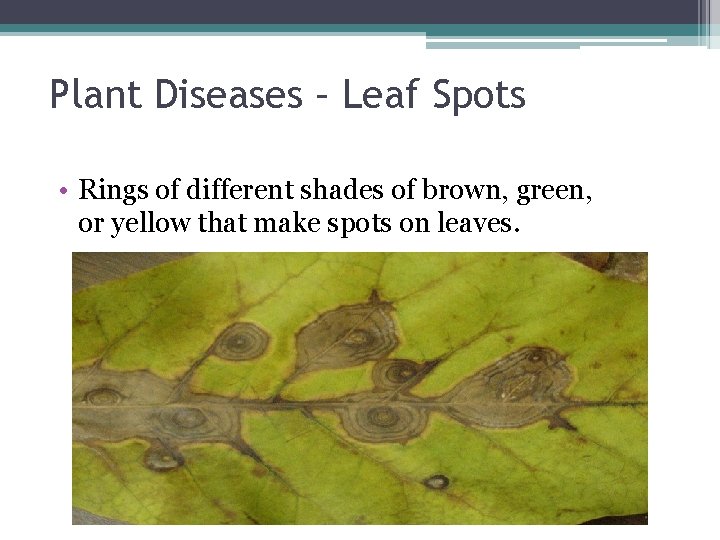
Plant Diseases – Leaf Spots • Rings of different shades of brown, green, or yellow that make spots on leaves.
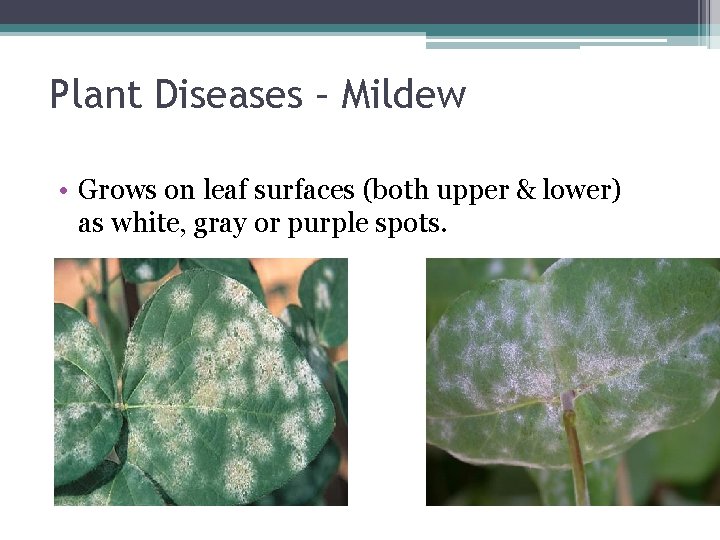
Plant Diseases – Mildew • Grows on leaf surfaces (both upper & lower) as white, gray or purple spots.
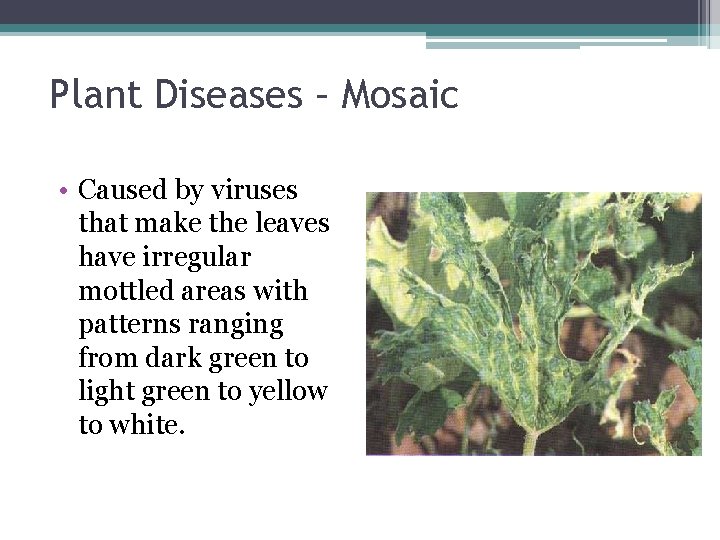
Plant Diseases – Mosaic • Caused by viruses that make the leaves have irregular mottled areas with patterns ranging from dark green to light green to yellow to white.
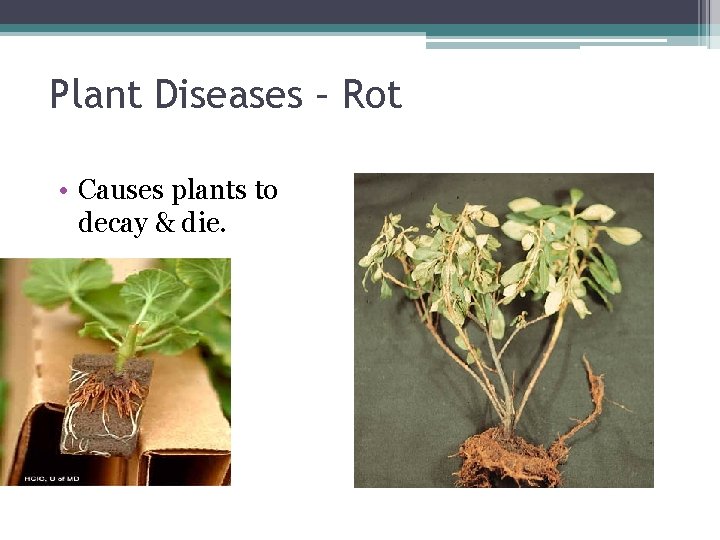
Plant Diseases – Rot • Causes plants to decay & die.
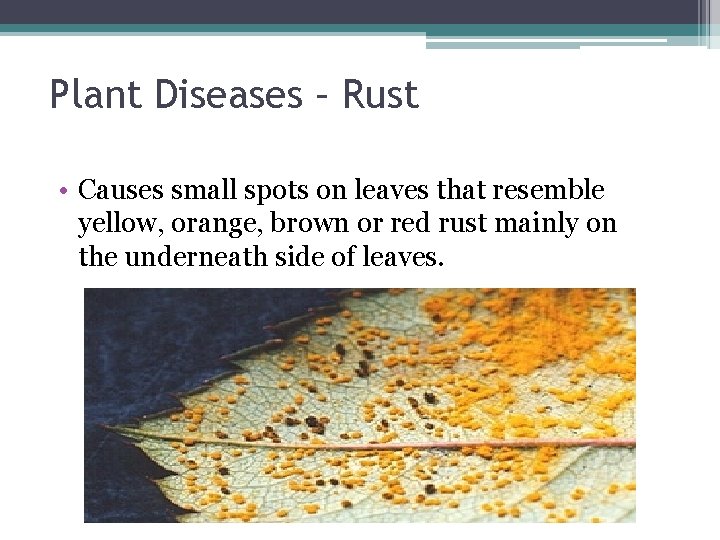
Plant Diseases – Rust • Causes small spots on leaves that resemble yellow, orange, brown or red rust mainly on the underneath side of leaves.
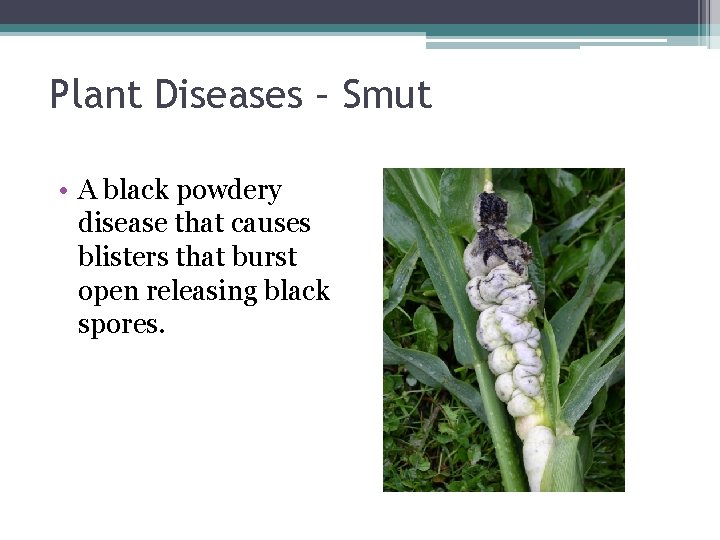
Plant Diseases – Smut • A black powdery disease that causes blisters that burst open releasing black spores.
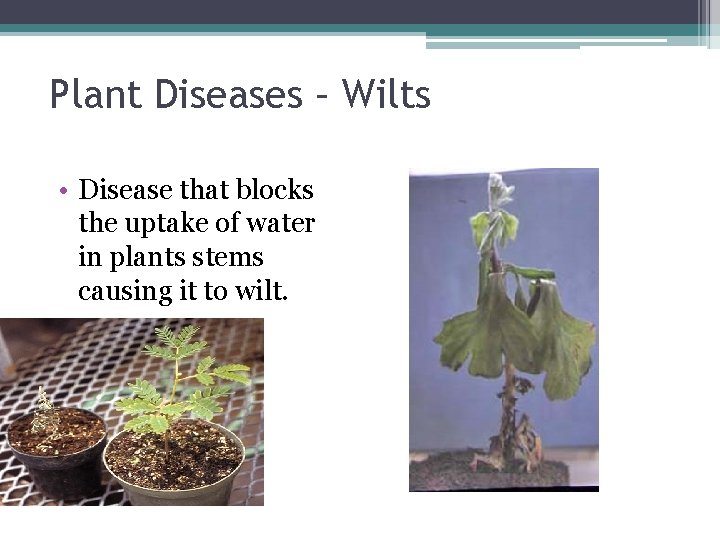
Plant Diseases – Wilts • Disease that blocks the uptake of water in plants stems causing it to wilt.