
Pesticides diseases and DDT 1 What are two

- Slides: 16
Pesticides, diseases, and DDT 1) What are two ways chemicals get into the environment? b) What is the difference between persistent and non-persistent? 2) What is the difference between pesticides, herbicides, and insecticides? 3) What does ingestion and absorption mean? 4) What is one pro and one con for DDT?
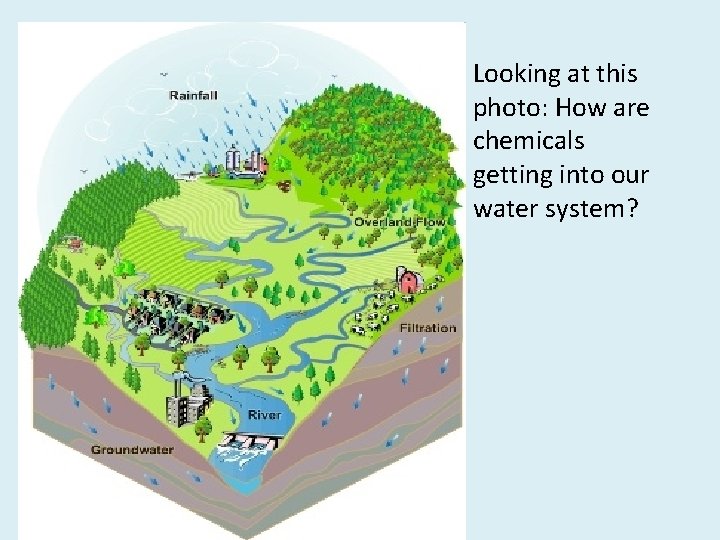
Looking at this photo: How are chemicals getting into our water system?
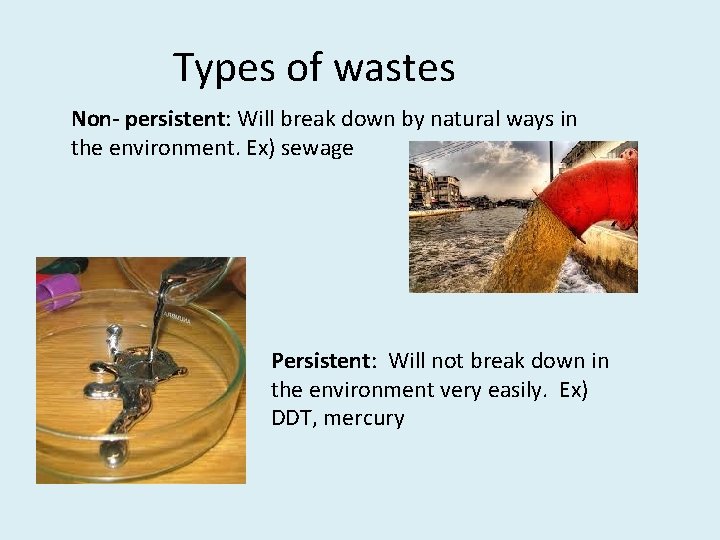
Types of wastes Non- persistent: Will break down by natural ways in the environment. Ex) sewage Persistent: Will not break down in the environment very easily. Ex) DDT, mercury
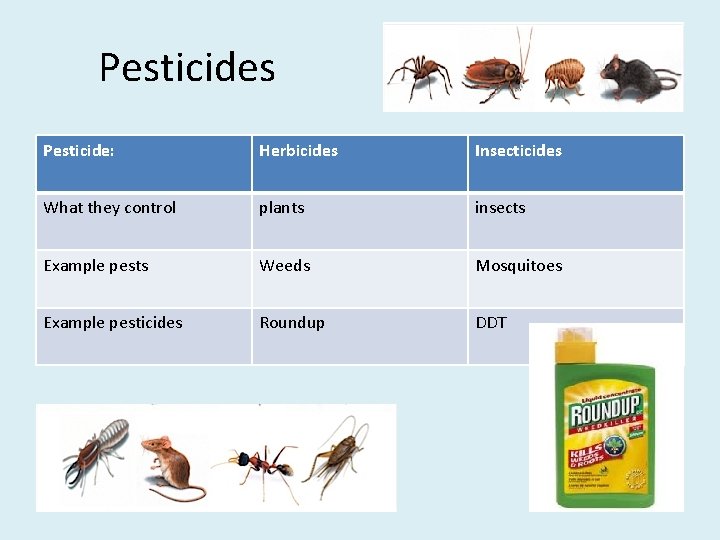
Pesticides Pesticide: Herbicides Insecticides What they control plants insects Example pests Weeds Mosquitoes Example pesticides Roundup DDT
DDT • Dichlorodiphenyltrichloroethane … We’ll just call it DDT
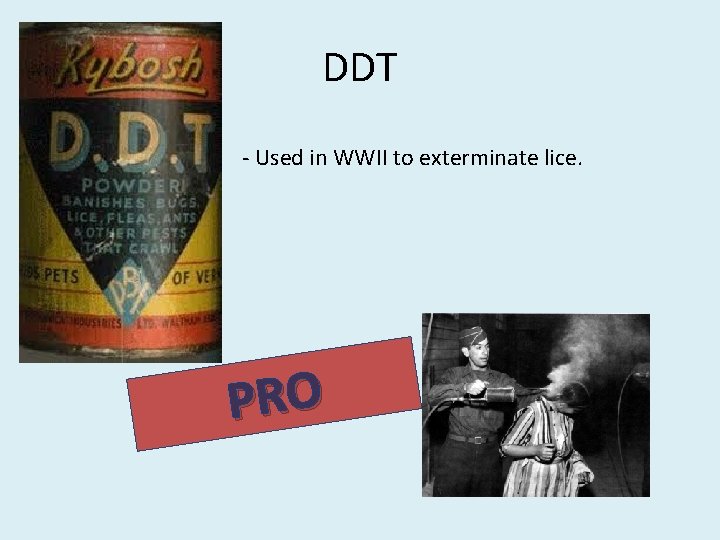
DDT - Used in WWII to exterminate lice. PRO
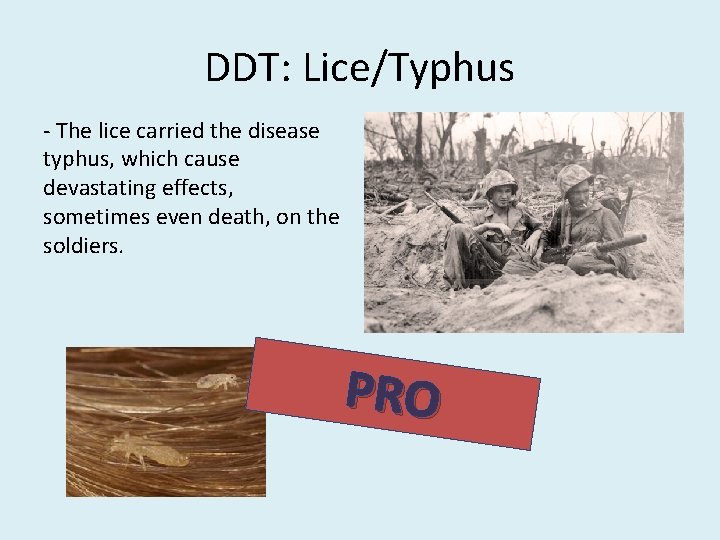
DDT: Lice/Typhus - The lice carried the disease typhus, which cause devastating effects, sometimes even death, on the soldiers. PRO
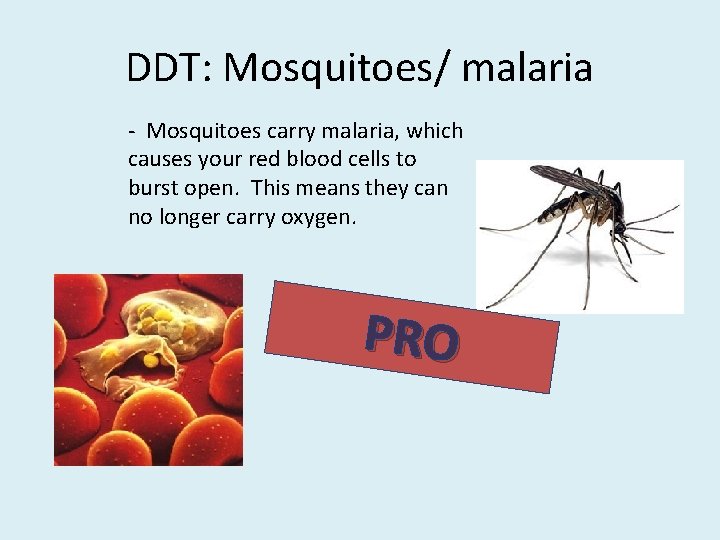
DDT: Mosquitoes/ malaria - Mosquitoes carry malaria, which causes your red blood cells to burst open. This means they can no longer carry oxygen. PRO
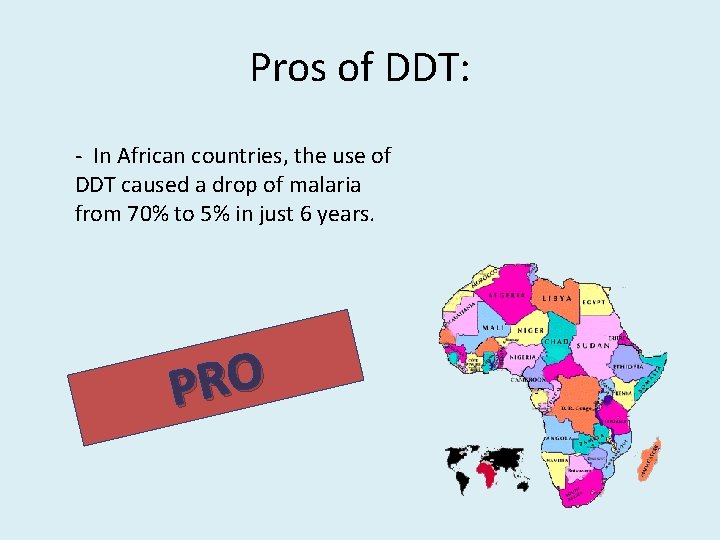
Pros of DDT: - In African countries, the use of DDT caused a drop of malaria from 70% to 5% in just 6 years. PRO
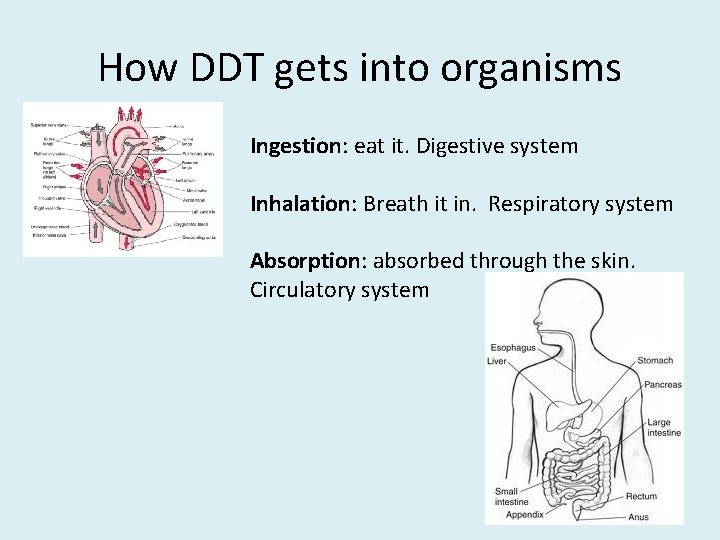
How DDT gets into organisms Ingestion: eat it. Digestive system Inhalation: Breath it in. Respiratory system Absorption: absorbed through the skin. Circulatory system
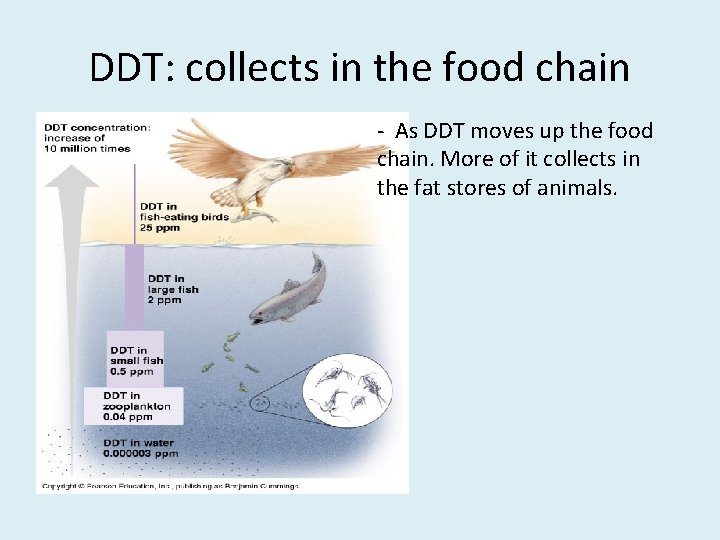
Evidence against DDT -It has a half-life of 12 years. Meaning it does not leave the environment for many generations. - It is fat-soluble meaning it dissolves into fat stores and stays in organisms for decades. CON
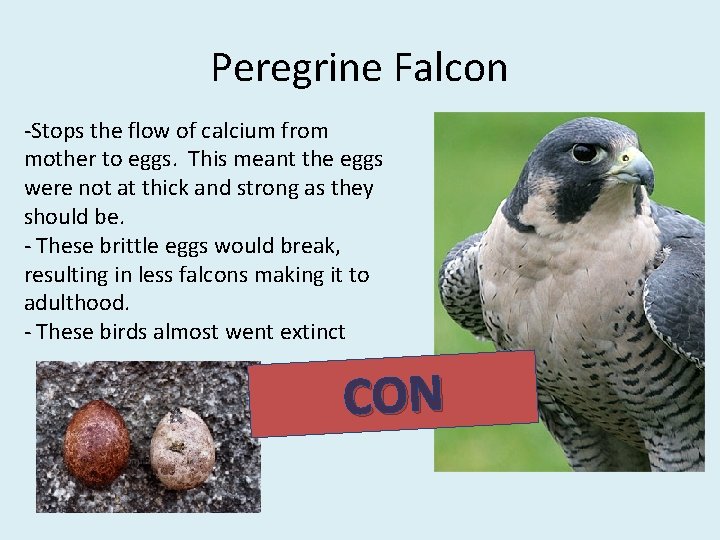
Peregrine Falcon -Stops the flow of calcium from mother to eggs. This meant the eggs were not at thick and strong as they should be. - These brittle eggs would break, resulting in less falcons making it to adulthood. - These birds almost went extinct CON
DDT: collects in the food chain - As DDT moves up the food chain. More of it collects in the fat stores of animals.
Biomagnification - Build up of substances, such as pesticides, in an organism. - It is being absorbed faster than the substance is lost.
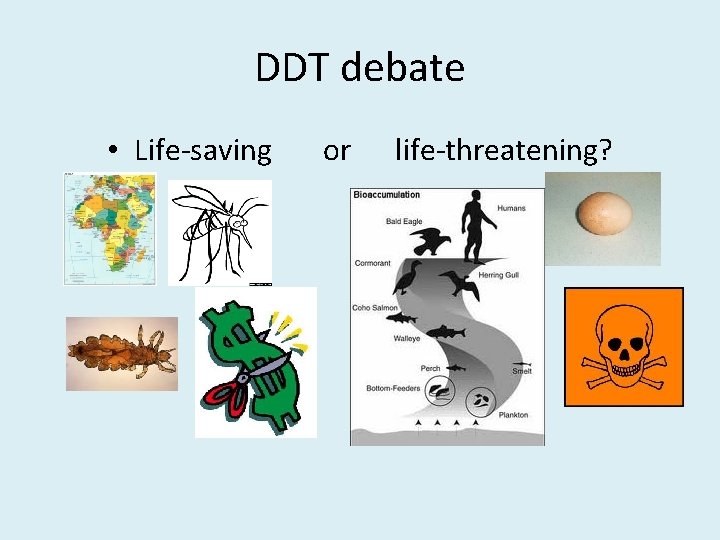
DDT debate • Life-saving or life-threatening?
Pesticides, diseases, and DDT 1) What are two ways chemicals get into the environment? b) What is the difference between persistent and non-persistent? 2) What is the difference between pesticides, herbicides, and insecticides? 3) What does ingestion and absorption mean? 4) What is one pro and one con for DDT?