
PEST MANAGEMENT Objective 5 OBJECTIVES A Describe principles
PEST MANAGEMENT Objective 5
OBJECTIVES A. Describe principles of integrated pest management B. Identify plant pests and diseases and their causes C. Explain procedures for the safe handling, use and storage of pesticides
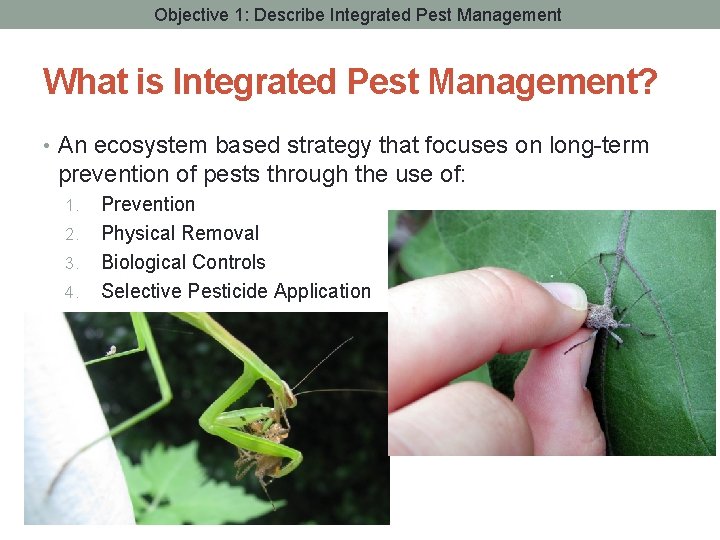
Objective 1: Describe Integrated Pest Management What is Integrated Pest Management? • An ecosystem based strategy that focuses on long-term prevention of pests through the use of: 1. 2. 3. 4. Prevention Physical Removal Biological Controls Selective Pesticide Application
Objective 1: Describe Integrated Pest Management STRATEGIES
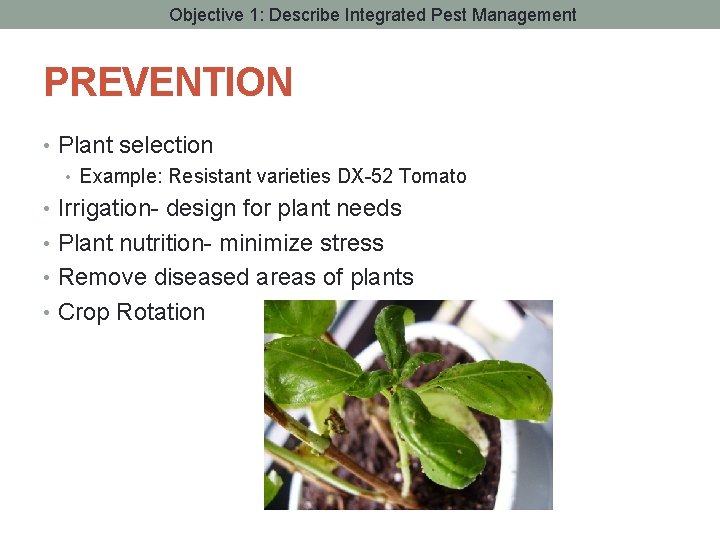
Objective 1: Describe Integrated Pest Management PREVENTION • Plant selection • Example: Resistant varieties DX-52 Tomato • Irrigation- design for plant needs • Plant nutrition- minimize stress • Remove diseased areas of plants • Crop Rotation
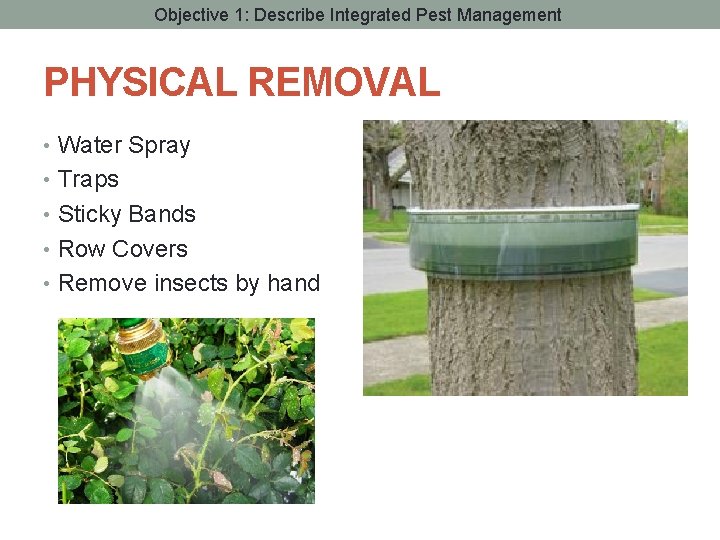
Objective 1: Describe Integrated Pest Management PHYSICAL REMOVAL • Water Spray • Traps • Sticky Bands • Row Covers • Remove insects by hand
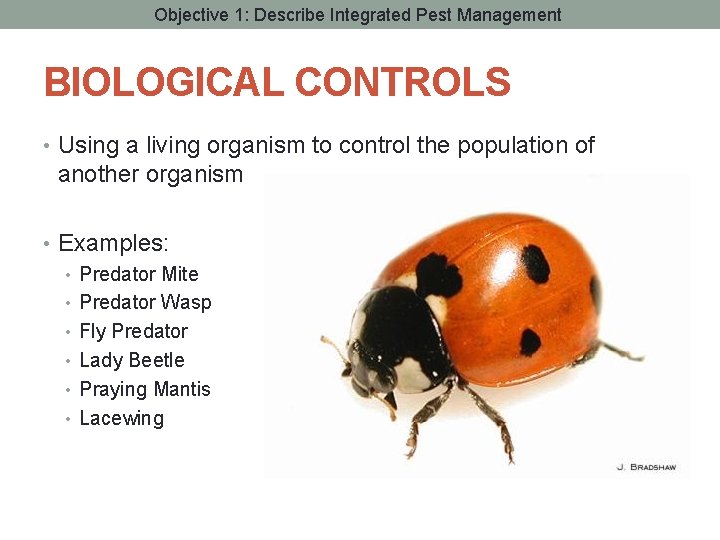
Objective 1: Describe Integrated Pest Management BIOLOGICAL CONTROLS • Using a living organism to control the population of another organism • Examples: • Predator Mite • Predator Wasp • Fly Predator • Lady Beetle • Praying Mantis • Lacewing
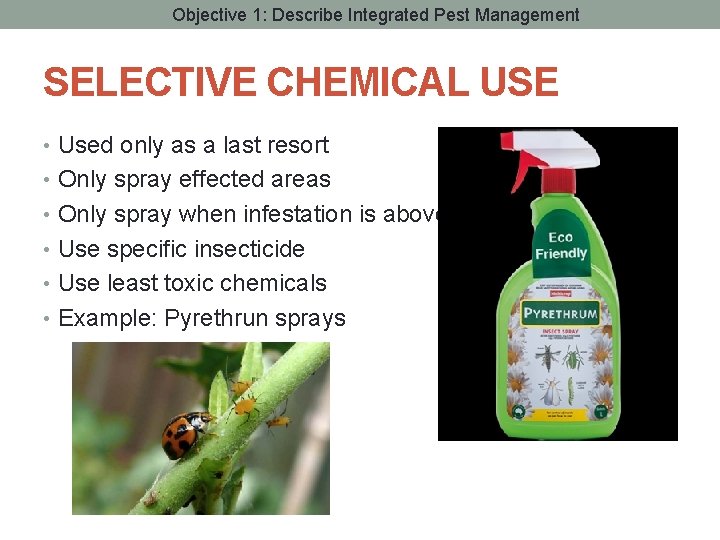
Objective 1: Describe Integrated Pest Management SELECTIVE CHEMICAL USE • Used only as a last resort • Only spray effected areas • Only spray when infestation is above threshold • Use specific insecticide • Use least toxic chemicals • Example: Pyrethrun sprays
Objective 1: Describe Integrated Pest Management Benefits of IPM • Economical • Example: In Mississippi, where IPM is used on all of the state's 18 acres of greenhouse tomatoes, growers saw a 30 percent yield increase and an additional $828, 000 in income. • Reduces health related hazards • Protects Natural Resources • Water • Soil • Endangered Species • Beneficial Insects
- Slides: 9